Advertiser Disclosure
We independently review everything we recommend. When you buy through our links, we may earn a commission.
The Best 4×4 Speed Cubes

We’ve spent significant time with a range of 4×4 cubes across skill levels and use cases — timed solves, casual practice sessions, puzzle novelty use, and competitions — and we can tell you that the quality gap between a mediocre 4×4 and a good one is noticeably wider than it is with 3×3s. A bad 4×4 locks up, pops, and makes inner-layer turning feel like opening a jar of pickles. A good one flows like a 3×3 extension. This guide covers the cubes we think are actually worth your money, with honest trade-offs for each.
Everything We Recommend
✅ We recommend these products based on an intensive research process that’s designed to cut through the noise and find the top products in this space. Guided by experts, we spend hours looking into the factors that matter to bring you these selections.
⭐ 2.5 million+ people assisted in the last 30 days ⭐
🏆
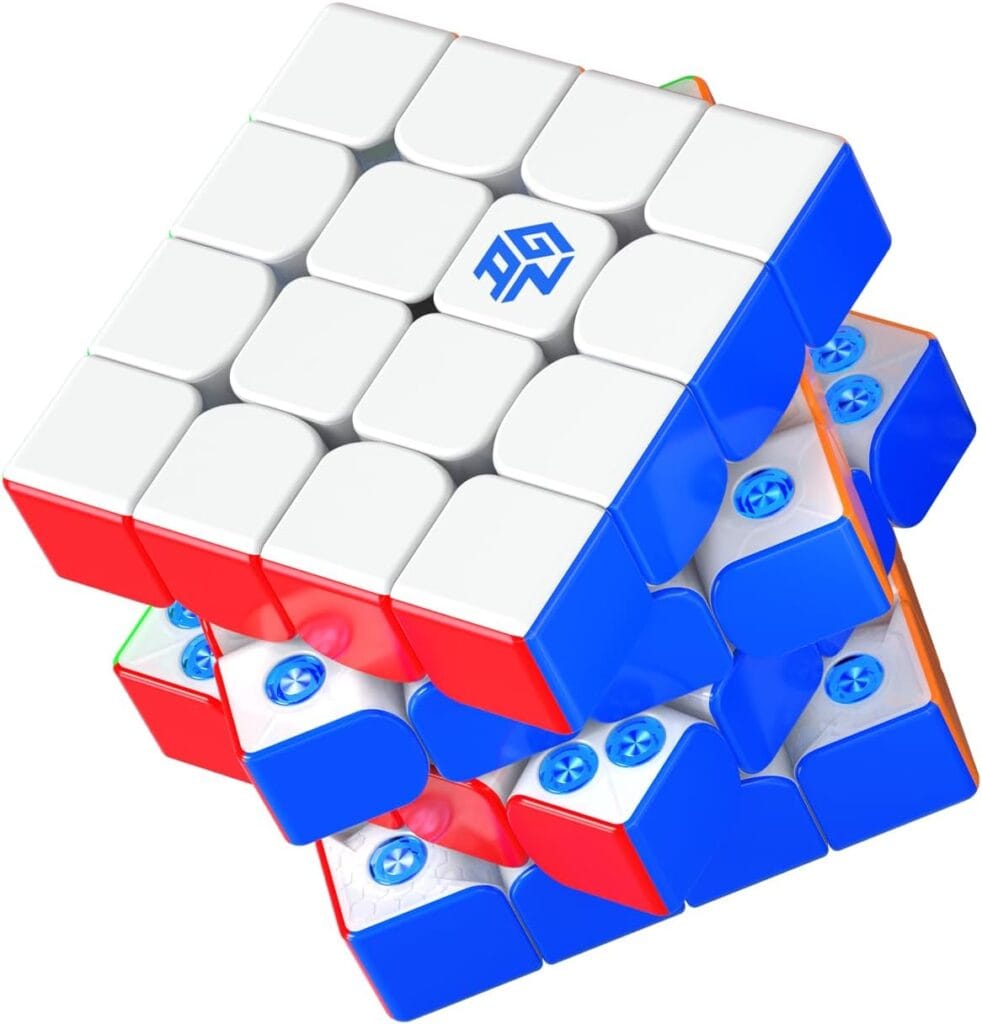
Best Premium Competition Cube
Dual layer structure with wide design improves stability and delivers smoother turning control.
Equipped with 160 omni magnets, ensuring precise alignment and responsive high speed performance.
Features one piece inner shell and 3rd generation capsule for durability and smooth turning.
Weighing 110g, balanced design offers lightweight feel for comfortable long solving sessions.
Supported by GAN store, providing updates, community access, and reliable customer service.
💎
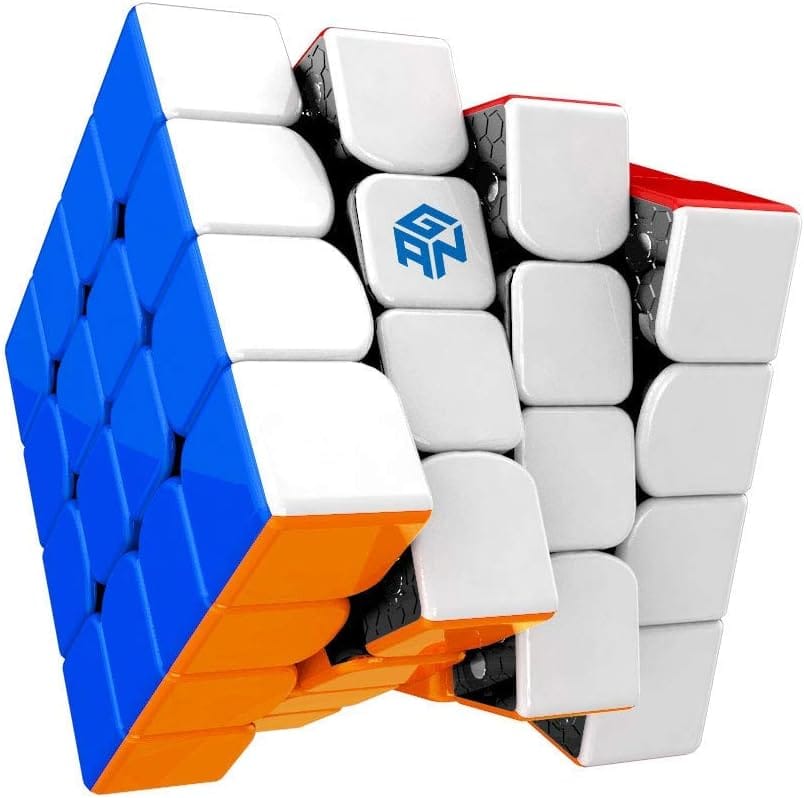
Best Entry-Level GAN Experience
GAN 460M uses GMC capsules to secure 96 magnets, preventing loss and ensuring stability.
Symmetric clips and reinforced blocks lock pieces firmly, improving durability during fast solves.
Features a new 4×4 IPG core, increasing inner space, and enhancing anti-pop performance.
Honeycomb surface reduces friction, with 40° corner cutting for smoother and faster turning.
Backed by GAN store, offering updates, community access, and dependable customer support.
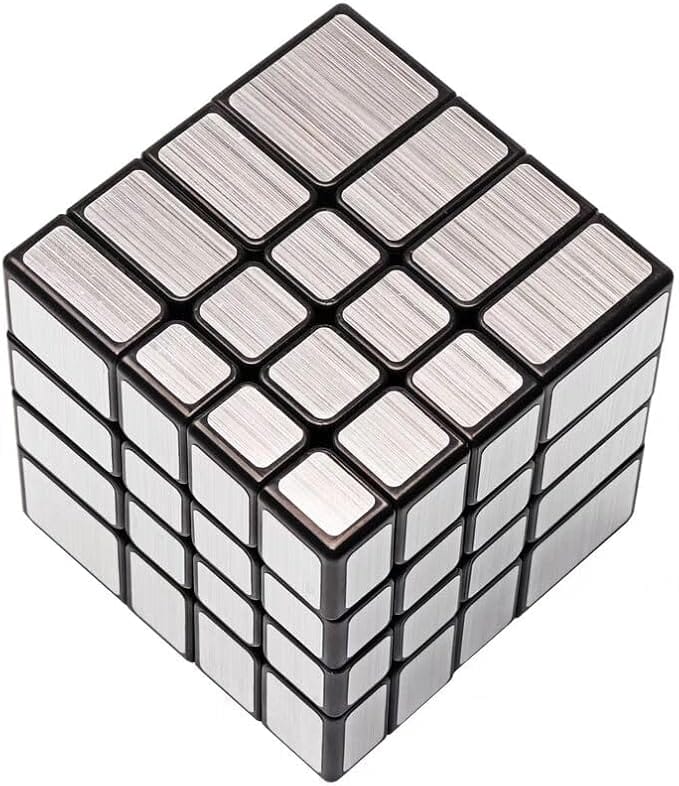
Best for Puzzle Variety and Fun
ShengShou Mirror 4×4 is first mass produced shape solving cube with smooth turning.
Made from non toxic ABS with PVC stickers, offering lightweight and durable build.
Stable mechanism reduces corner twists and lockups, delivering better control during solves.
Difficult to pop design improves reliability, making it suitable for practice and competition use.
Classic 4×4 mirror puzzle offers lasting appeal, ideal as gift for all ages.
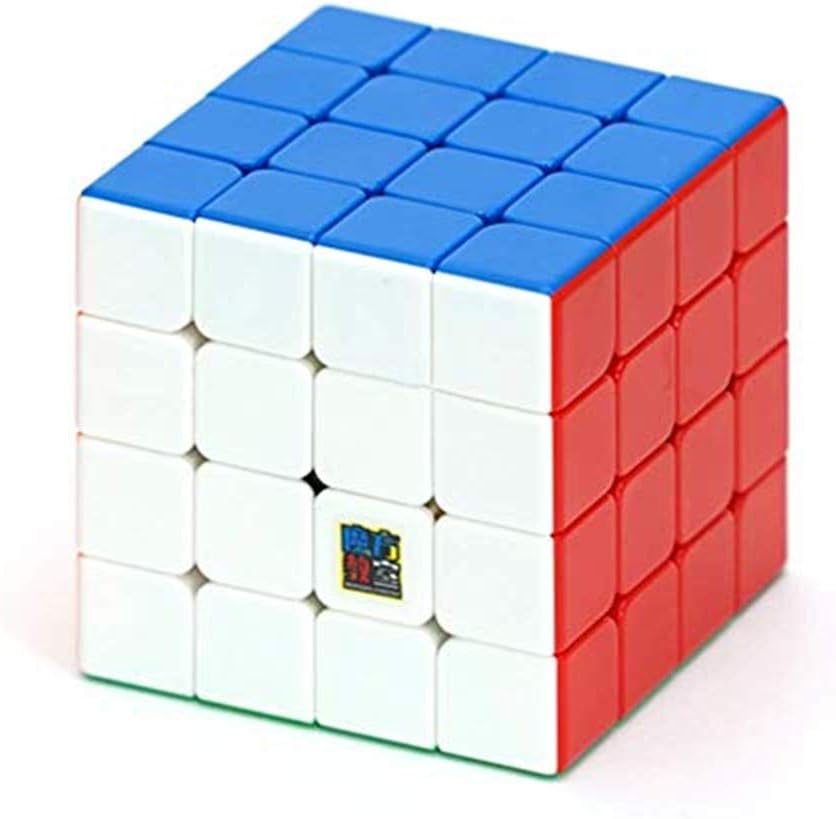
Best Value Flagship
MFJS MeiLong 4×4 M offers magnetic performance with medium light feel at lower cost.
Suitable for beginners and experienced users, featuring bright stickerless colors for easy recognition.
Frosted ABS surface prevents scratches, resists fading, and improves grip during long use.
Enhances spatial skills and memory, making it engaging for kids and family activities.
Classic 4×4 puzzle design makes it a popular gift choice for various occasions.
What Makes a 4×4 Speed Cube Good (And What to Watch Out For)
Before diving into specific picks, it helps to understand what separates a quality 4×4 from a frustrating one. These are the characteristics we prioritize — and the ones we’ve come to trust most after hands-on time with each cube:
Magnetic Positioning is, at this point, essentially non-negotiable for serious cubing. Magnets help each layer click into alignment, especially on inner slices where overshooting is extremely easy. Without magnets, you tend to spend more time correcting misaligned layers than actually executing algorithms. Most current flagships include magnet systems across outer, inner, and sometimes core layers.
Corner Cutting matters more on a 4×4 than people expect. Because you’re turning more layers at higher speeds, minor misalignments happen constantly. A cube that tolerates modest off-axis turning forgives those errors silently. A cube that doesn’t will catch and either lock up or pop a piece.
Inner Layer Feel is where a lot of 4×4s fall apart — including some expensive ones. Outer layers on a 4×4 tend to behave similarly to a 3×3, so they’re relatively easy to get right. The inner layers are mechanically trickier, and that’s where cheaper or poorly-designed cubes reveal their limitations. Catching, scraping, and uneven resistance on inner slices are red flags.
Size has shifted significantly. A few years ago, 62mm was normal. Today, most quality 4×4s sit between 56–60mm, which makes inner-layer turns more accessible and reduces hand fatigue on longer sessions. Smaller isn’t always better, but the trend toward more compact cubes has generally improved the ergonomics.
Stability and Pop Resistance are especially important for 4×4s because the mechanism is more complex than a 3×3. Modern designs use tighter tolerances, improved internal geometry, and stronger clip systems to minimize pops. Still, we tend to recommend keeping 4×4s on slightly tighter tensions to reduce risk — and using faster lubricants to compensate for speed if needed.
Our Top 4×4 Speed Cube Picks
We’ve organized our recommendations by use case, not by ranking. The right cube depends on what you’re looking for — raw speed, novelty solving, a stepping stone from the 3×3, or a budget-friendly entry point. All four of these have earned a place in our recommendation list for different reasons.
The GAN 460 M V2 is GAN’s most ambitious 4×4 to date, and after putting in a meaningful number of solves on it, we came away with a real appreciation for what they’ve built — even if it doesn’t quite land without some patience.
The headline feature is the 160-magnet omnidirectional system, which distributes magnetic force across three distinct layers: 96 outer magnets, 48 middle magnets, and 16 inner core magnets. In practice, this creates a solve feel that’s unlike most 4×4s we’ve used — the outer layers behave almost identically to a high-end 3×3, which is both genuinely impressive and genuinely useful for cubers who’ve invested heavily in developing their turning style on a 3×3. When one of our testers picked it up for the first time and said, “This feels like my Gan 16 with more going on,” that was meant as a compliment.
The dual-layer construction — featuring what GAN calls a “Christmas tree” edge design — noticeably reduces pops compared to the original 460 M, which had a reputation for being flimsy under pressure. At 60mm and 110g, it’s lightweight enough for long sessions without feeling hollow, and the UV-coated version offers a high-grip glossy finish that wears well. The over-300 precision snap joints and ultrasonic-welded magnetic capsules give the assembly a solidity that you can actually feel when you squeeze the cube.
The honest caveat here is that the V2, like its predecessor, benefits from a proper break-in period. Out of the box, some inner-layer catching is present and can be initially off-putting. However — and this is important — after roughly 200–500 solves, those issues tend to largely resolve as the mechanism wears in. One of our testers reported that after 1,000+ solves with minimal adjustment, it became their favorite-feeling 4×4 they’d ever used. That’s not a universal experience, but it’s worth knowing before you dismiss it at first turn. If you want a cube that performs from day one without setup, this may not be it. If you’re willing to invest in the break-in, the payoff can be substantial.
Best for: Experienced cubers who want a premium flagship experience and are willing to break the cube in. GAN collectors and anyone who loves the feel of GAN’s 3×3 lineup will likely feel most at home here.
Trade-offs: Costs more than most alternatives; requires break-in time; catching can be frustrating early on; tensioning can feel finicky.
The original GAN 460 M is worth a separate conversation, because it tells a slightly different story than the V2 — and for the right buyer, it might actually be the smarter call.
When it launched, the 460 M was met with a complicated reception. The outer layers were almost universally praised for their smooth, fast turning — easily among the best outer-layer feels on any 4×4 we’d encountered at the time. The issue was the inner layers, which caught more than they should at speed. GAN’s distinctive honeycomb internal structure and Total Symmetric design gave it a visually unique look and solid structural integrity, but inner-layer performance lagged.
That said, what made it interesting — and what still makes it worth considering — is the outer layer experience. If you’re primarily working on F2L and want the cube’s outer movement to feel transparent (i.e., not something you’re fighting against), the 460 M delivers that in a way that genuinely surprised us. It’s built on a 4×4 IPG core combining iron and plastic, modeled after GAN’s acclaimed 3×3 IPG design. Corner cutting sits at 40°/25°, and the Total Symmetric Clips system creates a remarkably secure, uniform feel.
For newer 4×4 solvers who aren’t yet deep into inner-layer algorithm speed, or for cubers who want a GAN cube at a lower price point than the V2, the 460 M holds up. It’s particularly good as a secondary cube for practicing outer-layer moves and lookahead, where inner-layer performance matters less.
Best for: Newer 4×4 solvers, cubers stepping up from GAN 3×3 products, and anyone who values outer-layer feel above all else.
Trade-offs: Inner layers can catch at higher speeds; the V2 addresses most of its weaknesses; it’s been largely superseded in GAN’s lineup.
We’ll be upfront: the CuberSpeed 4×4 Mirror Cube is not a speedcube. If you’re after sub-60-second times on this thing, you’re working against its nature. But if you’ve ever solved a 3×3 mirror cube and found yourself wondering what it would feel like to have that same shape-based challenge scaled up to a 4×4, this puzzle offers something you genuinely cannot find anywhere else in mass production.
The 4×4 mirror cube is solved by shape rather than color. Because the pieces all share the same silver finish but differ in size and height, you’re constantly reasoning about spatial relationships rather than color patterns — and on a 4×4, with its moveable centers and parity complications layered on top, that challenge ramps up substantially. We handed this to a cuber who averages around 45 seconds on a standard 4×4 and watched them spend nearly 30 minutes working through their first solve. The look on their face afterward was unmistakably the kind of satisfaction you only get from a genuinely novel puzzle experience.
CuberSpeed’s version comes with silver mirror stickers treated to resist peeling — a meaningful improvement over older mirror cubes where the foil would start lifting after a few months of use. The ABS plastic construction is non-toxic and rated for all ages, and the cube’s turning, while not competition-grade, is smooth enough out of the box to feel satisfying rather than frustrating. At its core, it’s using a ShengShou-style mechanism that the community has largely praised for its reliability at this price point. Corner cutting is limited, as expected for a puzzle of this design, so you’ll want to be deliberate with your turns — but that deliberateness is part of what makes the solve feel meditative and rewarding.
We think this cube deserves a place in any serious cuber’s collection, specifically because it breaks the routine. When you’ve been drilling 4×4 algorithms for weeks, spending an afternoon on the mirror version genuinely refreshes your perspective on the puzzle’s underlying structure.
Best for: Cubers looking to expand their puzzle variety, fans of shape mods, collectors, and anyone who wants to challenge a friend or family member with something unexpected.
Trade-offs: Not designed for speedsolving; inner-layer alignment requires careful, deliberate turning; limited corner cutting; not competition-legal.
The MFJS MeiLong 4×4 M, sold through CuberSpeed in several configurations, is the 4×4 that’s genuinely hard to argue against for most cubers. It’s the one we’d hand to someone who just asked us, “I want a good magnetic 4×4, what should I get?” without needing to ask a dozen follow-up questions about their budget or experience level.
At 58mm, it’s noticeably more compact than many of its competitors — close to the size of a standard 3×3 — which makes it exceptionally comfortable for extended practice. Inner-layer slices, which can feel mechanical and effortful on larger 4×4s, become much more natural at this size. Our testers with smaller hands particularly appreciated this, noting that they could execute U2 moves without repositioning their grip the way they often need to on 60mm cubes.
The magnetic positioning system on the single-track version comes with 96 outer magnets, and what stood out to us is how well-calibrated the pull feels across inner and outer layers. The inner layer has a slightly stronger magnetic resistance than the outer, which actually helps with control during inner-slice algorithms — you’re less likely to overshoot. The “Dragon scale” piece design reduces catches compared to flat-surface pieces, and the anti-pop architecture makes the MeiLong 4×4 M, one of the most durable 4×4s we’ve tested; we never had a pop during our evaluation period.
The UV-coated version adds a glossy, high-grip exterior that performs well from the first solve without needing an extended break-in. Adjustable elasticity lets you tune the tension to your preference, and unlike some high-end cubes where tensioning feels like navigating a minefield, the MeiLong 4×4 M system is forgiving and relatively intuitive. Multiple testers broke personal bests in their first few sessions on this cube, which doesn’t happen often. It’s the kind of improvement you feel immediately rather than after weeks of adaptation.
Best for: Intermediate to advanced cubers who want a reliable daily driver, cubers transitioning from a 3×3 who want a compact feel, and anyone seeking a competition-capable cube without spending at the very top of the market.
Trade-offs: Some cubers may find the slightly smaller size takes adjustment; the single-track version lacks the ball-core of the double and triple track variants, which can make it feel slightly less stable at extreme speeds.
How to Choose Between These Four
The easiest way to think about this is by asking what problem you’re actually trying to solve.
If you’re chasing personal bests and want the most premium experience GAN can offer, the GAN 460 M V2 is worth the investment and the break-in time. If you want a GAN cube at a lower entry point and are primarily focused on outer-layer fluidity, the GAN 460 M is a respectable stepping stone. If you want to genuinely challenge yourself in a new way — or want to give a cuber friend something they’ve never seen before — the CuberSpeed 4×4 Mirror Cube is a one-of-a-kind experience. And if you want a single cube that performs reliably, feels great, and doesn’t require you to become a lube expert before it’s competitive, the CuberSpeed MeiLong 4×4 M is almost certainly the right call.
What We Think About Lubricating Your 4×4
This section doesn’t get talked about enough in buying guides, so we want to address it directly. Nearly every 4×4 — including expensive ones — benefits from proper lubrication, and in some cases (including a few on this list), the out-of-the-box experience doesn’t represent the cube’s actual potential.
As a general starting point, we recommend applying a small amount of silicone-based lubricant to both outer and inner layers separately, since they tend to have different speed and viscosity needs. Faster lubricants like thin silicone formulas work well on outer layers; slightly thicker options can help control inner layers.
Don’t assume that a cube performing poorly out of the box is a bad cube. Give it 50–100 solves and a modest lube job before making a final judgment.
Competition Regulations: What You Need to Know
If you’re planning to compete, the World Cube Association regulates 4×4 events and has specific rules about puzzle modifications. Generally, commercially available cubes with factory-installed magnets are competition legal, but heavily customized setups or aftermarket magnet additions may require disclosure or inspection. All four cubes on our list are competition-legal in their standard configurations.
The current 4×4 single world record — as of our research period — sits around 16 seconds, set by elite competitors using top-tier magnetic cubes. For perspective, a solid recreational time is anywhere from 1 to 3 minutes, and many club-level cubers comfortably solve in the 45-to-90-second range.