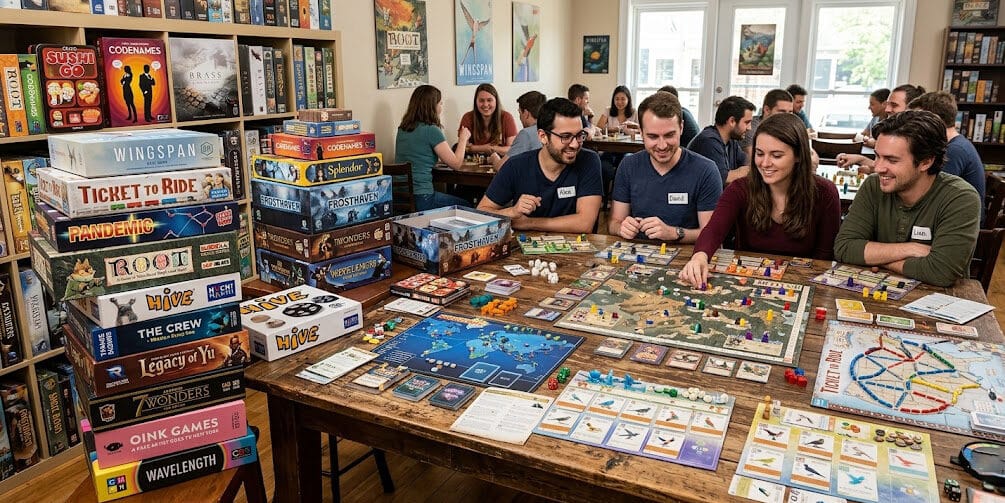

Splendor is one of those rare gateway games that manages to feel genuinely satisfying even once you’ve played it a hundred times. The premise is deceptively simple: you’re a Renaissance gem merchant collecting poker-chip-style tokens to purchase development cards, which in turn generate permanent income for future purchases. What surprised our team when we first played it was how quickly the “just one more turn” feeling set in. The engine-building mechanic — where early, modest cards start passively generating resources for bigger purchases — scratches a deeply satisfying itch without ever becoming confusing. Rules explanation takes about five minutes, which means it genuinely works as a “first game of the night” to warm people up. The weighty, casino-grade gem tokens alone tend to get comments from new players. One tester called it “Candy Crush but with actual human interaction and better stakes.” It plays well at two, three, or four — and at around 30 minutes per session, it rarely overstays its welcome. For anyone looking for a polished, accessible introduction to engine-building, Splendor is one of the strongest options on this list.
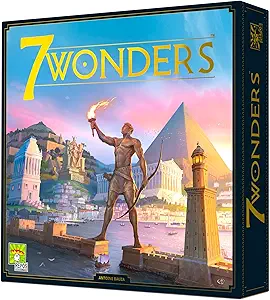
Asmodee 7 Wonders Board Game (New Edition)
Seven Wonders is the gold standard of simultaneous-drafting games, and the New Edition tidies up both the graphic design and the rulebook without changing what makes it work. Up to seven players each draft cards simultaneously — meaning there’s essentially no downtime, which is a genuine rarity at higher player counts. You’re building a civilization across three ages, balancing military strength, scientific research, commerce, and the construction of one of the seven ancient wonders. What tends to hook people is how different each game feels depending on which wonder board you’re assigned and which cards circulate through the draft. Our team found that it scales genuinely well from two to seven players, though two-player sessions use a modified draft rule that works fine without being quite as electric as a full table. The new edition’s clarified iconography makes a real difference — the original could feel visually cluttered to newcomers. If you regularly host larger groups and want something that runs in under an hour regardless of player count, this is one of the more reliable options we’ve tested.
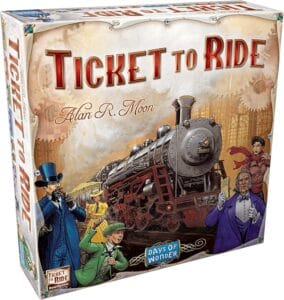
Days of Wonder Ticket to Ride Board Game
Ticket to Ride is probably the most-recommended gateway game of the past twenty years, and for good reason — it earns that reputation almost every time we put it in front of new players. The concept is elegantly tactile: you’re collecting colored train cards and laying plastic train pieces across a map of North America to complete destination routes. The tension between racing to claim routes before your opponents and quietly building toward longer, more valuable paths is remarkably well-calibrated for a game this accessible. What makes it click with mixed-experience groups is that the rules genuinely fit on a single page, yet there’s enough strategic variation to keep returning players interested. The production quality is solid — the board is large and colorful, and there’s something inherently satisfying about snapping a train route into place. It’s worth noting that the game can occasionally feel frustrating when a critical route gets blocked, which some players find energizing, and others find irritating. If your group trends competitive, that friction is part of the fun. For most households, Ticket to Ride earns its spot as a reliable, crowd-pleasing anchor to any game night rotation.
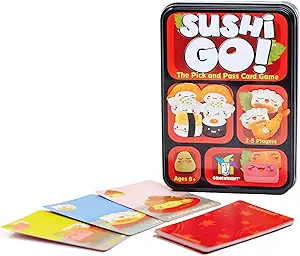
CEACO Sushi Go: The Pick and Pass Card Game
Sushi Go is one of the most consistently successful “five minutes to teach, thirty minutes to play” games we know of, and its adorable illustrated food characters mask a surprisingly clever drafting mechanic. Players simultaneously pick one card from their hand, pass the rest, and score points based on combinations collected across three rounds — sashimi trios, wasabi multipliers, pudding tie-breakers. The catch is that you’re always watching what’s flowing around the table and trying to read what your neighbors are collecting. Our team has played this at family reunions, with kids as young as eight, and with seasoned gamers who appreciated it as a quick palate-cleanser between heavier sessions. The card quality is good, the tin packaging is genuinely compact and gift-friendly, and the scoring is intuitive enough that most people can track it mentally without the scorepad. The main trade-off is depth: experienced gamers may find it runs thin after many plays. But as a game you keep in a bag for travel or pull out to fill 25 minutes before dinner, it’s one of the most reliably enjoyable filler games we’ve come across.
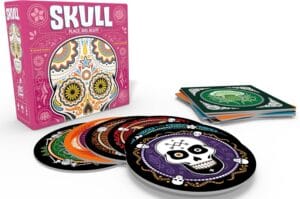
Space Cowboys / Asmodee Skull Party Game
Skull strips a bluffing game down to its barest, most hypnotic essentials, and the result is one of the most intense social experiences you can have with just a deck of flower-and-skull coasters. Each player places one coaster face down from their hand, then bids on how many they can flip without hitting a skull. The person who outbids everyone must then flip that many coasters — starting from their own stack — hoping desperately they didn’t hide a skull themselves. What our team found remarkable is how much psychological tension this generates with zero randomness and almost zero rules. The entire game is reading people: who’s bluffing, who’s sandbagging, who just slid that skull onto their pile while maintaining eye contact. It plays up to six comfortably, and sessions run 20 to 30 minutes. The poker-chip-style coasters feel premium and are easy to shuffle and stack. It’s not a game that rewards deep strategic analysis — it rewards social intuition and nerve, which makes it one of the most accessible “serious” games for non-gamers. If you want a party game that generates actual stakes and genuine laughter simultaneously, Skull is hard to beat.
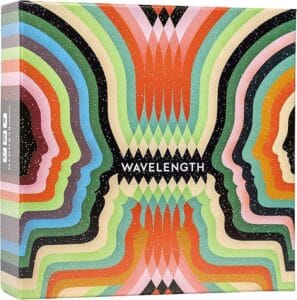
Wavelength is the kind of party game that makes everyone feel smart and exposed at the same time, which is a genuinely difficult balance to achieve. One player (the “Psychic”) sees where a hidden target sits on a spectrum between two poles — say, “Hot to Cold” or “Good Movie to Bad Movie” — and must give a one-word clue to guide their team’s dial toward it. The team then deliberates aloud, arguing about where the clue lands on the spectrum, and scores points based on how close the dial lands to the hidden target. What makes it work brilliantly for mixed groups is that the deliberation itself is the game — you quickly discover that your teammates think “lukewarm” is basically “cold” while you considered it firmly “warm,” and that gap is endlessly entertaining. Our team has played this with people who hate board games and people who play competitively, and it’s one of the few games that works equally well for both. It comfortably handles 2 to 12+ players, setup takes seconds, and you can realistically play a full, satisfying round in 30 minutes. One of our testers called it “the game that makes dinner parties ten times better.”
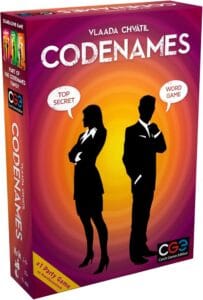
CGE Czech Games Edition Codenames
Codenames is a modern classic that earns its reputation at almost every table, even years after its release. Two rival spymasters give one-word clues that link multiple words on a shared grid, trying to guide their team to all their agents before the opposing side does — and before anyone accidentally touches the assassin. The social tension of watching your teammates interpret your clue in exactly the wrong direction never stops being simultaneously agonizing and hilarious. What holds up especially well over repeated plays is that the clue-giving side of the game rewards creativity and lateral thinking in ways that feel genuinely satisfying when they land. The red-herring problem — where a clue could plausibly connect to the other team’s words — adds a layer of strategic care that’s easier to explain than to master. Our team tends to recommend this for groups of four to eight who enjoy wordplay and don’t mind a game where the smartest person in the room occasionally looks completely foolish. Clue-giving is harder than it looks, which keeps it fresh. Session time is typically 15 to 30 minutes, making it easy to play multiple rounds in an evening.
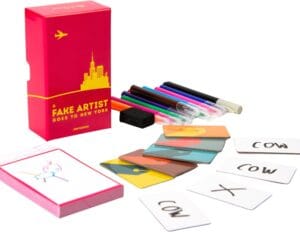
Oink Games: A Fake Artist Goes to New York
A Fake Artist Goes to New York is a party game that fits in your pocket and generates a disproportionate amount of chaos, laughter, and suspicion for its size. Players collectively draw a picture together — each person adding exactly one line — except one player is the Fake Artist who doesn’t know what’s being drawn. The twist is that the Fake Artist must contribute a line that looks convincing without giving away their ignorance, while everyone else tries to expose them. What our team found is that the beauty of the game lives in the ambiguity: a skilled Fake Artist can draw a vague squiggle that passes, while an overconfident real artist sometimes draws something so specific that they accidentally look like the imposter. The Oink Games production is impressively compact and well-considered — thin marker boards, clear role cards, all packed into a box barely larger than a deck of cards. It works best with five to eight players and tends to generate immediate replay momentum, where people want to go again the moment a round ends. If you need a brilliantly portable party game that works before everyone’s settled in, this is one we keep coming back to.
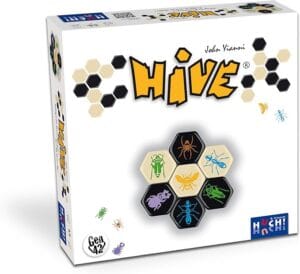
Hive occupies a fascinating and somewhat unique position in the board game landscape: it’s an abstract strategy game that feels like chess in some respects, but has no board, travels in a small bag, and can be learned in about ten minutes. Players take turns placing or moving Bakelite insect tiles — each with unique movement rules — to surround the opponent’s Queen Bee while protecting their own. What surprised our team most was how quickly deep strategic play emerged after just a few sessions. The absence of a board means the “board” is whatever shape the hive takes, which grows and shifts with every move — creating a constantly evolving tactical puzzle. The components are genuinely impressive: thick, heavy tiles with satisfying weight and clean graphic design. Hive plays in 20 to 30 minutes and is one of the strongest two-player options we know of in any price range. Its portability (playable on any flat surface, no setup required) makes it ideal for travel or casual lunch-break play. The main limitation is the strict two-player count, so it won’t serve group game nights. But for a pure two-player abstract game with serious depth, Hive is one of the most consistently recommended titles on our team.
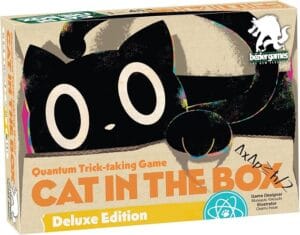
Bezier Games: Cat in the Box Deluxe Edition
Cat in the Box is a trick-taking game that cleverly dismantles the one thing most trick-taking games take for granted: you don’t know what suit your cards are until you play them. Each player holds cards with only numbers — no suits — and declares the suit as they play each card, simultaneously placing a cube on the community board to claim that suit-value combination. Once a combination is taken, no one else can play that value in that suit, which means you can get boxed into a “paradox” where you can’t follow suit and must concede the round. What makes it sing is how this single rule change transforms the entire texture of trick-taking: you’re no longer reading a fixed hand but navigating a probability space, and the shared board makes the constraint visible for everyone. Our team, which includes both trick-taking veterans and players who’d never touched the genre, found it genuinely fresh and addictive. The Deluxe Edition’s production — deep-set card trays, quality cubes, a beautifully illustrated box — feels premium without being excessive. It plays best at four but handles three to five well. If your group enjoys card games and wants something with real novelty, this is one of the more original designs on the list.
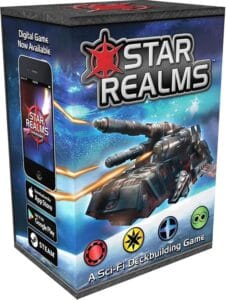
Star Realms is a deck-building game that manages to deliver a snappy, competitive, two-player experience in a package small enough to fit in a jacket pocket — and at a price point well below most hobby games. Players start with an identical 10-card starting deck and take turns purchasing ships and bases from a shared market row, gradually replacing weak starting cards with a more powerful engine. The goal is simple: reduce your opponent’s Authority (hit points) to zero. What keeps it engaging is the faction synergy system — cards from the same faction trigger bonus abilities when played together, so smart drafting is rewarded without the experience becoming overly complicated. Our team found that games typically run 20 to 30 minutes, which makes it fast enough for two quick rounds in an evening. The card art is vivid, and the sci-fi theme is coherent without being heavy. The one consideration worth flagging is that two-player is essentially the intended experience — multiplayer variants exist but are less polished. For couples or roommates who want a competitive game that’s quick to set up and quick to teach, Star Realms is one of the most efficient game-to-enjoyment ratios we’ve encountered.
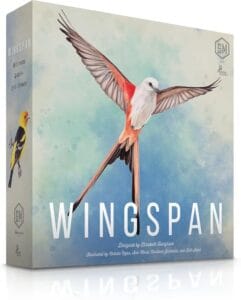
Stonemaier Games Wingspan (Base Game)
Wingspan is one of those games that manages to be genuinely beautiful and genuinely clever at the same time, which is rarer than it should be. Players act as bird enthusiasts building habitats that attract and house birds from a gorgeously illustrated, scientifically accurate deck of 170 bird cards. Each bird you play activates and enhances a habitat — forests for cards, grasslands for eggs, wetlands for food — creating cascading chain reactions that grow increasingly satisfying as the game progresses. What regularly surprises new players is that despite the gentle nature theme, Wingspan is a tightly competitive engine-builder with meaningful decisions at every turn. The production quality is exceptional: thick player mats, a wooden egg component, custom dice in a bird-feeder dice tower, and card art detailed enough that our team spent time just reading bird facts between turns. It plays in 45 to 70 minutes and handles one to five players well, with a solo automa mode that’s one of the better single-player experiences in its weight class. If there’s a consideration, it’s that setup and teardown take a few minutes — this isn’t a game you pull out for a spontaneous 20-minute session. But for a planned game night centerpiece, Wingspan is one of our most enthusiastically recommended titles.
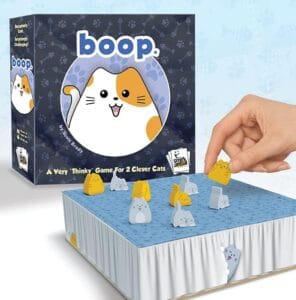
BOOP is an abstract two-player game with an almost absurdly charming premise — you’re placing kittens on a quilted board, and whenever a kitten is placed, it “boops” adjacent pieces one space away — but the strategic depth it generates from this single rule is genuinely remarkable. The goal is to graduate three of your kittens into adult cats, then get three cats in a row. The booping mechanic creates a constant push-and-pull where lines you build get disrupted in unexpected ways, and plans you thought were set up get scattered by a well-placed opponent piece. Our team played this extensively as a two-player option and found that the 20-minute play time is accurate, which means you almost always want to play again immediately. The production quality is delightful — the kittens and cats are chunky, satisfying wooden pieces, and the quilted-pattern board is one of the more visually appealing game surfaces we’ve seen. BOOP works beautifully as a gift for someone who claims they don’t like strategy games: the approachable aesthetic gets them to the table, and the cleverness of the mechanic keeps them there. It’s strictly two players, which limits its utility for groups, but as a head-to-head option, it’s one of our favorites.
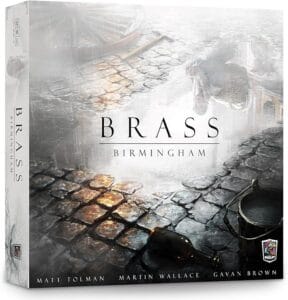
Roxley Games: Brass Birmingham
Brass Birmingham is widely regarded as one of the most accomplished strategy games published in the past decade, and our team’s time with it did nothing to challenge that assessment. Set in industrializing England, players develop industries and build canal and rail networks across a modular board, competing to build the most lucrative network across two historical eras. The genius of the design is that actions are tightly constrained — you can only build where you have connections, and connections depend on building — creating a dense puzzle where every decision has cascading consequences. What genuinely surprised our team was how smoothly a game of this depth actually plays at the table once the rules click. The first session has a learning curve, but by the midpoint of that first game, most players have internalized the core logic. The production is exceptional: thick punchboard, beautifully illustrated cards, and a board with remarkable visual clarity, given how much information it carries. It plays best at three or four and typically runs two to three hours — a meaningful time commitment that it earns. This is not a casual gateway game, but if your group is ready to step into heavier territory, Brass Birmingham is one of the most rewarding places to go.
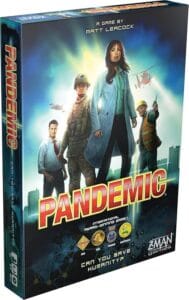
Asmodee Pandemic Board Game (Base Game)
Pandemic remains one of the most accessible and effective introductions to cooperative gaming, and holding up that reputation after more than fifteen years of releases is genuinely impressive. Players take specialized roles — Medic, Scientist, Dispatcher, and others — and work together against a steadily escalating global disease outbreak, trying to discover four cures before the world is overwhelmed. What makes Pandemic work so well as a co-op introduction is that its tension is immediate and legible: the board visualizes the crisis in real time, disease cubes accumulate with grim momentum, and the moment someone draws an Epidemic card, the whole table reacts. Our team particularly appreciated how the role asymmetry creates natural collaboration — the Medic wants to go one direction, the Scientist needs cubes of a different color, and negotiating that tension is most of the game. The difficulty is genuinely adjustable, and the base game offers enough variety to stay interesting across many sessions before you’d want an expansion. There’s a known criticism that experienced players can sometimes dominate decision-making (the “quarterbacking” problem), but strong social contracts at the table generally manage that. For a first cooperative board game, Pandemic is one of the most consistently solid recommendations we can make.
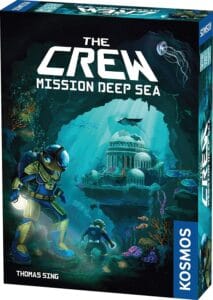
Thames & Kosmos: The Crew — Mission Deep Sea
The Crew: Mission Deep Sea is one of the most elegant trick-taking cooperative games ever designed, and it works beautifully even for players who’ve never played a trick-taking card game before. Players form a crew attempting to complete a series of sequential missions, each requiring specific players to win specific tricks — but communication between players is strictly limited to a single “radio communication” card per round. The constraint is the point: you must infer your crewmates’ hands from context and play cooperatively without being able to coordinate freely. What our team found over many sessions is that the missions escalate in a perfectly calibrated way, and the brief format of each mission (often 10 to 15 minutes) means a failed attempt is immediately replayed rather than resentful. The Deep Sea theme is a modest upgrade from the first Crew’s space setting — the missions have more thematic flavor baked in — and the physical production is clean and functional without being flashy. It genuinely works across 2 to 5 players, though three or four is arguably the sweet spot. For groups who want a cooperative card game that rewards communication, patience, and deduction, The Crew: Mission Deep Sea is one of the most satisfying options we know of at any price.
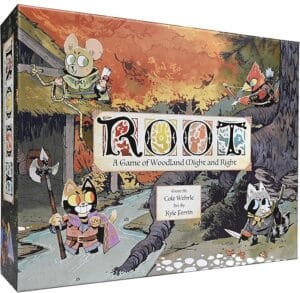
Leder Games: Root — A Game of Woodland Might and Right
Root is a genuinely unusual strategy game in that each player controls a completely different faction with different rules, different win conditions, and a different strategic identity — and they all happen to share the same forest. The Cats build infrastructure and score through economic engine-building; the Birds run a government that spirals into crisis; the Vagabond freelances across both sides; the Alliance foments sympathy among woodland creatures. The asymmetry is the game, and it generates wildly different experiences depending on who’s playing what. Our team found that Root has a notable learning curve — the rulebook is dense, and faction rules require study — but that the payoff, once people internalize their roles, is some of the most exciting and contentious gameplay we’ve experienced. No two games play the same because the faction dynamics shift based on player count and composition. It’s worth noting that the game is often considered best at three or four players, and some factions are generally considered stronger than others, which may matter to competitive groups. But for players who love asymmetric design and political maneuvering, Root is unlike almost anything else in the hobby.
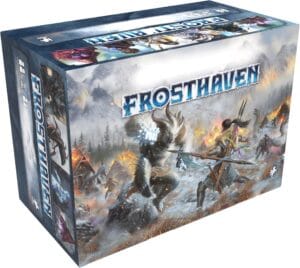
Cephalofair Games: Frosthaven Board Game
Frosthaven is one of the most ambitious cooperative campaign games ever produced, and if you’re ready for a commitment, it’s one of the most rewarding. The sequel to Gloomhaven, it drops players into a remote northern outpost facing threats from multiple directions — dungeon-crawling tactical combat, seasonal resource management, and a town-building meta-layer that evolves across a campaign of 100+ scenarios. What struck our team most forcefully is how much genuine narrative momentum the game generates: decisions made in one session have consequences across future sessions in ways that feel organic rather than scripted. The component quality is exceptional — cards, miniatures, interlocking modular dungeon tiles — though the setup time for individual scenarios is real and worth accounting for. This is emphatically not a casual recommendation: Frosthaven is best suited to a committed group of two to four players who can schedule regular sessions and manage a shared campaign over months. If that sounds like work, it might not be the right fit. But if it sounds like exactly what you’ve been waiting for in a game, Frosthaven delivers at a scale that very few other titles attempt.

Van Ryder Games: Final Girl Starter Set
Final Girl is a solo-only game that puts you in the role of the lone survivor in a slasher film scenario, trying to defeat the killer before the body count ends the movie — and you with it. Each game uses a “Feature Film” box that pairs a specific killer with a specific location: a camp counselor vs. a summer camp, for instance, or a sorority house scenario. The gameplay involves managing health, items, and victim placement while the killer advances according to a clear event deck, creating a cat-and-mouse tension that’s remarkably effective for a single-player experience. Our team appreciated how the Starter Set (which includes one location and one killer) gives a complete experience without requiring immediate further purchases — though the game’s modular design means expansion packs genuinely add variety rather than just more of the same. The graphic design is deliberately B-movie pulpy, which either charms you immediately or doesn’t, but the mechanical design underneath is tight and well-calibrated. Play time typically runs 45 to 75 minutes, depending on scenario difficulty, and the replayability across different Feature Film combinations is substantial. For solo gamers who love thematic tension and don’t mind push-your-luck resource management, Final Girl is one of the most distinctive options on this list.
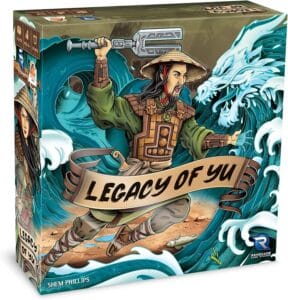
Renegade Game Studios: Legacy of Yu Solo Board Game
Legacy of Yu is a solo deck-building game that manages to feel genuinely epic in scope despite running in 30 to 45 minutes, and its difficulty calibration is one of the most thoughtful we’ve encountered in a solo title. You play as Yu, a legendary Chinese historical figure managing flood control and defense against invading barbarians simultaneously — two crises always pulling resources in different directions. What makes Legacy of Yu distinctive is its built-in difficulty scaling: a legacy-lite system tracks your wins and losses across a campaign of nine scenarios, adjusting subsequent difficulty based on how you’re doing. Win too easily, and the game quietly gets harder. Struggle, and it eases slightly — without feeling patronizing. Our team found that this resulted in a campaign that felt genuinely personalized to skill level in a way that static difficulty settings never quite achieve. The production is clean and functional: a modular board, a carefully designed deck, and event cards with just enough narrative flavor to make each session feel meaningful. It’s worth noting that the game’s historical theme is handled with care, and the rulebook is genuinely clear. For solo gamers who want a campaign experience that fits into a work-week evening rather than consuming an entire weekend, Legacy of Yu is one of the strongest picks in its category.