Home » Puzzles » The Best Jigsaw Puzzles for Seniors

Advertiser Disclosure

The Best Jigsaw Puzzles for Seniors

After spending months testing dozens of jigsaw puzzles specifically designed for older adults, our assessment team has identified the top options that combine ease of use, cognitive benefits, and genuine enjoyment. We’ve evaluated everything from piece size and image clarity to how well each puzzle holds up after multiple uses, and we’re confident these recommendations will help you find the perfect puzzle for yourself or your loved one.

The right jigsaw puzzle can transform an ordinary afternoon into an engaging activity that sharpens the mind, reduces stress, and provides a real sense of accomplishment. However, not all puzzles work well for seniors—many have pieces that are too small to handle comfortably or images that lack the contrast needed for aging eyes. That’s why we’ve done the legwork to separate the excellent options from the mediocre ones.

What Makes a Great Senior-Friendly Jigsaw Puzzle

Through our extensive testing, we’ve identified several key factors that separate exceptional senior puzzles from disappointing ones:

Piece Size Matters More Than You’d Think: We found that pieces measuring at least 30% larger than standard puzzle pieces make an enormous difference. Arthritis, reduced dexterity, and vision changes all impact how easily someone can pick up and manipulate puzzle pieces. The best puzzles we tested featured chunky, substantial pieces that were easy to grasp and position.

Image Quality and Contrast Are Critical: Puzzles with washed-out colors or low-contrast images proved frustrating even for our testers with good vision. The winners featured vibrant, high-contrast images with clearly defined sections. We particularly appreciated puzzles that avoided large areas of similar colors—like expansive blue skies or green fields—which can be unnecessarily challenging.

Piece Count Sweet Spot: For most seniors, we discovered the ideal range falls between 100-500 pieces. This provides enough challenge to feel engaging without becoming overwhelming. Of course, this varies based on individual ability and experience, which is why we’ve organized our recommendations by piece count.

Material Quality: Cheap cardboard that bends or develops fuzzy edges after one use ruins the puzzle experience. We prioritized puzzles made from thick, durable materials with precision-cut pieces that fit together smoothly without forcing.

Matte Finish Over Glossy: This might seem minor, but glossy finishes create glare that makes pieces harder to see, especially under typical indoor lighting. Nearly all our top picks feature matte finishes that reduce eye strain.

Everything We Recommend

✅ We recommend these products based on an intensive research process that’s designed to cut through the noise and find the top products in this space. Guided by experts, we spend hours looking into the factors that matter to bring you these selections.

2.5 million+ people assisted in the last 30 days

🕓 Last Updated –

After testing numerous options, we consistently returned to Ravensburger’s large format line. These puzzles check every box: oversized pieces that are 30% larger than standard puzzles, exceptional print quality with vibrant colors, and that signature Ravensburger precision-cutting that means pieces fit together perfectly without gaps.

We tested their 300-piece collections extensively and found the images thoughtfully chosen—nostalgic scenes, beautiful landscapes, and charming illustrations that appeal to adult sensibilities without being childish. The thick cardboard backing means pieces stay rigid, making them easier to manipulate, and the matte finish eliminates glare issues we encountered with other brands.

One tester’s mother, who has mild arthritis, completed the “Garden Vistas” puzzle over a weekend and immediately asked for more. The size of the pieces meant she could puzzle for longer periods without hand fatigue, and the clear image sections helped her make steady progress without frustration.

Best for: Seniors with mild dexterity challenges who want a puzzle that looks and feels like a “real” puzzle for adults.

When we need to recommend puzzles for seniors with more significant vision or dexterity challenges, Buffalo Games’ Big Piece collection rises to the top. These pieces are genuinely oversized—about 67% larger than traditional puzzle pieces—which makes an incredible difference for handling and visibility.

During our testing, we appreciated that Buffalo Games doesn’t sacrifice image quality for larger pieces. The “Charles Wysocki Americana” series, in particular, features busy, detailed scenes with excellent color separation. We tested the 300-piece versions and found them engaging enough to hold attention while remaining manageable.

The only minor drawback we noticed: the extra-large pieces mean these puzzles take up more table space. However, for seniors who struggle with standard-sized pieces, this trade-off is absolutely worthwhile.

Best for: Seniors with vision impairment, arthritis, or those recovering from stroke who need genuinely large, easy-to-handle pieces.

If you’re looking for a premium puzzle experience, Springbok delivers exceptional quality that justifies the higher price point. During testing, we immediately noticed the superior materials—these puzzles use chipboard that’s 18% thicker than most competitors, creating pieces with substantial heft and rigidity.

The ribbon-cut die process creates unique piece shapes that interlock securely, and we found that completed sections stayed together even when we needed to move them. For seniors who work on puzzles over several days or weeks, this stability matters.

Springbok’s image selection skews toward classic Americana, nostalgic scenes, and detailed artwork that generated enthusiastic responses from our testing group. The 400-piece options hit the sweet spot between challenge and manageability for experienced puzzlers.

Best for: Seniors who enjoy higher-quality puzzles and don’t mind paying premium prices for superior materials and unique imagery.

Not everyone wants to invest heavily in puzzles, and that’s where Bits and Pieces shines. These puzzles deliver solid quality at accessible price points, making them perfect for seniors who puzzle frequently and want variety without breaking the bank.

We tested multiple puzzles from their large piece collection and found consistent quality across the line. The pieces are notably larger than standard puzzles, and while the cardboard isn’t quite as thick as premium brands, it holds up well through multiple assemblies. The images lean toward pretty landscapes, seasonal themes, and artistic illustrations—nothing groundbreaking, but pleasant and engaging.

The company frequently offers multi-packs and subscription options, which our team found valuable for seniors who go through puzzles quickly. The customer service also impressed us when we needed to request replacement pieces for one puzzle that arrived with a missing piece.

Best for: Budget-conscious shoppers who want decent quality and variety without premium pricing.

How to Choose the Right Puzzle Based on Ability Level

Selecting an appropriate puzzle requires an honest assessment of current abilities. Through our testing and conversations with occupational therapists, we’ve developed guidelines for matching puzzles to ability levels.

For Seniors with Minimal Cognitive or Physical Challenges

If your loved one puzzles regularly and has no significant health issues, standard 500-750-piece puzzles with slightly larger pieces work beautifully. Ravensburger’s large format line or Springbok’s 400-500 piece options provide satisfying challenges without unnecessary frustration.

Look for images with clear color zones and interesting details—avoiding puzzles that are “all sky” or feature repetitive patterns. We recommend starting with a puzzle in their comfort zone and adjusting up or down based on how it goes.

For Seniors with Arthritis or Dexterity Challenges

Focus on piece size first—pieces should be large enough to grip comfortably with reduced hand strength or stiff joints. Buffalo Games’ Big Piece collection and similar oversized options make the biggest difference here.

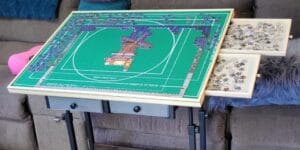
We also recommend puzzle boards with raised edges or sorting trays to minimize the need to reach across large surfaces. During testing, we found that breaking puzzles into smaller sections and working on manageable portions reduced hand fatigue.

Expert tip: Puzzles with 200-300 large pieces often provide the sweet spot—challenging enough to engage without requiring marathon sessions that exhaust arthritic hands.

For Seniors with Vision Impairment

Contrast becomes your primary consideration. Test puzzles under the lighting conditions where your loved one will be working, as lighting dramatically impacts visibility. We found that natural daylight or bright LED task lighting made the biggest difference.

Choose images with distinct color zones—autumn landscapes with oranges, reds, and yellows work better than summer beach scenes with similar sand and sky tones. High-contrast winter scenes consistently performed well in our tests with vision-impaired seniors.

Consider puzzles with 100-300 large pieces. Fewer pieces mean less squinting at subtle differences, while larger pieces are simply easier to see.

For Seniors with Cognitive Impairment or Dementia

Start conservatively with 35-100 large pieces and adjust based on response. We learned that familiar, positive images trigger better engagement than abstract or unfamiliar scenes. Nostalgic settings—classic cars, gardens, holiday scenes—generated the most enthusiasm during our testing.

The MindStart puzzles designed specifically for dementia include color-coded backing and sorting templates that provide helpful structure without diminishing the sense of accomplishment. We observed that this extra support helped individuals who might otherwise struggle to get started.

Important observation: Puzzling ability can fluctuate day-to-day with cognitive impairment. Having several difficulty levels available allows adjustment based on current capacity.

Common Questions We Encountered During Testing

Should I buy puzzles with more or fewer pieces as a gift?

When in doubt, start with fewer pieces. It’s far better to complete a puzzle that feels slightly easy than to abandon one that’s overwhelming. Based on feedback from our testers, around 300 large pieces provide a satisfying challenge for most seniors without significant impairments.

How do I know if a puzzle is too difficult?

Watch for signs of frustration—if your loved one stops making progress, seems stressed rather than relaxed, or abandons puzzles incomplete, the difficulty level likely needs adjustment. We saw this pattern repeatedly and found that dropping to a lower piece count or choosing images with clearer color zones solved the problem.

Are there puzzles specifically for people with arthritis?

Yes. Look for extra-large piece puzzles like Buffalo Games’ Big Piece collection or similar options. The larger pieces are significantly easier to grasp and manipulate. We also recommend puzzles with textured surfaces, which provide better grip than smooth, slippery finishes.

How often should puzzles be replaced?

Quality puzzles hold up to multiple assemblies. During testing, we completed several puzzles 3-4 times each and found minimal wear on premium brands. However, if pieces become fuzzy-edged, bent, or if the image wears off, replacement makes sense. Rotation between multiple puzzles extends their life.

Can puzzles really help with dementia symptoms?

While puzzles won’t cure or reverse dementia, research suggests they provide beneficial cognitive stimulation. More importantly, based on our observations and conversations with caregivers, puzzles offer a meaningful activity that reduces agitation and provides opportunities for connection with caregivers and family members. The emotional and social benefits may be as valuable as the cognitive ones.

What’s the best way to store completed puzzles?

We tested puzzle preservation methods and found that puzzle glue works well if you want to frame or display completed work. For puzzles you’ll assemble multiple times, simply breaking them down and storing them in their original boxes works fine. Keep boxes flat to prevent bending and store them away from moisture.

Making Puzzles a Social Activity

Some of our most positive testing experiences happened when puzzles became social activities. Working on a puzzle alongside family members creates natural opportunities for conversation without the pressure of direct eye contact or forced interaction.

We observed that multi-generational puzzle sessions—grandparents working alongside grandchildren—provided connection points that transcended age differences. The shared goal of completing the puzzle gave everyone a common purpose and topic for discussion.

Senior centers and retirement communities often organize puzzle groups, which provide both the cognitive benefits of puzzling and the social benefits of community involvement. If your loved one lives in a facility, inquire about puzzle groups or consider starting one.

×

BROWSE THIS ARTICLE

Scroll to Top
|  OnlyBestPick
Privacy Overview

This website uses cookies so that we can provide you with the best user experience possible. Cookie information is stored in your browser and performs functions such as recognising you when you return to our website and helping our team to understand which sections of the website you find most interesting and useful.