Advertiser Disclosure
We independently review everything we recommend. When you buy through our links, we may earn a commission.
The Best LEGO Speed Champions Sets

Let’s be honest—most of us will never own a Ferrari F40 or pilot a Formula 1 car around Monaco. But LEGO Speed Champions changed the game when it launched back in 2015, giving us a way to own these automotive legends without taking out a second mortgage. The theme was specifically designed with adult builders in mind, even though it doesn’t carry the official 18+ label.
What started as simple six-stud-wide models has evolved into incredibly detailed eight-stud-wide builds that capture the essence of real racing machines. The theme has partnered with virtually every major automotive brand—Ferrari, Porsche, McLaren, Lamborghini, Mercedes-AMG, Bugatti, Dodge, and more. In 2025, LEGO even went all-in on Formula 1, releasing sets for all 10 teams simultaneously in March.
These aren’t just toys. They’re engineering lessons disguised as entertainment. Every time you snap together a spoiler or figure out how those curved slopes create aerodynamic lines, you’re learning about automotive design. Plus, at around $25-50 for most sets, they’re infinitely more affordable than their real-world counterparts.
Ready to buy? Choose your favorite in LEGO Speed Champions — see it on Amazon
Everything We Recommend
✅ We recommend these products based on an intensive research process that’s designed to cut through the noise and find the top products in this space. Guided by experts, we spend hours looking into the factors that matter to bring you these selections.
⭐ 2.5 million+ people assisted in the last 30 days ⭐
🏆

Authentic F1 collector pack lets fans relive trackside excitement and bring the racing dream home.
Build, race, and display detailed LEGO F1 cars for immersive play and standout collection appeal.
A great model car gift offering a thrilling, family-friendly building and racing experience.
Includes a limited-edition poster showcasing all 10 iconic F1 teams for exclusive display value.
LEGO quality ensures consistent, compatible pieces; full set measures 21.1×10×5.71 inches.
💎

Build the Mercedes-AMG Petronas F1 car in this 267-piece set designed for ages 10+.
Includes a driver minifigure with team suit and winged helmet that fits inside the cockpit.
Features authentic 2024 details like sponsor decals and wider Pirelli-marked rear tires.
Enjoy family F1 play by racing this model alongside other LEGO F1 sets sold separately.
Completed car measures 2 cm tall, 20 cm long, and 8 cm wide for shelf-ready display.

Build two Mercedes-AMG G 63 and SL 63 cars in this 806-piece set for ages 10+.
Each car includes a Mercedes-clad driver minifigure for exciting racing role-play.
Models feature authentic details like grilles, wheels, interiors, and signature Mercedes livery.
After racing, both cars make eye-catching display pieces for shelves or bedside tables.
Each vehicle measures about 7 cm high, 18 cm long, and 8 cm wide for a realistic scale.

Build the iconic Ferrari F40 in this 318-piece set designed for kids ages 9 and up.
Includes a driver minifigure with helmet, wig, and wrench for realistic race play.
Features authentic F40 details like rear spoiler, air intakes, red seats, and gear shift.
After racing, the Ferrari model displays beautifully on a shelf or bedside table.
Measures about 4 cm high, 15 cm long, and 8 cm wide for a true-to-scale supercar look.

Build two Lamborghini supercars in this 607-piece set designed for racing fans ages 10+.
Features authentic details, including Y-shaped lights, air intakes, and aerodynamic wings, from real models.
Includes two driver minifigures with race outfits and helmets for high-speed role-play.
Kids can race their Revuelto and Huracán STO creations, then display them as standout decor.
Each Lamborghini model measures about 4 cm high, 16 cm long, and 8 cm wide for realistic scale.
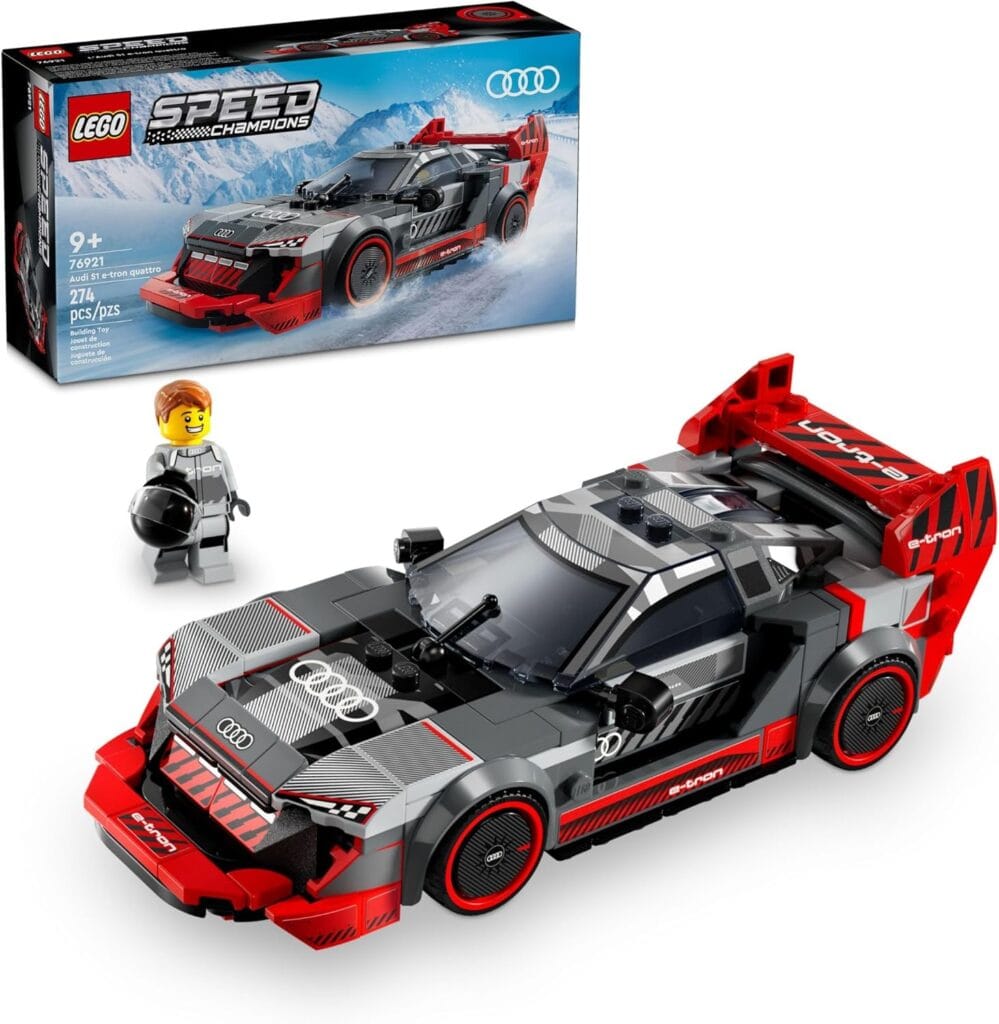
This LEGO Speed Champions Audi S1 e-tron quattro lets kids aged 9+ build, play, and display a detailed race car model.
Includes a removable roof and a driver minifigure with helmet, wig, and wrench for action play.
Features authentic Audi elements like a large rear wing, deep diffuser, front splitter, and detailed interior.
After racing, kids can showcase the Audi model as a striking display piece on a shelf or bedside table.
Offers a fun build-and-play experience and pairs perfectly with other Speed Champions sets for bigger racing adventures.

This LEGO Speed Champions Bugatti Centodieci lets kids aged 9+ build a 291-piece hypercar measuring 6 inches long.
Signature Bugatti details include 5 air intakes, a horseshoe grille, quad tailpipes, and an overhanging rear wing.
Kids can race the Centodieci with its included driver minifigure, then display the finished model as striking room decor.
A great gift idea for children who love sports cars, building toys, and detailed model car kits.
The LEGO Builder app offers helpful 3D tools to guide young builders through each construction step smoothly.
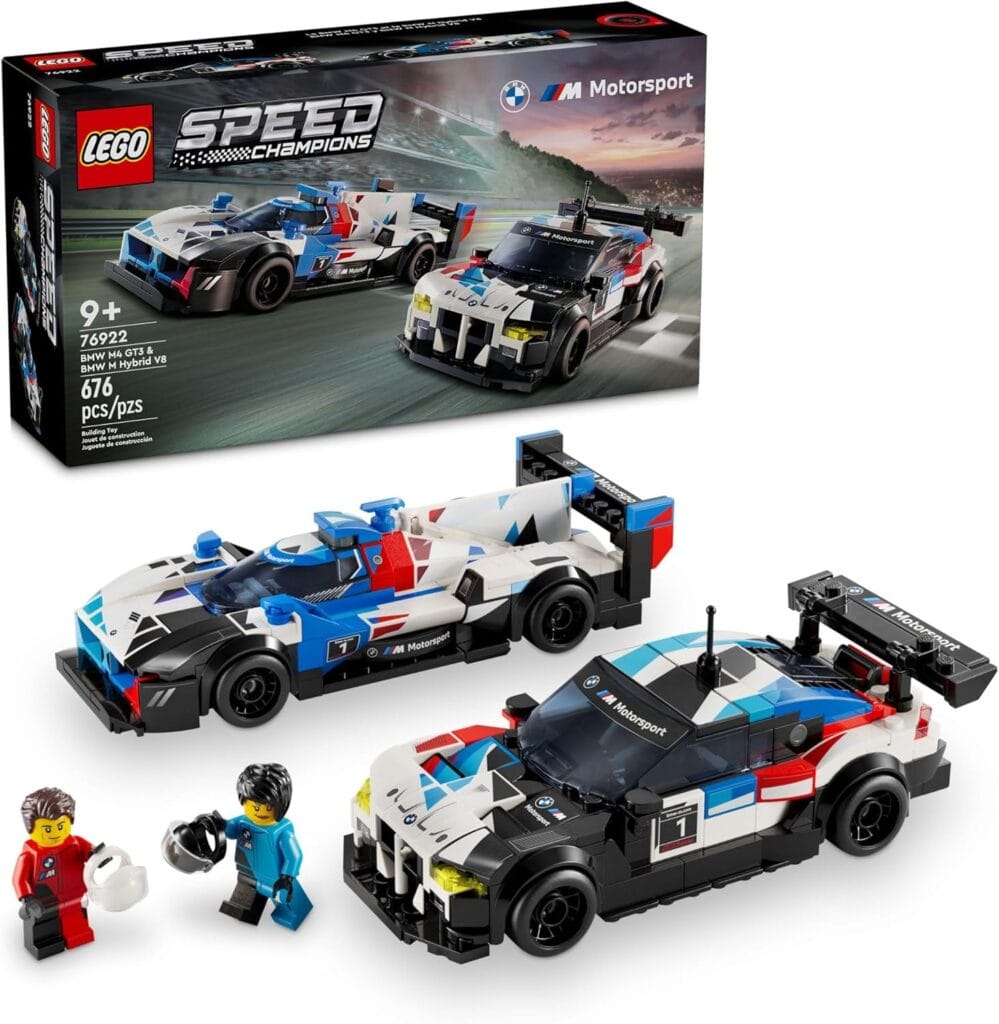
This LEGO Speed Champions set includes BMW M4 GT3 and BMW M Hybrid V8 race cars for builders aged 9+.
Each BMW model includes a driver minifigure with a helmet, wig, and wrench for realistic racing play.
Both cars feature authentic BMW M Motorsport details like diffusers, rear wings, tailpipes, and full livery.
After racing, kids can display the completed BMW models proudly on a shelf or bedside table.
This buildable BMW set offers a fun play-and-display experience and is a great gift for young builders and collectors.
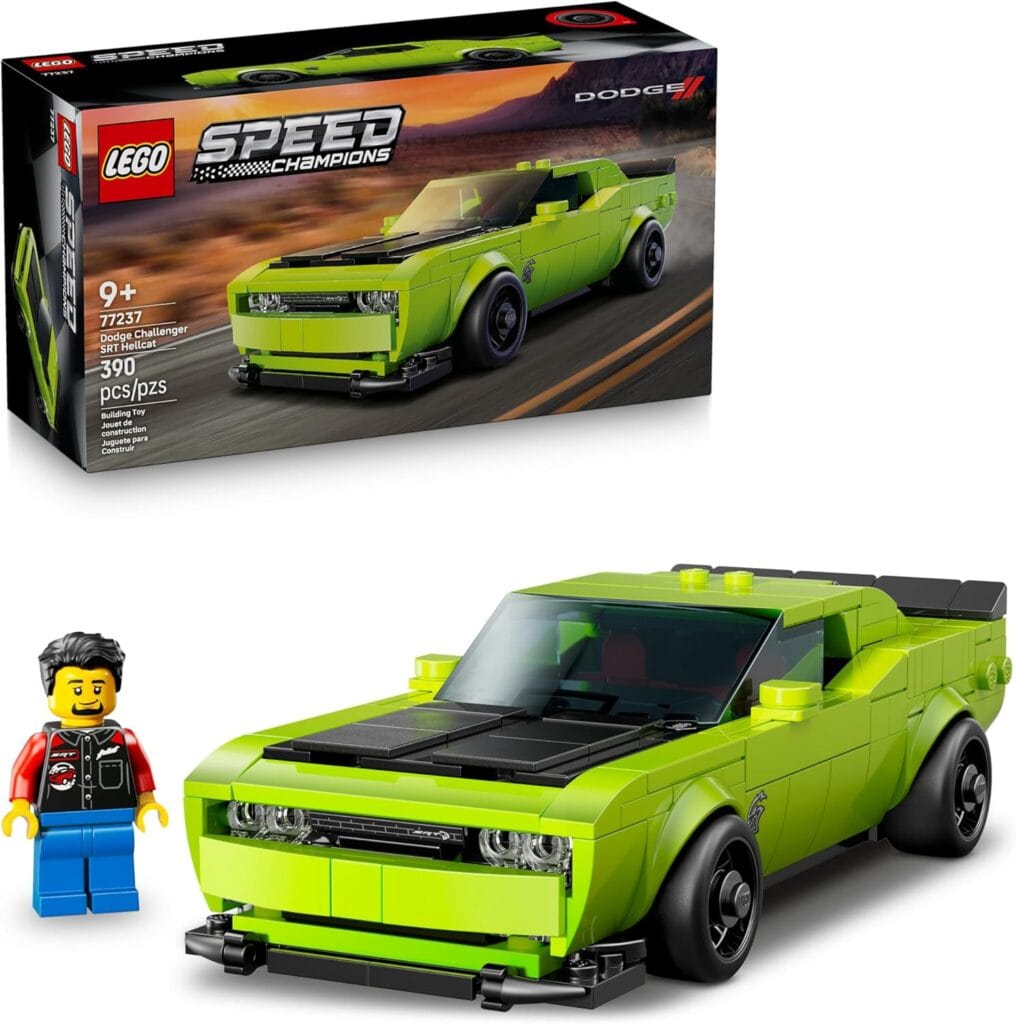
Build the legendary Dodge Challenger SRT Hellcat, a powerful 390-piece muscle car for fans ages 9+.
Features authentic Hellcat details including a long hood, hood scoop, bold grille, and dual tailpipes.
Includes a Dodge racing driver minifigure that kids can seat for thrilling high-speed race play.
Finished model measures 6.5×3×1.5 inches and displays beautifully as standout room decor.
A fun car-building gift that pairs with the LEGO Builder app for interactive 3D construction guidance.
How We Tested These Sets
Our assessment team doesn’t just build these sets once and call it a day. We spent months evaluating each model based on several key factors. Build quality came first—how satisfying was the construction process? Did the techniques feel innovative or repetitive? We also examined display appeal because these sets end up on shelves where they need to look stunning from every angle.
Authenticity mattered too. We compared each model against photos of the real vehicles, checking whether LEGO captured the essential character of each car. Part quality played a role, especially given how Speed Champions sets rely heavily on stickers (a necessary evil for capturing sponsor logos and racing details). Finally, we considered value—does the finished product justify the price tag?
We built these sets in various conditions, from quiet weekend afternoons to hurried weeknight sessions. Some we tackled solo, others with family members ranging from teenagers to adults. This range of experiences helped us understand how these sets perform for different builders in real-world scenarios.
The Eight-Stud Revolution
The shift from six-stud-wide to eight-stud-wide models in 2020 transformed Speed Champions completely. Those extra two studs might not sound like much, but they allowed LEGO designers to include details that were previously impossible. The theme has been remaking classic six-wide cars with the improved scale, and the difference is remarkable.
Eight-stud-wide models feature more authentic proportions, especially around the windshield and side profiles. The cockpits feel more spacious, and the overall stance captures the aggressive, low-slung look of real supercars and race cars. The building techniques have gotten more sophisticated, too, with clever use of curved slopes, inverted elements, and SNOT (Studs Not On Top) techniques that create smooth, realistic bodywork.
Top LEGO Speed Champions Sets Our Picks
Now let’s dig into the specific sets we tested. We chose these based on availability, variety, and how well they represent the current state of LEGO Speed Champions. Each one offers something unique, whether that’s innovative building techniques, stunning visual appeal, or simply being really fun to put together.
Walking into this build felt like Christmas morning multiplied by ten. The Ultimate Formula 1 Collector’s Pack isn’t just a set—it’s an entire grid’s worth of racing heritage packed into one massive box. When we first saw it available exclusively through Amazon, we knew this would be something special for serious collectors.
What makes this pack extraordinary is the completeness it offers. Instead of agonizing over which F1 team to choose, you get the whole paddock. We spent an entire weekend building these cars back-to-back, and the experience taught us something valuable: each team’s car has its own personality. The Red Bull, with its aggressive blue-and-red livery, builds differently than the sleek black Mercedes. The bright pink BWT Alpine creates visual pop that the more subdued Sauber doesn’t attempt.
Building all ten cars in sequence revealed patterns we never would have noticed otherwise. LEGO used similar chassis construction across the board, but then diverged in how they handled the bodywork. Some teams got blockier side pods built from layered tiles. Others used larger curved elements for smoother profiles. The Ferrari, for instance, employs surprisingly complex internal structuring to achieve its distinctive shape, while the Williams takes a more straightforward approach that newer builders would appreciate.
The sticker marathon challenged our patience. Across ten cars, you’re looking at 300+ stickers total. We developed a system: build all chassis first, then apply all stickers in one focused session, then complete final assembly. This assembly-line approach kept us from sticker fatigue and ensured consistency across all models.
Display options with this pack are virtually endless. We arranged ours in a starting grid formation, two rows of five cars recreating that pre-race tension. Other collectors we’ve talked to prefer team garages—all ten cars lined up like they’re waiting for race day servicing. The pack includes all ten driver minifigures, too, letting you stage pit crew scenes or podium celebrations.
For anyone serious about Formula 1 or Speed Champions collecting, this pack represents exceptional value. Buying all ten cars individually would cost significantly more, and you’d spend weeks hunting down each release. Having them arrive together in one shipment eliminated that anxiety. This is the set that transforms a casual interest into a full-blown display centerpiece.
The Mercedes-AMG F1 W15 taught us that sometimes understated elegance beats flashy colors. After building the more visually aggressive Red Bulls and Ferraris, returning to Mercedes’ minimalist black-and-turquoise livery felt refreshing. This set captures the engineering philosophy that’s defined Mercedes’ dominance in recent F1 seasons: clinical precision wrapped in sophisticated aesthetics.
The build quality here impressed us immediately. Mercedes’ design team clearly collaborated closely with LEGO because every proportion feels correct. The long wheelbase, the aggressive front wing geometry, the way the halo structure integrates into the cockpit—it all comes together with remarkable authenticity. We compared photos of the real W15 side-by-side with the finished model, and LEGO nailed the essential character.
What surprised us was how this particular build taught us about aerodynamics. The front wing assembly uses multiple small elements positioned at specific angles, showing how real F1 teams manipulate airflow. The bargeboards and side pod design demonstrate how teams channel air around the vehicle. Building it became an educational experience about why Formula 1 cars look so complex.
The color scheme presents both challenges and advantages. Black shows every construction detail, which means your building technique needs to be clean. Loose connections or misaligned pieces become immediately obvious. But when done right, that glossy black body with turquoise accents looks absolutely premium. The Petronas sponsorship stickers add just enough visual interest without overwhelming the sleek profile.
We displayed this alongside other F1 cars, and it consistently drew comments. Something about Mercedes’ reputation for excellence makes this model feel special. It sits on our shelf like a tiny engineering marvel, reminding us that Formula 1 represents the absolute pinnacle of automotive technology.
This double pack blindsided us with its versatility. We expected just another luxury car set, but what we got was a masterclass in automotive contrast. The G 63 and SL 63 represent two completely different philosophies of high-performance driving, and building them back-to-back highlighted exactly why Mercedes’ lineup is so compelling.
The G 63 build started innocuously enough—standard SUV construction with familiar techniques. But then LEGO pulled clever tricks to capture the G-Wagon’s brutalist aesthetic. The squared-off bodywork uses surprisingly sophisticated internal structures to maintain that aggressive, military-derived stance. The front grille, instantly recognizable on real G-Wagens, translates perfectly into studs and tiles. Building the spare tire mount on the rear door brought unexpected satisfaction—such a small detail, but it’s essential to the G 63’s character.
Transitioning to the SL 63 felt like switching genres entirely. Where the G 63 is all about commanding presence and utility, the SL 63 emphasizes sleek performance and refined luxury. The build here focuses on curves and flowing lines. LEGO used every trick in their aerodynamic playbook: curved slopes, inverted elements, smooth tile work that makes your fingers glide across the finished model. The retractable hardtop element (even if simplified in LEGO form) acknowledges what makes the SL special—it’s a grand tourer that transforms.
Having both vehicles together created interesting display dynamics. Some days we position them as a luxury duo, the kind of garage combo that signals “I’ve made it.” Other times we stage them in different environments—the G 63 looking ready for adventure, the SL 63 positioned like it’s about to carve through mountain roads. The contrast keeps this set visually interesting long after the build is complete.
The minifigures included aren’t specifically named characters, but that works in your favor. They become whoever you want them to be. We’ve cast them as everything from successful executives to motorsport enthusiasts enjoying their weekend rides. This flexibility adds play value that more specific sets sometimes lack.
At 808 pieces for under $50, this pack delivers exceptional value. You’re essentially getting two complete Speed Champions experiences for barely more than the cost of one. For anyone who appreciates luxury German engineering or wants variety in their Speed Champions collection, this set checks every box.
The Ferrari F40 hit us right in the nostalgia. This wasn’t just building a LEGO set—it was recreating an automotive icon from the late 1980s that defined what supercars could be. When Ferrari created the F40 as the last car personally approved by Enzo Ferrari himself, they made something raw, purposeful, and utterly focused on performance. LEGO’s version captures that spirit remarkably well.
We immediately noticed this is a remake of an earlier six-stud-wide version, and the improvement is staggering. Moving to eight studs wide gave designers room to capture details that were previously impossible. The F40’s distinctive wedge shape, those massive rear wheel arches, the giant rear wing—they all translate better with the extra width.
The build process taught us about compromises and priorities. LEGO couldn’t replicate every aspect of the F40’s design perfectly. The side windows sit slightly higher than ideal due to windscreen element choices. The front headlights use elements that approximate rather than exactly match the real car’s pop-up units. But here’s what matters: step back three feet, and it’s unmistakably an F40. The proportions, the stance, that aggressive Rosso Corsa red—it all works.
That red deserves special mention. Ferrari red is arguably the most famous automotive color in the world, and LEGO’s bright red captures it beautifully. The finished model practically glows on your shelf. We added subtle lighting from below, and the red seemed to intensify, making the F40 impossible to ignore.
Stickers presented the usual challenge, but the F40’s racing-inspired graphics made application more rewarding. Every “F40” badge, every Ferrari prancing horse, every aerodynamic stripe contributes to authenticity. We took our time, using tweezers and careful alignment, and the result justified the effort. This isn’t a car that should look sloppy.
What really sold us was how this set serves multiple audiences. Older collectors remember when the F40 was the ultimate poster car, that unattainable dream machine that made Ferrari’s flagship. Younger builders discover an important piece of automotive history that influenced decades of supercar design. The F40 bridged generations of car culture, and this LEGO version does the same.
We displayed ours alongside modern Ferraris, and the contrast is striking. The F40’s analog, mechanical brutality, stands apart from today’s computer-refined hypercars. It’s a reminder that sometimes less technology and more raw performance create something timeless.
This double pack ambushed us with the realization that Lamborghini might be the most inherently LEGO-friendly supercar brand. Those sharp angles, the aggressive styling, the unapologetic drama—it all translates brilliantly into brick form. Getting two Lamborghinis in one set felt like LEGO understood exactly what enthusiasts wanted.
The Revuelto came first in our build order, and immediately, we understood why Lamborghini’s latest flagship generates so much controversy. It’s the first hybrid supercar from Sant’Agata, representing a massive shift for a brand built on screaming naturally-aspirated V12s. LEGO captured the design language perfectly—those hexagonal elements that define modern Lamborghini styling, the Y-shaped lighting signatures, the way the body seems sculpted by wind tunnel testing and aggressive imagination in equal measure.
Building the Revuelto required some of Speed Champions’ most advanced techniques. The front splitter uses brackets positioned at angles we hadn’t seen in previous sets. The side air intakes demand careful part placement to maintain structural integrity while achieving that open, functional appearance. The rear diffuser challenged us with its complexity—multiple small pieces creating intricate geometry that actually resembles real aerodynamic elements.
Switching to the Huracán STO (Super Trofeo Omologata, which basically means “race car you can drive on streets”) provided contrast while maintaining the Lamborghini flavor. The STO is smaller, more focused, and somehow even more aggressive than the Revuelto. LEGO gave it a completely different visual presence despite using similar building techniques. The massive rear wing, the stripped-down racing aesthetic, the way every element screams “track day”—it’s viscerally different from the Revuelto’s more refined approach.
The color options matter here. Both cars come in distinctive liveries that enhance their personalities. We particularly loved how the Huracán STO’s graphics acknowledge its racing heritage—you can almost imagine it lapping circuits with those race number decals and sponsor placements.
What impressed us most was the value proposition. Two complete Lamborghini builds for one price point means you’re essentially getting supercar variety at a bargain. Some collectors displayed theirs as a Lamborghini showroom scene. Others staged them like they’re waiting at a track day event. We’ve repositioned ours countless times because each arrangement tells a different story about Lamborghini’s range.
The minifigures leaned into the “wealthy car enthusiast” aesthetic, which fits perfectly with the Lamborghini brand image. They’re dressed casually but expensively—exactly how you’d expect someone capable of owning these cars to look on a weekend drive.
For anyone who appreciates Italian supercar drama or wants models that make bold visual statements, this pack delivers completely. These aren’t subtle cars, and LEGO didn’t try to make them subtle. They’re automotive theater captured in brick form.
The Audi S1 e-tron Quattro surprised us by being one of the most satisfying builds in the entire Speed Champions lineup despite its relative obscurity. While Ferraris and Lamborghinis grab headlines, Audi’s rallycross machines represent a different kind of performance excellence—one focused on brutal acceleration, precise handling, and conquering mixed surfaces at absurd speeds.
This set captures rallycross aesthetics perfectly. The wide-body stance, the massive wheel arches accommodating chunky rally tires, the giant rear wing generating downforce on dirt and tarmac—it all screams purpose-built competition machine. Unlike road-going supercars trying to be civilized, the S1 e-tron makes no compromises. It exists only to win races.
The build introduced us to techniques that prioritize function over luxury. Rally cars need robust construction because they’re getting thrashed through corners, jumping, and generally being abused in ways that would destroy street cars. LEGO reflected this with solid internal structures and clever use of reinforcing elements. The finished model feels substantial in ways that sleeker supercars sometimes don’t.
We particularly appreciated the livery work. Rally and rallycross cars wear sponsor decals as badges of honour, and the S1 e-tron doesn’t disappoint. The sticker sheet includes authentic Audi Sport graphics, sponsor logos, and racing numbers that transform the model from a generic race car into something that looks like it just rolled out of an actual paddock. Applying these stickers required our usual patience, but seeing the finished result made the effort worthwhile.
The electric drivetrain aspect adds modern relevance. While many people associate electric vehicles with silent, boring transportation, the S1 e-tron destroys that stereotype. This car could hit 60 mph in around two seconds—faster than most supercars—while producing monstrous torque that allowed it to dominate rallycross competition. Building it reminded us that electric performance can be just as exciting as traditional combustion engines.
Display options with this set lean toward action scenes. We positioned ours at aggressive angles, suggesting mid-corner slides or launching off a starting line. Some collectors pair it with other rally-inspired builds to create full motorsport dioramas. The compact size means it doesn’t dominate a shelf but still commands attention through sheer aggression.
For enthusiasts who appreciate motorsport beyond traditional circuit racing, or anyone interested in electric performance, the S1 e-tron Quattro offers something genuinely different. It’s not the prettiest set in Speed Champions, but it might be one of the most characterful.
The Bugatti Centodieci stopped us cold the first time we saw it. Not because of the LEGO version—because of what the real car represents. Only ten Centodieci exist in the world, each priced around $9 million. Most people will never even see one in person, let alone own one. LEGO democratized access to this incredible machine in a way nothing else could.
Building the Centodieci felt like handling something precious. Bugatti created this as a tribute to the EB110, their supercar from the 1990s, and LEGO captured both the heritage and the modern reinterpretation. The front end uses clever element choices to recreate the distinctive horseshoe grille that’s defined every Bugatti for decades. The side profile captures that long, low stance that makes hypercars look fast while standing still.
The technical challenges here pushed our building skills. Bugatti’s design team creates shapes that conventional manufacturing struggles with—they’re more sculpture than simple engineering. LEGO had to interpret those organic curves using their geometric brick system, and the compromises they made show remarkable thoughtfulness. Certain angles use inverted slopes in ways we’d never seen before. The rear section employs fascinating combinations of elements to suggest the Centodieci’s complex aerodynamic work.
White as the primary color choice works perfectly. On the real Centodieci, white emphasizes the sculptural quality of the bodywork—every curve, every line becomes more prominent. The LEGO version benefits identically. The white elements show off the building techniques while creating a finished product that looks remarkably premium. Add the contrasting black accents, and you get a visual balance that’s quietly stunning.
We should mention the exclusivity factor. Building one of only ten real cars (even in LEGO form) carries psychological weight. This isn’t just another supercar—it’s genuinely rare, even in the real world. That rarity transfers to the LEGO version, making it feel special in ways that more common cars don’t quite achieve.
The Centodieci sits on our shelf like a museum piece. Other Speed Champions sets are impressive, but this one makes visitors ask questions. What is it? Why does it look so unique? How much does the real car cost? (The answer to that last question always generates shocked reactions.) It becomes a conversation starter that leads to discussions about automotive excellence, engineering limits, and why some people spend millions on cars.
For collectors who want something truly distinctive, or anyone fascinated by the absolute pinnacle of automotive achievement, the Centodieci delivers. It’s not the easiest build in Speed Champions, but it might be the most rewarding when you’re admiring the finished product.
This BMW double pack delivered unexpected depth about modern motorsport evolution. On one side, the M4 GT3 represents traditional GT racing—cars that look like their road-going counterparts but with extensive modifications for competition. On the other hand, the M Hybrid V8 pushes into endurance racing’s cutting-edge hybrid future. Together, they tell a story about where racing has been and where it’s heading.
The M4 GT3 build showcased BMW’s commitment to aggressive styling that still respects the M4 road car’s DNA. Those flared fenders, that massive rear wing, the lowered stance—they all transform the street car into a weapon specifically designed for circuit racing. LEGO captured the GT3’s character through careful attention to proportions. The wide body isn’t just for show; it accommodates the increased track width that helps GT cars corner at absurd speeds.
Building the livery became particularly engaging. GT3 cars run in various racing series worldwide, and teams create distinctive paint schemes that help spectators identify their favorites. Our set came with BMW M Motorsport graphics that looked professional and purposeful. The blue-and-red color scheme against white bodywork creates instant recognition—this is unmistakably a BMW race car.
Switching to the M Hybrid V8 revealed LEGO’s ability to handle extremely complex aerodynamics. Modern endurance prototypes are engineering showcases, with every surface optimized for speed, efficiency, and downforce. The Hybrid V8’s shape looks alien compared to traditional race cars, and LEGO didn’t shy away from that weirdness. The low nose, the covered front wheels, the giant rear diffuser—they all push boundaries in ways that challenge conventional building techniques.
What fascinated us was how the hybrid technology manifests visually. Unlike traditional race cars, where the engine is just… there, invisible under bodywork, the M Hybrid V8’s design suggests its complex powertrain. You can see where electric motors live, where the combustion engine sits, how everything integrates into a package that’s supposed to race for 24 hours straight at Le Mans.
Having both cars together creates educational opportunities. You can compare how different racing categories approach the same challenge: going fast. GT3 stays closer to production cars, accepting some compromises for maintaining that connection. The Hybrid V8 abandons all pretense of being street-legal, pursuing pure speed through radical engineering. Building them back-to-back made these differences tangible rather than theoretical.
Display versatility impressed us, too. Stage them as BMW’s racing program—two different cars, same manufacturer, unified by that iconic blue-and-white roundel. Or separate them into different areas representing distinct racing categories. We’ve even positioned them like they’re in a tech museum, with the M4 GT3 showing GT racing’s present and the Hybrid V8 suggesting motorsport’s future.
For BMW enthusiasts or anyone interested in real-world racing technology, this double pack offers exceptional educational value alongside pure building enjoyment. These aren’t fantasy designs—they’re actual race cars you can watch compete on weekends. That connection to real motorsport makes the builds feel more meaningful.
The Dodge Challenger SRT Hellcat grabbed us immediately with pure, unfiltered American attitude. After building sophisticated European supercars and technical racing machines, returning to old-school muscle car philosophy felt refreshing. The Hellcat doesn’t apologize for anything—it’s loud, powerful, and proudly excessive in ways that European manufacturers would consider poor taste. We loved it for exactly those reasons.
Building this set reminded us why American muscle cars maintain such devoted followings. The Hellcat’s proportions emphasize presence over grace. That long hood suggests massive engine displacement (707 horsepower from a supercharged V8 in the real car). The wide stance indicates straight-line performance prioritized over delicate handling finesse. The aggressive front grille looks like it’s about to devour slower cars. LEGO captured all of this through bold element choices and zero subtlety.
The lime green color proved controversial in our testing group, but won us over completely. Traditional muscle car colors—black, orange, red—would have worked fine. But lime green makes this Hellcat pop on shelves in ways that conservative colors never could. It’s the automotive equivalent of a neon sign announcing “LOOK AT ME.” Some might call it garish. We call it perfect for the Hellcat’s personality.
At 390 pieces, this set offers more complexity than typical single-car Speed Champions releases. LEGO used those extra pieces wisely, building up the muscular fenders, creating the distinctive side stripes, and detailing the front and rear ends until they matched the Hellcat’s intimidating presence. The hood uses textured elements suggesting the massive air scoop that feeds the supercharger on real Hellcats—a small detail that car enthusiasts will immediately recognize and appreciate.
The stickers deserve special mention because they make or break the muscle car aesthetic. Dodge offers Hellcats with various stripe packages and graphics, and LEGO chose options that emphasize the car’s performance credentials. That “SRT HELLCAT” badging across the rear splitter? Essential. The subtle hood graphics? They hint at the beast lurking underneath. Applied correctly, these stickers transform the model from a generic muscle car into specifically a Challenger Hellcat.
We displayed ours in aggressive poses—front wheels turned like it’s about to launch from a stoplight, positioned at angles suggesting barely-controlled power. Muscle cars aren’t meant to sit primly on shelves; they demand presentation that matches their personalities. Some collectors staged drag racing scenes, positioning the Hellcat like it’s in the staging lanes waiting to unleash 707 horsepower down a quarter-mile.
The Hellcat’s cultural significance adds depth beyond just being another car. It represents the last gasp of traditional American muscle before electrification changes everything. Dodge recently announced the Hellcat’s discontinuation, making this LEGO version a tribute to an era ending. Building it felt poignant—celebrating something that’s simultaneously celebrated and mourned by enthusiasts.
For anyone who appreciates American automotive culture, or just wants something that makes no pretense of being refined, the Challenger SRT Hellcat delivers completely. It’s not subtle, it’s not sophisticated, and it’s absolutely perfect for what it is. In a lineup dominated by European exotic cars, this American muscle car provides essential variety and character.
The Formula 1 Explosion of 2026
In March 2025, LEGO made history by releasing 10 Formula 1 sets simultaneously—one for each team from the 2024 F1 season. Walking into a LEGO store and seeing an entire wall of F1 cars felt surreal, like witnessing the collision of two passionate fanbases.
Each F1 set features the authentic livery, sponsor logos, and unique design elements of its respective team. They all share similar dimensions and core building techniques (smooth front chassis curves, new wheel cover elements, sleek underbodies), but each build offers its own quirks and challenges. The sticker count varies significantly—some sets include 40+ stickers while others keep it around 24.
What impressed us most was how LEGO incorporated female minifigure drivers in five of the ten F1 sets. It’s a small but meaningful touch that acknowledges how the sport could be more inclusive, even if it’s just in brick form.
Why Stickers Are Here to Stay
Speed Champions sets are notorious for their sticker-heavy approach, and we understand the frustration. Applying 30-40 stickers perfectly requires patience and precision. But here’s the thing: authentic racing liveries demand it. Real race cars are covered in sponsor logos, team colors, and racing stripes. Printed elements would make these sets prohibitively expensive.
Our team developed a system that made sticker application much easier. First, we organized all the stickers before starting the build. We used tweezers for precise placement and worked in good lighting. Taking breaks between sticker-heavy sections prevented fatigue-related mistakes. The payoff? A finished model that looks spectacular on display.
Building Techniques That Impressed Us
Modern Speed Champions sets employ some genuinely clever construction methods. The use of inverted tiles and slopes creates incredibly smooth surfaces. Bracket pieces position elements at unexpected angles, capturing the aggressive rake of a supercar or the aero complexity of an F1 car. The new wedge slope elements introduced in the F1 sets opened up fresh possibilities for builders.
We particularly appreciated how different sets experimented with cockpit construction. Some used transparent elements to simulate canopies, while others relied on carefully positioned slopes. The Ferrari F40, for instance, uses specific windscreen elements that create its distinctive profile, even if they require some compromise around window height.
Displaying Your Speed Champions Collection
After spending months with these sets, we developed strong opinions about display strategies. Height matters tremendously. Position Speed Champions sets at eye level so you catch all those carefully applied stickers and building details. Too high and they become background noise. Too low, and nobody appreciates the craftsmanship.
Lighting transforms these models from nice to spectacular. We experimented with various solutions and found that warm LED strip lights mounted on shelves create the most professional appearance. Cool white LEDs wash out the colors, while warm light enhances the reds, blues, and metallic elements that define Speed Champions’ aesthetics.
Grouping strategies depend on your collection size and personal preferences. Small collections (five or fewer sets) work well displayed together, creating a mini automotive museum.
Larger collections benefit from themed arrangements. Consider organizing by manufacturer, racing category, or chronologically by release date. We rotated our display every month, bringing different sets forward to maintain visual interest.
Mixing Speed Champions with Other LEGO Themes
One unexpected joy we discovered was how well Speed Champions integrates with other LEGO themes. The minifigure drivers can operate vehicles from the Creator Expert line. Speed Champions cars fit perfectly into LEGO City street scenes, adding a touch of high-performance glamor to otherwise ordinary urban landscapes.
The modular building approach means you can swap parts between sets. Want to create a custom livery? Mix and match body panels from different cars. The consistent eight-stud-wide scale ensures everything plays nicely together. We built entire pit lane dioramas using parts from multiple sets, and the results looked like professional racing photography recreated in LEGO form.
Building Tips We Learned the Hard Way
Creating this guide required building dozens of Speed Champions sets, and we accumulated hard-won wisdom along the way. First, lighting matters more than you’d expect. Natural daylight makes identifying part colors significantly easier, especially when you’re working with subtle variations like dark gray versus black. We positioned our building station near a window and saw immediate improvement in construction speed and accuracy.
Sticker application benefits enormously from proper tools. Invest in precision tweezers—the kind designed for electronic work, not first aid. They give you exact control when positioning decals. We also discovered that slightly warming stickers (holding them near a lamp for a few seconds, not touching the bulb) makes them more pliable and easier to apply smoothly.
Organization prevents frustration. Speed Champions sets include hundreds of small pieces, and losing a specific bracket or modified tile mid-build stops progress cold. We used small containers to sort pieces by color before starting construction. The few minutes of organization time saved hours of hunting through a pile of parts.
Take breaks during sticker-heavy sections. Your eyes fatigue, your hands get less precise, and mistakes multiply. After applying ten stickers, stand up, walk around, and come back fresh. The improved accuracy justifies the extra time.
The Educational Value Nobody Talks About
These sets teach valuable lessons beyond just following instructions. Color theory becomes apparent when you see how Bugatti’s white contrasts with Dodge’s lime green. Engineering principles emerge as you discover why certain structural choices were made. Design philosophy reveals itself when comparing European refinement against American muscle.
Fine motor skills get serious workouts during these builds. Positioning small elements precisely, applying stickers without air bubbles, and maintaining a clean construction technique—these activities strengthen hand-eye coordination in ways that purely digital entertainment never could.
Problem-solving skills develop naturally. Occasionally, pieces don’t fit quite right on the first assembly. Rather than forcing connections (which damages elements), you learn to step back, identify the issue, and find correct solutions. This methodical approach to mechanical problems transfers to countless real-world situations.
Why Speed Champions Matters
At its core, Speed Champions democratizes automotive excellence. Most of us will never afford a Ferrari F40, never drive a Formula 1 car, never experience what 700+ horsepower feels like under our right foot. But we can build these machines brick by brick, understanding their designs, appreciating their engineering, and displaying them proudly.
These sets bridge generations. Parents who grew up with LEGO now build Speed Champions with their children, sharing automotive passion across age gaps. Grandparents who remember when cars were mechanical rather than digital find common ground with grandkids through these builds.
The theme celebrates human achievement. Every set represents thousands of hours of engineering, design, and testing by people pushing performance boundaries. Building them is participating in that celebration, acknowledging the people who create these incredible machines.
Final Thoughts from Our Testing Team
After hundreds of hours building, displaying, and analyzing these sets, one truth became clear: Speed Champions represents LEGO at its most focused and effective. The theme knows exactly what it wants to be—affordable, displayable automotive excellence—and executes that vision with remarkable consistency.
Every set we built taught us something. The Formula 1 cars revealed aerodynamic complexity we’d never considered. The supercars showed us how design language translates across brands. The race cars demonstrated how function dictates form in competitive environments. These weren’t just entertainment—they were education disguised as fun.
The value proposition keeps us coming back. Where else can you own a Bugatti Centodieci for under $25? How else do you experience building a Formula 1 car without engineering degrees and millions in funding? Speed Champions makes the automotive impossible accessible.
Looking across our collection now, every model tells a story. The Ferrari F40 reminds us why analog experiences still matter in our digital age. The Mercedes-AMG F1 W15 showcases cutting-edge technology’s elegant beauty. The Dodge Challenger Hellcat celebrates American excess without apology. Together, they form a narrative about humanity’s obsession with going faster, looking cooler, and pushing boundaries.
Whether you’re building your first set or your fiftieth, Speed Champions delivers consistent quality. The building experience engages without being frustrating. The finished products display beautifully. The price points remain reasonable. It’s LEGO understanding its audience and serving them exactly what they want.
So pick a set that speaks to you. Clear some shelf space. Set aside an afternoon. Build something that celebrates automotive passion. You won’t regret it.