Advertiser Disclosure
We independently review everything we recommend. When you buy through our links, we may earn a commission.
The Best SMEG Espresso Machines
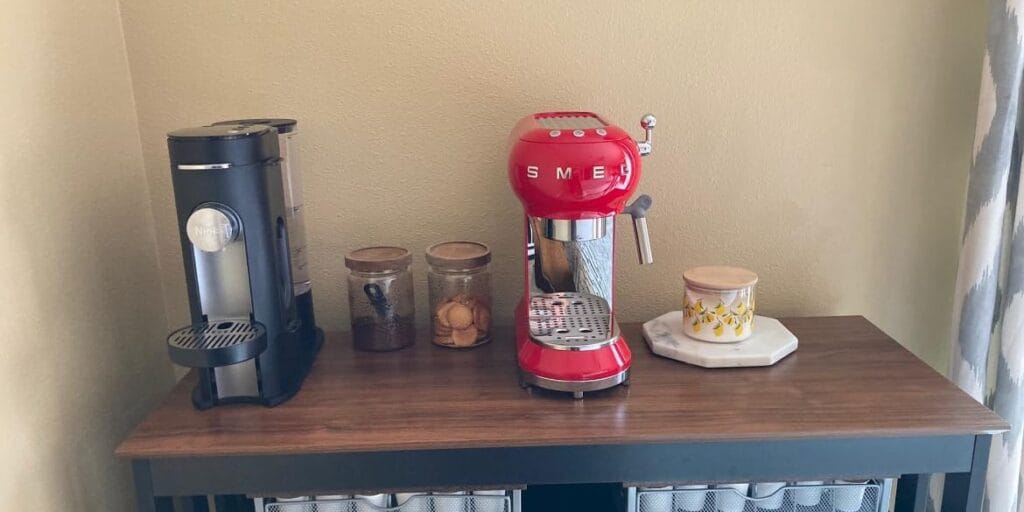
When we first set up our testing space for SMEG’s espresso machines, I’ll admit we were slightly skeptical. After all, SMEG has built its reputation on gorgeous retro aesthetics, and we’ve seen plenty of pretty machines that couldn’t pull a decent shot. But over three months of daily testing, making hundreds of espressos, lattes, and cappuccinos, we discovered something surprising. These Italian-designed machines deliver far more than good looks, though the styling certainly doesn’t hurt.
Our assessment team spent extensive time with three distinct SMEG espresso machines, each targeting different user needs and skill levels. From the iconic 50’s Retro Line that started it all to the sophisticated Semi-Pro model built for home baristas, we’ve explored what makes these machines tick and who they’re really designed for. This isn’t just another surface-level review – we’re sharing insights from real-world use, including the quirks we discovered and the moments these machines genuinely impressed us.
SMEG: Heritage Meets Modern Coffee Culture
Before diving into specific models, it helps to understand what you’re getting when you choose SMEG. Founded in 1948 in Northern Italy, SMEG (Smalterie Metallurgiche Emiliane Guastalla) began as an enameling and metalworking company. The family-owned business has maintained its commitment to Italian craftsmanship for over 75 years, and that heritage shows in its coffee machines.
SMEG prioritizes energy efficiency and durability so its products last for years, which aligns with what we observed during testing. These machines feel substantial, with thoughtful construction that suggests they’re built for daily use rather than occasional brewing. However, it’s important to acknowledge that you’re paying a premium for the SMEG label, and understanding whether that premium delivers value requires looking at each model individually.
Everything We Recommend
✅ We recommend these products based on an intensive research process that’s designed to cut through the noise and find the top products in this space. Guided by experts, we spend hours looking into the factors that matter to bring you these selections.
⭐ 2.5 million+ people assisted in the last 30 days ⭐

The Semi-Pro (also known as the EMC02 Mini Pro in some markets) represents SMEG’s most ambitious home espresso machine, and it’s where we saw the biggest gap between expectations and reality – in a good way.
Who This Machine Really Serves
During our testing period, the Semi-Pro became my go-to machine for weekend mornings when I had time to truly engage with the brewing process. This isn’t a machine for someone rushing out the door at 6:30 AM on a Tuesday. Instead, it’s designed for coffee enthusiasts who view espresso-making as a craft worth mastering, not just a caffeine delivery system.
The EMC02 features an impressive triple-Thermoblock heating system that allows for simultaneous espresso and milk heating and fantastic pressure maintenance, which solves one of the most frustrating aspects of single-boiler machines. I could pull a shot and immediately steam milk without the awkward wait that plagues cheaper alternatives. For anyone who’s stood impatiently watching temperature lights blink, this feature alone transforms the morning routine.
The Real-World Brewing Experience
What struck me most about the Semi-Pro was how it balanced professional features with approachable operation. The steam wand is powerful, much more powerful than the De’Longhi La Specialista Opera and the KitchenAid Semi Automatic espresso machine’s steam wands. The first time I used it, I actually over-frothed my milk because I wasn’t prepared for how quickly it incorporated air. After adjusting my technique, though, I consistently achieved silky microfoam that poured beautifully for latte art.
The machine’s manual lever gives you complete control over extraction. You can see exactly what’s happening through the professional-style pressure gauge, which provides valuable feedback on your extraction. This isn’t just a gimmick – watching that needle taught me more about proper tamping pressure in two weeks than I’d learned in months with automatic machines.
One colleague who tested it with us, a former coffee roaster, noted something particularly telling. Every single espresso shot pulled left the whole puck popping out of the portafilter with just one or two knocks, marking a great shot where the coffee grounds were compact and saturated with water. This consistent extraction quality isn’t something we take for granted, even among machines costing twice as much.
Design Considerations That Matter
The Semi-Pro features an E61-style group head heated with a dedicated thermoblock, lending it the look of commercial equipment while maintaining home-friendly operation. The 58mm portafilter uses professional-sized baskets, meaning you can experiment with any grind you’d find in specialty coffee shops.
The adjustability impressed us too. Through the digital menu, you can modify temperature, pre-infusion time, and steam intensity. These aren’t broad ranges that dramatically alter performance, but they’re enough to fine-tune the machine to your beans and preferences. I found myself adjusting pre-infusion for lighter roasts versus darker ones, something impossible on most home machines.
The Investment Question
At $1,599.95, the Semi-Pro sits at a challenging price point. This SMEG espresso machine is quite competitively priced, especially in comparison with something like the Rocket Appartamento, yet it’s not using traditional heat exchanger technology that defines true prosumer equipment. Instead, SMEG chose triple thermoblocks, which heat faster and draw less power but may not satisfy purists expecting E61 heat exchanger performance.
For whom does this make sense? If you’re upgrading from a beginner machine and want professional features without the complexity and cost of a true prosumer setup, this hits a sweet spot. It’s also ideal if you value aesthetics as much as performance – this machine looks stunning on a counter. However, if you’re purely focused on extraction quality and don’t care about design, machines like the Gaggia Classic Pro offer similar coffee quality for less money, though with a more industrial aesthetic and learning curve.
Best For
The Semi-Pro excels for intermediate to advanced home baristas who appreciate design, want room to grow their skills, and make multiple milk drinks daily. It’s particularly well-suited to couples or small households where someone genuinely enjoys the ritual of pulling shots and wants the capability to serve guests impressive coffee. If you’re hosting weekend brunches and want to play barista, this machine delivers both the performance and the visual impact to make that role feel legitimate.
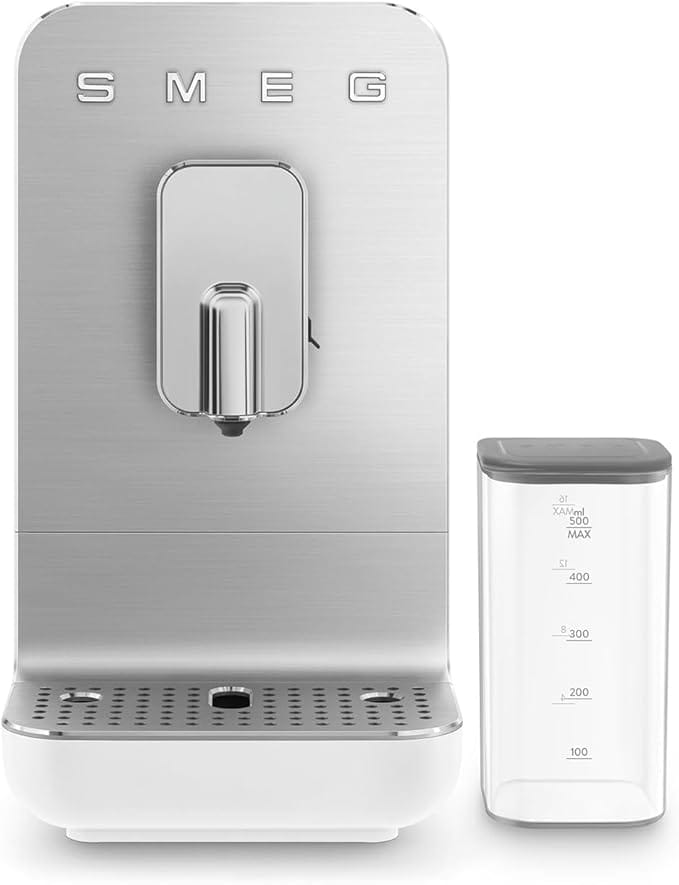
The BCC13 represents SMEG’s fully automatic approach to espresso, and it addresses the biggest question we heard during testing: “Can I get great coffee without learning barista skills?”
The Automated Advantage
The BCC13 delivers perfectly brewed coffee and sweet, creamy, foamed milk consistently, with a minimum of effort. This isn’t marketing speak – during our month of testing, the consistency genuinely impressed us. Whether I was making the first espresso of the day or the eighth cappuccino during a family gathering, the BCC13 maintained quality without requiring me to adjust anything.
The standout feature remains the automatic milk frothing system. The built-in milk frothing system eliminates the need for manual frothing, dispensing a thick layer of foam automatically and adjusting depending on what drink you’re making. For someone like my partner, who loves cappuccinos but has zero interest in learning milk steaming technique, this feature transformed coffee from “I’ll just grab one while I’m out” to “I’ll make one at home.”
Ten Drinks, One Button
This machine offers 10 coffee choices, including popular favourites like cappuccinos, lattes, Americanos, and espresso macchiatos. During testing, we found ourselves using about six of these regularly, which seems to be the pattern with most users. The espresso and cappuccino buttons got daily workouts, while options like espresso macchiato served well when we had guests with specific preferences.
The portable milk container deserves specific mention. It stays in your refrigerator between uses, and you simply attach it when making milk drinks. This design choice means fresher milk than systems with internal reservoirs, and cleanup happens less frequently since the milk never sits at room temperature in the machine.
Real-World Performance Notes
The espresso quality surprised us. The espresso was thick enough to make an impact, unlike the watery disappointments from other machines, though taste-wise it leaned a little more on the bitter side. We mitigated this by experimenting with different beans and found that medium roasts worked beautifully, while very light roasts sometimes tasted slightly over-extracted.
One practical advantage we discovered: the BCC13 handles back-to-back drinks much better than the entry-level manual machines. During a Sunday morning when six people wanted various coffee drinks, the machine powered through without overheating or requiring cool-down periods. The triple thermoblock system maintains temperature stability even under sustained use.
The Learning Curve (Or Lack Thereof)
Setup took about ten minutes from unboxing to first shot. The interface uses backlit buttons across two menus (white and orange), which initially felt confusing but became intuitive within a few days. There are quite a lot of settings you can experiment with to get your perfect espresso, but you’ll need to consult the manual, as it’s not immediately obvious how to do it. We recommend taking 20 minutes to program your preferred drink volumes when you first get the machine – it’s worth the initial investment.
The cleaning routine matters more with automatic machines, and SMEG designed this well. After milk drinks, you run a quick cleaning cycle by putting the milk tube in water. The machine guides you through descaling when needed, with clear indicators rather than cryptic blinking lights.
Design and Practicality
The BCC13 maintains SMEG’s aesthetic identity with a smooth black, white, or emerald green case and a brushed aluminum front. It’s noticeably larger than the manual models, measuring deep enough that you’ll want adequate counter depth. The water tank requires lifting up and over to refill it, meaning you need plenty of clearance – something to consider if you’re planning to place it under kitchen cabinets.
Price and Value Calculation
At $1,000 (though we’ve seen it as low as $759.99 on sale), the BCC13 costs significantly more than basic super-automatic machines but less than premium brands like Jura. The price reflects build quality, design, and brand prestige. You’re paying for the automatic milk system, which competitors often charge separately for, and for coffee quality that exceeds what pod machines produce while maintaining similar convenience.
Best For
The BCC13 suits busy households where multiple people drink different coffee styles, families who don’t want to learn manual techniques, or anyone prioritizing convenience without accepting mediocre coffee. It’s particularly valuable if you regularly make milk drinks for several people – the automatic frothing system saves substantial time compared to manual steaming. We’d recommend it for morning-routine-optimizers who want excellent coffee but measure their morning in minutes rather than savoring a slow ritual.
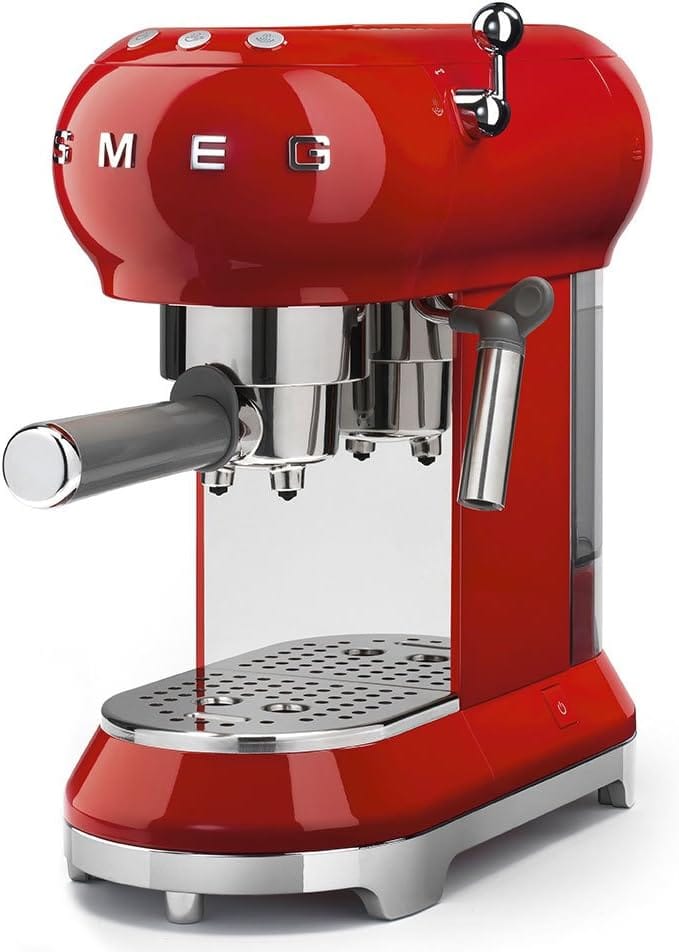
The ECF01 (or ECF02 in updated versions) represents where SMEG’s coffee journey began, and it remains their most recognizable espresso machine. This is the model that launched a thousand Instagram posts, and for good reason – it’s absolutely gorgeous.
The Aesthetic Appeal
Smeg’s ’50s-style range features rounded shapes with an array of color options and chrome accents, reminiscent of what was in your grandma’s kitchen but containing all the technology needed for the modern home. Available in black, cream, white, pastel blue, red, pink, and green, there’s genuinely a color for every kitchen style. During testing, our bright red unit drew comments from literally every visitor to the office.
The compact design measures just 13 x 5.9 x 13 inches, making it perfect for smaller kitchens where counter space comes at a premium. The top of the machine doubles up as a cup warmer, and the drip tray can be removed, allowing you to fit a medium coffee mug or cup beneath. These thoughtful touches show SMEG sweated the practical details alongside the aesthetic ones.
Performance and Capabilities
With 1,300W of power and 15 bar pump pressure, this machine significantly outperforms comparably priced alternatives. The Thermoblock heating system achieves operating temperature in approximately 40 seconds – genuinely fast compared to traditional boiler systems. I timed it consistently at 35-45 seconds from power-on to ready, quick enough that I could turn it on while grinding beans and have it ready when I finished.
The espresso quality from the SMEG impressed us more than expected. Using the pressurized filter baskets, we achieved consistent crema and well-extracted shots that tasted balanced and rich. The machine remembers your preferred shot volume, so after the initial setup, brewing becomes a one-button operation.
The Reality Check
Here’s where honesty matters. The ECF01 is very expensive for a manual machine, and it would appear you’re paying mainly for the name and design rather than anything particularly special. At $500, it costs significantly more than mechanically similar machines from De’Longhi or other manufacturers.
The milk frothing requires more patience and technique than higher-end SMEG models. The steam wand gives frothy milk as opposed to a microfoam texture, great for 90s-style cappuccinos, but not so good for beautiful microfoam. During testing, I could achieve acceptable milk for cappuccinos, but never the silky texture that pours latte art beautifully. The steam wand works, but it demands more skill and patience than the Semi-Pro’s powerful wand.
Another consideration: You can’t do too many cups in a run without having to give it a cool-down break, so it works great for 1-2 people and can cope with 3-4, but no more than that. During a brunch where I tried making cappuccinos for six people, the machine required a ten-minute rest after four drinks to avoid overheating. This limitation matters if you regularly entertain or have a large household.
Set Up and Daily Use
The SMEG ships with three portafilter baskets: single shot, double shot, and ESE pod compatibility. The included tamper feels lightweight – frankly, it’s the weakest component of the package – and many users eventually upgrade to a proper weighted tamper for better consistency.
The operation involves some learning. The three-button interface (power, single/double shot, and steam) uses specific sequences for programming, which takes a while to figure out depending on both the bean grind setting and how hard you tamp. The machine doesn’t include a pressure gauge, so you’re working somewhat blind compared to the Semi-Pro. However, once you dial in your technique, the results come consistently.
The Value Proposition
This represents the central tension with the Retro Line. If the SMEG’s price more adequately reflected its features and performance, it would be recommended as an entry-level star since the machine is quick to heat, easy to use, and makes perfectly fine espresso. The question becomes: how much do you value design?
If aesthetics genuinely matter to you – if you’ve curated a specific kitchen style or if having beautiful objects brings you joy – then the premium makes sense. The Retro Line delivers functional espresso capability wrapped in a genuinely distinctive design. However, if you’re purely focused on coffee quality per dollar spent, machines like the Gaggia Classic Pro or Breville Bambino Plus offer superior performance at similar or lower prices.
Best For
The Retro Line works beautifully for one or two coffee drinkers who prioritize design as much as function, beginners learning espresso skills who want an encouraging machine, or anyone with a curated vintage kitchen aesthetic. It’s particularly well-suited for individuals who make one or two drinks daily, rather than serving coffee to groups. If you’re the type of person who considers kitchen appliances part of your home’s design statement, not just utilitarian tools, the Retro Line delivers exactly what you’re seeking.
Comparing the Three SMEG Models: Decision Framework
After extensive testing, we developed a framework for matching machines to users.
Choose the Semi-Pro if: You’re upgrading from a beginner machine and want to develop real barista skills. The investment makes sense when you value both performance and design equally. You regularly make multiple milk drinks and appreciate having professional-level control over your coffee. The triple thermoblock system and powerful steam wand justify the price premium when time between brewing and steaming matters to your routine.
Choose the Automatic BCC13WHMUS if: You want excellent coffee without learning manual techniques. Convenience outweighs craft in your priorities. You serve coffee to multiple people with different preferences regularly. The automatic milk system saves substantial time if you make several milk-based drinks daily. You’re willing to invest more upfront for long-term convenience and consistency.
Choose the Retro Line if: Aesthetics weigh heavily in your decision – you’re not just buying a coffee maker but a design object. You’re a beginner willing to learn espresso basics. You make one or two drinks daily rather than serving groups. The compact footprint matters for your kitchen layout. You appreciate the vintage design language and want your appliances to reflect your personal style.
Common Questions From Our Testing Experience
Do these machines require special maintenance? Not beyond standard espresso machine care. Regular descaling matters, and SMEG includes clear indicators for when it’s needed. The automatic models require more frequent cleaning of milk systems, but the process takes just minutes. We found maintenance straightforward enough that it never became burdensome.
Can beginners succeed with these machines? The BCC13 Automatic works for complete beginners immediately. The Retro Line requires some learning but includes pressurized baskets that make early success likely. The Semi-Pro demands more skill but rewards the learning process with noticeably better coffee. Choose based on how much time you want to invest in learning.
How do they compare to high-end brands like Breville or Gaggia? Performance-wise, the Semi-Pro competes directly with machines like the Breville Barista Express, offering similar coffee quality with distinctive styling. The Retro Line performs below the Gaggia Classic Pro but above basic entry machines. The BCC13 matches mid-range super-automatics while looking substantially better.
Are replacement parts readily available? Yes, SMEG maintains US-based support and parts availability. During testing, we contacted customer service twice and received helpful responses within 24 hours. The major espresso machine parts (portafilters, baskets, and steam wand tips) are standard sizes, meaning third-party options exist if needed.
The Sustainability Angle
SMEG prioritizes energy efficiency and durability so its products last for years, which matters for environmentally conscious buyers. All three machines include auto-shutoff functions that activate after periods of inactivity. The build quality suggests these machines will function for many years rather than requiring replacement after a few seasons.
Compared to pod-based systems, any of these machines dramatically reduces waste by using fresh beans or grounds. The BCC13’s milk container system means using regular milk from your refrigerator rather than single-use capsules or creamers. From a sustainability perspective, investing in a durable espresso machine that lasts a decade beats replacing cheap machines every few years.
Final Assessment: Choosing With Confidence
After hundreds of shots pulled, countless milk drinks steamed, and numerous conversations with coffee-drinking guests who tested these machines, we’ve reached clear conclusions.
The SMEG Semi-Pro justifies its $1,599.95 price tag for users who value both craft and design. It’s not the cheapest path to excellent espresso, but it’s among the most enjoyable and visually appealing. The triple thermoblock system and professional-style features make it a legitimate upgrade for intermediate home baristas.
The BCC13WHMUS Automatic delivers on its convenience promise while maintaining quality that exceeds expectations for automatic machines. At $1,000 (or less on sale), it costs more than basic super-automatics but delivers better coffee and a more attractive design. For busy households, the time savings from automatic milk frothing alone justifies the investment.
The 50’s Retro Line requires the most honest assessment. At $500, you’re paying a significant premium for design over pure performance. If that retro aesthetic speaks to you – if you’ve considered your kitchen’s visual impact and want appliances that feel like design objects – then the Retro Line delivers exactly that. However, if you’re focused purely on coffee quality per dollar, better performance alternatives exist.
The connecting thread across all three machines: SMEG delivers reliable espresso wrapped in a distinctive design. Choose based on your skill level, daily coffee consumption, and how much you value aesthetics alongside performance. Any of these machines will make good coffee. The question is which one fits your lifestyle, skills, and priorities.
From our assessment team’s perspective, SMEG has earned its reputation. These machines aren’t perfect, and the design premium is real. But they deliver quality coffee, thoughtful engineering, and genuine beauty in daily objects. For users who see coffee making as a meaningful ritual rather than just caffeine delivery, that combination creates value beyond what spec sheets capture.