Advertiser Disclosure
We independently review everything we recommend. When you buy through our links, we may earn a commission.
The Best Solo Board Games to Play Right Now
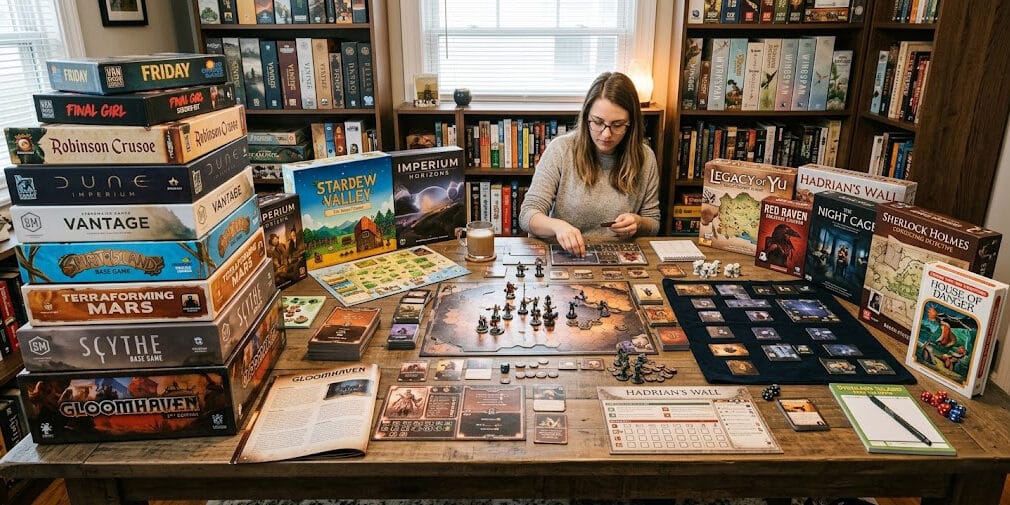
Solo board gaming used to feel like a consolation prize — something you did when you couldn’t get anyone else to play. That reputation is largely gone now.
The shift makes sense when you think about it. Solo games let you move at your own pace, explore a theme as deeply as you want, and genuinely challenge yourself without any social pressure. Designers have responded in kind — where solo modes used to be an afterthought, many publishers now treat them as a core part of the product. Some games, like Friday and Legacy of Yu, are designed exclusively for one player.
What We Looked for in a Great Solo Game
Before getting into specific picks, it’s worth spelling out what makes a solo board game worth your time. These are the criteria our team used:
Meaningful decisions. A good solo game keeps you thinking. The best ones tend to create situations where there’s no obvious right answer — just trade-offs you have to weigh carefully.
Replayability. Since you’re playing alone, the game needs enough variability — through card draws, modular boards, or branching scenarios — to feel fresh over multiple sessions.
Manageable overhead. Running a solo game means you’re also running the “opponent” or managing complex systems by yourself. Games that require you to referee your own experience shouldn’t make that feel like a chore.
Satisfying win/loss conditions. The best solo games make both winning and losing feel earned. A loss should teach you something; a win should feel like you actually worked for it.
Theme that pulls you in. This one is subjective, but consistently, the solo games that stick with people are the ones where the theme and mechanics reinforce each other so well that you forget you’re sitting alone at a table.
With those criteria in mind, here’s what we found.
Everything We Recommend
✅ We recommend these products based on an intensive research process that’s designed to cut through the noise and find the top products in this space. Guided by experts, we spend hours looking into the factors that matter to bring you these selections.
⭐ 2.5 million+ people assisted in the last 30 days ⭐
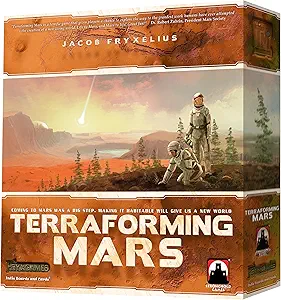
Best for: Strategy players who love engine-building and long, satisfying sessions
Terraforming Mars hits a sweet spot that very few games manage: it’s complex enough to keep experienced players fully engaged, but the core loop — play cards, take actions, raise the planet’s temperature and oxygen — is intuitive enough that you never feel lost in the rules. Our tester picked this one up on a slow Sunday afternoon and didn’t put it down until nearly midnight. Playing solo against the corporation challenge, every card draw felt like a genuine decision tree. Do you push toward greenery tiles and points, or sprint to meet the terraforming requirements before time runs out? What surprised us most was how much the game rewards replaying — the card combinations shift enough between games that two consecutive sessions rarely feel the same. The trade-off worth knowing: setup takes a while, and the cardboard components aren’t quite as premium as the price tag might suggest. But if you can live with that, the strategic depth here is hard to match.
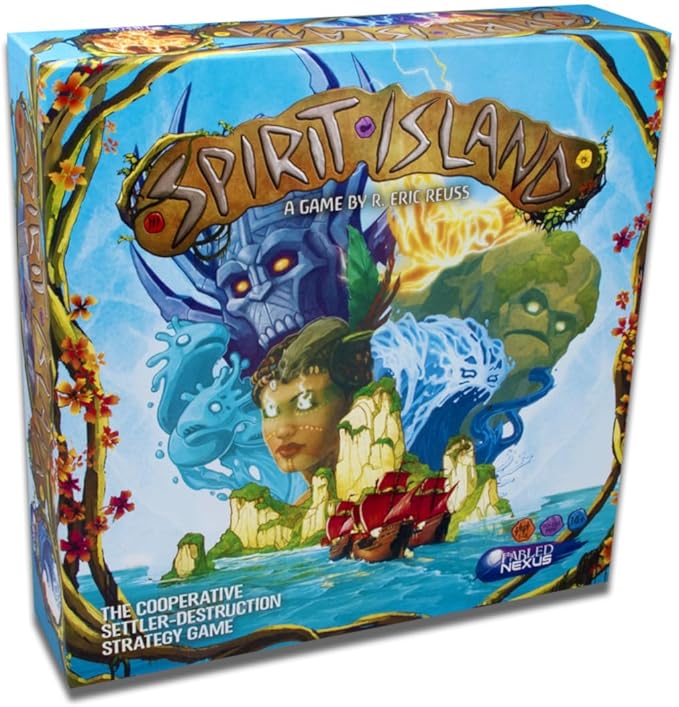
Best for: Players who want a genuinely challenging, asymmetric solo experience
Spirit Island flips the colonial board game script entirely — you play as nature spirits defending your island from invaders — and it does it with a mechanical elegance that’s genuinely impressive. Each of the game’s spirits plays completely differently, which means the “solo” experience here is really a whole collection of experiences in one box. Our tester ran several consecutive sessions with different spirits and remarked that it almost felt like playing different games entirely. The difficulty is real: Spirit Island doesn’t go easy on you, and your first few games will likely end in defeat. But those losses tend to feel instructive rather than punishing, because you can usually trace back exactly where things went wrong. The heaviness is worth flagging — the rulebook is dense, and your first session will probably involve a lot of back-and-forth with the manual. If you’re patient through that learning curve, though, Spirit Island delivers one of the deepest solo experiences in modern board gaming.
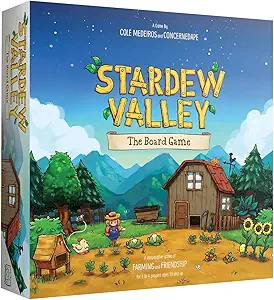
Best for: Fans of the video game, or anyone craving a cozy, low-pressure solo session
This one surprised our team more than almost anything else on the list. We expected a licensing tie-in with decent art and shallow mechanics — what we got was a genuinely charming cooperative game that translates the video game’s rhythms remarkably well. Playing solo, you manage the farm, explore the mines, build friendships with villagers, and work toward seasonal goals, all with a sense of unhurried warmth that most games don’t bother attempting. It’s not the most strategically demanding game here, and experienced players might find the challenge a bit gentle. But that’s partly the point. Stardew Valley the board game, is the one you reach for when you want the hobby feeling — the pleasant weight of cards in your hand, the satisfaction of a well-timed harvest — without the stress of a punishing loss condition. It’s relaxing in a way that feels intentional, not lazy.
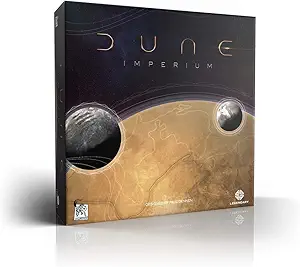
Best for: Strategy gamers who enjoy deck-building layered with worker placement
Dune: Imperium manages the neat trick of making you feel like you’re navigating the political machinations of Arrakis even when you’re playing alone. The solo mode pits you against an automated opponent called the Hagal House, and what impressed our tester was how much tension that opponent actually generates — you’re never quite sure when it’s going to swoop in and grab the space or resource you needed. The deck-building side of the game is genuinely satisfying: watching your starting hand of weak cards gradually transform into a finely tuned engine feels earned rather than automatic. The Dune theme is well-integrated, too, which matters more in solo play than it might in a group game. Our one caveat: the solo rules require a bit of extra attention on setup, and the Hagal system can feel slightly mechanical compared to a human opponent. But for the genre, it’s one of the more well-constructed solo implementations we’ve tested.
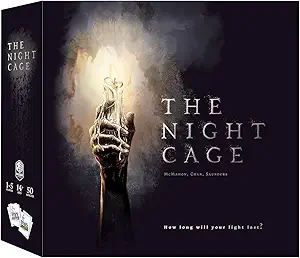
Best for: Horror fans and anyone who loves atmospheric, high-tension cooperative games
The Night Cage is unlike anything else on this list. You’re a prisoner in an infinite dark labyrinth, holding a candle, trying to find keys and escape before the darkness consumes everything — and the tile-drafting mechanic, where tiles literally disappear when your light moves away from them, creates a sense of dread that’s hard to shake. Our tester played this late at night (recommended, apparently) and described it as “the board game equivalent of a really good horror short story.” The solo mode works because the tension is inherent in the design — you’re not fighting a dummy AI, you’re fighting the board state itself. The game plays quickly enough for multiple attempts in a single evening, which is good, because losing your first run is practically a rite of passage. Component quality is high, the art is genuinely unsettling, and the rule overhead is surprisingly light. This one earns its place as a standout in the atmospheric horror niche.

Best for: Horror movie fans who want a highly replayable, modular solo experience
Final Girl is a love letter to slasher films, and the modular design is its biggest strength. The starter set gives you a killer and a location to start with, but the game’s real appeal is how each combination of killer and map creates a completely different tactical puzzle. Our tester tried multiple pairings over a weekend and found that the game’s tone shifted noticeably depending on the setup — some felt relentlessly tense, others had moments of dark humor. You play as the lone survivor trying to outlast and eventually defeat the killer, managing a hand of cards against an automated villain that escalates in genuinely unpredictable ways. The trade-off is that the base starter set is intentionally limited — Van Ryder clearly wants you to expand, and the full experience comes through additional killer/location packs. But even the starter set represents solid value for horror fans, and the production quality is noticeably high. If you enjoyed the theme of The Night Cage but want more mechanical variety, Final Girl scratches a different but equally satisfying itch.
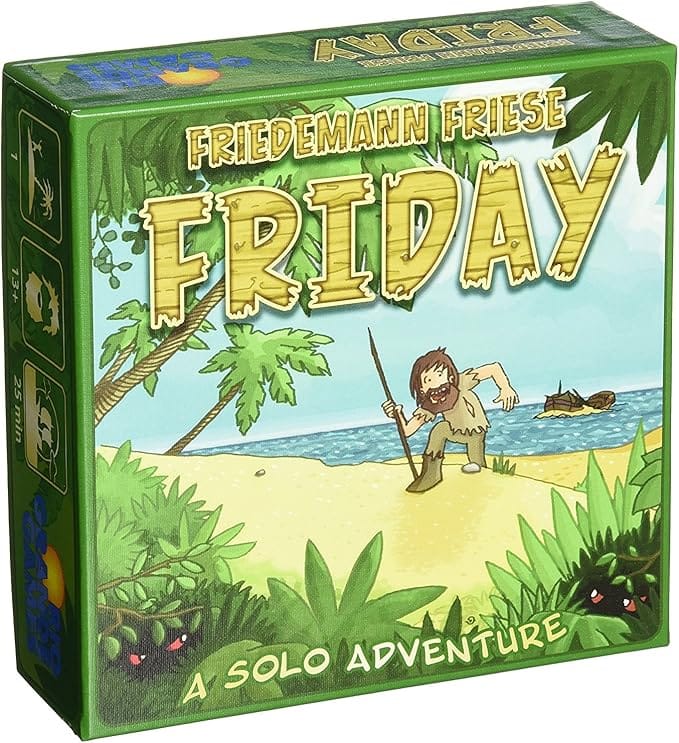
Best for: Solo-only players looking for a compact, strategic card game with a tight design
Friday is a rarity: a game designed from the ground up for exactly one player, with no solo “mode” awkwardly grafted onto a multiplayer frame. You play as Friday, helping Robinson Crusoe survive on a desert island by battling hazards and gradually improving his deck of skills. The deck-building here has a satisfying twist — you don’t just add good cards, you actively want to remove the weak “aging” cards that clog your hand. Our tester appreciated how much strategic tension the game packs into such a small box. A full game runs about 25 minutes once you know the rules, which makes it one of the best options for a quick solo session on a weekday evening. The difficulty levels are well-calibrated, with the hardest settings providing a genuine challenge even for experienced players. The one legitimate criticism is that the iconography can be cryptic at first — keep the reference card handy for your first few games. Once it clicks, though, Friday is one of the most elegant solo experiences in the hobby.
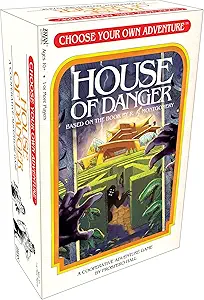
Best for: Casual players, families, and anyone who grew up reading CYOA books
House of Danger nails a specific feeling that most hobby games don’t even attempt: the breezy, slightly campy excitement of a choose-your-own-adventure paperback. It’s not a heavy game — the decisions are relatively simple, and the stakes feel appropriately pulpy — but it’s tremendously fun for what it is. Our tester played through the first chapter with a cup of coffee on a lazy morning and was immediately charmed by the writing, which leans into the 1980s thriller aesthetic without winking too hard at it. The card-drawing mechanic for resolving challenges adds just enough randomness to keep things unpredictable, and the branching narrative gives you a genuine reason to replay. It’s worth being transparent: this isn’t the game for players who want deep mechanical complexity. But as an entry point to solo gaming, or as a palate cleanser between heavier titles, it’s genuinely excellent — and underrated for group play with one person making the decisions aloud.
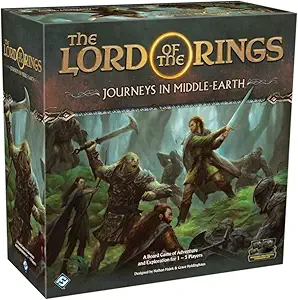
Best for: Tolkien fans and anyone who loves narrative campaign games with app integration
Journeys in Middle-Earth is one of the most polished campaign experiences in board gaming, and the app integration — which manages the game’s scenarios, enemy behavior, and narrative — is significantly less gimmicky than you might expect. Our tester spent multiple weeks working through the base campaign solo, controlling two heroes, and found that the story held up surprisingly well across the full run. The game does an excellent job of making Middle-Earth feel present rather than decorative: the environments, enemies, and event cards all reinforce the setting in ways that matter mechanically. Managing two heroes solo adds a layer of planning — you’re essentially making decisions for both characters simultaneously, which creates interesting internal trade-offs. The app dependency is worth flagging as a practical concern (you’ll need a phone or tablet at the table), but the app itself is well-designed and rarely felt intrusive. For Tolkien fans especially, this is a deeply satisfying way to spend a solo evening.
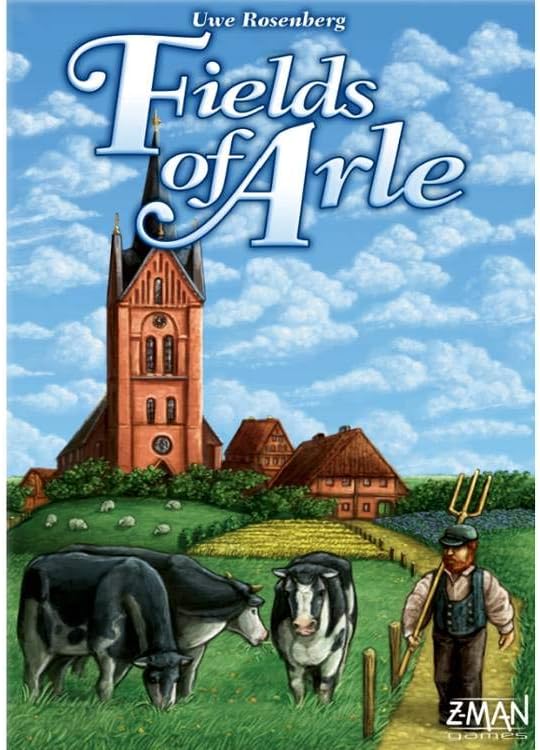
Best for: Euro game enthusiasts who want a meditative, deeply strategic solo experience
Uwe Rosenberg’s Fields of Arle is one of those games that rewards patience in a way that feels genuinely unusual. You’re managing a small farm in East Frisia across two years, expanding your homestead, raising animals, and completing craftwork — and the game unfolds with a quiet, methodical rhythm that can feel almost contemplative when you’re playing alone. Our tester described the solo mode as “the board game equivalent of a long walk somewhere beautiful.” The solo challenge is meaningful: you’re racing against your own efficiency, trying to maximize your output against a par score, which creates more internal pressure than you might expect from such a serene theme. The game has a notable learning curve — there’s a lot to absorb in the rulebook — and setup takes time. But Fields of Arle rewards the investment. Once it’s in your hands, it’s one of the most satisfying solo puzzles in the hobby, especially for players who like the feel of heavy Rosenberg games like Agricola or Caverna.
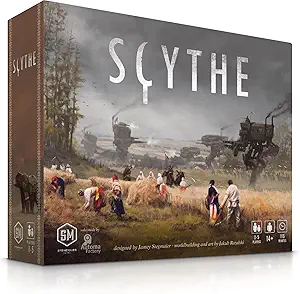
Best for: Strategy gamers who want asymmetric factions, strong production value, and moderate-to-heavy depth
Scythe’s alternate-history 1920s Europe setting is one of the most distinctive in board gaming, and the solo mode — playing against the Automa opponent — is genuinely one of the better AI implementations we’ve tested. The Automa generates competitive pressure without requiring you to manage a complex second player, and it scales well if you want to increase the difficulty. Our tester was particularly struck by how well the faction asymmetry holds up in solo play: each faction has a genuinely different feel, which means multiple solo campaigns with different starting positions play out very differently. The production quality here is hard to argue with — the components are beautiful, and the game’s visual identity is cohesive and striking. The trade-off is that Scythe has a reputation for feeling like it ends before fully getting going, especially in shorter player counts. That tendency is less pronounced solo, but it’s worth knowing going in. For most strategy-oriented solo players, though, it’s still one of the most complete packages in this guide.
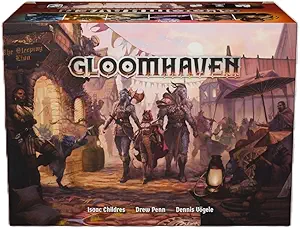
Best for: Players who want the deepest, most long-running solo dungeon-crawl campaign available
Gloomhaven is the gold standard of campaign dungeon crawlers, and the second edition refines the original’s already impressive design with cleaner rules, updated components, and a more accessible entry point. Our tester spent the better part of three months working through a solo campaign and reported that the game’s character progression — gradually unlocking abilities, retiring characters, and revealing the world’s secrets — creates a sense of investment that almost nothing else matches. Playing two characters simultaneously solo is the standard approach, and while it adds cognitive load, it also gives you more tactical control than a cooperative game normally offers. The honest caveat: Gloomhaven is a commitment. Setup is involved, the campaign is enormous, and the box is physically large. But if you’re looking for a solo experience that functions like a genuinely great single-player video game — with progression, consequence, and hundreds of hours of content — Gloomhaven 2nd Edition is the most credible answer in the hobby.
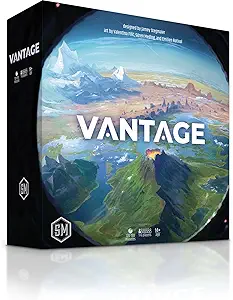
Best for: Players who want a compact, clever puzzle game with accessible rules and high replay value
Vantage is one of Stonemaier’s most recent releases, and it shows the studio’s knack for making games that are easy to teach but genuinely rewarding to master. The solo experience centers on a tile-placement puzzle with a spatial logic that rewards careful planning — and our tester found that even short 20-minute sessions consistently produced interesting decisions. What sets Vantage apart in the solo space is how quickly it gets to the interesting part: there’s no long setup, no elaborate rulebook to digest, and no extended learning phase. You’re making meaningful choices almost immediately, and the constraint-driven design (you’re always working within tight limits) keeps the puzzle feeling fresh across multiple plays. It’s not the most thematically immersive game on this list, but as a brain-teaser with genuine elegance, it earns its spot. If you’re building a collection and want a game that’s easy to bring to the table on short notice, Vantage is worth serious consideration.
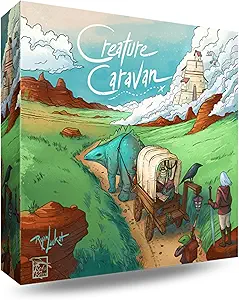
Best for: Players who enjoy Ryan Laukat’s illustrated worlds and want something whimsical but mechanically satisfying
Red Raven Games has built a reputation for producing games with a distinctive illustrated aesthetic — the kind of art that makes you want to live inside the box — and Creature Caravan delivers that visual identity alongside a solo mode that holds up under real play. You’re leading a caravan of creatures across a fantasy landscape, managing resources and relationships in a way that feels appropriately storybook. Our tester appreciated how well the theme and mechanics reinforce each other: the decisions you make feel like they belong in the world rather than being grafted onto it. The solo experience is more on the gentle side of the complexity spectrum, which makes Creature Caravan a strong pick for evenings when you want engagement without intensity. The art alone is worth the admission price for players who value that kind of thing — it’s the sort of game that earns compliments just sitting on a shelf.
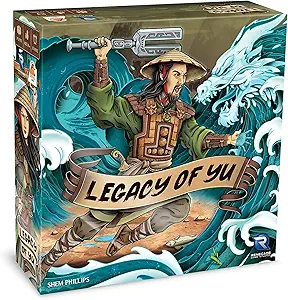
Best for: Solo-only players who want a campaign game designed with no multiplayer compromise
Legacy of Yu is notable for the same reason as Friday: it exists exclusively as a solo game, and that design purity shows in every mechanic. You play as Yu the Great, battling floods and barbarians across a campaign of escalating scenarios, with a difficulty system that adjusts dynamically based on how well or poorly you’ve been doing. Our tester found that automatic difficulty adjustment to be one of the game’s most interesting qualities — it means the game tends to stay tense without becoming unfair, keeping you on the edge of winning rather than sliding into an unwinnable state. The campaign structure creates genuine narrative momentum, and the legacy elements (permanent changes to your game state) give each session real consequence. The one trade-off worth naming: if you don’t enjoy losing and resetting, the early learning curve might feel rough. But if campaign board gaming is your thing and you want something built for you specifically as a solo player, Legacy of Yu is one of the most thoughtful options out there.
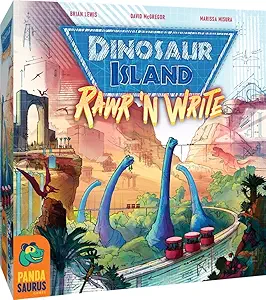
Best for: Solo players who want a quick, satisfying roll-and-write with a fun theme
Rawr ‘N’ Write takes the beloved Dinosaur Island theme — build a theme park full of genetically engineered dinosaurs — and translates it into a compact roll-and-write format that plays beautifully solo. Each session runs 30 to 45 minutes, making it one of the fastest meaningful experiences on this list. Our tester was charmed by how much of the original game’s personality survived the translation: you’re still balancing safety against spectacle, managing dinosaur DNA, and trying to keep your guests from getting eaten. The roll-and-write format means no two games play out quite the same way, even though you’re marking up the same sheets. The sheets themselves are nicely designed — the iconography communicates clearly once you’ve had a session or two to absorb it. For players who want solo gaming that fits into a tight schedule without sacrificing the fun, this is one of the genre’s stronger entries.
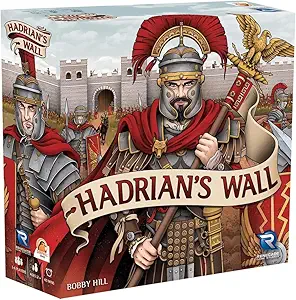
Best for: Solo players who love dense, maximally satisfying puzzle-style games with a historical theme
Hadrian’s Wall is what our team tends to call a “full brain” game — one that demands your complete attention and rewards it generously. Playing as a Roman general tasked with building and defending a section of the famous wall, you’re managing a cascade of interconnected tracks and resource decisions across six rounds. The solo mode gives you a scoring target to beat, and the internal puzzle of optimizing your engine against that target is deeply satisfying. Our tester described finishing a strong game of Hadrian’s Wall as feeling like solving a really difficult crossword — that specific sense of earned mental satisfaction. The trade-off is density: this is not a game you casually pick up after a long day without the bandwidth for it. The sheets are complex, the decisions are numerous, and the game rewards players who engage with it fully. But for that audience specifically, Hadrian’s Wall is one of the best solo games published in recent years.
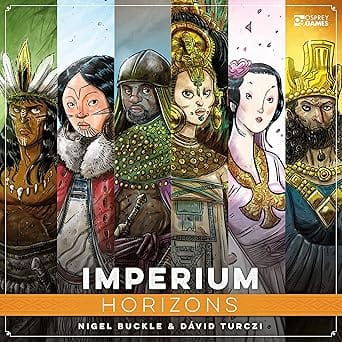
Best for: History enthusiasts and strategy players who want a rich civilization-building experience
Imperium: Horizons expands the acclaimed Imperium series with new civilizations, adding even more variety to an already impressive roster. Playing solo against an automated empire, you’re developing your civilization from a wandering tribe into a dominant power — using a hand management system that cleverly simulates the growth and expansion of a real historical culture. Our tester found that each civilization in the box plays with a genuinely distinct flavor, which speaks to how much care the designers put into asymmetric design. The solo implementation is well-considered: the automated opponent generates real pressure without becoming a second full-time job to manage. If you have any interest in history — ancient empires, emerging cultures, the push and pull of civilization-building — Imperium: Horizons tends to make those themes feel alive rather than abstract. The game pairs well with a bit of background reading on whichever civilization you’re playing. It’s one of those games that can genuinely spark curiosity beyond the table.
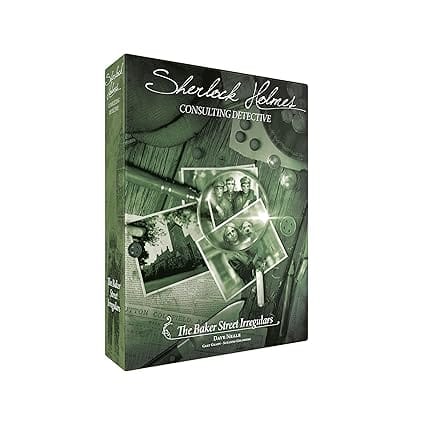
Best for: Mystery lovers and players who want a narrative, deduction-heavy experience
Consulting Detective occupies its own category almost entirely: it’s less a “game” in the traditional mechanical sense and more a structured mystery you investigate using a newspaper archive, a city map, and your own deductive reasoning. The Baker Street Irregulars case book gives you a fresh set of mysteries outside the original London series, with a new cast of characters and well-crafted puzzles. Our tester played through two cases solo, narrating the deductions aloud (highly recommended), and found the experience remarkably absorbing. The satisfaction of following a chain of clues to a correct conclusion — or the humbling realization that you completely missed an obvious lead — is unlike almost anything else in the hobby. The trade-off is that it’s not replayable in the traditional sense: once you’ve read the solution to a case, that case is done. But the sheer quality of the mystery writing and the genuine engagement of the deduction process make each case feel worth its time. For mystery fans especially, this is close to essential. The Sherlock Holmes Consulting Detective series has earned a dedicated following for good reason.
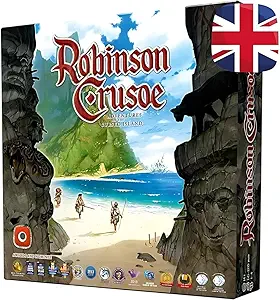
Best for: Players who want a brutal, thematic survival experience with strong narrative events
Robinson Crusoe is one of the most talked-about solo survival games in the hobby, and after extended testing, we understand why. You’re stranded on an island — sometimes alone, sometimes with companions — managing food, shelter, weather, and a constant string of genuinely alarming event cards. The game doesn’t pull punches: it will batter your plans, surprise you with disasters, and occasionally make you feel completely overwhelmed. And yet, when a session comes together, and you complete a scenario’s objectives, the relief is deeply satisfying in a way that mirrors the theme almost too well. Our tester appreciated how the event deck makes each game feel like it’s telling a specific story — not just a series of mechanical decisions, but a survival narrative with genuine dramatic beats. The rulebook is legitimately challenging to parse on first read, and setup is involved. But if you’re willing to invest the time, Robinson Crusoe delivers one of the most emotionally engaging solo experiences in the hobby.
How to Choose the Right Solo Game for You
With 20 games on this list, narrowing it down to your next purchase is a reasonable challenge. Here’s how we’d think about it:
If you’re new to solo gaming, start with Friday, Choose Your Own Adventure: House of Danger, or Stardew Valley. All three keep rules overhead low and deliver satisfying sessions quickly, which helps you figure out what style you actually like before committing to something larger.
If you want depth and don’t mind a learning curve, Spirit Island, Gloomhaven 2nd Edition, and Terraforming Mars are the games that the hobby’s most dedicated solo players tend to orbit around. They’re more demanding, but they also tend to be the games still on people’s tables years later.
If you’re a thematic player who cares more about narrative and atmosphere than mechanical elegance, The Night Cage, Robinson Crusoe, Journeys in Middle-Earth, and Sherlock Holmes Consulting Detective will likely scratch that itch more effectively than the heavier Euros.
If time is a constraint, Dinosaur Island: Rawr ‘N’ Write, Vantage, and Friday are all playable in under an hour — often significantly under — and they’re designed to feel complete in that window rather than truncated.
If replayability matters most to you, Final Girl and Spirit Island have the highest game-to-game variability on this list. Gloomhaven and Legacy of Yu have the longest campaign legs.
Frequently Asked Questions
Are solo board games as fun as multiplayer games?
That depends heavily on what you’re looking for. Solo board games excel at letting you engage with a game’s systems fully on your own terms, without the scheduling challenges or pacing compromises of group play. Many experienced players find certain solo games more satisfying than their multiplayer equivalents precisely because of that control. The honest answer is: try one and find out. The games on this list were chosen in part because they hold up as solo experiences specifically, not as watered-down versions of multiplayer games.
What’s the difference between a “solo mode” and a game designed for one player?
A dedicated solo game (like Friday, Legacy of Yu, or Sherlock Holmes Consulting Detective) is built from the ground up for one player. A solo mode is a variant added to a multiplayer game. Both can be excellent, but dedicated solo designs tend to feel more tightly tuned — every mechanic serves the single-player experience. Solo modes vary widely in quality; the best ones (like Spirit Island’s or Scythe’s Automa) can be genuinely impressive, while weaker implementations feel like afterthoughts.
How long does a typical solo board game session take?
It varies enormously. Friday and Dinosaur Island: Rawr ‘N’ Write can run under 45 minutes. Terraforming Mars and Scythe typically take 90 minutes to two hours solo. Gloomhaven scenarios run around 60–90 minutes each, but the campaign spans many, many sessions. One practical tip: always check the BGG page for a game’s realistic solo time rather than the box estimate — player reports tend to be more accurate.