Advertiser Disclosure
We independently review everything we recommend. When you buy through our links, we may earn a commission.
3D Puzzles vs LEGO: Which Is More Challenging?
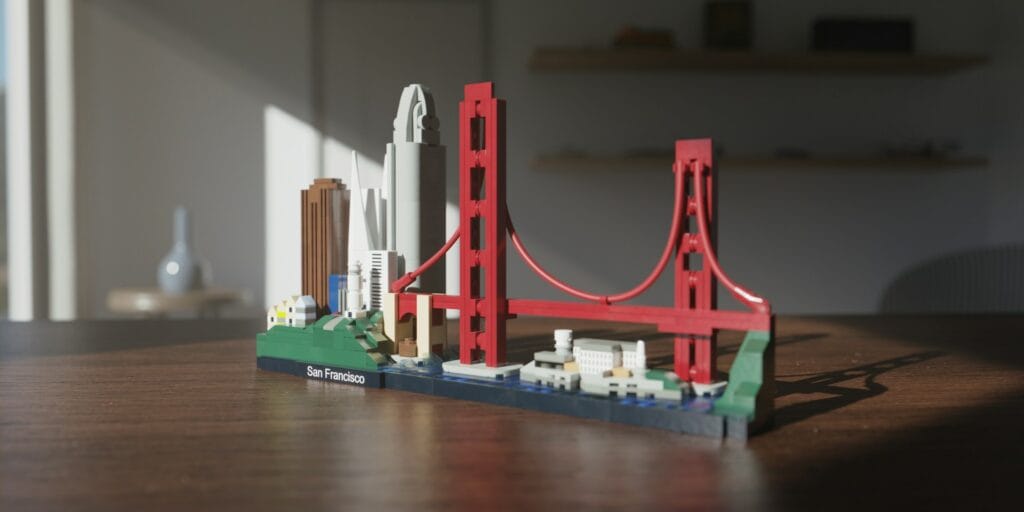
We have spent countless hours building both intricate 3D puzzles and complex LEGO sets, and one question keeps surfacing in our testing lab: which one truly delivers the greater challenge? After assembling over fifty different models from both categories and analyzing the cognitive demands of each, our assessment team discovered that the answer is far more nuanced than most enthusiasts realize.
The debate between 3D puzzles and LEGO continues to captivate hobbyists, parents, and puzzle enthusiasts worldwide. While both offer engaging construction experiences, they challenge your brain in fundamentally different ways. Understanding these distinctions will help you choose the right activity for your skill level, time commitment, and mental stimulation goals. Moreover, recognizing what makes each building system uniquely challenging can transform how you approach these beloved hobbies.
Differences Between 3D Puzzles and LEGO
Before diving into the challenge comparison, our team needed to establish what sets these two building experiences apart. Three-dimensional puzzles typically arrive as pre-designed structures that require following a specific sequence to achieve the intended result. These puzzles use interlocking foam pieces, plastic components, or specialized materials that fit together in predetermined ways. The manufacturer provides clear instructions, and deviation from the pattern usually results in structural failure.
LEGO, conversely, offers a hybrid experience that bridges guided construction and creative freedom. When building from official sets, you follow detailed instructions similar to 3D puzzles. However, the modular nature of LEGO bricks allows for modification, customization, and completely freeform building once you understand the system’s mechanics. This versatility fundamentally changes the nature of the challenge.
The construction philosophy differs significantly between these two activities. Three-dimensional puzzles emphasize spatial reasoning, pattern recognition, and sequential thinking. You must visualize how flat or curved pieces transform into three-dimensional objects. LEGO construction focuses on understanding mechanical principles, structural stability, and creative problem-solving within the constraints of the brick system.
How Each System Challenges Your Brain
Our assessment team evaluated both building systems across multiple cognitive dimensions to determine which presents greater challenges. The results revealed that difficulty manifests differently depending on the specific skills being tested.
Three-dimensional puzzles excel at testing visual-spatial intelligence. When assembling a 500-piece architectural model or a spherical globe puzzle, you constantly rotate pieces mentally, predict how curved surfaces will align, and understand how two-dimensional components create three-dimensional forms. Research from cognitive psychology suggests that spatial reasoning tasks like these activate the parietal lobe extensively, strengthening your ability to manipulate objects mentally. Our testers found that complex 3D puzzles with irregular shapes or minimal color coding demanded intense concentration and spatial awareness.
LEGO challenges different cognitive pathways, particularly when building without instructions or modifying existing designs. The engineering aspect of LEGO construction requires understanding weight distribution, connection strength, and structural integrity. Advanced LEGO sets incorporate mechanical elements like gears, axles, and pneumatic systems that introduce physics principles into the building process. Furthermore, the creative freedom inherent in LEGO building activates divergent thinking, pushing you to generate multiple solutions to construction challenges.
Time Investment and Patience Requirements
The temporal dimension of challenge cannot be overlooked when comparing these building systems. Our team tracked completion times across various difficulty levels for both 3D puzzles and LEGO sets to understand how time investment correlates with challenge intensity.
Complex three-dimensional puzzles, particularly those with 1000 or more pieces, typically require eight to fifteen hours of focused work. The challenge intensifies as you progress because later pieces often depend on the precise placement of earlier components. If you make mistakes in the foundation layers, you may need to disassemble significant portions to correct errors. This cumulative difficulty means that 3D puzzles become progressively more challenging rather than maintaining consistent difficulty throughout.
LEGO sets demonstrate more variable time requirements based on piece count and complexity. A 3000-piece LEGO architecture set might take twelve to twenty hours to complete, but the modular building approach allows for natural break points. You can typically pause after completing a section without losing progress or context. However, the most challenging LEGO experiences often come after instruction completion, when builders attempt modifications or custom creations. Our team observed that designing and building an original LEGO creation of moderate complexity can consume thirty to fifty hours, far exceeding typical 3D puzzle completion times.
Frequently Asked Questions About 3D Puzzles and LEGO Challenges
Through our research and community engagement, several questions emerged repeatedly regarding the relative difficulty of these building systems. Are 3D puzzles suitable for younger builders compared to LEGO? Our testing indicates that entry-level 3D puzzles designed for children aged eight and above offer comparable accessibility to basic LEGO sets. However, adult-oriented 3D puzzles with minimal visual guidance can prove more immediately challenging than similarly marketed LEGO sets because they offer fewer intuitive construction cues.
Can someone who excels at 3D puzzles automatically succeed with complex LEGO builds? Not necessarily. Our assessment revealed limited skill transfer between the two activities. Testers who rapidly completed challenging 3D puzzles sometimes struggled with LEGO Technic sets requiring mechanical understanding. Conversely, experienced LEGO builders occasionally found 3D puzzle assembly frustrating because the fixed nature of solutions prevented the creative problem-solving they had developed.
Which system provides better cognitive benefits for adults? Both offer significant mental stimulation, but they target different cognitive areas. Three-dimensional puzzles particularly benefit individuals seeking to maintain or improve spatial reasoning abilities, which research suggests may decline with age without regular practice. LEGO building, especially freeform construction, supports creative thinking and engineering intuition. For comprehensive cognitive exercise, our team recommends alternating between both systems rather than exclusively focusing on one.
Which Challenge Reigns Supreme?
After extensive evaluation, our assessment team concluded that determining which system presents greater challenges depends entirely on how you define difficulty. If challenge means following complex instructions with precision and developing spatial reasoning, three-dimensional puzzles edge ahead, particularly for models with 800 or more pieces and minimal color coding. The unforgiving nature of these puzzles, where mistakes compound throughout construction, creates genuine difficulty that cannot be easily circumvented.
However, if the challenge encompasses creative problem-solving, mechanical understanding, and open-ended construction tasks, LEGO offers deeper and more varied difficulty levels. The true challenge of LEGO emerges when you venture beyond instructions into custom building, where you must simultaneously satisfy aesthetic preferences, structural requirements, and functional goals without predetermined solutions.
For individuals seeking the most comprehensive challenge, we recommend embracing both systems strategically. Begin with structured experiences in both categories to build foundational skills, then progress toward more difficult projects. Consider tackling a challenging 3D puzzle to sharpen spatial reasoning, then apply that enhanced visualization ability to a complex LEGO Technic build that demands both spatial awareness and mechanical understanding.