Advertiser Disclosure
We independently review everything we recommend. When you buy through our links, we may earn a commission.
The Best 2000-Piece Jigsaw Puzzles
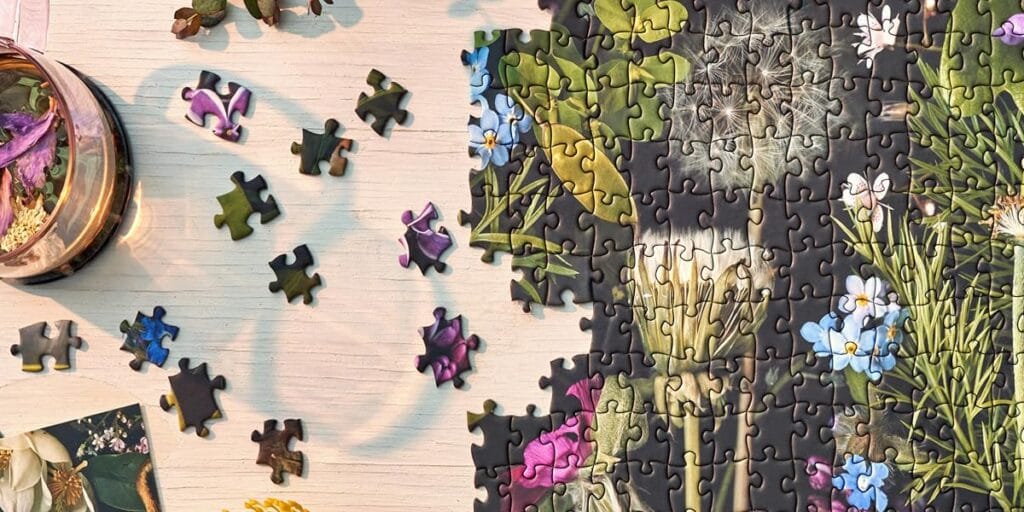
There is something oddly satisfying about dumping 2,000 puzzle pieces onto a table and knowing — before you even sort a single edge — that you are in for a genuinely rewarding challenge. These puzzles sit in a sweet spot that hardcore puzzlers know well: demanding enough to keep you engaged for days, yet not so intimidating that they never get opened. Our assessment team has spent a lot of hours at puzzle tables, testing pieces, comparing print quality, and arguing about whose turn it is to sort the blues.
In this guide, we share our honest picks for the best 2000-piece jigsaw puzzles on the market right now. We have focused on four standout brands — Ravensburger, Buffalo Games, Cobble Hill, and Trefl — covering everything from cut quality and piece thickness to image clarity and value for money. Whether you are a seasoned puzzler looking for your next obsession or shopping for the perfect gift, you will find a clear recommendation here.
Everything We Recommend
✅ We recommend these products based on an intensive research process that’s designed to cut through the noise and find the top products in this space. Guided by experts, we spend hours looking into the factors that matter to bring you these selections.
⭐ 2.5 million+ people assisted in the last 30 days ⭐
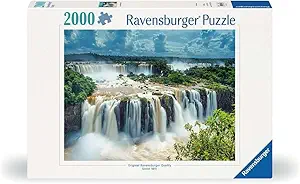
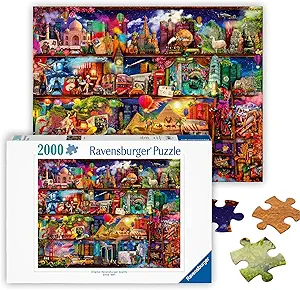

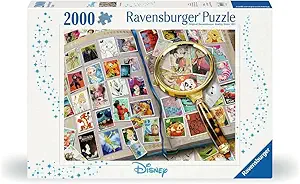
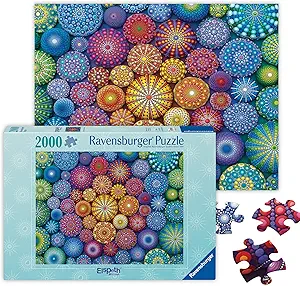
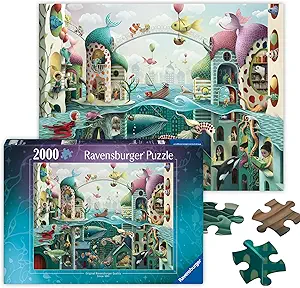
If there is one brand name that comes up in every serious puzzler’s conversation, it is Ravensburger, and after weeks of testing, we understand exactly why. The pieces are produced using handcrafted steel cutting tools designed in-house, which means every single piece is unique in shape, eliminating false fits almost entirely. The extra-thick European blue board prevents any warping or fraying over time, and the fine linen-structured surface diffuses light so beautifully that you can puzzle comfortably under a standard lamp without straining your eyes. The hallmark is what Ravensburger calls SoftClick Technology: a manufacturing precision so tight that pieces produce a soft, satisfying click when correctly placed — a tiny reward that makes every correct connection feel genuinely earned. Their 2,000-piece catalogue spans everything from sweeping mountain photography to iconic pop culture collages, and each box is backed by a lifetime warranty with no questions asked. For puzzlers who want to invest in an experience rather than just an activity, Ravensburger is the definitive answer.
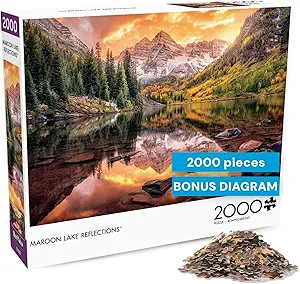
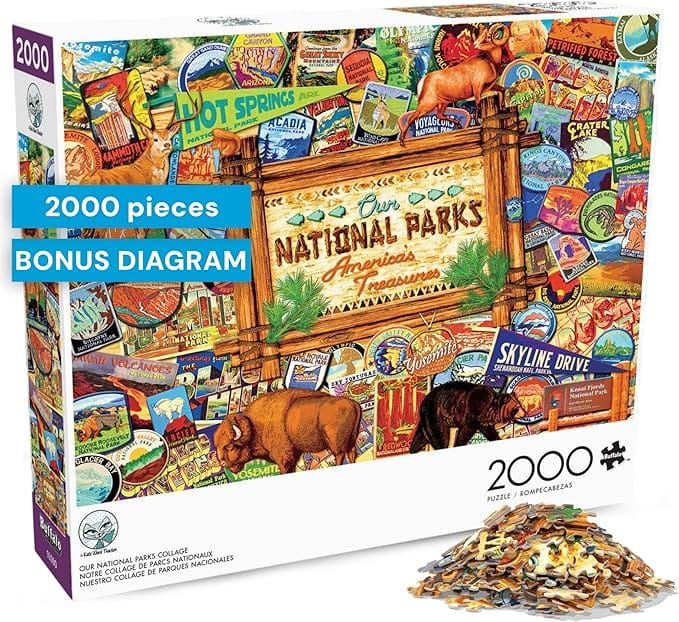
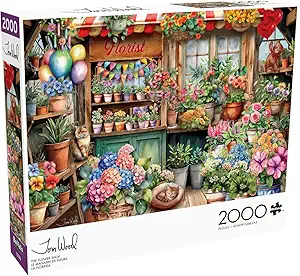
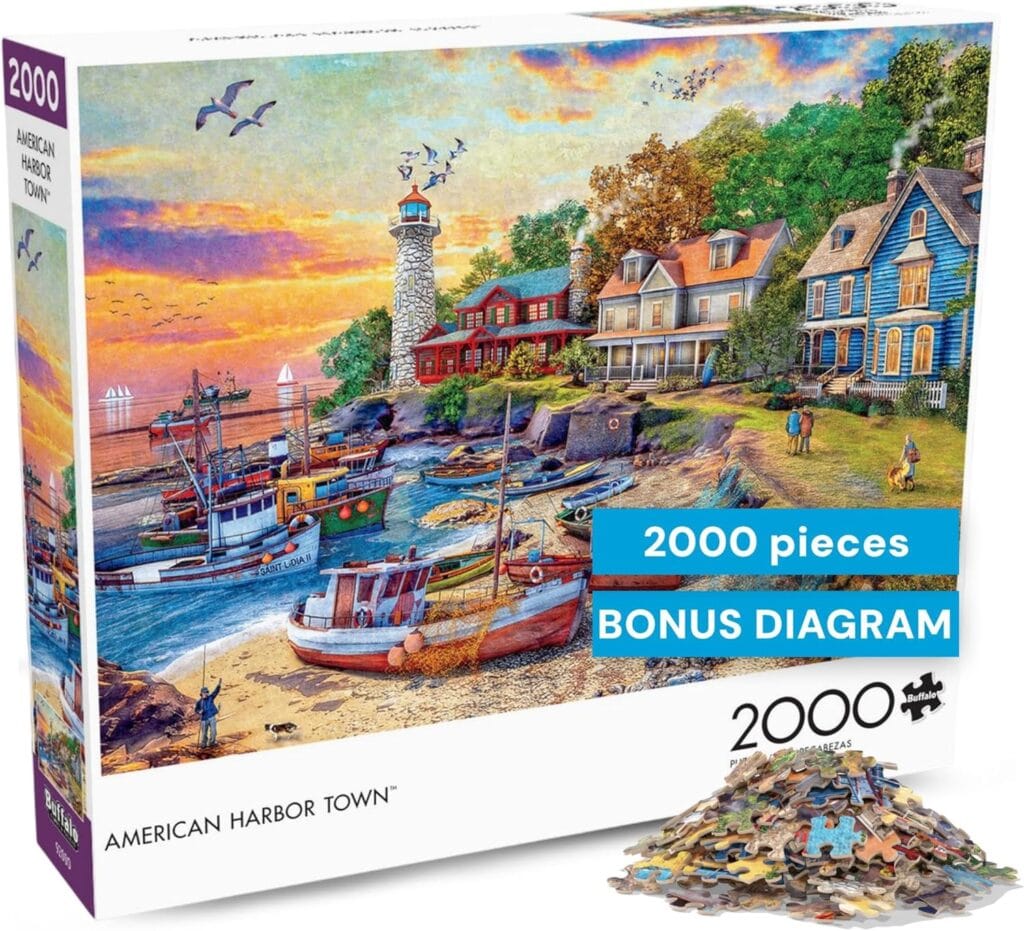
Buffalo Games has quietly become one of the most trusted names in the American puzzle market, and for good reason: they consistently deliver high-quality puzzles at a price that makes the hobby genuinely accessible. Their 2,000-piece puzzles are complete at 38.5″ x 26.5″ and are made from thick, premium recycled paperboard — a sustainability credential that comes without any compromise in durability. What really sets Buffalo Games apart at this price range is their proprietary Perfect Snap technology, which gives each interlocking piece a firm, confident fit that holds sections together without feeling stiff or forced. As our team sorted through their National Parks Collage puzzle, we were struck by how vivid and precisely printed the image was — each park scene rendered with crisp detail that made even the trickier sky sections manageable. A full-color bonus poster is included with every puzzle, functioning as either a helpful reference guide or a hidden-object checklist depending on the edition. This dual-purpose feature is a thoughtful touch that genuinely changes how you interact with the puzzle. If you want to build a serious puzzle collection without spending a fortune on every box, Buffalo Games is the smartest starting point — and probably where you will keep returning.
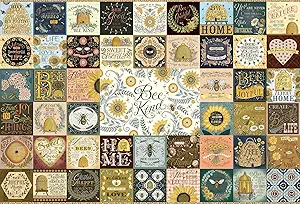
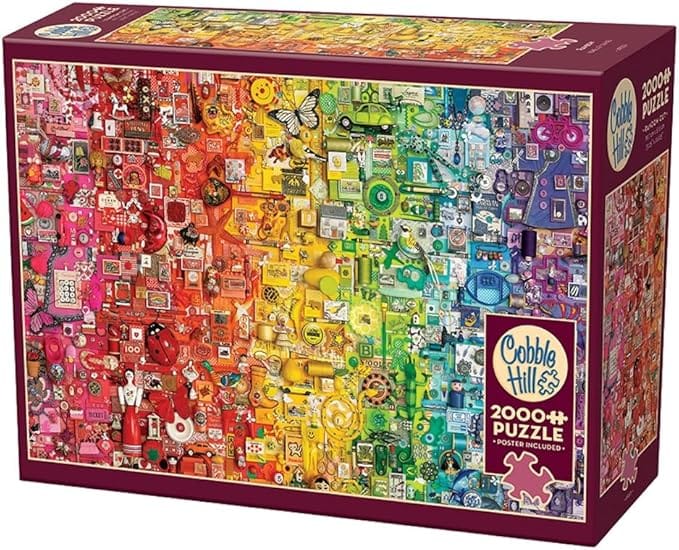
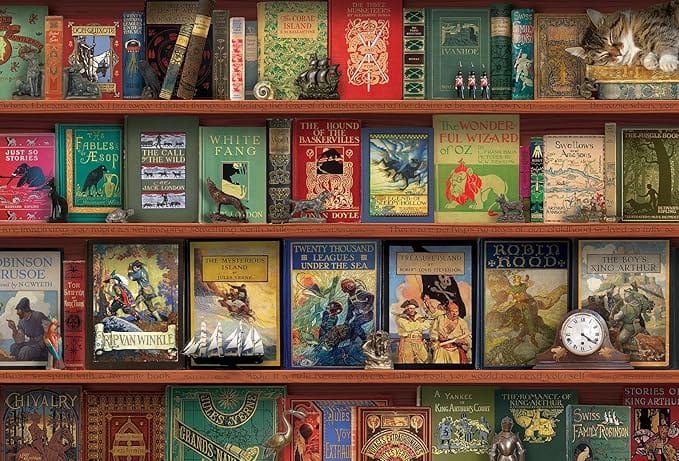

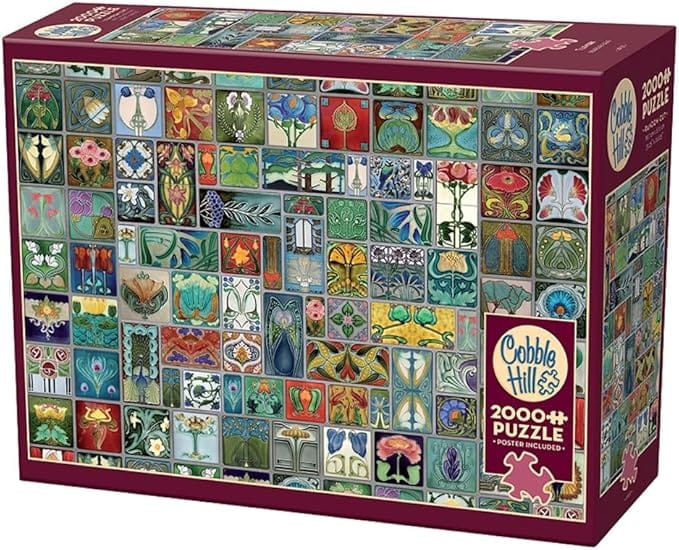
Cobble Hill is the brand our team reaches for when we want a puzzle session that genuinely tests us — not just our patience, but our spatial reasoning and attention to shape. Founded in 2005 and proudly manufactured in North America, Cobble Hill built its reputation on one defining feature: random-cut pieces. While most brands use repeating ribbon-cut patterns where knobs and holes follow predictable grid logic, Cobble Hill’s die cuts produce pieces that are all genuinely different from one another. There is no falling into a rhythm of “bump-left, hole-right” — every piece demands its own evaluation, which means the solving process stays mentally stimulating from piece one to the very last corner. The materials reinforce this premium feel: 100% recycled blueboard at roughly 1.7mm thickness, textured linen-finish paper that kills glare under any light, and vegetable-based inks that keep the imagery crisp without fading. Their finished 2,000-piece puzzle measures 39.25″ x 26.62″ — just slightly larger than most competitors — and comes with a reference poster for every puzzle produced after 2018. The image catalogue leans into collages, nature scenes, and whimsical art that look as good framed on a wall as they do laid out on a table. For puzzlers who have outgrown the predictability of standard cuts, Cobble Hill is the logical next step.
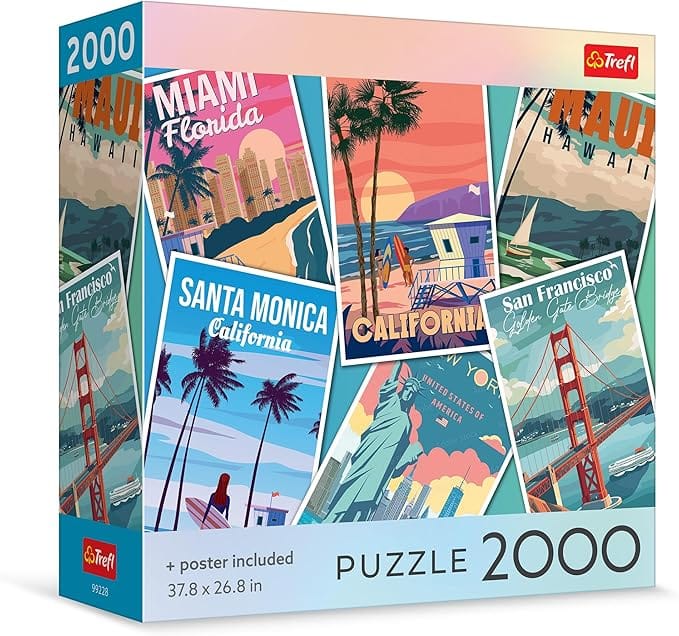
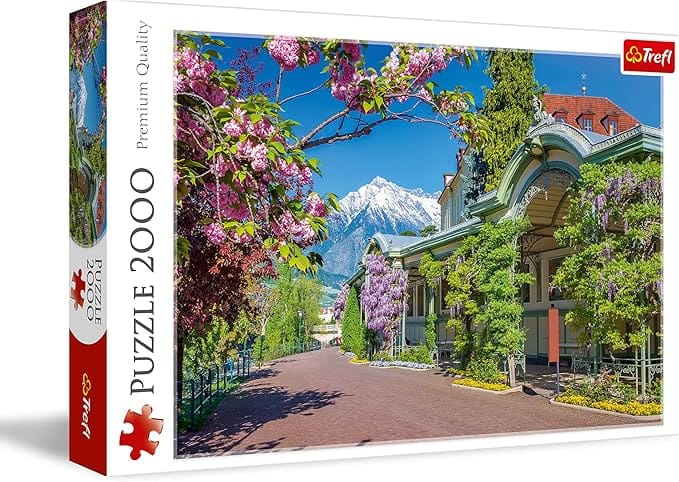
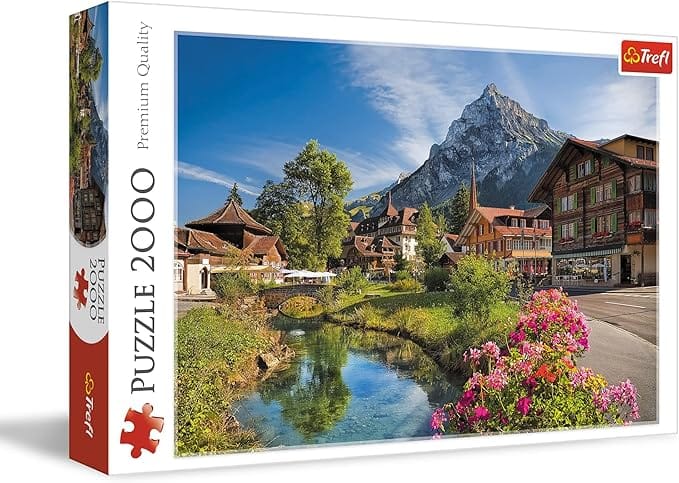
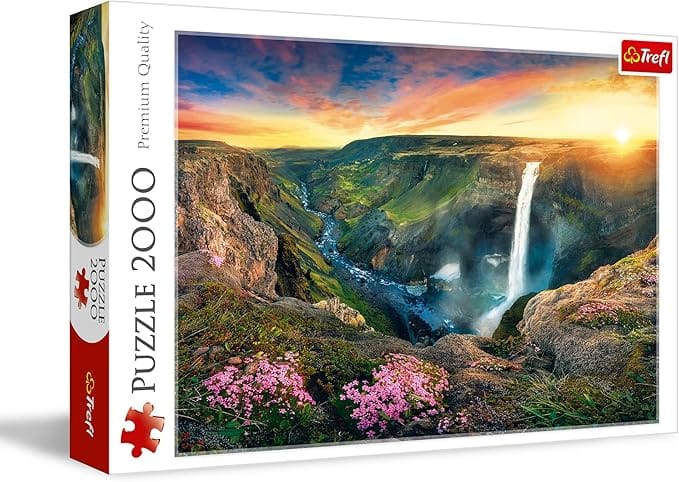
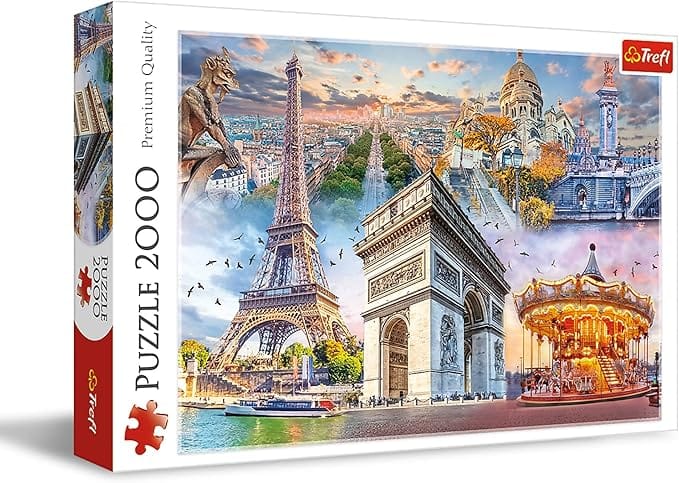
Trefl is a family-owned company based in Poland that has been manufacturing puzzles since 1985, and their 2,000-piece Red Series is where European puzzle craftsmanship meets a genuinely spectacular library of travel imagery. If your dream puzzle features the sun setting over Venice, the reflections of Haifoss Waterfall in Iceland, or the lantern-lit streets of Dubai, Trefl almost certainly has the version you are picturing — and at a price point that makes collecting multiple titles completely reasonable. The pieces themselves are produced at one of the three largest puzzle factories in Europe, and the quality reflects that scale: thick, durable cardboard with a smooth, satisfying feel in the hand, combined with an anti-reflective linen-structured paper that keeps the image sharp and easy to read. Our team was particularly impressed by how consistently the pieces interlocked — there is a soft, positive snap that feels close to Ravensburger territory at a noticeably lower price. Each 2,000-piece puzzle finishes at approximately 38″ x 27″, and the vivid, travel-focused photography translates beautifully at that scale, turning the sorting process into something that genuinely feels like a geography lesson. If you want to build a collection around the world’s most beautiful places and do not want to compromise on piece quality to do it, Trefl is a remarkable find.
Why 2,000 Pieces? The Case for Going Bigger
Most puzzle enthusiasts start with 500 or 1,000 pieces, and that is perfectly reasonable. But at some point, the challenge starts to feel too short-lived, and that is exactly when a 2,000-piece puzzle steps in to change everything. According to Buffalo Games, the average solving time for a 2,000-piece puzzle runs between 15 and 20 hours — meaning you get to enjoy the process over multiple evenings rather than racing through it in an afternoon.
The finished size also matters. Most 2,000-piece puzzles are complete at around 38.5″ x 26.5″, which is big enough to fill a coffee table and look genuinely impressive on a wall once framed. That brings us to another reason people love this piece count: the completed image is detailed enough to frame and hang as art. Plenty of puzzlers do exactly that.
From a cognitive standpoint, research consistently shows that jigsaw puzzles exercise spatial reasoning, improve short-term memory, and reduce cortisol levels. A longer, more complex puzzle simply means more of those benefits. Experienced puzzlers may finish a 2,000-piece puzzle in as little as 5 to 8 hours, while casual puzzlers can stretch the experience over weeks — and that flexibility is part of the appeal.
What to Look for Before You Buy a 2,000-Piece Puzzle
Not all 2,000-piece puzzles are created equal. After testing dozens of options, our team has zeroed in on the factors that actually determine whether a puzzle session is enjoyable or frustrating.
Piece Quality and Thickness
Thin, flimsy pieces are the enemy of a good puzzle. Look for brands that use premium-grade cardboard — often called “blueboard” — with a minimum thickness of around 1.7mm. Thick pieces are easier to handle, less prone to bending, and interlock more confidently. Ravensburger’s extra-thick European blue board and Cobble Hill’s random-cut blueboard pieces are two of the best examples we tested.
Cut Type: Ribbon vs. Random
Ribbon-cut puzzles follow predictable grid patterns with knobs and holes in standard positions. They are easier to learn, but can make sorting feel repetitive. Random-cut puzzles, on the other hand, use unique piece shapes throughout — every single piece can look different, which adds a genuinely stimulating layer to the solving experience. Cobble Hill is perhaps the gold standard for random cut at this price point.
Image Quality and Glare Reduction
Nobody wants to squint under a lamp trying to decipher a washed-out image. The best puzzles use a linen-structured paper surface that diffuses light and reduces glare dramatically. This seemingly small detail makes an enormous difference during long puzzling sessions, especially under artificial lighting. Ravensburger, Cobble Hill, and Trefl all use versions of this linen or anti-reflective finish.
Fit and “False Fits”
False fits — where a piece appears to snap in but is actually in the wrong spot — are a significant frustration with lower-quality puzzles. Precision-cut dies and consistent cardboard thickness help eliminate this problem. Ravensburger is famous for its SoftClick Technology, which produces pieces so precisely cut that you can literally hear a quiet click when a correct connection is made.
Image Variety and Theme Selection
The best brands offer wide catalogues so you can find something that genuinely excites you. Landscapes, cityscapes, art reproductions, pop culture, nature photography, food scenes, and whimsical collages are all well represented across our recommended brands. A puzzle you are emotionally connected to is a puzzle you will actually finish.
Eco-Friendly and Sustainable Materials
More and more puzzlers care about sustainability, and the good news is that the leading brands are responding. Look for puzzles made with FSC-certified cardboard, vegetable-based inks, and recycled materials. Cobble Hill uses 100% recycled chipboard and vegetable-based inks; Ravensburger holds FSC certification across its range.
How Our Team Tested These Puzzles
We evaluated each puzzle across five key areas: piece quality and thickness, cut precision and false-fit rate, image clarity under multiple lighting conditions, overall assembly experience, and packaging quality. Every puzzle was assembled on a dedicated puzzle table to simulate real-world conditions, and we noted any issues with piece fraying, dust levels, and sorting ease. We also timed our sessions to get a realistic sense of how long each puzzle takes for intermediate-level puzzlers.
Pricing was factored in separately, because what represents value depends heavily on the puzzler — a devoted hobbyist might consider a premium Ravensburger worth every penny, while a casual gifter will appreciate Buffalo Games’s accessible price tag. We have tried to be transparent about where each brand sits on that spectrum.
Tips for Getting the Most Out of Your 2,000-Piece Puzzle
Set Up a Dedicated Space
A 2,000-piece puzzle needs room — ideally a dedicated table you can leave undisturbed between sessions. If space is limited, invest in a roll-up puzzle mat or a puzzle board with a lid, so you can safely store your progress without losing pieces or disturbing your sorting.
Sort Before You Start
Separate edge pieces first, then sort interior pieces by color, pattern, or texture into small trays or lids. This pre-sorting step can add 30 minutes to a session, but it saves hours of frustration later. For collage-style puzzles like Cobble Hill’s offerings, sorting by “scene section” is even more useful than sorting by color alone.
Work in Good Lighting
A daylight-spectrum lamp (5,000K–6,500K) makes a world of difference when distinguishing subtle color variations. All our recommended brands use glare-reducing linen finishes specifically to help with this, but even the best finish benefits from quality light. If you find yourself squinting, upgrade your lamp before you blame the puzzle.
Consider Framing When You’re Done
Every puzzle in our guide produces a finished image worthy of display. If you plan to frame yours, pick up a bottle of puzzle conserver glue beforehand — brands like Ravensburger and Trefl sell their own formulations that dry clear and hold thousands of pieces firmly in place. Once dry, a framed 2,000-piece puzzle becomes a genuinely impressive piece of wall art.
Know Your Difficulty Preference Before Buying
Sky-heavy or monotone sections dramatically increase difficulty. If you are buying as a gift for someone new to larger puzzles, look for images with high contrast, multiple distinct color zones, and lots of interesting detail — Trefl’s city and landscape scenes are great for this. If you want maximum challenge, Cobble Hill’s random-cut collage puzzles with large sections of similar texture are the hardest puzzles we have tested at this piece count.
Frequently Asked Questions
How long does a 2,000-piece puzzle take to complete?
This really depends on your experience level and how often you sit down with it. Buffalo Games puts the average at 15 to 20 hours for most adult puzzlers. An experienced puzzler working with a high-contrast image might finish in as little as 8 hours; a casual weekend puzzler tackling a challenging collage might spread the same puzzle over three or four weeks. That extended timeline is part of the appeal — you get a long, rewarding hobby experience out of a single purchase.
Are 2,000-piece puzzles suitable for beginners?
We would not recommend jumping straight to 2,000 pieces if you have no puzzle experience. Start with 500 or 1,000 pieces to build your spatial reasoning and sorting habits, then step up. If you are comfortable with a 1,000-piece puzzle and want more of a challenge, a 2,000-piece is the natural and satisfying next level. Cobble Hill specifically recommends their 2,000-piece range for puzzlers who are already skilled at the 1,000-piece level.
What is the finished size of a 2,000-piece puzzle?
It varies slightly by brand, but most 2,000-piece puzzles finish at approximately 38″ x 27″ (96 x 69 cm). Cobble Hill’s 2,000-piece puzzles are slightly larger at 39.25″ x 26.62″, while Ravensburger’s 2,000-piece puzzles finish at approximately 38.75″ x 29.5″. Always check the box for exact dimensions if you are planning to frame your puzzle.
Can I frame a 2,000-piece puzzle?
Absolutely — and it is worth it. Apply a puzzle conserver or PVA-based puzzle glue to the face of the completed puzzle, let it dry completely, then carefully slide it onto a backing board. Standard poster frames in 24″ x 36″ work for most, though you may need a custom frame for puzzles that fall outside standard dimensions. Ravensburger and Trefl both sell puzzle-specific glue that dries clear and holds permanently.
Are there eco-friendly 2,000-piece puzzle options?
Yes, and the good news is that the best brands already take sustainability seriously. Cobble Hill uses 100% recycled chipboard and vegetable-based inks. Ravensburger puzzles are FSC-certified, meaning the cardboard comes from responsibly managed forests. Buffalo Games uses 100% recycled paperboard across its range. Trefl manufactures in a European facility with strong sustainability standards. So buying from any of our recommended brands is already a relatively responsible choice.
The Mental Health Benefits of Puzzle-Solving (and Why 2,000 Pieces Gets You There Faster)
It might sound like marketing language, but the mental health benefits of jigsaw puzzles are genuinely well-documented. The focused, repetitive nature of puzzle-solving activates what researchers call a “flow state” — a condition of deep, effortless concentration associated with reduced anxiety and improved mood. The longer the puzzle takes, the more sustained that benefit becomes, which is one reason the jump from 1,000 to 2,000 pieces is not just about the challenge — it is about extending the reward.
According to research published by the National Institutes of Health, engaging in visuospatial cognitive activities — of which jigsaw puzzling is a classic example — is associated with delayed cognitive decline and improved working memory across age groups.
For a lot of our team members, a 2,000-piece puzzle on the dining table became a genuine anchor during busy periods — something to return to for 20 minutes at the end of the day that reliably quieted a spinning mind. If you have never experienced that particular kind of calm, a great 2,000-piece puzzle is probably the fastest route there.
Which 2,000-Piece Puzzle Should You Buy?
After all our testing, the answer — as it usually is — depends on who you are and what you value.
If you want the absolute best puzzle experience money can buy, start with Ravensburger. The SoftClick precision, the lifetime warranty, and the quality of the finished image are genuinely in a class of their own. You will understand within the first hour why they have been making puzzles since 1891.
If you want high quality without the premium price tag, Buffalo Games is the clear value winner. Perfect Snap technology, vivid imagery, the included bonus poster, and a huge image library make these puzzles hard to beat for the price.
If you are an experienced puzzler who wants a real challenge, Cobble Hill’s random-cut format will change the way you think about puzzle-solving. Every piece is genuinely unique, the materials are excellent, and the image library is beautifully curated.
And if your heart belongs to dramatic travel photography — mountain passes, ancient cities, breathtaking coastlines — Trefl’s Red Series is your answer. European manufacturing quality at an everyday price, wrapped around some of the most striking landscape imagery in the puzzle market.
The Cloudberries puzzles we tested were also quite good, but there aren’t many 2,000-piece options available.