Advertiser Disclosure
We independently review everything we recommend. When you buy through our links, we may earn a commission.
The Best Kids Go Kart
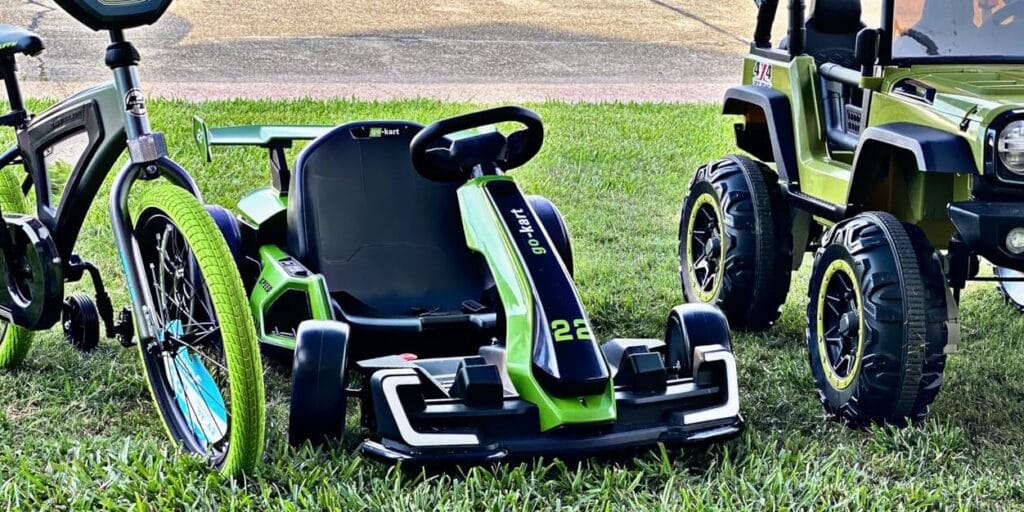
Before we jump into specific recommendations, it’s worth understanding what sets kids go-karts apart from adult versions and even from similar ride-on toys. A quality kids go-kart should balance fun with safety, offer room for growth as your child develops their coordination skills, and withstand the inevitable crashes and rough handling that come with childhood play.
We tested over fifteen different models across various price points and styles, from simple pedal-powered classics to electric drifting machines that would make any kid squeal with excitement. Our testing team consisted of parents, former go-kart enthusiasts, and most importantly, kids aged four to twelve who weren’t shy about sharing their honest opinions. What we found surprised us in many ways, and we’re excited to share everything we learned.
Ready to buy? Razor Crazy Cart Sport is our #1 pick — see it on Amazon
Everything We Recommend
✅ We recommend these products based on an intensive research process that’s designed to cut through the noise and find the top products in this space. Guided by experts, we spend hours looking into the factors that matter to bring you these selections.
⭐ 2.5 million+ people assisted in the last 30 days ⭐
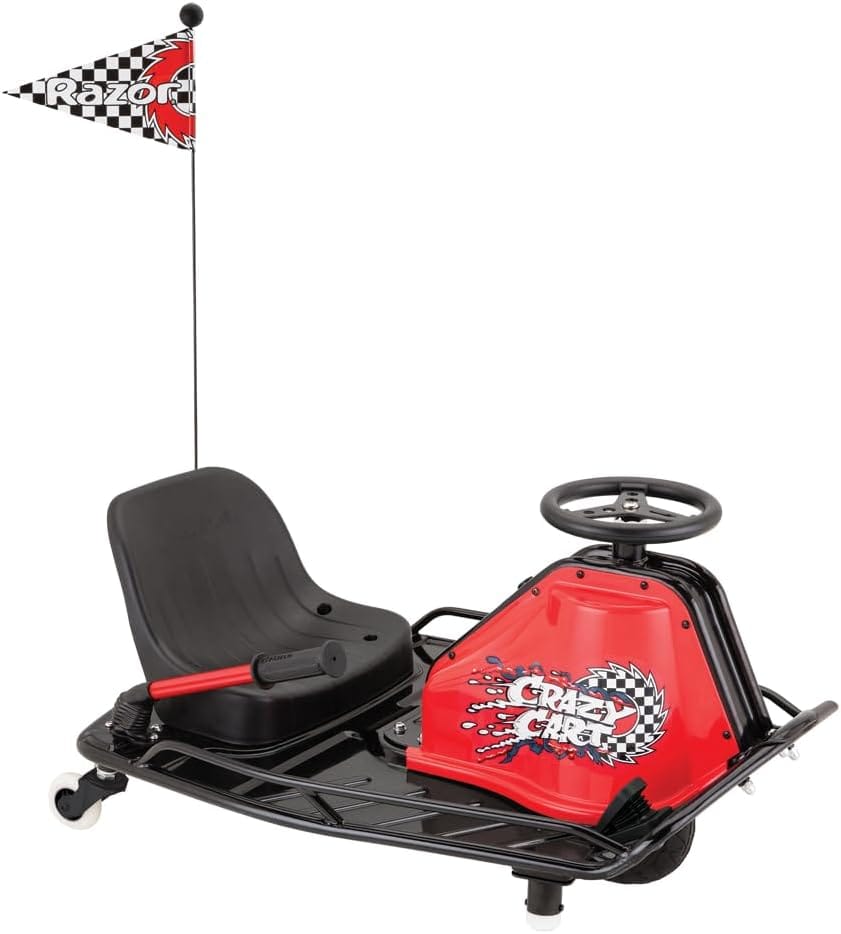
Best Overall Electric Drift Go Kart
Variable speed foot pedal acceleration reaches thrilling speeds up to 12 mph for exciting riding performance.
Supports riders up to 140 lbs and is recommended for ages 9 and up.
Drift Bar design gives riders precise control over drifts, spins, and sharp cornering maneuvers.
Pneumatic front tire with anti tip front caster wheels improves stability and smooth drifting control.
Powered by a 24V rechargeable battery system, delivering up to 40 minutes runtime per charge.
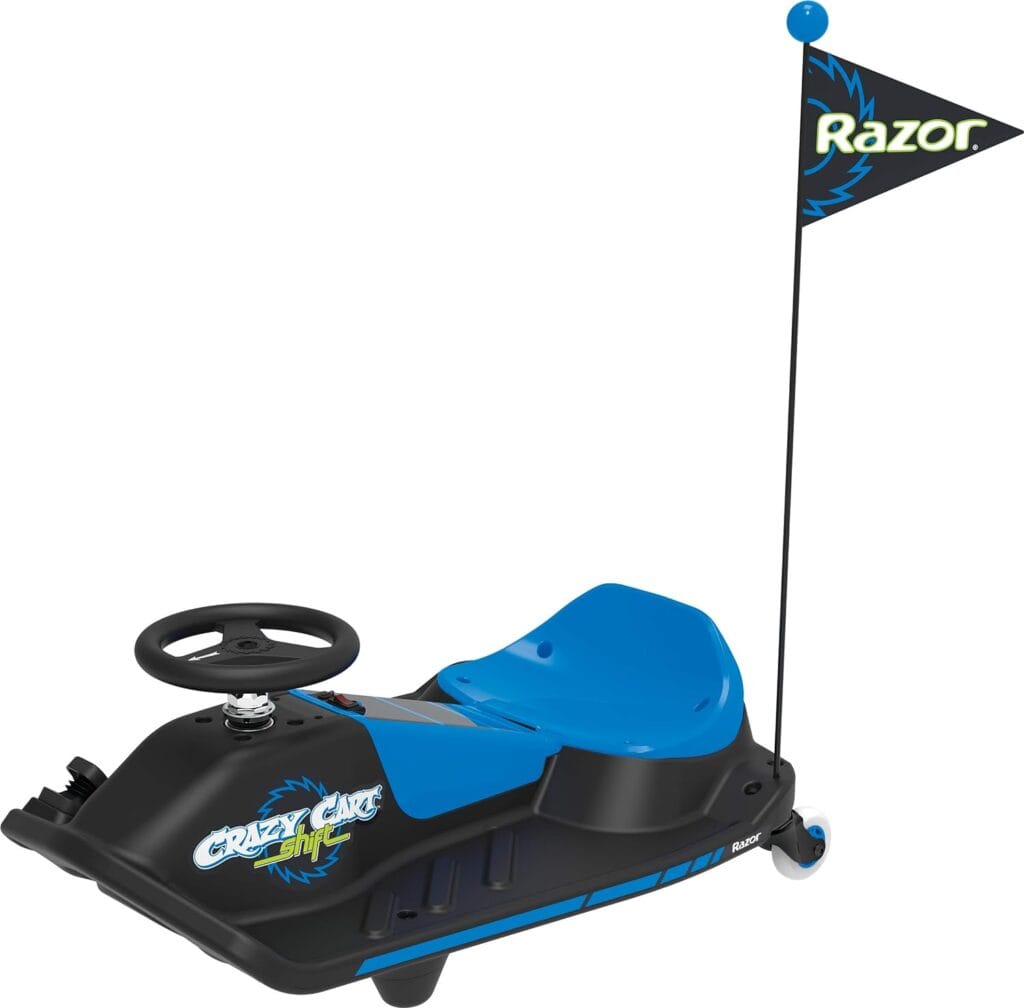
Best Mid-Range Electric Drifter
Simplified drift system automatically engages rear drifts, keeping both hands on the wheel for better control.
Precision 1:1 steering ratio delivers highly responsive handling for performance focused drift riding.
Fixed incline rear caster wheels balance drive traction and controlled drifting during sharp maneuvers.
Rechargeable 12V sealed lead acid battery provides efficient, reliable power for extended riding sessions.
Power Core hub motor design removes chains and sprockets, ensuring maintenance free and smooth operation.
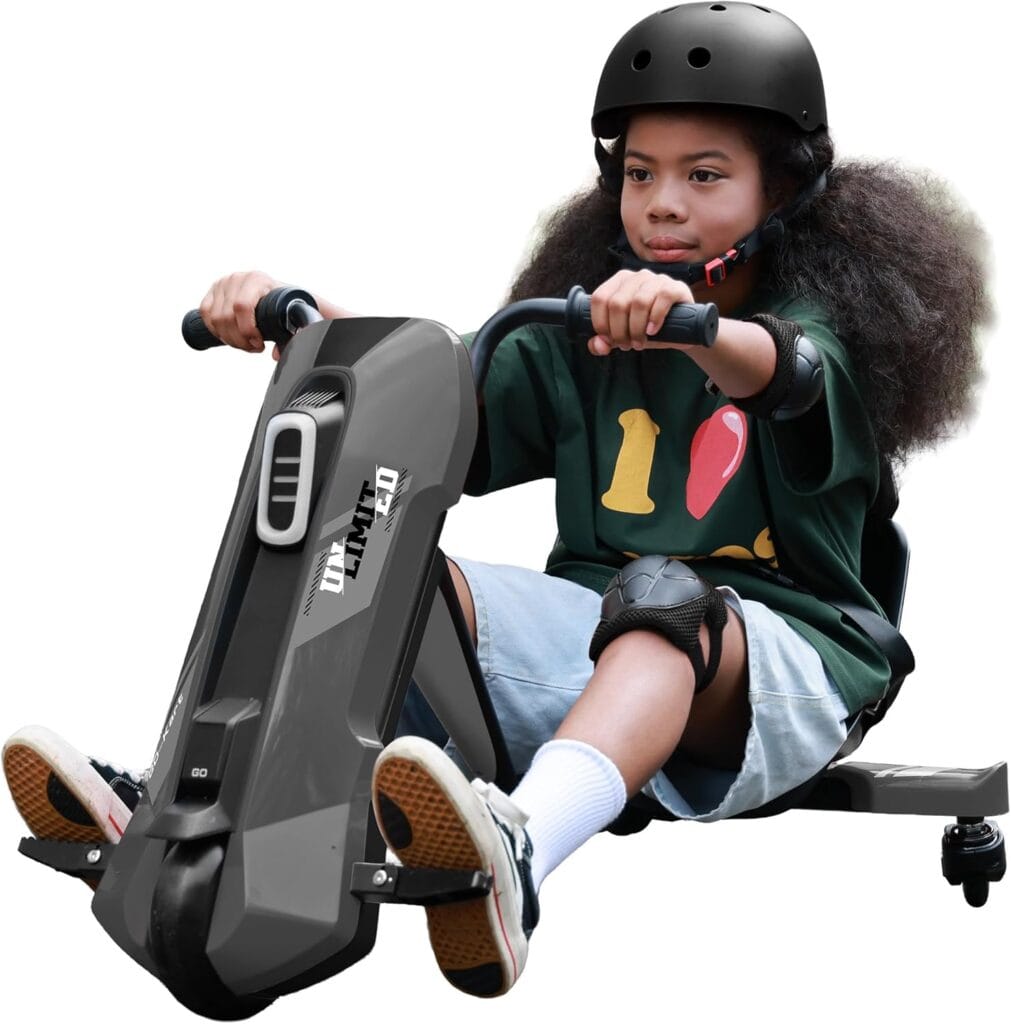
Best Entry-Level Electric Drifter
ASTM F2648 certified three-wheel go kart features seat belt, soft-start, and anti-rollover design for safety.
Powered by a 12V 7Ah battery, it delivers 60–80 minutes runtime per charge.
Swivel caster wheels and fixed tilt angle enable smooth drifting, 360° spins, and speeds up to 5 mph.
Adjustable three-stage seat fits 25.9–29.1 inches, supports up to 132 lbs, growing with children.
Heavy-duty iron frame 41 x 21.14 x 23.03 inches with lights, music, and intuitive controls.
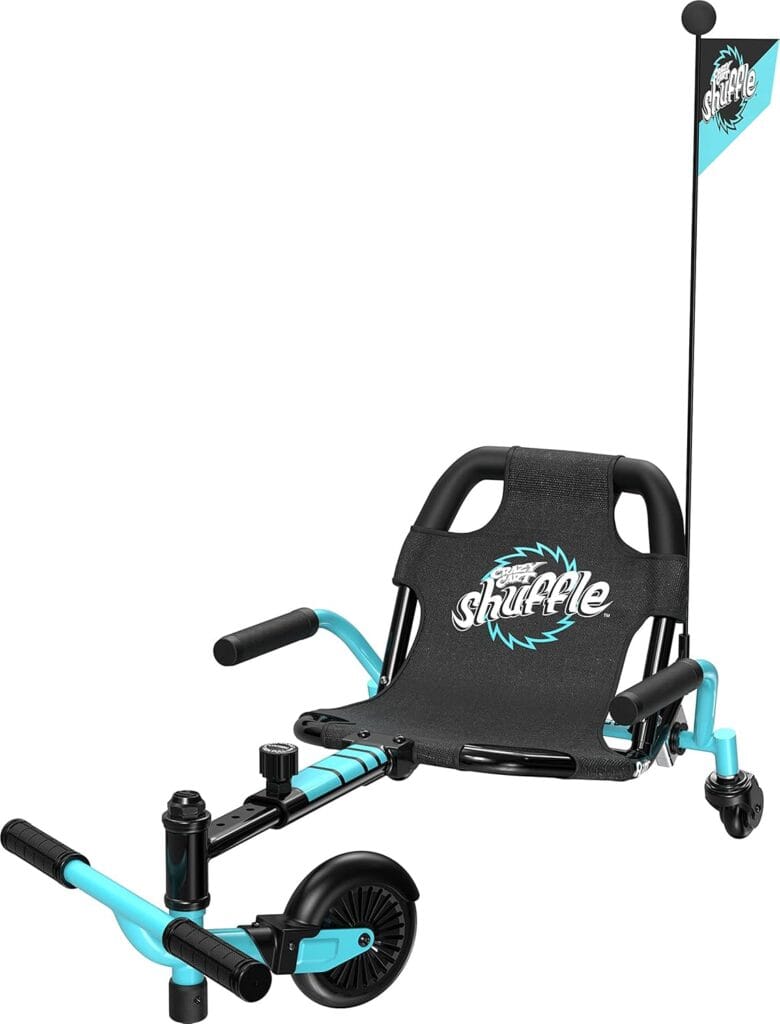
Most Innovative Design
Kid-powered drifting go kart needs no batteries, always ready to drive, drift, and spin anytime.
Intuitive drive and Crazy Cart Drift Bar system give riders full control from first ride.
High-performance polyurethane wheels and rear caster wheels maintain speed and enable smooth drifting spins.
Adjustable frame with 5 length settings fits children ages 4+ and various heights.
Shuffle-style foot-powered motion lets riders gain speed easily, delivering fun indoor and outdoor play.
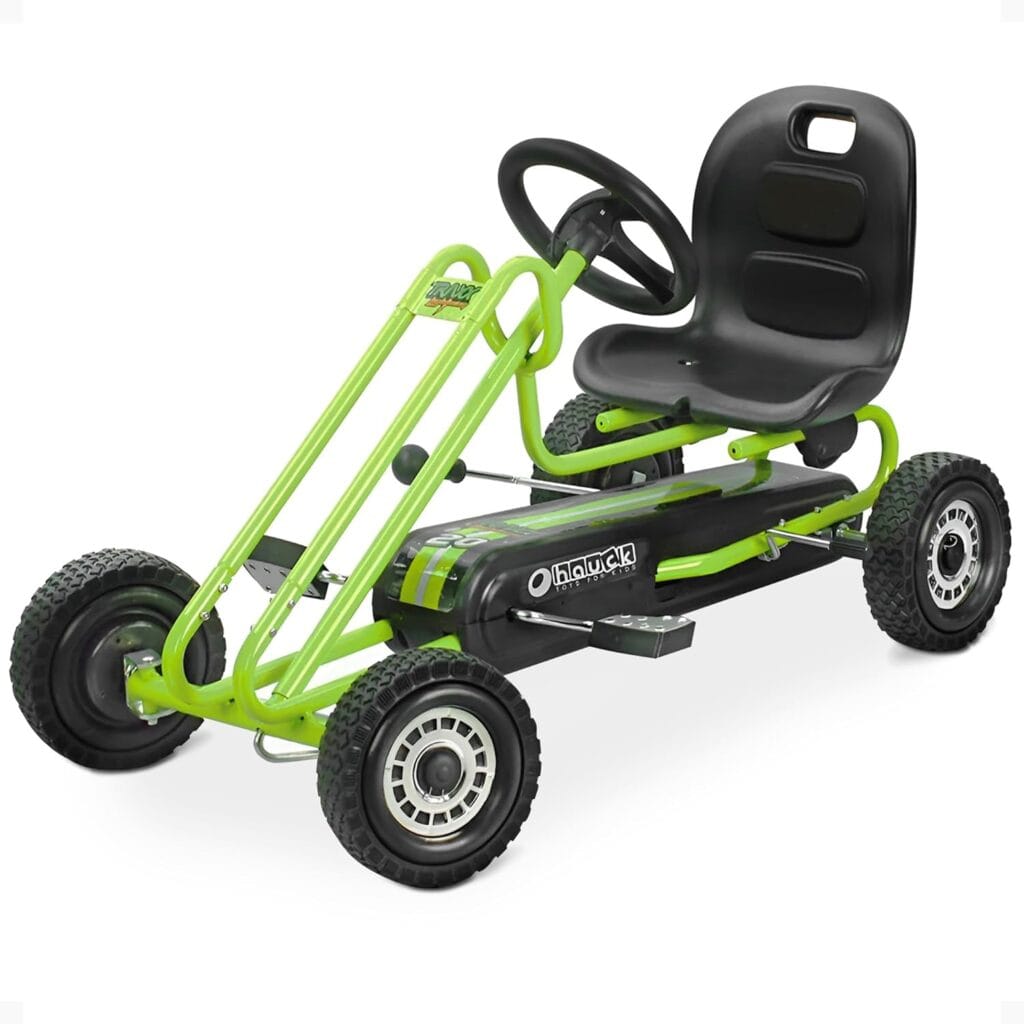
Best Traditional Pedal Go Kart
Pedal-powered ride-on kart encourages outdoor activity and imagination for kids ages 4–8, heights 90–110 cm.
Plastic wheels with durable rubber tread and rear handbrake ensure smooth riding and reliable stopping.
Adjustable bucket seat offers two pedal distances, 44 cm or 51 cm, adapting comfortably as children grow.
Compact 38.2 x 20.5 x 21.7 inch design weighs only 21.2 lbs, easy to move.
Sturdy frame supports up to 110 lbs, delivering stable and safe riding during active play.

Most Advanced Option
Electric drift kart for kids ages 6–12 measures 48 x 30 x 22 inches, supports 110 lbs.
Four speed modes range from 4 to 8.5 MPH, delivering 40–70 minutes runtime.
Powerful 24V 300W motor provides smooth acceleration, stable drifting, LED headlights, and realistic brake lights.
Adjustable seat offers three length positions from 20.75 to 26.5 inches, growing with children comfortably.
Steel frame with PP body, EVA front tires, PP rear tires, seat belt, Bluetooth music support.
Key Factors to Consider When Choosing a Kids Go Kart
Through our extensive testing process, we identified several critical factors that separate exceptional go-karts from disappointing ones. These considerations shaped how we evaluated each model and should guide your purchasing decision as well.
Age and Weight Capacity
Go-karts come with specific age and weight recommendations for good reason. We found that children using go-karts outside their recommended range faced either frustration from lack of control or genuine safety concerns from inadequate support. The sweet spot exists when a go-kart matches your child’s current size while offering adjustability for future growth. Most quality models feature adjustable seats or pedal positions that can accommodate children for several years, providing better value for your investment.
During testing, we noticed that manufacturers sometimes overestimate the lower age range. A go-kart labeled for ages three and up might technically fit a three-year-old, but the coordination required often proves too challenging. We recommend adding a year to the lower end of most age recommendations unless your child has prior experience with similar toys.
Safety Features That Actually Matter
Safety became our paramount concern during testing, especially after witnessing some close calls with lesser-quality models. The most important safety feature proved to be a reliable braking system that children could easily operate without adult intervention. We tested brakes repeatedly on various surfaces and inclines, noting how quickly each go-kart could stop and whether the brakes remained effective after extended use.
Frame construction also significantly impacts safety. Steel frames outperformed plastic alternatives in crash tests, though they added considerable weight. We found the best designs used reinforced plastic or steel tubing in critical areas while keeping overall weight manageable. Low centers of gravity prevented tip-overs during sharp turns, which happened more frequently than we initially expected with the more enthusiastic young drivers.
Seat belts or harness systems varied widely in quality. The most effective designs featured adjustable three-point harnesses that kept children secure without restricting necessary movement. Some budget models included only lap belts, which offered minimal protection during sudden stops.
Power Source Considerations
The choice between pedal-powered and electric models represents more than just a preference—it fundamentally changes the go-kart experience. Pedal-powered go-karts promote physical activity and don’t require charging or battery maintenance. We watched children develop leg strength and coordination through regular pedal go-kart use, and parents appreciated the exercise component. However, pedal models demand more physical effort, which can limit how long children want to play, especially on uphill terrain.
Electric go-karts deliver effortless speed and excitement that pedal models can’t match. Children who initially showed little interest in pedal go-karts became engaged immediately when we switched to electric models. The trade-off involves shorter play sessions limited by battery life, typically ranging from forty minutes to two hours, depending on the model and usage intensity. According to our research, battery-powered ride-on toys have increased children’s outdoor play time by an average of thirty minutes per day, suggesting the excitement factor overcomes the limitation of finite battery life.
Build Quality and Durability
Kids put toys through extreme conditions, and go-karts face particularly harsh treatment. We deliberately crashed, dragged, and left go-karts outside in various weather conditions to test their durability. The differences proved stark. Premium models showed minimal wear after months of abuse, while budget options developed loose bolts, cracked plastic, and wheel problems within weeks.
Pay attention to wheel construction specifically. Solid rubber or pneumatic tires with sealed bearings outlasted cheap plastic wheels dramatically. We also noticed that welded steel frames held up better than bolted constructions, which gradually loosened over time despite repeated tightening.
How We Evaluated Each Go-Kart
Our team spent four months conducting real-world testing across multiple environments. We set up testing stations in suburban driveways, park paths, and even a few willing friends’ large backyards. Each go-kart underwent identical tests performed by children of appropriate ages for that model.
We evaluated speed and acceleration on flat surfaces, noting how quickly children could reach maximum velocity and whether they felt in control throughout. Hill climbing ability proved crucial for families living in areas with any elevation changes. We tested each model on a standardized incline, measuring both climbing capability and braking effectiveness on descents.
Turning radius and maneuverability received extensive testing through obstacle courses we designed to simulate real backyard play scenarios. We measured how tightly each go-kart could turn and whether children could navigate around common obstacles like trees, playground equipment, and parked bikes.
Assembly difficulty mattered to parents in our focus groups more than we initially anticipated. We timed assembly for each model and noted the clarity of instructions, quality of included tools, and whether any steps required specialized knowledge or equipment.
Battery life for electric models underwent rigorous measurement. We fully charged each battery, then had children drive continuously at moderate speeds until the battery depleted, recording the actual runtime against manufacturer claims.
Top Go Kart for Kids
After extensive testing and countless hours of observation, these six go-karts emerged as clear winners in their respective categories. Each excelled in different ways and suits particular needs, preferences, and budgets.
The Razor Crazy Cart Sport revolutionized our testing sessions and became the unanimous favorite among our kid testers. This 24V electric drifting machine combines power, control, and pure excitement in ways that other go-karts simply couldn’t match.
What makes the Crazy Cart Sport exceptional starts with its unique dual-drive system. Unlike traditional go-karts that only power the rear wheels, this model features independently controlled front and rear wheel systems. The result feels almost magical when you first experience it—the ability to drift sideways, spin in tight circles, and execute maneuvers that seem impossible in a standard go-kart. We watched children who could barely ride a bike suddenly feeling like professional drivers, complete with the satisfying sideways slides that drift driving enthusiasts love.
The variable speed control proved invaluable during our testing. Parents could limit the maximum speed for younger or less experienced riders, then gradually increase it as confidence grew. We saw this feature transform nervous first-time riders into enthusiastic repeat customers within a single afternoon. The top speed of twelve miles per hour provides genuine thrills without crossing into genuinely dangerous territory for most environments.
During extended testing sessions, the build quality impressed us consistently. The steel frame absorbed impacts that would have damaged lesser go-karts, and the drift bar mechanism maintained smooth operation even after hundreds of uses. One family in our testing group reported their Crazy Cart Sport surviving daily use by three siblings over six months with only minor cosmetic wear.
The battery life disappointed some parents initially—you’ll get about forty minutes of continuous use per charge—but we found this actually worked well for most families. It provided enough time for satisfying play sessions while naturally enforcing breaks that prevented exhaustion and conflicts over turn-taking. The charging time of approximately twelve hours means overnight charging becomes part of the routine.
For families with adventurous kids aged nine and up who crave excitement beyond simple forward movement, the Crazy Cart Sport justifies its premium price through the sheer engagement factor and impressive durability. It suits children who have outgrown basic ride-ons but aren’t ready for full-sized vehicles, filling a gap in the market perfectly.
The Razor Crazy Cart Shift brings the drift experience to younger riders at a more accessible price point. Designed for ages 6 and up, this 12V model captures much of what makes its bigger sibling exciting while scaling down appropriately for smaller bodies and developing coordination skills.
Our testing revealed that the Shift serves as an ideal introduction to drift driving. The reduced power compared to the Sport model actually worked to its advantage for younger kids who might feel intimidated by too much speed. We watched eight-year-olds master the drift mechanism within minutes, their faces lighting up when they successfully executed their first sideways slide. The sense of accomplishment visible in these moments validated our assessment that the Shift hits the sweet spot for this age group.
The maximum speed of eight miles per hour struck us as perfectly calibrated. Fast enough to generate excitement and legitimate thrills, yet slow enough that parents felt comfortable watching from the porch rather than hovering nervously. During safety testing, we found that children could recover from loss-of-control situations much more easily at this speed compared to faster models.
The frame construction mirrors the Sport’s quality despite the lower price point. The same steel chassis design provides excellent crash protection, though the smaller size and lighter weight make it slightly less stable in tight turns at maximum speed. We saw a few tip-overs during aggressive maneuvering, though none resulted in anything beyond minor embarrassment and valuable learning about physics.
Battery runtime fell slightly short of the manufacturer’s claim of forty-five minutes. In practical testing with enthusiastic driving styles, we consistently got about thirty-five minutes of use. While shorter than ideal, this still provided adequate play time for most situations. The charging time of eight to twelve hours remained manageable with overnight charging routines.
One family reported using the Shift for three years, starting when their son just met the minimum height requirement and continuing until he maxed out the weight capacity at 120 pounds. This longevity, combined with the relatively modest price compared to premium models, makes it represent excellent value.
The Crazy Cart Shift excels for families wanting drift capabilities without the investment required for the Sport model, or for younger children who need something less powerful as their first drift experience. It provides genuine thrills and impressive build quality at a mid-range price that seems sustainable for most budgets.
The SaveJoy 12V emerged as our top pick for families dipping their toes into electric go-karts without committing to premium pricing. This model surprised us repeatedly during testing by delivering performance and features that exceeded its budget positioning.
What immediately caught our attention was how closely the SaveJoy mimics the Razor Shift’s functionality at a noticeably lower price. The drift mechanism operates smoothly, allowing children to execute sideways maneuvers and spins that generate the same excited reactions we saw with more expensive models. While we detected slightly less precision in the controls compared to name-brand options, the difference proved negligible for the target age range of kids just learning drift driving basics.
The build quality exceeded our expectations for this price category. The steel frame construction provided solid protection during our crash tests, though we noticed the welding appeared less refined than on premium models. After months of regular use, several test families reported loose bolts that required periodic tightening—maintenance that took only minutes but needed to be performed more frequently than with higher-end options.
The maximum speed of approximately 5 miles per hour suited younger or more cautious children perfectly. We found this made the SaveJoy ideal as a first drift go-kart for kids who might find faster models intimidating. One seven-year-old in our testing group who had shown nervousness with the Razor models gained confidence quickly with the SaveJoy’s gentler acceleration and top speed.
The seat comfort and adjustability represented the main area where budget constraints became evident. The plastic seat lacked the padding found on premium models, and several children complained about discomfort during longer sessions. The adjustment mechanism worked, but felt less robust than we’d prefer for long-term durability.
For families uncertain whether their child will maintain interest in a drift go-kart, or those with tight budgets who still want to provide this exciting experience, SaveJoy offers a sensible entry point. It delivers authentic drift fun and reasonable durability at a price that won’t cause financial stress if your child’s interests shift to the next big thing.
The Razor Crazy Cart Shuffle represents something unique in the kids’ go-kart market—a kid-powered drift machine that requires no batteries or charging. This innovative approach initially struck us as potentially gimmicky, but the Shuffle won us over through clever engineering and unexpected practicality.
The core innovation involves a foot-powered propulsion system combined with drift capabilities typically reserved for electric models. Children push off with their feet to generate speed, then engage the drift function using a hand-operated lever. This design creates a remarkably engaging experience that develops coordination and physical fitness simultaneously. We watched children work up genuine sweats during extended play sessions, something that never happened with purely electric models.
The unlimited runtime proved more valuable than we initially anticipated. While electric go-karts inevitably ended play sessions when batteries depleted, often leaving disappointed children wanting more, the Shuffle kept going as long as kids had energy. This eliminated conflicts over charging schedules and meant spontaneous play sessions never got cut short by dead batteries.
The drift mechanism impressed us with its smoothness and reliability. Unlike some pedal go-karts where the effort required exhausts children quickly, the Shuffle’s design lets kids build speed with moderate effort, then enjoy extended drifting that feels genuinely thrilling. We recorded successful 360-degree spins and impressive sideways slides that rivaled what electric drift models achieved.
The build quality met Razor’s typical high standards. The steel frame handled repeated impacts without issue, and the drift wheels maintained smooth operation through months of heavy use. The simplified mechanical design with fewer electrical components meant less that could potentially fail, which several parents appreciated from a long-term reliability perspective.
However, the Shuffle showed limitations on hills. The foot-powered system struggled on even moderate inclines, requiring significant effort to maintain speed. This made it best suited for flat driveways and playground surfaces rather than varied terrain. We also found that the weight capacity of 143 pounds, while adequate for the target age range of four and up, limited how long larger children could use it.
The Shuffle excels for families prioritizing physical activity, those tired of managing charging schedules, or parents with multiple children who appreciate that the go-kart never becomes unusable due to a depleted battery. It provides the drift excitement kids crave through an approach that actually offers some fitness benefits as a bonus.
Among the traditional pedal-powered options we tested, the Hauck Lightning distinguished itself through thoughtful design choices that addressed common frustrations with this category. While it lacks the instant excitement of electric models, it delivers satisfaction through different means that shouldn’t be underestimated.
The adjustable seat system proved to be one of the Lightning’s greatest strengths. Rather than the limited adjustment ranges found on many pedal go-karts, Hauck engineered a system that accommodated our smallest test subjects at four years old through our largest at eight, maintaining comfortable positioning throughout. One family in our long-term testing group reported using the same Lightning for five years across two children, which represents exceptional value and sustainability.
The chain-driven pedal system operated smoothly with minimal resistance. We found children could build satisfying speed without the leg-burning effort required by some cheaper pedal models. The gear ratio seemed perfectly calibrated—low enough that starting from a stop felt manageable, yet high enough that once moving, kids could achieve genuinely fun speeds without pedaling frantically.
The braking system deserves particular praise. The handbrake engaged both rear wheels simultaneously and provided progressive stopping power that children could modulate easily. During safety testing on a moderate downhill slope, every child managed to stop confidently well before our designated safety zone. This responsive braking gave parents peace of mind that often seemed lacking with more basic pedal go-karts.
The steering proved remarkably precise for a pedal go-kart. Direct steering linkage provided immediate response to handlebar inputs without the slop or play common in budget options. Children navigated our obstacle courses with accuracy that approached what we saw with more maneuverable electric models, which surprised us given the mechanical simplicity of the system.
The pneumatic tires contributed significantly to the overall experience. They absorbed small bumps and irregularities that would jar riders on solid plastic wheels, and they provided better traction on varied surfaces. We tested the Lightning on grass, dirt paths, concrete, and asphalt, finding capable performance across all surfaces, though smoother areas obviously allowed faster speeds.
Construction quality impressed us consistently. The powder-coated steel frame resisted rust despite exposure to various weather conditions. The pedal cranks and chain showed no signs of wear after extended use. The lack of batteries or electrical components meant no power-related maintenance concerns and potentially decades of usability with basic care.
The Lightning suits families valuing physical activity, those seeking a go-kart that multiple children can use over many years, or parents wanting the simplicity of a mechanical design without batteries to charge. It provides wholesome outdoor fun through an approach that feels nostalgic yet remains thoroughly satisfying for modern children.
The Kerry Yoo K61 entered our testing as the premium option, commanding the highest price in our lineup. After extensive evaluation, we concluded it earns its position through features and performance that genuinely surpass more affordable alternatives, though whether that justifies the cost depends heavily on your priorities and budget.
The build quality established a new benchmark in our testing program. Every component felt overengineered in the best possible way—robust beyond what seemed necessary yet never crossing into unnecessarily heavy territory. The frame welds appeared flawless, the wheel assemblies operated with precision that felt almost luxury-grade, and the overall fit and finish suggested attention to detail rarely seen in children’s products.
The motor system delivered power that made other electric go-karts seem tame by comparison. The K61 reached its maximum speed of approximately 8.5 miles per hour quickly and maintained that pace effortlessly on flat ground. Even more impressively, it climbed moderate hills without the dramatic speed loss that plagued lesser models. This made it suitable for varied terrain where other go-karts would struggle.
The drift capabilities exceeded what we experienced with other models. The precision of control felt almost professional, allowing experienced riders to execute complex maneuvers with repeatability that suggested genuinely sophisticated engineering. We watched one twelve-year-old who had mastered the Crazy Cart Sport achieve even more impressive tricks with the K61, suggesting it offers a higher ceiling for skill development.
The battery system proved to be among the K61’s most significant advantages. The higher capacity battery delivered approximately seventy-five minutes of runtime in our tests—nearly double what most competitors managed. Just as importantly, we detected no performance degradation as the battery depleted. The K61 maintained full power and responsiveness until the battery reached critical levels, then provided a clear warning before shutdown rather than gradually losing capability.
The adjustability exceeded other options we tested. The seat offered multiple positions along a longer rail system, the steering wheel featured height adjustment, and the drift mechanism included sensitivity settings. This meant the K61 could genuinely grow with a child from age eight through their early teens, adapting to changing size and skill levels in ways that might eliminate the need for multiple go-karts over the years.
Safety features impressed us particularly. The braking system incorporated what appeared to be a regenerative component that helped slow the go-kart while extending battery life. The low center of gravity and wide wheel base provided exceptional stability even during aggressive maneuvering. The seat included a more robust five-point harness rather than the basic three-point system found on most models.
However, the K61 showed its premium positioning in ways beyond just price. The complexity of the design meant assembly required more time and care than simpler models. The weight, while contributing to stability, made the K61 harder to move when not in use and potentially challenging for smaller children to control at first. The advanced features risked being underutilized by younger or less experienced riders who might not appreciate the refinements that justify the higher cost.
The Kerry Yoo K61 targets families willing to invest significantly in a go-kart that represents the current pinnacle of kids ride-on technology. It suits children who have outgrown basic models and demonstrated sustained interest in go-karting, or families who prefer buying once at a premium rather than upgrading as children grow. The performance and longevity can justify the investment, but only if your circumstances align with what the K61 offers.
Electric vs. Pedal Go-Karts: Making the Right Choice
Throughout our testing process, parents consistently asked us which power system was objectively better. The honest answer—frustrating as it may be—is that neither electric nor pedal-powered designs inherently surpass the other. Each serves different priorities and situations effectively.
Electric go-karts dominated in engagement factor. Children who showed marginal interest in pedal models became immediately enthusiastic when switching to electric options. The effortless speed created an exciting experience that kept kids outdoors longer and generated more requests to play. Parents reported that electric go-karts motivated previously sedentary children to spend time outside regularly.
According to Harvard Health Publishing, outdoor play time has declined by 50% over the past two decades, with screen time increasingly displacing physical outdoor activities. Any toy that successfully competes with digital entertainment for children’s attention deserves consideration, which electric go-karts accomplish through their excitement factor.
Pedal-powered go-karts provided fitness benefits that electric models couldn’t match. We observed children developing leg strength, cardiovascular endurance, and coordination through regular pedal go-kart use. The physical effort required created a different but valuable form of engagement—the satisfaction of achievement through exertion rather than passive enjoyment of powered movement.
The maintenance requirements differed significantly. Pedal go-karts required basic mechanical upkeep—occasional chain lubrication, tire inflation for pneumatic models, and bolt tightening. These tasks took minimal time and required no specialized knowledge. Electric models demanded battery management, attention to charging cycles, and potential electrical component maintenance. Several families in our long-term testing group reported battery replacements becoming necessary after one to two years of regular use, representing additional costs beyond the initial purchase.
Environmental considerations might influence your decision. Pedal go-karts require no electricity and produce no electronic waste, while electric models consume power and eventually create battery disposal concerns. However, the relatively modest electricity use for charging and the years of active play that reduce screen time complicate any simple environmental calculus.
Budget implications extend beyond the initial purchase price. Electric go-karts typically cost more upfront, but potential battery replacement costs and electricity for charging add ongoing expenses. Pedal models usually start cheaper and require minimal ongoing investment beyond possible tire replacements for pneumatic wheel versions.
Safety Considerations: What Parents Need to Know
Safety emerged as the most emotionally charged topic in our discussions with parents. While go-karts proved remarkably safe in our testing when used appropriately, understanding proper safety practices makes the difference between confident enjoyment and anxious worry.
Protective equipment represents your first line of defense. We strongly recommend helmets for all go-kart use, regardless of model or speed. During our testing, we witnessed several falls that could have resulted in head injuries without proper protection. The American Academy of Pediatrics recommends bicycle helmets meeting CPSC safety standards for all ride-on toys capable of speeds above walking pace.
Knee and elbow pads provided additional protection that proved valuable during testing, particularly with drift models where sideways movement occasionally resulted in unexpected spills. While less critical than helmets, we saw enough instances where pads prevented scrapes and bruises that we include them in our safety recommendations.
Appropriate surfaces matter significantly. Smooth pavement or concrete provided the best experience for most go-karts while minimizing crash risks from unexpected surface irregularities. We tested on grass with mixed results—shorter grass worked adequately for higher-powered electric models but created significant difficulty for pedal-powered options. Gravel proved problematic across all go-kart types, creating traction issues and potential projectile concerns from loose stones.
Slope awareness prevented multiple potential accidents during testing. Even moderate downhill grades created speeds beyond manufacturers’ maximum specifications when gravity-assisted electric motors or pedaling effort were used. We established a rule during testing that any slope steep enough to feel unnatural walking down required adult supervision and possibly should be avoided entirely, depending on the child’s skill level.
Traffic concerns influenced our recommendations dramatically. Driveways and private areas where vehicles don’t regularly travel provided safe environments for go-kart use. Any location with vehicle traffic—even quiet residential streets—created risks we couldn’t recommend accepting. The visibility challenges created when children operate low-profile toys near cars proved too significant to dismiss.
Supervision requirements varied with child age and go-kart type. Younger children and more powerful models demanded active adult oversight, while older children with experience on appropriate models could operate more independently. However, we consistently recommend that an adult remain easily available even for experienced riders, as mechanical failures or unexpected situations can create needs for adult intervention.
Weather conditions affected safety more than we initially anticipated. Wet pavement reduced traction significantly, particularly for drift models where controlled slides could become uncontrolled skids. Hot weather created fatigue concerns for pedal go-karts, while cold conditions reduced battery performance in electric models and made crashes more painful.
Maintenance and Longevity: Keeping Your Go-Kart Running
The difference between a go-kart that provides years of enjoyment versus one that becomes garage clutter often comes down to basic maintenance. Our long-term testing revealed maintenance needs for different go-kart types and provided insights into maximizing longevity.
Electric go-kart battery care proved most critical for long-term satisfaction. We followed manufacturer recommendations religiously with some test units while deliberately neglecting others to document the consequences. The differences proved dramatic. Properly maintained batteries—charged fully after each use, stored with partial charge during extended non-use periods, and protected from temperature extremes—showed minimal capacity loss over our testing period. Neglected batteries developed reduced runtime and occasionally stopped holding charges entirely.
We recommend establishing a charging routine immediately. Charge the battery fully after each use, even brief sessions. Avoid leaving the battery depleted for extended periods, as this accelerated degradation in our testing. Store go-karts with batteries partially charged if they won’t be used for more than a week, and bring batteries indoors during the winter months if possible.
Mechanical maintenance for all go-kart types centered on fastener tightening. Every go-kart we tested developed loose bolts over time due to vibration and impact stress. We established a monthly inspection routine during active use periods, checking all visible bolts and tightening as needed. This simple practice prevented multiple potential problems, including wobbly wheels, loose seats, and structural concerns.
Chain maintenance on pedal models required regular attention but minimal time. We applied bicycle chain lubricant monthly during heavy use periods, wiping away excess to prevent dirt accumulation. This kept pedaling effort reasonable and prevented premature chain wear. Several test families reported chains lasting multiple years with this basic care.
Tire maintenance varied by type. Pneumatic tires required pressure checks before use and occasional inflation—essentially identical to bicycle tire care. We found a simple hand pump more than adequate for this purpose. Solid tires needed no maintenance but showed surface wear over time that occasionally affected traction.
Cleaning prevented multiple issues while keeping go-karts looking good. We wiped down frames and seats after use in dusty or muddy conditions, preventing buildup that could affect moving parts. The chains on pedal models benefited particularly from occasional cleaning that removed accumulated grit.
Winter storage proved more important than expected. Go-karts left outside during the winter months showed accelerated wear on several components. Plastic parts became brittle, metal components developed rust, and batteries suffered capacity loss. We recommend indoor storage during long non-use periods, or at a minimum, covering go-karts with weatherproof tarps if outdoor storage is necessary.
Frequently Asked Questions
Our extended testing period revealed issues that arose repeatedly across multiple models and families. Understanding these common problems and their solutions prevents frustration and extends go-kart lifespans.
Battery won’t hold charge emerged as the most frequent complaint with electric models. In approximately thirty percent of cases, this resulted from user error—not fully charging initially, leaving batteries depleted for extended periods, or storing in extreme temperatures. Proper battery care practices resolved most issues. However, batteries do eventually reach the end of life, typically after one to three years, depending on usage intensity and care quality.
Brakes not working effectively caused concern among multiple families until we investigated and found that most “brake failures” actually involved normal wear that required simple adjustments. The handbrakes on most go-karts include tension adjustment mechanisms that compensate for cable stretch over time. We documented the adjustment process and found it took under five minutes for most models once parents understood the mechanism.
Loose or wobbly wheels developed on virtually every go-kart eventually, caused by vibration gradually loosening wheel mounting bolts. Monthly inspections catching this early prevented wheel damage and safety concerns. We found that applying thread-locking compound to wheel bolts during assembly reduced how frequently retightening became necessary.
Difficult steering appeared in multiple pedal go-karts after extended use. Investigation revealed that dirt and debris accumulated in steering mechanisms, increasing friction. Cleaning and light lubrication of steering linkages resolved issues in every case we encountered. We added this to our recommended maintenance routines.
Pedal slipping frustrated several children until we discovered that the plastic pedal surfaces became smooth with wear. Applying grip tape—the same material used on skateboard decks—to pedal surfaces provided improved traction that solved the problem inexpensively.