Advertiser Disclosure
We independently review everything we recommend. When you buy through our links, we may earn a commission.
The Best Strategy Board Games
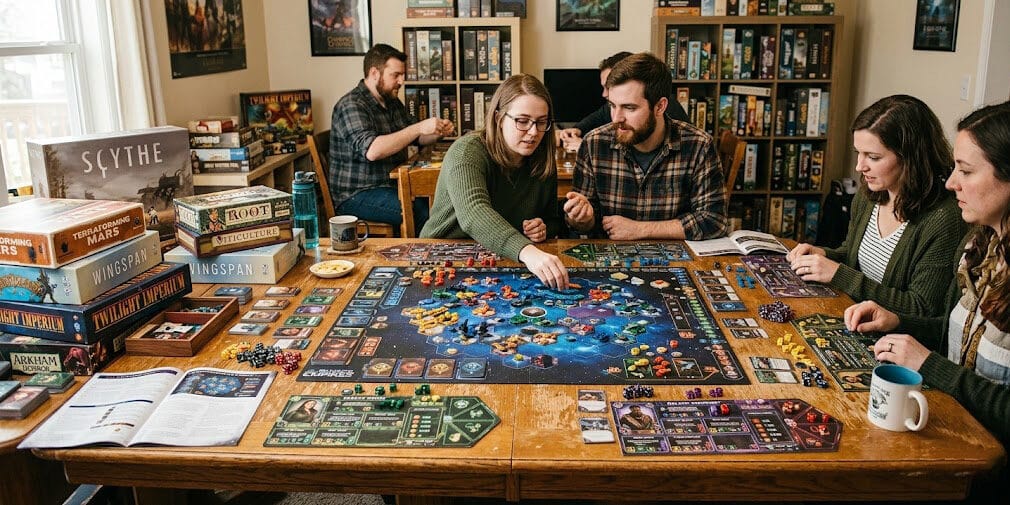
We’ve collectively logged hundreds of hours playing strategy board games over the past year — at kitchen tables, on living room floors, and occasionally at dedicated game nights that ran well past midnight. We pulled in games across weight classes, player counts, and themes, and we kept asking ourselves one honest question: Does this one actually earn another play? The selections below are the ones that said yes, loudly. None of them is perfect — every game here comes with trade-offs worth knowing about — but each one offers something genuinely compelling that tends to make it stand out from an increasingly crowded market.
Ready to buy? Root: A Game of Woodland Might and Right is our #1 pick — see it on Amazon
Everything We Recommend
✅ We recommend these products based on an intensive research process that’s designed to cut through the noise and find the top products in this space. Guided by experts, we spend hours looking into the factors that matter to bring you these selections.
⭐ 2.5 million+ people assisted in the last 30 days ⭐
🏆
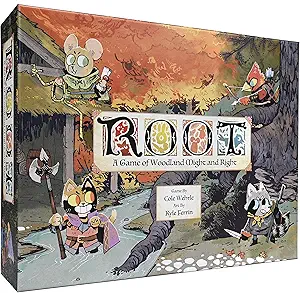
Players shape the story through unique roles, creating strong interaction and replay value.
Features asymmetric gameplay with multiple factions competing to control a forest kingdom.
Each game session offers new outcomes as players decide the fate of woodland.
Designed for groups and families, delivering engaging strategy gameplay in a fantasy setting.
💎
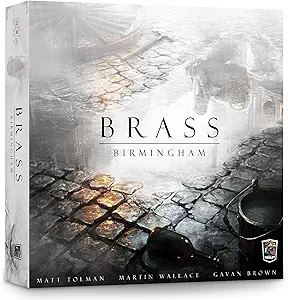
Set during the Industrial Revolution, players build industries and manage shifting economic markets.
Balanced for 2 to 4 players, offering strategic depth and competitive gameplay.
Deep strategy system where every decision impacts networks, industries, and future turns.
Features premium components and award winning design for a refined board game experience.
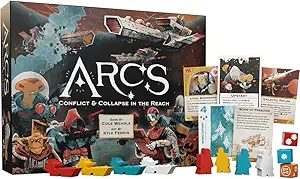
Set in a tactical space opera, players compete for control through combat and strategy.
Uses a four suit card system where timing and initiative shape available actions.
Dynamic Ambitions system rewards foresight, adaptability, and well timed strategic decisions.
Includes premium components and modular content, offering scalable complexity and strong replayability.
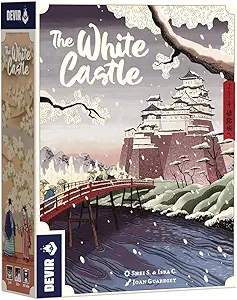
Set in feudal Japan, players lead clans and gain influence through strategic worker placement.
Combines dice placement, resource management, and euro style mechanics for deeper gameplay.
Multiple scoring paths, including gardens, castle defense, and advancing noble court ranks.
Supports 1 to 4 players, ages 12 plus, with 85 minute playtime.

Simultaneous turns grant major benefits to the active player and minor benefits to others.
Includes over 350 unique cards with double-sided designs and 25000 setups.
Supports solo, team, and competitive modes for flexible, varied gameplay.
Built with FSC certified materials, focusing on sustainability and reduced environmental impact.
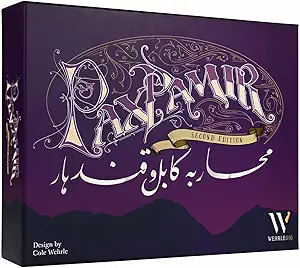
Includes cloth map, mounted board, 150 cards, and 37 detailed resin pieces.
Set in 19th century Central Asia, players navigate politics and shifting power alliances.
Strategic gameplay uses court cards for actions, battles, taxation, and infrastructure building.
Features automated Wakhan opponent, delivering a deep and challenging solo experience.
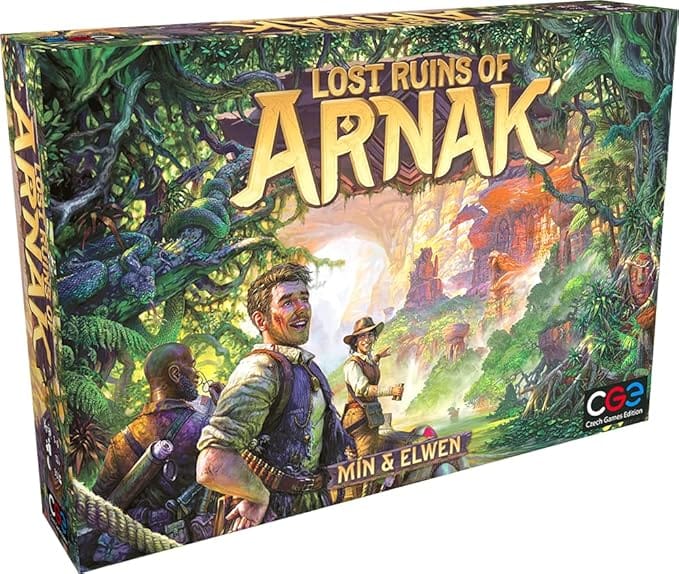
Combines deckbuilding with worker placement, allowing cards to perform multiple strategic roles.
Uses small decks and tactical board decisions to reduce randomness and increase control.
A strong resource management system is essential for building efficient and competitive strategies.
Variable setup of actions, artifacts, and equipment creates diverse, replayable gameplay.
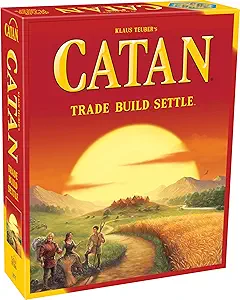
Set on Catan island, players compete to build settlements and gain supremacy.
Gather and trade five resources including ore, brick, lumber, grain, and wool.
Build roads, settlements, and cities to earn points and expand your network.
Dice driven gameplay and tactics create dynamic strategy in this 25th anniversary edition.
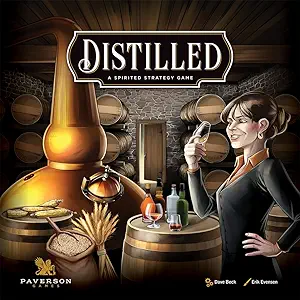
Medium weight euro game about crafting spirits in a distillery for 1 to 5 players.
Designed for ages 14 plus, with an average 30 minute playtime session.
Build your distillery, manage resources, and craft recipes to become a master distiller.
Includes three removable trays with lids and a Game Trayz storage organizer.
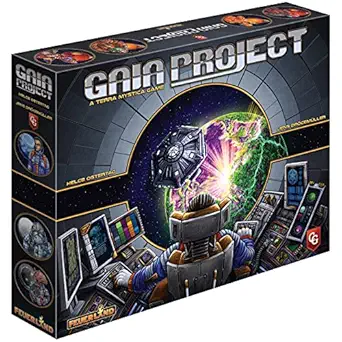
Advanced space strategy game for 1 to 5 players focused on colonization.
Control unique factions, terraform planets, research technologies, and build powerful federations.
Supports solo and multiplayer modes, offering competitive gameplay for strategy enthusiasts.
Features premium components and detailed artwork from Capstone Games for an immersive experience.
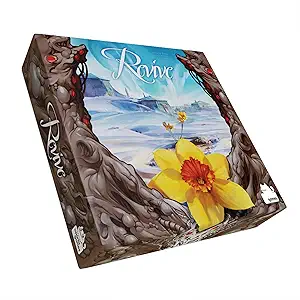
Survival game Revive set 5000 years after civilization collapse, rebuilding society world.
Strategy board game with asymmetric tribes exploring frozen earth, gathering resources strategically.
Highly variable gameplay with randomized ancient sites shaping victory point strategies differently.
1-4 players, age 14+, 90-120 minutes, campaign unlocks replayable content indefinitely available.
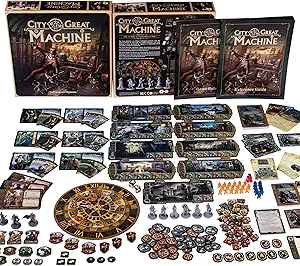
Miniatures board game set in a steampunk city, fighting against an AI Great Machine.
Supports 1vMany, cooperative, and solo modes for flexible strategic gameplay options.
Hidden movement and secret planning create deep tactical prediction and counterplay mechanics.
Includes premium miniatures, cards, tokens, and 1-4 players aged 14+, an immersive experience.
What to Look for in a Strategy Board Game
Before we get into specific picks, it’s worth pausing on what actually separates a good strategy game from a forgettable one. In our experience, a few qualities tend to define the titles that stay in regular rotation.
Meaningful decisions at every turn. The best strategy games rarely give you a free turn. Every choice carries a cost — usually the opportunity cost of what you didn’t do. Games that achieve this tend to feel engaging even when things aren’t going your way.
Appropriate complexity for your group. A common mistake is buying a game that’s technically “great” but sits on the shelf because it takes 90 minutes to teach. Think honestly about your usual group’s appetite for rules, and match accordingly.
Player interaction that feels purposeful. Some strategy games are essentially solo puzzles played simultaneously. Others are deeply adversarial. Most sit somewhere in the middle. Knowing where a game lands on that spectrum helps set the right expectations before the first play.
Replay value is tied to variance. Whether that variance comes from a modular board, asymmetric factions, or variable card draws, the best games tend to feel different enough from session to session to justify coming back.
Production quality that serves the gameplay. Good components don’t make a bad game good, but they do make a good game more inviting. We tend to favor games where the physical design reinforces the thematic and mechanical experience rather than just looking impressive on a shelf.
How We Tested
Our team played every game on this list at least three times — most, considerably more. We tested across different player counts where possible, mixed experienced and newer players into sessions, and paid close attention to how games held up after the novelty wore off. We also leaned on community consensus from sources like BoardGameGeek, one of the most comprehensive databases for board game ratings and reviews, to cross-check our impressions against a broader player base. Where our conclusions diverged from the crowd, we’ve tried to explain why.
Our Top Strategy Board Game Picks
Root is the game that probably sparked more post-session conversation in our testing than any other title on this list. On the surface, it looks like a charming woodland-creature war game — and the art by Kyle Ferrin absolutely earns that reading. But what Root actually is, under the hood, is a deeply asymmetric conflict where each faction at the table is playing an almost entirely different game. The Cats are building an industrial engine. The Birds are trying to maintain a rigid bureaucratic structure that’s always one bad card draw from imploding. The Alliance is slowly radicalizing the forest. The Vagabond is off doing quests. When it clicks, the experience feels genuinely alive in a way few games manage. The trade-off is that the asymmetry can be confusing for new players — you really do need someone at the table who knows the factions — and faction balance shifts significantly with player count. But if you’re willing to invest in learning it, Root tends to become one of those games your group returns to repeatedly. Designed by Cole Wehrle and published by Leder Games, it remains one of the most discussed and celebrated strategy games of the past decade.
Best for: Groups comfortable with asymmetric rules overhead and at least 2–4 sessions to find their footing.
Watch out for: The learning curve is genuinely steep. New players often feel lost in their first session — which is normal and worth pushing through.
If Root is about chaotic asymmetric warfare, Brass: Birmingham sits at the opposite end of the emotional spectrum — it’s a clean, deeply satisfying economic engine builder set during the Industrial Revolution in England’s Midlands. Designed by Martin Wallace and rebuilt for a modern audience by Gavan Brown and Matt Tolman, Brass: Birmingham is consistently rated among the highest-scoring games, and in our experience, that reputation is earned. You’re building industries, connecting cities with canals and then rail lines, and trying to time your development so that your network earns points at exactly the right moments. What surprised our team most was how the game creates genuine tension without direct aggression — your opponents aren’t attacking you, but they can absolutely block your routes or race you to lucrative industries. The two-era structure (canal era followed by rail era) means you essentially play two connected games in one session, and the shift between them creates a natural strategic reset that keeps things interesting. It plays best at three or four players, and sessions generally run around 90 minutes once players know the rules.
Best for: Players who enjoy economic optimization and careful long-term planning. Excellent for groups who find direct conflict off-putting.
Watch out for: The first session can feel slow as players parse the action economy. Stick with it — the second play is almost always dramatically better.
Arcs is Cole Wehrle’s most recent major release, and it’s been a polarizing one in the board game community — which, from our experience, is usually a sign that something genuinely interesting is happening. Where Root was asymmetric but structurally familiar, Arcs is built around a card-driven action system that forces players to follow suit in a way that creates cascading reactions and unexpected swings. The game is set in a collapsing galactic empire, and the narrative arc (pun intended) of a campaign can feel genuinely dramatic. We found that Arcs rewards players who lean into improvisation rather than rigid planning — the best sessions were the ones where someone’s grand strategy collapsed, and they pivoted brilliantly. The base game works as a standalone experience, but the Campaigns expansion is where Arcs reportedly reaches its full potential, adding persistent consequences and a richer story structure across multiple sessions. It’s not a game for everyone, but for the right group, it generates the kind of game night stories that people are still talking about weeks later.
Best for: Experienced players looking for something narratively driven and mechanically unusual. Groups who enjoy emergent storytelling.
Watch out for: The card-following mechanism can feel restrictive until it clicks. Give it at least two plays before forming a final opinion.
The White Castle is one of those games that manages to deliver a genuinely rich strategic experience in a compact, elegant package. Set in feudal Japan around the Himeji Castle, the game uses a dice-drafting mechanism tied to a clever bridge structure — dice placed on the bridge determine both their cost and their position in the turn order, which creates immediate tension right from the setup. Our team was struck by how quickly it teaches compared to how much strategic depth it actually contains. Sessions run around 60 to 75 minutes, even with new players, which makes it an ideal choice when you want something that feels substantial without requiring a full evening. The theme is beautifully integrated into the mechanics, and the production from Devir is excellent — the components feel premium and reinforce the visual identity of the setting. It’s a particularly strong option for groups who enjoy worker-placement and tableau-building games but don’t want to commit to a two-hour-plus session.
Best for: Medium-weight game fans, couples gaming, and groups looking for an efficient 60–90 minute experience with genuine strategic texture.
Watch out for: Experienced players may find the decision space slightly shallower than in heavier titles. The White Castle is broad but not extremely deep.
Earth is what happens when someone sets out to design a game that’s simultaneously accessible to newcomers and mechanically satisfying for experienced hobbyists, and actually succeeds. The theme — you’re cultivating ecosystems of plants, drawing from a deck of 128 uniquely illustrated plant and habitat cards — is one of the most distinctive in recent memory, and the artwork is genuinely stunning. But the reason Earth keeps hitting our table isn’t the visuals; it’s the combo-chaining mechanism that lets players trigger cascades of effects by planting and growing in the right sequence. Every card in the deck does something, and learning which cards synergize with your island and biome is an evolving puzzle across the whole game. What we appreciated most was how Earth manages to feel strategic without ever feeling punishing. You’re not really blocking other players — you’re competing for points in a shared, growing ecosystem, which means even newer players usually feel like they accomplished something by the game’s end. Published by Inside Up Games, Earth has quickly earned a reputation as one of the most inviting mid-weight card games released in recent years.
Best for: Mixed groups, new-to-the-hobby players paired with experienced ones, and anyone who enjoys engine-building games with a positive-sum feel.
Watch out for: Analysis paralysis is a real risk given the card volume. Groups prone to long decision-making may want to set a soft turn timer.
Pax Pamir is one of the most intellectually demanding games on this list, and one of the most rewarding. Designed by Cole Wehrle (yes, him again) and published by Wehrlegig Games, Pax Pamir is set during the 19th-century conflict in Afghanistan known as “The Great Game,” where Russian and British imperial powers maneuvered for regional dominance while Afghan leaders played all sides for survival. That theme isn’t decorative — it’s structural. Players align with one of the three factions (Russian, British, or Afghan), but those alignments can shift, which means the person currently winning might suddenly find themselves on the losing side of a coalition collapse. Our testing team found Pax Pamir to be unlike almost anything else in the hobby — it’s aggressive, dynamic, and occasionally ruthless in a way that feels historically honest. The production quality of the second edition, including the hand-stitched board cover and the metallic coins, is among the most impressive we’ve seen at any price point. It’s not a game you’d recommend to someone new to strategy games, but for players ready for something intellectually serious, it’s extraordinary.
Best for: Experienced strategy gamers, fans of political and historical themes, and groups who enjoy high-stakes shifting alliances.
Watch out for: The scoring system and coalition mechanics are genuinely complex. The first session often feels disorienting. That’s by design.
Lost Ruins of Arnak has earned its reputation as one of the cleanest gateway games to heavier hobby territory, and playing it makes that obvious within about fifteen minutes. Published by Czech Games Edition, Arnak blends deck-building with worker placement in a way that feels intuitive rather than arbitrary — you’re exploring an island, uncovering artifacts, and researching technologies while managing resources that double as your movement currency. The research track is particularly well-designed: it creates a persistent personal objective that gives newer players a clear direction while also serving as a point-scoring engine for experienced players who want to optimize. Our team found that Arnak holds up remarkably well across player counts, and the game scales from two to four players without feeling fundamentally different in character. The expansion, Expedition Leaders, adds asymmetric starting positions that meaningfully extend the game’s replayability. If you’re looking for something to bridge the gap between gateway games and proper heavyweights, Arnak is one of the most reliable recommendations we can make.
Best for: Players transitioning from lighter games into the strategy hobby. Excellent for mixed groups where not everyone has heavy-game experience.
Watch out for: The competitive tension is relatively low. Players who prefer direct conflict may find Arnak’s puzzle-like quality too passive.
No list of strategy board games would be complete without acknowledging Catan, and not just for historical reasons. Designed by Klaus Teuber and first published in 1995, Catan essentially defined what modern hobby board gaming could look like — a game with meaningful decisions, player interaction, and a trading economy that made it equally playable by families and serious hobbyists. Our team returns to Catan periodically, not out of nostalgia but because it continues to do something genuinely difficult: it creates natural social dynamics through the negotiation and trading phase that feel organic rather than scripted. The trade-offs are real — the dice-rolling resource production means luck plays a larger role than in most games on this list, and experienced players can sometimes feel constrained by the randomness. But for introducing people to the hobby, for family game nights, or for groups where not everyone wants to commit to a complex rulebook, Catan earns its place at the table. It’s also worth noting that the Catan universe has expanded substantially, with Cities & Knights and Seafarers adding meaningful strategic depth for groups ready to graduate from the base game.
Best for: Gateway gaming, families, and mixed groups of varying experience levels. An excellent first strategy game for nearly any group.
Watch out for: The luck element can feel frustrating in high-stakes play. Not ideal for groups seeking a deep, luck-minimal strategy.
Distilled is one of the most thematically committed games we tested — and that commitment pays off in surprising ways. You’re running a historical distillery, sourcing ingredients, perfecting recipes, and aging spirits in barrels to sell at a profit. What sounds like a cozy exercise in flavor management turns out to be a genuinely tense resource management game, because every recipe you lock in ties up ingredients that other players might also be chasing, and the bottling phase creates real-time competition for market positions. Our team found Distilled to be unexpectedly sharp underneath its warm, approachable presentation — the kind of game where you feel like you’re relaxing and being challenged at the same time. The production design is exceptional: the recipe cards feel like actual distillery documentation, and the barrel storage mechanic (physically placing your aged spirits in compartments) is one of those tactile experiences that makes the whole theme land more convincingly. If you want something approachable enough for a relaxed game night but substantive enough to satisfy experienced players, Distilled deserves serious consideration.
Best for: Casual-to-medium players who appreciate strong thematic integration; excellent for food and drink enthusiasts who want a game that matches their interests.
Watch out for: The game plays best at three or four players. Two-player sessions tend to lose some of the competitive tension.
Gaia Project is the spiritual successor to Terra Mystica, and if you know what that means, you’re probably already interested. If you don’t: Gaia Project is a deeply complex, asymmetric civilization-building game set across a galaxy of planets, where fourteen distinct factions each pursue unique strategies through terraforming, research advancement, and territorial expansion. Published by Capstone Games in North America, Gaia Project refines several of Terra Mystica’s rougher edges while preserving what made that game compelling — the sense that your faction’s particular strengths are guiding you toward a strategy, and that executing that strategy in the face of competitive pressure is a deeply satisfying puzzle. Our testing confirmed that Gaia Project is genuinely heavy — rules explanation alone can take 45 minutes for newcomers — but also that it tends to reward the investment more consistently than most games at a similar weight. The research track and federation-building mechanics create meaningful mid-game decisions that keep the experience alive across the full session length, which can run two to three hours depending on player count and experience.
Best for: Experienced hobbyists who want a meaty, intellectually demanding session. Groups who loved Terra Mystica or similar civilization-builders.
Watch out for: Not a game you can teach casually. Expect a full learning session before competitive play feels fair.
Revive is a post-apocalyptic civilization-rebuilding game that managed to surprise us more than almost anything else we tested this year. Published by Matagot, Revive puts players in charge of tribal factions emerging from an ice age, exploring a frozen landscape, developing technologies, and reactivating ancient machines to secure a foothold in a recovering world. What sets Revive apart is how it handles the tension between exploration and engine-building: the board grows organically through tile placement as players push into new territories, which means the physical shape of the game world changes meaningfully from session to session. Our team found the faction asymmetry well-balanced relative to many of its peers — each tribe has a distinctive ability profile that creates genuine strategic identity without feeling unfair. The production quality is strong, and the visual design of the frozen landscape tiles creates an atmosphere that actually enhances decision-making rather than distracting from it. Revive tends to appeal to players who like civilization-building themes but want something a touch more dynamic than the genre average.
Best for: Fans of civilization and engine-building games who want meaningful exploration alongside their tableau development.
Watch out for: Setup time is substantial. Factor in 20–30 minutes of preparation before the first turn.
City of the Great Machine is one of the most thematically unusual games on this list — and also one of the most asymmetric. One player controls the Great Machine, a totalitarian mechanical entity trying to suppress the population and complete its sinister agenda, while the remaining players take the roles of Revolutionary heroes trying to resist it. Published by CrowD Games and originally funded through a successful crowdfunding campaign, the game creates a one-versus-many dynamic that generates genuine narrative tension, the kind where the table falls quiet at a critical moment, and you can almost feel the dramatic stakes. Our team found the Machine player role particularly fascinating — it requires a completely different kind of strategic thinking from the Revolutionaries, managing resources and timing events in ways that feel almost like running a real-time puzzle. The Steam-era visual design is gorgeous, and the game’s iconography is clear enough that once the rules are internalized, turns move quickly. It’s a demanding experience for the Machine player, and the asymmetry means your group needs to be comfortable with an unequal rule burden, but for the right group, City of the Great Machine delivers a kind of dramatic arc that few games in the strategy space can match.
Best for: Groups who enjoy one-versus-many dynamics, thematic narrative play, and steampunk aesthetics. A strong pick for groups that have exhausted more conventional strategy formats.
Watch out for: The Machine player carries a significantly heavier cognitive load. Ideal when your most experienced player is willing to take that role.
How to Choose the Right Game for Your Group
Matching a strategy game to your group’s actual preferences is more important than picking the “best” game in the abstract. Here’s a quick framework we use when recommending games to friends.
If your group is new to strategy games, start with Catan, Lost Ruins of Arnak, or Earth. These titles offer genuine strategic texture without requiring a steep rules investment.
If your group enjoys economic games, Brass: Birmingham is the clearest recommendation. The White Castle is an excellent lighter alternative.
If your group wants asymmetric experiences: Root and Pax Pamir are the most distinctive options, with Root being more accessible of the two. City of the Great Machine is worth considering if one-versus-many dynamics appeal.
If your group enjoys complex, lengthy games, Gaia Project and Revive are both strong choices for dedicated hobbyists. Arcs deserve consideration for groups who want narrative alongside their complexity.
If your group values theme above all, Distilled and City of the Great Machine both deliver thematic immersion that goes beyond surface decoration.
Common Questions About Strategy Board Games
How many players do most strategy games work best with?
Most of the games on this list perform well with three or four players. Two-player games tend to skew more directly competitive, and some games designed for three or more can feel hollow at two. We’ve noted optimal player counts for each recommendation above, and we’d suggest paying close attention to those ranges — they matter more than many buyers expect.
How long should I expect a session to take?
The games on this list range from roughly 60 minutes (The White Castle) to three or more hours (Gaia Project, Pax Pamir). Box-stated times are often optimistic — factor in roughly 20–30 percent more time for newer players, plus setup and teardown. For any game over 90 minutes, we’d recommend scheduling a dedicated session rather than squeezing it in after dinner.
Are these games good for families?
Catan and Earth are the most family-accessible titles here, with age recommendations starting around 10–12 for most players. Root, Pax Pamir, Gaia Project, and City of the Great Machine are generally better suited to adult groups or mature teenage players with prior hobby experience. Always check individual age recommendations on the publisher’s site.
Final Thoughts
The strategy board game space is genuinely strong — there’s more variety, more consistent production quality, and more design ambition than at almost any prior point in the hobby’s history. The games on this list each do something distinctive well, and none of them are easy recommendations to dismiss. Our honest suggestion is to start with the game that best matches your group’s appetite for complexity, and let your collection grow from there. The worst outcome in this hobby is buying something your group never actually wants to play — which is why matching the game to the people matters more than chasing the highest-rated title.