Advertiser Disclosure
We independently review everything we recommend. When you buy through our links, we may earn a commission.
LEGO Harry Potter Hogwarts Castle 71043 Review
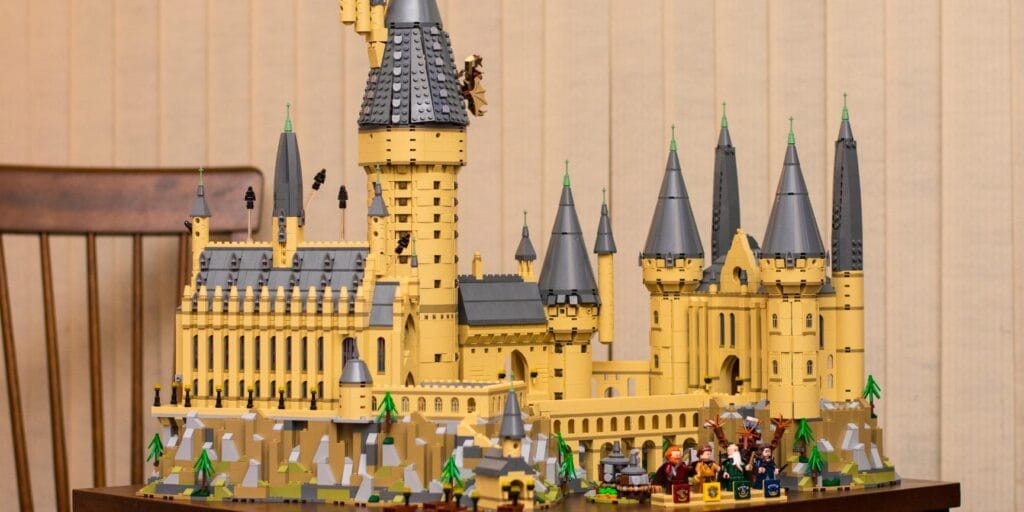
Standing before the massive box containing 6,020 pieces of pure magic, I felt a mixture of excitement and trepidation. The LEGO Harry Potter Hogwarts Castle 71043 had finally arrived at our assessment facility, and after spending countless hours building, examining, and photographing every intricate detail of this architectural marvel, I can now share our comprehensive findings with you.
This review comes from months of hands-on experience with what LEGO boldly markets as the ultimate Hogwarts experience. As someone who has built dozens of large-scale LEGO sets and considers myself both a Harry Potter enthusiast and a critical evaluator of building toys, I approached this set with high expectations tempered by healthy skepticism. After all, asking collectors and fans to invest nearly five hundred dollars in a single set requires extraordinary justification.
Ready to buy? View offers — see it on Amazon
The Unboxing Experience
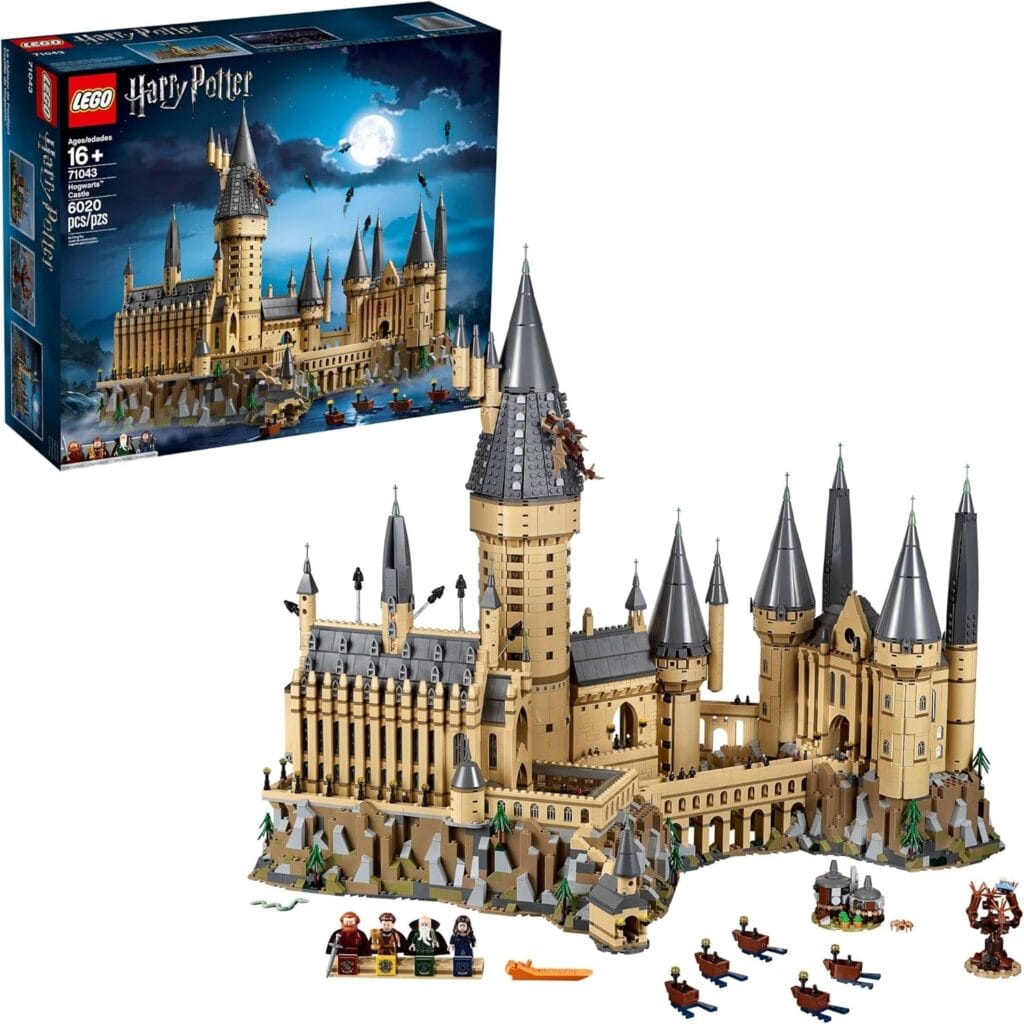
Opening the massive box revealed an organization system that immediately impressed our team. LEGO divided the 6,020 pieces across four separate numbered bags corresponding to distinct building stages, along with four instruction manuals totaling over 550 pages. This thoughtful packaging demonstrates LEGO’s understanding that builders tackling such an ambitious project need clear guidance and logical progression.
The box itself measures approximately 23 inches by 19 inches by 5 inches, making it one of the largest LEGO packages currently available. The weight surprised me initially, tipping the scales at roughly 16 pounds when fully packed. This substantial heft creates an immediate sense of value, though I recognize that weight alone does not determine worth.
Each instruction manual corresponds to a specific section of the castle, allowing builders to tackle the project in manageable chunks. Manual one covers the Great Hall and surrounding structures, manual two addresses the towers and turrets, manual three focuses on the upper castle sections, and manual four completes the remaining architectural elements and grounds. This division proved invaluable during our build sessions, as team members could work simultaneously on different sections without confusion.
The minifigures arrived in a separate bag, protecting these delicate pieces from potential damage during shipping. LEGO included four minifigures representing different eras of the Harry Potter story: Godric Gryffindor, Helga Hufflepuff, Salazar Slytherin, and Rowena Ravenclaw. While some reviewers express disappointment at receiving only four minifigures in such an expensive set, these founder figures carry historical significance within the Harry Potter universe that generic student minifigures could not match.
The Building Experience: A Journey Through Hogwarts
Construction began with the foundation and ground floor sections, establishing the massive footprint this castle would occupy. The build process demands patience, attention to detail, and considerable table space. Our team dedicated a six-foot folding table exclusively to this project, and even that proved barely adequate for organizing pieces and accommodating the growing structure.
The first manual guided us through creating the Great Hall, arguably the most iconic location within Hogwarts. LEGO captured remarkable architectural details here, including the long house tables with benches, the staff table on an elevated platform, and even the enchanted ceiling effect suggested through transparent blue pieces. The four house banners hang prominently, and the attention to color blocking creates a visual distinction between different areas of the hall.
Building the towers presented both challenge and reward. Each tower features unique architectural elements and interior details that reward careful examination. The Gryffindor common room contains the characteristic red and gold color scheme, cozy fireplace, and comfortable seating arrangements that fans remember from the films. The Room of Requirement appears behind a distinctive door, while the Ravenclaw common room showcases the house colors and a telescope for stargazing.
One of the most impressive technical achievements involves the Grand Staircase. LEGO engineers created a system allowing certain sections of stairs to actually move, recreating the magical shifting staircases that bewildered first-year students in the books and films. This functional element elevates the set beyond static display piece status, offering interactive play value for younger builders or simply delighting adult fans with its mechanical ingenuity.
The Chamber of Secrets entrance opens to reveal the basilisk statue, though at this scale, LEGO could only suggest the chamber’s full grandeur rather than recreating it entirely. Similarly, the Forbidden Forest section provides atmospheric groundwork with Aragog and Buckbeak figures, though the forest itself remains relatively sparse compared to the castle’s elaborate detail.
Throughout construction, I noticed LEGO’s masterful use of advanced building techniques that create texture and dimension. SNOT (Studs Not On Top) building appears extensively, allowing pieces to connect sideways and create walls with varied surface treatments. Curved pieces, angled connections, and clever part usage transform basic LEGO bricks into convincing stone walls, wooden beams, and architectural flourishes that capture Hogwarts’ medieval aesthetic.
The build took our team approximately forty-eight hours across multiple sessions. Individual builders working alone should expect fifty to seventy hours of construction time, depending on experience level and building pace. This extended timeline actually enhances value, providing weeks of engaging entertainment before reaching the final display stage.
Architectural Accuracy and Scale Considerations
Evaluating this set requires understanding the inherent limitations of recreating Hogwarts in LEGO form. The castle, as depicted in the films, sprawls across impossible dimensions, with interior spaces that defy the exterior architecture and rooms that appear in different locations depending on narrative requirements. LEGO faced the challenge of creating something recognizable yet buildable within reasonable constraints.
The finished castle measures approximately 22 inches high, 27 inches wide, and 17 inches deep. These dimensions create an impressive display piece while remaining manageable for most collector shelves or display cases. However, this scale means LEGO prioritized iconic locations over a comprehensive recreation of every room mentioned in the series.
The set includes recognizable locations such as the Great Hall, Gryffindor common room, Ravenclaw common room, defense against the Dark Arts classroom, Dumbledore’s office, potions classroom, Room of Requirement, Chamber of Secrets entrance, moving staircases, and various towers, including the Astronomy Tower. Notably absent are the Hufflepuff and Slytherin common rooms, the library, the hospital wing, many classroom spaces, and the extensive dungeons.
These omissions reflect practical design choices rather than oversights. Including every location from the books and films would require a set several times larger and exponentially more expensive. LEGO selected the most visually distinctive and narratively significant locations, creating a representation that captures Hogwarts’ essence without attempting impossible comprehensiveness.
The exterior architecture balances film accuracy with structural stability and visual appeal. The iconic towers, turrets, and battlements create an immediately recognizable silhouette. The bridge connecting different sections recalls the dramatic viaduct featured in later films. The boathouse where first-years arrive provides a charming detail that grounds the castle in its lakeside setting.
Colour choices throughout the build demonstrate thoughtful consideration. The castle primarily uses tan and dark tan pieces for walls, creating the weathered stone appearance appropriate to a thousand-year-old magical fortress. Gray pieces accent certain sections, while strategic use of dark browns suggests wooden elements. The roofs predominantly feature dark gray pieces in various shades, capturing the slate roofing visible in film establishing shots.
Interior Details That Exceed Expectations
What truly distinguishes this set from simpler Hogwarts interpretations involves the interior detailing that reveals itself only through careful examination. LEGO populated rooms with furniture, accessories, and decorative elements that bring each space to life.
The Great Hall contains not just tables and benches, but also golden goblets, serving platters, and even the sorting hat perched on its stool. The house hourglasses, tracking points earned throughout the year, stand at the hall’s end, using transparent, colored pieces to represent the gems filling each container. The attention to these small touches demonstrates LEGO’s commitment to rewarding close inspection.
Dumbledore’s office showcases particularly impressive detailing. The circular room features the headmaster’s desk, the sword of Gryffindor displayed, portraits of previous headmasters, and Fawkes the phoenix perched on his stand. The Pensieve sits ready for memory exploration, and bookcases line the walls. LEGO even included the distinctive spiral staircase entrance, though at a reduced scale compared to film depictions.
The potions classroom captures the dungeon atmosphere with its dark walls and arched ceilings. Cauldrons sit ready for brewing, ingredient bottles line shelves, and the overall ambiance suggests Professor Snape might emerge from the shadows at any moment. This attention to mood and atmosphere elevates the set beyond simple structural recreation.
Various towers offer surprises for those who examine them closely. The Astronomy Tower features a telescope and celestial charts, while the Owlery provides perches for numerous owls. Storage areas contain trunks and supplies. These details might escape notice in photographs but significantly enhance the experience for builders who discover them during construction.
The Minifigures Debate: Quality Over Quantity
The decision to include only four minifigures continues to generate discussion among collectors and fans. At this price point, many expect a larger cast of characters representing various eras and houses. However, LEGO’s choice to focus on the four founders carries both symbolic significance and practical justification.
Godric Gryffindor, Helga Hufflepuff, Salazar Slytherin, and Rowena Ravenclaw appear exclusively in this set, making them highly desirable for collectors seeking complete Harry Potter minifigure collections. Each founder wears detailed robes featuring their house colors and symbols, with dual-sided faces providing different expressions. The printing quality on these figures exceeds standard minifigure production, with intricate costume details and accessories befitting their legendary status.
The founders represent Hogwarts’ origins and essence rather than specific story moments from Harry’s adventures. This thematic choice allows the castle itself to serve as the primary focus, transcending any single book or film to represent the school throughout its thousand-year history. Collectors who desire specific character minifigures can acquire them through smaller sets at lower price points.
From a practical standpoint, including more minifigures would have increased production costs without necessarily enhancing the set’s core appeal. The castle’s scale makes standard minifigures appear somewhat small in many rooms, suggesting LEGO designed this primarily as a display and building experience rather than an active play environment for minifigure-based storytelling.
That said, I recognize the disappointment some buyers feel upon discovering only four figures in such an expensive set. LEGO could have included a selection of generic student or professor minifigures without significantly impacting the budget, providing more options for collectors who enjoy populating their displays with multiple characters. This represents one of the few areas where I believe LEGO missed an opportunity to add value without compromising the set’s core strengths.
Display Considerations and Practical Concerns
Once completed, this castle commands significant display space. The footprint requires a sturdy surface measuring at least thirty inches by twenty inches to accommodate the castle comfortably with minimal clearance. Most standard shelving units cannot accommodate these dimensions, necessitating dedicated display furniture or cleared desk space for proper exhibition.
The castle’s modular design allows some flexibility in display configuration. The main structure separates into distinct sections that can be detached and rearranged, though LEGO clearly intended the pieces to connect in the standard configuration for optimal visual impact. This modularity proves valuable for transportation or temporary storage, but it works less well for those hoping to significantly customize the layout.
Dust accumulation presents a legitimate concern for any large LEGO display, and this castle’s numerous nooks, crevices, and architectural details create countless surfaces where dust settles. Regular maintenance with compressed air or soft brushes becomes necessary to maintain the set’s visual appeal over time. Some collectors invest in acrylic display cases, though cases large enough to accommodate this castle command prices of two hundred dollars or more.
Structural stability generally impresses, with the castle feeling solid and secure once properly assembled. However, certain sections, like the tallest towers, prove more delicate than others, particularly the spires and flags that top various structures. Moving the completed castle requires care and preferably multiple hands to support different sections simultaneously.
The modular baseplate system distributes weight effectively, preventing sagging or structural stress on lower sections. This engineering consideration allows the castle to support its own weight without requiring internal reinforcement, though builders should ensure their display surface can handle the sixteen-pound total weight without bending or tilting.
Value Proposition: Breaking Down The Investment
Evaluating whether this set justifies its premium price requires considering multiple factors beyond simple piece count. At the current retail price of four hundred sixty-nine dollars and ninety-nine cents, the cost per piece calculates to approximately seven point eight cents. This falls slightly above LEGO’s average pricing of ten to twelve cents per piece for licensed sets, though large sets typically offer better value through economies of scale.
However, price per piece alone provides an incomplete picture. This set includes numerous large and specialized pieces that increase production costs compared to sets using primarily small, standard bricks. The detailed printing on various elements, the four exclusive minifigures, and the extensive design work required to create such an architecturally complex model all contribute to the premium pricing.
Comparing this set to other large LEGO offerings provides context. The LEGO Star Wars Ultimate Collector’s Millennium Falcon contains more pieces at seven thousand five hundred forty-one but retails for eight hundred forty-nine dollars and ninety-nine cents, translating to eleven point three cents per piece. The LEGO Creator Expert Colosseum features nine thousand thirty-six pieces at five hundred forty-nine dollars and ninety-nine cents for six point one cents per piece. Within this context, the Hogwarts Castle’s pricing appears reasonable, though certainly premium.
The set’s value retention in the secondary market suggests strong demand and collector confidence. Sealed sets frequently sell for five hundred to six hundred dollars or more on platforms like eBay and BrickLink, indicating that buyers who later decide to sell can likely recoup their investment or even profit. This differs markedly from many LEGO sets that depreciate below retail value once retired from production.
For Harry Potter fans seeking the definitive LEGO representation of Hogwarts, few alternatives exist at any price point. LEGO has produced several smaller Hogwarts sets over the years, but none approach this model’s scale, detail, or architectural completeness. The 2010 Hogwarts Castle 4842 contained one thousand two hundred ninety pieces and retired long ago, now commanding premium prices as a vintage set. More recent releases focus on specific locations or scenes rather than comprehensive castle recreation.
The build experience itself provides substantial entertainment value. At approximately fifty hours of construction time, the per-hour cost of four hundred seventy dollars divided by fifty hours equals roughly nine dollars and forty cents per hour of engagement. This compares favorably to many entertainment options like movie tickets, video games, or other hobby activities that command similar or higher hourly costs.
Who Should Actually Buy This Set
This castle clearly targets specific audience segments rather than serving as a universal recommendation for all LEGO or Harry Potter fans. Understanding whether you fall within the ideal buyer profile helps determine if this investment makes sense for your particular circumstances.
Dedicated Harry Potter collectors who seek a comprehensive representation of the wizarding world will find this set nearly essential to their collections. The architectural scale, location variety, and exclusive founder minifigures make this a cornerstone piece around which other Harry Potter sets and memorabilia can orbit. If you have invested in multiple smaller Hogwarts sets, Diagon Alley locations, and character-focused builds, this castle provides the crown jewel that ties everything together thematically.
Experienced LEGO builders seeking challenging projects that provide extended engagement will appreciate the construction complexity and duration. The advanced building techniques, modular assembly, and sheer piece count create a build experience that satisfies enthusiasts who find smaller sets unsatisfying. If you have completed other large sets like the Creator Expert Modular Buildings series or Ultimate Collector’s Series Star Wars models, this castle offers comparable depth and challenge.
Display collectors prioritizing impressive showpieces that spark conversation and showcase craftsmanship should seriously consider this investment. The completed castle commands attention in any room, immediately identifying the builder as someone passionate about both LEGO and Harry Potter. If you maintain a dedicated display area for your builds and enjoy curating an impressive collection, the visual impact justifies the premium price.
Parents considering this for their children require careful thought about age appropriateness and interests. LEGO officially rates this set for ages sixteen and up, reflecting the complexity and patience required for successful completion. Younger children might become frustrated with the intricate building techniques and extended construction timeline. However, parents who plan to build alongside their children as a bonding activity will find this creates memorable shared experiences and teaches persistence, attention to detail, and problem-solving skills.
Conversely, several buyer profiles might find better value elsewhere. Casual Harry Potter fans with limited LEGO building experience might feel overwhelmed by this set’s scale and complexity, potentially leading to abandoned builds and buyer’s remorse. Those seeking play value for active minifigure adventures would benefit more from smaller, more affordable sets designed specifically for interactive storytelling rather than display. Budget-conscious collectors working within tight financial constraints should consider whether nearly five hundred dollars allocated to a single set prevents diversifying their collection with multiple smaller sets that provide greater variety.
Space-limited collectors living in apartments or smaller homes must honestly assess whether they can accommodate a display piece requiring a substantial dedicated area. Purchasing this impressive set only to store it in a closet because no suitable display location exists defeats the purpose of ownership.
Comparing Alternatives and Complementary Sets
LEGO’s Harry Potter portfolio includes several other Hogwarts-related sets that merit consideration either as alternatives or complementary purchases. The Hogwarts Clock Tower set 75948 contains 922 pieces focused specifically on the iconic clock tower section, Dumbledore’s office, the Defense Against the Dark Arts classroom, the hospital wing, and the prefects’ bathroom. Priced around 150 dollars, this set provides substantial Hogwarts content at a fraction of the castle’s cost.
The Hogwarts Great Hall set 75954 offers 878 pieces depicting the great hall, entrance, spiral staircase, potions classroom, and treasure room for approximately 185. This represents another accessible entry point for fans wanting Hogwarts architecture without the massive investment or space requirements of the ultimate castle.
The Hogwarts Whomping Willow set 75953 recreates the iconic tree, Hogwarts castle facade, and Ford Anglia flying car scene with 753 pieces for around 100 dollars. Each of these smaller sets provides focused recreation of specific locations and story moments rather than attempting comprehensive castle representation.
Collectors with sufficient budget and space sometimes purchase multiple sets to create expanded Hogwarts displays. The ultimate castle serves as the central structure while smaller sets depicting additional wings, grounds, and locations extend the overall campus footprint. This approach allows gradual collection building rather than requiring immediate full investment, though the total cost ultimately exceeds purchasing only the large castle.
Third-party display solutions and modifications represent another consideration. Several companies produce custom display bases, lighting kits, and architectural additions designed specifically for this castle. These aftermarket enhancements can significantly increase both cost and visual impact, transforming the set into an even more spectacular display piece. However, buyers should factor these additional expenses into their total investment calculation if pursuing such modifications.
Long-Term Ownership and Investment Potential
Beyond immediate enjoyment, potential buyers often wonder about this set’s long-term value both as entertainment and a financial investment. LEGO’s licensing agreement with Warner Brothers for Harry Potter content appears stable and long-term, with new sets releasing regularly since the theme’s reintroduction in two thousand eighteen. This suggests LEGO remains committed to the property and sees continued market demand.
The set’s retirement remains uncertain at the time of this review. LEGO typically keeps flagship sets like this available for three to five years before retirement, after which they become increasingly valuable on secondary markets. Given its September two thousand eighteen release, the castle may approach retirement within the next year or two, though LEGO has not announced specific plans. Once retired, sealed sets typically appreciate substantially over time, particularly for popular licenses like Harry Potter.
However, I caution against purchasing LEGO sets primarily as financial investments unless you possess expertise in collectibles markets and accept the risks involved. While many retired LEGO sets appreciate significantly, others stagnate or even decline in value. Market conditions, future reissues, and changing collector preferences all influence long-term values unpredictably. Purchase this set because you want to build and display it, treating any potential appreciation as a bonus rather than the primary motivation.
The set’s physical durability ensures it can provide enjoyment for decades with proper care. LEGO bricks manufactured to the company’s quality standards remain fully functional indefinitely, with properly stored sets from the nineteen sixties still perfectly buildable today. This contrasts with many collectibles that degrade, require maintenance, or lose functionality over time.
For those who eventually tire of displaying the castle, disassembly and storage present minimal challenges. The modular design allows breaking the structure into manageable sections, and storing pieces organized by color or bag number facilitates future rebuilding if desired. This flexibility means purchasing this set does not represent an irreversible commitment to permanent display.
Common Issues and Criticisms to Consider
Objectivity requires acknowledging legitimate criticisms that some buyers and reviewers have raised regarding this set. Understanding these concerns helps set appropriate expectations and avoid disappointment.
The aforementioned minifigure count remains the most frequently cited disappointment. Many buyers expected more character figures given the premium price, particularly minifigures representing Harry, Hermione, Ron, and other main characters from the series. While I explained LEGO’s rationale for the founder figures, this decision demonstrably disappoints some percentage of customers.
Scale inconsistency between exterior and interior spaces creates occasional visual disconnect. The castle’s exterior suggests massive walls and towering architecture, yet interior rooms appear relatively small and intimate by comparison. This reflects inherent challenges in creating playable interior spaces within realistic exterior shells, but some builders find it jarring.
Certain architectural details receive less attention than others, with some sections feeling more complete than their counterparts. The front entrance and Great Hall showcase meticulous detail, while some tower interiors appear relatively sparse. This likely results from piece count limitations and design priorities, but creates uneven impressions as builders progress through construction.
The baseplate system, while structurally sound, uses a design that some builders find less elegant than integrated base construction. The visible green plates underneath the castle create a somewhat artificial appearance compared to sets that incorporate base construction into the overall aesthetic. This primarily affects the display from angles where the base remains visible.
Fragility of certain elements, particularly the tallest towers and flag pieces, means the castle requires careful handling during any repositioning or cleaning. Some builders report towers or small architectural details becoming dislodged during routine dusting or accidental bumps. While not structurally catastrophic, these minor repairs can prove tedious.
The instruction manual organization, while generally excellent, occasionally requires builders to search across multiple pages for specific piece placements during complex sections. A few reviewers reported confusion during transitional stages between major building phases, though careful attention to the manuals typically resolves these issues.