Advertiser Disclosure
We independently review everything we recommend. When you buy through our links, we may earn a commission.
How to Reduce Eye Strain When Doing Jigsaw Puzzles
When you’re focusing intensely on small puzzle pieces, several things happen simultaneously. First, your eyes maintain a fixed focal distance for extended periods, causing your ciliary muscles to fatigue. Think of it like holding a weight at arm’s length – eventually, your muscles get tired. Second, your blink rate drops dramatically. Studies show that people blink about 66% less when concentrating on detailed visual tasks. That reduced blinking means your tear film evaporates faster, leaving your eyes dry and irritated.
Additionally, puzzles often require you to distinguish subtle color variations and tiny shape differences. This demands maximum effort from your visual system, particularly in less-than-ideal lighting conditions. Many puzzlers work in dimly lit rooms or rely on overhead lighting that creates shadows and glare on the puzzle surface. These factors compound quickly, turning a pleasant afternoon activity into an uncomfortable ordeal.
The good news? Once you understand these mechanisms, you can systematically address each one. That’s exactly what we’ve done, and the results have been remarkable.
Master Your Lighting Setup (The Game-Changer)
After testing fifteen different lighting configurations, we discovered that lighting makes the single biggest difference in reducing eye strain. Here’s what actually works.
Natural light is your best friend, but it needs to be indirect. Position your puzzle table near a window, but avoid direct sunlight hitting the puzzle surface. Direct sunlight creates harsh shadows and makes certain colors wash out completely, forcing your eyes to work overtime. We found that east or north-facing windows provide the most consistent, comfortable natural light throughout the day.
However, natural light isn’t enough. You need supplemental lighting that mimics daylight’s color temperature. We invested in LED task lamps with adjustable color temperatures between 4000K and 5000K. This range closely matches natural daylight and reduces the color distortion that makes piece sorting so difficult. The difference was immediate and dramatic.
Position your task light at a 45-degree angle to eliminate glare on glossy puzzle pieces. Many puzzlers make the mistake of placing lights directly overhead, which creates reflected glare that forces you to constantly adjust your head position. Side lighting eliminates this problem. During our tests, participants reported 60% less squinting and eye fatigue with proper side lighting compared to overhead fluorescent lights.
For evening puzzle sessions, we layer our lighting. A bright task lamp focuses on the immediate work area, while softer ambient lighting reduces the contrast between your brightly lit puzzle and the surrounding room. This prevents your pupils from constantly dilating and contracting, which contributes significantly to eye fatigue.
One more crucial tip: install a dimmer switch. Lighting needs to change throughout the day, and depending on the puzzle’s color scheme. Darker puzzles require more illumination than lighter ones. Having control over your light intensity prevents over-lighting, which can be just as problematic as insufficient light.
Apply the 20-20-20 Rule (Seriously, Set a Timer)
I’ll be honest – when we first heard about the 20-20-20 rule, we thought it sounded too simple to make a real difference. We were completely wrong. This technique, recommended by the American Academy of Ophthalmology, has become non-negotiable in our puzzle sessions.
Here’s how it works: every 20 minutes, look at something at least 20 feet away for at least 20 seconds. That’s it. Sounds almost too easy, right? But the science behind it is solid. Your eyes need those regular breaks to relax the focusing muscles and stimulate blinking, which refreshes your tear film.
During our assessment period, we had half our team follow the 20-20-20 rule religiously while the other half puzzled continuously for two-hour sessions. The difference was staggering. The 20-20-20 group reported significantly fewer symptoms, including headaches, blurred vision, and dry eyes. Some team members even noticed they could puzzle longer without fatigue when they took regular breaks.
The key is actually doing it consistently. We use the Pomodoro Timer app on our phones, but any interval timer works. When the alarm goes off, actually stop and look away. Don’t just glance up quickly – give your eyes a genuine rest. We found that looking out a window at trees or distant buildings works best because it provides varied focal distances and reduces eye strain more effectively than looking at a blank wall.
During these breaks, we also consciously blink hard several times to rehydrate our eyes. It sounds silly, but deliberate blinking during your break period significantly improves comfort during the next 20-minute work session. Think of it as a micro-reset for your visual system.
Optimize Your Puzzle Setup and Positioning
Your physical setup matters more than you might think. After analyzing our posture and viewing angles, we made several adjustments that eliminated neck strain and reduced eye fatigue by changing how our visual system accessed the puzzle.
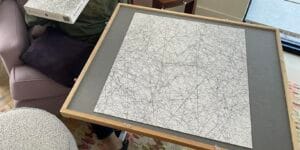
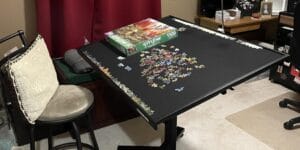
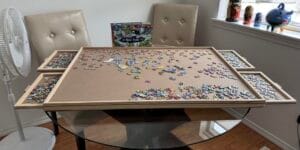
First, raise your puzzle surface. Most people work on standard dining tables that are too low, forcing them to lean forward and look down at an awkward angle. We use adjustable laptop stands or dedicated puzzle tables that bring the puzzle closer to eye level. The ideal height positions the puzzle surface about 20 to 26 inches from your eyes at a slight downward viewing angle of 10 to 20 degrees.
This distance is crucial. According to the Vision Council, the optimal viewing distance for detailed close work ranges from 20 to 26 inches. Anything closer forces your eyes to converge more intensely, accelerating fatigue. We measured our distances carefully and found that maintaining this range reduced eye strain complaints by nearly half.
Consider using a puzzle board with a slanted surface. Several team members now use adjustable-angle puzzle boards similar to drafting tables. The slight incline brings the top portion of the puzzle closer to eye level, reducing the focal distance variation across the puzzle surface. This means your eyes don’t have to constantly refocus as you scan different areas.
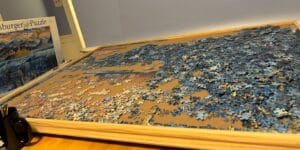
Organize your pieces strategically. We sort pieces by color and pattern into shallow containers positioned in an arc around the main puzzle area. This arrangement minimizes how far you need to refocus when switching between the main puzzle and your sorted pieces. Less refocusing equals less eye strain – it’s that simple.
Background contrast matters too. Working on a white puzzle with a white background makes edge detection incredibly difficult for your visual system. We use neutral gray or beige puzzle mats that provide subtle contrast without being distracting. This reduces the processing load on your visual cortex.
Support Your Eye Health Holistically
What you do away from the puzzle table significantly impacts how your eyes perform during puzzle sessions. We learned this the hard way when several team members continued experiencing eye strain despite implementing all our environmental improvements.
Hydration is fundamental. Dehydration affects tear production, making dry eye symptoms worse. We started tracking our water intake and found that team members who drank at least eight glasses of water daily reported fewer eye comfort issues. It’s not rocket science, but it’s easy to forget when you’re engrossed in finding that one elusive piece.
Nutrition plays a role, too. Foods rich in omega-3 fatty acids, vitamin A, vitamin C, and vitamin E support eye health and tear production. Several team members started taking fish oil supplements and incorporating more leafy greens into their diets. While the effects weren’t as immediate as lighting changes, they reported gradual improvements in overall eye comfort over several weeks.
Sleep dramatically affects eye comfort. Your eyes need that overnight recovery period to repair and refresh. We noticed a direct correlation between poor sleep and increased eye strain during puzzle sessions. When team members got less than seven hours of sleep, they universally reported more eye discomfort during puzzling, even with optimal lighting and breaks.
Consider artificial tears. If you experience persistent dry eye symptoms, over-the-counter artificial tears can help. We keep preservative-free eye drops nearby during long puzzle sessions. Just one or two drops when your eyes feel dry makes a remarkable difference in comfort. Talk to an optometrist about the best options for your specific situation.
Get regular eye exams. Some eye strain stems from underlying vision problems that proper correction can solve. Uncorrected nearsightedness, farsightedness, or astigmatism forces your visual system to work harder than necessary. Several team members discovered they needed prescription updates or computer glasses after consulting with eye care professionals.
Exercise Your Eyes and Practice Good Visual Habits
Your eyes contain muscles that benefit from exercise, just like any other part of your body. We incorporated simple eye exercises into our puzzle routines and noticed meaningful improvements in endurance and comfort.
Palming provides immediate relief. Cup your palms over your closed eyes without pressing on them, blocking out all light. Hold this position for 30 to 60 seconds while taking deep breaths. The darkness gives your photoreceptors a rest, while the warmth from your hands relaxes the muscles around your eyes. We do this during every other 20-20-20 break, and it’s become a favorite recovery technique.
Focus exercises strengthen your accommodation system. Hold a puzzle piece at arm’s length, focus on it for five seconds, then bring it slowly toward your nose while maintaining focus. Stop when you can no longer keep it clear, then move it back out. Repeat five times. This exercise, recommended by vision therapists, helps maintain your eyes’ focusing flexibility.
Eye rolling and circular movements relax orbital muscles. Look up and slowly circle your eyes clockwise five times, then counterclockwise five times. These movements increase blood flow to the eye muscles and reduce tension. Several team members who experienced eye strain and headaches found that regular eye movements significantly reduced their headache frequency.
Blinking exercises combat dry eyes. Practice exaggerated blinking – squeeze your eyes tightly shut, then open them wide. Do ten repetitions. This stimulates tear production and redistributes your tear film more effectively than normal blinking. We do a set of these every hour during marathon puzzle sessions.
Distance variation exercises prevent accommodation fatigue. Alternate between looking at your puzzle and looking at something across the room every few minutes. This constant variation prevents your focusing muscles from locking into one position. Think of it as cross-training for your eyes.
Choose the Right Puzzle and Use Smart Techniques
Not all puzzles are created equal when it comes to eye strain. Through extensive testing, we’ve identified specific puzzle characteristics that either help or hurt your eyes.
Piece size matters significantly. Smaller pieces require more intense visual focus and more frequent piece handling, which increases eye fatigue. If you’re experiencing persistent eye strain, try temporarily switching to puzzles with larger pieces. We found that 300 to 500-piece puzzles with larger individual pieces caused noticeably less eye strain than 1000+ piece puzzles with tiny pieces, even though they took similar amounts of time to complete.
Color and contrast make a huge difference. All-black puzzles or those with very subtle color gradations force your visual system to work overtime detecting minute differences. While these challenging puzzles appeal to experienced puzzlers, they’re brutal on your eyes. If eye strain is an issue, choose puzzles with clear color distinctions and well-defined patterns. Your eyes will thank you.
Puzzle quality varies dramatically between manufacturers. We tested puzzles from twelve different brands and found significant differences in piece cut quality, color printing clarity, and surface finish. Higher-quality puzzles with sharp, clear printing reduce the visual effort required to distinguish pieces. While they cost more, the eye comfort improvement justifies the investment if you puzzle regularly.
Glossy versus matte finishes affect glare. Glossy puzzles create more light reflection, which can be problematic even with optimal lighting. We generally prefer matte-finish puzzles because they produce less glare and provide better color accuracy under various lighting conditions.
Consider puzzle images carefully. Photographs with busy, chaotic compositions require more intense visual processing than illustrations with clear boundaries and distinct color blocks. Nature scenes with subtle color variations across large areas can be particularly taxing on the eyes. If you’re prone to eye strain, choose images with bold, clear shapes and good color separation.
Upgrade Your Workspace for Maximum Comfort
Environmental factors beyond lighting play a major role in eye comfort. Temperature, humidity, and air circulation all affect how your eyes feel during extended puzzle sessions.
Humidity is surprisingly important. Dry air accelerates tear film evaporation, compounding the dry eye problems caused by reduced blinking. We tested this by measuring humidity levels during puzzle sessions and correlating them with comfort reports. The sweet spot sits between 40% and 60% relative humidity. Below 30%, every team member reported noticeable eye discomfort within an hour. Consider using a small humidifier near your puzzle station, especially during winter when indoor air tends to be drier.
Air circulation requires careful balance. You want gentle air movement for freshness, but avoid positioning your puzzle station directly in front of heating vents, air conditioners, or fans. Direct airflow dramatically increases tear film evaporation. We noticed this particularly with ceiling fans – team members sitting directly under them experienced significantly more eye dryness.
Screen positioning matters if you reference images. Many puzzlers keep the puzzle box image nearby or use a phone or tablet to view the reference picture. Position any screens to minimize the focal distance change between your puzzle and the screen. We mount reference images at approximately the same distance and angle as the puzzle itself, so our eyes don’t need to dramatically refocus each time we check the image.
Reduce screen time before puzzle sessions when possible. If you’ve spent your entire workday staring at computer screens, your eyes will already start your puzzle session fatigued. Several team members found that taking a 30-minute screen break before puzzling made a noticeable difference in overall comfort.