Advertiser Disclosure
We independently review everything we recommend. When you buy through our links, we may earn a commission.
The Best Board Games for Couples
If you only have time to read one sentence: Sky Team is our top pick for couples who want a game that genuinely tests how well you work together — and it does it in 20 minutes flat. That said, the “right” couples game depends a lot on who you are and what kind of evening you’re after. So we kept going, and we’ve got 15 more games that we genuinely stand behind.
How to Choose: A Quick Buyer's Guide
Finding the right game comes down to knowing what kind of evening you want to have and how much mental energy you’re willing to bring. Here’s how we’d direct different types of couples:
If you’re total beginners, Start with Jaipur or Sea Salt & Paper. Both are quick to learn, immediately engaging, and won’t make either of you feel lost. Love Letter works beautifully as a five-minute-to-learn game you can pull out before deciding what to play next.
If you want something cooperative, Sky Team is our clear recommendation — nothing else on this list generates quite the same shared-struggle dynamic. Codenames: Duet and Dorfromantik are strong alternatives if you want something less tense or with a longer session length.
If you want competitive play without bad feelings, Jaipur, Fox in the Forest, and Schotten Totten all deliver competitive tension while staying friendly. None of them produces the kind of take-that mechanics that create genuine table friction.
If you’re both experienced gamers, 7 Wonders Duel, Five Tribes, and Splendor Duel offer the most strategic depth and the highest replay ceiling. These are games that get better the more you understand them.
If you want something beautiful to put on the table, Harmonies and Dorfromantik stand out in terms of aesthetics. Both feature exceptional component quality and produce a visually pleasant tableau as you play.
If you have very limited space or want to travel, Hive and Schotten Totten both work on any hard surface. Love Letter literally fits in a jacket pocket. Sky Team’s box is compact enough to pack easily.
If one of you is a gamer and the other isn’t: Onitama, Cat Lady, and Castle Combo all have accessible enough rules that experience gaps matter less than you’d expect. Jaipur is particularly forgiving in the first session.
Everything We Recommend
✅ We recommend these products based on an intensive research process that’s designed to cut through the noise and find the top products in this space. Guided by experts, we spend hours looking into the factors that matter to bring you these selections.
⭐ 2.5 million+ people assisted in the last 30 days ⭐

Players: 2 only | Time: 15–20 min | Complexity: Light-Medium | Award: 2024 Spiel des Jahres
Sky Team is the rare cooperative game that makes you feel genuinely dependent on another person — in the best possible way. You and your partner play as pilot and co-pilot, trying to land a commercial airliner, rolling dice in secret behind individual screens, then silently placing them on a shared cockpit control panel. The catch: once the dice are rolled, talking is off the table. You have to read each other, trust each other, and occasionally watch helplessly as your partner places a die you were counting on. That mix of tension, trust, and mutual accountability is unlike anything else we tested, and it’s exactly what makes it the standout choice for couples. It scales beautifully, too — the base game includes 21 scenarios across real-world airports, each introducing new wrinkles like kerosene leaks, icy runways, or an intern you have to train mid-flight. Sessions that started as “one quick game” routinely turned into two or three. Winning felt genuinely triumphant; losing rarely felt frustrating. If you’re only buying one game from this list, make it this one.
Pros: Only 20 minutes per game; grows in complexity as you improve; unmatched cooperative tension; gorgeous thematic design; excellent replay value across 21 scenarios.
Cons: Strictly two players only; dice luck can occasionally feel punishing at higher difficulty levels; the no-talking rule takes an adjustment period.
Players: 2 | Time: 20–30 min | Complexity: Light-Medium
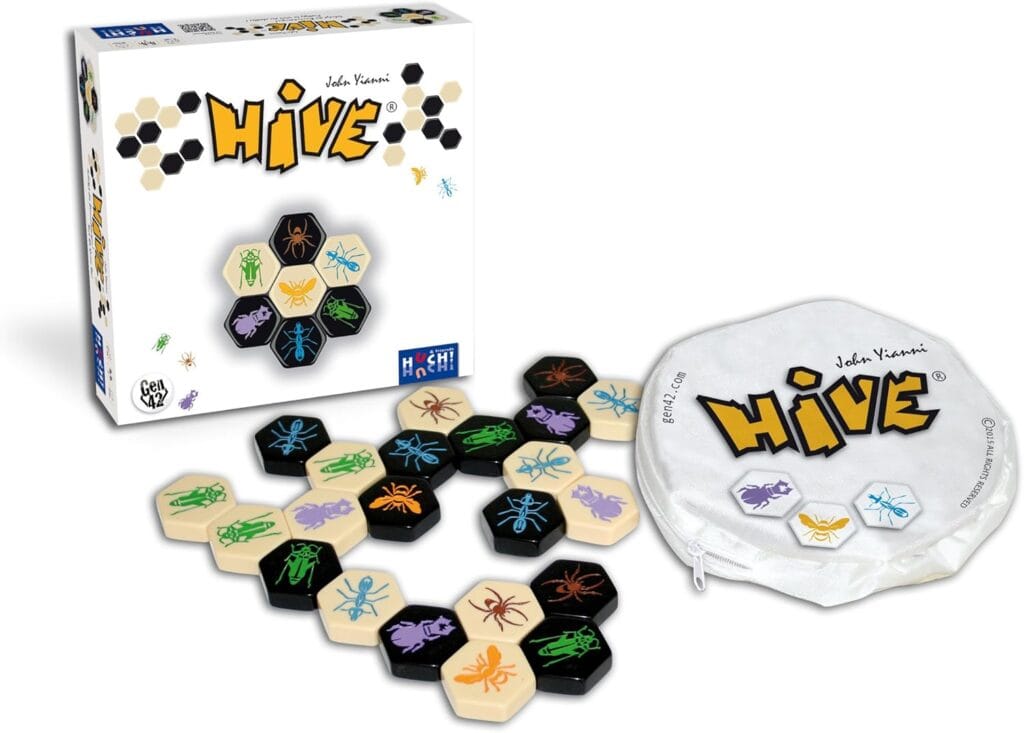
Hive is the game we kept going back to when we wanted something that felt substantive but required zero setup. There’s no board, no cards, and no pieces to punch out — just 22 chunky, satisfying Bakelite tiles depicting insects, each with its own movement rules. The goal is to surround your opponent’s queen bee before they surround yours. It sounds simple. It’s not. Within a few moves, Hive starts to feel like a chess-adjacent puzzle where every placement sends quiet ripples through the whole game state. What surprised us most during testing was how quickly both experienced players and total newcomers found their footing — the learning curve is real, but not steep. The tiles themselves are dense and tactile in a way that feels far more premium than the price suggests, and the whole game drops into a small bag you can take anywhere. We played it on a café table, a hotel room bed, and a train. It held up every time. This one earns a permanent spot in most couples’ collections.
Pros: No board needed — plays on any surface; highly portable; genuinely deep strategic play despite simple rules; excellent component quality; great value.
Cons: Can feel a little abstract for players who want more theme or narrative; expansion tiles (Mosquito, Ladybug, Pillbug) are essentially mandatory for more experienced players and sold separately.
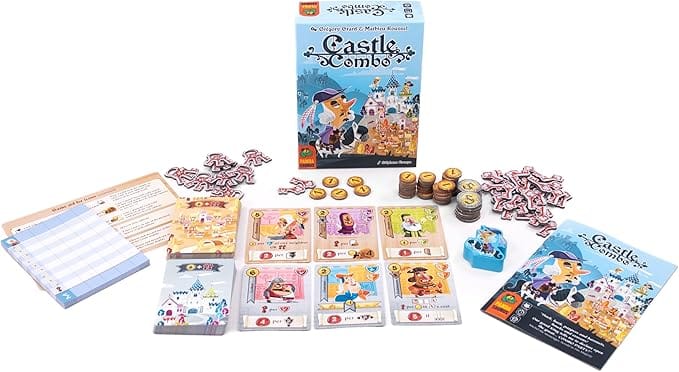
Players: 2–5 | Time: 20–30 min | Complexity: Light
Castle Combo slipped onto this list a little unexpectedly — it wasn’t one of our most anticipated picks going in, but it consistently generated the most laughter per session of anything we tested. The premise is gloriously chaotic: you’re drafting character cards, each with a quirky medieval job (a witch, a blacksmith, a jester), and combining their abilities to score points. The combos are where the magic happens. Finding a combination that does something absurd and unexpected produces a particular kind of delight that’s hard to manufacture in a heavier game. Setup takes roughly three minutes, rules explanation takes about five, and from there the game mostly runs itself while you focus on scheming and celebrating. It’s on the lighter end of this list by design — this is the game to pull out when you want to play something together without committing mental energy to it. That’s not a knock; knowing when a game serves that function is actually useful.
Pros: Extremely fast to learn and set up; generates genuine moments of surprise and humor; scales well from two to four players; beautiful, whimsical card art.
Cons: Lower replay depth than other picks on this list; experienced gamers may find it too light after a few sessions; relies heavily on combo discovery, which diminishes over time.
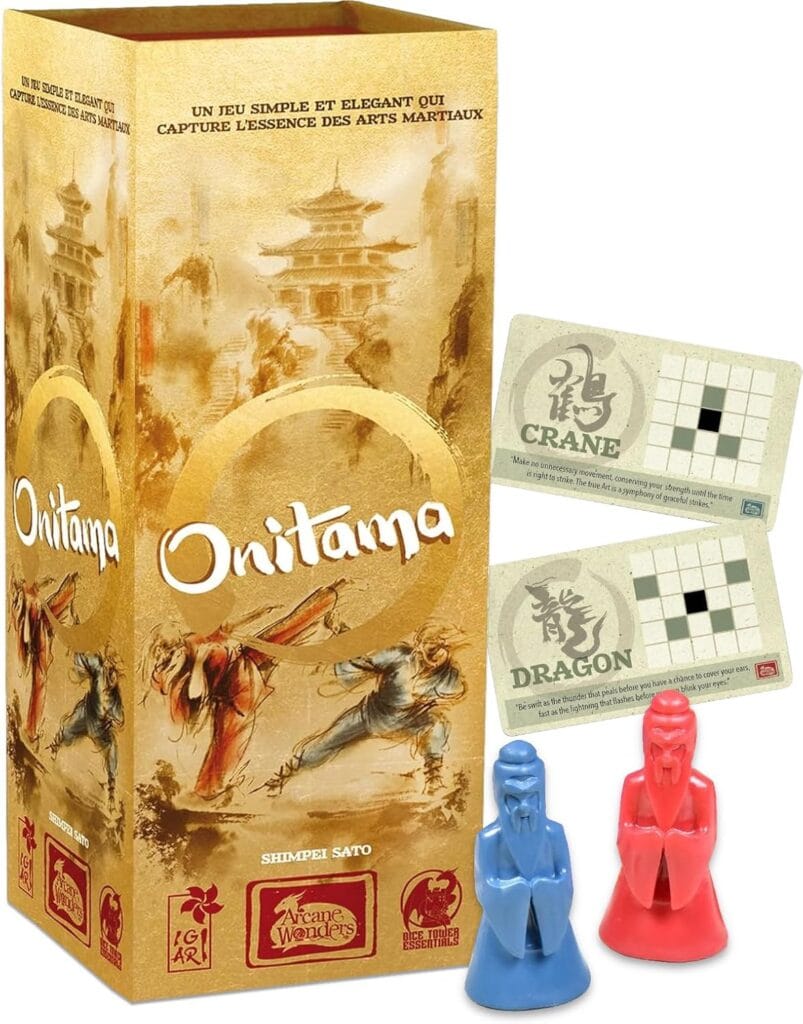
Players: 2 | Time: 15–20 min | Complexity: Light-Medium
Onitama has been described as “chess for people who don’t want to learn chess,” and that’s a reasonably accurate sell, though it undersells how elegantly the game stands on its own. Each player controls a master and four students on a small 5×5 grid, and movement is dictated entirely by a rotating pool of five movement cards. You use a card, pass it to your opponent, and they return one from the center — so the options available to both of you are always shifting, always visible, and always worth studying. There’s no luck, no hidden information, and no dice. It’s a pure strategy game with a small enough footprint to work on most surfaces. We found it hit a particular sweet spot for couples with mismatched experience levels: a stronger player can’t simply run away with the game the way they might in chess, because the constantly rotating card pool keeps things unpredictable enough to stay interesting for both parties. The components are lovely — nice cards, a silk-finish cloth board — and games rarely overstay their welcome.
Pros: Pure strategy with no luck involved; fast-playing despite real depth; gorgeous components; easy to teach; great for couples with different skill levels.
Cons: Very limited player interaction outside of direct combat; may feel repetitive if played in long back-to-back sessions; strictly two players only.
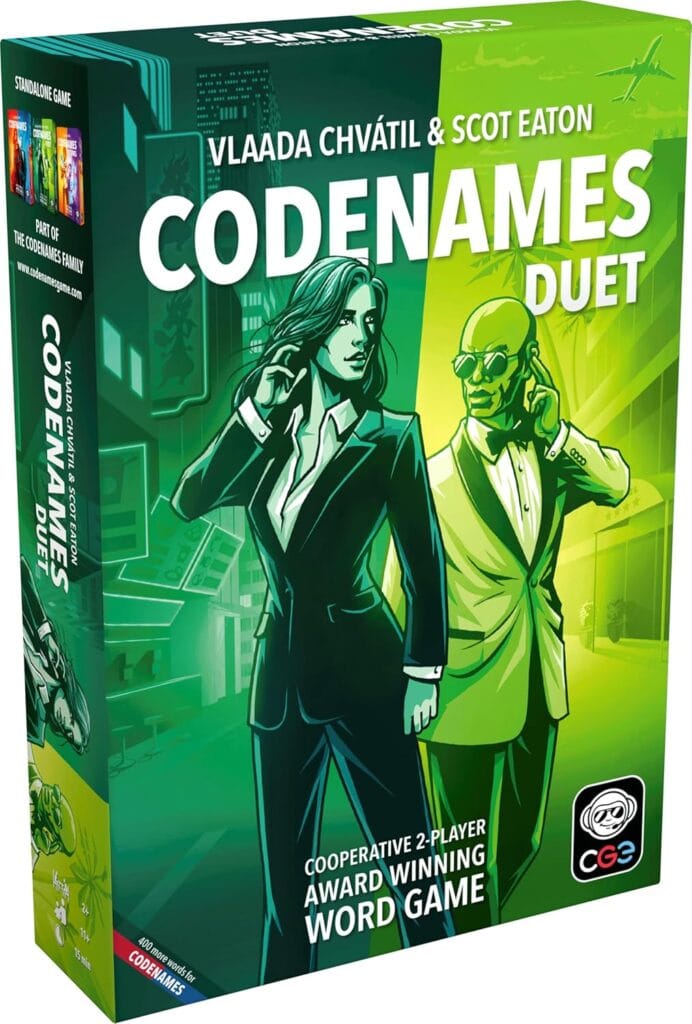
Players: 2 (or teams) | Time: 15–30 min | Complexity: Light
Codenames: Duet is the cooperative two-player version of the wildly popular word-association game, and it’s one of the best examples we’ve seen of a multiplayer hit being meaningfully reimagined for two. Instead of competing, you and your partner each give each other one-word clues designed to lead the other to specific words on a shared grid — without hitting assassin words that immediately end the game. It requires genuine insight into how your partner’s brain works: what words they associate with what concepts, which paths they’ll logically follow, and where they’re likely to go wrong. We found it as illuminating as it was fun — you learn something about how your partner thinks every time you play. The 2nd Edition adds a refreshed word set and some streamlined rules, and the portable card-based format means it travels well. This one also scales surprisingly well for evenings when friends join — hand it to three or four people, and it works just as smoothly. A genuinely clever design.
Pros: Deeply cooperative; encourages communication and mutual understanding; very portable; scales to small groups easily; excellent value.
Cons: Some word grids feel noticeably harder than others due to random setup; not ideal for couples with very different vocabulary strengths; sessions can occasionally feel stuck if clue-giving is difficult.
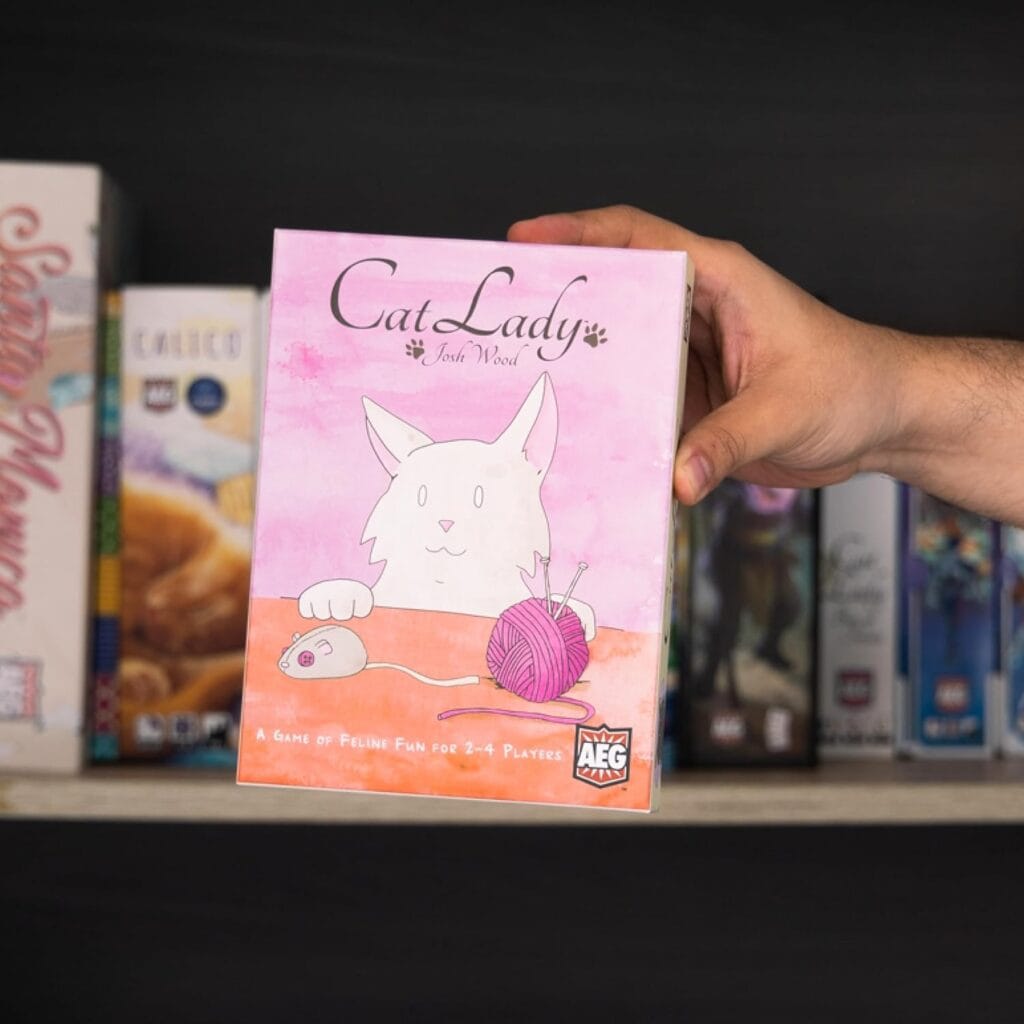
Players: 2–4 | Time: 20–30 min | Complexity: Light
Cat Lady arrived in our testing as a bit of a wildcard — we expected a light filler, and we got something more nuanced. You’re drafting cards in a shared grid (you take a full row or column on your turn), collecting cats, food, catnip, costumes, and toys to score points, all while managing the very real possibility that your cats will go hungry and cost you points instead of earning them. The tension between grabbing what you need and denying your partner what they need is surprisingly fun at two players, and the game develops a kind of playful pettiness that couples seem to love. The cat artwork is genuinely charming, and the component quality is above average for the price point. What makes Cat Lady stand out is how quickly non-gamers get comfortable with it — the theme does a lot of the cognitive heavy lifting, and the rules feel intuitive within a few turns. It won’t challenge a seasoned gamer for long, but for most couples it’s reliably enjoyable across a good number of sessions.
Pros: Accessible to non-gamers; charming, well-executed theme; meaningful decisions at two players; quick setup and play; pleasant table presence.
Cons: Experienced gamers will find the strategic ceiling relatively low; scoring can feel anticlimactic if both players optimize efficiently; the theme may not appeal to everyone equally.
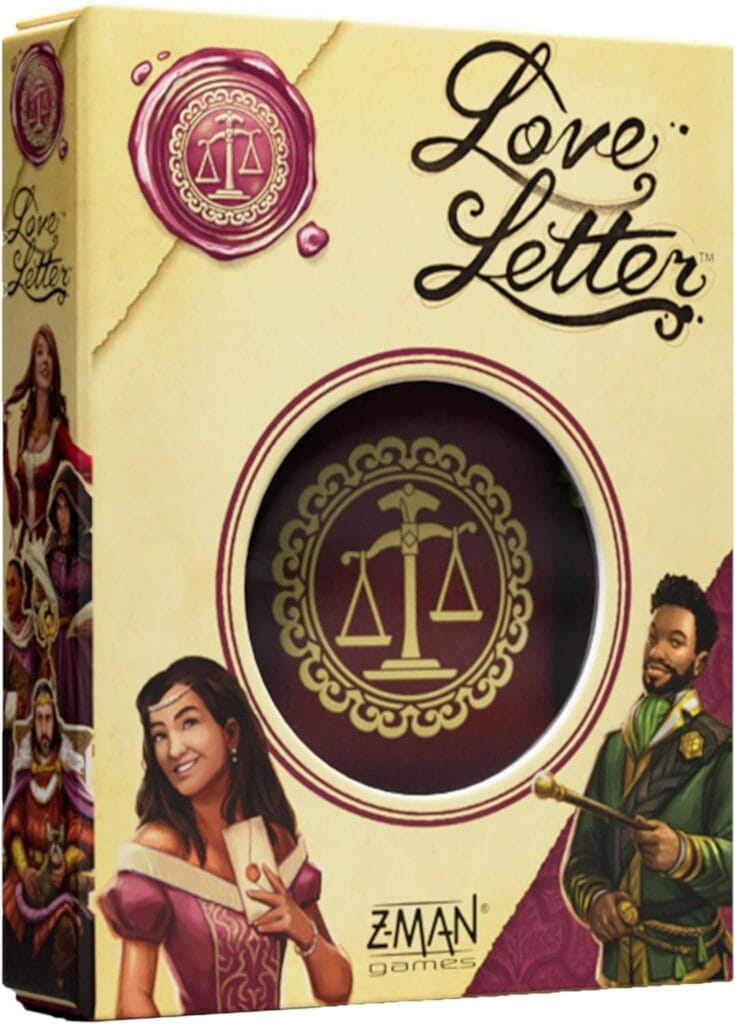
Players: 2–6 | Time: 15–20 min | Complexity: Light
Love Letter is something of a miracle of game design: 21 cards, a handful of tokens, and a genuinely tense elimination game that manages to feel different almost every session. You’re trying to get your love letter to the princess while knocking out your opponent’s chances of doing the same. Each turn, you hold two cards, play one, and use its effect to either gather information, protect yourself, or eliminate your opponent. It’s a game of deduction, bluff, and calculated risk, and it produces those moments where you read your partner correctly, play the perfect card, and feel unreasonably smug about it. The game plays in 15 minutes at most, which makes it excellent as a warm-up game before something heavier, or as a quick decider when you can’t agree on what else to play. We tested the standard edition and found it perfectly solid. The card stock is good, the tokens feel nice in hand, and the setup is essentially zero. A classic that earns its reputation.
Pros: Plays in under 20 minutes; fits in a pocket; generates real tension despite extreme simplicity; scales from 2 to 6 players; numerous themed editions available.
Cons: Some sessions feel more luck-dependent than others; very short game length means it works better as part of a broader game night than a standalone evening; experienced players may burn through the novelty quickly.
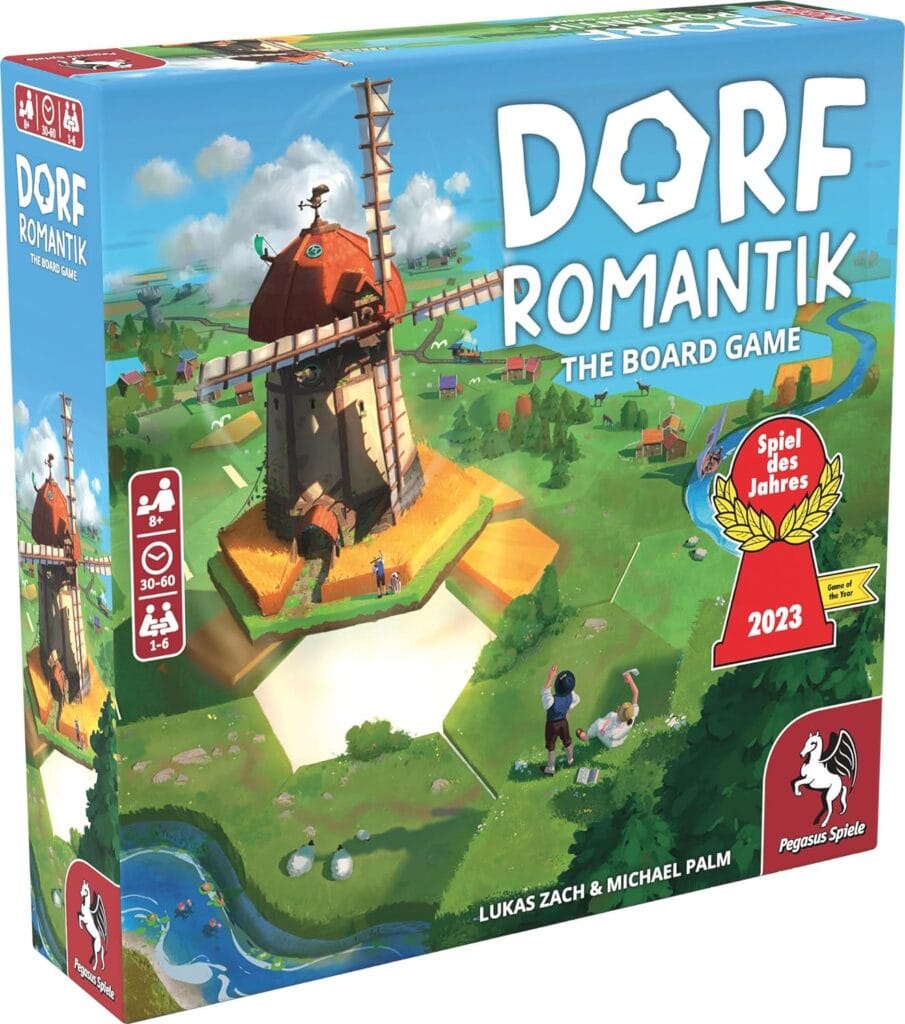
Players: 1–6 | Time: 45–75 min | Complexity: Light-Medium
Dorfromantik started as a video game, and its transition to tabletop is one of the most successful port jobs we’ve seen. The premise is genuinely calming: you and your partner draw hexagonal landscape tiles and collaboratively place them to build an ever-expanding countryside — matching terrain types, completing settlements, following rivers, meeting scoring targets. There’s no conflict, no player elimination, and no time pressure. You simply build a beautiful, shared landscape together and see how well you score. The co-operative scoring against a fixed challenge scale (rather than against each other) means there’s no reason to be strategic at your partner’s expense, and the whole experience has a meditative quality that stands apart from most games on this list. It’s also one of the few games here that genuinely works as a solo experience, which is useful for couples with mismatched schedules. The campaign structure — unlocking new tile sets as you hit milestones — gives it remarkable legs.
Pros: Deeply relaxing and genuinely beautiful; excellent for couples who want cooperation without conflict; strong campaign system for long-term play; plays well solo too.
Cons: May feel too passive for couples who want competitive tension; can run long if you’re optimizing carefully; the campaign boxes (for unlocking content) require storage space.
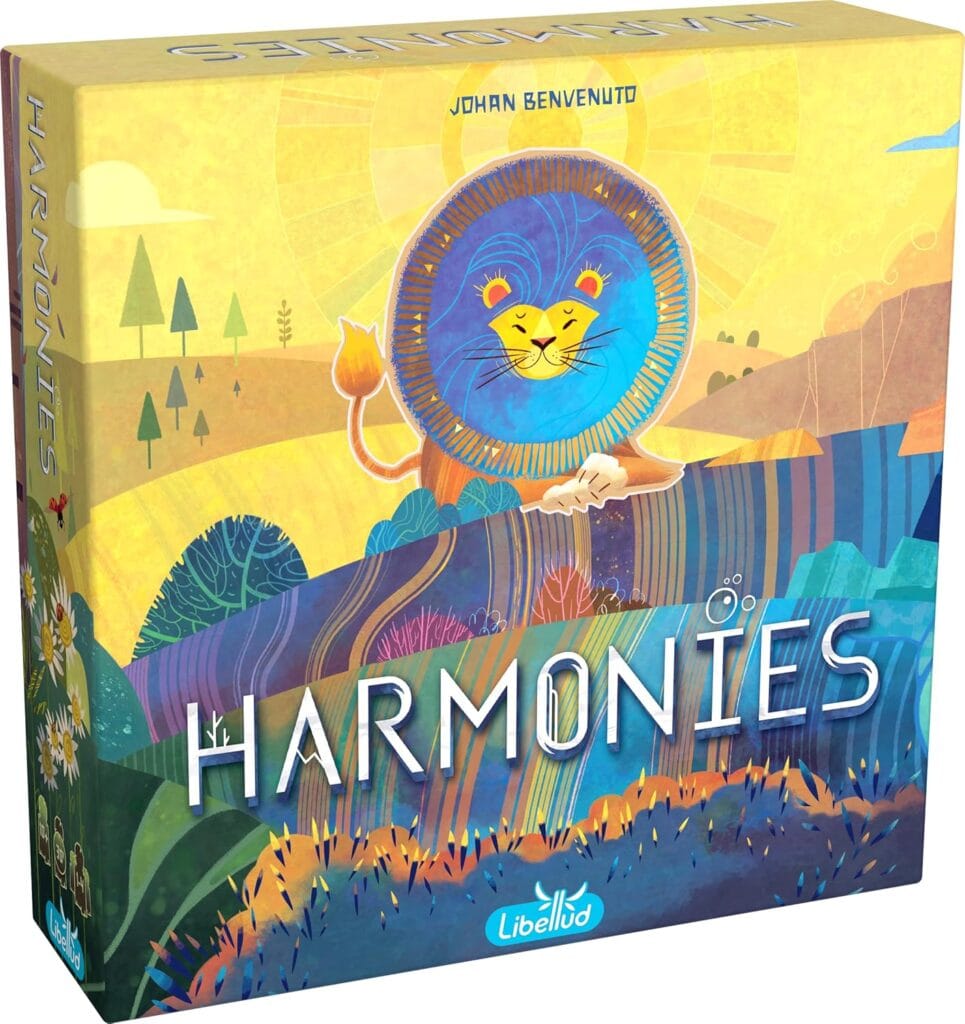
Players: 2–4 | Time: 30–45 min | Complexity: Light-Medium
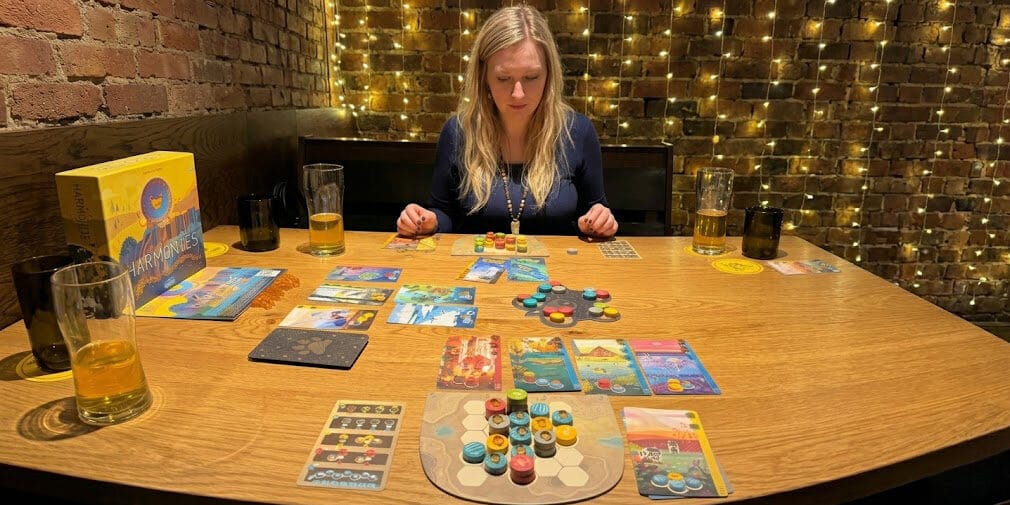
Harmonies is one of those games that looks almost too pretty to play — the animal tokens are carved wood, the nature tiles are vividly illustrated, and the whole tableau you build across a session comes to resemble a little ecosystem you made together. The gameplay is more structured than it looks: you’re drafting tokens from a central river and placing them on your personal board to create habitats that score points based on adjacency and stacking rules. Animals have different preferences — some want mountains, some want water, some want open fields — and learning to build a board that serves multiple scoring conditions simultaneously is where the satisfying strategic layer lives. We found Harmonies occupied a really useful middle space: more engaging than a pure filler, not demanding enough to feel like work. It was one of our most-requested repeat plays during testing, particularly among couples who tend toward aesthetic games. If the tactile and visual quality of a game matters to you, Harmonies is hard to beat.
Pros: Exceptional component quality and visual appeal; satisfying spatial puzzles; scales well from 2 to 4 players; approachable for non-gamers; calming table presence.
Cons: Scoring system takes a session or two to fully internalize; can feel somewhat parallel (everyone focused on their own board); theme is pleasant but not particularly narratively engaging.
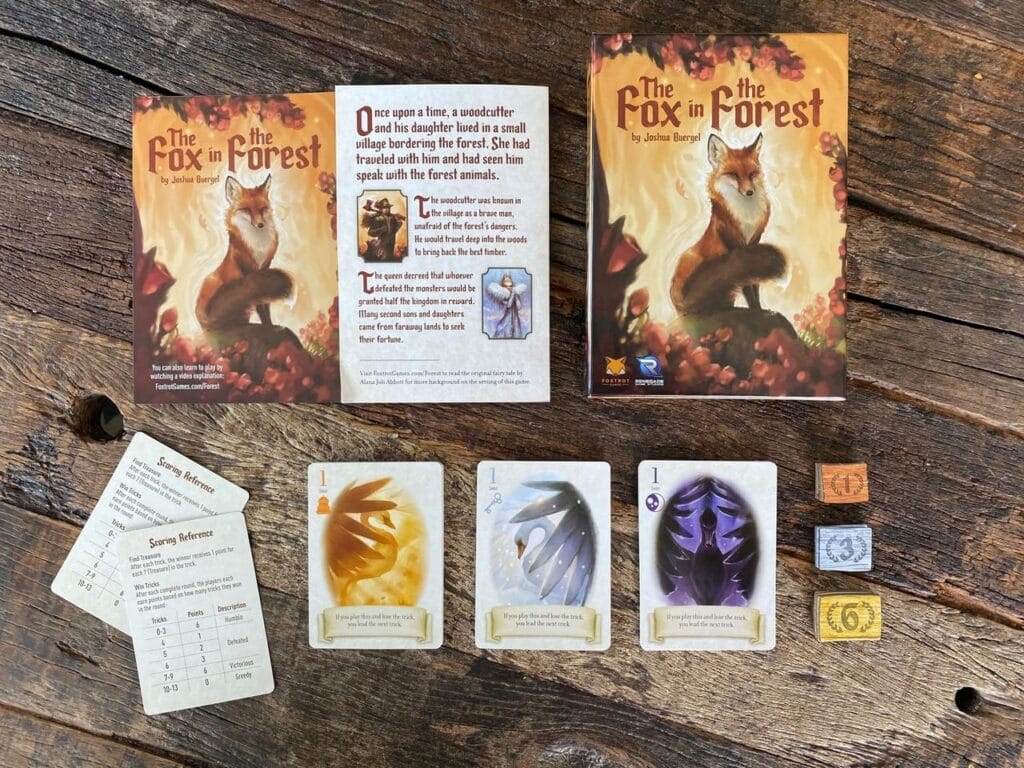
Players: 2 only | Time: 25–30 min | Complexity: Light
Fox in the Forest is a trick-taking card game built from the ground up for two players, and it’s a more sophisticated design than its lovely fairy-tale artwork might suggest. The trick-taking mechanics will feel familiar if you’ve ever played Hearts or Spades, but Fox in the Forest adds a key twist: winning too many tricks is actively bad. Score too many, and you fall into the “Tyrant” zone, losing points instead of gaining them. That tension between playing your best cards and deliberately throwing tricks at the right moments creates a constant low-key negotiation with yourself — and occasionally with how well you’ve read your partner’s hand. We found it excellent for the 25-minute window: long enough to feel like a real game, short enough to play two or three rounds in an evening. The fairy-tale suit design (Bells, Keys, Moons, Stars) is handled beautifully, and the booklet included to help newer card players get comfortable is a thoughtful addition. A genuinely well-crafted small game.
Pros: Elegant trick-taking mechanics with a clever scoring twist; fast-playing; high-quality cards and illustrations; scales naturally to a best-of-three format; great for card game fans.
Cons: Strictly two players; trick-taking experience is helpful — total beginners may take a session to get comfortable; low player interaction beyond reading the other person’s plays.
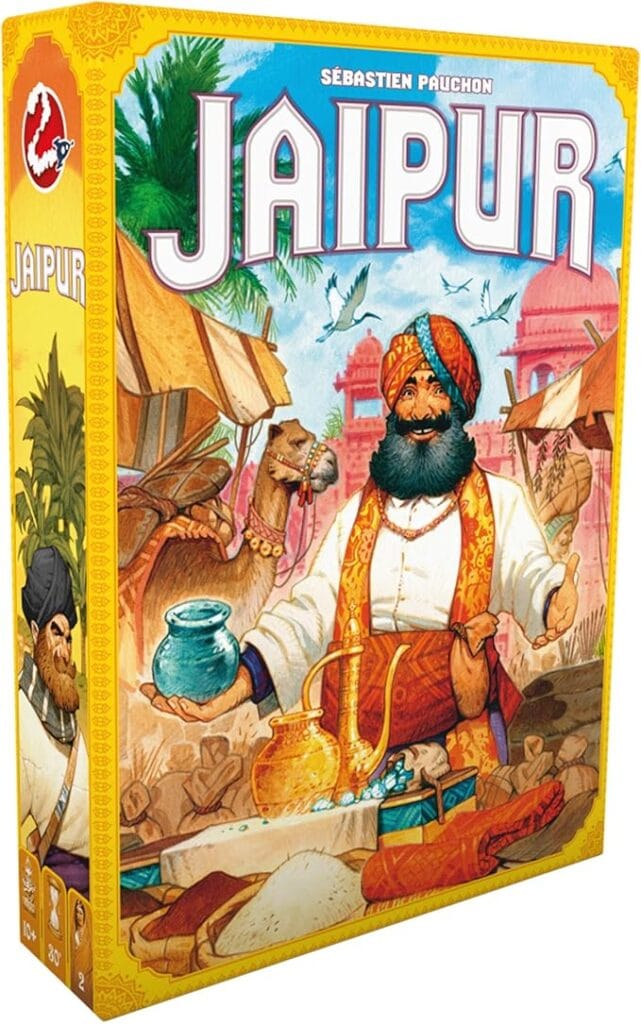
Players: 2 only | Time: 30 min | Complexity: Light-Medium
Jaipur is the game we recommended most frequently to couples who’d never played a modern board game before — and the one we most consistently saw become a gateway to the hobby. You and your partner are rival traders in an Indian market, competing to collect and sell sets of goods (spice, leather, silk, gold, silver, gems) to the merchant. Sell too slowly, and your partner claims the best prices; sell too quickly, and you miss the bonus chips awarded for larger sets. Every turn is a micro-decision wrapped in a macro-puzzle, and the game plays beautifully in about 30 minutes. The New Edition updates the visual design with richer illustrations and improves some of the cardstock quality, both welcome upgrades. What makes Jaipur particularly strong for couples is the way it generates table talk — debates about who should have sold when, playful accusations about timing, the occasional groan when your partner scoops a bonus you were building toward. It’s competitive without being mean, and engaging without being complex.
Pros: Excellent gateway game for non-gamers; consistently engaging over many sessions; fast and portable; beautiful updated production in the New Edition; balanced competitive tension.
Cons: Strictly two players; camel mechanic (used to grab multiple cards) can feel slightly off for new players at first; experienced gamers may find the ceiling not quite high enough over time.
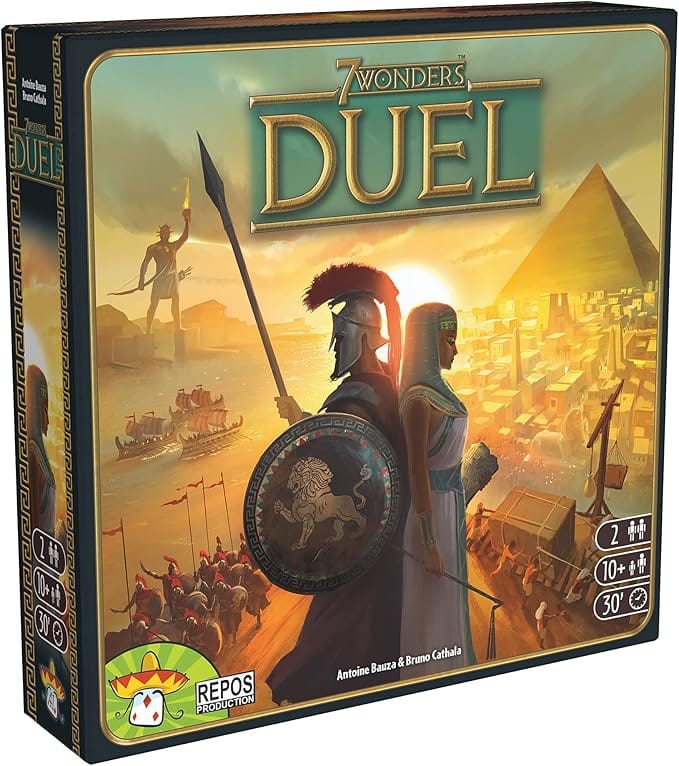
Players: 2 only | Time: 30 min | Complexity: Medium
7 Wonders Duel is one of the most discussed two-player games in the hobby for a reason: it takes the card-drafting, civilization-building engine of the original 7 Wonders and redesigns it specifically for head-to-head play, and the result is arguably more satisfying than its parent game. You and your partner draft cards from a shared tableau across three ages, building your civilization’s economy, science, and military — while watching closely to make sure your partner isn’t quietly marching toward a scientific or military victory that bypasses the final score count entirely. That threat of instant-win conditions keeps both players genuinely alert throughout, even when things seem comfortable. We found the 30-minute play time genuinely impressive for how much strategic weight the game carries. It can feel slightly overwhelming in the first session or two, but the second-game clarity is among the best of any game on this list. This one grows with you.
Pros: Rich strategic decision space in 30 minutes; three distinct win conditions create genuine variety; strong replayability; excellent production quality; grows more interesting over multiple sessions.
Cons: Steeper learning curve than most picks on this list; first session often ends before both players fully grasp the system; the military track can feel frustrating if your partner commits to aggression early.
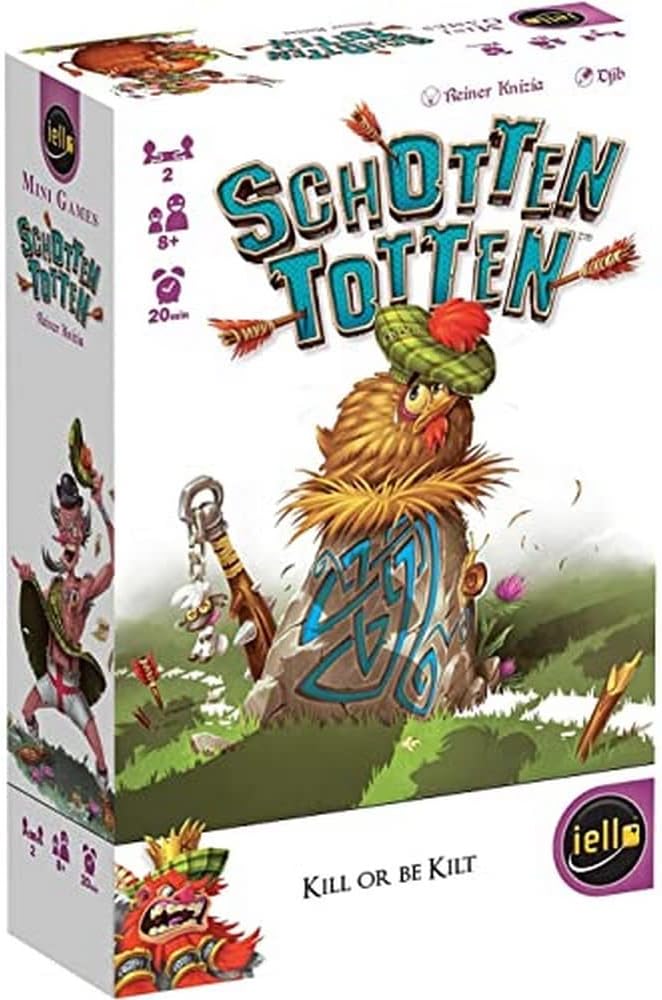
Players: 2 only | Time: 20–30 min | Complexity: Light-Medium
Schotten Totten is a game about claiming territory along a line of nine stones using poker-style card combinations — and it’s one of the most underappreciated two-player games in the hobby. Each turn, you play a card to one of the nine border stones, building a three-card combination on your side. Claim five stones, or three adjacent ones, and you win. The key is that neither player has full information — you’re both reading partial hands and trying to figure out whether your opponent’s face-down-card combination can beat yours before committing further resources. The tension it generates is genuinely remarkable for a game this portable and this affordable. We’d draw a direct line from Schotten Totten to games like Lost Cities or Battle Line for couples who want something that feels like a strategic duel without requiring a 90-minute setup. The tactical depth here consistently surprised testers who wrote it off as too simple at first glance.
Pros: Exceptional strategic depth for the price and footprint; elegant poker-hand scoring system; quick sessions; very portable; great value.
Cons: A familiarity with poker hand rankings is helpful; stone placement and hand management can feel confusing in the opening game; aesthetics are functional but not visually striking.
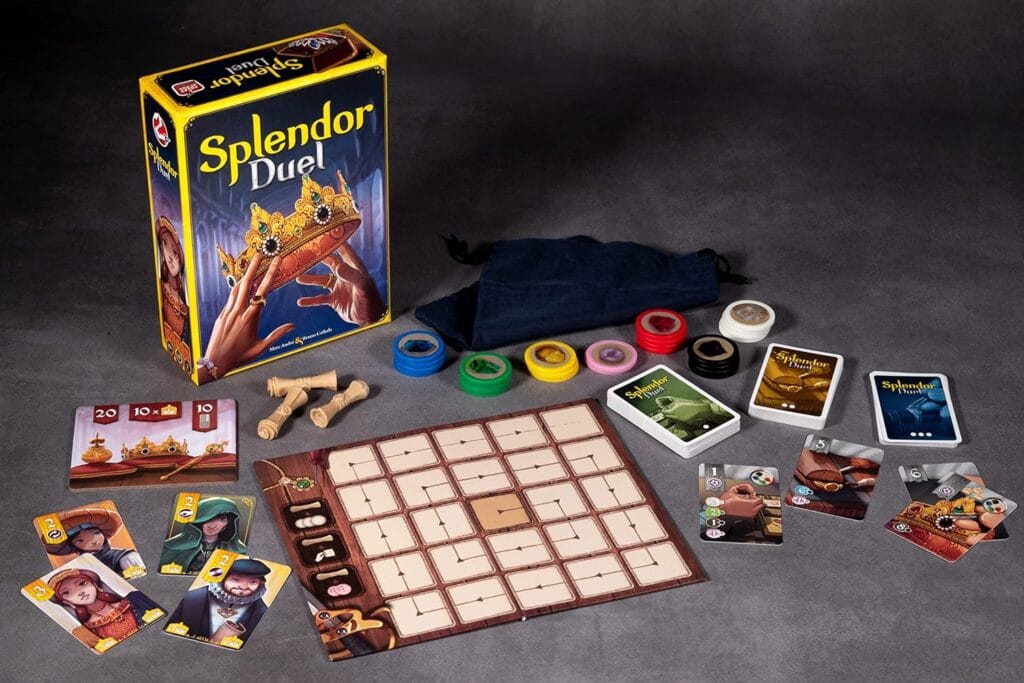
Players: 2 only | Time: 30–40 min | Complexity: Light-Medium
Splendor Duel takes the gem-collecting engine of the beloved Splendor and rebuilds it specifically for two, adding meaningful competition, new card powers, and three different ways to win, all of which you need to monitor simultaneously. You draft gem tokens from a shared spiral track (the placement of which matters strategically), use them to purchase development cards that generate permanent resources, and work toward one of three victory conditions: prestige points, royal cards, or collecting cards of every color. The multitrack victory condition is what elevates Splendor Duel above the original for two players — you’re never quite comfortable, because your partner can sidestep your point lead if they pivot to a different win condition fast enough. We found this created exactly the kind of alert, engaged play that makes a 35-minute game feel like it earns its time. Component quality is characteristically strong from Asmodee, and the gem tokens have the satisfying weight that’s become something of a trademark.
Pros: Multiple win conditions create genuine strategic variety; excellent gem token quality; builds naturally on Splendor familiarity; fast once learned; well-balanced competitive tension.
Cons: First-game learning often involves an accidental victory condition being reached before both players understand it; the bag draw for gem selection involves some luck; not for players who want purely strategic games.
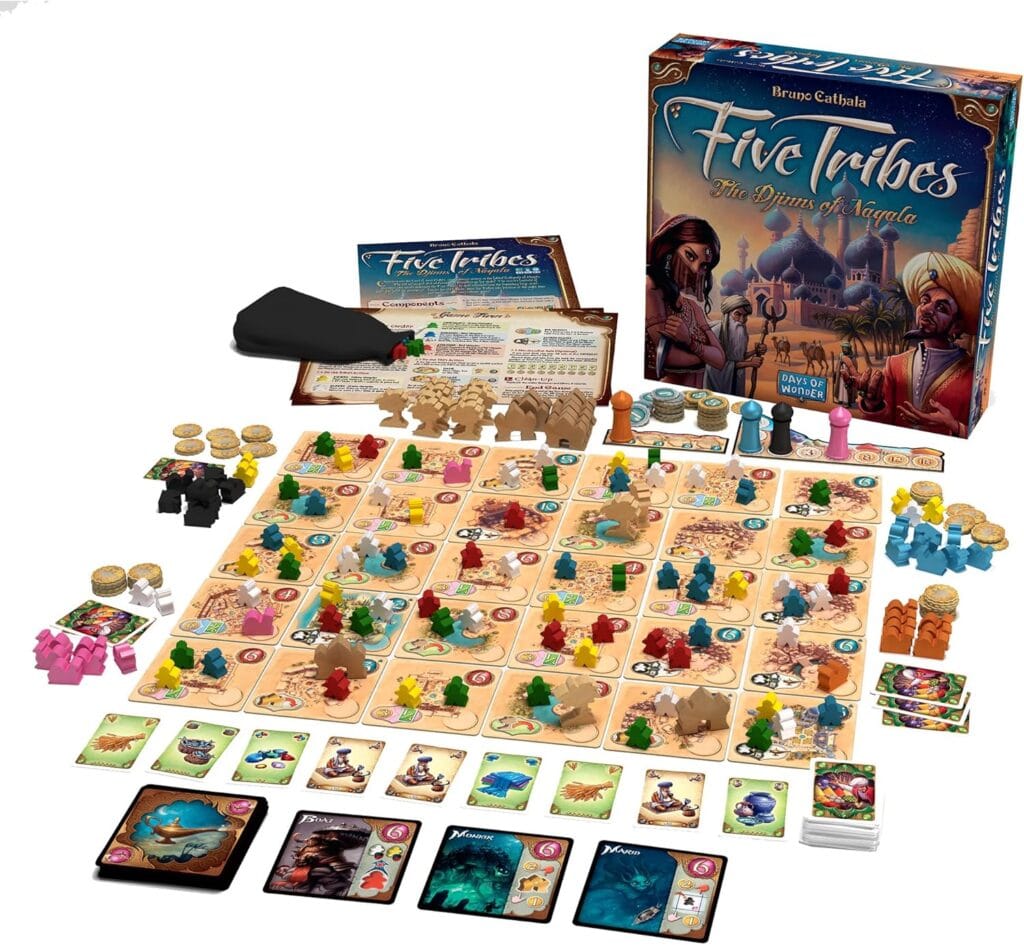
Players: 2–4 | Time: 40–80 min | Complexity: Medium
Five Tribes is the longest and most strategically complex game on this list, and we’ll be honest: it’s not for every couple. But for pairs who enjoy deeper games — the kind you play after dinner on a quiet weekend — it’s genuinely exceptional. You move colored meeples around a grid of tiles, “picking up” and “dropping” them to trigger the special powers of whichever color ends your move. Those powers unlock merchants, builders, assassins, and elders, all generating different kinds of value and points. The decision space is enormous, and the interaction between players is high — you’re constantly reacting to what your partner just did and thinking several moves ahead. What surprised us during testing was how well it plays at two: the game tightens up significantly, and the smaller player pool makes tracking your partner’s strategy feel achievable rather than chaotic. For couples who genuinely enjoy a mental workout together, Five Tribes is among the most rewarding games on this entire list.
Pros: Exceptional strategic depth; high player interaction; beautiful, thematic components; scales well to two players; enormous replayability through variable tile layout.
Cons: Longest setup and play time on this list; analysis paralysis is a real risk for some players; not well-suited to casual or low-energy evenings; learning curve takes multiple sessions.
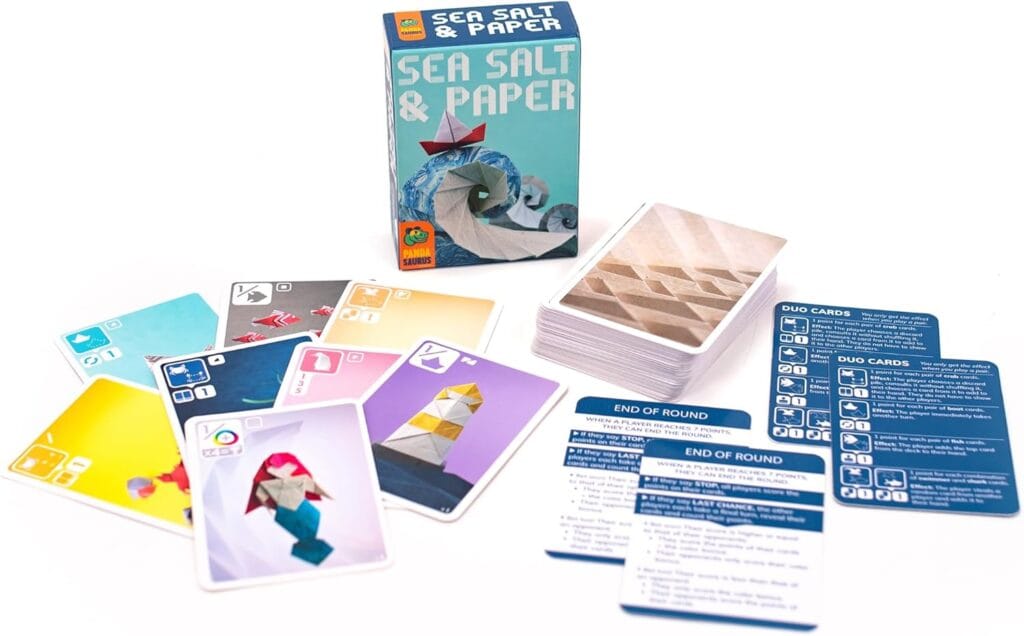
Players: 2–4 | Time: 30–40 min | Complexity: Light
Sea Salt & Paper is the game that looks like it should be filler and plays like it secretly has a graduate degree. The entire game is built around collecting and combining ocean-themed cards — seashells, fish, crabs, mermaids, octopuses, boats — to assemble sets and trigger special effects, then choosing at a critical moment whether to stop the round and lock in your points or push further and risk being beaten. That final decision — “stop” or “last chance” — gives every round a climax that punches well above the game’s weight. The card art is genuinely beautiful, rendered in a delicate watercolor style that gives the whole thing an aesthetically calm quality even when you’re absolutely furious that your partner took the card you needed. It plays in roughly 30 minutes, fits in a small box, and travels without complaint. We found it consistently ranked as a favorite among couples who prefer lighter fare — it has just enough decision-making to feel meaningful without requiring a rulebook consultation.
Pros: Gorgeous card art; elegant stop-or-push-your-luck mechanic; fast and portable; excellent for non-gamers; highly replayable across many sessions.
Cons: Luck plays a larger role than in many picks on this list; the card combo effects take a session to fully internalize; experienced gamers may want something with a higher strategic ceiling.
Why We're Qualified to Tell You This
We tested over 30 games specifically marketed to two players or known to perform well at two. Our team of five couples — ranging from board game newcomers to people who own shelving units dedicated to their collections — played each game multiple times across different settings: date nights at home, coffee shops with small tables, lazy Sunday afternoons, and post-dinner wind-downs. We timed sessions, tracked how often we reached for a game again without prompting, and paid close attention to how a game felt emotionally — whether it sparked conversation, created tension in a fun way, or just felt like homework.
We did not test anything we couldn’t finish in under two hours on a weeknight. We also specifically avoided games that required extensive reading before the first play. Life is short.
What We Eliminated
Before getting to the final list, here’s what didn’t make the cut:
Patchwork came close. It’s cozy and legitimately clever, but after a handful of sessions, the quilt-building loop started to feel repetitive for couples who play more than once a month. It’s worth trying, just not worth putting at the top of a list.
Pandemic is a solid cooperative game, but it tends to produce one dominant player who essentially manages the others’ turns. That dynamic doesn’t work well for two people who want to feel equally invested. We also found the theme — disease outbreak — a little heavy for a relaxed evening.
Lost Cities has a devoted following, and we understand why, but it’s thin on interaction. You’re essentially playing solitaire across from each other. Fine for a travel game, not compelling enough for a dedicated date night.
Ticket to Ride (Two-Player Variants) lost something without the tension of a fuller table. With only two players, the map felt sparse, and the block-your-opponent strategy that makes the game fun evaporated.
Sagrada is beautiful, but the rule overhead in the early sessions was consistently a mood-killer for less experienced players.
What remained after our elimination rounds were games that consistently felt worth playing again — games where one of us would suggest a rematch before the other had finished packing the box.
A Few Final Thoughts
The best board game for couples is, ultimately, the one you’ll actually play. A game that sounds perfect on paper but sits on your shelf untouched isn’t doing anyone any good. Our honest advice: start with one or two games from the lighter end of this list — something like Jaipur or Sea Salt & Paper — and see whether you both enjoy the format. If you do, work your way toward something with a bit more depth. The board game hobby rewards patience, and so does finding the right game for your specific dynamic.
If you’re curious about expanding beyond two-player-specific games, there’s a reasonable overlap with our guides to best gateway board games for beginners and best strategy games for game night — both of which include titles that work well at two players even when designed for larger groups.