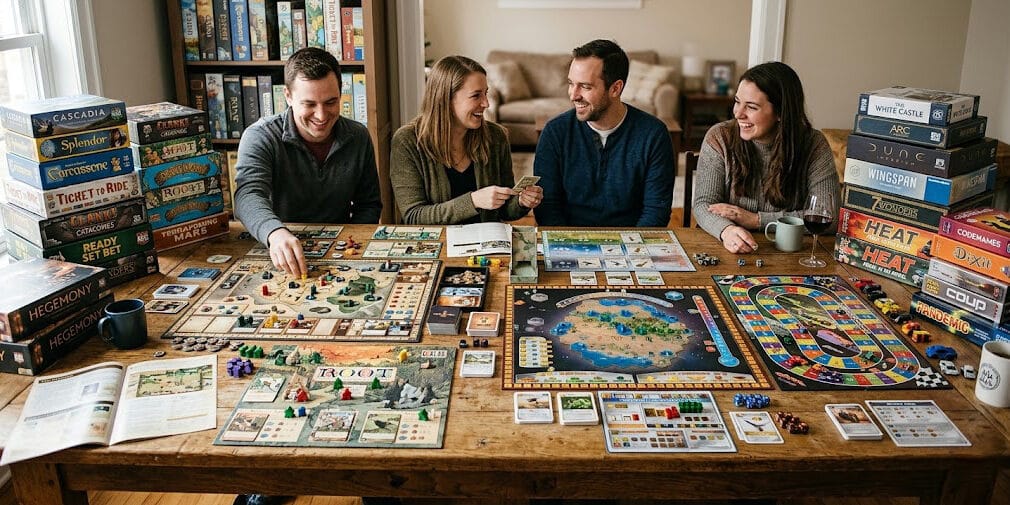

Cascadia (AEG & Flatout Games)
Cascadia was one of those games where the whole table exhaled a quiet “oh, this is good” about twenty minutes in — and nobody had to be told how to feel it. Designed by Randy Flynn, this tile-laying and token-drafting game puts you in charge of building a Pacific Northwest habitat filled with salmon, bears, elk, foxes, and hawks. Each turn, you pick a landscape tile and a wildlife token to place on your growing ecosystem, and the scoring shifts based on which wildlife scoring cards are active that session. What makes it genuinely brilliant is how elegantly light it is on the surface while quietly offering real depth underneath. New players grasp the mechanics in one round; experienced players spend the whole game agonizing over beautiful decisions. The components are lovely — thick tiles, satisfying wooden tokens — and the nature theme is relaxing in a way that most competitive games aren’t. It scales well from solo play up to four, and the rotating scoring conditions mean no two games feel identical. If you’re looking for a game that converts skeptical partners or non-gamer friends with minimal friction, Cascadia is one of the most reliable picks we’ve encountered.
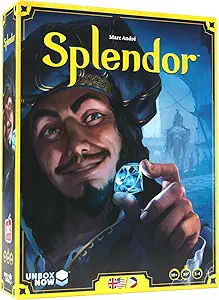
There’s a reason Splendor has become a staple recommendation for new strategy gamers: it does something rare, which is to make resource management feel intuitive rather than intimidating. You’re a Renaissance gem merchant collecting colored chips and purchasing development cards that eventually attract noble patrons to clinch the win. The whole thing clicks into place after about three turns, and yet the strategic tension — knowing when to grab gems your opponents need, recognizing when someone is about to close out the game — keeps even experienced players fully engaged. Our testers loved how the physical chips feel: they’re thick, satisfying poker-style tokens that add a tactile pleasure to every turn. Games run about 30 minutes, which makes it an ideal opener for a longer game night or a satisfying standalone when time is short. It works particularly well for two to four players and hits its peak tension at three. The one genuine trade-off is that Splendor can start to feel a little familiar after many plays unless you add expansions, but as an introduction to engine-building and card-drafting, it remains one of the cleanest examples the hobby has produced.
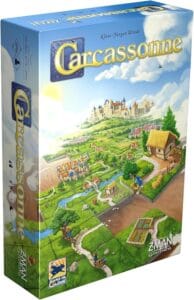
Carcassonne is the game we’ve used more than almost any other to get hesitant adults to genuinely fall in love with modern board gaming. The premise couldn’t be simpler: draw a tile, place it to extend a growing medieval landscape, and then decide whether to deploy one of your limited supply of little wooden followers — called meeples, a word the hobby basically invented here. Yet the decisions pile up beautifully. Do you complete someone else’s city to score off their work? Do you share a feature to hedge your bets? Do you hold your meeples back for the farm scoring at the end? First-timers play it as a pleasant puzzle; regular players turn it into a surprisingly competitive experience. The base game handles two to five players and takes about 30 to 45 minutes, and the vast expansion library means you can add as much or as little complexity as your group wants over time. Component quality is solid — the art has a warm, hand-illustrated quality that wears well. It’s hard to think of many games that have stayed this relevant for over 20 years.
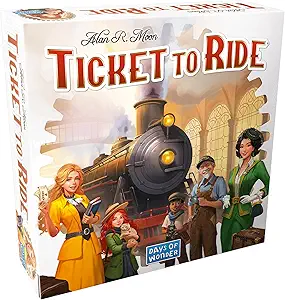
Ticket to Ride holds a specific place in board game history as the title that genuinely moved the hobby into the mainstream — and after playing it again with fresh eyes, we understand exactly why. The concept is clean: collect colored train cards, spend them to claim railway routes across the map, and try to complete destination tickets that earn you points at the end. The rules fit on a single page. The map is inviting. The trains are charming little plastic pieces that feel good to place. And then, around the midpoint of every game, someone realizes the route they need is blocked, and the whole table erupts in a mix of laughter and betrayal that’s almost universally appealing. That emotional swing — from calm planning to delightful chaos — is what makes Ticket to Ride work across experience levels and age groups. It plays two to five players comfortably and runs about an hour, making it well-paced for a casual evening. The original USA map is the right place to start, though the Europe version adds a few wrinkles that fans tend to prefer after a handful of plays. Either way, this is one of the safest recommendations in the hobby.
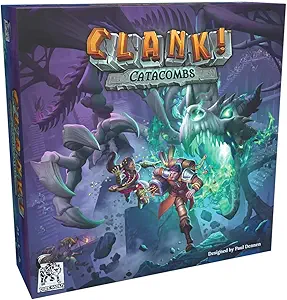
Clank! Catacombs is the kind of game that produces genuinely memorable stories at the table — the kind you’re still retelling weeks later. It’s a dungeon-delving deck-builder where you venture into a procedurally built underground maze, grab artifacts and treasures, and try to escape before the dragon’s rage kills you. The twist that gives the game its name is the Clank! Mechanic: Every loud action you take adds your-colored cubes to a bag, and when the dragon attacks, randomly drawn cubes deal damage. Play cautiously, and you’re safe but slow; play boldly, and you’re rich but probably bleeding. The Catacombs edition improves on the original by making the dungeon modular — tiles flip and reveal as you explore, so the board literally builds itself during play, which adds enormous replay variety. Our testers found that the competitive tension peaks wonderfully when one player escapes early, and everyone else is scrambling to get out before the dragon finishes them off. It handles two to four players well and typically runs 60 to 90 minutes. The deck-building is accessible enough that strategy newcomers can engage without feeling lost.

Ready Set Bet is one of the most genuinely fun experiences we’ve had with a group of six or more, and it works with people who would never normally gravitate toward a “strategy game.” The conceit is a horse race run in real time from a companion app or included cards, and players are simultaneously betting on race outcomes using poker-style chips on a shared betting board. Odds shift, long shots come in from behind, and the whole room tends to end up yelling at the same time. What makes it work is that the real-time betting element creates natural urgency — there’s no waiting for your turn because everyone is acting at once. The game handles up to nine players, which is legitimately rare for something with this level of engagement, and it scales down to two without losing its energy. Our favorite sessions were at six players where the table felt like a small betting parlor. Components are attractive, and the ruleset is simple enough to explain in under five minutes. If you host larger groups and want something other than trivia or party games, Ready Set Bet fills that gap in a way very few games do.
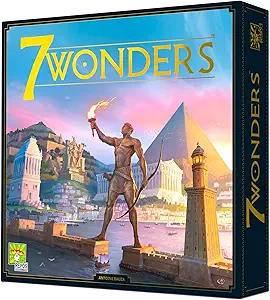
7 Wonders (Asmodee, New Edition)
7 Wonders pulls off something genuinely impressive: it lets up to seven players complete a full game in about 30 minutes without anyone sitting around waiting for their turn. That’s because every player acts simultaneously, passing a hand of cards around the table and drafting one each round to develop their ancient civilization. You’re building wonders, generating resources, producing science, fielding military, and managing your neighbors’ suspicions all at once. The new edition refreshes the component quality meaningfully — the cards are cleaner, the iconography is cleaner, and the overall presentation feels more polished than the original. The learning curve is moderate: the card types take a game or two to internalize, but once players understand what each color does, the game opens up considerably. The 7-player count is genuinely impressive for a 30-minute game with this much decision-making. The main limitation is that new players sometimes feel slightly overwhelmed during their first session, but almost everyone wants to play again immediately after. Paired with a good primer on civilization card synergies, 7 Wonders quickly becomes a group favorite.

HEAT: Pedal to the Metal (Asmodee)
HEAT surprised us more than almost anything else we tested. Racing board games have a checkered history — many are either luck-heavy or so mechanically fussy that the tension evaporates — but HEAT manages to feel genuinely exciting from the first corner to the final straightaway. You’re managing a hand of speed cards, pushing your engine by dumping Heat cards into your deck, and cornering without blowing past the limit and spinning out. The hand management is clever and intuitive: go faster by adding Heat, but Heat clogs your hand and forces tough decisions when the corner arrives. The track tiles are gorgeous, the car components are satisfying, and the game plays one to four in about an hour. It’s one of those titles where the mechanical theme — you genuinely feel like you’re managing an engine — reinforces the experience in a way that elevates every decision. Our group played it back-to-back twice on the first play, which doesn’t happen often. The Championship mode adds a campaign structure across multiple races that gives serious replay value. If anyone at your table has even a passing interest in motorsport, this one is an easy sell.
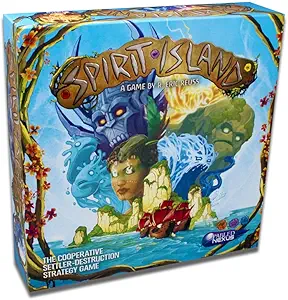
Spirit Island (Greater Than Games)
Spirit Island is the cooperative game we find ourselves recommending most to people who’ve already worn out Pandemic and are ready for something that genuinely challenges them. You and your fellow players are ancient island spirits defending a native people against colonial invaders, and the asymmetry is the whole point: every spirit plays completely differently. One spirit is aggressive and fast; another is slow and defensive; another manipulates the land itself. Learning your spirit’s specific powers and figuring out how they mesh with your teammates’ is where the game’s real magic lives. The difficulty is real — Spirit Island doesn’t hold your hand, and losing isn’t uncommon — but the strategic depth is enormous, and the game has enough variable setup through different invader boards, adversaries, and spirits to stay genuinely fresh for a very long time. Components are excellent: thick tokens, evocative art, and a rulebook that’s dense but well-organized. It typically runs 90 to 120 minutes for one to four players. This isn’t the right entry point for complete newcomers, but for a group that’s ready to graduate from gateway co-ops, it’s one of the hobby’s strongest offerings.
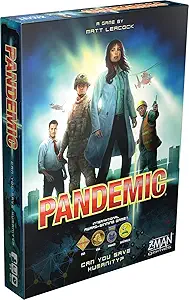
If there’s one cooperative game that belongs on this list without debate, it’s Pandemic. It functions as both the definitive entry point for co-op gaming and a genuinely tense experience in its own right: players take on specialist roles — scientist, medic, dispatcher, researcher — and work together to contain and cure four simultaneous disease outbreaks before the world falls apart. Every turn is a negotiation: do we treat outbreaks in Asia or focus on curing the disease that’s about to chain-react in South America? The role abilities are distinct enough that every player feels meaningfully different, which helps prevent the “alpha player problem” where one person just tells everyone what to do. Games run about 45 to 60 minutes, and the difficulty is adjustable through the number of epidemic cards you seed. The components are functional and attractive, and the map is satisfyingly tactile. Our testers have lost more sessions of Pandemic than we’ve won, which is a testament to its balance — it’s hard enough to feel like an achievement when you do succeed. It’s widely available, reasonably priced, and handles two to four players beautifully.
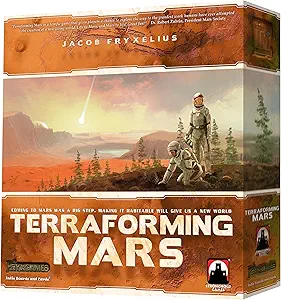
Terraforming Mars (Stronghold Games)
Terraforming Mars is, in our assessment, one of the most satisfying engine-building games ever designed — and it earns that title the hard way, through sheer density of interesting decisions. You’re a corporation racing to make Mars habitable: raising temperature, growing oxygen levels, covering the surface with oceans and greenery, all while playing project cards from an enormous deck that gives every game its own texture. The card variety is where the game’s longevity comes from: with over 200 project cards in the base game, you’re constantly encountering new combinations and synergies. Our testers found that the first game takes longer than expected as players learn to read the card ecosystem, but by the second play, everything accelerates into a flowing, deeply satisfying experience. It runs one to five players, though it genuinely shines at two to three, and sessions typically run 90 to 120 minutes. Components are functional rather than luxurious — the cards are fine, the player boards are famously thin — but the gameplay is compelling enough that the production rarely feels like a dealbreaker. Many fans upgrade to the Ares Expedition card game spinoff for faster play, but the original is where you want to start. The Prelude expansion is the first upgrade we’d recommend.
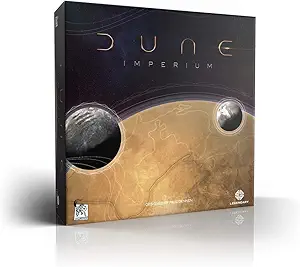
Dune: Imperium does something genuinely difficult: it translates one of the most complex fictional universes in science fiction into a board game that’s approachable for strategy newcomers while still satisfying for veterans. You’re a House leader navigating the political, military, and economic systems of Arrakis — managing influence with factions like the Bene Gesserit, the Emperor, and the Fremen, controlling spice production, and deploying agents to key locations across a shared board. The blend of worker placement and deck-building is elegant: your deck evolves over the course of the game, and the cards you have in hand determine where you can send agents, which creates a satisfying planning puzzle each round. Our group found that the political intrigue — who to ally with, who to undercut — created exactly the kind of table diplomacy that makes strategy games memorable. It plays one to four players and typically runs 60 to 120 minutes, depending on experience. The Uprising expansion adds meaningful variety, but the base game alone is a complete and deeply replayable experience. If your group has any affection for the source material, this one is an easy call.
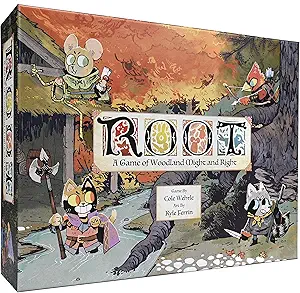
Root is the game our most experienced players gravitate to when they want a genuine mental workout, and it’s one of the most distinctive designs in modern board gaming because every player at the table is playing a completely different game. The Cats are building an industrial empire and scoring through sawmills and workshops. The Eyrie Dynasties are following a rigid decree that generates points but spirals toward chaos. The Woodland Alliance is fomenting revolt from the shadows. Each faction has its own rulebook, its own victory conditions, and its own strategic rhythm — and the way they interact is where Root becomes something special. The woodland art style is deceptively cute, which often catches new players off guard when they realize they’re engaged in fairly cutthroat politics. Learning Root takes commitment: plan for a longer first session as each player absorbs their faction’s rules. But once your group has a few games under its belt, it’s one of the richest experiences in the hobby. It plays two to four players optimally and runs 60 to 90 minutes with experienced players. Root has also built one of the strongest fan communities in the hobby.

Wingspan is the game that proved ornithology could be deeply compelling to people who have never thought twice about birds. Designed by Elizabeth Hargrave, it puts you in the role of a bird habitat researcher attracting species to your nature preserve, with each bird card featuring a unique power, a food cost, and an egg capacity. The engine you build is the point: activate early birds to chain into later birds, trigger cascading effects, and watch your preserve grow into a beautifully interconnected system. What repeatedly struck our team — many of whom are not “nature people” — was how the theme and mechanics reinforce each other in a way that feels genuinely intentional. The components are extraordinary: the egg tokens are pastel ceramic-style pieces, the bird cards are illustrated with stunning watercolor art, and the entire package feels like something you’d want to display on a shelf. It plays one to five players and scales well across the range, running about 40 to 70 minutes. There’s a genuine learning curve in understanding which engine combinations are most efficient, but the game is forgiving enough that less experienced players can still enjoy the experience without feeling crushed.
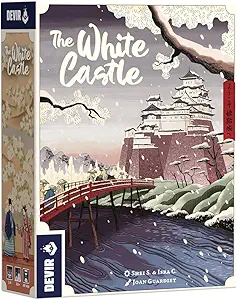
The White Castle doesn’t get nearly as much attention as it deserves in mainstream recommendations, and that’s a shame because it’s one of the most beautifully designed Euro games of the last few years. Set in feudal Japan around the Himeji Castle, you’re deploying workers across the castle and its gardens, maneuvering between three resource tracks — iron, koku, and florins — and competing to fulfill cards that earn points through courtiers, gardeners, and warriors. The structure is tight in a way that feels almost musical: turns are short and efficient, the resource management is precise without being punishing, and the tension of watching opponents compete for the same spaces creates a constant low-level pressure that keeps everyone engaged. Our testers loved how the three-resource system forces real prioritization — you can never do everything, and every choice feels meaningful. It plays one to four players and typically runs 60 to 80 minutes. The component quality is lovely: the castle board is beautifully illustrated, the wooden pieces are satisfyingly chunky, and the card art draws on traditional Japanese aesthetics in a respectful and immersive way. For fans of medium-weight Eurogames who want something distinctive, The White Castle is one of our strongest recommendations right now.
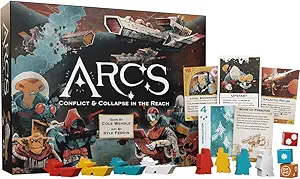
Arcs comes from Leder Games, the same studio behind Root, and it carries that same DNA of asymmetry and narrative emergence — but transplanted into a space opera setting that feels genuinely unlike anything else in the hobby. Players build empires across a star map, compete for control of systems and resources, and pursue individual objectives that shift the game’s direction in surprising ways. The card-driven action system is elegant: you play a card, and everyone else must either follow its suit or lead with a new card, creating a rhythm of pressure and response that rewards reading your opponents over several turns. The campaign mode — Arcs: The Blighted Reach — elevates the experience further by threading outcomes across multiple sessions into a persistent story. Our team found that Arcs rewards players who lean into the narrative ambiguity rather than optimizing purely for points. It handles two to four players, runs 45 to 120 minutes depending on the mode, and has enough complexity to stay fresh across many plays. It’s not the right entry point for newer players, but for groups ready for something ambitious, Arcs is one of the most interesting designs to emerge in recent years.
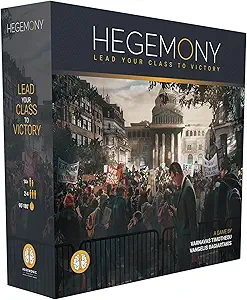
Hegemony: Lead Your Class to Victory (Hegemon Games)
Hegemony is unlike almost anything else in the hobby because it takes political economy — the actual mechanics of labor, capital, the middle class, and the state — and turns them into an engaging multiplayer experience. Each player represents a different socioeconomic class: the Working Class, the Middle Class, the Capitalist Class, or the State, and each faction has completely different win conditions and gameplay systems. The Working Class organizes labor and demands wages; the Capitalist Class runs businesses and lobbies for favorable policy; the State manages the national budget and balances everyone’s competing interests. What emerges is a surprisingly genuine simulation of how class tensions play out — and the game tends to generate real conversations at the table about policy, fairness, and tradeoffs. Our testers found it dense on first play, with a longer rules overhead than most games on this list, but the payoff for groups willing to invest in learning it is a uniquely memorable experience. It plays two to four players and typically runs 90 to 180 minutes. This one is explicitly for groups who want their game night to feel a little bit like a political science seminar, and for those groups, it genuinely delivers.
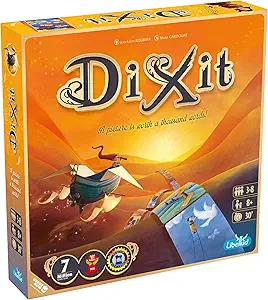
Dixit is the game we’ve watched work on the most diverse groups — grandparents and college students at the same table, people who haven’t played a board game in decades next to hobby veterans — and it works because it strips competition down to something deeply human: shared imagination. One player is the storyteller, choosing a card from their hand and giving a clue that’s evocative without being obvious. Everyone else plays a card they think fits the clue, and players vote on which card was the storyteller’s. Score too many points, and you were too obvious; score too few, and you were too obscure. The art — dreamlike, surrealist illustrations by artist Marie Cardouat — is the game’s greatest asset: every card feels like a portal to a different conversation. Our team consistently found that Dixit prompted personal stories, memories, and associations that never would have come up otherwise. It plays three to six players and runs about 30 minutes. The components are excellent — large, beautifully printed cards and substantial wooden rabbit scoring tokens — and the game holds up well across many sessions. It’s also a genuinely safe pick for groups with children present, since the content is entirely family-appropriate.
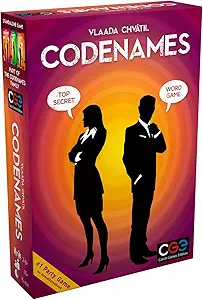
Codenames (CGE — Czech Games Edition)
Codenames has, in our experience, a higher “first session conversion rate” than almost any game we’ve tested — meaning the percentage of new players who immediately want to play again. Two rival spymasters are giving one-word clues to help their teams identify secret agent cards on a 5×5 grid, while avoiding the assassin that ends the game instantly. The tension is immediate and universal: watching your team debate whether “SATURN” really refers to the planet and the car brand and not the Greek god is exactly the kind of collective reasoning that feels fun rather than stressful. Codenames handles two to eight or more players — it technically has no upper limit since teams can be as large as you want — and plays in 15 to 30 minutes, which makes it ideal for getting a group warmed up or as a quick finale at the end of a long night. The word cards cover enough pop culture and general knowledge to feel relevant without being exclusionary. Our only consistent observation is that clue-giving is significantly more demanding than guessing, so the spymaster role tends to get claimed quickly by the word nerds at your table.

Coup is a masterpiece of compression: it delivers more genuine social deduction and tension than games three times its size, in about 15 minutes, with a box that fits in your jacket pocket. Each player holds two face-down character cards granting special powers — steal, assassinate, exchange, block — and the entire game is built on the question of whether you’re telling the truth about which cards you have. Anyone can claim to be any character. Anyone can challenge any claim. Getting caught lying loses you a card; getting challenged when you’re telling the truth costs the challenger a card. Our team played more rounds of Coup in a single evening than we planned to, which tells you everything about how compulsive the experience is. The replayability is remarkable for the price point — it’s one of the most affordable games on this list, typically running under $20. It plays two to six players, though it genuinely peaks at five or six, where the lying becomes maximally chaotic. The main limitation is that two-player Coup loses a meaningful amount of its social dynamic, so this one is best saved for groups.
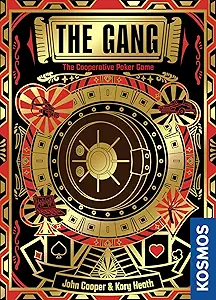
The Gang is our favorite recommendation for players who want something genuinely quick, clever, and different without any learning overhead. It’s a cooperative trick-taking game — meaning everyone is playing against the game itself rather than each other — and the constraint that generates all the tension is this: you cannot communicate about your cards. You have to collectively win specific tricks using specific cards in specific suits, and the only information you can share is through a single optional token that signals you hold the highest card in a suit. The result is a surprisingly tense experience built almost entirely out of inference and trust. Games take about 15 minutes, which makes The Gang a wonderful closer for a longer game night or an easy way to fill 20 minutes while waiting for dinner to arrive. It plays two to five players and handles the full range well. The components are minimal — it’s essentially a card game — but the card quality is solid, and the rulebook is among the clearest we’ve read. For anyone who grew up playing trick-taking games like Hearts or Spades, The Gang will feel immediately familiar yet completely fresh.