Advertiser Disclosure
We independently review everything we recommend. When you buy through our links, we may earn a commission.
The Complete Guide to Puzzle Accessories: Everything You Need to Puzzle Better
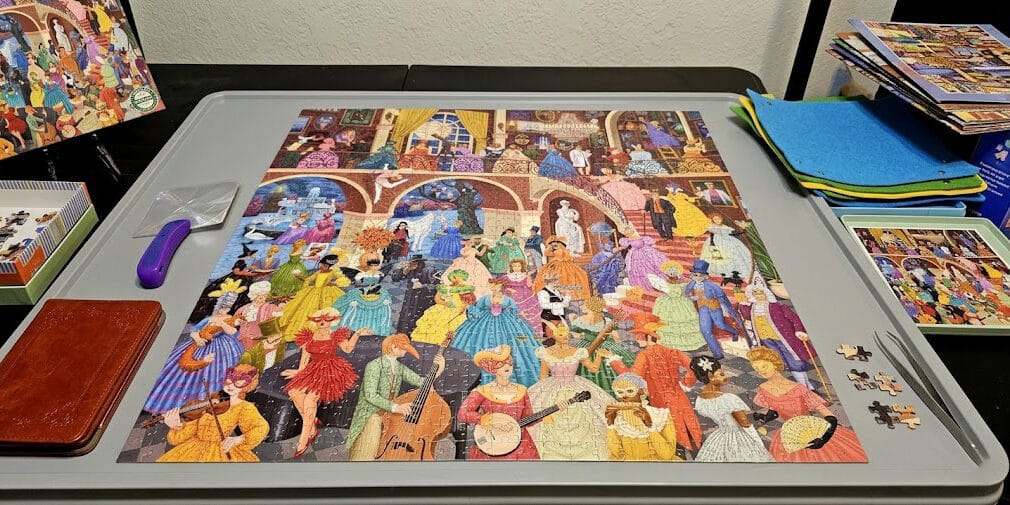
You might be wondering if puzzle accessories are really necessary. Technically? No. But the same is true of a good knife in the kitchen or a quality pair of running shoes — you can get by without them, but once you’ve experienced the difference, it’s hard to go back.
We’ve been there. Our testing team spent weeks working through puzzles of all sizes and complexity levels — specifically to see which accessories genuinely made a difference and which ones were just nice-looking clutter. What follows is our honest, practical breakdown of the eight accessories we actually reach for, why each one matters, and who it makes the most sense for.
Whether you’re a weekend puzzler who does one 500-piece now and then, or someone who treats puzzling like a serious hobby with a dedicated corner of the living room, there’s something in this list for you. Let’s get into it.
The 8 Puzzle Accessories Our Team Recommends
✅ We recommend these products based on an intensive research process that’s designed to cut through the noise and find the top products in this space. Guided by experts, we spend hours looking into the factors that matter to bring you these selections.
⭐ 2.5 million+ people assisted in the last 30 days ⭐
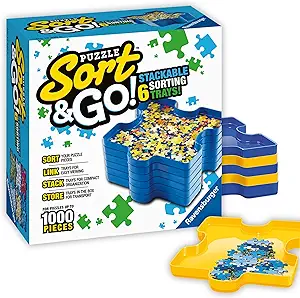
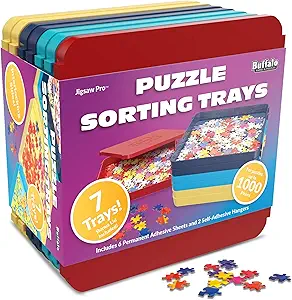
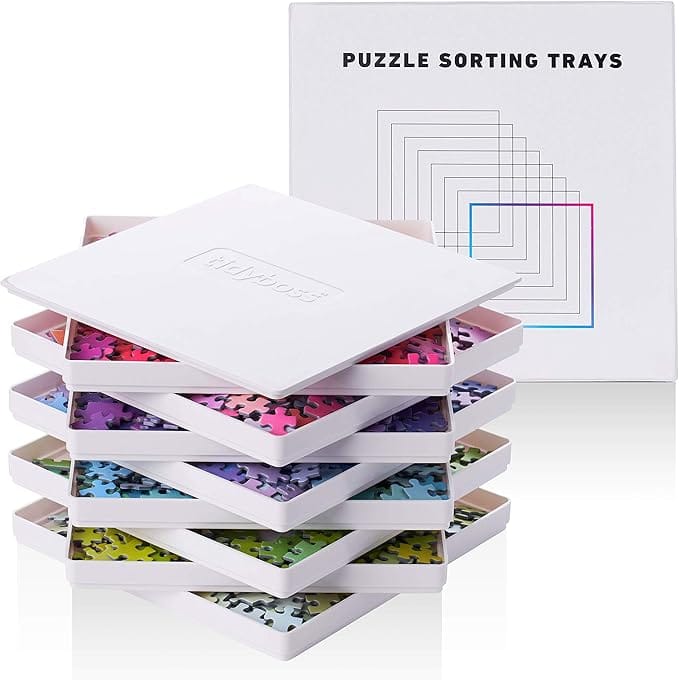
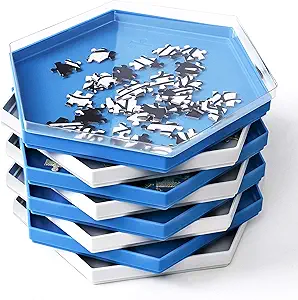
Best for: Anyone who sorts by color, edge, or pattern before building — which, honestly, is most of us.
If there’s one accessory we’d tell a brand-new puzzler to buy first, it’s a good set of sorting trays. The difference between dumping all your pieces on a table and actually organizing them into categories is, in our experience, the difference between a frustrating session and a genuinely enjoyable one.
We tested several designs over multiple puzzle sessions, and what we discovered is that the small details matter a lot more than you’d expect. The best sorting trays we worked with were slightly deeper than they looked in photos — enough to hold a generous pile of pieces without the edges spilling over when you shift the tray. They were also stackable, which turned out to be crucial for anyone puzzling in a shared space. When dinner happens, you can stack the whole sorted system and set it aside without losing a single piece. The ones with a lip that’s just tall enough to keep pieces corralled but shallow enough that you can easily see what’s inside struck the perfect balance. After using a solid set of sorting trays, going back to messy piles on the table felt almost comically inefficient — like trying to cook with one pot when you’ve always had a full kitchen. (Here is our review of the best jigsaw puzzle sorting trays)
Trade-off to consider: Trays take up horizontal space on your table. If you’re puzzling on a small surface, you may need to rotate which trays are active at a time.
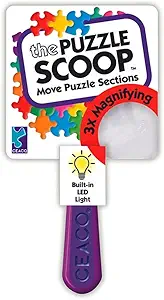
Best for: Puzzlers who like to build sections separately and then combine them, or anyone who’s ever watched a completed cluster scatter across the floor.
Picture this: you’ve just finished a dense, 200-piece section of sky. It looks great. Now you need to slide it to the other side of the table to connect it to the rest of the puzzle. If you’ve ever tried to do this with your hands, you know the panic that follows — pieces shift, clusters separate, and suddenly your careful work is a jigsaw pile again.
A puzzle scoop solves this problem so elegantly that the first time you use one, it feels almost like a cheat code. The best scoops we tested were completely flat with a very thin leading edge that slides cleanly under even a small cluster of pieces without disturbing them. What surprised our team was how much confidence it gave us — we started building in more sections, working on multiple areas simultaneously, because we knew we could move things without the usual risk. The scoop also works beautifully for relocating sorted pieces from one area of your workspace to another without spilling. It’s a simple tool, but its impact on how freely you move around a puzzle is genuinely hard to overstate. We found it especially valuable for larger puzzles (1,000 pieces and up) where sections can get quite substantial before they’re ready to merge.
Trade-off to consider: Scoops work best on smooth, hard surfaces. On a felt mat, the grip can make scooping slightly more effort.
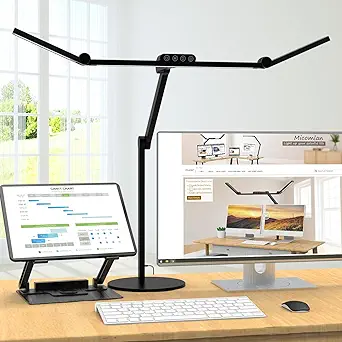
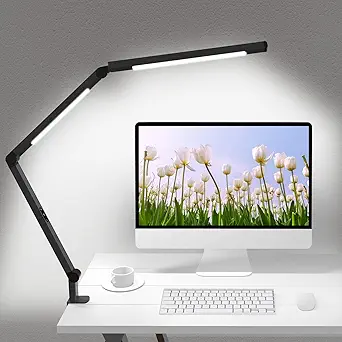
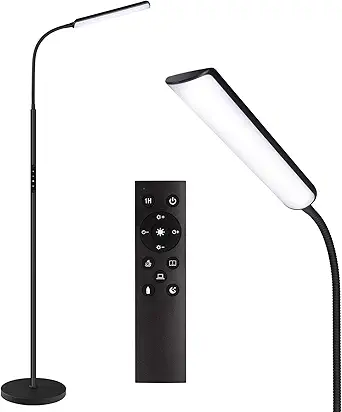
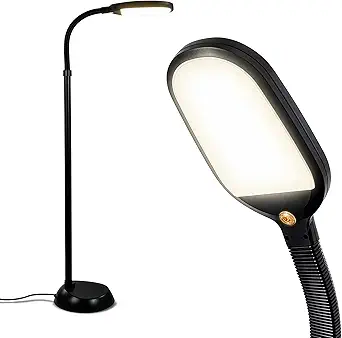
Best for: Anyone who puzzles in the evening, in a room with warm lighting, or who finds themselves squinting to distinguish similar colors.
We’ll be direct: puzzling in poor light is a surprisingly common source of frustration that most people don’t connect to their setup. If you’ve ever spent ten minutes convinced a piece doesn’t exist, only to find it sitting right in front of you once you moved to a brighter spot, you know exactly what we’re talking about.
Dedicated puzzle lights made a bigger difference than we initially anticipated during our testing. The best designs we worked with were adjustable — both in terms of position and color temperature — which allowed us to fine-tune the light for the specific puzzle. Cool white light tends to help with color differentiation, especially on puzzles with subtle tonal variations, while warmer light can make highly detailed artwork feel a bit muddy. The models that clamp to the side of a table are particularly handy because they let you direct the beam exactly where you’re working, rather than casting an ambient glow over the whole surface. One tester noted that switching to proper puzzle lighting noticeably reduced the eye strain and neck tension she’d been experiencing during long sessions — something she’d been attributing to posture rather than visibility. For evening puzzlers especially, good lighting isn’t an indulgence; it genuinely protects your eyes over time, as optometrists regularly advise. (Here are our reviews of desktop jigsaw puzzle lamps and floor-standing jigsaw puzzle lamps.)
Trade-off to consider: Clamp-style lights require a table edge thick enough to accommodate the clamp. Measure yours before purchasing.
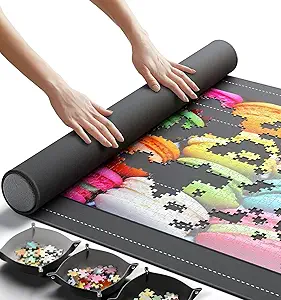

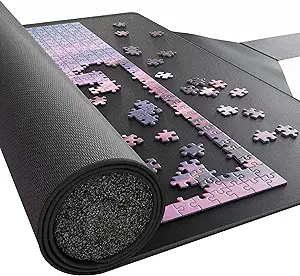
Best for: Puzzlers who work on shared surfaces — kitchen tables, coffee tables — or anyone who needs to pause mid-puzzle and reclaim the space.
One of the most common puzzler problems is that life doesn’t pause for your hobby. The dining table is needed for dinner. The coffee table has to host guests. And yet, stopping mid-puzzle, especially on a complex one, could mean losing hours of progress.
A good roll-up puzzle mat (Our Review of Puzzle Mats) is genuinely liberating in this regard, and we mean that without exaggeration. The best mats we tested had a dense, slightly textured felt surface that held pieces remarkably well during the roll-up process — far better than the slippery alternatives we tried. The key technique, which took our team a session or two to refine, is to roll slowly, from the outer edge inward, while maintaining consistent tension. With the right mat, a partially completed 1,000-piece puzzle rolls up without losing its arrangement and stores neatly until you’re ready to unroll and pick up exactly where you left off. The sense of freedom that comes from knowing you can puzzle on your kitchen table without committing the entire surface to the project indefinitely made us wonder why we hadn’t invested in one sooner. This is also one of the more travel-friendly accessories — rolled mats pack surprisingly compactly for anyone who wants to bring a puzzle on a trip.
Trade-off to consider: Rolling a puzzle requires care and a bit of practice. Very large puzzles (2,000+ pieces) can be unwieldy to roll without a second set of hands.
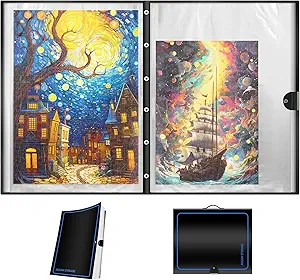

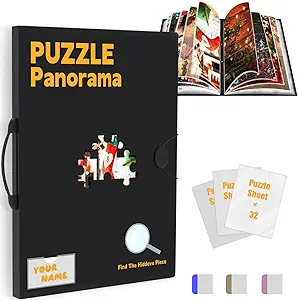
Best for: Puzzlers who complete a lot of puzzles and want to preserve their finished work without committing to framing every single one.
Here’s a question our team started asking ourselves: what happens to a completed puzzle? The default options have always felt a bit unsatisfying — disassemble it and lose the sense of accomplishment, or glue and frame it and end up with a wall full of puzzle art. A puzzle storage folder offers a genuinely thoughtful third path.
Think of it as a portfolio for your puzzles — a flat, protective folder with individual pockets that hold completed puzzles flat and safe. The one we spent the most time with accommodated puzzles up to the standard 1,000-piece size comfortably, and the HD film pockets kept pieces from scratching or warping over time. What surprised us most was how satisfying it felt to flip through previous puzzles — almost like a photo album of projects, each one a little reminder of where you sat, what you were watching, who you were puzzling with. For puzzlers who work through several puzzles a year, this accessory also solves the storage problem elegantly: instead of stacking boxes or finding shelf space, completed puzzles compress flat into a folder that stores almost anywhere. It also makes a genuinely thoughtful gift for a puzzler in your life, especially paired with a puzzle rental or a new puzzle subscription.
Trade-off to consider: Storage folders work best with standard-sized puzzles. Unusually large or irregularly shaped puzzles may not fit standard pocket dimensions.


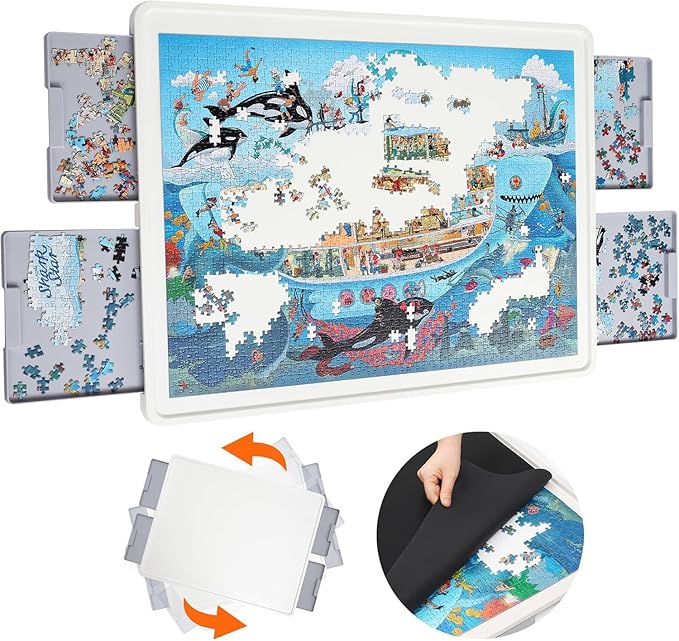
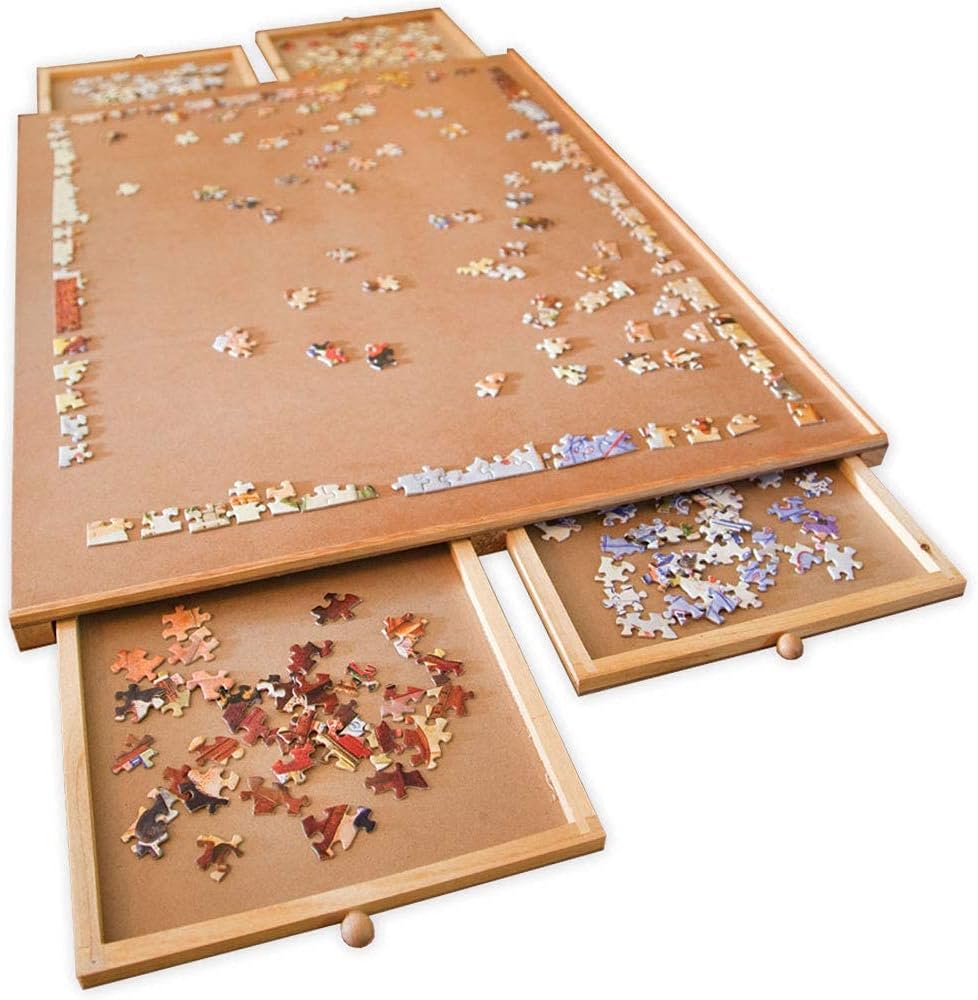
Best for: Puzzlers who want a dedicated work surface they can move around the house, or those who puzzle on a table they need to keep clear between sessions.
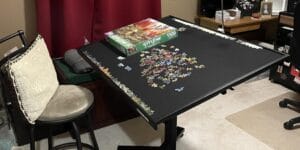
A puzzle board is essentially a portable puzzle platform — a flat, usually felt-lined board that gives your puzzle a consistent, moveable home. It sounds simple, and it is, but the quality-of-life improvement is real.
During testing, we worked with several types — felt-lined flat boards, rotating boards, and tilted boards — and each had its fans on our team. The felt-lined flat board was the most universally appreciated because it prevents pieces from sliding around mid-session, which is a surprisingly common annoyance on bare table surfaces. The rotating board was the standout for puzzles above 1,000 pieces, because it lets you swing the puzzle toward you rather than physically moving around the table — a change that felt almost extravagant the first time we tried it. The tilted boards divided our team most: some testers loved the ergonomic angle, finding it much easier on the neck during long sessions; others found they needed to adjust their technique when working on the inclined surface. The handcrafted wooden options we tried, like those from artisan puzzle board makers, brought a material warmth to the workspace that the plastic options simply couldn’t match, and they felt noticeably more durable. If you’ve ever set up a puzzle only to wish you could move it to a sunnier spot, a puzzle board makes that completely painless.
Trade-off to consider: Felt boards can collect dust and lint over time. They generally need an occasional shake-out to stay clean.
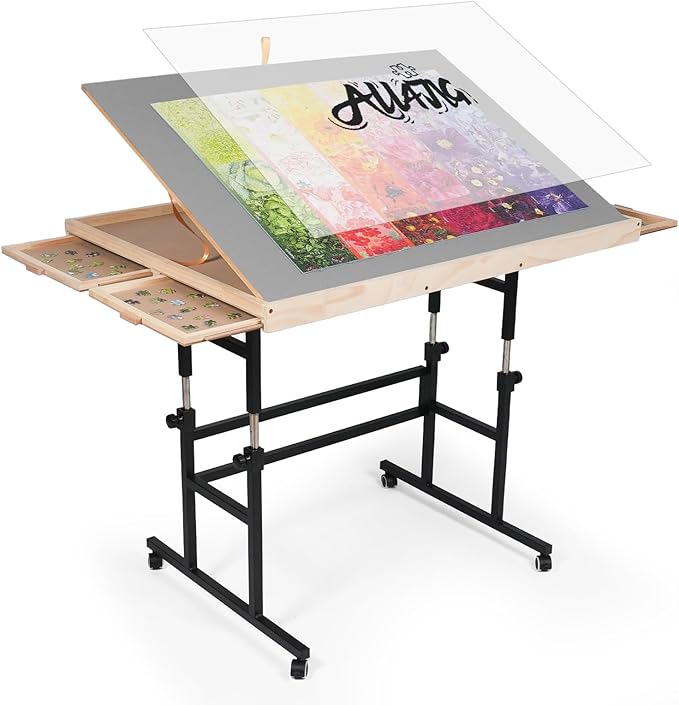
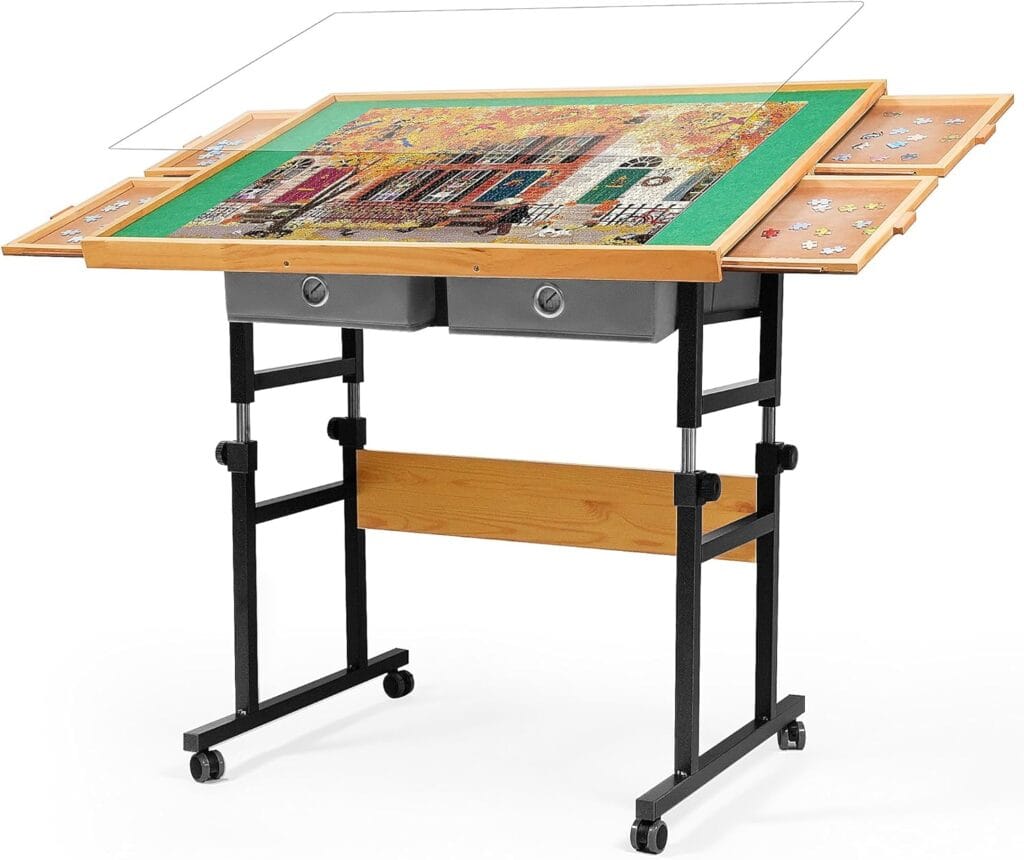
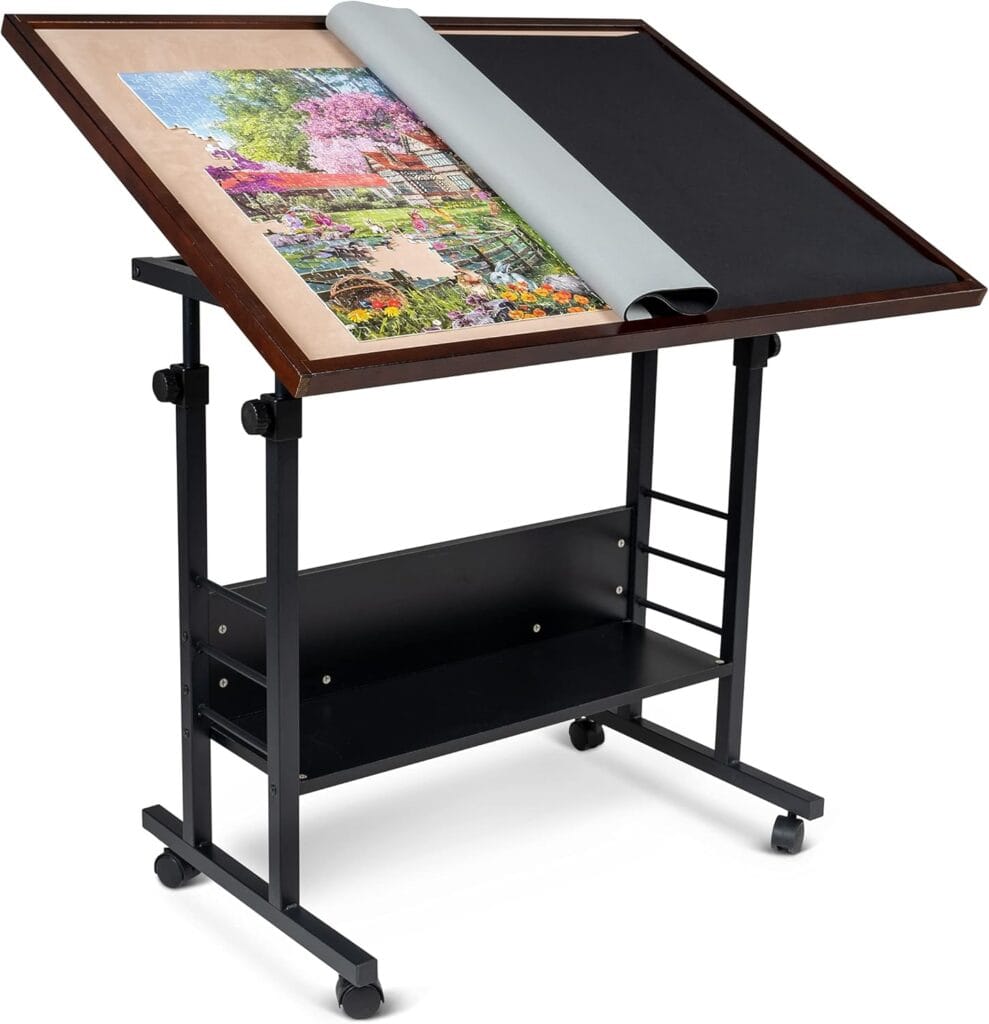
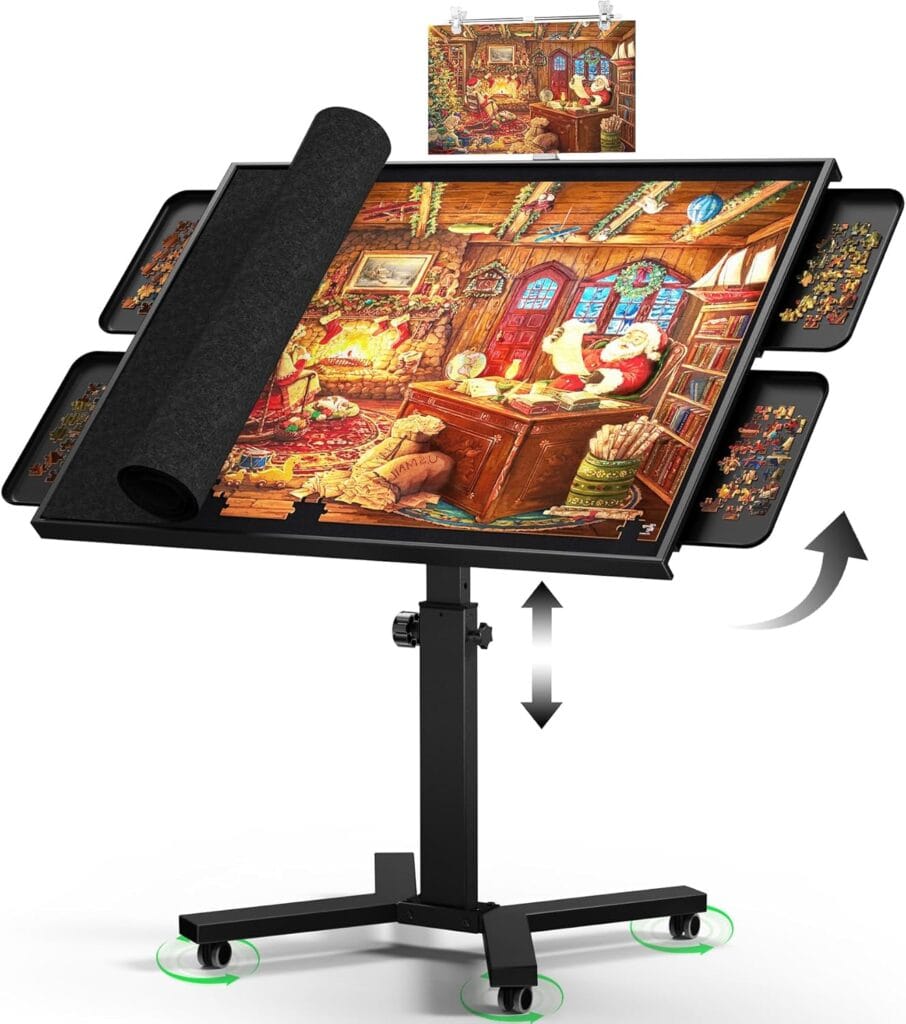
Best for: Dedicated puzzlers who want a permanent, ergonomically optimized workspace — and who don’t mind making a larger investment.
This is the accessory that separates the committed puzzler from the occasional one, and we say that with genuine affection. A puzzle table is exactly what it sounds like: a table designed specifically for puzzling, often with features that make the whole experience markedly better.
What struck our team most during testing wasn’t any single feature of a puzzle table — it was the cumulative effect of all of them working together. A slightly tilted surface that reduced neck strain. Built-in drawers that kept sorted pieces accessible without cluttering the main workspace. A fitted cover that protects work-in-progress puzzles between sessions. The adjustable height meant our tallest and shortest testers could both work comfortably without hunching. Puzzle tables on wheels offered something we didn’t realize we wanted until we tried it: the ability to roll your entire puzzle setup from room to room, following the light or the company. The investment is higher than any other accessory on this list, but for serious puzzlers, it genuinely functions as several accessories in one — replacing the need for a separate mat, board, and storage solution. For anyone puzzling multiple times a week, it tends to pay for itself in the form of reduced discomfort and genuinely better sessions. Ergonomic research consistently supports that adjustable work surfaces reduce strain during extended seated tasks — and puzzle tables are a direct application of that principle.
Trade-off to consider: Puzzle tables require dedicated floor space. They’re a meaningful investment and are best suited to puzzlers who have a consistent, long-term relationship with the hobby.
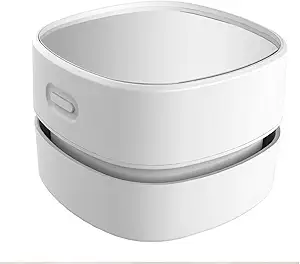
Best for: Puzzlers who work on multi-use surfaces — kitchen tables, dining tables — and need a quick, thorough cleanup between sessions.
This one tends to surprise people when they first hear it, and we get it. A desk vacuum feels like a random addition to a puzzle accessories list. But spend a few sessions puzzling on a kitchen table, and you’ll quickly understand why this earned a spot.
Jigsaw puzzle pieces shed. It’s a fact that no one talks about, but once you know it, you can’t un-see it — small flecks of cardboard, paper dust, and coating residue that settle into the table surface and, if you’re eating there, make a mess you’d rather not have around food. A compact, handheld desk vacuum handles this in under a minute, and the ones we tested were quiet enough that you could run them without disturbing anyone else in the room. Our testers who use kitchen or dining tables for puzzling said this became one of their most-used accessories — not because the mess was dramatic, but because having a fast, easy cleanup solution removed a low-grade sense of guilt about using the shared surface. The cordless models with a small dustbin were overwhelmingly preferred; no cord to manage, no emptying every thirty seconds. It’s a small thing, but it makes puzzling in a shared household feel much less like an imposition — which, if you live with people who don’t puzzle, matters more than you might think.
Trade-off to consider: Desk vacuums need occasional emptying and charging. They’re not a one-and-done purchase; they need minor ongoing maintenance.
How to Choose the Right Accessories for Your Setup
Now that we’ve walked through each accessory in detail, it’s worth stepping back and thinking about which ones actually make sense for your situation. Here’s a practical framework our team developed after testing everything together:
Start with organization. Sorting trays and a scoop together form the core of a functional puzzle setup. These two accessories address the most common frustrations — disorganized pieces and the inability to move sections freely — and they’re relatively affordable. Almost every puzzler benefits from them regardless of skill level or frequency.
Then address your space constraints. If you puzzle on a multi-use surface, a roll-up mat is close to essential. If you have a dedicated corner or room, a puzzle board or table makes more sense. Don’t buy both a mat and a table — they solve the same underlying problem (portability and surface dedication) from different angles.
Consider your lighting and ergonomics. Puzzle lights and adjustable puzzle tables address physical comfort during long sessions. If you puzzle for more than an hour at a time, both are worth seriously considering. The American Optometric Association recommends adequate lighting for close-focus tasks to reduce digital and near-work eye strain — and puzzling qualifies.
Add the finishing touches. A storage folder and desk vacuum are quality-of-life upgrades that become more valuable the more actively you puzzle. They’re not the first things to buy, but they’re worthwhile once the fundamentals are in place.
Frequently Asked Questions
Do I need all of these accessories to enjoy puzzling?
Not at all. Plenty of people puzzle happily with just a table and a pile of pieces. These accessories tend to enhance the experience, not define it. We’d suggest starting with sorting trays and seeing how much of a difference they make before adding more.
What’s the single best first puzzle accessory to buy?
Based on our testing, sorting trays make the most immediate impact for the broadest range of puzzlers. They’re affordable, universally useful, and the improvement in session quality tends to be noticeable right away.
Are puzzle tables worth the money?
For casual puzzlers, probably not yet. For anyone who puzzles regularly — say, a few times a week — the ergonomic and organizational benefits tend to justify the investment over time. It’s worth thinking of a puzzle table less as an accessory and more as a furniture decision.
How do I store an unfinished puzzle without losing pieces?
A roll-up mat is the most flexible solution for puzzlers on a shared surface. If you have more dedicated space, a puzzle board with a cover accomplishes the same thing without the roll-up risk. For long-term storage of finished puzzles, a storage folder is hard to beat.
The Bottom Line
Puzzle accessories exist on a spectrum from genuinely transformative (sorting trays, a good mat) to more specialized investments (puzzle tables) that reward dedicated puzzlers. The goal of this guide has never been to convince you to buy everything on the list — it’s been to help you figure out which few things will actually change your experience.
In our assessment, most puzzlers will find the biggest improvement from starting with sorting trays, a scoop, and proper lighting. From there, let your specific setup and habits guide you. If you’re puzzling on the kitchen table, get a mat. If you’re squinting at subtle color differences, sort out your lighting. If you puzzle every day, seriously consider a table.
The hobby is inherently patient and unhurried. Your accessory decisions can be the same way.