Advertiser Disclosure
We independently review everything we recommend. When you buy through our links, we may earn a commission.
The Best Horror Board Games
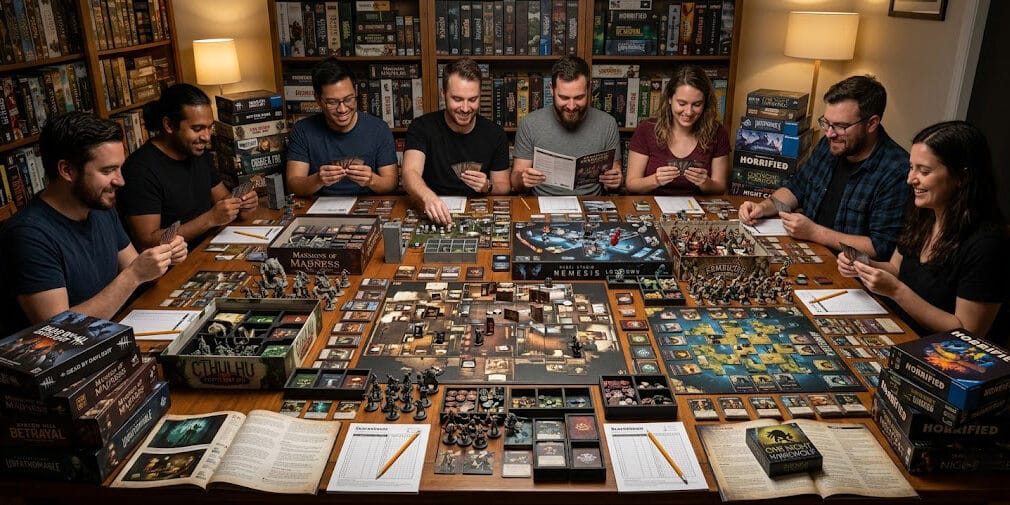
If you want one answer before anything else: Mansions of Madness 2nd Edition is the horror board game we’d recommend to most people. It’s genuinely atmospheric, does most of the heavy lifting through its companion app so the rules don’t bog down the experience, and manages to hit that rare sweet spot between accessible and deeply immersive. Whether you’ve been playing hobby games for years or you’re just now venturing past Catan, it tends to deliver.
That said, horror board games span a wild range — from frantic party games that run 15 minutes to sprawling cooperative epics that eat an entire Saturday. One game won’t suit everyone, and part of what we set out to do was figure out exactly which game fits which kind of player.
Which Horror Board Game Should You Buy?
You want the best all-around horror board game → Mansions of Madness 2nd Edition. It’s the most complete experience on this list: atmospheric, app-assisted, rich in narrative, and accessible enough that you don’t need a dedicated “rules person” to get it to the table. If you only buy one horror board game, this is the one.
You’re new to board games or shopping for a family → Horrified: Universal Monsters. It teaches quickly, plays in under 90 minutes, and is the strongest gateway horror game we tested. The Universal Monsters theme adds recognition value that helps bring in players who might otherwise hesitate.
You play alone → Final Girl. It was designed for solo play from the ground up, and it shows. The tension and pacing of a slasher film, compressed into a 20–60 minute solo session, is something no other game on this list quite replicates.
Your group loves strategy and wants depth → Arkham Horror 3rd Edition. This is the most strategically rich cooperative horror game on our list. Expect a longer session and a steeper learning curve, but also the most satisfying team victory when it happens.
You need something for a large group or party → One Night Ultimate Werewolf. Nothing else on this list plays ten people in fifteen minutes and generates as much table energy. It’s a reliable go-to for any group event where horror is on the theme but everyone’s availability is limited.
You prefer competing against other players → Unmatched: Cobble & Fog. Horror gaming is dominated by cooperation; this is the best competitive option we tested, with genuine asymmetric design and fast play times.
You want cinematic sci-fi horror → Nemesis Lockdown. The semi-cooperative structure and alien encounter system are among the most original horror mechanics we encountered. Budget time and table space.
You want group drama and betrayal → Unfathomable or Betrayal at the House on the Hill. Unfathomable is the stronger mechanical design; Betrayal generates better stories. Both are excellent, and your preference will come down to whether you value mechanical tension or narrative surprise.
You want something genuinely unsettling for a smaller group → The Night Cage. The atmosphere is extraordinary for the price. If your group can sit with quiet tension, this game is worth every dollar.
Our Top Picks for the Best Horror Board Games
✅ We recommend these products based on an intensive research process that’s designed to cut through the noise and find the top products in this space. Guided by experts, we spend hours looking into the factors that matter to bring you these selections.
⭐ 2.5 million+ people assisted in the last 30 days ⭐
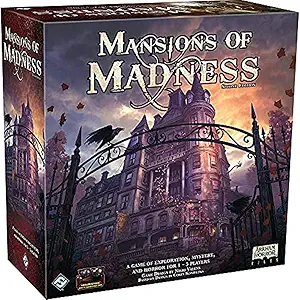
Players: 1–5 | Playtime: 2–3 hours | Age: 14+
Mansions of Madness 2nd Edition is the one we kept coming back to. When we first set it up, the companion app surprised us — not because we expected it to be bad, but because we didn’t expect it to feel so genuinely useful rather than gimmicky. The app handles map reveal, puzzle logic, and atmospheric audio in a way that removes a mountain of administrative work from whoever might otherwise be stuck playing “game master.” That means everyone at the table is actually playing, not managing. During one session, the moment a new room opened to reveal a flood of cultists with accompanying sound design, the table went silent in the best way. Thematically, the game leans hard into Lovecraftian cosmic horror — investigators with crumbling sanity, ancient creatures that can’t quite be described, mysteries that feel genuinely unsolvable until they suddenly aren’t. Component quality is strong: the miniatures are detailed, the art direction is consistently excellent, and the map tiles feel substantial. It scales well from two to five players, though we found the sweet spot sits around three or four. Scenarios vary in length and difficulty, and the replayability is genuinely high.
Pros:
- Companion app removes GM burden; everyone plays equally
- Exceptional atmosphere through audio, art, and puzzle design
- Strong replayability across multiple scenarios
- Scales well across player counts
Cons:
- App dependency means no internet, no game (in some scenarios)
- Rulebook is dense; expect a slower first session
- Can run long — budget three hours for bigger groups
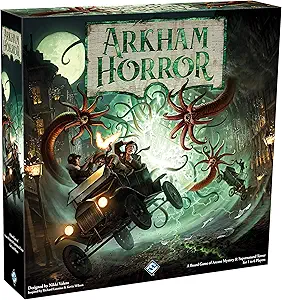
Players: 1–6 | Playtime: 2–3 hours | Age: 14+
Arkham Horror has been around in various forms since 1987, and the third edition is the version the series needed. Earlier editions were notorious for their bloated rule sets and game lengths that could stretch to five-plus hours. The third edition streamlines dramatically without gutting what made the original compelling: a sprawling city full of growing dread, investigators with distinct abilities and personal stakes, and a mounting sense that the Ancient One you’re trying to stop is inevitable — but maybe, just maybe, not today. We found the action economy much improved over previous versions. Turns feel purposeful rather than scattered. The card-driven mystery system gives each session a different shape, and the doom track creates genuine urgency without feeling punishing from the opening move. Where this game separates itself from Mansions of Madness is in its strategic texture — there’s more decisions to weigh, more ways for a clever team to build toward a win. For groups who want to feel like they earned the victory, Arkham Horror 3rd Edition tends to deliver that satisfaction in a way that more streamlined games don’t.
Pros:
- Deep strategic layer with meaningful decisions each round
- Streamlined significantly over previous editions
- Supports up to six players, strong for larger groups
- Rich, evolving narrative across multiple sessions
Cons:
- Still a complex game — not ideal for new hobbyists
- Setup takes time; expect 20–30 minutes before first card is drawn
- Some scenarios feel more balanced than others
Players: 1–5 | Playtime: 60–90 minutes | Age: 10+
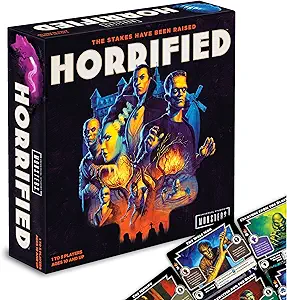
Horrified might be the best argument that horror board games don’t have to be inaccessible. It uses the Universal Monsters — Dracula, the Wolfman, Frankenstein’s Monster, the Mummy, and others — as the basis for a cooperative game where players work together to defeat a rotating cast of monsters before they terrorize the village to zero. What struck us immediately was how quickly the game teaches itself. Within fifteen minutes of opening the box, everyone at our table — including players who hadn’t touched a board game in years — understood what they were supposed to be doing and why. The monster AI is elegant: each creature has its own movement logic and defeat condition, which means the game genuinely varies based on which monsters you’re fighting. Defeating Dracula requires a completely different approach than containing the Creature from the Black Lagoon. The art direction leans into classic Hollywood monster movie aesthetics in a way that feels affectionate rather than campy. Component quality is above average for this price range. For families, game nights with mixed experience levels, or anyone who wants a solid introduction to cooperative horror gaming, Horrified earns its place at the table without demanding too much.
Pros:
- Genuinely accessible; teachable in under 15 minutes
- Each monster combination changes the strategic puzzle
- High-quality art and components for the price point
- Works well across ages (10+) and experience levels
Cons:
- Experienced hobbyists may find it too light after a few plays
- Tension can plateau in mid-game before the finale
- Limited expansion content compared to larger game systems
Players: 3–6 | Playtime: 60–120 minutes | Age: 12+
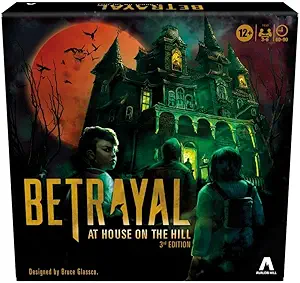
Few games generate stories the way Betrayal at the House on the Hill does. The premise is elegantly simple: players cooperatively explore a haunted mansion, drawing room tiles, encountering events, and picking up items — until the “haunt” triggers. At that point, one player (usually) becomes the traitor, the rulebook reveals a unique scenario, and the cooperative game becomes something else entirely. The third edition expands the scenario count to 50 and smooths over some of the rougher mechanical edges from earlier versions, including clearer traitor rules and better-balanced haunts. We played six different sessions and got six different games, which speaks to the replayability even before factoring in expansion content. The atmosphere is built through discovery — you never know what’s behind the next door, and the escalating weirdness of each event card genuinely sets a mood. It’s worth noting that not all 50 haunts are equally well-designed; some feel tighter than others, and the infamous “haunt balance” issues from earlier editions are reduced but not entirely eliminated. Still, for sheer narrative variety and the kind of “I can’t believe that just happened” moments that make game nights memorable, Betrayal remains essential.
Pros:
- 50 unique haunt scenarios; virtually no two games play the same
- Strong narrative drama and surprise factor
- Third edition smooths several balance issues from prior versions
- Strong brand recognition; easy to recommend broadly
Cons:
- Haunt quality is uneven across the 50 scenarios
- Rules can feel unclear at haunt reveal, especially for new players
- Best with 5–6 players; can feel thin at three
Players: 1 | Playtime: 20–60 minutes | Age: 14+
Final Girl is the solo horror game we’d recommend without hesitation to anyone who wants to scratch the horror itch alone. The conceit — you play the last survivor of a slasher film, trying to defeat the killer before he eliminates you — is executed with genuine craft. Each “feature film” box pairs a specific location (a summer camp, a haunted mansion, a carnival) with a specific killer, and the mechanics shift meaningfully between them. When we played through Frightmare on Maple Lane, the killer’s movement felt relentless and unpredictable in a way that genuinely stressed us out. When we switched to A Knock at the Door, the domestic horror setting created a completely different emotional texture. The game plays in 20 to 60 minutes depending on how efficiently you build your engine (the card-based action system rewards practice), and it tends to be punishing at first — which is thematically appropriate. Dying is part of the experience. Over repeat plays, the satisfaction of finally outmaneuvering the killer feels earned in a way that easier games can’t replicate. Expansion content is abundant, the base game is affordable, and the small table footprint makes it practical for solo gaming in tight spaces.
Pros:
- Exceptional solo horror experience with genuine tension
- Each feature film combination creates a distinct experience
- Small box, affordable entry point
- Punishing but fair — repeated plays feel rewarding
Cons:
- Strictly solo; no multiplayer option
- Iconography can be unclear at first — expect a learning curve
- Randomized killer power draws can occasionally feel unwinnable
Players: 1–5 | Playtime: 90–150 minutes | Age: 14+
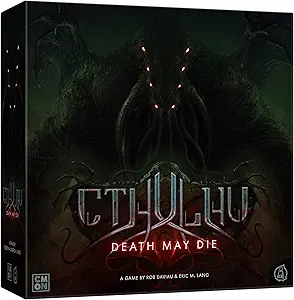
Cthulhu: Death May Die is not a subtle game. Where Arkham Horror and Mansions of Madness lean into dread and atmosphere, this one leans into action and spectacle — and that’s entirely intentional. The design premise is almost cheerful in its absurdity: your investigators aren’t trying to prevent the Ancient One from arriving. You’re letting it arrive, because only then can you kill it. Mechanically, the game builds toward a climactic boss fight in a way that feels more like a tabletop dungeon crawl than traditional Lovecraft-adjacent horror. Characters grow more powerful (and more unhinged) as the game progresses through a sanity system that grants abilities as investigators lose their minds. In practice, this creates a frenetic escalation arc that kept our testing group visibly energized from the midpoint through the finale. The miniatures are exceptional — genuinely impressive sculpts that add visual weight to the table — and the Ancient One encounters are varied enough that replay sessions feel fresh. This is the pick for groups who want big dramatic moments, monster-punching catharsis, and a game that ends with a bang rather than a slow simmer.
Pros:
- High-energy, escalating gameplay with dramatic payoff
- Exceptional miniature quality; strong visual presence
- Character progression through insanity is genuinely fun
- Supports solo play through up to five players
Cons:
- Heavier box; significant table space required
- Rules complexity is high — not for first-time hobbyists
- Some scenarios feel more balanced than others
- Combat-heavy; may not satisfy players seeking atmospheric dread
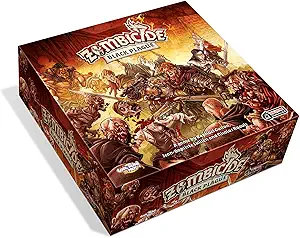
Players: 1–6 | Playtime: 60–120 minutes | Age: 14+
Zombicide: Black Plague drops the modern setting of the original Zombicide and replaces it with a medieval fantasy world overrun by the undead, and the shift works better than we expected. Mechanically, the game hasn’t been reinvented — it’s still a cooperative zombie-survival crawl where heroes clear rooms, gather weapons, and try to complete objectives before the undead horde overwhelms them — but the fantasy context opens up design space. Necromancers who actively spawn new zombies unless killed create an urgency that forces players to prioritize targets rather than simply pushing forward. When we played a five-player session, the table energy was consistently high: there’s enough happening at any given moment to keep everyone engaged, and the game’s pacing rarely drags. Component quality is a genuine strength — the miniatures alone justify a significant portion of the price for many players, and the art direction is vivid and consistent. It rewards tactical thinking without demanding it, which makes it a strong choice for groups where skill levels vary. First-timers can contribute meaningfully while more experienced players handle the strategic layer. If you want other similar options, check out our picks for the best cooperative board games.
Pros:
- Strong cooperative action with up to six players
- Necromancer mechanic adds urgency and dynamic decision-making
- Excellent miniatures and high-quality components
- Tactical depth scales to player experience without excluding newcomers
Cons:
- Setup and cleanup time can be substantial
- Scenarios can feel repetitive across multiple plays without expansion content
- Does not innovate significantly beyond the base Zombicide formula
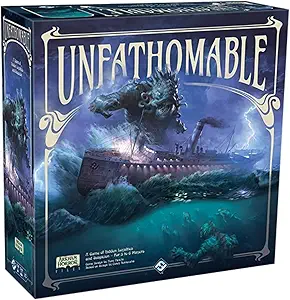
Players: 3–6 | Playtime: 2–4 hours | Age: 14+
Unfathomable is a reimplementation of Battlestar Galactica: The Board Game, repositioned in a Lovecraftian ocean-voyage setting — and the reskin is remarkably effective. Players are passengers and crew aboard an ocean liner crossing the Atlantic in the 1920s, trying to survive the voyage while Deep Ones assault the ship from below and a cult potentially works against you from within. The hidden traitor element here benefits from the mid-length game structure: the traitor reveals themselves (or doesn’t) in the final act, and the information-deduction layer throughout is genuinely tense rather than frustrating. During testing, we had sessions where the human team narrowly survived with all traitors undetected, and sessions where a traitor exposed themselves at the worst possible moment and nearly sank everyone. Both felt earned. The mechanical skeleton from Battlestar Galactica is strong and translates naturally to the horror setting, and Fantasy Flight’s production values are — as expected — excellent. This is one of the stronger hidden-traitor designs we tested, and a significant improvement in thematic cohesion over the game it’s based on.
Pros:
- One of the most mechanically sound hidden-traitor horror games
- Outstanding thematic fit; the ocean horror setting is deeply effective
- Strong production values and component quality
- Scales well across player counts
Cons:
- Long play time requires a committed group
- Traitor mechanic can frustrate players who dislike social deduction
- Rules complexity is high; plan for a significant first-session investment
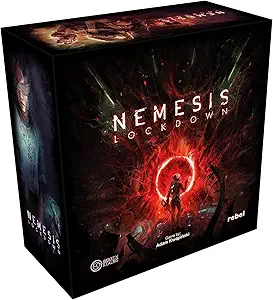
Players: 1–5 | Playtime: 90–180 minutes | Age: 14+
Nemesis Lockdown is a standalone game in the Nemesis universe — you no longer need the original Nemesis box to play — and it transposes the sci-fi survival horror from a space freighter to a research base on Mars. The shift in setting changes the atmosphere meaningfully: the isolation of a planetary surface, the weight of limited oxygen, and the maze-like corridors of an underground facility create a different kind of dread than the original. Mechanically, the game retains what made Nemesis exceptional: asymmetric character objectives that may or may not align with the group’s survival, an alien threat that feels genuinely unpredictable through its noise and reaction mechanics, and an escalating tension arc that rarely lets up. The semi-cooperative structure — you’re technically working together, but everyone has personal goals — creates natural drama without the arbitrary sting of a dedicated traitor reveal. When we tested this, two players completed their personal objectives but had to decide whether to help the third escape or abandon them to make the escape pod. The conversation that followed was unforgettable. Strong thematic identity and mechanical innovation make this one of the most compelling designs in modern horror gaming.
Pros:
- Standalone from original Nemesis — no prior purchase required
- Semi-cooperative structure generates genuine personal drama
- Alien encounter system is tense and mechanically clever
- Asymmetric objectives add replay variety
Cons:
- Rules are complex; first session requires patience
- Significant table space and setup time required
- Can run long with full player count
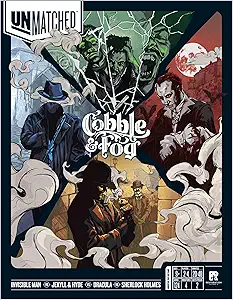
Players: 2–4 | Playtime: 20–40 minutes | Age: 9+
Unmatched is a head-to-head dueling game, and Cobble & Fog is one of its strongest sets — pitting Sherlock Holmes, Invisible Man, Dracula, and Jekyll & Hyde against each other in asymmetric card-driven combat. What sets this apart from most competitive games is how different each character plays. Dracula controls his bat familiars and vampire thralls in ways that feel thematically coherent with the character, not just mechanically distinct. Jekyll & Hyde has two distinct cards sets that you manage simultaneously — one for each persona — creating a hand-management puzzle unlike anything else in the system. We played this at two, three, and four-player configurations across multiple sessions, and the game consistently produced tight, dramatic finales. At 20 to 40 minutes per game, it’s also one of the most efficiently designed experiences on this list — enough depth to reward skill development, short enough that you can play multiple games in a single evening. The production quality is high and the rulebook — unlike many in this genre — is genuinely clear on a first read. For groups who prefer competition to cooperation, or want a palate cleanser between longer games, Cobble & Fog earns a spot in any horror-themed collection.
Pros:
- Each character plays completely differently; genuine asymmetry
- Fast play time; suitable for multiple games per session
- Competitive design is rare in horror gaming; fills a real gap
- Compatible with other Unmatched sets for expanded variety
Cons:
- Shorter, lighter experience — may not satisfy players seeking depth
- Competitive structure isn’t for everyone in a hobby dominated by co-op
- Expansions required to significantly expand the character roster
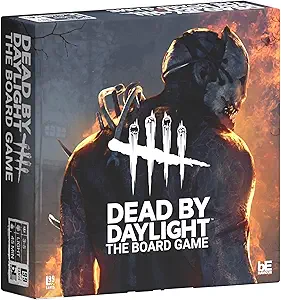
Players: 3–5 | Playtime: 30–60 minutes | Age: 17+
Dead by Daylight: The Board Game translates the asymmetric horror of the video game with more fidelity than most video game adaptations manage. One player controls the Killer, and the remaining players control Survivors trying to repair generators and escape before they’re sacrificed to the Entity. What impressed us most was how accurately the game captures the power dynamic from the source material: Survivors feel genuinely vulnerable, cooperative moments feel meaningful, and the Killer player has enough agency and strategic decision-making to stay engaged without the role feeling like a simple chasing exercise. The chase mechanic — using cards and line-of-sight rules to simulate the video game’s pursuit sequences — is cleaner than we expected from an adaptation, and it generates the kind of frantic table-talk that makes group games memorable. Character variety is strong; playing as Claudette versus Jake already feels different, and Killer selection changes the strategic dynamic significantly. For existing fans of Dead by Daylight, the translation is faithful enough to feel like a love letter. For players who haven’t played the video game, the theme is accessible and the asymmetric design is a genuinely compelling way to experience that one-versus-many tension.
Pros:
- Faithful adaptation of a beloved horror video game
- Asymmetric play generates distinct, satisfying experiences for both sides
- Chase mechanics are mechanically clever and thematically accurate
- Works for players unfamiliar with the source material
Cons:
- Survivors can feel helpless against an experienced Killer player
- Lighter strategic depth than some titles on this list
- Replay variety depends on character selection rather than scenario changes
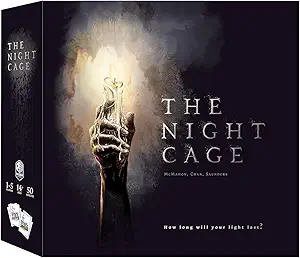
Players: 1–5 | Playtime: 45–90 minutes | Age: 14+
The Night Cage might be the most genuinely unsettling game on this list. Each player holds a candle, and the candles illuminate tiles — but only the tiles immediately adjacent. The rest of the board is darkness. Movement reveals new tiles; stepping away from a lit area extinguishes those tiles permanently, collapsing them back into the void. The result is a cooperative puzzle game where the board itself actively shrinks around you, and the feeling of limited information combined with a closing perimeter creates a specific brand of dread that most horror games aim for but don’t quite reach. During testing, the table went quiet in a way we rarely experience — not from confusion, but from genuine tension about what might be in the dark ahead. The component design reinforces the atmosphere: matte-black tiles, minimal art, a box that strips away any hint of cheerful game design to commit fully to the aesthetic. Mechanically, the puzzle is tight and collaborative communication is essential, which means it rewards engaged groups without punishing quieter ones. At under $40 in most markets, it also represents one of the stronger value propositions among horror games at this level of design quality.
Pros:
- Uniquely oppressive atmosphere through elegant mechanical design
- Strong thematic cohesion; everything serves the mood
- Excellent value for the price point
- Works for solo through five players
Cons:
- May be too minimalist for players seeking richer narrative or component variety
- Limited long-term replayability without expansion content
- Quiet, cerebral experience — not for groups seeking action or energy
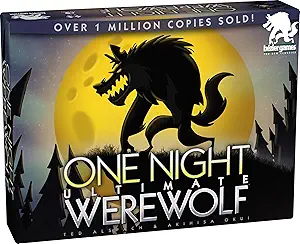
Players: 3–10 | Playtime: 10–15 minutes | Age: 8+
One Night Ultimate Werewolf is an exercise in elegant simplicity. The entire game — setup, play, and resolution — fits inside fifteen minutes, and it generates more table drama per minute than virtually anything else in hobby gaming. Every player gets a secret role card: some are villagers, one or two are werewolves, and a handful have special abilities that activate during a tense “night phase” conducted with eyes closed and narrated by the free companion app. At dawn, everyone debates who among them is a werewolf, and the group votes. The genius of the design is the single-round structure: because there’s no elimination and no multi-session commitment, the social deduction stakes feel high without any player being sidelined. The companion app narration handles the night phase cleanly, removing the need for a dedicated narrator and keeping the experience moving. We tested this with groups ranging from board game regulars to people who’d never played a social deduction game, and it landed without exception. It’s not deep horror, but it’s a perfect gateway and a reliable crowd-pleaser for larger, mixed groups where everyone’s available time and patience for rules is limited. The game that popularized the whole “secret roles” mechanic now common to the party game scene.
Pros:
- Plays in 10–15 minutes; easy to fit into any evening
- No player elimination; everyone plays through to the end
- Companion app handles narration cleanly
- Scales to ten players; strong for large groups
Cons:
- Not a horror game in any deep thematic sense — more of a social game with a horror theme
- Very light mechanically; not for players seeking strategic depth
- Loses impact with repeated sessions as players learn role combinations
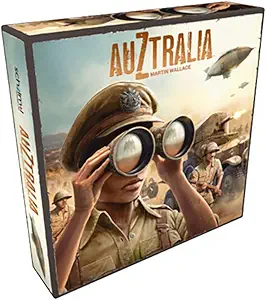
Players: 1–4 | Playtime: 30–120 minutes | Age: 13+
AuZtralia is an odd and compelling thing: a resource-management and combat game set in an alternate-history Australia where the Old Ones have emerged from the Outback, and human civilization — rebuilt after a global catastrophe — is trying to reclaim the continent before the Great Old Ones strengthen beyond control. Designed by Martin Wallace, it has the structural discipline of a Euro-style game beneath its Lovecraftian horror theme, and that combination is rarer and more interesting than it sounds. During our testing, what struck us most was how the time pressure works: turns are structured on a timeline rather than in rounds, meaning every action you take has an opportunity cost against what your opponents might accomplish before the monsters move. The Old Ones themselves are simultaneously obstacles and a collective threat — if enough of them activate, everyone loses. That shared-loss mechanic creates natural cooperation even in a competitive game structure. The Australian setting is distinctive, the mythology is handled thoughtfully, and the game rewards players who can manage competing priorities under pressure. It’s not the most immediately gripping game on this list, but it’s one of the most satisfying to master.
Pros:
- Genuinely distinctive setting and tone among horror board games
- Timeline-based turn structure creates interesting tactical decisions
- Works as competitive, cooperative, or solo
- Euro-game precision beneath the horror theme rewards strategic thinking
Cons:
- Slower burn — takes a session or two to appreciate its depth
- Theme may feel distant to players expecting immediate horror immersion
- Less widely available than other titles on this list
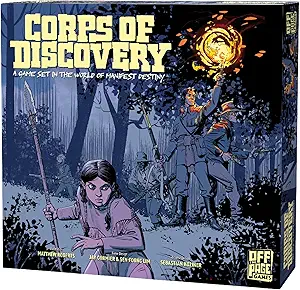
Players: 1–4 | Playtime: 45–75 minutes | Age: 14+
Corps of Discovery brings the Lewis and Clark expedition into a horror context — the American frontier, reimagined as a place where the unknown is genuinely threatening and the wilderness pushes back in ways that feel mythological and unsettling. As a smaller-press title, it doesn’t have the production budget of Fantasy Flight or CMON, but the design makes strong choices where it counts: the journal mechanic, which lets players record discoveries in ways that shape future turns, gives the game a storytelling texture that bigger titles often don’t bother with. We found the historical grounding genuinely refreshing — it creates a specific, unusual atmosphere that sets it apart from the Arkham Horror-adjacent Lovecraftian field. The horror here is folkloric rather than cosmic, which makes it accessible to players who find Eldritch horror overwrought. Mechanically, resource management and exploration are the core loops, and both work cleanly without demanding excessive rulebook consultation. For groups interested in something distinctive — a horror game that doesn’t feel like it’s been produced by committee — Corps of Discovery is a confident, interesting small-press recommendation worth tracking down.
Pros:
- Distinctive historical horror setting; stands apart from the Lovecraftian crowd
- Journal mechanic adds narrative texture and replay variation
- Approachable for players new to heavier horror themes
- Strong storytelling identity for a smaller-press title
Cons:
- Lower production budget shows in component quality compared to larger publishers
- More limited availability; may require ordering online
- Lighter mechanical depth may not satisfy experienced hobbyists
How We Tested
We evaluated more than 20 horror-themed board games across several play sessions with groups of varying sizes and experience levels. Our assessment team played each game through at least two full sessions — more for titles with randomized scenarios — and made notes on rule complexity, atmosphere, component quality, replayability, and how the game held up when played with newer hobbyists versus seasoned players. We paid close attention to pacing: does the game drag? Does it lose tension before the end? Does it deliver on its thematic promise, or does the horror feel cosmetic?
Games that scored high on paper but fell flat at the table — whether because of a frustrating rulebook, flimsy components, or a theme that didn’t translate mechanically — didn’t make the cut.
What We Eliminated and Why
Before we get to our picks, it’s worth mentioning a few categories of games we tested and set aside.
Several hidden-traitor games we tried suffered from what we call the “kingmaker problem” — the moment the traitor is revealed, one player effectively controls whether anyone else wins, which can feel deeply unsatisfying at the wrong table. We kept One Night Ultimate Werewolf on the list because its brevity sidesteps this issue entirely, but longer hidden-traitor games that dragged out that dynamic past the fun threshold were cut.
A handful of legacy-style horror games we tested required commitments most groups couldn’t maintain — eight or more sessions to complete a campaign, with permanent changes to components along the way. These are great for dedicated groups but impractical for the majority of players, so they didn’t make our final list.
We also filtered out games where component quality undercut the atmosphere. Horror games live and die by immersion. A game that breaks tension every time you squint at tiny text on a card or wrestle with a poorly punched cardboard token isn’t doing its job.
If you like these, be sure to check out of picks for the overall best board games.