Advertiser Disclosure
We independently review everything we recommend. When you buy through our links, we may earn a commission.
The Best Card Games
After weeks of playtesting across group sizes, age ranges, and game-night contexts, Exploding Kittens Original Edition stands out as the single most reliable card game for most households. It’s fast, absurd, easy enough for an eight-year-old, and genuinely funny for adults without needing to explain fourteen rules before someone can take their first turn. It doesn’t try to be deep — and that’s exactly what makes it work.
That said, “best” depends heavily on who’s sitting at your table. If you’re shopping for strategy lovers, casual families, or collectors chasing a living card game experience, there are better fits in this list. Keep reading — we’ll get you to the right choice.
Which Card Game Is Right for You?
Choosing the right card game comes down to three variables: who you’re playing with, how often you’ll play, and how much complexity you actually want.
If you’re shopping for a casual household with mixed ages, start with Exploding Kittens or Sushi Go!. Both play quickly, scale reasonably well, and won’t require you to referee a rulebook debate at 10 p.m.
If you want something for exactly two players, Fox in the Forest and Star Realms are genuinely well-designed for that context. Gwent is also worth serious consideration if you prefer a slower, more strategic experience.
For families with children under 10, Something Wild! and Taco Cat Goat Cheese Pizza are the most accessible options. The former is cooperative; the latter is chaotic in the best way.
For game-night regulars who want strategic depth, Dominion 2nd Edition is the obvious starting point, with Cat in the Box and Scout as excellent additions once the deck-building itch is satisfied.
For collectors and trading card game enthusiasts, Magic: The Gathering’s Final Fantasy Starter Kit provides the most accessible on-ramp into MTG, while Disney Lorcana Gateway suits the Disney-aligned collector who wants a game with genuine visual appeal.
For party settings with large groups, Cover Your Assets, I Should Have Known That!, and Taco Cat Goat Cheese Pizza all handle larger headcounts well and generate the kind of spontaneous social energy that makes a party game worth owning.
If you value portability above all, Scout and Skull both fit in a coat pocket and deliver experiences that outperform their small footprint.
The honest answer is that most households could benefit from two or three games from this list rather than one — a quick party game, a two-player staple, and something with strategic depth covers nearly every social occasion that comes up. Start with whatever fits your most common scenario, and expand from there.
Everything We Recommend
✅ We recommend these products based on an intensive research process that’s designed to cut through the noise and find the top products in this space. Guided by experts, we spend hours looking into the factors that matter to bring you these selections.
⭐ 2.5 million+ people assisted in the last 30 days ⭐
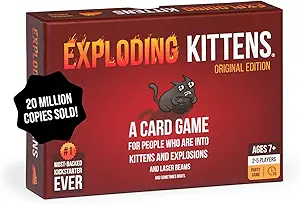
Pros: Near-zero learning curve; consistently funny across age groups; small box, big personality; durable card stock. Cons: Limited strategic depth; runs thin with highly competitive players; best at 4–6 players (2-player mode is noticeably weaker)
Exploding Kittens is the rare game that somehow manages to be a hit at both a six-year-old’s birthday party and a slightly chaotic adults-only Friday night. The premise is disarmingly simple: draw cards, avoid the exploding kitten, use action cards to sabotage your friends. What makes it special, though, isn’t the mechanics — it’s the pacing. Every round lasts just long enough to feel tense without dragging, and the illustrated cards (by The Oatmeal creator Matthew Inman) are absurdist enough that even losing feels like part of the joke. We played this with a mixed group that included two teenagers, a retired couple, and a self-described “not a games person,” and everyone was laughing within three minutes. The box is compact enough to toss in a bag, and the cards have held up remarkably well after dozens of shuffles. It’s not the most strategically rewarding game on this list, but for pure crowd-pleasing reliability, nothing else we tested came close. If you’re buying one card game and you genuinely don’t know your audience — start here.
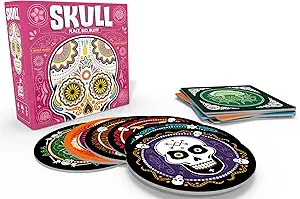
Pros: Elegant design; plays in minutes; works brilliantly at 3–6 players; coffee coaster aesthetic is genuinely charming. Cons: Very short play sessions may frustrate those wanting more; no meaningful solo or two-player mode
Skull is one of those games that reveals itself slowly — and then punches you harder than you expected. Each player gets four coasters: three flowers and one skull. You stack them face down, someone starts bidding on how many they can flip without hitting a skull, and the bluffing begins. That’s essentially the entire ruleset. What we didn’t anticipate during testing was how much psychological weight a game this minimal could carry. There’s something almost uncomfortably tense about watching someone confidently flip coasters while you know you buried a skull right where they’re headed. The production quality from Space Cowboys is excellent — the coaster format is durable, tactile, and visually striking on a table. We played this with a group of four who had zero prior card game experience, and they were requesting rematches before the first game even finished. It’s an ideal pick for people who find complex games intimidating but still want something with real stakes. Be warned: it’s short. Each session can wrap in 20 minutes, which, for some groups, is a feature, not a bug.
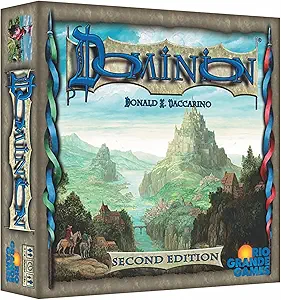
Pros: Deep, replayable deck-building mechanics; enormous variety within one box; highly regarded in the hobby community. Cons: Longer setup time; steep learning curve for new players; not well-suited for casual or party settings
Dominion essentially invented the “deck-building” genre, and the 2nd Edition refines it in meaningful ways. The core concept — you start with a weak hand of cards and gradually build a more powerful deck by purchasing cards from a shared market — sounds dry, but plays with surprising dynamism. No two games feel quite the same because the available kingdom cards shift with every setup, completely changing which strategies are viable. During our testing sessions, we noticed experienced players approaching each new configuration like a puzzle, and watching strategies collide across turns was genuinely engaging. The rulebook for the 2nd Edition is substantially cleaner than the original, which helps new players get up to speed faster, though we’d still recommend one person read the full rules before game night. It does require a table, attention, and some patience. This is not a game you crack open casually — but for the right group, it’s the kind of thing that turns a single purchase into a years-long hobby. If you have a regular gaming group that enjoys thinking three moves ahead, Dominion tends to become a staple.
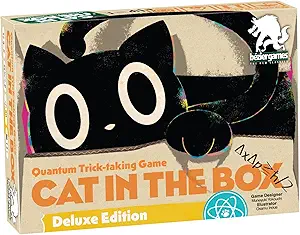
Pros: Genuinely clever reimagining of a classic format; elegant “quantum” suit mechanic; great for 3–5 players. Cons: Rulebook requires careful first reading; trick-taking newcomers may find the initial concept confusing
Cat in the Box is the kind of game that makes you say “wait — that’s brilliant” about ten minutes in, right after the initial confusion clears. The core twist on traditional trick-taking is that cards have no fixed suits. Instead, when you play a card, you declare what suit it is by placing a token on a community board — but no suit can have more than one of any given number. The “quantum” framing is cheeky but accurate: your four of clubs is only a four of clubs once you say it is. What this creates is a trick-taking game where you’re constantly second-guessing your own decisions and watching other players’ moves for information. Our playtesters who were already fans of trick-taking games like Euchre or Spades immediately recognized the cleverness; those unfamiliar with the format needed a couple of practice rounds. Once everyone understood it, though, the game clicked hard. The card quality is solid, the box is compact, and it plays in under an hour with an experienced group. For players who’ve outgrown standard trick-taking but aren’t ready to commit to something heavier, this hits a near-perfect middle ground.
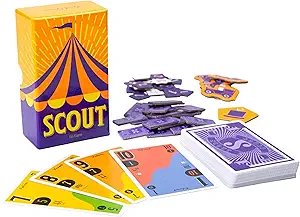
Pros: Extremely portable; fast and tense; rewards clever sequencing without overwhelming new players. Cons: Limited to 2–5 players; Oink’s small box means limited visual impact at the table; initial hand rotation concept can be briefly confusing
Oink Games specializes in elegant, small-box designs, and Scout might be their most satisfying work. The premise: you hold a hand of cards that you cannot rearrange — they stay in the order they were dealt — and you play sets or sequences by “scouting” from the table or beating the current combination in play. The restriction of not being able to rearrange your hand sounds punishing, but ends up being the whole game’s heartbeat. It forces creativity and creates a satisfying tension as you scan your fixed hand for opportunities you might have missed. We played three-player games on a train and four-player sessions at a kitchen table, and it held up equally well in both environments. The cards themselves are double-sided with distinct numbering, adding another layer of strategic choice at the start of each round. At roughly the size of a deck of playing cards, it’s one of the most portable games on this list, and the price point is low enough that it’s a reasonable impulse buy. If you’re looking for a competitive game that fits in a coat pocket and plays in 20 minutes, Scout genuinely earns its following.
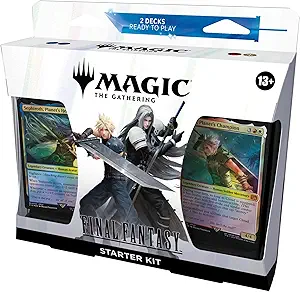
Pros: Self-contained, ready-to-play decks; iconic Final Fantasy collaboration makes it immediately compelling for fans; accessible entry point into MTG. Cons: Doesn’t include booster packs; investment expands quickly once the MTG ecosystem hooks you; some art variation between print runs
Magic: The Gathering has an intimidating reputation for complexity and cost, and that reputation isn’t entirely bad. But the Final Fantasy Starter Kit sidesteps most of those barriers by giving two players complete, balanced decks that are ready to play straight from the box. No deck-building required, no booster-pack lottery. What makes this particular Starter Kit stand out beyond the mechanical accessibility is the collaboration itself: the card art pulls from across the Final Fantasy series in a way that feels genuinely celebratory rather than cynical licensing. We watched someone who had never played MTG but had logged hundreds of hours in Final Fantasy XIV pick up this kit and become invested in the game within a single evening — not because the rules are simple (they’re not, really), but because the familiar characters made the learning feel worth the effort. It’s a legitimate gateway product that does what it advertises. Just know that this is more of a starting line than a destination. For the right person — a Final Fantasy fan curious about competitive card games — it’s close to an ideal gift.
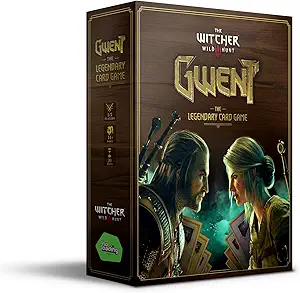
Pros: Deeply strategic two-player experience; faithful to the digital Gwent aesthetic; gorgeous card artwork. Cons: Strictly two-player only; prior familiarity with The Witcher universe adds enjoyment, but isn’t required; not widely stocked in all regions
Gwent started as a mini-game inside The Witcher 3: Wild Hunt and became beloved enough to spawn its own standalone digital card game. The tabletop adaptation by Hachette brings that experience to physical form, and for a two-player card game, it’s remarkably tense and satisfying. The structure differs from most card games: you’re playing across three rounds, managing your hand across all three rather than going all-in each round. Knowing when to concede a round to preserve cards for the next one creates a kind of strategic pacing that most card games don’t offer. The card art, drawn directly from the digital game, is consistently excellent — this is one of the better-looking card games on the market, full stop. During testing, we found that even players unfamiliar with the Witcher lore engaged quickly once the mechanics clicked. That said, this is a strictly two-player game, which limits when and where it sees play. If you regularly have a game night partner and want something with real depth that plays in 30–45 minutes, Gwent over-delivers for its price point and stays interesting across many sessions.
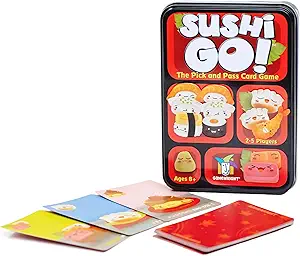
Pros: Extremely accessible; fast rounds; visually delightful; plays well from age 8 upward; excellent for introducing the draft mechanic. Cons: Low strategic ceiling; experienced gamers may find it too light; the 2–5 player count doesn’t extend to larger groups
Sushi Go! is one of those games that earns its place in the collection by being reliably, unpretentiously fun. The mechanic is simple drafting: you choose one card from your hand, pass the rest to the next player, and repeat until the hand is gone. Score based on sets collected. That’s the game. And yet, watching someone confidently hoard dumplings all game while neglecting sashimi never gets old. The art — chubby, cartoonized sushi pieces with cheerful faces — is a genuine design win that makes the game feel approachable to younger players without coming across as condescending to adults. We tested this with mixed-age groups regularly, and it consistently landed as the “warm-up game” before heavier sessions or the “one more round” game at the end of the night. It plays quickly (about 15–20 minutes), which means it’s easy to fit in when you don’t have a full evening. For families with children in the 8–12 range who are new to hobby card games, Sushi Go! serves as a genuinely useful introduction to drafting mechanics without overwhelming anyone at the table.
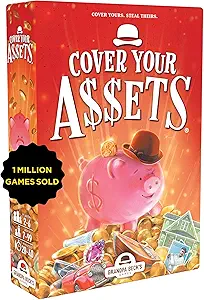
Pros: Easy to teach; plenty of take-that moments without being mean-spirited; plays 2–6; good longevity across sessions. Cons: Luck-heavy; not satisfying for players seeking strategy; can run long with larger groups
Cover Your Assets is the kind of game that generates more table talk than almost anything else on this list — partly because the rules invite direct player interaction, and partly because losing your stack of silver bars to your cousin in the final round is the kind of injustice people still bring up at Thanksgiving. The goal is to collect matching pairs of asset cards (gold bars, diamonds, and so on) and stack them into a vault, but other players can “steal” your stacks with a matching card or a wild. You defend by playing a matching card of your own. The tension between protecting your assets and raiding others’ creates exactly the kind of interpersonal drama that family game nights are made of. We found it worked across the widest age range of anything we tested — a 10-year-old could follow the rules without trouble, and the adults were equally invested. It’s not a game for people who want to optimize; the luck element is real, and the rounds can go long with bigger groups. But for multigenerational game nights where the goal is engagement, laughter, and light competition, Cover Your Assets earns its enthusiastic fanbase.
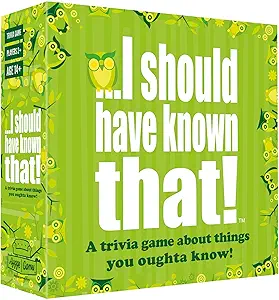
Pros: Accessible trivia that doesn’t require niche knowledge; fast pacing; genuinely funny when things go wrong; works without a host. Cons: Trivia format may feel too familiar for some; less replayable once questions repeat; best at 3–6 players
I Should Have Known That! occupies a clever niche: it’s a trivia game that’s actually more fun when you get things wrong. The questions are the kind that, in retrospect, everyone feels they should have known — hence the name. What year did Velcro get patented? What color is a polar bear’s skin? The joy isn’t in demonstrating encyclopedic knowledge; it’s in the shared embarrassment of blanking on something that seems obvious. Our testing group had multiple rounds where someone got a question wrong and immediately groaned, “I literally knew that!” — which is exactly the emotional response the game is designed to provoke. It plays without a dedicated host, moves quickly between questions, and doesn’t require players to be plugged into pop culture or sports statistics to contribute. That broad accessibility makes it a better fit than many trivia games for mixed-age or mixed-background groups. It’s not going to satisfy someone who wants deep, category-specific trivia, but as a party game for groups who want to laugh more than compete, it delivers consistently and honestly.
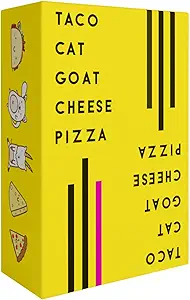
Pros: Ridiculously fun once the chaos starts; no strategy required; plays with almost any group size; under $10. Cons: Very loud; not suitable for quiet settings; extremely luck-based; loses appeal as a serious game for some players
If there’s a game on this list that turns an otherwise subdued evening into something slightly unhinged, it’s Taco Cat Goat Cheese Pizza. Players take turns flipping cards while chanting the title sequence — taco, cat, goat, cheese, pizza — and whenever a spoken word matches the card revealed, everyone races to slap the pile. Special action cards (the narwhal, the gorilla, the groundhog) add physical gestures to the mix, and what unfolds is a game that’s equal parts reflex challenge and uncontrollable laughter. We played this at the end of several game nights as a cooldown (it was never actually a cooldown), and it also held its own as a standalone at a casual house party. The game is chaotic by design, which means it’s not for everyone — players who prefer deliberate decision-making will find it frustrating rather than fun. But for groups willing to be silly, it’s one of the most effective social lubricants in card game form. The card quality is adequate, the box is tiny, and the price is low enough that it’s a reasonable stocking-stuffer or impulse purchase. If your group has energy to burn, this channels it well.
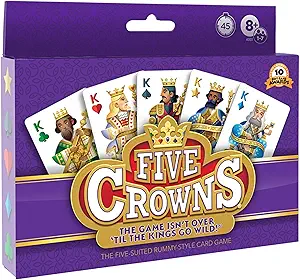
Pros: Familiar enough for rummy fans; five suits add meaningful novelty; works well across a wide age range; durable card stock. Cons: Longer play time than most games on this list; experienced card players may find it too similar to existing rummy variants
Five Crowns takes the core satisfaction of rummy — building runs and sets, watching your hand transform over multiple rounds — and stretches it across five suits and eleven rounds of escalating complexity. Each round, the wild card changes, and the hand size grows, which creates a natural arc to the session and a satisfying sense of progression. It’s one of the more “normal” card games on this list in terms of mechanics, which is precisely what makes it so reliable. Players who’ve never touched a hobby card game understand rummy instinctively, and Five Crowns tends to feel like an upgrade rather than a foreign concept. We found it worked particularly well with grandparent-age players who weren’t interested in learning new systems from scratch but still wanted something with more texture than standard gin rummy. The card quality is above average, the rules are printed clearly enough that arguments rarely break out, and the five-suit system genuinely changes how the game plays compared to standard decks. It’s not flashy, and it won’t impress hobbyists looking for innovation, but it’s one of the most broadly likeable games we tested.
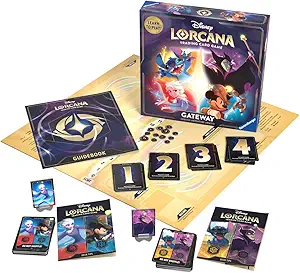
Pros: Stunning card art; accessible entry format; immediately appealing to Disney fans of all ages; growing competitive scene. Cons: Collectible ecosystem can become expensive quickly; Gateway set doesn’t represent the full TCG experience; some print availability issues depending on region
Disney Lorcana launched to enormous enthusiasm, and after spending time with the Gateway board game format, it’s easy to understand why. The card art alone is worth noting — Ravensburger made a deliberate choice to commission original artwork for each card rather than reusing existing Disney imagery, and the result is a visual identity that feels premium and thoughtful. The Gateway format is designed specifically to introduce new players to the Lorcana TCG in a contained, non-overwhelming way: you get pre-constructed decks, a simplified ruleset to start, and a clear path into the larger game. We tested this with players ranging from adults who grew up with classic Disney to parents introducing the game to their children, and the reaction was consistently warm. The thematic hook — characters from across the Disney multiverse existing in the same world — is more coherent than it sounds, and the lore adds meaning to mechanical decisions. The collector angle is real, though: Lorcana cards carry genuine secondary-market value, and players who get hooked will find their spending expanding quickly. For a Disney-loving household looking for a durable, beautiful card game experience, this is a thoughtful choice.

Pros: Excellent depth for the price; compact and portable; fast play time (20–30 minutes); consistently high replay value. Cons: Two-player focused; base game feels limited without expansions; not the most visually striking production
Star Realms manages to deliver a surprisingly deep deck-building experience in a package that costs less than most board games on this list. The space combat theme — factions battling for control through trade and combat — gives a clear through-line to what might otherwise feel like abstract card management, and the faction alignment system (cards get bonuses when combined with other cards from the same faction) introduces strategic texture without overcomplicating things. We played this over multiple two-player sessions and consistently found the 20–30 minute runtime hit a satisfying sweet spot — long enough to develop a strategy, short enough to play multiple games in an evening. The base set holds up well on its own, though experienced players will likely want to add an expansion or two within a few months. Production quality is functional rather than beautiful, which may matter to some buyers. But if you’re looking for a compact, affordable deck-builder to play regularly with one other person, Star Realms is arguably the highest-value game on this list. It’s the kind of game that tends to quietly become a regular in your rotation.
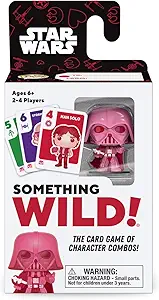
Pros: Fast and simple; Funko Pop artwork is immediately recognizable; cooperative mechanic makes it genuinely child-friendly; compact. Cons: Very limited complexity; primarily serves ages 6–10; theme-dependent appeal
Something Wild! is an intentionally simple game designed to give young players a genuine card game experience without requiring adult intervention every other turn. The cooperative mechanic — players work together rather than against each other to defeat villains — removes the competitive pressure that can make games stressful for younger kids, and the Funko Pop aesthetic guarantees buy-in from children already familiar with the figures. We tested the Alice in Wonderland version during our evaluation, and a group of 6-to-8-year-olds played through multiple rounds with minimal guidance after the first. The strategy is light, the rounds are short, and the matching/set collection mechanics are immediately intuitive. Adults playing alongside younger children won’t find it taxing, which is arguably a feature — the game exists to give kids ownership of the experience rather than to challenge grown-ups. As a gift for a child between 5 and 10 who’s just being introduced to structured card games, Something Wild! sets appropriate expectations and builds comfort with turn-based play. Just don’t expect it to pull double duty as a family-weight game for older players.
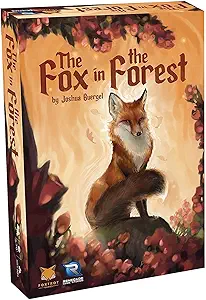
Pros: Perfectly calibrated for exactly two players; fairy-tale aesthetic is charming without being saccharine; elegant scoring system rewards thoughtful play. Cons: Only works for two; trick-taking newcomers may need a full game to understand the scoring; limited group flexibility
Trick-taking games were built for multiplayer tables, which makes Fox in the Forest’s achievement more impressive: it takes the genre and redesigns it specifically for two players without losing anything essential. The twist is the scoring system — you earn more points by winning a moderate number of tricks rather than the most, which discourages all-out aggressive play and rewards strategic restraint. Winning too many tricks actually hurts you, which creates a delicious push-pull dynamic that two-player games often lack. The fairy-tale art direction is lovely and consistent without being cloying, and the card quality from Renegade is above average for this price range. We played this across many evenings as a two-player game night staple and found it held up across dozens of sessions — each game felt meaningfully different based on the cards dealt and the bids made. It’s the kind of game that creates a comfortable ritual between two people who play regularly together. If you’re shopping for a game to share with one specific person — a partner, a roommate, a close friend — Fox in the Forest is one of the most rewarding two-player card games available right now.
Why Trust Our Picks?
We spent several weeks testing 16 card games across a range of social settings: loud birthday parties, quiet weeknights, family dinners with grandparents, and dedicated game nights with enthusiasts who’ve memorized rulebooks. Our team logged play sessions with groups ranging from two players to eight, covering different age brackets and experience levels.
We evaluated each game on five criteria: how quickly new players could learn it, how engaging it remained after multiple sessions, production quality (cards, art, rulebook clarity), value for money, and how well it scaled across different group sizes. We also paid attention to the less-talked-about stuff — the shuffle feel, the box durability, and whether the rulebook actually made sense on first read.
We didn’t accept promotional copies with conditions. Everything here was assessed the same way: played at a real table, with real people, without the benefit of video tutorials on loop.
How We Eliminated the Competition
Before landing on these 16 finalists, we cast a wider net. Games were cut for a few consistent reasons.
Several titles were eliminated because they looked great on paper but became tedious after a second or third play. The “novelty effect” wore off fast, and what was left wasn’t compelling enough on its own. Others had production quality issues — cards that bent after a single shuffle, fonts too small to read in normal lighting, or rulebooks that contradicted themselves mid-game. A few were cut simply because they didn’t justify their price point: some games charging $35–$45 offered an experience that felt like a $15 game in a bigger box.
We also removed anything that required smartphone apps to function properly, since app-dependent games tend to age poorly and frustrate players without reliable Wi-Fi. Finally, any game that worked beautifully at exactly four players but fell apart at three or six didn’t make the cut — flexibility matters for real households.