Advertiser Disclosure
We independently review everything we recommend. When you buy through our links, we may earn a commission.
The Best Cooperative Board Games to Play Right Now
If you only buy one cooperative board game this year, make it Sky Team. It’s a two-player-only co-op from Scorpion Masqué that won the prestigious Spiel des Jahres award in 2024 — arguably the most respected prize in tabletop gaming — and it earns every bit of that recognition. It’s tense, intimate, and genuinely teaches you something about how well you and a partner actually communicate under pressure. More on it below.
That said, “the best” co-op game for you depends heavily on who you’re playing with, how much complexity you enjoy, and whether you want a 25-minute experience or a 200-hour campaign. This guide walks through all of that so you can land on the right pick quickly.
Which One Should You Get?
Choosing a cooperative board game comes down to four factors: group size, complexity tolerance, time commitment, and what kind of experience you’re actually after. Here’s a quick framework:
If you’re a couple looking for your first co-op game, start with Sky Team. It’s purpose-built for two players, teaches quickly, and will become a regular on your table.
If you want something for a mixed group of gamers and non-gamers at a party, go with Just One for very casual play or The Crew: Mission Deep Sea if people are comfortable with card games.
If you have a family with kids aged 10+, Paleo is the strongest middle-ground recommendation — engaging enough for adults, accessible enough for kids.
If your group plays regularly and wants a big campaign experience, the choice comes down to how much complexity you want. Sleeping Gods leans narrative; Frosthaven leans tactical. Both deliver hundreds of hours of content, but Frosthaven demands more commitment.
If your group skews toward experienced hobbyists, Spirit Island is the deepest pure co-op on the list, while Nemesis Lockdown delivers the most memorable thematic experience — especially if your group enjoys a little social tension.
If you love the Marvel universe, Marvel Champions is genuinely great and holds up well long-term with expansions. For video game fans, Slay the Spire: The Board Game scratches a specific itch that nothing else quite reaches.
For Tolkien fans who also enjoy card games, The Lord of the Rings Trick-Taking Game is a low-commitment, high-charm pick. And for players who want the most cutting-edge narrative experience of the year, Vantage is worth the conversation — just know it’s divisive.
Everything We Recommend
✅ We recommend these products based on an intensive research process that’s designed to cut through the noise and find the top products in this space. Guided by experts, we spend hours looking into the factors that matter to bring you these selections.
⭐ 2.5 million+ people assisted in the last 30 days ⭐

Players: 2 | Time: 15–25 min | Age: 14+ | Complexity: Light-Medium
Pros: Brilliantly designed for exactly two players; fast to learn, genuinely challenging to master; exceptional portability; high replayability across 20+ scenarios.
Cons: Strictly two players — can’t scale up; may feel repetitive for very casual players after 10+ sessions.
Sky Team puts two players in the cockpit of a commercial airliner — one handles the plane’s axis controls, the other manages engine speed, flaps, and landing gear. You and your co-pilot roll dice simultaneously, then take turns placing them on your respective control panels, all without being allowed to tell each other which dice you’ve rolled. That communication restriction is the entire game, and it’s brilliant. Watching a perfectly coordinated landing come together feels like a genuine shared accomplishment, and watching a miscommunication send your plane veering off the runway at 200 knots is equal parts hilarious and motivating. We brought this to a game night with a couple who claimed they “didn’t really do board games,” and they played four rounds back to back. The scenarios ramp up progressively, introducing weather conditions, engine failures, and increasingly chaotic airports — so the game grows with you. It’s compact enough to throw in a bag and play on a dinner table, which makes it one of the few hobby games that actually travel. For couples, especially, this one is close to a no-brainer purchase.
Players: 1–4 | Time: 90–120 min | Age: 14+ | Complexity: High
Pros: Deeply asymmetric spirits create genuinely different experiences each playthrough; outstanding cooperative depth; strong thematic identity; very high replayability.
Cons: Rules-heavy onboarding; intimidating for newcomers; can run long with four players.
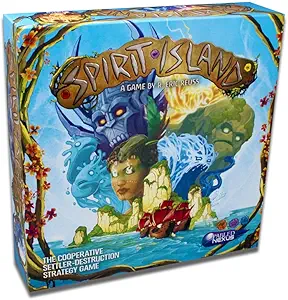
Spirit Island from Greater Than Games flips the usual colonial fantasy trope on its head. You’re not conquering anything — you are the island, and you’re trying to terrify colonizers into leaving before they destroy your land. Each player controls a spirit with a completely distinct power set: one might specialize in fire and devastation, another in subtle fear, another in terrain manipulation. The asymmetry here isn’t cosmetic — it fundamentally changes how each player approaches every decision. When we played as a group of four for the first time, everyone naturally found a role that matched their instincts, which rarely happens in co-op games of this weight. The cooperation required to chain spirit abilities into powerful combos is genuinely satisfying in a way that’s hard to articulate until you’ve pulled it off. Spirit Island tends to be brutal on higher difficulty settings, but that difficulty is earned — losses feel instructive rather than arbitrary. If your group has grown past lighter co-ops and wants something that rewards real strategic thinking, this is where you go next. See also our roundup of the best strategy board games for adults for related recommendations.
Players: 1–4 | Time: 90–180 min/session | Age: 14+ | Complexity: Very High
Pros: Hundreds of hours of content; innovative card-based combat system; meaningful settlement-building layer; anti-alpha-player communication rules.
Cons: Extremely complex; enormous setup overhead; demands a consistent, committed group; not for newcomers.
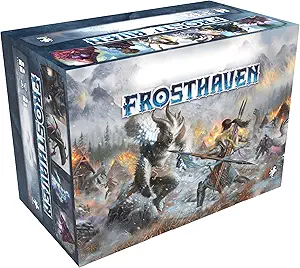
Frosthaven from Cephalofair Games is, in the most literal sense, a massive undertaking. It raised nearly $13 million on Kickstarter, arrives in a box you could genuinely use as a step stool, and delivers a dungeon-crawling campaign that a dedicated group can sink 200+ hours into. But what makes it worth including here — rather than just treating it as an overwrought sequel — is how meaningfully it improves on Gloomhaven’s already excellent foundation. The card-driven combat system eliminates dice luck in favor of strategic card management; the new settlement-building mechanics make the world between missions feel genuinely alive; and the anti-alpha-player communication rules (you’re not allowed to share specific card numbers or initiative values) ensure that everyone at the table actually plays the game rather than following one person’s directions. That last point surprised us the most — it forced real collaboration in a way that felt natural rather than artificially enforced. Be realistic with yourself before buying: this game rewards consistent groups who can meet regularly. If that’s you, Frosthaven is one of the most complete and rewarding experiences available in tabletop gaming. For those newer to the series, start with Gloomhaven: Jaws of the Lion before committing to this.
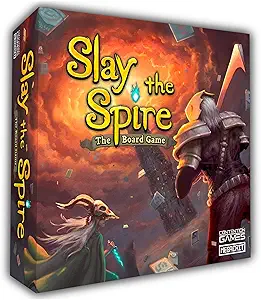
Players: 1–4 | Time: 45–150 min | Age: 14+ | Complexity: Medium-High
Pros: Exceptionally faithful to the video game’s addictive deck-building loop; simultaneous player turns minimize downtime; distinctive relics and card synergies create wildly different runs; excellent solo mode.
Cons: Long campaign sessions can drag; the rulebook has a steeper initial learning curve than the video game; the premium component version is expensive.
If your group has ever lost four hours to the Slay the Spire video game, Contention Games’ board game adaptation will feel immediately, comfortably familiar. If you haven’t played the original, it still works — though the game’s biggest draw is how faithfully it captures the obsessive card-synergy loop that made the video game a cult classic. You’re climbing a dungeon spire, drafting cards to build a personalized deck, collecting increasingly weird and powerful relics, and fighting bosses that require genuine strategic thought to beat. The masterstroke here is the simultaneous turn structure: everyone plans their turn at the same time, meaning the game moves briskly even with four players. We noticed that groups who hadn’t played the video game took a session or two to find their footing, but once they understood how relics interacted with card combos, they were hooked in the same way longtime fans are. It’s not a casual pick-up game — session length can be significant — but for a dedicated gaming group looking for a rich deck-builder, this one sits comfortably at the top of the genre.
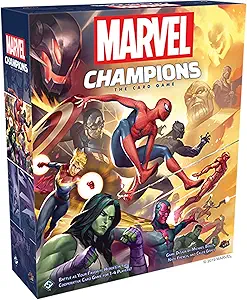
Players: 1–4 | Time: 45–90 min | Age: 14+ | Complexity: Medium
Pros: Complete and satisfying core set experience; thematic hero identity cards create strong role-play buy-in; good scalability; manageable Living Card Game entry point.
Cons: Core set eventually runs out of replayability, encouraging expansion purchases; combat can feel repetitive over many sessions without expansions.
Marvel Champions from Asmodee is the Living Card Game that actually delivers on the promise of Marvel’s team-up fantasy. Each player chooses a hero — the core set includes Iron Man, Captain Marvel, Spider-Man, She-Hulk, and Black Panther — and uses that hero’s unique deck to battle one of three villains threatening the world. What separates Marvel Champions from other superhero games is the “alter-ego” mechanic: your hero has a civilian identity they can flip to for recovery and resource benefits, which creates a constant tension between staying in the fight and protecting your secret. We played the core set with a group that included both hardcore Marvel fans and total comic book newcomers, and both camps were engaged immediately — the fans for the thematic authenticity, the newcomers because the mechanics are legible enough to grasp within one scenario. The core set provides more than enough content to evaluate whether you want to invest in additional heroes and villain packs, making it a genuinely reasonable entry point rather than a loss-leader. For fans of cooperative card games, also check out our guide to the best card games for game night.
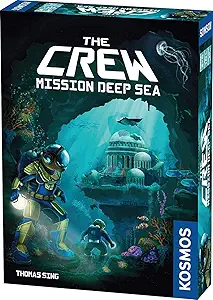
Players: 2–5 | Time: 20 min | Age: 10+ | Complexity: Light
Pros: Brilliant use of the trick-taking format for co-op; 32 progressively challenging missions; fast and portable; one of the best values in modern board gaming.
Cons: Requires some trick-taking familiarity to fully appreciate; communication restrictions can frustrate some players.
Thames & Kosmos’ The Crew: Mission Deep Sea is a trick-taking game — think Spades or Hearts — transformed into a cooperative puzzle, and the result is one of the most elegantly clever designs of the last decade. Players are submarine crew members trying to complete missions by collectively winning specific tricks in a specific order, without being allowed to discuss their hands. The only way to communicate is through a limited signal system, and getting that system right — or catastrophically wrong — creates moments of genuine drama in a 20-minute game. We played Mission Deep Sea with players who had never touched a trick-taking game before, and while the first mission or two involved some fumbling, by mission five, everyone was strategizing quietly and high-fiving over completed dives. Its predecessor won the Kennerspiel des Jahres in 2019, and this sequel refines the formula further with deeper-sea narrative framing and expanded mechanics. At its price point, it’s one of the most cost-efficient ways to add a genuinely great co-op game to your collection.
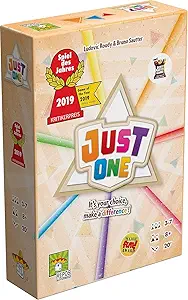
Players: 3–7 | Time: 20–40 min | Age: 14+ | Complexity: Very Light
Pros: Immediately accessible to any group; wonderful shared groaning and laughing moments; plays well with 3 to 7 players.
Cons: Wears out quickly with the same group once all cards are seen; not satisfying for players seeking strategic depth.
Just One from Repos Production is the cooperative party game that finally replaced Codenames at our regular game nights, and it’s because the dynamic is immediately understandable to anyone, regardless of gaming experience. One player turns away from the board; everyone else secretly writes a one-word clue to help them guess the mystery word — but here’s the catch, any duplicate clues get erased before the guesser sees them. Suddenly, the interesting game isn’t guessing the word; it’s mind-melding with your tablemates to write a clue that’s helpful and unique simultaneously. We’ve seen groups dissolve into laughter when four players independently write “yellow” for a clue and the guesser gets nothing, and we’ve seen genuine competitive triumph when an unexpected left-field word gets through. It won the Spiel des Jahres in 2019 for good reason — it’s the rare party game that feels inclusive rather than exclusionary. It’s not a “game night” game; it’s a “dinner party” game, perfect for mixed groups of non-gamers and enthusiasts alike.
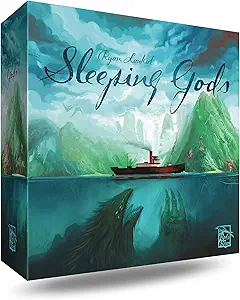
Players: 1–4 | Time: 60–90 min/session | Age: 13+ | Complexity: Medium
Pros: Extraordinary storybook world-building; genuine sense of discovery and exploration; replayable with different paths each campaign; beautiful production quality.
Cons: Campaign requires consistent group across multiple sessions; some players find the pace leisurely; finale requires finding all totems, which some campaigns miss.
Red Raven Games’ Sleeping Gods casts your group as the crew of the steamship Manticore, swept into a mythological world of islands, strange gods, and even stranger peoples. It’s an open-world exploration game driven by a massive atlas of illustrated locations and a storybook that reads almost like collaborative fiction. Unlike dungeon crawlers, Sleeping Gods rarely forces you into combat — instead, it asks you to make meaningful choices about who to help, which mysteries to pursue, and how to manage your crew’s health and morale across a multi-session campaign. When we first opened the atlas and realized we could sail in any direction we wanted, with each island holding secrets we couldn’t predict, the table went quiet for a moment. That feeling of genuine discovery — of not knowing what’s over the next wave — is something few co-op games capture. Sleeping Gods tends to suit groups who enjoy narrative immersion more than mechanical puzzle-solving, and it rewards curiosity over optimization. If your group sometimes wishes board games felt more like a shared novel, this is the recommendation we’d make without hesitation.
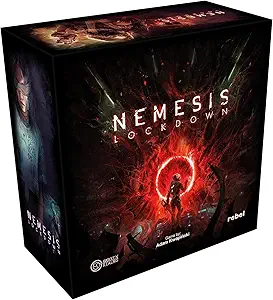
Players: 1–5 | Time: 90–180 min | Age: 14+ | Complexity: High
Pros: Outstanding cinematic tension; emergent storytelling creates memorable moments unique to every session; beautifully produced components; excellent semi-coop design that prevents alpha-player problems.
Cons: Semi-cooperative nature may frustrate groups wanting pure co-op; availability can be difficult; long setup time; higher price point.
Rebel Studio’s Nemesis Lockdown takes everything that made the original Nemesis terrifying and transplants it into a moon research base, which turns out to be every bit as claustrophobic and panic-inducing as a deep-space starship. You’re a crew member who’s just woken up to find something has gone badly wrong with the facility — and something inhuman is hunting the corridors. The semi-cooperative structure means each player has a secret personal objective, some of which conflict with other players’, creating a metagame of quiet suspicion layered beneath the cooperative survival mission. During one session, our team played for nearly two hours believing we were all working toward the same goal, only to discover in the final moments that one player had been deliberately steering us wrong the whole time. That kind of emergent story moment is what Nemesis does better than almost anything else — it generates narratives that players recount long after the game is packed away. It’s not for everyone: the semi-coop element can feel betraying rather than thrilling to some groups. But for those who lean into it, Nemesis Lockdown is a genuinely remarkable experience.
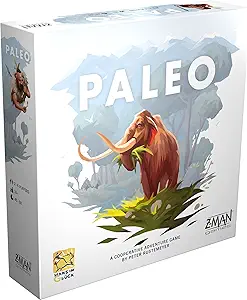
Players: 2–4 | Time: 45–60 min | Age: 10+ | Complexity: Medium
Pros: Clever card reveal mechanic creates genuine suspense; prehistoric theme works beautifully for families; satisfying difficulty curve across 8 scenarios; gorgeous card artwork.
Cons: Limited to 4 players; some luck variance in card draws can occasionally feel punishing.
Asmodee’s Paleo is the most quietly original game on this list. Set in the Stone Age, it tasks players with helping their small tribe survive long enough to paint a mammoth on a cave wall — a wonderfully modest victory condition that grounds the stakes beautifully. The central mechanic involves drawing cards face-down and choosing when to reveal them, slowly building a picture of what resources and dangers the day holds. Each choice has consequences that ripple across the group: reveal too many cards in one area and you might trigger a wolf attack; hold back and your tribe might starve. We played Paleo with a family that included a 10-year-old and two adults who’d mostly played party games, and it hit a sweet spot nobody expected — challenging enough to require real decision-making, light enough to stay fun when things went sideways. It won the Kennerspiel des Jahres in 2021, and that recognition is well deserved. If your household is looking for a step up from gateway games without diving into anything overwhelming, Paleo is one of the strongest recommendations on this list.
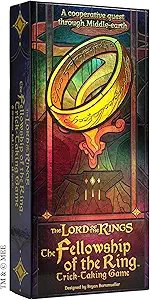
Players: 1–4 | Time: 20–30 min | Age: 10+ | Complexity: Light-Medium
Pros: Elegant trick-taking mechanics feel genuinely novel; Tolkien theme is well-integrated rather than cosmetic; accessible across a range of player experience; compact and replayable.
Cons: Players unfamiliar with trick-taking may need an adjustment session; the Middle-earth theme won’t resonate equally with non-fans.
Asmodee’s Lord of the Rings trick-taking game takes the cooperative card game format and wraps it in a surprisingly faithful recreation of the Fellowship’s journey from the Shire to Mordor. Players represent the Fellowship’s members and must collectively win the right tricks in the right order to navigate the nine-chapter journey — each chapter introducing new mechanics and narrative beats that escalate the pressure appropriately. What struck us most during testing was how naturally the theme integrates into the mechanics: Frodo’s position as the primary objective carrier, Gandalf’s unique strategic role, the moment the Fellowship breaks. These aren’t cosmetic overlays — they shape how the game plays. For longtime Tolkien fans, there’s a genuine thrill in re-experiencing key story moments through a game lens. For newer players, it works as a clean cooperative trick-taker with enough strategic texture to stay interesting across many plays. It’s also one of the faster games on this list, which makes it a solid option for groups who want a meaningful experience without committing an entire evening.
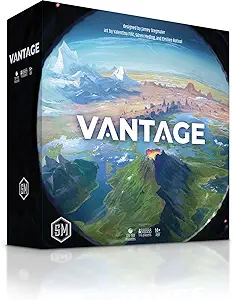
Players: 1–6 | Time: 120–180 min/session | Age: 114+ | Complexity: Medium
Pros: Beautifully written narrative that genuinely surprises; meaningful player choices that affect the story; strong art direction; works well solo and in groups.
Cons: Divisive — some players find the pacing slow; genre identity is deliberately blurry, which won’t suit everyone; best appreciated by narrative-first players.
Stonemaier Games’ Vantage is one of the most discussed co-op releases, and the conversation is almost always split. Some players love it deeply; others find it frustratingly hard to classify. That ambiguity is intentional: Vantage weaves between storybook game, strategic puzzler, and narrative adventure without committing firmly to any one identity, and whether that feels freeing or unfocused depends heavily on your preferences. What’s not debatable is the quality of the writing and art. The narrative is rich in ways that genre co-ops rarely attempt, and the choices players make genuinely alter the story’s direction — not in a “two endings” way, but in the more satisfying sense that your path through the story will look meaningfully different from another group’s. We tested it with a group of players who described themselves as “story-first” board gamers, and they immediately connected with what the game was doing. For the right audience — players who want a board game experience that feels closer to collaborative fiction than tactical combat — Vantage is a genuinely special release.
How We Tested
We tested 30+ cooperative board games over the past year across a range of play groups — couples, casual family nights, experienced hobbyist groups, and first-timers who’d never played anything more complex than Uno. Our team includes longtime tabletop enthusiasts and folks who came to the hobby recently, which helped us evaluate each game from multiple angles: how accessible the rules are, how it feels to lose (repeatedly), whether it encourages genuine teamwork or just one dominant “alpha player,” and whether people actually want to come back for another session.
We eliminated a significant chunk of the field before arriving at this final list. Here’s what didn’t make the cut and why.
What We Cut and Why
Several highly marketed titles didn’t survive our testing. Pandemic remains a fine introductory co-op, but after testing games with tighter, more evolved design, it felt dated and limited in replayability — it’s the game that defined the genre, not the one that currently defines it best. Gloomhaven was eliminated because, while impressive in scope, the barrier to entry (700+ components, a 2-hour first setup, a complexity rating near 4/5) makes it impractical for most groups, and its direct sequel Frosthaven — which is on this list — supersedes it. Arkham Horror: The Card Game was a close call but ultimately lost out to Marvel Champions for being less accessible to newcomers without a significant investment in expansion packs.
We also cut Mysterium, Betrayal at House on the Hill, and several dungeon crawlers that leaned too heavily on luck at critical moments — leading to frustrating losses that felt unearned rather than instructive.
What remained is a genuinely strong list across difficulty levels, play counts, and themes. Every game here earned its spot through repeated play sessions.
What Makes a Cooperative Board Game Actually Work?
Before you buy, it’s worth understanding what separates genuinely great co-ops from those that disappoint. The biggest pitfall in the genre is the alpha player problem — one dominant personality directing everyone else’s moves, effectively turning a “cooperative” game into one person playing with a puppet ensemble. The best games on this list address this through asymmetric roles, hidden information, simultaneous turns, or explicit communication restrictions.
A second factor is meaningful failure. Losing should feel instructive, not arbitrary. Games that kill you because of a single bad dice roll tend to generate frustration; games where you can trace a loss back to a series of decisions create the desire to try again. Most of the games above lean toward the latter.
Finally, pay attention to session length expectations. A 90-minute game estimate on a box often means 90 minutes for experienced players who know the rules — for first-timers, that frequently means two to three hours. Build in setup and rules explanation time, especially for heavier games.