Advertiser Disclosure
We independently review everything we recommend. When you buy through our links, we may earn a commission.
The Best Family Board Games
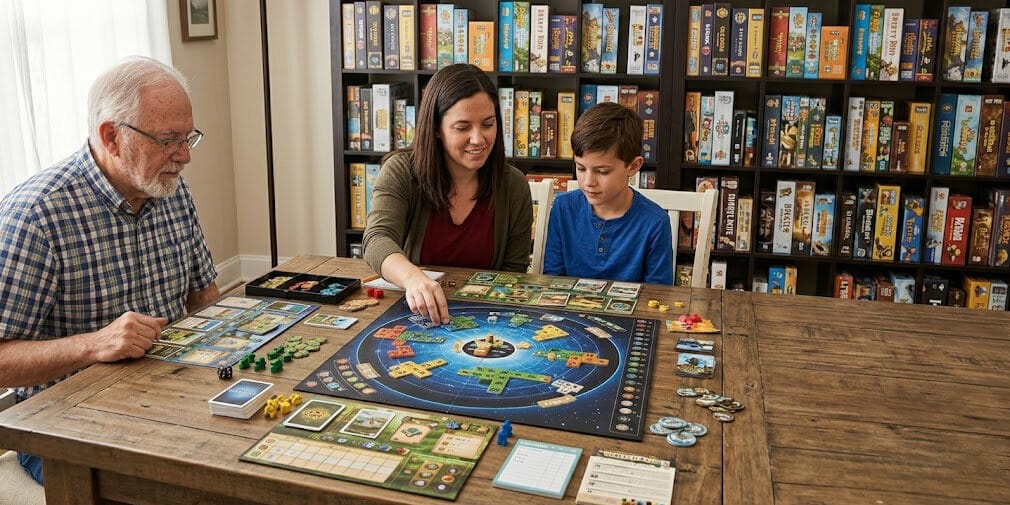
Our top recommendation for most families is Cascadia by AEG & Flatout Games. It’s a Spiel des Jahres winner with a five-minute setup, beautifully tactile wooden components, and a spatial puzzle that scales naturally from a curious 10-year-old to a strategic adult — all in under 30 minutes. It rarely causes arguments, rarely produces a runaway leader, and the moment you place your final tile and your ecosystem takes shape across the table, there’s a genuine sense of collective satisfaction that few family games manage to deliver. We’ve seen it appeal equally to grandparents visiting for the weekend and teens who typically resist anything that isn’t a screen.
That said, Cascadia isn’t the only strong option out there — and depending on your household, it might not even be the right one. We spent several months testing 15 games with real families across varying ages, attention spans, and competitive temperaments. What follows is our honest take on every game we’d actually recommend, along with a clear buying guide to help you decide quickly.
Which Game Should You Actually Buy?
Finding the right game depends less on which one is technically most impressive and more on what your specific household needs on a Friday night. Here’s how we’d break it down.
If you want one game that works for almost any family, go with Cascadia. It handles mixed ages gracefully, has a family variant to lower complexity for younger players, and produces a beautiful result every time. It’s the safest recommendation on this list for a first purchase.
If your household skews younger (ages 6–10) and you need something truly fast, Take Time is the answer. It sets up in two minutes and plays for twenty, with enough energy to actually hold younger attention spans.
If your family loves competition and a little chaos, King of Tokyo or Survive: The Island will deliver. Both are relatively light on rules but heavy on player interaction, which means every session feels different and genuinely tense.
If you already own a few games and want something with more strategic depth, HEAT: Pedal to the Metal, Quacks of Quedlinburg, or Planet Unknown are the natural step up. All three reward repeated play, have meaningful decisions throughout, and won’t feel routine after 10 sessions.
If your group gravitates toward cooperative play, Bomb Busters is the recommendation. The progressive mission structure and communication restrictions create the kind of cooperative tension that makes everyone feel invested, not just the most experienced player at the table.
If you want a long-term commitment game for a consistent group, Ticket to Ride Legacy: Legends of the West delivers an experience nothing else on this list can match — but it requires a committed group willing to see the campaign through.
If you’re buying for someone who says they “don’t like board games,” Start with Hummingbirds or Castle Combo. Both are non-threatening, visually appealing, and produce positive experiences quickly without demanding strategic investment.
Everything We Recommend
✅ We recommend these products based on an intensive research process that’s designed to cut through the noise and find the top products in this space. Guided by experts, we spend hours looking into the factors that matter to bring you these selections.
⭐ 2.5 million+ people assisted in the last 30 days ⭐
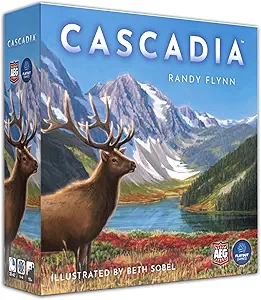
Players: 1–4 | Ages: 10+ | Play Time: 15–30 min | Difficulty: Low–Medium
Cascadia is the kind of game that earns a permanent spot on your shelf within the first session. You’re building an ecosystem in the Pacific Northwest — laying hexagonal habitat tiles (forests, rivers, mountains, wetlands) and placing wooden wildlife tokens (bears, foxes, salmon, elk, hawks) in patterns that satisfy each animal’s scoring preferences. The genius is in how the rules teach themselves: within two rounds, players understand the feedback loop instinctively, without referring back to the rulebook. What surprised our team most was how different each player’s finished landscape looked from everyone else’s, even when starting from identical conditions. That “I built something” feeling at the end of a game — what the board game community sometimes calls Builder’s Satisfaction — is genuinely strong here. The wooden components are heavy and pleasingly tactile. The scoring cards ensure no two games play identically. And critically, the gap between a skilled adult and a new teenage player tends to stay close enough that nobody feels helpless.
Pros: Spiel des Jahres winner; highly replayable through variable scoring goals; beautiful, durable wooden components; excellent solo mode; easy to teach in two minutes
Cons: Maxes out at 4 players; can feel slightly passive if you prefer direct player conflict; four-player sessions may feel slightly slower
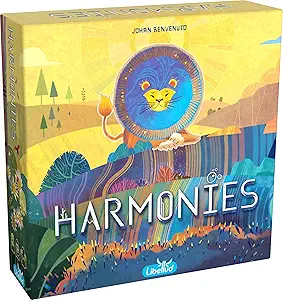
Players: 1–4 | Ages: 10+ | Play Time: 30–45 min | Difficulty: Low–Medium
Harmonies arrived at our table with modest expectations and left as one of our most-played games of the testing period. At its core, you’re drafting colorful animal and terrain tokens from a central pool and arranging them in your own nature tableau, matching each animal’s habitat preferences to earn points. But describing the mechanics doesn’t capture what actually happens when you play it — there’s a meditative, almost artistic quality to building your little world, balanced against the very real tension of watching someone else claim the token you desperately needed. Our testers noted that Harmonies has one of the shortest “first-game frustration curves” we’ve encountered: people understood their strategy within a turn or two, and the game never punished them too harshly for an early misstep. The artwork is exceptional — genuinely the kind you catch yourself just staring at between turns. It also scales very well for two players, which is rarer than you’d think in this category.
Pros: Exceptional visual design; low learning curve; scales well for two players; relaxing but still strategically satisfying; high replay value
Cons: Lighter on conflict than some players may prefer; not ideal for groups who want a more competitive or confrontational experience
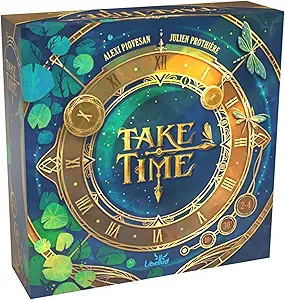
Players: 1–4 | Ages: 10+ | Play Time: 20–30 min | Difficulty: Low
Take Time is the game you reach for when you need something that genuinely works for everyone at the table — the 7-year-old, the teenager on their phone, and the grandparent who insists they’re “not good at games.” It’s a quick-thinking card game built around matching and timing, with enough speed and surprise to make even a short session feel lively. In testing, it was one of the few games where we saw a first grader beat a college-age sibling without a hint of luck-shaming afterward — because the mechanics reward quick pattern recognition rather than accumulated strategy knowledge. That’s a harder design balance to strike than it sounds. The rules fit on a single card, setup takes under two minutes, and the play itself tends to generate the kind of involuntary laughter and groaning that makes a game night memorable. It won’t satisfy players looking for deep strategy, but it’s an invaluable opening act or wind-down game that holds its own in any family game rotation.
Cons: Won’t satisfy strategy-focused players; low replay depth on its own over many sessions; best used as a complement to deeper games rather than a standalone anchor
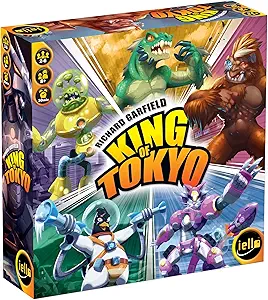
Players: 2–6 | Ages: 8+ | Play Time: 30–45 min | Difficulty: Low
King of Tokyo is the game we’ve watched convert the most self-described “board game skeptics.” You’re playing giant monsters — Gigazaur, Alienoid, and The King — battling for control of Tokyo, rolling custom dice, and collecting energy to buy power-up cards. The dice mechanism (roll, keep, re-roll up to twice — familiar if you’ve played Yahtzee) makes it immediately accessible without feeling derivative. What sets it apart is the central tension: whoever occupies Tokyo gains points faster but takes damage from every other monster. The pressure to hold the city, or bail out at the right moment, creates exactly the kind of “your turn is killing me” energy that makes game nights electric. Our teen testers in particular loved the monster theme and the escalating card powers, while younger kids (8+) grasped the dice logic fast enough to compete meaningfully. It’s loud, chaotic, and intentionally so — and for many family situations, that’s exactly what’s needed.
Pros: Fast-learning dice mechanism; high player engagement between turns; beloved monster theme; plays well across a wide age range; power cards add strategic layers without overcomplicating
Cons: Meaningful luck variance can frustrate strategic players; player elimination exists; it works better with 4–6 players than with 2
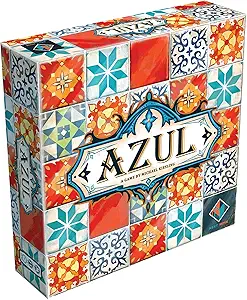
Players: 2–4 | Ages: 8+ | Play Time: 30–45 min | Difficulty: Low–Medium
Azul has the kind of table presence that makes people stop mid-conversation to ask what you’re playing. The chunky, translucent resin tiles feel like they belong in a jewelry store, and watching a beautifully completed mosaic pattern come together over the course of a game is viscerally satisfying in a way that paper and cardboard rarely achieve. Beyond the aesthetics, the gameplay is tighter than it looks: you’re drafting tiles from factory displays to complete rows on your player board, and the penalty system for taking tiles you can’t place adds a genuinely stressful edge to what otherwise looks like a calm puzzle. Our testers found that Azul does an exceptional job of making adults feel challenged while keeping younger players (8+) engaged with the tactile, visual aspects of the game. It’s one of those rare cases where the components themselves are a compelling enough argument to buy it. That said, the penalty mechanics can frustrate players prone to perfectionism, and it maxes out at four.
Pros: Industry-leading component quality; beautiful and tactile gameplay experience; genuinely strategic without being heavy; Spiel des Jahres winner; very elegant ruleset
Cons: Maximum four players; penalty mechanics can frustrate beginners; some find the abstract theme less engaging than narrative-driven games

Players: 1–4 | Ages: 10+ | Play Time: 30–60 min | Difficulty: Low–Medium
HEAT is what you get when someone designs a racing game that actually feels like racing. You’re managing a hand of cards representing your engine’s speed, pushing hard through straights and braking into corners — but overdo it and you flood your deck with Heat cards that clog your hand and slow you down. The feedback is immediate and intuitive: go too fast, feel the consequences the very next turn. Our testing team played this with motorsport fans and complete racing novices, and both groups got into it within a lap. The track is modular, so no two races look the same, and the campaign mode (in the expansion) added just enough narrative progression to keep players invested across multiple sessions. It’s genuinely one of the most thematic games on this list — when you’re neck-and-neck coming out of the final corner with an empty hand, the tension is real. The only caveat is that analysis paralysis can slow things down with larger groups if players aren’t pushed to keep the pace up.
Pros: Highly thematic racing experience; fast and intuitive card mechanism; modular track for replayability; excellent for motorsport fans
Cons: Pacing can slow with deliberate players; full campaign requires the expansion for best experience; not ideal for players who dislike any element of hand management
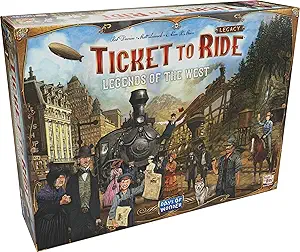
Players: 2–5 | Ages: 10+ | Play Time: 60–90 min | Difficulty: Medium
If your family has already played standard Ticket to Ride and loved it, Legends of the West is the natural evolution — and it’s a substantial one. The legacy format means your decisions in one session permanently alter the board, unlock new routes, and reveal story developments that carry forward through a full campaign. We found that this format created some of the most invested game nights of our entire testing period. Players who typically wandered off after 45 minutes stayed for the full session because the stakes felt real — the map evolving under your hands, routes permanently claimed, events you’d remember referencing three games later. That permanence can be a dealbreaker for some (you can’t easily reset and replay), but for families ready to commit, it delivers an experience that no single-session game can match. The base Ticket to Ride mechanics are still there — collect cards, claim routes — but the additional layers of narrative and consequence make it feel meaningfully elevated.
Pros: Exceptional narrative investment; evolving legacy format creates unique long-term engagement; built on proven Ticket to Ride foundation; strong replayability across campaign
Cons: Permanent changes make it a one-playthrough experience; longer session time may not suit all families; requires a consistent player group across sessions for best results
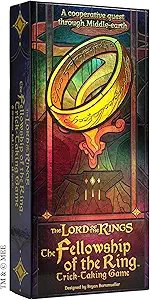
Players: 1–4 | Ages: 10+ | Play Time: 20–30 min | Difficulty: Low–Medium
This one surprised us more than almost anything else we tested. We expected a licensed theme pasted onto workmanlike mechanics — instead, we got one of the most inventive trick-taking designs we’ve encountered at the family game level. The game follows the Fellowship through iconic moments from the story, and the “no-follow” rule (you don’t have to follow the lead suit) opens up strategic space that standard trick-taking games like Hearts or Spades simply don’t have. For Lord of the Rings fans, the thematic integration is genuinely thoughtful — the challenges and fellowship dynamics feel embedded in the mechanics rather than stapled on top. Our testers, who were already fans of the books, described an almost nostalgic satisfaction in navigating these moments through a card game. For players unfamiliar with trick-taking, there’s a brief learning curve, but it’s one of the more accessible entry points to the genre we’ve found.
Pros: Innovative “no-follow” rule adds real strategic depth; strong thematic integration; accessible entry point into trick-taking games; beautiful card artwork
Cons: Players unfamiliar with trick-taking games may need extra explanation; fans uninterested in the Tolkien theme may find it less compelling; not a standalone standout without the IP
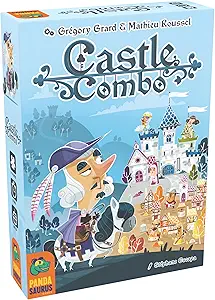
Players: 2–5 | Ages: 10+ | Play Time: 20–35 min | Difficulty: Low
Castle Combo fills a specific gap that’s harder to find than you’d expect: a short, sharp card game that’s strategic enough for adults but approachable enough for kids in the 8–12 range without talking down to anyone at the table. You’re building a medieval castle by drafting cards and triggering combos between different buildings — the moment one card chains into two or three others unexpectedly is exactly the kind of satisfying “aha” that makes players immediately want to try again. In testing, we found Castle Combo consistently produced the highest rate of immediate rematches of any game on this list. The small box format also means it travels easily, making it a strong candidate for restaurant waits, vacation nights, or any situation where you need good gameplay in a compact footprint. The solo mode is genuinely well-constructed, not an afterthought, which extends the value considerably.
Pros: Fast, satisfying combo mechanics; accessible to a wide age range; excellent travel size; strong solo mode; very high rematch rate in testing
Cons: Some players may find the medieval theme visually understated, lighter than some strategy enthusiasts prefer
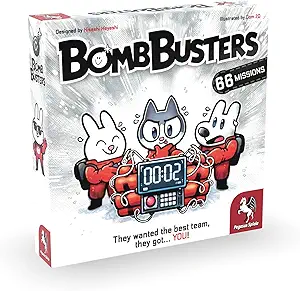
Players: 2–5 | Ages: 10+ | Play Time: 20–40 min | Difficulty: Low–Medium
Bomb Busters is the 2025 Spiel des Jahres winner, and having tested it extensively, we think the recognition is deserved. You’re a cooperative bomb disposal team, working through a series of escalating missions across five sealed boxes that introduce new mechanics and surprises as you progress. The communication restriction is the heart of the game: you can observe your teammates’ tiles but cannot directly tell them what you know, forcing inference and creative signaling. That constraint sounds frustrating on paper, but produces some of the most genuinely collaborative moments we observed during testing — the collective exhale when a correctly identified wire pair is removed, or the groan when a miscommunication sets off a detonation. The progressive mission structure means the game you’re playing in mission 30 is notably different from mission 5, keeping long-term engagement high. It’s a particularly strong pick for families who tend to gravitate toward cooperative games.
Pros: 2025 Spiel des Jahres winner; escalating mission structure with genuine surprise; strong cooperative tension; excellent for communication and inference skills; high replayability across campaign
Cons: Campaign-style format means limited replayability after completion; communication restrictions can occasionally frustrate players who prefer direct teamwork; best with a consistent group
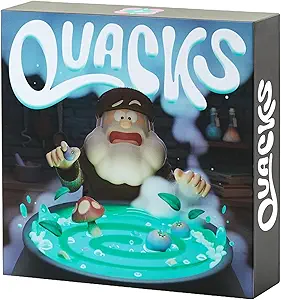
Players: 2–4 | Ages: 10+ | Play Time: 45–75 min | Difficulty: Low–Medium
The Quacks of Quedlinburg — or simply Quacks, as it’s come to be known — is one of the finest examples of “push your luck” design in the hobby. You’re a quack doctor brewing potions by drawing ingredient chips from your personal bag, trying to extend your potion as far as possible before a white chip causes it to explode. The tension of reaching into the bag one more time, knowing your luck might run out, is deceptively addictive. What makes it work for families specifically is that the luck-versus-strategy balance sits in a sweet spot: experience and smart chip-buying genuinely help, but a new player can still win through fortunate draws, which keeps competitive gaps from becoming demoralizing. In our testing, it produced some of the funniest group reactions of any game — grown adults wincing as they draw their bag, kids cheering when someone’s potion explodes. The component quality (custom bag, chunky chips, satisfying pot board) is excellent throughout.
Pros: Highly entertaining push-your-luck mechanic; accessible to new players while rewarding strategy; excellent component quality; Kennerspiel des Jahres winner; genuinely funny moments in play
Cons: Session length can run longer than expected with deliberate players; four-player maximum; luck variance may frustrate consistency-oriented players
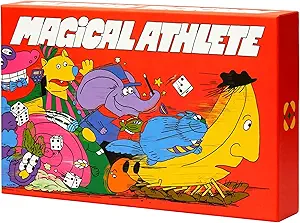
Players: 2–6 | Ages: 10+ | Play Time: 20–30 min | Difficulty: Low–Medium
Magical Athlete is the sleeper hit of this list — less well-known than some of the others, but reliably spectacular at the table. It’s a racing game where each player controls athletes with unique asymmetric powers: one character floats over obstacles, another benefits from being behind, and another gains strength from allied athletes nearby. The variability in player powers means every game has a fundamentally different dynamic, and the interaction between abilities produces moments that are hard to predict and easy to celebrate. Our testers — particularly those who tend to gravitate toward thematic or narrative games — responded very strongly to it. The playful fantasy-sports aesthetic keeps the theme light without being childish, and the built-in player imbalance (some characters are intentionally stronger) is offset by an auction draft that lets players compete for the most powerful options. For families who like competition but want something with more personality than a standard race game, this is an underrated recommendation.
Pros: Highly asymmetric player powers create memorable moments; supports up to 6 players; draft system balances power differences; fresh and fun theme; high replayability through character combinations
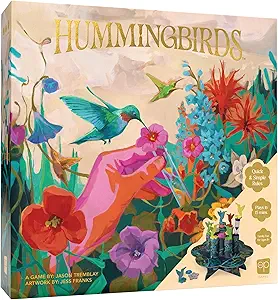
Players: 1–4 | Ages: 8+ | Play Time: 15–30 min | Difficulty: Low
Hummingbirds is the quietest game on this list in the best possible way. You’re placing hummingbirds and flowers on a shared garden board, creating arrangements that score based on proximity and color matching, in a game that feels more like collaborative art-making than direct competition. We tested it primarily with groups that included players who resist competitive gaming — particularly younger kids and adults who find head-to-head games stressful — and it consistently delivered a warm, unhurried game night experience. The artwork is genuinely lovely, printed on thick tiles that feel special to handle, and the garden tableau that develops over the course of the game is visually rewarding regardless of who wins. It’s not a particularly complex game, and players looking for tension and strategic conflict will find it too gentle. But for the right household — one that wants a relaxing, beautiful shared experience — Hummingbirds is a quietly confident recommendation.
Pros: Approachable for younger players and reluctant gamers; beautiful visual design and components; low-conflict gameplay ideal for sensitive players; excellent solo mode; calming, meditative experience
Cons: Low conflict and competition may feel too passive for competitive players; shorter strategic depth limits long-term engagement for experienced gamers; maxes at four players
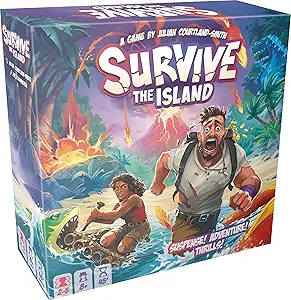
Players: 2–5 | Ages: 8+ | Play Time: 45–60 min | Difficulty: Low–Medium
Survive: The Island is one of those rare games that feels genuinely timeless — originally designed in 1982 and still producing screams of betrayal and laughter forty years later. The 2024 edition refreshes the components without losing the classic charm: you’re evacuating your explorers from a sinking volcanic island while navigating (or unleashing) sharks, whales, and sea serpents to eliminate your rivals. Every explorer token has a hidden point value, which means the painful calculus of which explorer to save — and whose to feed to a shark — creates genuine drama every turn. Our testing group produced more involuntary exclamations during a session of Survive than almost any other game on this list. The mechanics are simple enough for players as young as 8, but the player interaction is sharp and memorable. There’s a real edge to it — decisions that feel consequential, betrayals that feel personal — and that’s exactly what makes it so reliably fun.
Pros: Iconic design with lasting appeal; high player interaction and dramatic moments; hidden values create genuine tension; accessible rules for ages 8+; 2024 edition improves production quality
Cons: Can feel mean-spirited for sensitive players; maximum four players; luck plays a meaningful role in survival outcomes; not suitable for highly conflict-averse groups
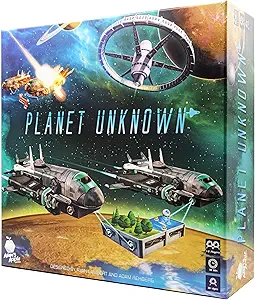
Players: 1–6 | Ages: 10+ | Play Time: 60–80 min | Difficulty: Medium
Planet Unknown is the most ambitious game on this list, and in the right group, it delivers the most ambitious payoff. Each player is terraforming their own planet by drafting polyomino-shaped terrain pieces from a shared central station that rotates like a lazy Susan — meaning everyone drafts simultaneously, which nearly eliminates downtime. You’re filling your planet board with life support, biomass, water, and rover tracks, managing multiple resource tracks that unlock bonuses as they fill. The complexity here is genuine: there are more variables to track than in any other game on this list, and first games will feel overwhelming for some players. But the payoff — the fully terraformed planet taking shape in front of you, rover trails snaking across the terrain — is among the most satisfying end states we experienced in testing. The simultaneous drafting also means session length stays manageable even at five or six players, which is unusual for a game at this complexity level.
Pros: Simultaneous play eliminates downtime; supports up to 6 players; deep and rewarding engine-building; visually spectacular finished board state; strong solo mode
Cons: Steeper learning curve than others on this list; first session can feel overwhelming; heavier than most “family game” categories suggest; best suited to families with some modern board game experience
How We Tested These Games
We rotated through all 15 games across multiple households — families with young kids (ages 6–10), mixed-generation groups (kids plus grandparents), and older households with teens. We paid particular attention to three things: how long it actually takes to teach the rules (not what the box says), whether anyone checked their phone mid-game, and how people felt after a loss. We also looked hard at component quality, because nothing deflates a game night faster than flimsy cardboard or illegible text. Games that led to post-game conversation — about tactics, about funny moments, about rematches — got ranked higher. Games that caused one player to silently stew got ranked lower, no matter how clever the design.
We also compared these picks against popular alternatives like Carcassonne, Wingspan, Pandemic, Sushi Go!, and Codenames, which gave us a reliable baseline for what “good” looks like across different complexity tiers.
What We Eliminated and Why
Not everything that landed on our table made the final cut:
Catan (Standard Edition) — A classic, yes, but we watched it drag on past 90 minutes twice with first-time players. The early-game resource luck also frustrated younger players who felt behind before they understood why. Great game for dedicated sessions; too punishing for casual family nights.
Pandemic — The cooperative tension is genuinely exciting, but in testing, one experienced player consistently ended up “backseat driving” the whole table’s decisions. It stopped feeling like a family game and started feeling like a lecture.
Exploding Kittens — Fast and funny in bursts, but it lacked staying power. We played three rounds in a row, laughed the first time, and had largely moved on by the third.
Sequence — Solid older game, but felt stale in comparison to what modern publishers are doing with similar mechanics. The components also felt noticeably cheaper next to the rest of this list.
Monopoly (standard version) — We included it as a control, and it confirmed our suspicions. The average session lasted two hours, ended in one player bankrupting everyone else, and produced exactly zero rematches. We cannot recommend it as a family game in good conscience when there are so many better options available.
Final Word
The family board game category has gotten genuinely remarkable in recent years. The games on this list aren’t compromise choices — they’re polished, thoughtful designs that regularly outperform the classics many of us grew up with. Our consistent observation across testing was that the right game, matched to the right household, makes family game night something people actually look forward to rather than something they endure. Start with one that fits your current situation, and expand from there. The hobby rewards exploration.