Advertiser Disclosure
We independently review everything we recommend. When you buy through our links, we may earn a commission.
The Best Drill Bits for Brass
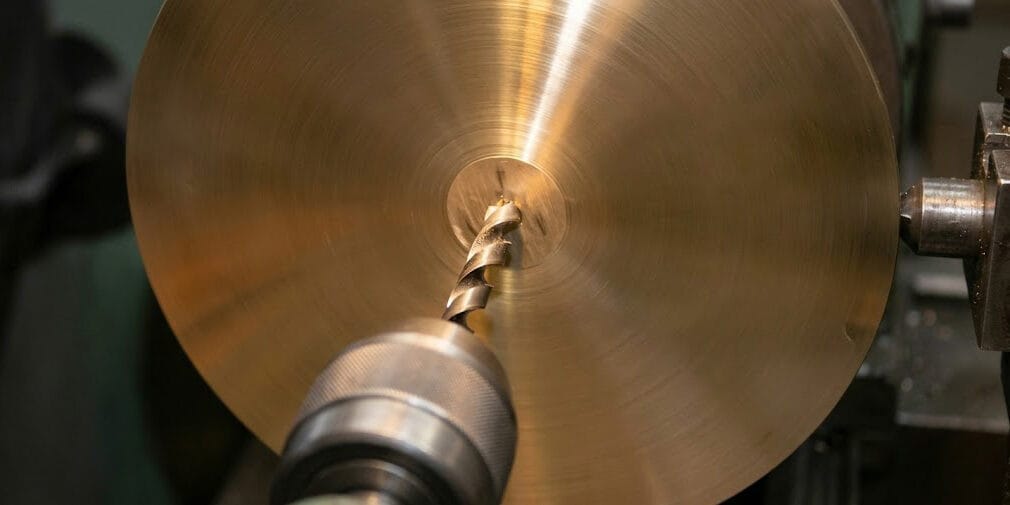
Brass looks soft, and in a lot of ways, it is. It’s far easier to cut than stainless steel or hardened tool steel. But if you’ve ever put a standard twist bit to a brass fitting and watched it suddenly dig in, seize, and spin the workpiece right out of your hand — you already know that “soft” doesn’t mean “easy.” Brass has a nasty reputation for grabbing drill bits, especially sharp ones, and the result tends to range from ugly to dangerous.
We’ve spent a lot of time at the bench working through this, drilling brass pipe fittings, electrical connectors, instrument parts, and plumbing fixtures. What we found is that choosing the right bit matters enormously — but so does understanding why brass behaves differently than most metals. Get both right, and you’ll be pulling clean, burr-free holes through brass faster than you’d expect. Get it wrong, and you’ll be replacing broken bits and reordering stock.
Choosing the Right Bit for Your Situation
Here’s a quick reference to help you match the right pick to your project:
- General home DIY, variety of materials: DEWALT DWA1184
- Impact driver users: Makita B-65399 Impact Gold
- Full fractional range on a budget: CaRoller HSD913 29-piece
- Focused brass and mixed hard metals: Cortool US10000000 6-piece cobalt
- All-purpose cobalt for small holes: MACXCOIP Cobalt Drill Bit Set
- Quick-change hex shank system: COMOWARE TGHEXSHANK
- Large holes in brass, copper, or steel: DKIBBITH TCT Hole Saw DKVIP-0005
Why Drilling Brass Is Different
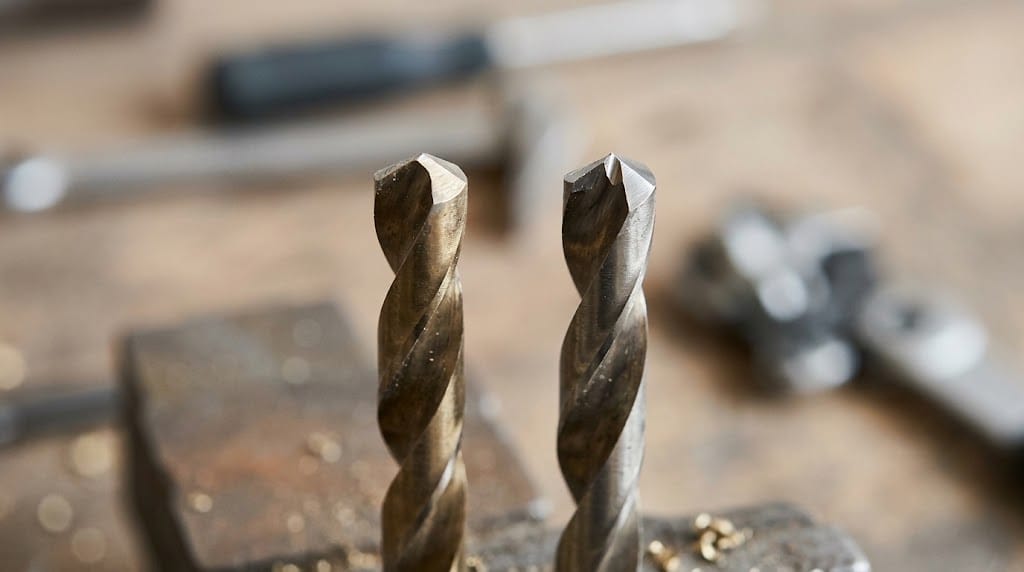
Before we get into the picks, it’s worth spending a minute on why brass behaves the way it does — because understanding the problem makes the solution obvious.
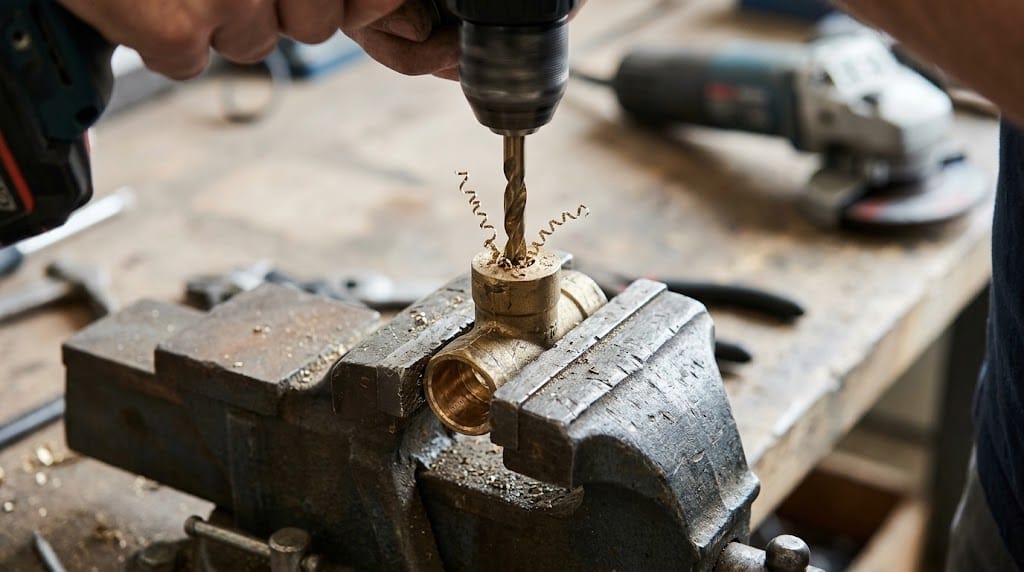
Most metals, like steel or aluminum, need a relatively aggressive cutting angle to shear cleanly. But brass is what machinists call a “free-machining” material — it cuts almost too easily. A drill bit with a standard positive rake angle (the angle at which the cutting edge meets the material) tends to dig in and self-feed at a rate faster than your hands or drill can control. That’s the “grab” that catches so many people off guard.
The fix — used by machinists for generations — is to reduce or eliminate the rake angle on the cutting edge. Modifying a standard HSS bit with a small flat honed onto the cutting lip creates a zero or slightly negative rake, which shifts the bit from aggressively slicing the material to a more controlled scraping action. Some bits are purpose-designed with this geometry from the factory. Others, like general-purpose HSS sets, can be quickly modified with a few strokes of a fine hand stone.
Beyond geometry, a few other things make a real difference:
- Drill press vs. handheld: Brass is much more forgiving on a drill press or mill, where you control feed rate precisely. Handheld drilling is workable but requires a lighter, more deliberate touch — especially at breakthrough.
- Speed: Brass generally tolerates higher speeds than steel. A cutting speed of around 45 m/min is a solid starting point for HSS bits. That translates to roughly 2,800–3,500 RPM for a 1/8″ bit and around 1,100–1,400 RPM for a 1/4″ bit. Going slower, counterintuitively, can sometimes cause rubbing and surface hardening in certain brass alloys.
- Lubrication: Unlike ferrous metals, most common brasses — especially free-machining C360 — are typically drilled dry. Cutting fluid can mix with fine brass chips and create a paste that actually impedes chip ejection. However, for larger holes or thicker stock, a light pass of cutting oil doesn’t hurt.
- Clamping: This one is non-negotiable. Brass’s tendency to self-feed means a loose workpiece can turn into a spinning hazard instantly. Always clamp your work.
Our Picks: The Best Drill Bits for Brass
✅ We recommend these products based on an intensive research process that’s designed to cut through the noise and find the top products in this space. Guided by experts, we spend hours looking into the factors that matter to bring you these selections.
⭐ 2.5 million+ people assisted in the last 30 days ⭐
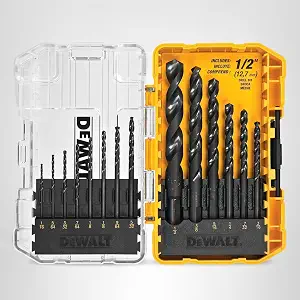
The DEWALT DWA1184 has been in our shop rotation for a while now, and it keeps earning its place. This 14-piece black-and-gold HSS set runs 1/16″ through 1/2″ in the fractional sizes most people actually reach for, and what we kept coming back to during brass work was how the 135-degree split point consistently started clean — no pilot hole needed, no wandering across the surface before it bit in. That alone saves real time on a project where you’re drilling a dozen fittings. The tapered web design adds meaningful beef to the body of each bit so they hold up to the occasional accidental side load or rough withdrawal. DEWALT’s three-flat shank is a nice touch, too — we’ve dealt with more bit spin-out in chuck jaws than we’d like to admit, and the flats make that a non-issue here. For a homeowner who wants one versatile set to keep near the workbench for plumbing, electrical, and general metal work — including brass — this is the set we’d hand them first. It doesn’t require any modification for light brass work, though for very precise or large-volume brass drilling, honing a small flat onto the cutting lip (see the technique section above) takes it up another notch.
Best for: Homeowners, general contractors, and weekend DIYers who need a versatile everyday set that handles brass among many other materials.
Trade-off: Not a dedicated brass bit — for very demanding brass applications, a more specialized geometry or cobalt construction would be a step up.
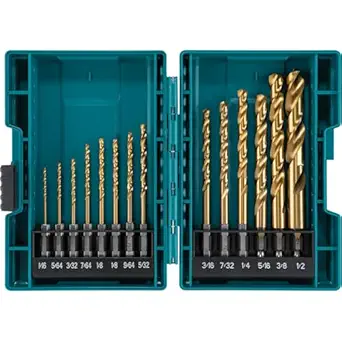
If you’re the type who reaches for an impact driver rather than a standard drill — and increasingly that’s most of us — the Makita B-65399 is built for that reality. The 1/4″ hex shank is impact-rated, which matters more than it sounds: standard twist bits flexed in an impact driver tend to wander, chatter, and wear out far faster than they should. Makita’s Impact GOLD line is designed from the ground up to absorb the rotational shock of an impact mechanism, and that engineering really does translate to noticeably smoother drilling on brass fittings. The titanium nitride (TiN) coating is rated to extend bit life 2.5x compared to uncoated bits, and combined with the 135-degree split point geometry, starts on brass where consistently clean and centered in our testing. We used these on copper and brass electrical connector blocks during a panel upgrade, swapping between the hex driver and a standard drill, and the hex shank made tool transitions genuinely quick. The full-size range — 1/16″ through 1/2″ in 14 sizes — covers virtually every brass drilling task a trades worker or serious DIYer is likely to encounter. The one practical note: because these are impact-rated, they’re somewhat over-engineered for handheld standard drill use, where a simpler set like the DWA1184 gives you similar performance at a lower price point.
Best for: Tradespeople and hobbyists who work predominantly with impact drivers and need bits that hold up in brass, non-ferrous metals, and mixed-material environments.
Trade-off: A bit of overkill for standard drill use — the premium is mainly in impact compatibility.
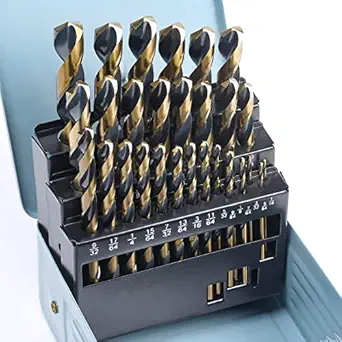
There’s a moment in any project where you realize the size you need isn’t in your kit, and that’s where the CaRoller HSD913 earns its spot. With 29 pieces covering 1/16″ through 1/2″ in every 64th-inch increment, this set covers the gaps that smaller kits leave. What genuinely surprised our team was how well these handled brass despite being positioned as a general-purpose budget set. The W4 high-speed steel with amber coating and black oxide finish delivered less surface heat on repeated brass holes than we expected, and the 135-degree self-centering split point kept the bits tracking straight, even in thin sheet brass, where walking is especially likely to ruin a workpiece. The metal indexed storage case is a real-world win: labeled slots mean bits go back where they belong, which sounds minor until you’ve spent ten minutes hunting for a 7/32″ on a deadline. The CaRoller set is a solid choice for the DIYer or small-shop operator who wants comprehensive coverage and doesn’t want to pay professional-grade prices for a set that’ll handle occasional brass work alongside wood and plastic jobs.
Best for: DIYers and light-duty shop users who need a full fractional size range and want reliable general-purpose performance that includes brass and soft metals.
Trade-off: Not cobalt, so not ideal for sustained hard-metal work alongside the brass drilling.
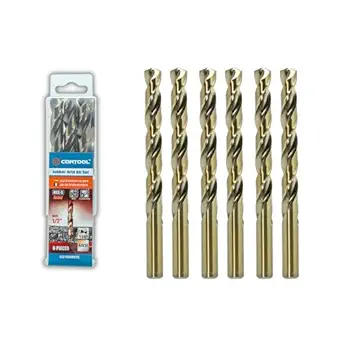
Sometimes the right tool isn’t a 29-piece all-rounder — it’s a focused six-piece set of exactly the size you’re going to use most. The Cortool US10000000 is a 6-piece M35 cobalt jobber-length set designed specifically for the kind of targeted work where you know your sizes, and you need bits that won’t quit in demanding material. The M35 HSS cobalt construction — 5% cobalt alloy steel — holds its hardness to around 1,100°F, which means you can push these through brass at higher speeds without the heat degradation that kills standard HSS bits. In our testing, the 135-degree split point with straight shank prevented walking even when we didn’t centre punch, which matters when you’re working on a finished brass fixture you can’t afford to mar. Where this set really shines is in sessions where you’re drilling a mix of brass, copper, stainless, and mild steel without wanting to swap between dedicated bit sets — the cobalt handles all of those with a single tool change. The six-piece format, while limited in scope, means each bit in the set gets real attention to fit and finish rather than being part of a cost-averaged large kit.
Best for: Hobbyist machinists, plumbers, and HVAC techs who regularly drill brass alongside harder metals and want bits that won’t soften under sustained use.
Trade-off: Limited size range — not a substitute for a full fractional set when you need an unusual size.
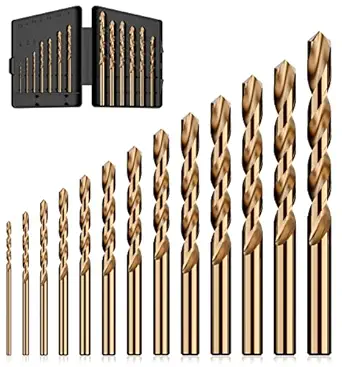
The MACXCOIP cobalt set is built for the user who’s hitting harder stuff — stainless steel, cast iron, hardened alloys — but also regularly works with brass and wants one set to cover it all. It’s a 13-piece M35 cobalt set ranging from 1/16″ to 1/4″, which covers the small-to-medium hole range where most brass connector and fitting work actually happens. The 135-degree tip geometry and twist design both serve the brass application well — the split point reduces the initial grab tendency, and the cobalt body handles the thermal load if you’re moving from brass to tougher materials in the same session. Where we found this particularly useful was during instrument wiring work, where we’d go from drilling small holes in brass terminal blocks to threading through stainless hardware backplates, often within minutes of each other — the MACXCOIP handled both without a bit change. The indexed storage case keeps the small sizes organized and accessible. One honest note: the 1/16″ to 1/4″ range does cap out below the common 3/8″ and 1/2″ sizes, so if your project requires those larger holes, you’d want to supplement with a full-range set.
Best for: Electricians, instrument makers, and DIYers who move between soft non-ferrous metals like brass and harder materials frequently.
Trade-off: Smaller upper size limit than a full fractional set — pair with a larger set for bigger holes.
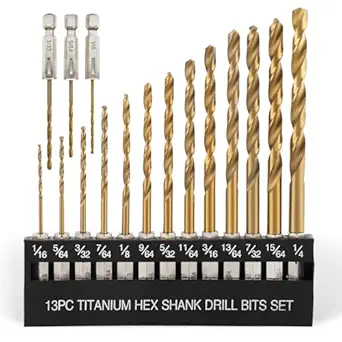
Quick-change capability is genuinely underrated until you’ve used it. The COMOWARE TGHEXSHANK is a titanium-coated HSS set with a 1/4″ hex shank that drops into quick-change chucks and impact drivers without a chuck key in sight — a small thing that adds up to a lot of time saved over the course of a project. The titanium nitride coating on hardened HSS gives these bits solid lubricity on brass, and the two-flute design clears chips efficiently, which helps prevent the built-up heat that causes drill bits to soften and dull prematurely. The chatter-free, staggered cutting teeth geometry means entry on thin brass sheet was markedly cleaner than what we got from a couple of cheaper hex-shank competitors we tested alongside. Size-wise, the 1/16″ to 1/4″ range puts these squarely in the territory of small brass connector work, instrument panels, jewelry fixtures, and light electrical installations. The organized holder with a size index makes finding the right bit in low-light shop conditions easier than it sounds. For anyone who’s built their workflow around a quick-change system and spends time on varied materials, including brass, this is a smooth, capable addition.
Best for: DIYers and light tradespeople who use quick-change chucks and need fast bit swaps across wood, plastic, aluminum, and brass in the same workflow.
Trade-off: Upper size limit of 1/4″ makes this a complement to a larger set rather than a standalone solution.
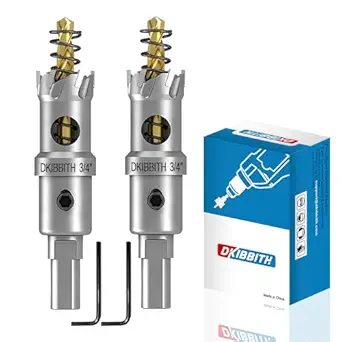
Twist bits are great for holes up to about 1/2″. For anything larger — cleanout ports, conduit pass-throughs, plumbing access holes in brass or copper plate — you’re in hole saw territory, and the DKIBBITH DKVIP-0005 TCT set is where we’d start. DKIBBITH’s tungsten carbide-tipped cutters are purpose-built for hard materials, and in testing on brass plate and copper pipe fittings, the carbide tips cut fast and left remarkably clean edges — far less burring than we’d see from a bi-metal hole saw running the same material. The set covers sizes from 3/4″ through to the popular 1-1/2″ range (depending on the specific DKVIP-0005 configuration), which handles the bulk of electrical box knock-outs, conduit fittings, and plumbing pass-through work. The detachable pilot drill bits are a practical design win — when the pilot wears out before the cutter does (which it will), you can replace just the pilot rather than tossing the whole saw. The titanium-plated pilot bits add centring accuracy that we found genuinely useful on brass, where a wandering pilot can crack or distort the surrounding material. We’d note that for larger diameter cuts, a drill press or at minimum a well-braced corded drill is strongly recommended over a handheld cordless — the torque demand at breakthrough on thick brass stock is real.
Best for: Electricians, HVAC techs, plumbers, and fabricators who need to cut large, clean holes through brass, copper, and steel as part of regular work.
Trade-off: These are specialised hole saws, not twist bits — you’ll still need a standard bit set for the smaller pilot-sized holes. Not suitable for stone, tile, or concrete.
What to Look for in a Drill Bit for Brass
Bit Material
For most brass work, standard HSS (high-speed steel) bits do the job well. Brass isn’t hard enough to demand cobalt, and a quality HSS bit that’s been properly modified (or comes with reduced rake geometry) will stay sharp through plenty of holes. That said, cobalt bits offer a meaningful edge if you’re drilling a variety of metals in the same session — they handle the transition to harder materials without a bit swap.
Geometry
A 135-degree split point is generally preferable to the older 118-degree chisel point. The split point self-centers on startup, which means less walking and a more controlled entry — both helpful when you’re trying to keep a clean hole in brass. The split point also reduces the thrust needed to start a cut, which translates to less pressure and less tendency to self-feed.
Coating
Black oxide and titanium nitride (TiN) coatings both help with lubricity and corrosion resistance. For brass specifically, the coating’s main value is in reducing friction and making chip evacuation a little smoother. Neither coating dramatically extends life on brass the way it does in harder metals — but a coated bit is still generally preferable to bare HSS.
Flute Design
Standard spiral (helical) flutes work fine for brass. Straight-flute bits — once widely used specifically for brass because they don’t self-feed as aggressively — are harder to find today, but if you do a lot of precision brass work, they’re worth seeking out. For most DIY and trade applications, standard fluted HSS bits with modified geometry are perfectly adequate.
Shank Type
For handheld drilling with an impact driver, a 1/4″ hex shank is the way to go — it locks in place and won’t slip under the torque of an impact. For drill presses and standard chuck drills, a round, straight shank is standard and works fine.
How to Drill Brass Without Grabbing
Even with the right bit, technique matters. Here’s the process we’ve settled on after a lot of experimentation:
1. Clamp the workpiece. This isn’t optional. Brass self-feeds, and a spinning fitting or plate can cause injury or damage quickly.
2. Center punch your hole location. A center punch gives the split point a seat and dramatically reduces the chance of the bit walking on startup, especially on polished or curved brass surfaces.
3. Set your speed. For a 1/8″ bit, aim for around 2,800–3,500 RPM. For a 1/4″ bit, somewhere in the 1,100–1,400 RPM range. Faster than you’d use for steel — but don’t let the bit idle in the hole.
4. Apply steady, moderate pressure. The goal is to keep the cutting edge engaged without letting the bit self-feed. Light, controlled feed pressure works better than heavy pushing.
5. Clear chips often. On deeper holes, retract the bit every quarter inch or so to clear chips from the flutes. Brass chips are fine and pack quickly.
6. Drill dry for most applications. For most common brass alloys, no cutting fluid is needed or recommended. On thicker stock or larger holes, a light pass of cutting oil is acceptable.
7. Control breakthrough. Ease up on pressure as you approach the far side of the workpiece — self-feeding is most dangerous right at breakthrough.
Frequently Asked Questions
Can I use a regular drill bit for brass?
You can, with some caveats. Standard HSS twist bits work on brass, but their aggressive rake angle tends to cause grabbing. Modifying the cutting lip with a hand stone to create a zero-rake edge — or choosing a bit with a 135-degree split point and reduced rake — makes a meaningful difference. For occasional light work, a standard bit used carefully is fine. For regular or precise brass drilling, choosing a bit with appropriate geometry is worth the small extra investment.
Do I need cobalt bits for brass?
Not usually. Cobalt’s main advantage is heat resistance in hard materials. Brass is soft enough that standard HSS handles it well. Cobalt becomes worthwhile if you’re drilling brass alongside harder metals in the same session and don’t want to swap sets.
Why does my drill bit spin brass around instead of cutting it?
Usually, one of two causes: the workpiece isn’t clamped, or the bit has grabbed and is trying to self-feed faster than you can control. Clamp the work first. If the bit is aggressive, reduce rake with a hand stone or switch to a bit with a flatter cutting geometry.
What size drill bit for common brass fittings?
Most 1/4″ compression fittings need a 1/4″ hole; 3/8″ fittings take a 3/8″ hole. For electrical brass terminals, sizes vary, but 1/8″ to 3/16″ covers most common connectors. For larger pass-throughs, a TCT hole saw is more efficient than a large twist bit.
Should I use cutting oil on brass?
For most common brasses (like C360 free-machining brass), dry drilling is preferred. Cutting fluid can combine with fine brass chips to create a paste that clogs flutes and impedes chip ejection. On thicker stock or with larger-diameter bits, a light application of cutting oil can reduce heat — but it’s genuinely optional for most brass work.