Advertiser Disclosure
We independently review everything we recommend. When you buy through our links, we may earn a commission.
The Best Mechanical Pencils
There is a moment every regular pencil user knows well: you are midway through a paragraph, a diagram, or a detailed sketch, and your point has gone so dull that your lines start to blur at the edges. You reach for the sharpener, lose your train of thought, and spend the next thirty seconds generating a small pile of wood shavings. A good mechanical pencil eliminates that entire experience. The lead stays consistent, the barrel never gets shorter, and the only interruption to your work is a single click.
But here’s the thing our assessment team keeps running into: mechanical pencils vary enormously in how they achieve that consistency. Some rotate the lead automatically so the tip wears evenly. Some lock the tip away behind a retractable sleeve so you can drop the pencil in a bag without snapping anything. Some are built from solid brass and feel like instruments rather than tools. And some prioritize a completely different philosophy — the 2mm clutch pencil, which gives you the expressive line variation of a wooden pencil without ever reaching for a sharpener.
Ready to buy? Pentel GraphGear 1000 is our #1 pick — see it on Amazon
Everything We Recommend
✅ We recommend these products based on an intensive research process that’s designed to cut through the noise and find the top products in this space. Guided by experts, we spend hours looking into the factors that matter to bring you these selections.
⭐ 2.5 million+ people assisted in the last 30 days ⭐
🏆
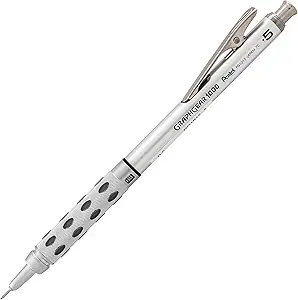
Best Overall
Superior drafting pencil designed for professionals and enthusiasts, offering precision and reliable performance.
Built-in lead hardness indicator allows quick identification of lead type for accurate drafting work.
Dual-action retractor advances and retracts 4mm tip, protecting lead from breaking during use.
Finely chiseled metallic grip with soft latex-free pads provides comfort during extended drawing sessions.
Pre-loaded with Pentel Super Hi-Polymer HB lead, available in 0.3, 0.5, 0.7, and 0.9mm sizes.
💎
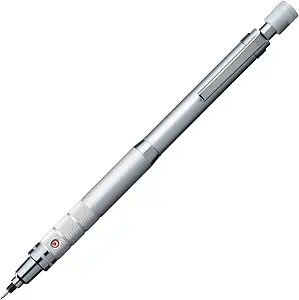
Best for Long Writing Sessions
Uni Kuru Toga automatically rotates the lead while writing, maintaining a consistently sharp point.
Spring-loaded rotation mechanism reduces uneven wear, helping create cleaner and more precise lines.
Constant lead rotation minimizes scratching, catching, and breakage compared with standard mechanical pencils.
Available in 0.3mm and 0.5mm options, delivering thinner, more consistent writing performance.
Lightweight design with a 1.0-pound package weight offers convenience for everyday writing tasks.
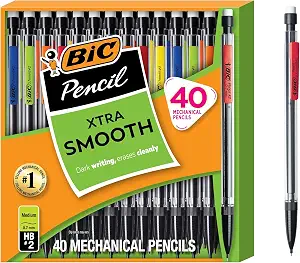
Best Budget Pick
BIC donates one pencil to teachers and classrooms in need with each qualifying pencil purchase.
The 40 count pack provides plenty of pencils for backpacks, pencil cases, and classrooms.
The 0.7 mm medium point stays sharp without sharpening, making it ideal for everyday schoolwork.
Smudge resistant graphite writes cleanly and erases easily, helping keep schoolwork neat and readable.
Retractable, refillable construction lets you replace lead and erasers instead of replacing the entire pencil.
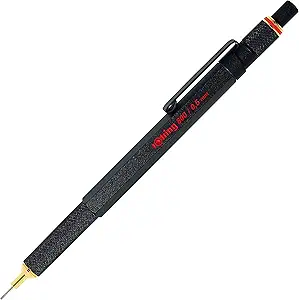
Best Premium Pick
Unique twist-and-click retractable mechanism protects the lead and sleeve, ensuring pocket-safe durability.
Full metal body provides excellent weight balance and a premium, durable writing experience.
Hexagonal barrel with non-slip knurled grip prevents fatigue and keeps the pencil from rolling.
rOtring brass mechanism advances 0.5mm lead precisely, with fixed sleeve for accurate ruler-based drawing.
Sleek black finish enhances aesthetics while delivering professional performance and reliable long-term use.
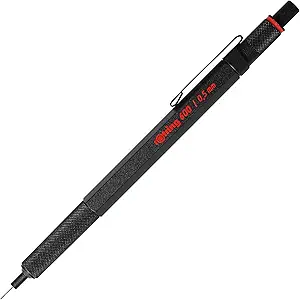
Best for the Purist
Precision 0.5mm tip with brass mechanism and fixed sleeve delivers crisp, accurate lines for technical work.
Full metal body with knurled grip ensures balance, durability, and fatigue-free control during long sessions.
Hexagonal barrel design prevents rolling and provides a secure, ergonomic hold for precise ruler-based tasks.
Lead grade indicator and hidden eraser under push-button cap allow fast corrections and lead identification.
Sleek black, refillable 0.5mm pencil offers professional durability and reliable long-term performance for all users.
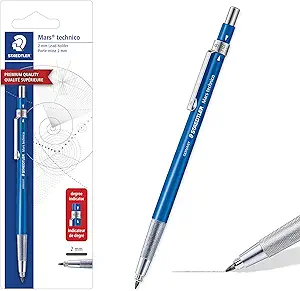
Best for Artists and Illustrators
Professional-grade 2mm graphite pencils deliver precise, consistent lines for technical drawing and artistic sketches.
Built-in sharpener under push-button cap keeps HB lead razor-sharp without extra tools or accessories.
Metal clip secures pencil in pockets while push-button advance allows exact lead control for smooth strokes.
Versatile mechanical pencil adapts for artwork, sketching, or schoolwork with reliable professional-grade performance.
Staedtler, a leading global brand, provides high-quality writing, drawing, and modeling tools for creative expression.
What to Look For in a Mechanical Pencil
Before we get into specific picks, it helps to understand what actually matters. A few specs tend to dominate mechanical pencil marketing — lead size, grip material, barrel weight — but the real performance differences show up in subtler ways. Here is what our team pays closest attention to.
Lead Diameter
This is the number most people start with, and for good reason. The 0.5mm is probably the most versatile option for general writing, giving you a fine line without being so thin that the lead snaps constantly. The 0.7mm is more forgiving for everyday note-taking and tends to break less. Anything at 0.3mm rewards patience and suits detailed technical work, but demands careful handling. The 2mm lead, used in clutch-style pencils, behaves more like a wooden pencil and suits sketching and shading.
Most people writing at a desk will do well with 0.5mm or 0.7mm. Artists and drafters often gravitate toward 0.3mm for fine detail work or 2mm for looser, expressive strokes.
Grip and Weight Balance
This matters more than most buyers expect. A pencil that’s too light can feel imprecise; one that’s too heavy fatigues the hand over a long session. Metal-bodied pencils generally sit in the 20–30 gram range, which gives a satisfying sense of quality but isn’t for everyone. Where the weight sits is equally important — tip-heavy pencils are usually easier to control for precision work, while centre-balanced pencils tend to feel more natural during long writing sessions.
Grip texture is another variable that’s worth considering. Knurled metal grips offer excellent control but can become abrasive over an hour or two of continuous use. Rubber insets soften the contact and work better for people who press hard while writing.
Retractable vs. Fixed Tip
A fixed tip gives you a slightly more direct, predictable writing feel and is generally more rigid. The downside is that the exposed sleeve is vulnerable to being bent, especially the long, slender sleeves used in drafting pencils. Drop one onto a hard floor at the wrong angle, and the sleeve bends, which usually means the pencil is done.
A retractable tip solves that problem but introduces a small amount of play in the mechanism. Most high-quality retractable pencils handle this well, but it’s worth knowing the trade-off exists before spending premium money.
Lead Advance Mechanism
The click feels matter. A crisp, solid click with a defined endpoint feels precise and satisfying. A soft, spongy click is more common on budget models and can make it harder to gauge how much lead has been advanced. Our team consistently reaches for pencils with clear, tactile clicks — it’s one of those details that sounds trivial until you’ve used a pencil with a great one.
Our Top Picks
The GraphGear 1000 earns its reputation by packing an unusual amount of practical engineering into a pencil that still feels like a pencil. Our team has put this one through the full range — long lecture note sessions, light drafting work, quick sketching — and it holds up across all of them with minimal complaints. What sets it apart from most pencils in its price range is the combination of a fully retractable tip and a beautifully designed grip section. Clicking the pocket clip releases a spring-loaded mechanism that pulls the entire sleeve and lead back into the barrel, which means this is one of the very few serious drafting pencils you can actually carry in a shirt pocket without worry. The grip itself is one of the more thoughtfully engineered ones we’ve tested — the metallic, diamond-knurled section is inlaid with 24 small latex-free rubber ovals that cushion the fingers just enough without adding mushiness, and after thirty minutes of continuous writing, the grip still feels natural. The brushed aluminium barrel includes a lead hardness indicator that lets you cycle through grades from 2B to 2H by loosening the front section and rotating it, which is genuinely useful if you keep multiple grades on hand. The 4mm fixed sleeve gives you the precision sight line that drafters need when working against a ruler. Available in 0.3mm, 0.5mm, 0.7mm, and 0.9mm, with colour-coded grip inserts distinguishing each size, the GraphGear 1000 manages to be both a versatile everyday carry and a capable technical instrument. The one honest caveat: the centre-of-balance sits toward the middle of the barrel rather than the tip, which some writers find less intuitive for extended work, and the eraser under the top cap is more of a last resort than a reliable tool. But for someone who wants one mechanical pencil that can do most things well without compromising on portability, this is the one we keep coming back to.
Best for: Students, professionals, and everyday writers who want a capable, well-built pencil that’s genuinely pocket-safe. Also a strong entry point for drafting work without spending rOtring-level money.
Trade-offs: A slightly top-heavy balance may not suit those who prefer a tip-weighted feel. The small built-in eraser is limited.
If you have ever written several pages of notes by hand and then looked back to find that your lines gradually went from crisp to muddy somewhere around page three, the Kuru Toga Roulette exists specifically to fix that. The standard frustration with mechanical pencils is that the lead wears down to a slanted chisel edge as you write, and every subsequent stroke that catches the edge of that chisel either produces an inconsistent line width or snaps the lead entirely. The Roulette’s internal mechanism solves this with genuine elegance: a spring-loaded clutch inside the barrel rotates the lead incrementally every time you lift the pencil from the paper, which is constantly during normal writing. The result is a lead tip that stays symmetrically pointed throughout a long session, because each face of the lead wears at an equal rate. Our team was initially skeptical that this was a gimmick, but after writing several pages with a standard pencil and then switching to the Roulette mid-session, the difference in line consistency was immediately visible. The Roulette is the premium version of Kuru Toga’s range, with a knurled metal grip section that gives it substantially more heft and control than the standard plastic-bodied Kuru Toga. The barrel has a metallic finish, and the whole package feels appropriately solid for the price. The grip knurling is finer than what you’ll find on rOtring pencils, making it comfortable for longer sessions where coarser textures might irritate the fingers. The trade-off is that the rotation mechanism works best for people who naturally lift the pencil between strokes — if you tend to write with continuous, dragging strokes, the mechanism engages less, and the benefit diminishes. At 0.5mm, this is also primarily a writing pencil rather than a drafting tool; the sleeve isn’t long enough for ruler-based technical work. But for students, professionals taking handwritten notes, or anyone who writes for extended stretches and gets frustrated with inconsistent lines, the Kuru Toga Roulette is unlike anything else on this list.
Best for: Students, writers, and note-takers who spend long periods writing by hand and want consistently even lines without having to rotate the pencil manually.
Trade-offs: The auto-rotation mechanism is most effective for printing-style writing rather than cursive. Not suited for drafting work requiring a long needle sleeve. Lead rotation requires pressing down on the paper, so very light-handed writers see less benefit.
This is the pencil our team reaches for when we need something that simply works — no fuss, no learning curve, no anxiety about losing it in a lecture hall or leaving it on a train. The 0.7mm lead is the sweet spot for general everyday writing: wide enough that it doesn’t snap under normal pressure, fine enough to produce legible, clean lines on standard notebook and exam paper. What genuinely surprised us was how smooth the writing experience actually is. BIC’s No. 2 lead delivers consistently dark strokes across different paper types without skipping or catching, and when you need to erase — which, in a classroom setting, is often — the built-in top eraser does the job cleanly without smearing or tearing the page. Lead advances with a simple click of the eraser, and it does so without drama; the mechanism is basic, but it’s reliable enough that we’ve never had one jam mid-sentence. The hexagonal barrel shape is a detail worth calling out: it gives you a natural grip orientation so the pencil doesn’t rotate in your hand during use, and it keeps the pencil from rolling off a desk between uses — the same logic rOtring uses on its 600, just in a much lighter, more casual package. Each pencil comes pre-loaded with three pieces of No. 2 lead certified for standardized tests, and they’re compatible with most standard 0.7mm lead refills when you run out. The clear barrel with colorful clip means you can spot it at the bottom of a backpack at a glance. The honest reality is that the BIC Xtra Smooth doesn’t offer the weight, precision, or satisfying click of the GraphGear 1000 or any of the rOtring pencils — it’s a plastic-bodied pencil at a plastic-pencil price, and it feels like one. But for students heading into an exam who need a reliable No. 2, or for anyone who wants a functional mechanical pencil without committing to a premium, this is genuinely the most dependable option in its class.
Best for: Students preparing for standardized tests, everyday note-takers who go through pencils quickly, classrooms, and anyone who wants a no-stress mechanical pencil at a price where losing it doesn’t sting. Excellent as a bulk buy for households or offices.
Trade-offs: Plastic body feels noticeably less substantial than any metal-bodied option on this list. The eraser is adequate but smaller than a dedicated block eraser. No lead grade indicator or grip cushioning. Available at Amazon, Walmart, Target, and virtually every office supply retailer.
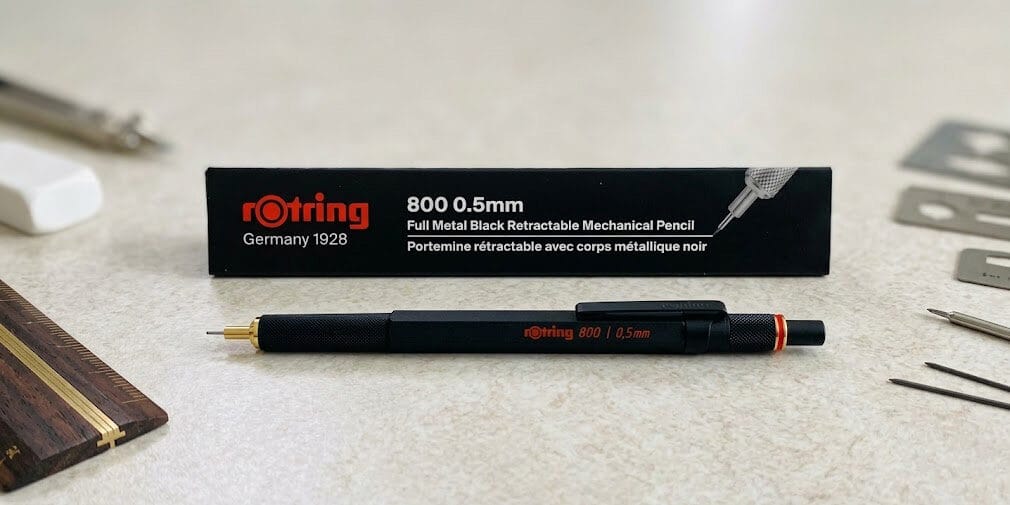
The rOtring 800 is the pencil our team reaches for when we want to feel like we’ve levelled up. It costs more than most of the other picks here, and it earns that premium in a way that’s immediately apparent the moment you pick it up — the full-metal brass body has a density and solidity that simply doesn’t exist at lower price points, and the hexagonal barrel gives you a consistent tactile orientation so you always know exactly how the tip is angled without looking. What makes the 800 special within rOtring’s own line is the “Twist and Click” retractable mechanism: rotating the knurled section near the top locks the entire tip and sleeve completely inside the barrel. This is the problem the rOtring 600 — which we also love — doesn’t solve, since that pencil’s fixed sleeve is the one genuinely vulnerable part of an otherwise indestructible package. With the 800, you can drop it in a bag, carry it in a pocket, and hand it to someone who’s never owned a drafting pencil without worrying about a bent sleeve. When extended, the 4.1mm fixed sleeve is as rigid and precise as you’d expect from rOtring’s brass mechanism, and the knurled grip is exceptionally refined — firm enough to prevent slipping, fine enough that it never bites into your fingers during long sessions. The 800 comes in 0.5mm and 0.7mm in black or silver. Our team genuinely enjoyed the 0.5mm black for detailed work; the weight (around 25 grams) puts a pleasant amount of authority into each stroke, and the hexagonal shape means it sits exactly where you left it on a tilted drafting table rather than rolling away. The honest trade-offs: the click mechanism feels softer and less crisp than the 600’s, which some writers find less satisfying. People with small hands or non-standard grip styles may find the weight and diameter uncomfortable for extended sessions. And the price is substantial — this is a pencil you buy because you love pencils, not because you need one.
Best for: Architects, designers, engineers, and serious enthusiasts who want professional drafting precision with the portability of a retractable tip. Also, a strong gift choice for someone who appreciates premium stationery.
Trade-offs: The most expensive pick on this list by a significant margin. The soft click feel doesn’t satisfy users who prefer a crisp advance. Heavy enough to cause hand fatigue for some over very long sessions.
If the 800 is the rOtring for people who want to carry their pencil everywhere, the 600 is the rOtring for people who want the purest possible writing and drafting experience at a desk. Our team has a particular affection for this one. The all-brass body, the hexagonal barrel, the crisp click advance, the lead hardness indicator at the top — all of it adds up to a pencil that feels completely intentional, like nothing about the design is there by accident. That click is worth dwelling on: it’s one of the best advance mechanisms we’ve tested at any price point, with a sharp, defined action that gives you precise feedback every time. There’s none of the soft, plunger-like compression you get on cheaper pencils. The hexagonal shape is simultaneously a design statement and a practical feature — it stops the pencil rolling off any surface, including angled drafting tables, and gives you a natural grip orientation so the tip always meets the paper at the same angle. The 600 is available in 0.35mm, 0.5mm, and 0.7mm in black or silver. The brass body means it’s heavier than most mechanical pencils at around 22 grams, which most of our team found to be a feature rather than a problem — that weight contributes to the controlled, unhurried feel of drawing or writing with it. The fixed needle sleeve is long and rigid, ideal for precise ruler-based drafting work, and the knurled grip section is, in the opinion of most team members, the most comfortable metal grip we tested. The caveat that comes up every time we recommend this pencil: there is no retractable tip. The exposed sleeve is vulnerable if the pencil gets dropped onto a hard floor at an angle, so this is a pencil that rewards a bit of care. Keep it in a case or clip it securely, and it will last for years. It’s also worth noting that people who hold their pencil in a non-standard way may find the short grip section leaves them gripping the hexagonal barrel, which can be less comfortable over long periods.
Best for: Technical drafters, architects, illustrators, and anyone who wants the most precise, focused writing experience possible at a desk. This is the pencil for people who care deeply about what a pencil feels like in the hand.
Trade-offs: No retractable tip makes the fixed sleeve vulnerable to drops. Heavier than plastic-bodied options and may not suit every hand. Fixed-length grip section can feel limiting for non-standard holders.
The STAEDTLER Mars Technico 780 plays by a different set of rules than everything else on this list. It’s a 2mm clutch pencil — sometimes called a lead holder — rather than a conventional mechanical pencil, and that distinction matters. While every other pick here advances a very thin piece of lead through a fixed sleeve, the Mars Technico holds a thick 2mm lead in a collet-style jaw mechanism: press the end button to release the jaws, the lead drops down by gravity, and release the button to lock it in place. The result is a lead that behaves much more like a wooden pencil — it can be sharpened to a very fine needle point using the integrated sharpener built into the push cap, or left with a slightly rounded point for shading and broader strokes. Our team found that this opened up possibilities that 0.5mm and 0.7mm pencils simply can’t provide. When you want to shade a large area with the side of the lead and then flip to precise line work, the Mars Technico handles both in a single tool. The build quality is exactly what you’d expect from a STAEDTLER product made in Germany: the blue plastic barrel feels solid and well-machined, the metal clip and grip zone have a satisfying heft, and the whole assembly feels like it could survive decades of use. The knurled metal grip section is comfortable and wide enough to suit most hand sizes. The lead hardness indicator on the clip lets you mark which grade is loaded — useful if you keep multiple units with different grades. The honest trade-offs are worth being upfront about: this is not a pencil for the uninitiated. The lead is thick enough that a freshly sharpened point will dull faster than a 0.5mm mechanical lead would, and you do need to rotate the pencil manually as you write to keep the wear even (the knurled grip makes this natural and easy, but it requires conscious technique). There’s no eraser built in, which is a real absence for anyone who edits as they write. And the clutch mechanism, while satisfying once you know it, takes a few minutes of practice to feel natural.
Best for: Artists, illustrators, designers, and anyone who wants the expressive range of a wooden pencil without the mess and waste of sharpening. Also an excellent choice for sketching, under-drawing for ink work, and any application where varying line weight matters.
Trade-offs: No integrated eraser. Requires manual rotation while writing to keep the point even. Thicker lead dulls faster than fine-gauge mechanical leads. Takes some practice to master the clutch mechanism. Lead refills are a slightly different purchasing proposition than standard mechanical pencil leads — look for STAEDTLER Mars Carbon 2mm leads to keep the system running well.
How These Picks Compare: A Quick Reference
The five pencils above represent five genuinely different philosophies. The Pentel GraphGear 1000 is the all-rounder — versatile, retractable, and accessible. The Uni Kuru Toga Roulette is the technical innovation pick, best for anyone who writes a lot and wants consistent lines without maintenance. The rOtring 800 is the premium everyday carry, combining rOtring’s legendary construction with genuine portability. The rOtring 600 is the desk specialist — the most precise and satisfying writing experience in the group for focused work, with the trade-off of a fixed tip. And the STAEDTLER Mars Technico 780 is the artist’s tool, a completely different kind of pencil that rewards users who want expressive range rather than mechanical consistency.
If you’re buying your first serious mechanical pencil, the GraphGear 1000 is the most practical starting point. If you’re already invested in the category and want to understand what all the rOtring fuss is about, the 600 is the version to start with. And if you draw as much as you write, give the Mars Technico a try — it genuinely changes what’s possible on the page.
What About Lead? A Brief Note on Choosing the Right Refill
The pencil body matters, but the lead you put inside it matters almost as much. Our team defaults to Pentel Ain Stein Hi-Polymer lead for most mechanical pencils — it’s widely available, breaks less than cheaper alternatives, and erases cleanly. For rOtring pencils specifically, rOtring’s own high-polymer leads are a natural match and worth using. For the STAEDTLER Mars Technico, stick with STAEDTLER’s Mars Carbon 2mm leads; they sharpen cleanly and come in a full range of grades from 4H to 4B.
Lead hardness is worth thinking about, too. HB is the standard middle ground — dark enough to read easily, hard enough not to smear. If you write on softer paper or want more expressive dark lines, try B or 2B. For technical drafting where smearing is a real concern, H or 2H leads stay cleaner but require more pressure to see clearly.
Frequently Asked Questions
What’s the difference between a mechanical pencil and a lead holder?
A mechanical pencil advances very thin lead (typically 0.3mm to 0.9mm) through a fine sleeve using a click mechanism. A lead holder, like the STAEDTLER Mars Technico 780, holds a much thicker 2mm lead in a collet jaw mechanism, and the lead needs to be sharpened separately. Lead holders are preferred by artists and illustrators for their expressive range; mechanical pencils suit writers and technical drafters for their consistent, ready-to-use precision.
Is a heavier pencil better?
Not universally. Heavier brass-bodied pencils like the rOtring 600 and 800 offer excellent control for focused drafting and drawing work, and many users find the added weight reduces the tendency to grip too tightly. But for very long writing sessions — say, three or more hours of continuous note-taking — that weight can accumulate into fatigue. Lighter pencils like the GraphGear 1000 (aluminium-bodied) and the Kuru Toga Roulette tend to be more comfortable for marathon writing sessions.
What lead size should I start with?
0.5mm is a reliable first choice for most people. It’s versatile enough for both writing and light sketching, available in every grade, and common enough that refills are stocked everywhere. If you tend to press hard or are prone to snapping lead, 0.7mm is more forgiving and still writes cleanly. Reserve 0.3mm for technical or detail work once you’re comfortable with the category.
Can you sharpen a mechanical pencil lead?
Standard thin-gauge mechanical pencil leads (0.3mm–0.9mm) cannot be sharpened — they’re too thin, and the sleeve provides whatever guidance they get. The 2mm lead in a clutch pencil, like the Mars Technico, can be sharpened, either in the integrated sharpener built into the push cap or in a standalone lead pointer. This is one of the key reasons clutch pencils appeal to artists.
Are expensive mechanical pencils worth it?
For occasional use, probably not. A quality mid-range pencil like the GraphGear 1000 will serve most people well for years. But if you use a pencil for multiple hours every day — whether you’re an architect, a student, an illustrator, or a prolific journal writer — a better-built tool reduces fatigue, improves control, and tends to pay for itself in consistency and longevity. The rOtring 600 and 800 are expensive because they’re built from materials that age well, not because of branding.
How do I prevent lead breakage?
A few factors contribute to breakage: pressing too hard, advancing too much lead at once, and using low-quality lead. The general advice is to advance just 2–3mm at a time, use a recognised brand like Pentel Ain or rOtring’s own leads, and let the weight of the pencil do more of the work than your hand pressure. The Uni Kuru Toga’s rotation mechanism also helps — by keeping the tip symmetrically worn, it reduces the sharp chisel-edge that tends to catch and snap.