Advertiser Disclosure
We independently review everything we recommend. When you buy through our links, we may earn a commission.
Best Writing Pencils for Adults That'll Make You Fall Back in Love With Handwriting
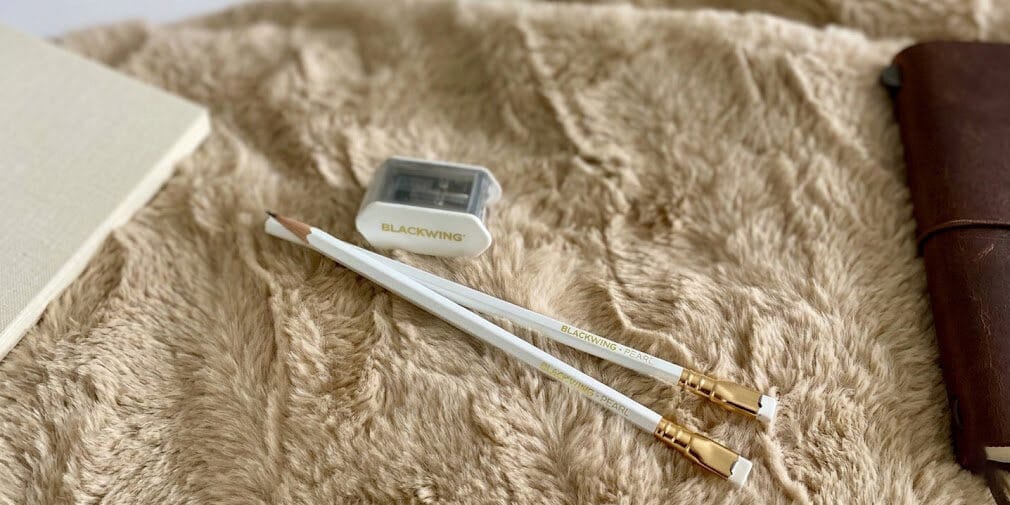
There’s something quietly satisfying about putting a well-made pencil to paper. Not a scratchy, half-chewed pencil from the back of a desk drawer — we mean a pencil that actually feels good in your hand, lays down a smooth, consistent line, and makes the act of writing feel less like a chore and more like a small pleasure you actually look forward to. If you’ve been getting by with whatever box of HBs came free with your kid’s school supplies, trust us: there’s a better way.
Our assessment team has spent a serious amount of time testing, writing, sketching, and note-taking with a wide range of pencils marketed to adults. We’ve scribbled through long work sessions, journaled late at night, annotated stacks of documents, and filled notebooks with everything from grocery lists to rough ideas. What we were looking for wasn’t the flashiest option or the most expensive one — it was the pencil that makes you reach for it again and again without thinking about it. The one that just works.
Ready to buy? Blackwing Natural Pencils is our #1 pick — see it on Amazon
How to Choose the Right Writing Pencil for Your Needs
With so many options available, it can feel a little overwhelming. But a few key questions can help narrow things down quickly.
How much pressure do you naturally use when you write? Heavy-handed writers tend to do better with firmer grades (like the Blackwing 602 or the Hi-Uni HB) because softer leads will smear and wear down too quickly. Lighter writers often find that the same firm grades feel scratchy or produce lines that seem too faint — in which case a balanced or soft formula, like the Blackwing Natural, tends to be a better fit.
How long are your typical writing sessions? For extended writing — longhand drafting, intensive journaling, or marathon note-taking — comfort over time matters as much as initial feel. Pay attention to barrel diameter and finish. Thicker barrels generally reduce hand fatigue for adults, and a smooth matte finish tends to be easier to grip than a lacquered one during longer sessions.
Do you erase frequently? If revision is part of your writing process, prioritize pencils with cleaner-erasing cores and pair them with a good stand-alone eraser in addition to the built-in ferrule eraser. The Tombow 2558 is a particularly strong performer in this category.
What paper do you typically write on? Smooth paper pairs well with firmer cores, while textured or rougher paper tends to suit softer formulas that lay down graphite more readily. A pencil that feels perfect in one notebook can feel scratchy or overly dark in another.
Our Top Picks for Best Writing Pencils for Adults
✅ We recommend these products based on an intensive research process that’s designed to cut through the noise and find the top products in this space. Guided by experts, we spend hours looking into the factors that matter to bring you these selections.
⭐ 2.5 million+ people assisted in the last 30 days ⭐
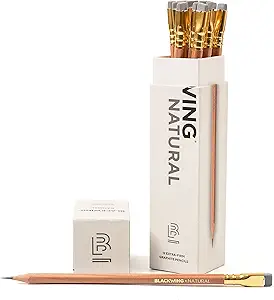
If you want a writing pencil that feels like it was made specifically for adults who take their writing seriously, the Blackwing Natural is one of the most compelling options you’ll find. What our team noticed immediately was the matte, unlacquered cedar finish — it has a warm, tactile quality that most pencils don’t even attempt. This isn’t a pencil trying to look fancy; it lets the material speak for itself. The Natural uses Blackwing’s proprietary balanced graphite formulation, which lands between their soft (Palomino) and firm (602) formulas. In practice, that middle-ground feel is genuinely versatile — dark enough to produce a satisfying, legible line for journaling or longhand writing, but firm enough that you’re not constantly stopping to re-sharpen. One tester who journals daily for about 20 minutes every morning noted that she went through an entire writing session without once thinking about the pencil itself — which, when you think about it, is really the goal. The flat eraser housed in the iconic ferrule works cleanly without leaving behind the kind of smudgy residue that cheaper erasers tend to deposit. For writers who value aesthetics alongside function — and who appreciate tools that age gracefully the more you use them — the Blackwing Natural is a genuine standout.
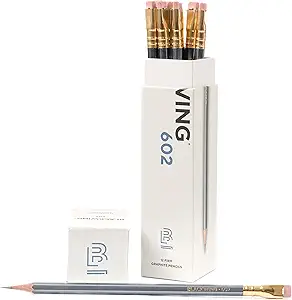
The Blackwing 602 has a reputation that precedes it, and after extended testing, our team can confirm that reputation is largely deserved. Originally discontinued in 1998 and reissued by Palomino in 2011, this pencil carries a kind of mythology in writing and creative circles — it was reportedly a favorite of John Steinbeck, who is said to have used upwards of 60 pencils a day. Whether or not the mythology adds to the experience is a matter of personal taste, but the actual writing performance stands on its own. The 602 uses a firm graphite core that’s noticeably darker than most HB pencils despite its firmer feel — a combination that Blackwing achieves through their proprietary formula. For adults who write densely across long sessions, this matters: you get a dark, confident line without the mushiness that soft pencils tend to develop after the first few minutes of use. The distinctive rectangular eraser — a patented design that lets you extend or remove it as needed — is thoughtfully engineered and works better than most pencil erasers we’ve tested. The matte black lacquered finish with gold lettering gives it a clean, serious look that feels appropriate on a professional’s desk rather than childish. If you’ve ever found HB pencils too light and softer grades too difficult to control, the 602 tends to be the answer a lot of writers didn’t know they were looking for.
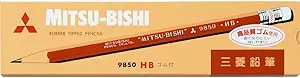
Mitsubishi’s pencil has a devoted following among pencil enthusiasts, and the HB grade in particular — the K9850HB — earns its place in any serious writing toolkit. Japanese pencil manufacturing tends to operate at a different standard of precision than much of what’s mass-produced elsewhere, and the Hi-Uni is a clear example of that. The graphite core is ground to an extraordinarily fine consistency, which translates directly to a writing experience that feels smoother than the grade number might suggest. Our team tested this pencil extensively across different paper weights and textures, and it performed reliably on everything from thin notebook paper to heavier journal stock. The point retention is notably good for an HB — one tester used the same point for several pages of continuous writing before needing to sharpen. The lacquered dark blue barrel is understated and professional, and the pencil sharpens cleanly without splintering, which is a small but genuinely satisfying quality check. Where the Mitsubishi distinguishes itself is in the consistency from pencil to pencil — open a box of twelve and every single one writes essentially identically. For adults who are particular about their tools and want something that performs predictably every time they pick it up, the K9850HB is a reliable choice that’s worth the modest step up in price from budget options.
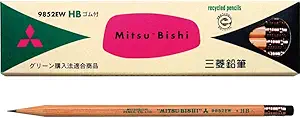
The K9852EWHB is a different kind of Mitsubishi pencil entirely — and honestly, one of the more quietly interesting options on this list. Rather than a premium Hi-Uni or a standard lacquered barrel, the 9852EW is built around an environmentally conscious manufacturing process: the shaft is made from recycled wood offcuts, the leftover edge and border pieces from lumber production that would otherwise go to waste. Mitsubishi joins these reclaimed fragments together using a finger-joint technique, which means every single pencil in the box looks slightly different — different grain direction, subtly different coloration, and a visible joint seam at a unique spot along the barrel. Our team found this unexpectedly appealing. In a world of identical lacquered cylinders, picking up a pencil that’s genuinely one-of-a-kind each time feels like a small but real distinction. The barrel is unfinished and unlacquered, giving it a raw, tactile warmth that’s closer to handling a piece of wood than most pencils allow. The graphite core is the same reliable Mitsubishi quality used across the 9850 and 9852 lines — smooth, a touch darker than a typical European HB, and well-centered in the barrel for clean long-point sharpening. One feature worth calling out specifically: the 9852EW includes a black eraser, which is relatively uncommon for Japanese pencils. It’s soft and performs cleanly for everyday corrections. For writers who care about sustainability, who appreciate tools with a bit of natural character, or who simply want a reliable everyday pencil that doesn’t look like every other one in the cup, the 9852EW makes a compelling and understated case for itself.
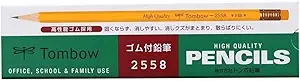
Tombow is a name that tends to come up in conversations about high-quality Japanese stationery, and the 2558 HB is a strong example of why. This pencil was originally developed for use in standardized testing and official documentation contexts in Japan — meaning it was engineered from the outset to produce clear, consistent, reliably erasable marks under real-world conditions rather than idealized ones. For adult writers, that heritage translates into a pencil that simply performs when you need it to. The core is smooth without being overly soft, which gives the writing a clean, defined quality — lines that look intentional and hold up well under different lighting conditions. Our team particularly appreciated how well the 2558 erases; it leaves virtually no ghost marks even on lighter-weight paper, which matters a great deal for anyone who edits and revises their handwritten work. The dark green barrel is an understated design choice that gives the pencil a quiet elegance, and the pencil sharpens reliably without the tip chipping or the casing splitting along the wood grain. The 2558 is also slightly more affordable than the Blackwing and Hi-Uni options, which makes it a practical everyday option for writers who go through pencils at a high rate — whether journaling, taking longhand notes in meetings, or working through crosswords and puzzles where consistent, erasable marks are genuinely important.
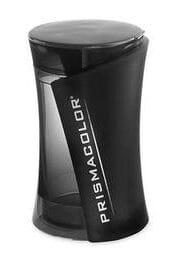
A great pencil is only as good as the point you put on it, and this is where a lot of writers quietly undermine their own experience. A poor-quality sharpener produces uneven, fragile points that break off almost immediately, creates rough facets in the wood casing that make the pencil uncomfortable to hold, and — in the case of very soft graphite pencils like the Blackwing Palomino — can shatter the core entirely with the wrong blade angle. The Prismacolor Premier Pencil Sharpener was designed with artists’ pencils in mind, which means it handles everything from standard HB cores to softer, larger-diameter leads with a gentleness that cheaper sharpeners can’t replicate. Our team used this sharpener throughout our entire testing process, and it was consistently the best tool for bringing all of the above pencils to a clean, long point without waste or breakage. The two-hole design accommodates both standard (7mm) and larger (11mm) diameter pencils, and the helical blade produces a smooth, tapered point rather than the blunt, rough cone that mass-market sharpeners tend to leave. The shaving reservoir is large enough to get through a meaningful sharpening session without needing to empty it constantly. For any adult who’s investing in quality pencils, pairing them with a sharpener that respects the materials is genuinely worth the small additional cost.
What We Looked for in Adult Writing Pencils
Before we get into specific products, here’s a quick rundown of the criteria our team used when evaluating each pencil:
Smoothness of the writing experience. Does the pencil glide across the page, or does it catch and scratch? A good writing pencil should feel effortless, almost like the graphite is being pulled onto the paper rather than forced.
Consistency of the core. We looked for even graphite density throughout — no sudden soft spots or hard patches that cause skipping or unexpected dark lines mid-stroke.
Durability of the point. How often does the tip break? Some pencils, especially very soft grades, crumble constantly. The best ones hold their point through a realistic writing session without needing constant sharpening.
Comfort over long sessions. We paid attention to barrel shape, diameter, and any coating or finish that affects grip. A pencil that feels fine for five minutes can become uncomfortable over an hour.
Erasability. For a writing pencil, the ability to erase cleanly — without ghosting or smearing — is a practical must.
Overall build quality. How the pencil is constructed, whether the casing splinters when sharpened, and how consistent the overall quality is from pencil to pencil in the same box.
Frequently Asked Questions About Adult Writing Pencils
What pencil hardness is best for general adult writing?
For most everyday writing tasks — journaling, note-taking, list-making — an HB grade is the broadly reliable starting point. It sits at the middle of the scale, offering a balance of darkness and durability. That said, “HB” isn’t a universal standard across brands; a Japanese HB from Mitsubishi or Tombow tends to be noticeably softer and darker than a European HB, which is worth keeping in mind when you’re comparing across manufacturers.
Are expensive pencils actually worth it?
For occasional or casual use, a standard HB from a decent brand will serve you perfectly well. But if writing is a daily practice — whether professionally or personally — the step up to a quality pencil tends to pay off in a genuinely different experience. The consistency, smoothness, and overall feel of something like the Mitsubishi or the Blackwing 602 is appreciably better than a budget pencil, in the same way that a good notebook feels different from a legal pad. You’re not just paying for a brand name; you’re paying for tighter quality control, better materials, and a more consistent result.
How often should I sharpen my pencil?
This depends on the softness of the core and the sharpness you prefer, but as a general guideline, sharpening every 15–20 minutes of active writing is a reasonable rhythm for HB grades. Softer grades wear faster and may need more frequent attention. One practical tip from our testing: sharpen before you feel like you absolutely have to. Writing with a slightly dull point causes you to press harder, which accelerates wear, causes hand fatigue, and produces less precise lines.
Does the wood casing actually matter?
More than most people realize. High-quality pencils typically use incense cedar, which has a tight, consistent grain that sharpens cleanly, holds the graphite core securely, and produces that distinctive pleasant smell when freshly sharpened. Lower-quality casings can splinter when sharpened, hold the core unevenly (which causes it to wobble and break more easily), and don’t feel as comfortable under the fingers during extended use.
Can I use a writing pencil for puzzles and crosswords?
Absolutely — and pencils are arguably the ideal tool for puzzle solving. If you’re a puzzle enthusiast, a well-chosen pencil and good eraser can make a real difference in the experience. Crossword solvers generally prefer a slightly harder grade for precision in small squares, while jigsaw puzzle enthusiasts who mark piece positions or work on puzzle accessories benefit from something with reliable erasability. The Tombow 2558, the Mitsubishi Hi-Uni HB, and the 9852EW are all particularly well-suited to this kind of precise, erasable work.
What’s the best way to store quality pencils?
Keep them horizontal when possible to prevent the core from settling toward one end of the barrel over time (a common cause of breakage when sharpening). A simple pencil case or a small wooden holder is sufficient — the goal is to avoid rolling them off surfaces and to keep them away from extreme heat, which can affect the bonding between the core and the casing.
A Few Words on Building a Writing Practice Around Good Tools
There’s a reason serious writers throughout history — from Steinbeck to Nabokov — were particular about their pencils. Tools shape behavior, often in subtle ways. When you pick up a pencil that feels good, that lays down a smooth line, that smells faintly of cedar when you sharpen it, you’re slightly more inclined to use it. And when you use it more, you write more. That’s not a small thing.
None of the pencils on this list are precious objects to be saved for special occasions. They’re working tools — and the best way to honor a good pencil is to use it up. Fill notebooks, annotate documents, sketch in margins, work through crosswords, draft letters you might not send. The graphite is meant to end up on paper, not in the box.
What our team hopes you take from this guide isn’t a single perfect recommendation — because that doesn’t exist — but a clearer sense of which pencil might suit the way you actually write. The Blackwing 602 if you want something firm and dark with a storied history. The Natural if you want versatility and warmth. The K9850HB is for precision and consistency if they are your priorities. The 9852EW if you value sustainability and natural character in your tools. The Tombow 2558 if you value erasability and practical performance above all. And the Prismacolor sharpener to make sure whichever pencil you choose is always at its best.
Writing by hand is worth doing well. A good pencil is a reasonable place to start.