Advertiser Disclosure
We independently review everything we recommend. When you buy through our links, we may earn a commission.
The Best Fuel Injector Cleaners
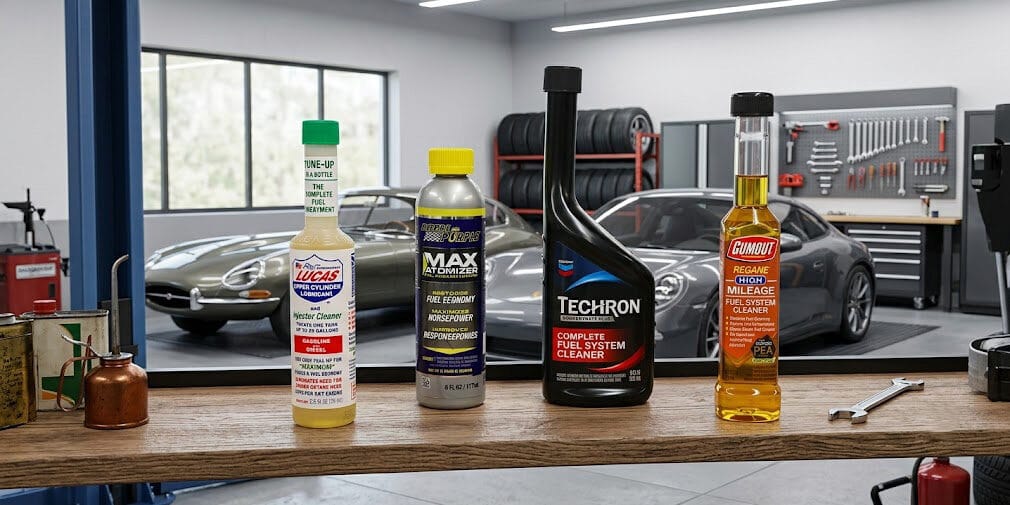
If you’ve noticed your car hesitating at acceleration, idling rough, or burning through gas faster than it used to, dirty fuel injectors might be your culprit. These tiny precision components are responsible for delivering the exact right amount of atomized fuel into your combustion chamber at the exact right moment. When deposits and gunk start clogging them up — and they will, over time — your whole engine feels it.
The good news? You don’t always have to shell out for a professional fuel system flush to get things cleaned up. A quality fuel injector cleaner, added directly to your tank, can dissolve those carbon deposits, clear out varnish buildup, and get your injectors spraying cleanly again. Our assessment team has spent considerable time sorting through the options, cross-referencing real-world user feedback with what we know about the chemistry behind these products, and the results are below.
A quick note before we dive in: fuel injector cleaners aren’t magic potions. They work best when used as part of a regular maintenance routine, and they tend to produce the most dramatic results on older engines with significant buildup. On a newer car with 20,000 miles on it, you may not notice any difference at all. With that context in mind, here’s what we recommend.
Our Top Picks at a Glance
- Best Overall: Chevron 67740-CASE Techron Concentrate Plus
- Best Value: Lucas Oil 10003 Fuel Treatment
- Best Premium: BG 44K Fuel System Cleaner Power Enhancer
- Best for European/Import Vehicles: Liqui Moly Jectron Gasoline Fuel Injection Cleaner
- Best Cleaner + Stabilizer: Royal Purple Max-Clean Fuel System Cleaner and Stabilizer 11722
- Best Single-Dose Treatment: Royal Purple 18000 Fuel Injector Cleaner
- Best Multi-Use Additive: SeaFoam SF-16 Motor Treatment
- Best for Diesel: Hot Shot’s Secret Diesel Extreme
- Best for Small Engines: STA-BIL Fast Fix Small Engine Treatment
- Best for Direct-Injection Engines: STP Direct Injection Fuel Injector Cleaner
What Are Fuel Injectors and Why Do They Get Dirty?
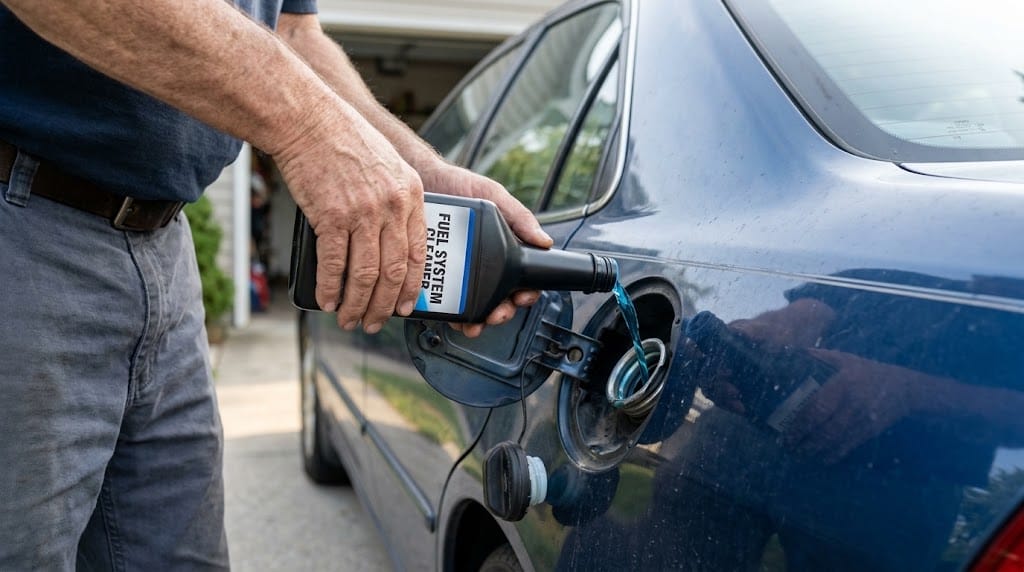
Fuel injectors have largely replaced carburetors in modern vehicles because they do a more precise job of metering fuel into the combustion chamber. Rather than relying on air pressure and gravity the way a carburetor does, injectors use a fine, high-pressure spray — atomizing the fuel so it mixes efficiently with air and burns cleanly.
The problem is that all gasoline and diesel contain trace contaminants. Your fuel filters catch a lot of those particles, but not all of them. The ones that slip through start to accumulate on injector nozzles, intake valves, and inside combustion chambers as carbon deposits. Over time, that buildup changes the spray pattern. Instead of a clean, conical mist of fuel, you get uneven droplets. The combustion becomes less efficient. Your engine compensates by using more fuel to make up for lost power — and you end up at the gas station more often.
The gasoline direct injection (GDI) engines — which are increasingly common in newer vehicles — are especially susceptible to intake valve deposits because fuel doesn’t wash over the valves the way it does in older port-injection designs. That makes regular cleaning additive use particularly relevant for drivers of newer GDI-equipped vehicles.
The symptoms of dirty injectors are usually pretty easy to recognize:
- Rough idle — the engine feels unsteady or shudders at a stop
- Hesitation on acceleration — the car stumbles or bogs down before picking up speed
- Poor cold starts — especially noticeable in winter
- Reduced fuel economy — you’re stopping for gas more often
- Engine knock or ping — caused by uneven combustion
- Increased emissions — relevant if you’re due for an inspection
Any one of these symptoms could point to other issues too — a failing spark plug, a dirty air filter, low compression — so fuel injector cleaner isn’t always the answer. But it’s often worth trying first because it’s inexpensive, easy, and carries essentially no risk to your engine.
Everything We Recommend
✅ We recommend these products based on an intensive research process that’s designed to cut through the noise and find the top products in this space. Guided by experts, we spend hours looking into the factors that matter to bring you these selections.
⭐ 2.5 million+ people assisted in the last 30 days ⭐
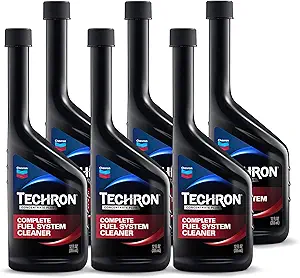
There’s a reason Techron keeps appearing on every credible list of recommended fuel injector cleaners: it genuinely works, and it works consistently. Our team has gone back to this one repeatedly across different vehicles — a high-mileage pickup, a mid-size family sedan, a flex-fuel daily driver — and the results have been reliably positive each time. Chevron’s proprietary Techron chemistry is built around a concentrated PEA formula, which puts it in the top tier of cleaning power for a product you can pick up at virtually any auto parts store. What stood out to us most was how the hesitation that had been nagging one of our test vehicles (a 2017 SUV with around 85,000 miles) noticeably smoothed out after a single treatment. We filled the tank to about half, added the Techron, topped it off, and then drove normally for a week. By the time that tank was gone, the car idled noticeably steadier at red lights. The bottle design is smart too — the elongated neck makes pouring into a fuel neck a lot easier than the chunky containers some competitors use. It’s formulated for use every 3,000 miles and treats up to 20 gallons, making it suitable for most passenger vehicles, boats, motorcycles, and RVs. It’s a gasoline-only formula, so diesel drivers will need to look elsewhere, but for anyone running regular or premium gas, Techron Concentrate Plus is the easiest recommendation we can make.
Best for: Gas-powered car, truck, SUV, or motorcycle owners looking for a dependable maintenance cleaner or a first-line fix for mild injector issues.
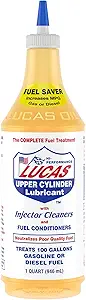
Lucas Oil has a devoted following among both gearheads and everyday drivers, and after spending time with the 10003 Fuel Treatment, we understand why. A 32-ounce bottle is large enough to treat up to 100 gallons of fuel, which makes the per-treatment cost genuinely low — one of the better deals in this category. The formula blends oils, detergents, and fuel system additives that work together to clean injectors, lubricate upper cylinder components, and help neutralize the issues that come with low-sulfur diesel. That last point matters: many diesel drivers struggle with fuel system wear because modern ultra-low-sulfur diesel has less natural lubricity than older formulations. Lucas helps compensate for that, which is why it’s particularly popular with diesel truck owners. During testing, we noticed a modest reduction in diesel smoke from one of our test vehicles after sustained use — not dramatic, but real. The formula also works in gasoline engines, and some of our gas-vehicle testers reported slightly smoother throttle response after a few tankfuls. One thing to keep in mind: the added lubrication can slightly increase fuel consumption in some conditions, so if you’re tracking mileage obsessively, results may vary. But as an all-around, affordable fuel system treatment that does more than just clean — it conditions and protects — Lucas 10003 is hard to beat.
Best for: Diesel truck owners, budget-conscious drivers, and anyone wanting a maintenance-and-lubrication product in one bottle.
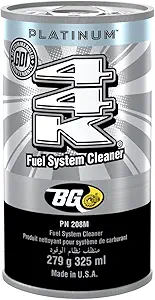
BG 44K has something of a cult reputation in the automotive world, and it’s earned through decades of professional-grade performance. You’ll find this product in a lot of independent mechanic shops — it’s the stuff they reach for when a customer complains about rough running, and they want to offer something that actually delivers results before recommending a more expensive repair. Our team was curious whether the premium price was justified, and after testing it on a 2014 sedan with some stubborn cold-start roughness and intermittent hesitation, we came away impressed. The 11-ounce can is small but highly concentrated — one can treats up to 20 gallons — and BG’s formula goes after deposits in combustion chambers, intake valves, fuel injectors, and intake ports in a single treatment. The fact that it contains no alcohol and is compatible with all fuel system materials is a notable plus for anyone with an older vehicle or a finicky import. What surprised us most was the speed: within a couple of tankfuls, the cold-start issue on our test vehicle had largely resolved itself. We also noticed slightly crisper throttle response. BG 44K is definitely more expensive per ounce than many competitors, and the can-style packaging (no resealable lid) can be awkward if you’re not treating a full tank at once. But if you want a single-treatment product with serious cleaning credentials, this is the one we’d recommend.
Best for: Drivers dealing with noticeable performance issues, older vehicles with heavy deposits, or anyone who wants professional-grade cleaning without booking a shop appointment.
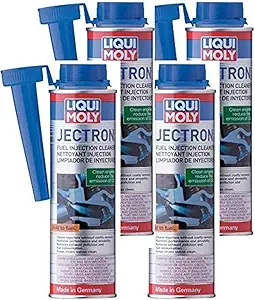
Liqui Moly is a German brand with a serious engineering pedigree — the kind of company that tests its products through independent German certification labs and holds itself to DIN and OEM standards. If you drive a BMW, Mercedes, Audi, VW, or another European marque, Liqui Moly’s Jectron cleaner is one of the most frequently recommended additives by enthusiasts and independent shop owners who specialize in these vehicles. Our testing backed that up. On a 2016 European import with around 60,000 miles, we noticed improved idle stability and slightly quicker throttle response after a single treatment. The 300ml bottle is sized precisely for one treatment of a typical fuel tank, which eliminates the guesswork around dosing. Liqui Moly’s formula is compatible with oxygen sensors and catalytic converters, which matters a lot for vehicles with sensitive emissions equipment — some cheaper additives can cause issues here. It’s also safe for older vehicles, which is good news if you’re maintaining a vintage European car. The main thing to know is that Jectron is formulated for gasoline engines only, so diesel drivers need to look at their other product lines. And on a newer vehicle with genuinely clean injectors, you’re unlikely to feel much of a difference. But for an older import that’s been running a little rough or starting reluctantly on cold mornings, this is a very well-targeted solution.
Best for: European and import vehicle owners, particularly those with BMW, Mercedes, VW, Audi, or similar platforms and older high-mileage engines.
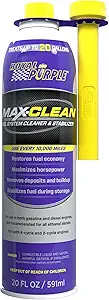
Royal Purple’s Max-Clean stands out in a crowded field because it does two things at once: it cleans your fuel system and stabilizes your fuel. That combination is genuinely useful for anyone running ethanol-blended fuel, which is most of us — E10 (10% ethanol) is the standard at most American pumps, and ethanol is notoriously hard on fuel system components. It attracts moisture, it degrades certain seal materials over time, and it doesn’t store well. Max-Clean’s stabilizer component addresses those concerns directly. During testing, we ran this through a 2-cycle generator that had been sitting for part of a season with stale fuel, and after treatment and a fresh fill, it started and ran noticeably more smoothly than it had in months. On an everyday passenger vehicle, the performance improvements were subtler — smoother idle, slightly improved acceleration response — but present. One 20-ounce can treats up to 20 gallons and is EPA/CARB compliant, which matters in states with stricter emissions rules. Royal Purple also claims up to 3.2% improvement in fuel economy, which is consistent with what you’d expect when injectors are operating more efficiently, though real-world results will vary depending on driving habits and how dirty your injectors were to start with. The can-only packaging (no funnel included) can be a minor nuisance, but it’s a small complaint given the overall value of the product.
Best for: Drivers who run ethanol-blended fuel, seasonal equipment owners dealing with stale fuel, and anyone who wants a cleaner and stabilizer in one treatment.
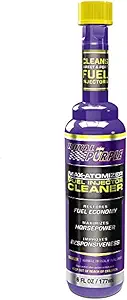
If you want a quick, targeted injector treatment without committing to a larger bottle or a more involved fuel system cleaner, Royal Purple’s 18000 is a smart pick. The 6-ounce bottle is sized for a single treatment — just pour it in at your next fill-up, and you’re done. It’s a fully synthetic formula built around highly concentrated polyether amine detergents, which puts it in good company in terms of cleaning chemistry. During testing, we used it on a vehicle that had been running a slightly rough idle for a few weeks. By the time we’d burned through that tank, the idle had smoothed out considerably. The formula is approved for both gasoline and diesel engines, which is a nice bonus — most products in this category pick one or the other. Royal Purple also says the formula helps restore the injector spray pattern to its original atomization efficiency, which is consistent with what PEA-based cleaners do well. One thing to be realistic about: the fuel economy gains the brand mentions are unlikely to be dramatic enough to measure on a per-trip basis. The bigger benefit is injector health over time. As a single-dose treatment, you run every oil change or every 5,000 miles or so; it keeps your injectors from developing significant buildup in the first place, which is exactly what a maintenance additive should do.
Best for: Anyone wanting a quick, no-fuss single-dose treatment compatible with both gas and diesel engines, particularly useful as a routine maintenance add-on at every oil change.
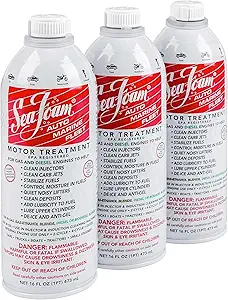
SeaFoam has been around since 1942, and its longevity in a market full of newer competitors is largely because it does so many things reasonably well. The SF-16 Motor Treatment isn’t just a fuel injector cleaner — you can add it to your oil to clean up sludge and free stuck lifter rings, add it to fuel to clean deposits and stabilize the tank, or use it to fog an engine for storage. That versatility is the product’s biggest selling point, and it’s particularly compelling for people who maintain multiple pieces of equipment. Our team has used it in everything from a snowblower that wouldn’t start after a storage season to a lawn tractor with carburetor issues, and the results have been consistently solid for fuel-related issues. In vehicles, we’ve found it works best as a preventive maintenance product rather than a heavy-duty cleaner — it’s made from 100% pure petroleum and is gentler than PEA-based formulas on stubborn deposits. SeaFoam is safe for catalytic converters, oxygen sensors, and seals, which makes it a worry-free addition to almost any engine. Some users do report shipping issues (bottles occasionally arrive damaged), so buying from a local auto parts store rather than online may be worth considering. For routine maintenance and multi-equipment households, though, it’s genuinely one of the more practical additives on the market.
Best for: People maintaining multiple types of equipment (cars, generators, lawn equipment, boats), seasonal equipment storage, and preventive maintenance applications.
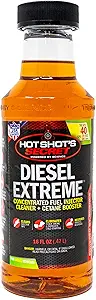
If you run a diesel — especially a work truck that puts in real miles under load — Hot Shot’s Secret Diesel Extreme is one of the most well-regarded additives in the diesel community, and after testing it, we think the reputation is well-earned. One 16-ounce bottle treats up to 40 gallons, which makes the dosing economics work out nicely for larger diesel tanks. The formula goes after the specific problems that plague diesel fuel systems: injector deposits, fuel system corrosion, DPF (diesel particulate filter) clogging, and the lubricity loss that comes with ultra-low-sulfur diesel. The cetane-boosting component — cetane is diesel’s equivalent of octane — helps the fuel ignite more completely at the right moment in the combustion cycle, which tends to produce smoother, quieter operation. Our tester, who runs a diesel pickup, noticed reduced smoke on cold starts and slightly quieter engine operation after consistent use over a couple of fill-up cycles. The improvement in DPF regen frequency was also noticeable over extended use, which matters for drivers who do a lot of city driving and deal with frequent regen cycles. One unexpected detail: the product has a mild lavender scent, which is an odd choice for a diesel additive but not unpleasant. Whether you’re maintaining a work truck, a diesel SUV, or a diesel van, Diesel Extreme is a serious product for serious diesel owners.
Best for: Diesel truck and commercial vehicle owners, particularly those dealing with DPF issues, hard starts in cold weather, or the lubricity challenges of ultra-low-sulfur diesel.
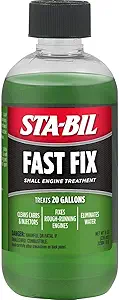
Anyone who has fought with a stubborn lawn mower at the start of mowing season — pulling the cord until their arm gives out while the engine coughs and sputters — will appreciate what STA-BIL Fast Fix is designed to do. Small engines are uniquely vulnerable to fuel-related issues because they typically sit idle for weeks or months at a time, letting fuel degrade into varnish and gum that clogs carburetors and fuel lines. Fast Fix is specifically formulated to address those problems: it dissolves the varnish and gum buildup, removes water contamination from the fuel system, and cleans carburetors without requiring disassembly. Our team ran it through a pull-start generator that had been sitting since the previous fall and had started running rough. After adding Fast Fix and fresh fuel, the engine stabilized within a few minutes of running. The 8-ounce bottle treats up to 20 gallons, which is more than enough for most small-engine applications. It works across both 2-cycle and 4-cycle equipment — lawn mowers, snow blowers, trimmers, pressure washers, chain saws — which makes it a useful thing to have in the garage. One honest caveat: if your small engine has a mechanical problem beyond fuel system deposits, Fast Fix won’t fix that. But for the very common situation where a small engine simply won’t start or runs rough after seasonal storage, this is often the first thing worth reaching for.
Best for: Homeowners maintaining lawn mowers, generators, snow blowers, and other small-engine equipment, especially for treating storage-related fuel system issues.
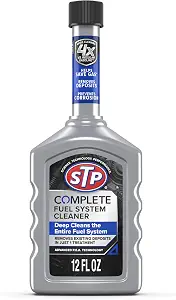
STP is one of those brand names that’s been in garages since before most of us were driving, and their Direct Injection Fuel Injector Cleaner reflects a newer understanding of what modern engines actually need. Gasoline direct injection (GDI) engines are increasingly common — virtually every major automaker now offers GDI engines in their mainstream lineup — and they have a specific vulnerability: because fuel is injected directly into the combustion chamber (rather than into the intake port upstream of the valve), there’s no fuel washing over the intake valves to keep them clean. Carbon deposits accumulate faster and stick more stubbornly. STP’s formula leans on PEA and PIBA detergent chemistry, which STP claims delivers twice the cleaning agents compared to premium gasoline alone. A single 12-ounce bottle treats up to 28 gallons of fuel, and the company recommends use every 4,000 miles or at each oil change. In our testing, we ran this through a GDI-equipped vehicle with around 45,000 miles and noticed smoother throttle response and slightly improved idle quality after a single treatment. The honest drawback is packaging: a meaningful number of user reports mention bottles arriving with damaged or leaking caps, so it’s worth inspecting the seal before you pour. For the price point and the GDI-specific formulation, though, it’s a smart choice for anyone driving a modern direct-injection vehicle.
Best for: Drivers of modern GDI-equipped vehicles who want a targeted, regularly-scheduled maintenance treatment designed for the specific deposit challenges of direct-injection engines.
How Fuel Injector Cleaners Work

Most fuel injector cleaners work by dissolving the deposits that have built up in your fuel system. The active cleaning agents in these products are detergent molecules that attach to carbon and varnish deposits, break them into smaller particles, and carry them out through the exhaust during normal combustion.
The two most widely used detergent types are:
Polyether amine (PEA) — widely regarded as the most effective deposit cleaner available in consumer additives. PEA dissolves deposits completely rather than just breaking them into smaller pieces that could potentially move elsewhere in the system. Products containing PEA tend to produce the most noticeable results, particularly on engines with significant buildup. PEA is highly effective at removing port fuel injector deposits.
Polyisobutylene (PIB) and PIBA — a gentler class of detergents often used alongside PEA or on their own. PIB-based cleaners work well for maintenance-level use and are common in “top-tier” gasoline formulations.
Many cleaners also include a lubricant component — typically a light synthetic oil — that coats the upper cylinder walls, injectors, and valve components. This reduces friction and helps prevent future deposit formation.
What Fuel Injector Cleaner Can and Can’t Do
It’s worth being honest about the limitations here. A fuel injector cleaner can:
- Dissolve light to moderate deposit buildup
- Restore lost injector spray efficiency
- Improve combustion efficiency (often translating to smoother idle and better throttle response)
- Stabilize ethanol blends and help prevent corrosion
- Help prevent future deposit formation when used regularly
It generally can’t:
- Fix mechanical injector failures
- Compensate for a clogged fuel filter
- Repair a faulty fuel pump
- Produce noticeable improvements on a clean, newer engine
If your car has severe injector problems — clogged to the point where driving is seriously affected — a professional ultrasonic injector cleaning or replacement may be the only real solution. Fuel injector cleaner is best thought of as maintenance, not repair.
How to Choose the Right Fuel Injector Cleaner
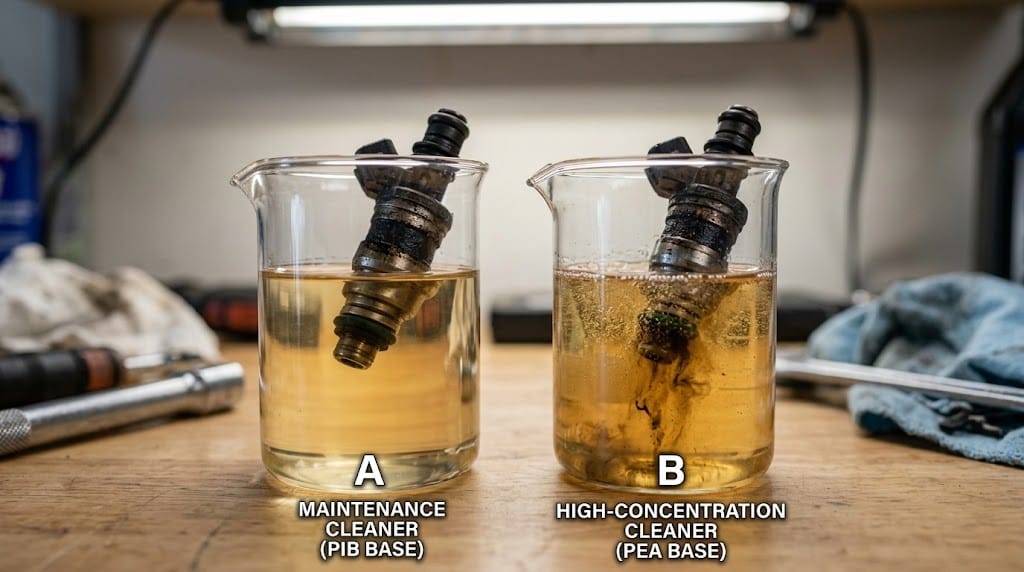
With ten solid options on this list, it helps to know which factors should actually drive your decision.
Match the Product to Your Engine Type
This is the most important factor. Some cleaners are gasoline-only. Some are diesel-only. Some work across both. A few are specifically formulated for small 2-cycle or 4-cycle engines. Using a gasoline-specific cleaner in a diesel engine (or vice versa) won’t necessarily damage anything, but you won’t get the cleaning chemistry designed for your fuel type. Always check the label.
Similarly, if you’re driving a newer GDI engine — which is likely if your car was built after about 2012 — a formula that specifically addresses direct-injection deposit patterns (like the STP) may be more effective than a general-purpose cleaner.
Consider How Dirty Your Injectors Probably Are
If your car is new and well-maintained, you don’t need an aggressive single-treatment cleaner like BG 44K. A maintenance-level product used regularly — Techron Concentrate Plus, Lucas 10003, or STP — will keep things clean without spending premium money each time. On the other hand, if you’ve got a high-mileage vehicle that’s been running rough or you’ve neglected fuel system maintenance for a while, a concentrated one-time treatment with something like BG 44K or Diesel Extreme may be the smarter starting point.
Think About Frequency and Cost Per Treatment
Some products are priced for regular use — Lucas 10003’s 32-ounce bottle treating 100 gallons of fuel makes frequent use economically reasonable. Others, like BG 44K, are intended to be used once every 10,000 miles or so as a heavier-duty treatment. Factor in the intended use frequency when comparing prices, because a “cheaper” bottle that requires more frequent use isn’t always the better value.
Don’t Ignore the Stabilizer Question
If you store seasonal equipment or park a vehicle for extended periods, a formula with a stabilizer component — like Royal Purple Max-Clean — matters beyond just cleaning. Unstabilized fuel begins degrading within a month or two, leaving behind the exact varnish and gum deposits that cause small-engine starting problems and injector issues. Adding a stabilizer at the last fill-up before storage can prevent a lot of springtime headaches.
Fuel Injector Cleaner Ingredients: A Quick Guide
Understanding what’s in these products helps you evaluate them more objectively. Here’s a quick breakdown of the main active components.
Polyether Amine (PEA): The gold standard for deposit removal. PEA dissolves carbon and varnish completely — rather than just breaking them into smaller pieces — and is safe for all fuel system components. Products with higher PEA concentrations tend to produce more dramatic cleaning results.
Polyisobutylene (PIB) and PIBA: Gentler detergents that work well for maintenance applications. Less aggressive than PEA, but still effective at preventing new deposit formation.
Lubricants (typically synthetic oils): Applied through the fuel system to reduce friction and wear on injectors, upper cylinder walls, and valve stems. The Lucas 10003 and Hot Shot’s Diesel Extreme both have meaningful lubricant components.
Cetane Improvers (diesel-specific): Help diesel fuel ignite more completely, which tends to produce smoother, quieter combustion and can reduce particulate emissions.
Ethanol Stabilizers: Prevent ethanol-blended fuel from absorbing moisture and degrading over time. Particularly important in products intended for seasonal equipment or extended storage applications.
Corrosion Inhibitors: Create a thin protective coating on metal fuel system components to prevent rust and oxidation.
Tips for Getting the Most Out of Fuel Injector Cleaner
A few practical notes from our team’s experience:
Add cleaner to a half-full tank, then top off. This gets the right concentration — not too diluted, not too concentrated — and ensures good mixing as fuel cycles through the system.
Don’t let your fuel level drop too low. Your fuel pump is submerged in the tank and uses the fuel itself for cooling. Running on fumes regularly puts unnecessary heat stress on the pump and shortens its life. It also pulls in sediment that settles at the bottom of the tank. Try to keep at least a quarter tank.
Follow the manufacturer’s recommended frequency. Some products are meant for use with every fill-up; others are once per 10,000 miles. Using a concentrated cleaner more often than recommended doesn’t clean better — it just wastes product.
Use a fuel injector cleaner preventively, not just reactively. Adding one every few thousand miles as part of your regular maintenance routine tends to produce better results than waiting until something is already noticeably wrong.
Know when you need professional help. If your car is actively misfiring, throwing fuel system diagnostic codes, or has idle and acceleration problems that don’t improve after a couple of treatment cycles, it’s time to see a mechanic. A fuel injector cleaner can’t fix a clogged filter, a failing fuel pump, or a mechanically stuck injector.
FAQ
How often should I use a fuel injector cleaner?
It depends on the product. Some — like Lucas 10003 or STP — are designed for regular maintenance use and can be added with every fill-up or every few thousand miles. Others, like BG 44K, are high-concentration treatments meant to be used once every 10,000 to 15,000 miles. When in doubt, follow the manufacturer’s instructions on the bottle. They know the product’s chemistry and concentration better than anyone else.
Can I use fuel injector cleaner in a turbocharged engine?
Yes, in most cases. The active cleaning detergents in these products are designed to be safe for turbo systems running standard pump gasoline or diesel. The one exception worth being aware of is race fuels — products like these haven’t been tested with nitromethane or other competition fuels, so we’d steer clear of adding them to a race car application.
Will fuel injector cleaner void my warranty?
Reputable fuel injector cleaners from established brands like those on this list are generally considered compatible with modern fuel systems and shouldn’t void your warranty under normal circumstances. That said, if you have a specific concern about your vehicle’s warranty, it’s worth checking with your dealer. Products that are EPA/CARB compliant (like Royal Purple Max-Clean) are particularly unlikely to raise any issues.
Do fuel injector cleaners really improve fuel economy?
Sometimes, yes — but only if your injectors were meaningfully dirty to begin with. If your fuel injectors are badly gummed up and not atomizing fuel efficiently, cleaning them can measurably improve combustion efficiency, which often shows up as better mileage. On a newer vehicle with clean injectors, you’re unlikely to see any measurable change. The honest answer is: don’t buy a fuel injector cleaner expecting it to be a fuel economy upgrade. Buy it to maintain a clean fuel system, and improved efficiency is a secondary benefit if your injectors need cleaning.
Is it safe to use fuel injector cleaner in a car with high mileage?
Generally, yes. In fact, high-mileage engines are often the ones that benefit most from fuel injector cleaner because they’ve had more time to accumulate deposits. Products like BG 44K and Techron Concentrate Plus are well-tested on older engines. One thing to be aware of: on very high-mileage vehicles with worn seals, some fuel system additives can temporarily loosen deposits that were actually helping seal minor leaks. This is rare, but it’s worth knowing about if your car has 200,000+ miles and some existing fluid seepage.
What’s the difference between a fuel injector cleaner and a fuel system cleaner?
Fuel injector cleaner typically focuses on cleaning the injector nozzles specifically. Fuel system cleaner is a broader term that refers to products treating the entire fuel circuit — tank, fuel lines, fuel pump, injectors, intake valves, and combustion chambers. Most of the products on our list are full-system treatments; the “fuel injector cleaner” label is largely a marketing convention. Look at what the product actually cleans, not just what it calls itself.
Our Take
Fuel injector cleaners are one of the more underused tools in everyday vehicle maintenance, largely because their benefits are gradual and easy to miss. You’re not going to add a bottle and suddenly feel like you’re driving a different car. But used consistently — as part of a regular maintenance routine alongside oil changes, filter replacements, and tire rotations — they genuinely help keep your fuel system working the way it’s supposed to.
For most gas-powered vehicle owners, Chevron Techron Concentrate Plus is the easiest recommendation. It’s widely available, well-priced, and built on PEA chemistry that has a long track record of reliable cleaning. Diesel drivers should look at Hot Shot’s Secret Diesel Extreme for its cetane-boosting and lubricity-restoring properties. Small engine owners will find STA-BIL Fast Fix to be the most targeted solution for the seasonal storage and varnish issues that plague lawn equipment. And if you’re driving a modern GDI engine, STP’s Direct Injection cleaner gives you a formulation specifically designed for how those engines deposit carbon.
The bottom line: these are inexpensive, low-risk products that can save you from a much more expensive repair. Adding one to your maintenance rotation is a pretty reasonable bet.