Advertiser Disclosure
We independently review everything we recommend. When you buy through our links, we may earn a commission.
Best Crossword Puzzle Books: Which One Will Actually Keep You Solving?
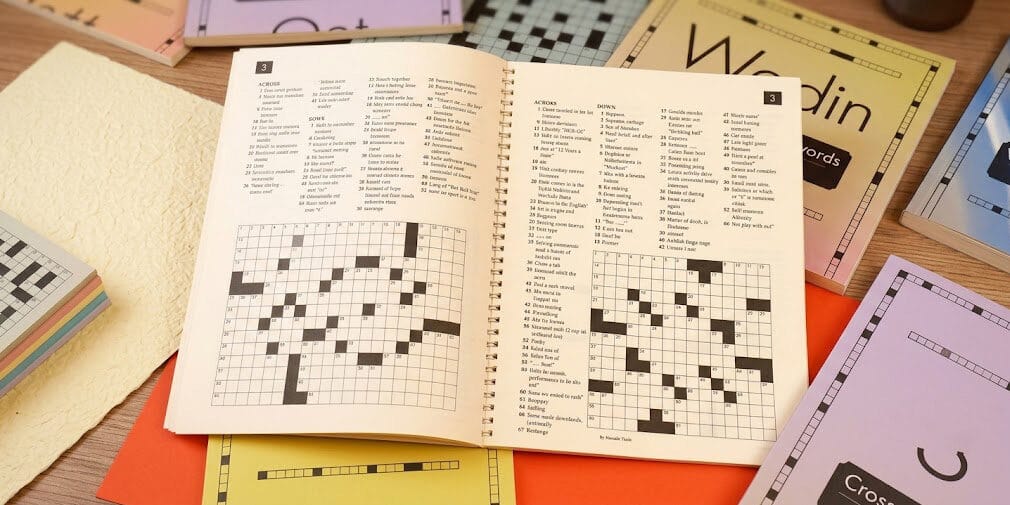
In this guide, we’re breaking down 11 of the most popular crossword puzzle book brands on the market right now, from household names like The New York Times to budget-friendly options you’ll find at the grocery store checkout line. We’ll walk through who each one is actually built for, where it tends to fall short, and how to think about matching a book to your own solving style. If you’re new to puzzles, someone buying a gift, or a longtime solver looking for your next stack, there should be something here that fits.
A Quick Snapshot Before We Dive In
If you’re short on time, here’s the general shape of how these 11 brands tend to differ, based on what our team observed across weeks of solving:
- Best for editorial polish: The New York Times and Will Shortz collections generally lead here, thanks to decades of consistent, single-editor oversight.
- Best for beginners: USA Today tends to be the gentlest entry point, with everyday vocabulary and low-frustration clueing.
- Best for bulk value: Simon & Schuster’s Mega volumes and Publications International’s spiral-bound compilations typically offer the lowest cost per puzzle.
- Best for a dependable daily habit: Stanley Newman’s Newsday-syndicated puzzles tend to strike a fair, well-labeled balance between challenge and clarity.
- Best for something different: Mike Shenk’s Wall Street Journal puzzles and Gregory Turner’s independently authored collections each bring a distinct flavor you won’t find in the mainstream lines.
- Best for budget or gifting: Kappa Books, Puzzle Time, and USA Puzzles generally suit casual, low-stakes solving or gift-giving over serious, long-term use.
What Makes a Crossword Puzzle Book Worth Buying?
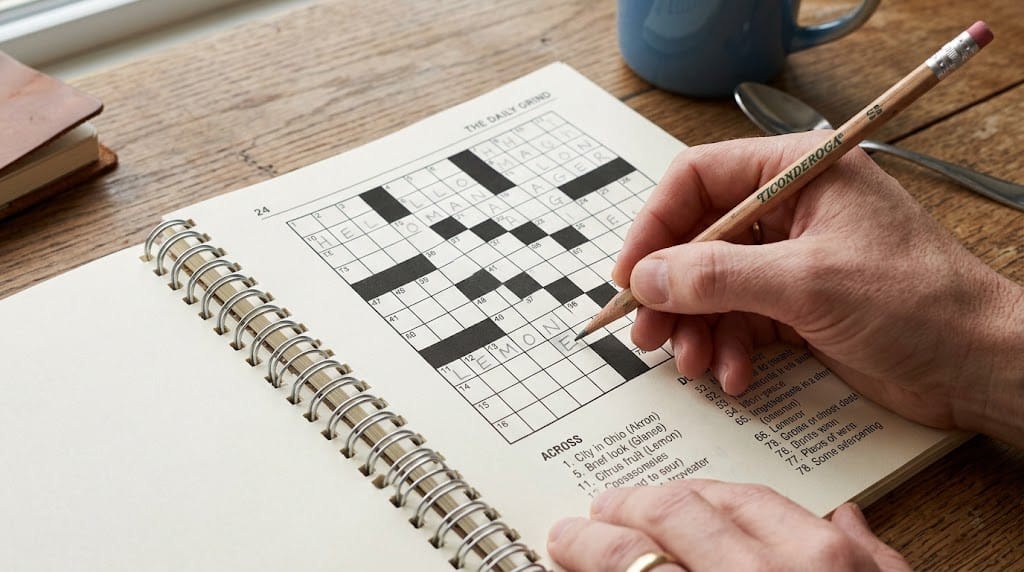
We know it’s tempting to just grab whatever’s closest to the register, and honestly, that’s not always a bad strategy. But if you’re going to invest real time into a puzzle book — and let’s be real, some of these take weeks to finish — a few factors tend to make the biggest difference in how much you actually enjoy the experience.
Difficulty progression. The best crossword books generally don’t throw you into the deep end immediately. Many follow the classic weekly ramp popularized by newspaper crosswords, where puzzles get progressively trickier as you move through the book (or the week), which tends to keep both beginners and veterans engaged without either group feeling bored or overwhelmed.
Clue freshness. This one is bigger than people expect. Cheaper puzzle books sometimes recycle the same clue-and-answer pairs across volumes, which can make repeat buyers feel like they’ve seen it all before. Books edited by a single dedicated editor tend to catch this more consistently than mass-produced compilations.
Print quality and layout. Nobody talks about this enough, but a puzzle grid that’s too small, or a page that doesn’t lie flat, can genuinely ruin the experience. Spiral-bound books tend to solve this problem, though they’re not universal across every brand.
Answer key accessibility. Some books bury their answer keys in a separate section that’s a hassle to flip to; others place answers directly after each puzzle. Neither approach is objectively better, but it’s worth knowing your own preference before you buy.
Value per puzzle. Crossword books range wildly in price per puzzle, from a few cents a puzzle in bulk compilations to considerably more in curated, editor-driven collections. Higher price doesn’t automatically mean higher quality, but it often reflects more careful editing.
With that framework in mind, here’s how our top 11 picks stack up.
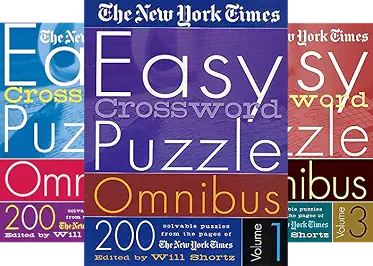
If you’re going to start anywhere, it’s probably here. The New York Times crossword has been a cultural fixture for decades, and its book collections carry that same reputation — for good reason, in our experience. What struck our testers most wasn’t just the puzzle quality, but how deliberately the difficulty is calibrated. Puzzles are organized by day of the week or by explicit difficulty labels, meaning a Monday-style puzzle collection genuinely feels like a warm-up, while the Friday and Saturday volumes will make you question your vocabulary in the best possible way. Editor Will Shortz has overseen the Times crossword since 1993, and that editorial consistency shows up on the page: clues feel current, wordplay is clever without being show-offy, and there’s a real sense that someone is proofreading for fairness rather than just filling a grid. The trade-off is price — these books typically cost more per puzzle than the mass-market alternatives on this list, and if you’re someone who solves five puzzles a day, that adds up fast. We’d point this one toward solvers who want a dependable, well-edited experience and don’t mind paying a bit more for it, rather than someone just looking to burn through puzzles cheaply on a road trip. If you’re building out a broader collection, it’s worth pairing this with a beginner-friendly puzzle book for building solving confidence before working up to the trickier weekend volumes.
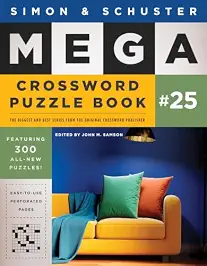
Simon & Schuster’s crossword line has been around since the very first crossword puzzle book was ever published, and the “Mega” volumes lean hard into that legacy by cramming in a genuinely enormous number of puzzles per book — often several hundred. What we appreciated during testing is that this isn’t just bulk for bulk’s sake; the puzzle variety inside stays reasonably fresh across that many pages, something that’s harder to pull off than it sounds. For anyone who solves obsessively, like on a daily commute or during a long recovery from surgery, the sheer volume here means you’re not restocking every few weeks. The trade-off is that with that many puzzles crammed into one spine, the binding takes a beating, and by the time you’re two-thirds through, the book doesn’t always want to lie flat anymore. We also noticed the difficulty curve is a little less structured than the Times books — you’ll get an easy puzzle followed by a genuinely tough one with no clear pattern, which some solvers enjoy as a surprise, and others find a bit disorienting. This one tends to work best for high-volume solvers who care more about quantity and value than a tightly curated experience.
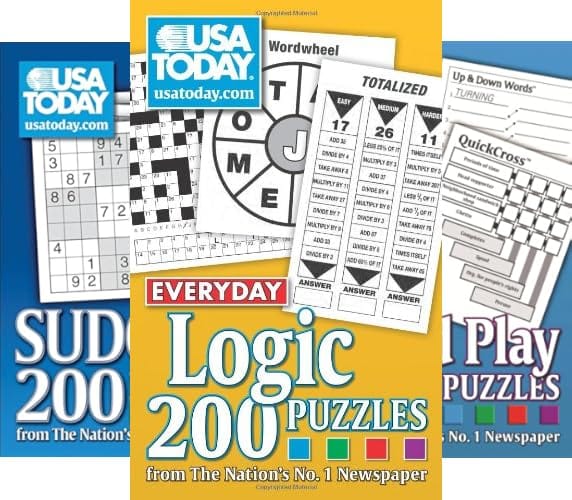
USA Today crosswords have built a loyal following specifically because they lean approachable. Compared to the New York Times’ occasionally cryptic wordplay, these puzzles generally stick to more everyday vocabulary and pop culture references that don’t require a specialized trivia background to unlock. Our newer solvers on the testing team consistently gravitated toward this book first, and more than one mentioned it was the first crossword book that didn’t make them feel behind. That accessibility is the whole point — USA Today crosswords are syndicated in newspapers nationwide specifically because they’re designed for a broad, general-interest audience rather than puzzle die-hards. The trade-off is that if you’re already an experienced solver, you might find yourself finishing puzzles faster than you’d like, and the lack of a true “hard mode” volume means veteran solvers may eventually outgrow this line. We’d recommend this one for solvers who want a confidence-building, low-frustration experience, or for anyone gifting a crossword book to someone who’s never really done one before. It also serves as a useful starting point before moving on to our notes on choosing the right difficulty level for your solving experience.
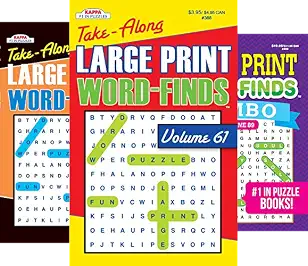
Kappa Books has quietly become one of the most recognizable names in the budget puzzle aisle, and if you’ve ever grabbed a puzzle magazine at a drugstore checkout, there’s a decent chance it came from them. What we found genuinely useful about this brand is how cheap the cost-per-puzzle ends up being — you’re getting a huge stack of grids for a fraction of what you’d pay for a curated editor-driven book. For solvers who treat crosswords more like a disposable, low-stakes activity — something to do while waiting at the DMV or during a lunch break — that value proposition is hard to argue with. The trade-off, and it’s a real one, is consistency. Because Kappa produces such a high volume of puzzle content, quality can vary noticeably from one issue to the next, and our testers occasionally ran into clues that felt dated or slightly ambiguous. The paper stock also tends to be thinner, which matters if you’re a pen solver rather than a pencil one, since bleed-through is a genuine annoyance here. We’d point this brand toward casual, budget-conscious solvers rather than anyone chasing a consistently polished experience.
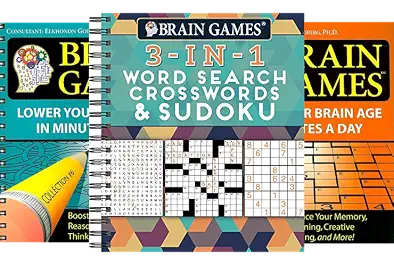
You’ve almost certainly seen these thick, spiral-bound puzzle compilations stacked near the checkout at big-box stores, often with titles promising “500 puzzles” or similar. Publications International has built a real niche around exactly that format, and our testers found it genuinely convenient for a specific use case: the person who wants one book that lasts an entire year without having to think about it again. The spiral binding is a nice touch here, letting the book fold flat or even back on itself, which matters more than people expect when you’re solving one-handed on a couch or in bed. The trade-off is that with a value proposition built around sheer quantity, the editorial voice can feel a bit anonymous — you won’t find a named editor building a reputation puzzle by puzzle the way you do with the Times or Wall Street Journal lines, and the theming across puzzles tends to be more generic as a result. We’d recommend this one for solvers who want maximum puzzle-per-dollar value and don’t mind a more inconsistent editorial hand, especially as a long-haul travel companion or a “leave it on the coffee table” option for house guests.
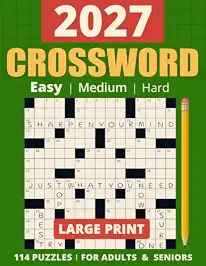
Puzzle Time has carved out a smaller but loyal audience by leaning into themed and seasonal puzzle collections — think holiday-themed grids, vacation-ready travel sizes, and gift-oriented packaging that make this line feel a little more personal than some of the bigger mass-market names. During testing, what stood out was how well these books work as actual gifts rather than just generic puzzle filler; the presentation and theming give them a bit more personality on a shelf. Because the books tend to run shorter than the mega-compilations on this list, they’re also genuinely portable, fitting easily into a beach bag or carry-on without adding much bulk. The trade-off is availability and consistency — because this isn’t one of the household-name publishers, you’ll sometimes find bigger gaps in difficulty labeling, and it can be harder to predict exactly what you’re getting before you crack the spine. We’d suggest this one for gift-givers and casual vacation solvers rather than someone building a long-term, disciplined solving habit, where a more structured line might serve you better.
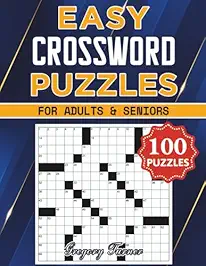
Gregory Turner represents a different category entirely from the newspaper-branded books on this list: an independently authored puzzle collection built by a single constructor rather than a syndicated editorial team. What we appreciated here is the distinct voice that comes through — because one person is writing the clues, the humor, references, and even the occasional recurring theme feel more personal than what you’ll find in a mass-produced compilation. Several of these independent collections are also formatted specifically with large-print grids, which our older testers genuinely valued, since eye strain is a real and often overlooked barrier to enjoying crosswords long-term. The trade-off is scale: without a large editorial team behind it, you may notice the puzzle count per volume runs smaller, and there’s more variance in polish from one puzzle to the next compared to a heavily resourced newspaper brand. This one tends to suit solvers who specifically want large-print accessibility or who enjoy supporting independent puzzle creators over big-name syndicates, rather than someone chasing the most puzzles per dollar.
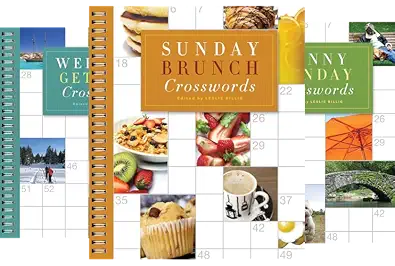
Stanley Newman has been the crossword editor for Newsday since 1988 for the Sunday puzzle and since 1992 for the daily grid, and that puzzle is syndicated to more than 100 newspapers worldwide — which tells you a lot about how trusted his editorial eye is in the puzzle world. He’s also something of a puzzle-world insider, having won the inaugural U.S. Open Crossword Championship and the American Crossword Puzzle Tournament back in 1982, and he’s often described as a protégé of Will Shortz himself. What our testers noticed right away is a clarity of construction — Newman’s puzzles use a “PuzzleMeter” difficulty and style rating on many editions, which takes a lot of the guesswork out of picking the right volume for your mood that day. The clues also tend to lean toward fair, well-signposted wordplay rather than obscure trivia, making these puzzles satisfying to finish rather than frustrating. Several editions come spiral-bound as well, which our testers specifically praised for how flat the book lies during solving. The trade-off is that Newman’s books lean toward a fairly traditional American-style crossword construction, so if you’re hoping for more experimental or cryptic-style clueing, this isn’t really the line for that. We’d point this brand toward solvers who want a dependable, expertly edited daily habit with a clear sense of what difficulty they’re getting into before they start.
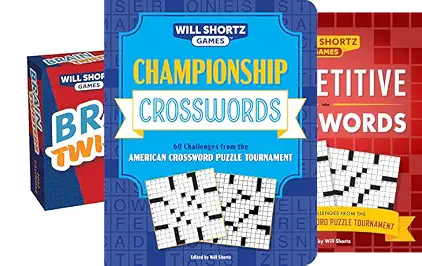
Will Shortz needs almost no introduction if you’ve spent any time in the crossword world — he’s been the crossword editor of The New York Times since 1993, he’s the puzzlemaster on NPR’s Weekend Edition Sunday, and he founded and still directs the American Crossword Puzzle Tournament every year. What makes his standalone, personally curated collections distinct from the standard NYT-branded books is the focus: these editions are often built around a specific theme or mood, like his “funniest” or “favorite” collections, rather than simply following the newspaper’s day-by-day difficulty structure. Our testers found these genuinely enjoyable as a change of pace, since the puzzles are hand-selected rather than chronologically compiled, meaning you get more editorial personality per page. Shortz’s decades of experience clearly show in how fair the clues feel — even the trickier entries usually have a clean, gettable logic once you step back from them, which keeps frustration low even on harder puzzles. The trade-off is that because these collections are curated rather than exhaustive, you won’t get quite the same volume of puzzles per book as some of the mega-compilations on this list, and pricing sits closer to premium than budget. This one is a strong fit for solvers who already know they enjoy a Shortz-style sensibility and want a themed, personality-driven collection rather than a bulk supply.
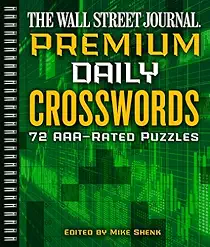
Mike Shenk has edited The Wall Street Journal’s crossword since the very first one ran back in 1998, and he’s also one-third of Puzzability, a puzzle-writing company that’s built puzzles for the Times and plenty of other major publications. Despite the “Wall Street” branding making it sound intimidating, our testers were pleasantly surprised at how approachable these puzzles actually are — you genuinely don’t need to know the difference between a stock split and a dividend to finish one comfortably. What stood out most in testing was the format variety: Friday puzzles in particular sometimes include a metapuzzle layer, where solving the crossword unlocks a secondary hidden answer, which added a genuinely fun extra challenge our team wasn’t expecting from a standard puzzle book. Shenk’s background editing Games magazine for over a decade clearly shows in how playful the theming can get without sacrificing fairness. The trade-off is that this line is a bit less widely available in physical bookstores compared to Times or Newsday products, and the business-and-finance flavor of certain themed puzzles, while accessible, may still feel less universal than something like USA Today’s more general-interest style. We’d recommend this one for commuters, professionals, and anyone who enjoys a puzzle with a bit more structural cleverness built in, especially if you like the idea of a bonus meta-challenge layered into your Friday solve.
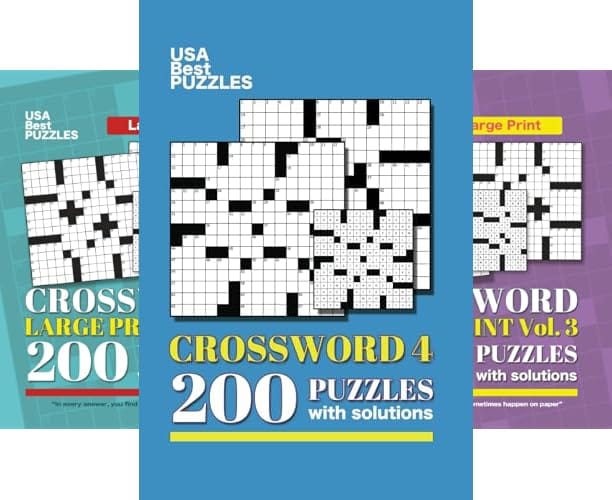
USA Puzzles positions itself as a more modern, accessible entry point into the crossword world, with pricing and packaging clearly aimed at solvers who want a straightforward, no-frills experience without committing to a premium editorial brand. During testing, our team found the puzzles genuinely serviceable for casual, low-pressure solving — nothing about the clueing felt like it was trying to trick you, which some solvers will appreciate, and others might find a touch too easy once they’ve built up some experience. The book format tends to be compact and travel-friendly, making it an easy grab-and-go option for a flight or waiting room. The trade-off is that, similar to some of the other budget-oriented lines on this list, you won’t find a long-standing named editor building a track record puzzle by puzzle, so quality consistency is something to expect variation in rather than count on. We’d point this one toward solvers who want an affordable, easygoing option to keep in the car or a bag, rather than a primary go-to for a serious, long-term solving habit.
How to Choose the Right One for You
If you want the most trusted, expertly calibrated experience and don’t mind paying a bit more, the New York Times or Will Shortz collections are hard to beat. If you’re brand new to crosswords and want to build confidence without getting frustrated, USA Today or Stanley Newman’s more fairly-clued puzzles tend to be gentler entry points. If you’re solving in bulk and want maximum value, Simon & Schuster’s Mega volumes or Publications International’s spiral-bound compilations will stretch your money the furthest. And if you want something with a bit more personality or a niche appeal, Gregory Turner’s independently authored large-print books or Puzzle Time’s themed gift editions might be exactly what you’re after.
It’s also worth thinking about how you actually plan to use the book. Solving during a commute calls for something compact and quick, like USA Puzzles or a Newsday volume, while a rainy weekend at home might be the perfect excuse to dig into a denser, trickier Wall Street Journal or Times collection. We’d also gently suggest not overthinking this too much — crossword books are relatively affordable as hobbies go, and there’s genuine value in simply trying two or three brands to see which clueing style clicks with how your brain works.
Budget is another honest factor worth naming outright. If you’re solving casually and don’t want to think too hard about the purchase, a Kappa Books or USA Puzzles title will get the job done without asking much of your wallet. If crosswords are a core part of your daily routine — the kind of thing you’d genuinely miss if it disappeared — investing in a more consistently edited line like the Times, Newsday, or Wall Street Journal tends to pay off in fewer dud puzzles over the long run. Neither approach is the “correct” one; it’s really about how central this hobby is to your day-to-day life.
Mistakes to Avoid When Buying a Crossword Puzzle Book
We’ve watched enough first-time buyers get frustrated with a bad match to notice a few recurring patterns worth flagging.
Buying based on brand recognition alone. It’s tempting to grab a New York Times book simply because the name is familiar, but if you’re brand new to solving, that Saturday-level puzzle can feel genuinely discouraging. Match the difficulty label to your experience level, not just the logo on the cover.
Ignoring the binding. This sounds minor until you’re twenty puzzles into a paperback that won’t stay open on your lap. If you solve primarily at a desk or table, it matters less; if you solve on a couch, a train, or in bed, spiral binding tends to make a bigger difference than people expect.
Assuming bigger is always better. A 500-puzzle bulk compilation is a great value on paper, but if the editorial consistency isn’t there, you may end up skipping puzzles that feel sloppy or repetitive. Sometimes a smaller, more carefully curated book delivers a better experience overall, even at a higher price per puzzle.
Overlooking print size. This one trips up more people than you’d think, especially when buying as a gift for an older relative. A standard print grid can be genuinely hard to solve comfortably for anyone with vision changes, and a large-print edition, like some of the independently authored options on this list, solves that problem entirely.
Not checking where the answer key lives. Some readers strongly prefer answers immediately after each puzzle, while others find that distracting and prefer them tucked away in the back. Neither is wrong, but figuring out your own preference before buying can save some mid-book annoyance.
Frequently Asked Questions About Crossword Puzzle Books
Are crossword puzzles actually good for your brain? Most cognitive research on this topic suggests that regularly engaging in word-based puzzles is associated with better verbal recall and general mental sharpness, particularly in older adults, though it’s generally considered one part of a broader healthy lifestyle rather than a standalone fix. In most cases, consistency matters more than difficulty — solving an easier puzzle daily tends to offer more benefit than occasionally attempting one you find so hard you give up.
What’s the difference between a “daily” and a “Sunday” crossword? Daily crosswords are typically smaller grids, often 15×15 squares, and tend to follow a weekly difficulty ramp from easy on Monday to hard by Saturday. Sunday puzzles are usually larger, around 21×21 squares, and often built around a clever central theme rather than the day-of-week difficulty structure.
Is a spiral-bound crossword book worth the extra cost? For a lot of solvers, yes. Our testers consistently preferred spiral binding because the book lies flat, which makes writing in pen or pencil noticeably easier and reduces the awkward page-holding that comes with a standard paperback spine.
Should beginners start with an easy book or just dive into a well-known brand like the Times? We’d generally recommend starting with something explicitly labeled easy or beginner-friendly, like a USA Today collection, rather than a Saturday-level Times puzzle, since early frustration is one of the most common reasons people give up on crosswords altogether. If you’re shopping for a younger solver instead, our breakdown of crossword puzzle books for kids or teens covers age-appropriate picks starting around 6.
How many puzzles are typically in a crossword puzzle book? This varies enormously — some curated, editor-driven collections include as few as 50 to 100 puzzles, while bulk compilations from brands like Simon & Schuster or Publications International can include several hundred in a single volume.
Do crossword puzzle books ever repeat clues or puzzles? Occasionally, particularly in high-volume, budget-oriented lines that produce a large number of issues per year. Brands with a single dedicated editor tend to catch repetition more reliably than mass-market compilations, since one person is reviewing the full body of work.
Are crossword puzzle books a good gift for older adults? Generally, yes, and it’s one of the more popular gifting categories in this space for exactly that reason. Look specifically for large-print editions or spiral-bound formats, since both tend to make the physical solving experience noticeably more comfortable for aging eyes and hands.
Can I improve at crosswords over time, or is it mostly about existing vocabulary? It’s genuinely a learnable skill. A lot of crossword solving is really about learning the recurring conventions puzzle constructors use — common abbreviations, frequent short answers, and typical wordplay patterns — rather than pure vocabulary knowledge. Most solvers notice real improvement within the first few dozen puzzles of consistent practice.
Final Thoughts
At the end of the day, the “best” crossword puzzle book really comes down to matching the brand’s personality to your own solving habits. We genuinely don’t think there’s a wrong choice among the 11 brands covered here — each one is solving a slightly different problem, whether that’s affordability, editorial polish, accessibility, or sheer volume. If you’re still not sure where to start, grabbing a smaller, less expensive volume from two or three different brands is a perfectly reasonable way to figure out which clueing style actually fits how your brain likes to work. Whichever one you land on, the real goal is simple: pick up a pencil, sit down somewhere comfortable, and enjoy the quiet, satisfying process of filling in that grid one clue at a time. For more ways to keep your mind active beyond the crossword aisle, take a look at our roundup of brain-training puzzle books worth adding to your shelf.