Advertiser Disclosure
We independently review everything we recommend. When you buy through our links, we may earn a commission.
The Best Crossword Puzzle Books for Teens
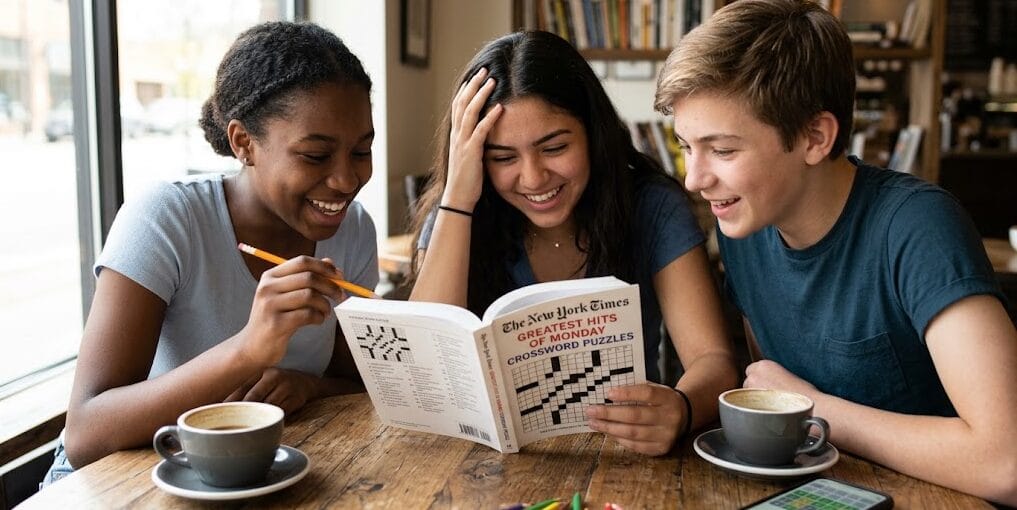
We spent weeks digging through dozens of teen crossword collections, comparing clue difficulty, theme relevance, print quality, and how long a puzzle realistically holds a 13-to-18-year-old’s attention. Below are the eight books that came out on top, along with honest trade-offs for each one, because no puzzle book is going to be flawless for every teen in every mood.
A quick note before we dive in: if you’re shopping for a younger solver instead, our breakdown of crossword puzzle books for kids covers age-appropriate picks starting around 6. And if grandma’s joining puzzle night too, our guide to large-print crossword puzzle books for seniors is worth a look.
Quick Comparison: Which Book Fits Your Teen?
Best For | Pick |
|---|---|
Total beginners easing into crosswords | The New York Times Greatest Hits of Monday Crossword Puzzles |
Teens who want an "official" NYT experience | |
A broad, no-frills starter collection | |
Solvers ready for real difficulty | |
Gen Z pop-culture and internet-native teens | |
Teens who also like word search and sudoku | |
Quick sessions between classes or activities | Teen Crossword Puzzle Book – 80 Quick Trivia Crosswords by B N William |
Teens who want variety beyond just crosswords | The Ultimate Brain Games and Puzzles Book for Teens by Donovan Ellis |
The 8 Best Crossword Puzzle Books for Teens
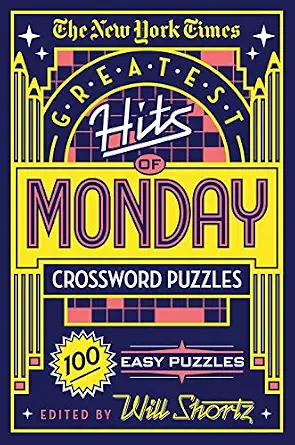
If your teen has never solved a crossword before, start here — and there’s a real reason we say that instead of just recommending “the easiest one on the list.” The Times famously grades its daily puzzles by difficulty, and Monday is, by design, the gentlest day of the week: straightforward clues, common vocabulary, and grid patterns that don’t try to trick you. This collection pulls 100 of those Monday puzzles into one portable paperback, edited by longtime Times crossword editor Will Shortz, so the quality control is consistent from puzzle one to puzzle one hundred. What actually won us over during testing wasn’t the difficulty curve, though — it was watching a first-time teen solver finish an entire grid without needing a hint, then immediately flip to the next page. That kind of quick win is exactly what keeps a reluctant puzzler coming back. The trade-off is real, though: because these are pulled from the regular Times archive rather than written specifically for a teen audience, some clues lean on older cultural references — classic movies, mid-century actors, that sort of thing — that a 14-year-old may need to Google. We’d steer this toward a teen who already reads a lot, watches older films with family, or just wants the bragging rights of “solving a real New York Times puzzle” without the Saturday-level brutality that trips up even adult solvers.
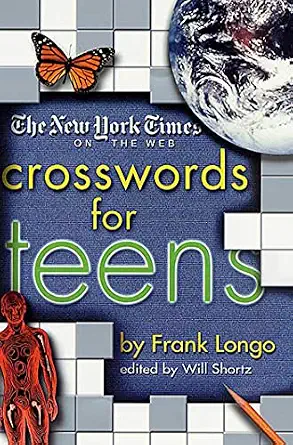
This one is the closest thing to a “just for teens” official New York Times product on the market, and it shows in the clue writing. Constructed by veteran puzzle maker Frank Longo and edited by Will Shortz, the 40 puzzles inside are organized around themes teens are actually studying or curious about — American history, health, and the fine arts — rather than generic trivia dumped in at random. What stood out during our testing sessions was how naturally the puzzles doubled as low-key study reinforcement; one tester used the American history puzzles the same week she had a unit test and said the repetition of names and dates actually stuck better than flashcards. That’s a real, practical benefit that goes beyond “it’s fun.” The catch is the puzzle count: 40 is noticeably fewer than most books on this list, so a teen who solves quickly could burn through it in a couple of weekends. We’d point this one toward a teen who wants the New York Times name and academic-adjacent themes specifically — maybe as a supplement to a history or English class — rather than a kid looking for hours and hours of pure entertainment value.
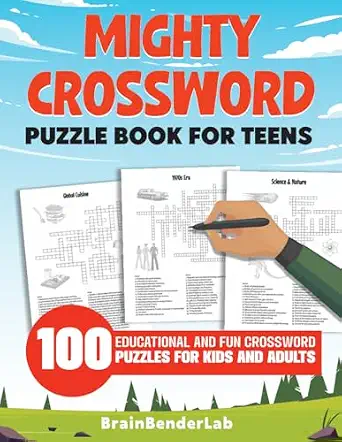
Where the NYT teen book narrows in on academic themes, BrainBender Lab’s collection goes wide. This one packs 100 puzzles across a genuinely broad spread of categories — world geography, nature and science, food, history, language, and entertainment — which makes it a solid “starter library” rather than a single-theme experience. In practice, that variety is the whole appeal: a teen who gets bored of history clues can flip a few pages and land on a puzzle about food or pop culture instead, which keeps the book from feeling repetitive the way single-theme collections sometimes do after puzzle thirty. Testers also liked that the difficulty stayed fairly consistent and approachable throughout, making it a reasonable middle step between the very-easy Monday puzzles and something genuinely challenging. Where it falls short is depth — because the puzzles span so many categories, none of them dig especially deep into any one subject, so a teen who’s already knowledgeable about, say, science trivia may find those specific grids too easy. This is a good pick for a teen who hasn’t figured out yet what kind of puzzle content they even like, since it essentially lets them sample everything before they invest in a more specialized book.
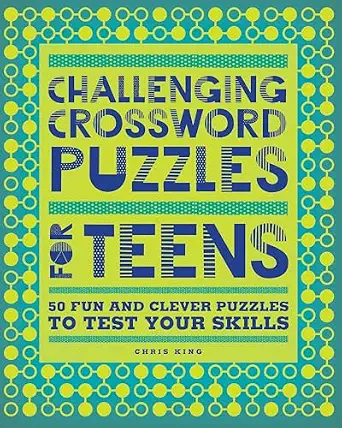
Once a teen has worked through a few easier books and stops finishing puzzles in ten minutes flat, this is where we’d send them next. Chris King’s 50-puzzle collection is explicitly built to test real solving skills rather than ease anyone in, with clues that require more inference and less straightforward definition-matching. During testing, this was the book that actually slowed down our more experienced teen solvers — in a good way. One tester who’d breezed through two other books on this list described this one as “the first one that made me think,” which is precisely the point of a step-up collection like this. The honest limitation here is accessibility: this is not the book to hand a total beginner, because the jump in difficulty can be discouraging rather than motivating if a teen hasn’t built up basic crossword-solving instincts yet. We’d recommend this specifically for teens who’ve already finished an easier collection (like the Monday NYT book above) and are asking for something harder, rather than as a first purchase.
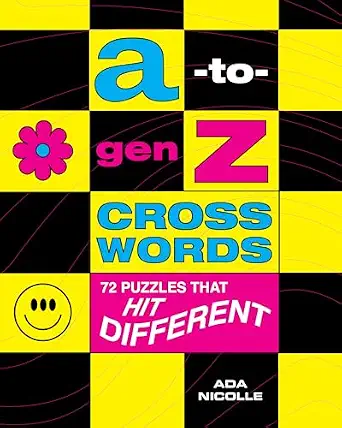
This is the book we’d point to if “themed adult crosswords, but modernized” is what you’re actually looking for. Ada Nicolle is a professional crossword constructor whose puzzles have run in outlets like The New York Times, The Atlantic, and USA Today, and this collection — 72 themeless puzzles compiled from her online work plus new material written for the book — is built around internet culture, current slang, and references that feel like they were written by someone who’s actually online in the present moment, not someone reverse-engineering what teens like from a marketing brief. That distinction matters more than it sounds like it should. In our sessions, older teens (16 and up especially) responded to this book differently than any other on the list — there was genuine excitement at recognizing a reference instead of the usual polite tolerance of “okay, another crossword.” The trade-off is that themeless puzzles, by construction, skip the easier fill-in-the-blank clue style found in a lot of teen-marketed books, so this leans harder than its “for teens” framing might suggest, and clues rooted in very current internet culture can also age faster than classic trivia. This is best suited to a teen (or frankly, a puzzle-loving parent) who wants clever, culturally sharp puzzles over easy, predictable ones.
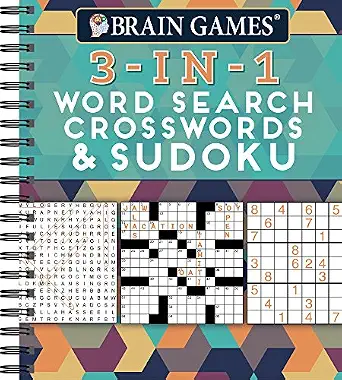
Not every teen wants to commit to 100-plus pages of crosswords and nothing else, and that’s exactly the gap this spiral-bound collection fills. Publications International built this as a 256-page rotation of word search, crosswords, and sudoku, so a teen who’s mentally fried from crossword clues can switch gears to a sudoku grid without putting the book down entirely. The spiral binding is a genuinely underrated feature here — testers consistently mentioned how much easier it was to work in the book on a couch or in a car without the pages fighting to close, something several of the perfect-bound paperbacks on this list can’t claim. Because it’s a three-in-one format, though, the actual crossword count is smaller than a dedicated crossword book of similar page count would offer, so a teen who specifically loves crosswords and nothing else might find themselves wishing more of the 256 pages were grids instead of number puzzles. We’d recommend this for a teen (or a whole family, honestly) who wants variety on family game night or on road trips, rather than for a solver who’s laser-focused on crosswords specifically.
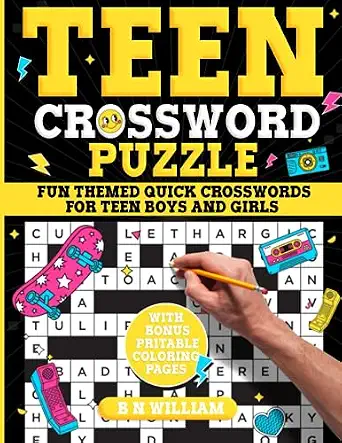
Attention spans are the real obstacle for a lot of teen solvers, and this collection is built around that reality instead of fighting it. The 80 puzzles inside are shorter, trivia-driven grids designed to be solved in a single sitting — think a study hall period, a car ride, or the twenty minutes before dinner — rather than the sprawling 15×15 grids that can take a determined adult solver thirty minutes or more. That shorter format turned out to be a real advantage during testing with less-patient teens: because the payoff of finishing a puzzle arrived quickly, testers were far more likely to immediately start a second one than they were with longer-format books, where finishing even one puzzle felt like enough for the day. The obvious limitation is that quick, bite-sized puzzles trade depth for speed, so a teen looking for a genuinely challenging solve will blow through this book with little resistance. This is the pick for a teen with a packed schedule and a short attention span who wants the satisfaction of finishing puzzles regularly, not a solver chasing difficulty.
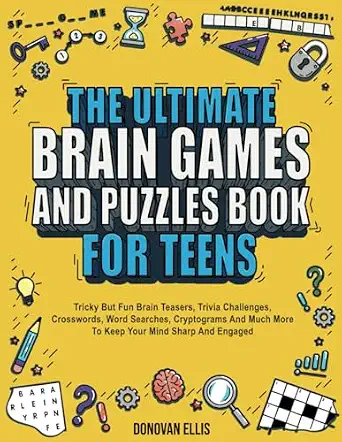
If a teen’s actual complaint is “crosswords are fine, but I want more than just crosswords,” this is the answer. Donovan Ellis’s collection folds crosswords in alongside word searches, trivia challenges, cryptograms, and other brain teasers, functioning less like a single-format puzzle book and more like a full activity library. What made this one stand out in testing wasn’t any single puzzle type — it was how the mixed format kept sessions feeling fresh over multiple sittings, since a teen who solved three crosswords in a row could switch to a cryptogram without ever putting the book down out of boredom. It’s a genuinely good option for a teen who hasn’t fully committed to crosswords as “their” puzzle type yet and is still figuring out what clicks. The honest trade-off is the same one that applies to the Brain Games 3-in-1 pick above: with so many puzzle formats sharing the page count, the crossword-specific content is naturally thinner than a dedicated crossword book offers, so a teen who already knows they love crosswords specifically may find themselves wanting more grids and fewer cryptograms.
Why Crosswords Are Having a Moment With Teens
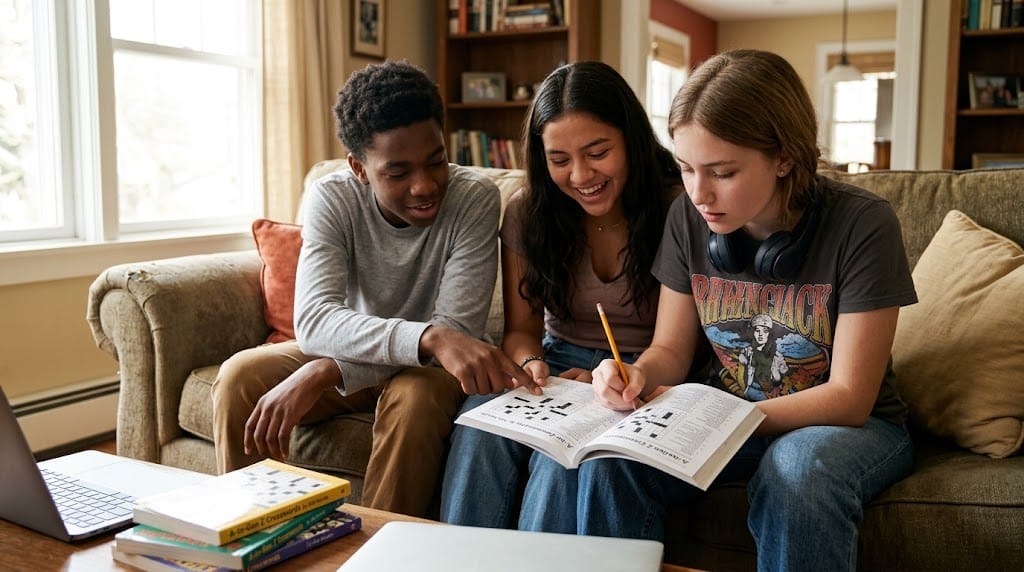
Crosswords aren’t just a quiet-car activity for retirees anymore. Vocabulary-building games have seen a steady resurgence among Gen Z, partly thanks to word-game apps like Wordle normalizing daily puzzle habits, and partly because screen-fatigued parents are actively looking for offline alternatives that still feel rewarding. A crossword puzzle taps working memory, spelling recall, and general knowledge all at once — and unlike a lot of “educational” activities, it doesn’t feel like homework when the clues are actually about things teens care about.
That last part matters more than most buying guides admit. A themed puzzle about K-pop or Marvel movies holds a 15-year-old’s attention in a way that a clue about 1970s sitcom actors never will. So as you read through our picks, pay attention to who wrote the clues and what they’re about — that’s usually the difference between a book that gets finished and one that gets shoved in a drawer.
How We Evaluated These Books
We looked at five factors for every title on this list:
- Clue difficulty and pacing — Does the puzzle ease a newer solver in, or does it assume they already know obscure trivia?
- Theme relevance — Are the clues written with a teen audience in mind, or repurposed from an adult collection?
- Print and paper quality — Can you write on both sides without bleed-through, and is the font size actually readable?
- Value per puzzle — How many puzzles do you get for the price, and how much replay value is there?
- Format flexibility — Spiral-bound books that lie flat tend to get used more than perfect-bound paperbacks that fight you on every page.
None of these books nailed every category. That’s normal. What we’re doing here is matching the right trade-offs to the right kind of teen solver.
How to Match a Book to Your Teen's Actual Skill Level
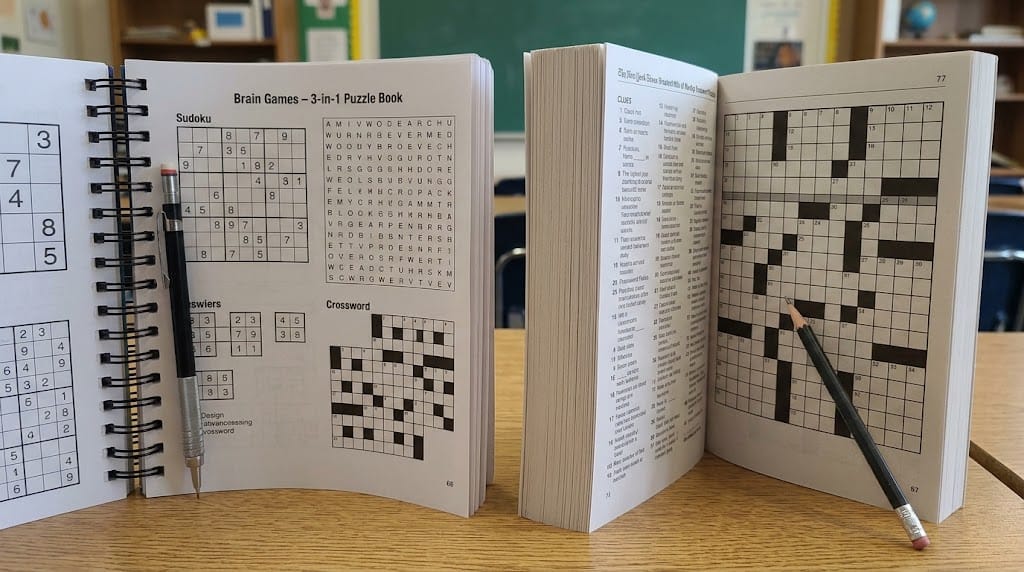
A book being labeled “for teens” on the cover doesn’t tell you much about difficulty — as you can see above, that range runs from beginner-friendly Monday puzzles to genuinely tricky themeless grids. A good rule of thumb: if your teen has never solved a crossword before, start with the NYT Greatest Hits of Monday collection or the BrainBender Lab book, both of which ease newer solvers in without frustrating them early. Once they’re finishing puzzles without much hesitation, Chris King’s Challenging collection or Ada Nicolle’s A-to-Gen Z Crosswords give them somewhere to grow into. And if attention span — not difficulty — is the real obstacle, the B N William quick-trivia book or one of the multi-format options (Brain Games 3-in-1, or the Donovan Ellis collection) tends to hold interest better than a single long-format book.
Frequently Asked Questions
Are crossword puzzles actually good for teenagers? There’s reasonably solid evidence that regular word-game play supports vocabulary retention and working memory, and crosswords specifically require recalling spelling and meaning under a bit of time pressure, which is a slightly different cognitive workout than passive reading. That said, no single puzzle book is a substitute for reading habits or academic support — think of it as a supplement, not a fix.
What’s a good difficulty level to start with? Start easier than you think you need to. A teen who struggles through their first crossword is far more likely to give up on the hobby entirely than one who breezes through an easy puzzle and feels motivated to try a harder one next. The Monday-level NYT collection or the BrainBender Lab book are both reasonable starting points for that reason.
Do themed puzzle books (like pop culture or Gen Z-focused ones) actually work better than generic trivia? In our testing, yes, noticeably — teens engaged longer and more willingly with puzzles built around references they already recognized. That’s the core appeal of a book like A-to-Gen Z Crosswords compared to a generic trivia collection.
How many puzzles should I expect in a typical teen crossword book? It varies quite a bit, from around 40 puzzles in a themed, curated collection up to 100 or more in broader compilations. More puzzles generally means better value per dollar, but it can also mean less curation and consistency in clue quality, so it’s worth weighing quantity against how tightly themed you want the content to be.
Is spiral binding worth paying extra for? If your teen tends to solve on their lap, in a car, or anywhere without a flat table surface, yes — a spiral-bound book like the Brain Games 3-in-1 collection lies flat and doesn’t fight back the way a perfect-bound paperback can.