Liberty Fox Crossword Puzzles for Kids Ages 6-8
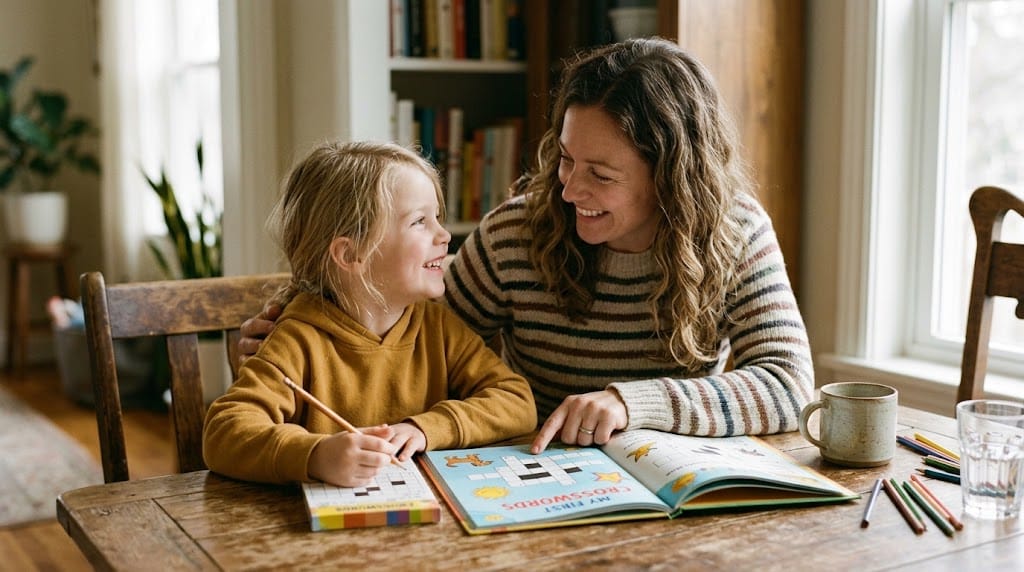
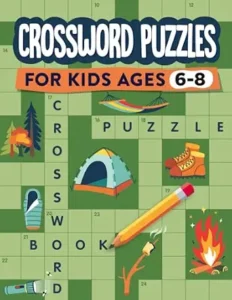
If your child is discovering that crosswords exist, this is a genuinely gentle on-ramp rather than a book that assumes prior puzzle experience. Each of its 90 puzzles is built around a single theme — animals, food, seasons, and similar kid-friendly categories — with the theme printed clearly at the top of the page so a first- or second-grader isn’t left guessing what direction the clues are even pointing in. What stood out to our reviewers is that every page doubles as a small coloring activity, since there’s an illustration tied to the puzzle’s theme, which turns a “finish your work” task into something that feels more like play. The trade-off is that with 90 relatively short, single-theme puzzles, a strong reader can burn through this book faster than the price tag suggests is ideal, and a couple of our testers found the print size on busier pages a little tight for a child still developing fine motor control with a pencil. Still, for a first-time solver who needs clear, contained puzzles rather than a sprawling challenge, it does exactly what it promises.
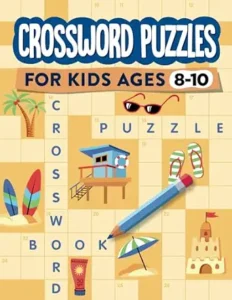
Liberty Fox Crossword Puzzles for Kids Ages 8-10
This is the same publisher’s follow-up book, and the difference in vocabulary difficulty between this one and its 6-8 sibling is noticeable in a good way — clues lean into slightly longer words and broader general-knowledge topics without suddenly feeling like a different reading level entirely. We liked that kids who graduate from the 6-8 edition can move into this one without the jarring difficulty spike that shows up in some competing series, which matters if you’re trying to build a habit rather than a one-off activity. Like its companion book, it keeps the one-theme-per-page structure and includes illustrations to color once the puzzle is solved, which our younger testers treated as a small reward system all on its own. Where it comes up a little short is variety of puzzle grid shapes — most of the crosswords follow a similar layout, so kids looking for visual novelty from page to page may notice the repetition before they hit puzzle 50. As a bridge book for a child moving past beginner level but not ready for dense, adult-style grids, it’s a sensible pick.
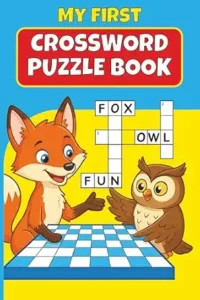
Bitsy Kiddo My First Crossword Puzzle Book for Kids Ages 6–8
There’s a real difference between a book that’s technically labeled “ages 6-8” and one that’s actually been thought through for a beginner, and this one leans hard into the latter. With 50 puzzles built specifically around simple, high-frequency words and clear picture clues, it’s a solid pick for a child who’s still sounding out letters and needs extra scaffolding rather than a book that assumes fluent independent reading. Parents in our testing group who have kids on the younger or less-confident end of that 6-8 range appreciated that the puzzles don’t lean on obscure vocabulary just to fill space — every clue feels chosen with a beginning reader specifically in mind. The tradeoff is the flip side of that same strength: with only 50 puzzles and a gentle difficulty ceiling, a child who’s already comfortable with crosswords will move through this book quickly and may find it undersized as a long-term activity book. Think of it less as a book that lasts a whole school year and more as the confidence-building starting point that makes a kid want to pick up a harder book next.
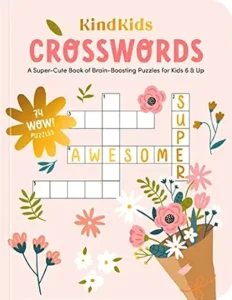
Better Day Books KindKids Crosswords for Kids 6 & Up
This one distinguishes itself less by puzzle difficulty and more by how it feels actually to hold and use. The KindKids series is built with lay-flat binding and a sturdy backer board, which sounds like a small detail until you’ve watched a 6-year-old wrestle a floppy paperback while trying to write, and it makes a real difference for a kid who’s still developing the hand control to write neatly on an unstable page. Beyond the format, the 74 puzzles are woven together with encouraging, kindness-themed messaging and full-color art that kids can cut out and display once they finish, which gives the whole experience a “collect them all” feel rather than a plain workbook vibe. Our testers with younger kids specifically liked that the book opens with simple instructions and warm-up puzzles before ramping into the main content, so a child who’s genuinely never done a crossword isn’t dropped in the deep end. On the downside, the encouraging-messages format and gift-style packaging mean you’re paying a bit of a premium compared to plain paperback competitors, and with 74 puzzles it’s not the biggest book on this list if your child burns through activity books quickly. For a family that wants a durable, giftable book that a child can genuinely handle on their own, though, it’s one of the more thoughtfully designed options here.
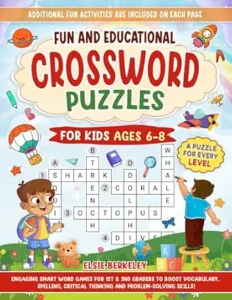
Elsie Berkeley Fun and Educational Crossword Puzzles for Kids Ages 6-8
What sets this book apart from a lot of the other 6-8 options is how deliberately it leans into building specific academic skills — vocabulary, spelling, critical thinking, and problem-solving — rather than just packaging generic clue-and-answer puzzles. The clue-writing feels noticeably careful about staying within a first- and second-grade vocabulary band, which our reviewers appreciated after testing a few competing books where the “easy” puzzles occasionally slipped in words well above the target age. It’s a strong pick for a parent who wants the activity to double as light homeschool reinforcement rather than pure entertainment, since the puzzle themes are chosen with classroom-adjacent topics in mind. The tradeoff is that the more education-forward tone means it’s a touch less playful than options like the Liberty Fox or Bitsy Kiddo books, so a child who’s motivated purely by fun and color rather than “getting better at spelling” might find it a little dry by comparison. If your priority is genuine skill-building over pure entertainment value, though, this is one of the more purposefully constructed books in the 6-8 range.
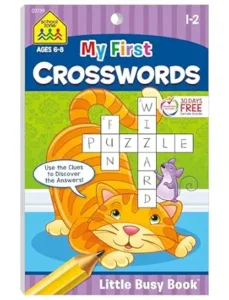
School Zone My First Crosswords Workbook for Ages 6-8
This one is built differently than most of the books on this list, and that’s worth understanding before you buy it. Rather than a bound book, it’s a top-bound activity pad with 48 tear-out pages, each one a single crossword puzzle printed on a page with a sturdy backing that gives a child a firm writing surface even without a table underneath. That portability is the real selling point — our testers found it genuinely useful for car rides and waiting rooms in a way that a heavier bound book isn’t, since kids can tear off one puzzle at a time instead of managing a whole book. The puzzles themselves are organized around specific skill categories like synonyms, positional words, and homophones, which gives it more of an academic backbone than a purely thematic book, and School Zone’s decades of workbook publishing experience shows in how cleanly the difficulty is calibrated for first and second graders. The obvious downside is that at 48 pages, it’s one of the shorter options here, and because pages tear out, it’s not really a keep-forever book the way some of the illustrated options are — once it’s done, it’s done. For a parent who wants something genuinely portable and skill-targeted rather than decorative, it earns its spot.
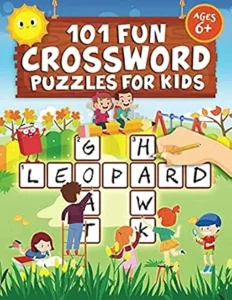
Jennifer L. Trace 101 Fun Crossword Puzzles for Kids
This is one of the more thoughtfully leveled books we tested, and it shows in the structure: the 101 puzzles are split across three difficulty tiers, so a child genuinely progresses from four-word starter puzzles up to more demanding grids rather than facing a flat difficulty level cover to cover. Because the book is pitched broadly at ages 6 through 10, it has an unusually wide runway — a younger sibling can start on the easy tier while an older one jumps ahead to the harder puzzles, which our testers with multiple kids found genuinely useful for households that don’t want to buy a separate book per child. Each puzzle section opens with a themed illustration page that previews the vocabulary coming up, which gives visual learners a helpful preview before they start filling in the grid, and the completion certificate at the back is a small but real motivator for kids who like a sense of finishing something. Where it can trip up is the same wide age range that makes it flexible: an 8- or 9-year-old landing squarely on an “easy” puzzle originally meant for a 6-year-old might find some pages feel babyish, so it helps to let your child skip ahead to their actual comfort level rather than working strictly front to back. Overall, it’s a strong pick if you want one book that can grow with a child over a couple of years rather than being outgrown in a few months.
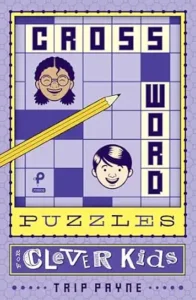
Trip Payne Crossword Puzzles for Clever Kids
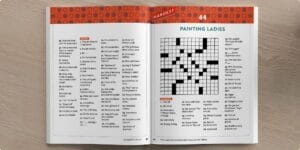
Of every book on this list, this is the one built by someone with genuine professional crossword-construction credentials — Trip Payne has constructed puzzles for The New York Times and Games magazine and is a multiple-time American Crossword Puzzle Tournament winner, and that editorial pedigree is noticeable in how cleanly these 40 puzzles are clued. Rather than filler vocabulary, the clues have real wit to them, and our testers with sharper, puzzle-curious kids consistently said this book “felt like a real crossword,” not a simplified kids’ version of one. Published under the well-regarded Puzzlewright Junior imprint, it’s compact — sized more like a pocket puzzle book than a full activity workbook — which makes it genuinely good for car trips, waiting rooms, or a stocking stuffer, but that same compact format means it tops out at 40 puzzles, noticeably fewer than several other books on this list. It’s also not the gentlest entry point for a true beginner, since the clue-writing style assumes a bit more comfort with wordplay than some of the straightforward vocabulary-drill books aimed at younger kids. For a clever 8-to-12-year-old who’s already enjoying crosswords and wants something that feels a step above a standard kids’ activity book, though, this is arguably the most polished option here.
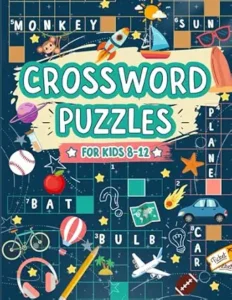
Activity Bandits Crossword Puzzles For Kids 8-12
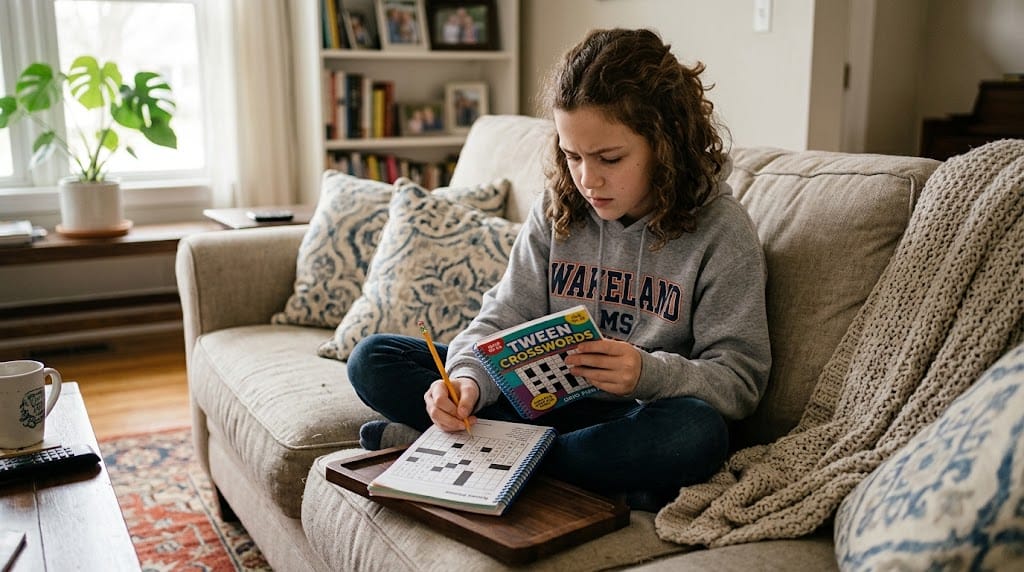
This book plays it straightforward, and for some families that’s exactly the appeal. It skips elaborate theming or gift packaging in favor of a no-frills collection of grade-appropriate crossword puzzles pitched squarely at the 8-to-12 range, with clue difficulty that sits in a comfortable middle ground — challenging enough to hold a tween’s attention without venturing into the kind of obscure vocabulary that turns a fun activity into a frustrating one. Parents who just want a reliable, no-nonsense puzzle book without paying extra for illustrated themes or premium binding tend to gravitate toward exactly this kind of independently published option, and our testers found the puzzle quality solid even if the presentation is plainer than some of the more polished branded books on this list. The lighter production values mean you shouldn’t expect the elaborate artwork or bonus content that books like KindKids or the Elsie Berkeley titles include, and there isn’t a lot of published detail on puzzle count or difficulty tiering going in, so it’s worth flipping through a sample page before buying if your child needs a very specific difficulty level. If your child just wants solid puzzles without extra bells and whistles, it does the job without overcomplicating things.
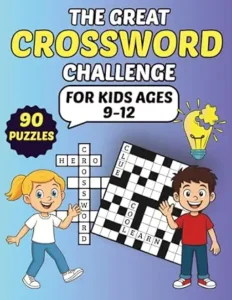
BrainTrap Publishing The GREAT Crossword Challenge for Kids Ages 9-12
This is one of the more deliberately challenging books on our list, and it’s worth choosing on purpose rather than by accident. With 90 themed puzzles printed in a large-print 8.5×11 format, it’s clearly built for kids who are past the beginner stage and ready for genuinely tougher clue-writing, and our testers found the “fun facts” sprinkled alongside each puzzle theme added a nice bonus-learning layer that turns solving into a small trivia session too. The black-and-white illustration style is simpler than the full-color art in some of the younger-skewing books here, which actually works in its favor for this age group — a 9-to-12-year-old is generally less motivated by cartoonish color art and more by feeling like they’re doing a “real” puzzle book rather than something that reads as babyish. Because the difficulty is intentionally set higher, this isn’t the right pick for a child who’s still building basic crossword fundamentals — hand it to a solver who’s outgrown easier books, not one who’s just starting, or you risk turning a confidence-building activity into a frustrating one. For families with a genuinely puzzle-hungry tween who’s tired of easy books, though, it’s one of the more satisfying challenges on this list.
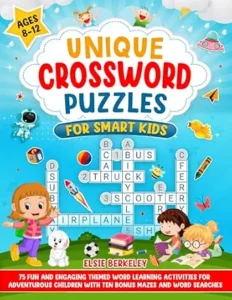
Elsie Berkeley Unique Crossword Puzzles for Smart Kids Ages 8 -12
Where this book earns its spot is variety — 75 puzzles spread across a genuinely wide range of themes, from geography and ancient civilizations to space and technology, which keeps a tween engaged in a way that a book with repetitive theming can struggle to do over 75 puzzles. Our testers specifically liked the ten bonus mazes and word searches folded in at the end, since it gives kids who finish the main crossword section something extra to do without needing a second book, and the range of subject matter means a curious kid is more likely to stumble onto a topic they didn’t know they cared about. It sits at a comfortably middle difficulty for the 8-12 range — noticeably more advanced than the beginner-focused books on this list, but not quite as demanding as the BrainTrap or Trip Payne titles — which makes it a solid default choice if you’re not sure exactly where your child’s skill level lands. The trade-off is that with such broad subject coverage, individual themes don’t get as much depth as a single-topic book might offer, so a kid who’s specifically obsessed with, say, animals or space might prefer one of the more narrowly focused options on this list instead. As a well-rounded, general-purpose pick for the upper end of this age range, it holds up well.
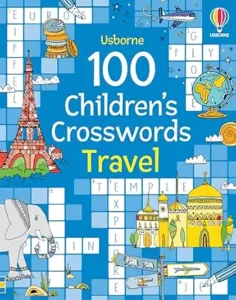
Phillip Clarke 100 Children’s Crosswords: Travel
Published by Usborne, a publisher with a long track record in kids’ educational content, this book takes a genuinely distinct angle by building all 100 puzzles around travel and world geography — landmarks, countries, and cultural trivia — rather than the generic mixed-theme approach most competitors use. That focus makes it a natural pick for a family that travels often, is planning a trip, or simply has a kid who’s into maps and flags, since the puzzles double as light geography lessons rather than pure vocabulary drills. The quirky illustrations of landmarks scattered throughout add real visual appeal, and the puzzles are ordered to get gradually harder as you move through the book, so kids build confidence early rather than getting discouraged on page one. Because the entire book is built around a single theme, though, it’s not the right choice for a child who wants broad variety puzzle-to-puzzle — if travel and geography aren’t a natural interest for your kid, the novelty can wear thin faster than a mixed-theme book would. For the right kid, especially one gearing up for a family trip, it’s a genuinely clever niche pick rather than a generic crossword book with a travel coat of paint.
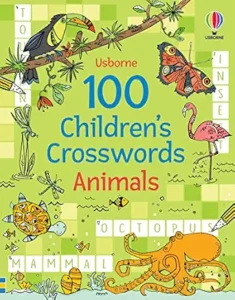
Phillip Clarke 100 Children’s Crosswords: Animals
The companion title in the same Usborne series swaps travel for animal-themed clues, covering everything from common pets to more obscure sea creatures, and it’s a strong option specifically for the kid who’d rather learn ten new facts about narwhals than sit through another mixed-bag puzzle book. Like its travel-themed sibling, the 100 puzzles increase in difficulty gradually, and the quirky wildlife illustrations on each page give it a visual identity that holds a kid’s attention longer than plain text-only puzzles tend to. Our testers with animal-obsessed kids in particular said this was the book their kids reached for unprompted, which is really the best endorsement a puzzle book can get. The same theme-focused trade-off applies here as with the travel edition — a child who isn’t especially drawn to animals may find 100 puzzles on one topic start to feel repetitive by the back third of the book, and because it’s a single-theme collection, it works best as one book in a rotation rather than a family’s only crossword title. If your child is genuinely animal-obsessed, though, it’s hard to beat as a themed pick.
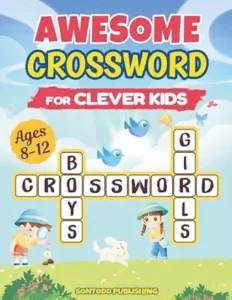
Sontodo Publishing Awesome Crossword Puzzles For Kids 8-12
This book’s standout feature is its built-in difficulty tiering — 100 puzzles spread across three distinct levels, which means it doesn’t force every kid in the 8-12 range into the same challenge level the way some single-tier books do. That structure makes it a genuinely practical pick for a family with kids spread across that age range, or for a single child who’s expected to grow into the book over a year or two rather than outgrowing it in a month. Our testers appreciated that the tiering felt authentic rather than cosmetic — the “easy” puzzles really are noticeably gentler than the “hard” ones, rather than a marginal difference dressed up as three separate levels. The book leans into a fairly standard word-filled challenge format rather than a strong unifying theme or elaborate illustration style, so kids looking for the visual flair of something like the Phillip Clarke or KindKids titles may find the presentation comparatively plain. As a straightforward, well-tiered option for a family that wants flexibility across a few years of skill growth, it’s a dependable middle-of-the-road pick.
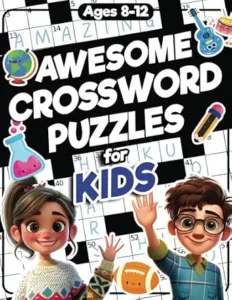
Jennifer L. Trace Awesome Crossword Puzzles for Kids Ages 8-12
The same author behind the 101 Fun Crossword Puzzles book takes a noticeably more advanced approach here, with 88 puzzles pitched at a wider span — the packaging explicitly stretches from ages 8 through 12 and even into early teens, which tells you this book skews toward the tougher end of the kids’ crossword spectrum rather than trying to be a gentle universal fit. Fans of Trace’s other title will recognize the same clean layout and clear clue-writing style, but the vocabulary here steps up meaningfully, making it a natural next book for a child who’s finished the 101 Fun Crossword Puzzles book and wants a genuine step up rather than more of the same difficulty. Our testers liked that it doesn’t feel like a re-skinned version of the easier book — the puzzles are constructed with a distinctly older audience in mind rather than simply reusing a similar clue bank at a slightly bigger size. Because it’s calibrated for the older, more advanced end of the age range, it’s a poor fit for an 8-year-old who’s still relatively new to crosswords, and families with younger or less experienced kids should look toward one of the entry-level books on this list first. For a tween who’s already comfortable with crosswords and craving something meatier, it’s one of the better “next step” books available.