Advertiser Disclosure
We independently review everything we recommend. When you buy through our links, we may earn a commission.
The Best Jigsaw Puzzle Brands for Kids
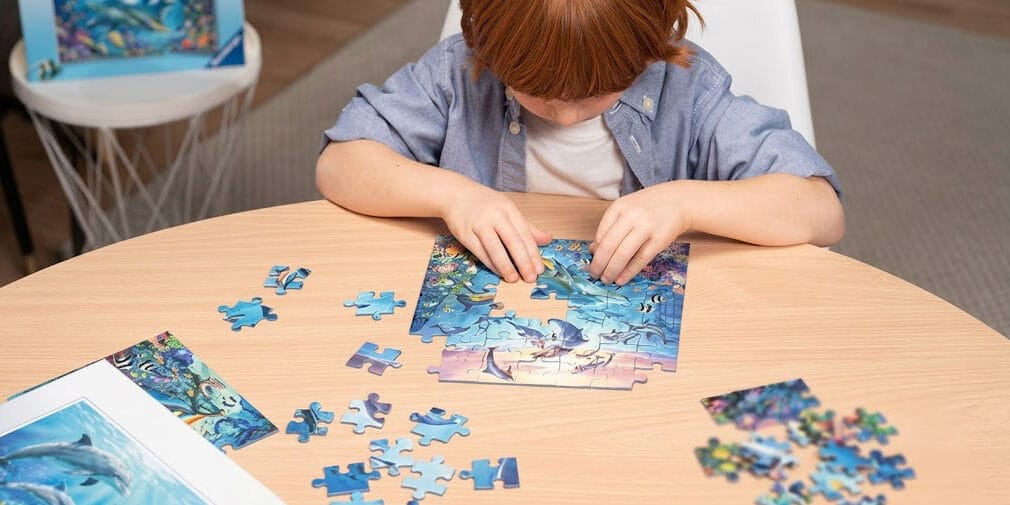
If you’ve ever handed a toddler a 500-piece puzzle meant for adults, you already know the outcome: chewed corners, a missing piece under the couch, and a kid who’s now convinced puzzles are boring. Picking the right brand for your child’s age and attention span actually matters a lot more than most gift guides let on.
With adult puzzles, brand differences mostly come down to image quality and how satisfying the pieces feel to click together. With kids’ puzzles, the stakes are different. A brand needs to get piece size right for little hands, use a board thick enough to survive a toddler standing on it, and design images that hold a child’s attention without becoming visually overwhelming. Skimp on any of those, and the puzzle ends up in the donation pile after one use.
Top Jigsaw Puzzle Brands for Kids
✅ We recommend these products based on an intensive research process that’s designed to cut through the noise and find the top products in this space. Guided by experts, we spend hours looking into the factors that matter to bring you these selections.
⭐ 2.5 million+ people assisted in the last 30 days ⭐
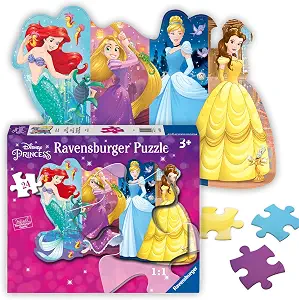
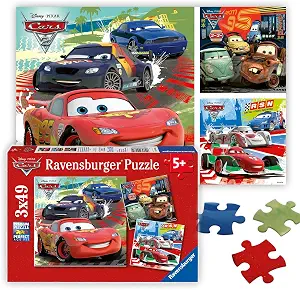
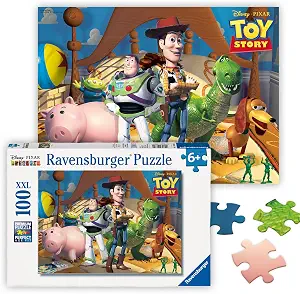
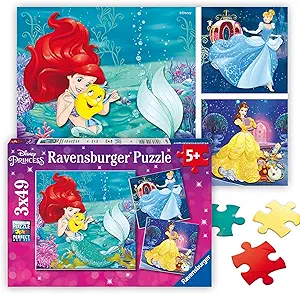
Ravensburger is the brand we kept coming back to when we needed a puzzle that could grow with a kid instead of getting outgrown in a season. My testing partner’s six-year-old started with their 60-piece dinosaur puzzle in the spring and was working through a 200-piece version of the same theme by the time school let out, and the jump in difficulty felt natural rather than jarring. That’s really the brand’s biggest strength: a genuinely wide range of piece counts and difficulty levels under one roof, so you’re not brand-hopping every time your child levels up. The pieces themselves have that signature soft-touch matte finish and a linen-textured surface that resists glare, which sounds minor until you’re doing a puzzle under a kitchen light and realize you can actually see the whole image clearly. Parents who want one dependable brand to rely on through several years of a kid’s development, rather than restarting the search every birthday, tend to get the most mileage out of Ravensburger.
Pros: Wide range of age-appropriate difficulty levels, strong print clarity, pieces fit snugly without forcing. Cons: Character-licensed puzzles (Disney, Pixar) often cost more than generic-themed options
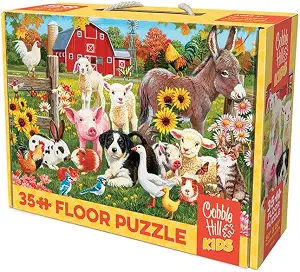
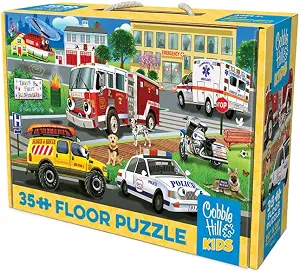
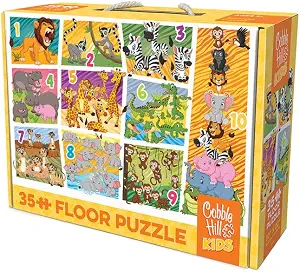
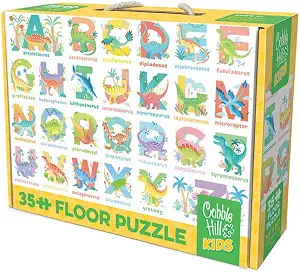
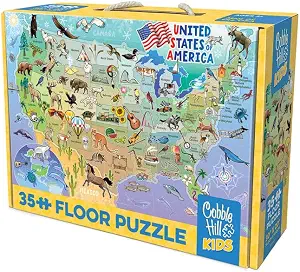
Cobble Hill won us over in a way we didn’t expect, mostly because of how the artwork held up to repeated use. We ran a 35-piece farm-animal puzzle through probably a dozen assemblies with a four-year-old over one month, and the board never softened or delaminated at the corners the way some cheaper kids’ puzzles do after that kind of handling. There’s also a quieter detail worth mentioning: Cobble Hill prints its boxes and puzzle backing using recycled board, which matters if you’re a parent trying to make small, better choices without turning every purchase into a research project. The illustration style leans warm and painterly rather than cartoonish, which made it an easy pick for families who want something that doesn’t feel like it’s competing for attention with a screen. This is a strong option for parents who want a puzzle sturdy enough to survive being a permanent fixture on the living room table for a week at a time.
Pros: Notably durable board that resists corner wear, environmentally conscious materials, distinctive non-cartoon artwork. Cons: Smaller selection of licensed characters compared to bigger brands
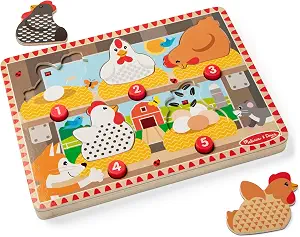
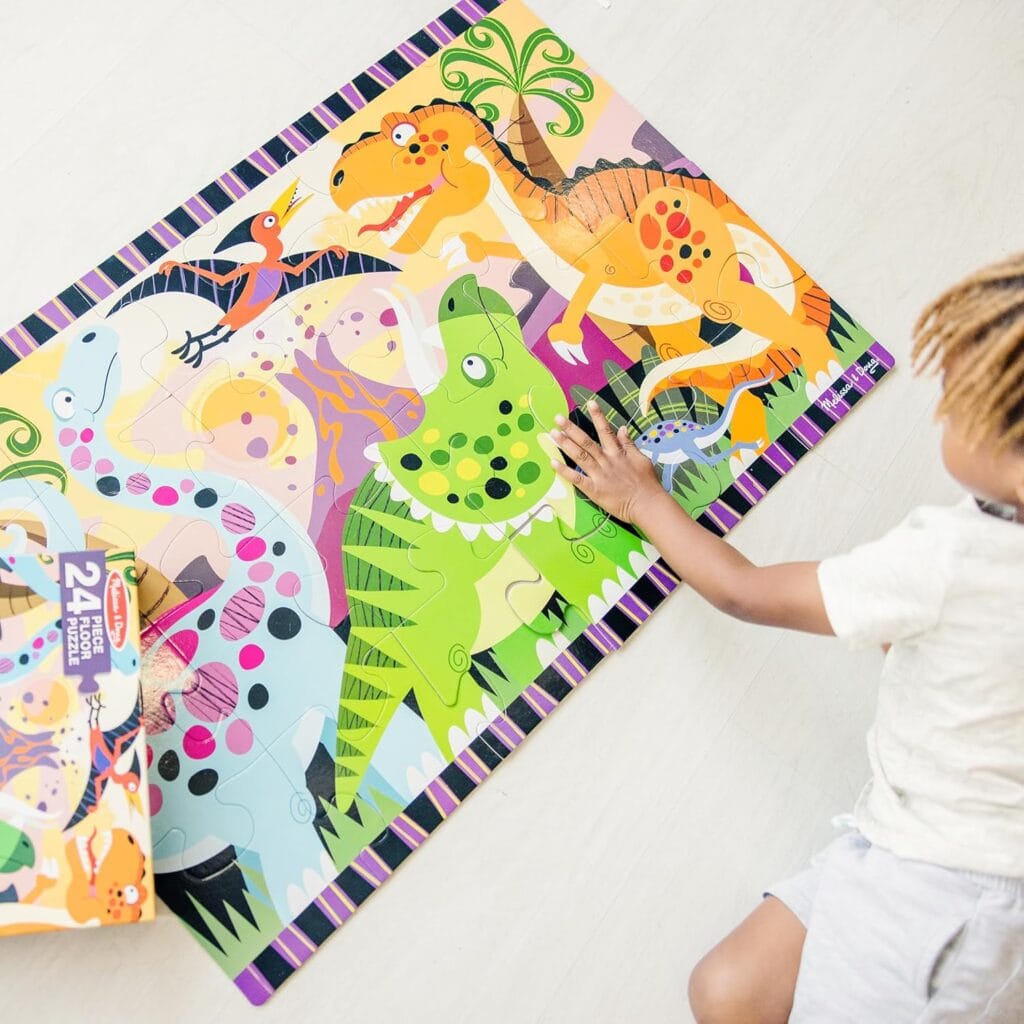
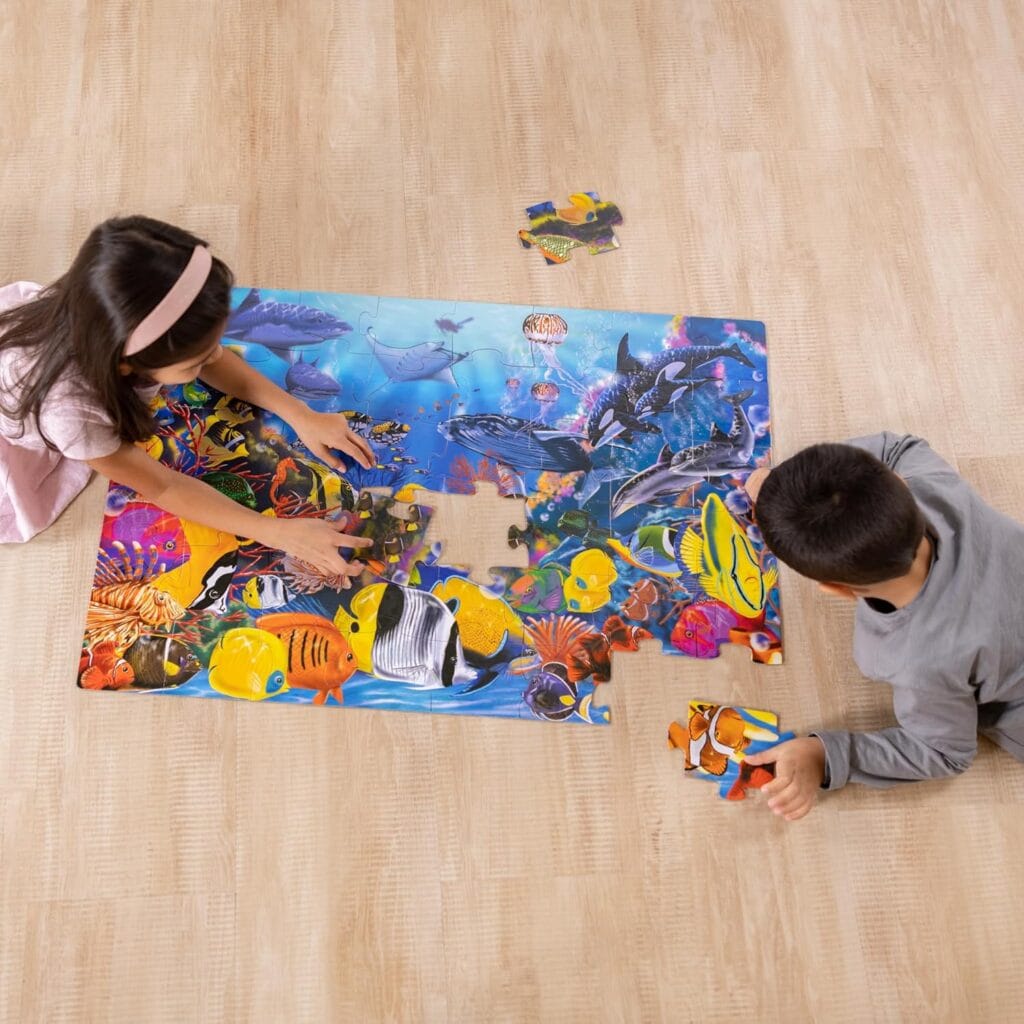
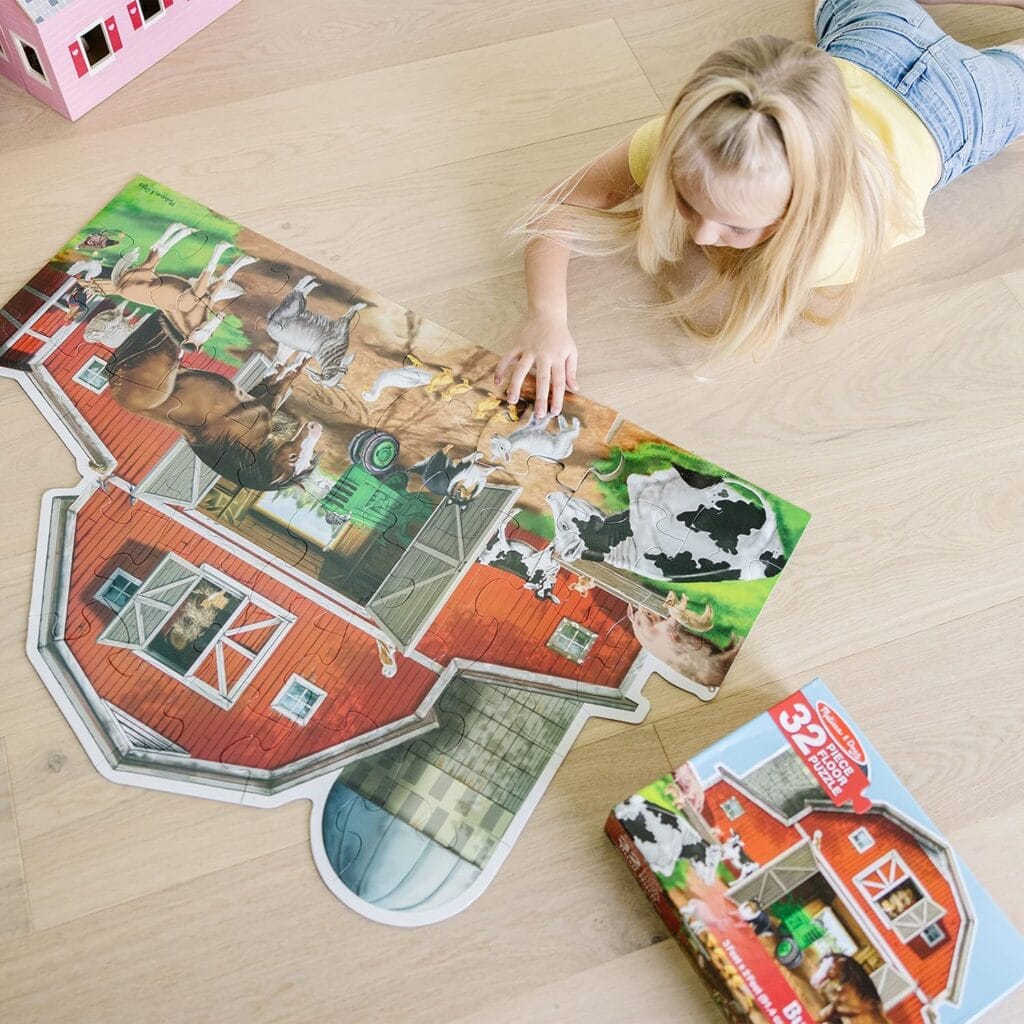
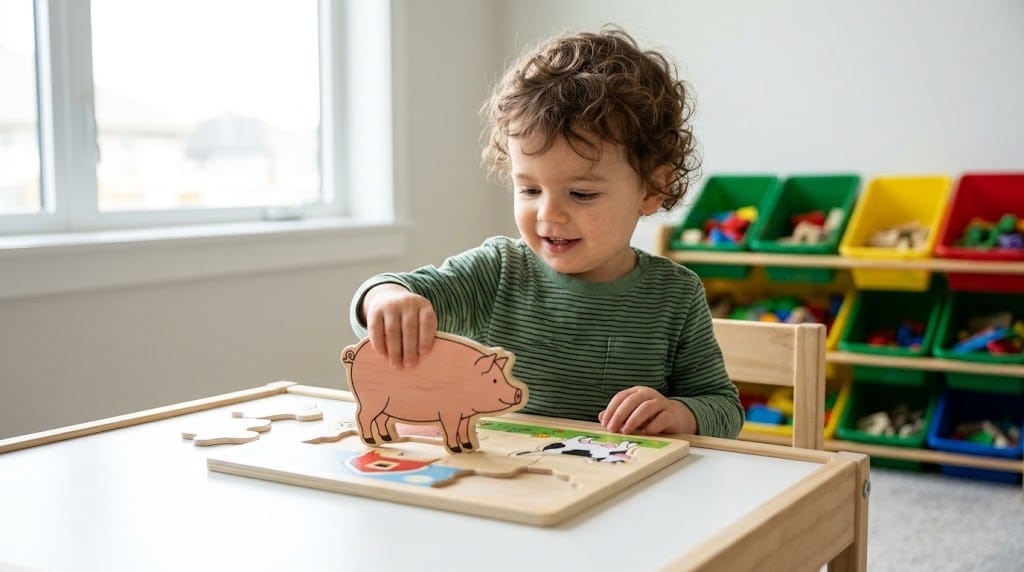
If you have a toddler in the house, there’s a good chance you already own something from Melissa & Doug, and there’s a reason the brand shows up in so many nurseries. We tested their classic wooden peg puzzles with a two-year-old who was still working on basic hand-eye coordination, and the chunky wooden knobs made all the difference — she could actually grip and lift the pieces herself instead of needing help every time, which kept her engaged far longer than a flat cardboard piece would have. The wood construction also means these puzzles survive drops, bites, and the occasional toss across the room in a way paper puzzles simply can’t. What surprised us most was how well-suited the imagery is for language development — animals, vehicles, and letters are rendered simply enough that a parent can narrate along while a toddler works. For families with a child under four who’s just learning to match shapes and names of objects, this is the brand we’d point to first.
Pros: Sturdy wooden construction survives rough toddler handling, chunky knobs support early motor skills, simple imagery aids early vocabulary. Cons: Limited piece counts mean kids age out of the wooden line fairly quickly
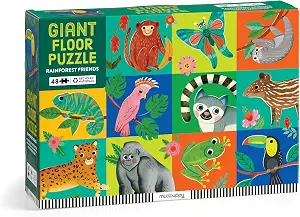
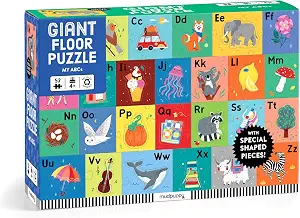
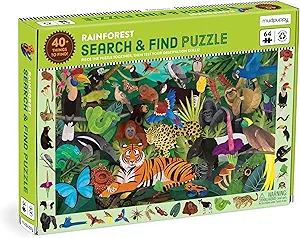
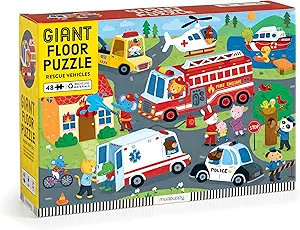
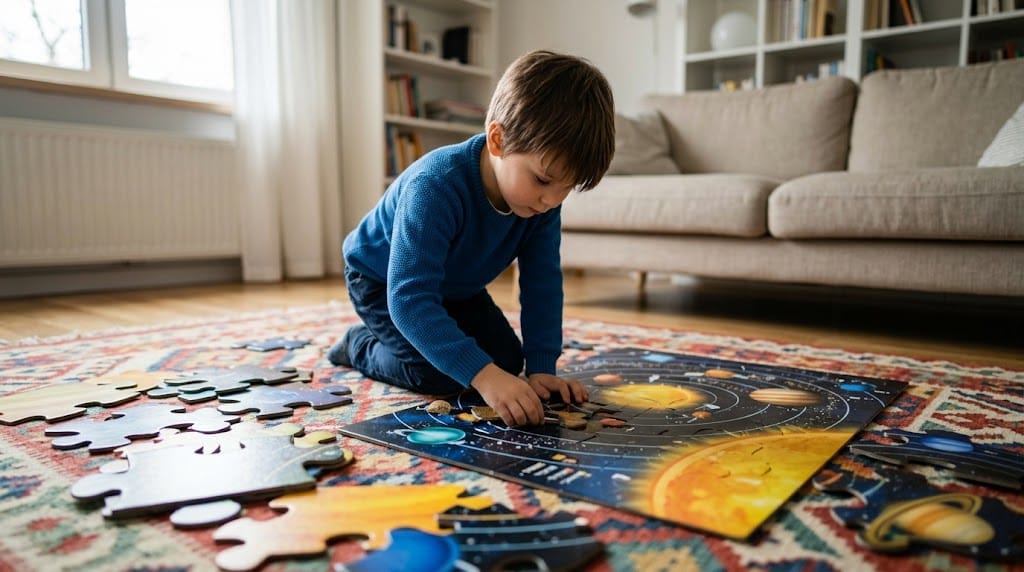
Mudpuppy is the brand we handed to kids who were a little bored with standard animal-and-farm imagery and wanted something with more character. Their puzzles lean into bold, saturated illustration styles — think space scenes, dinosaurs mid-roar, or underwater worlds — and during testing, that visual punch was genuinely what kept a seven-year-old at the table longer than we expected. One detail worth calling out: several of their puzzles glow in the dark or use metallic foil accents, and watching a kid’s reaction the first time they turned off the lights and saw their finished puzzle glow was honestly one of the more fun moments of our whole testing process. The pieces are standard cardboard rather than wood, so they’re not built for toddlers, but for kids who are past the chewing stage and want a puzzle that feels a little more exciting than educational, Mudpuppy tends to land well.
Pros: Distinctive, high-energy illustration styles that hold kids’ interest; fun novelty features like glow-in-the-dark ink. Cons: Standard cardboard pieces aren’t as durable as wood for very young or rough handlers
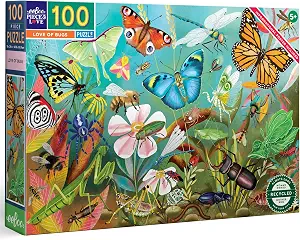
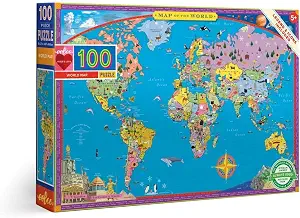
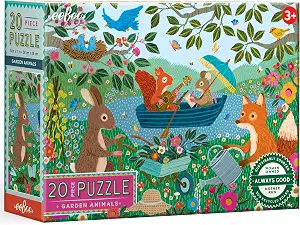
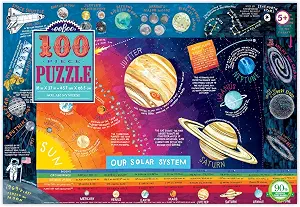
eeBoo took a different approach than every other brand on this list, and it showed in testing. Instead of leaning on licensed characters or bold colors, their puzzles favor a softer, storybook-style illustration with genuinely thoughtful educational themes — life cycles, world maps, the solar system, and so on. We used one of their “life cycle of a butterfly” puzzles with a five-year-old, and what stood out was that she started narrating the stages back to us unprompted a few days later, which told us the imagery had actually stuck. eeBoo also makes some of the friendliest puzzles we tested for kids who get frustrated easily — the shapes are gentler, and the piece interlocks are more forgiving than average, so a child can self-correct without a meltdown. This is a strong pick for parents who care about the puzzle actually teaching something, not just filling twenty quiet minutes.
Pros: Genuinely educational themes woven into gentle, non-overwhelming artwork; forgiving piece shapes reduce frustration. Cons: Softer color palette may appeal less to kids who prefer bold, high-contrast imagery
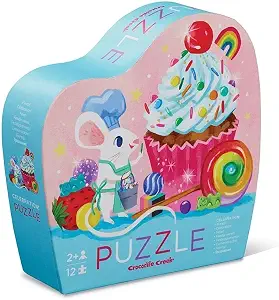
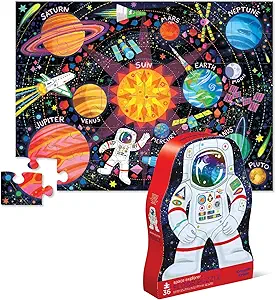
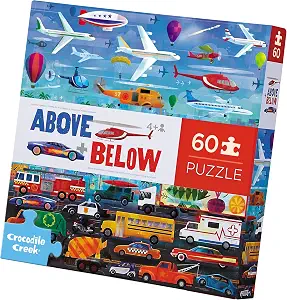
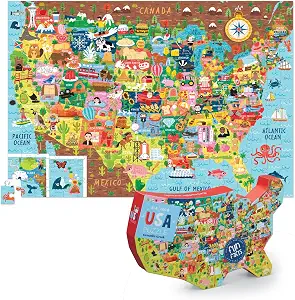
Crocodile Creek earned its spot on our list mostly through sheer kid delight — their puzzles come packaged in bright, sturdy round tins rather than boxes, and more than one kid in our test group got as excited about opening the tin as they did about the puzzle itself. Several of their sets are double-sided, so a completed puzzle reveals a second image or a fun fact on the back, which added a small layer of replay value we didn’t see anywhere else on this list. We tested a 100-piece ocean-themed set with an eight-year-old, and the piece cut was satisfying without being too easy, hitting a nice middle ground for kids who’ve outgrown toddler puzzles but aren’t ready for adult-level piece counts yet. The tins also double as decent storage once the puzzle’s done, which is a small thing, but it’s the kind of detail that makes a parent’s life slightly easier. Crocodile Creek is a solid choice for a birthday gift or travel puzzle, since the tin format holds up better in a backpack than a flimsy cardboard box.
Pros: Durable tin packaging doubles as storage, double-sided designs add replay value, satisfying mid-range difficulty. Cons: Selection is smaller and more niche-themed than bigger brands like Ravensburger
What We Looked at During Testing
- Piece size and thickness relative to the recommended age range
- Image and print quality, since faded or blurry printing makes puzzles harder for kids to solve independently
- Durability after repeated assembly, including corner and edge wear
- Educational value — does the puzzle teach a skill, a concept, or just kill time?
- Price relative to piece count and quality
How to Match Piece Count to Age
A rough guideline that held up throughout our testing:
- Ages 1–2: 2–4 piece chunky wooden puzzles
- Ages 3–4: 12–24 piece puzzles with large, simple pieces
- Ages 5–7: 48–100 piece puzzles
- Ages 8–10: 100–300 piece puzzles
The American Academy of Pediatrics notes that puzzles and similar problem-solving play support the development of fine motor skills and spatial reasoning in early childhood, which is part of why matching difficulty to age (rather than just going by what looks fun on the box) actually matters.
Common Questions Parents Ask
Are wooden puzzles worth the extra cost over cardboard? For kids under four, generally yes — wood survives rough handling and repeated drops far better, and the thicker pieces are easier for small hands to grip. Once a child is past the toddler stage, cardboard puzzles from brands like Mudpuppy or Ravensburger tend to offer better value and a wider range of themes.
How many pieces should a puzzle have for a first-timer? Start smaller than you think you need to. A frustrating first experience can sour a kid on puzzles altogether, so it’s generally better to start a few piece counts below what the box recommends and work up from there.
Do puzzle brands differ much in piece thickness? Yes, noticeably. Wooden brands like Melissa & Doug sit at the thick end of the spectrum, while standard cardboard brands vary — Cobble Hill’s board tended to hold up better than some lower-cost competitors we’ve tested for our Ravensburger 500-piece puzzle review.
Should I buy licensed character puzzles or original artwork? Licensed puzzles (Disney, Pixar, superheroes) tend to hook reluctant puzzlers fast, but original-artwork brands like eeBoo and Cobble Hill often hold a child’s attention longer once the novelty of the character wears off, since the imagery tends to be more visually rich.
A Final Note From Our Team
None of these six brands is a universal “best” pick — the right one really does depend on your child’s age, patience level, and what kind of imagery grabs their attention. If we had to boil it down: Melissa & Doug for the youngest hands, Mudpuppy or Crocodile Creek for kids who want personality and fun packaging, eeBoo for parents who want an educational bent, and Ravensburger or Cobble Hill as the dependable, grow-with-your-kid options. If you’re building out a puzzle collection at home, it’s also worth checking our guide on choosing the right puzzle cut type and our breakdown of floor puzzles for young children, which cover a couple of related decisions that come up once you’ve settled on a brand.