Advertiser Disclosure
We independently review everything we recommend. When you buy through our links, we may earn a commission.
The Best Floor Puzzles for Kids

There’s a particular kind of magic that happens when a child gets down on all fours, slides a giant puzzle piece across the living room floor, and — click — finds its home. Floor puzzles are one of those rare toys that hold a child’s attention without a screen in sight, and as parents and educators ourselves, we’ve spent years watching kids absolutely lose themselves in them. The problem? The market is crowded, and not every floor puzzle is made equal. Some look great in the box but fall apart within a week. Others have pieces so flimsy they buckle under little hands.
So our assessment team spent several weeks testing floor puzzles with real kids — ages ranging from 2 to 8 — to find the ones that genuinely hold up, keep kids engaged, and deliver on their developmental promises.
How to Choose the Right Floor Puzzle for Your Child
With so many solid options on the market, the right choice generally comes down to three questions: How old is your child? What kind of challenge are they ready for? And what matters most to you as a buyer — durability, design, sustainability, or value?
For toddlers aged 2–3, we’d generally point toward Mudpuppy or the simpler Melissa & Doug sets with 24–32 oversized pieces. The imagery is engaging, the pieces are manageable, and neither brand will break your budget.
For kids aged 3–5, Melissa & Doug, Crocodile Creek, or QUOKKA tend to hit the sweet spot. Melissa & Doug offers the widest theme range and excellent piece quality; Crocodile Creek suits families who care about aesthetic warmth; and QUOKKA is the right call if presentation matters for a gift.
For kids aged 5–8 who are ready for more challenge, SYNARRY and Ravensburger both deliver. SYNARRY offers more pieces at a lower price; Ravensburger rewards the investment with premium durability and a satisfying fit.
Everything We Recommend
✅ We recommend these products based on an intensive research process that’s designed to cut through the noise and find the top products in this space. Guided by experts, we spend hours looking into the factors that matter to bring you these selections.
⭐ 2.5 million+ people assisted in the last 30 days ⭐
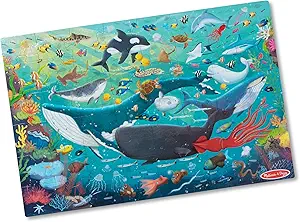
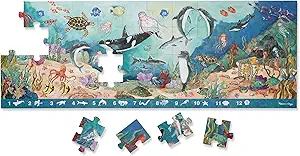
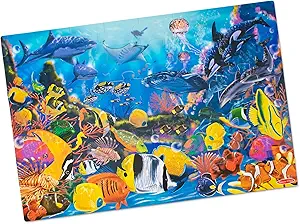
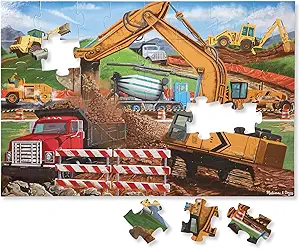
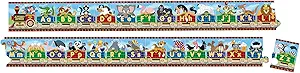

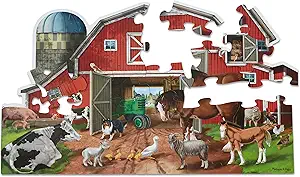
Best for: Families looking for a reliable, widely available, theme-rich floor puzzle experience for ages 3 and up.
Melissa & Doug has been making developmental toys for over 35 years, and their floor puzzles genuinely reflect that depth of experience. When our team opened the Search and Find Beneath The Waves Floor Puzzle and the Outer Space Glow-in-the-Dark Floor Puzzle, the first thing we noticed was the pieces themselves — extra-thick cardboard with a matte, wipe-clean surface that held up beautifully through repeated handling by small hands, accidental spills, and more than one enthusiastic stomp. Both puzzles measure a generous 2 x 3 feet when fully assembled, giving kids a real sense of physical accomplishment when they finish. What honestly surprised us, though, was the Glow-in-the-Dark variant: you assemble it under bright light, and when you flip off the switch, hidden stars, planets, and nebula details emerge from the image like a secret reward — the kids in our testing group literally gasped. Every Melissa & Doug floor puzzle also includes an illustrated guide that helps children recognize shapes and picture elements independently, so parents don’t need to hover to make the activity educational. The FSC certification on their cardboard is a thoughtful touch, too, for families who care about sustainable sourcing. Where Melissa & Doug occasionally falls short is in variety for older kids — the themes tend to skew younger, and some parents noted that the pieces can feel a little large for a confident 6-year-old who’s ready for more of a challenge. Still, for sheer quality-to-value ratio in the 3–5 age range, this brand is difficult to beat.
Trade-offs: Somewhat limited challenge for kids over age 6; not all themes will appeal to every child.
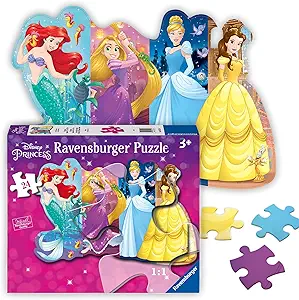
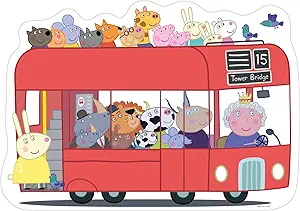
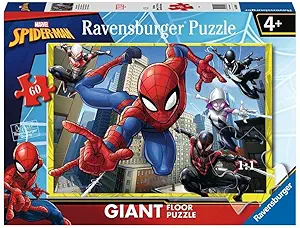

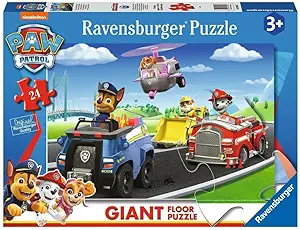
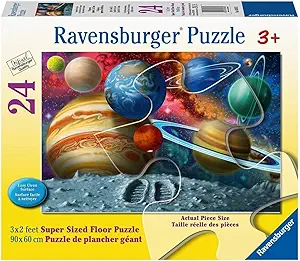
Best for: Parents who prioritize build quality, piece precision, and longer-term durability, particularly for ages 4 and up.
Ravensburger has a reputation in the puzzle world that borders on legendary, and their children’s floor puzzles earn that reputation in ways that are immediately tactile. The moment you pick up a Ravensburger piece, you notice the difference — their cardboard tends to be slightly denser and more rigid than most competitors, and the cutting die is precise enough that pieces snap together with a satisfying click that’s oddly satisfying for adults and kids alike. During our testing, the Farm and Construction Site 2-Pack was a hit for its bold, high-contrast imagery, which made it genuinely accessible for younger kids who can struggle with busier designs. The color saturation is notably rich — the greens feel green, the blues feel blue — and the scenes are detailed enough that kids kept finding new elements to point out and name even after completing the puzzle multiple times. What distinguishes Ravensburger most, though, is longevity: after heavy repeated use, the pieces retained their shape and their fit. No warping, no edge fraying. For families who want to invest in a puzzle that will be around for years, not just one season, Ravensburger generally justifies the slightly higher price point. The main trade-off is availability — Ravensburger’s floor puzzle range is somewhat narrower than Melissa & Doug’s, and finding specific themes locally can require some hunting.
Trade-offs: Higher price point; narrower theme selection for floor puzzles specifically; may be harder to find in physical retail stores.
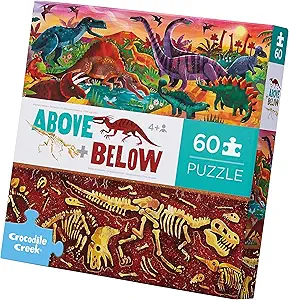
Best for: Gift-givers and design-conscious families who want a floor puzzle that’s as visually lovely as it is functional, for ages 3 to 6.
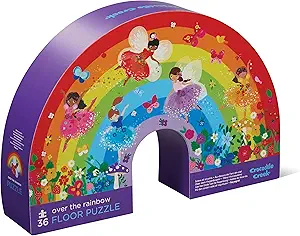
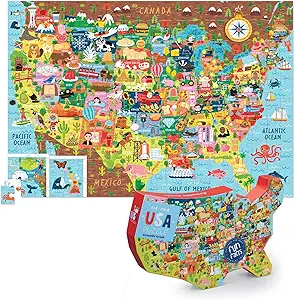
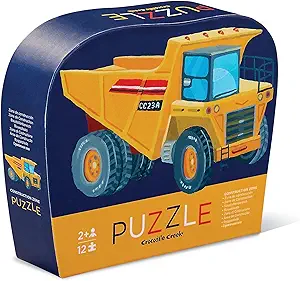
Walking into a toy store and spotting a Crocodile Creek puzzle is an experience in itself — their packaging is genuinely beautiful, featuring illustrated scenes with a warm, hand-drawn quality that feels refreshingly different from the flat digital art common in the category. Our team tested the Over The Rainbow 36-piece floor puzzle, and the reaction from kids was immediate: the illustration style, with its rich details and gentle color palette, drew them in like a storybook. The 36-piece count is well-calibrated for ages 3–5, offering just enough challenge to feel like an achievement without becoming frustrating. Pieces are sturdy with slightly rounded edges that are kind to small hands, and the shaped storage box doubles as a display piece — parents genuinely wanted to leave it on a shelf. Crocodile Creek also uses soy and vegetable-based inks in their printing, which matters to an increasing number of parents thinking about what their children are handling. The puzzles measure around 24 x 18 inches when complete, which is somewhat smaller than the 2 x 3-foot standard from brands like Melissa & Doug — something to keep in mind if your child tends to prefer the physical drama of a big floor spread. But as a gift, especially for a child who loves animals or transportation themes, Crocodile Creek is one of the most thoughtful choices we tested.
Trade-offs: Smaller finished size than some competitors; more limited piece-count range; fewer options for kids over age 6.
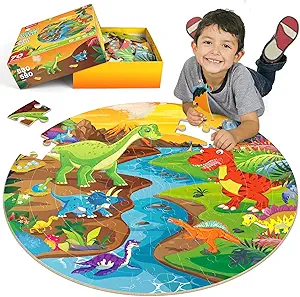
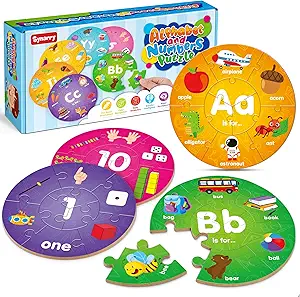
Best for: Budget-conscious families with kids aged 3–8 who are passionate about dinosaurs and can handle a slightly higher piece count.
SYNARRY isn’t the most well-known name in the floor puzzle space, but it’s won a devoted following for good reason, and we were genuinely impressed when we tested their 70-piece Dinosaur Floor Puzzle. Seventy pieces is a meaningful jump from the standard 48, and it positions this puzzle nicely for kids around 4–6 who are ready for more of a challenge but not yet ready to sit at a table with smaller pieces. The dinosaur artwork is bright and detailed — scientifically plausible enough to satisfy curious kids while colorful and dynamic enough to feel exciting rather than textbook-ish. During testing, several children who initially said they were “bad at puzzles” completed this one successfully because the large, irregular pieces are still very manageable, and the distinct color zones for each dinosaur make finding matches intuitive. The puzzle assembles to a solid 2 x 3 foot spread, and piece thickness is respectable for the price point — not quite Ravensburger-level, but far from flimsy. Storage is handled by a standard illustrated box. The area where SYNARRY shows its value-brand origins is mainly in the packaging experience — the box is functional rather than premium, and the brand lacks the breadth of themes that the larger names offer. But if you have a child who is going through a serious dinosaur phase and you want to give them something that will hold their attention for a solid hour, SYNARRY delivers impressive value.
Trade-offs: More limited theme range; packaging is functional rather than premium; fewer options outside the dinosaur/nature categories.
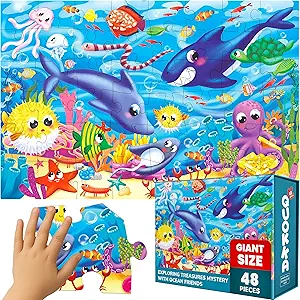
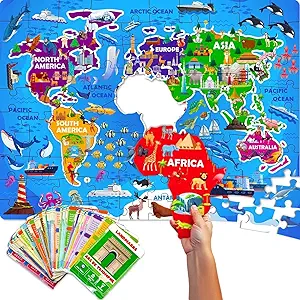
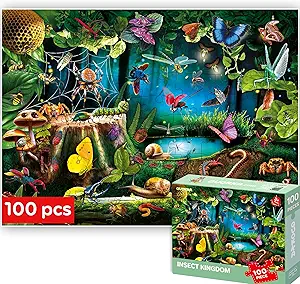
Best for: Parents and gift-givers who want a floor puzzle experience that feels genuinely special from the moment it’s opened, for ages 3–6.
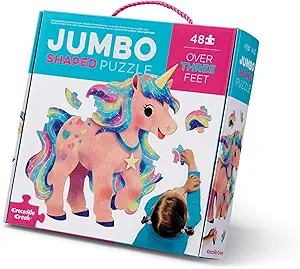
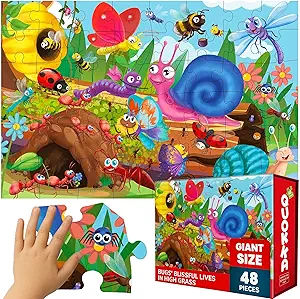
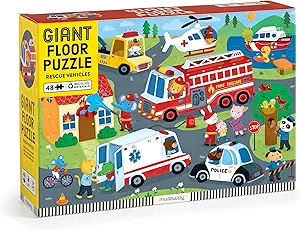
QUOKKA is a newer player in the children’s puzzle space, but they’ve made a strong impression by leaning into an area most toy brands neglect: the unboxing experience. When our team received the QUOKKA Giant Floor Puzzle — a 48-piece, 2 x 3-foot puzzle that comes in a premium storage box with magnetic closure and a leather-look handle — the first reaction from everyone in the room was that it looked more like a gift from a boutique toy shop than a mass-market toy. That matters, particularly if you’re buying for a child’s birthday or a holiday. But QUOKKA isn’t just packaging — the puzzle itself is well-made, with thick, unique-shaped pieces that fit together with pleasing precision and don’t slide apart when a young child accidentally bumps the assembled image (a more common frustration than it sounds). The scenes, including city cars and dinosaur themes, are rich with detail that kids keep discovering on repeat sessions. QUOKKA also offers a replacement piece policy for lost pieces, which is one of those small, thoughtful touches that parents of young children will genuinely appreciate. In 2024, QUOKKA’s wooden puzzles and play mats won recognition from the Mom’s Choice Awards and Baby Maternity Magazine, reflecting a broader design philosophy centered on educational quality. The price is higher than average for the category, which is the main reason QUOKKA sits better as a gifting option than an everyday purchase. But if you want a floor puzzle that earns a genuine “wow” when it’s unwrapped, this is the one.
Trade-offs: Higher price point; premium packaging won’t matter to all families; theme range is still growing.
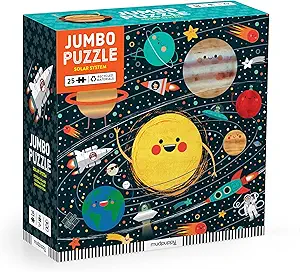
Best for: Parents who value distinctive, artist-collaborator artwork and eco-friendly materials, for ages 2 and up.
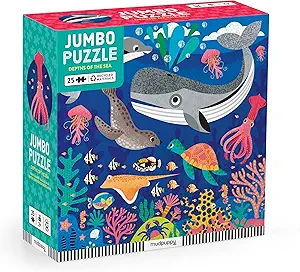
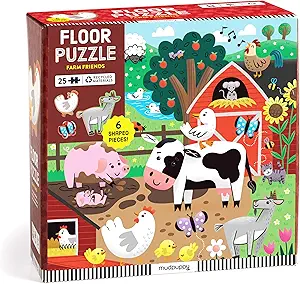
Mudpuppy has been around since 1992, and over three decades, they’ve developed a very clear identity: whimsical, artist-designed illustrations, a genuine commitment to sustainability, and a deep respect for screen-free childhood. Our team tested several Mudpuppy floor puzzles, including the Mighty Dinosaurs Jumbo Puzzle and the At The Zoo 25-piece option, and what sets them apart is immediately visible in the artwork. Mudpuppy collaborates with independent illustrators and established artists — they’ve worked with the estates of Andy Warhol and Eric Carle — which gives their puzzles a visual personality that feels like it belongs in a children’s picture book rather than a toy catalog. The 25-piece count is well-suited to confident toddlers and younger kids, with the oversized pieces (including six special-shaped pieces in select sets) providing both tactile fun and an added layer of visual problem-solving. The greyboard contains approximately 90% recycled paper, the packaging uses around 70% recycled materials, and the printing uses nontoxic inks — credentials that are easy to verify and matter to an increasingly eco-aware parent demographic. All Mudpuppy products meet CPSIA, ASTM, and CE safety standards. The finished size (typically around 2 x 2.5 feet) is slightly more compact than some competitors, and the 25-piece count is intentionally accessible rather than challenging — so if you have a child who’s already flying through 48-piece puzzles, you may find Mudpuppy’s floor range too easy. But for younger kids taking their first real steps in puzzle-solving, or for families who genuinely care about what an artist-designed piece of play looks like sitting on their shelf, Mudpuppy is a consistently satisfying choice.
Trade-offs: Lower piece counts than some competitors; smaller finished size; may not offer enough challenge for kids over age 5.
What Makes a Great Floor Puzzle?
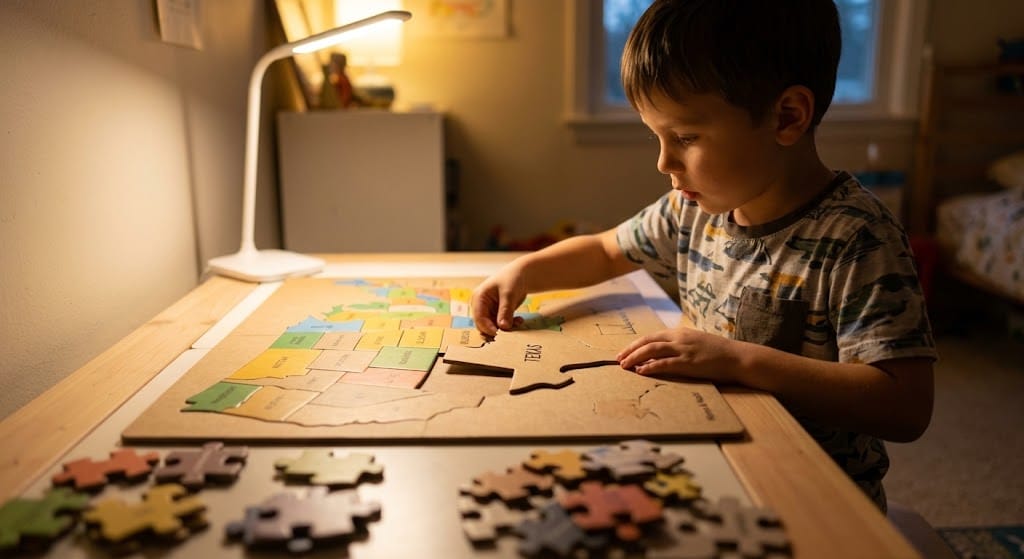
Before we get into our picks, it’s worth talking about what actually separates a good floor puzzle from a forgettable one, because it’s not always what you’d expect.
Piece Thickness and Durability
This is arguably the most important factor, especially for younger kids. Thin, flimsy cardboard warps and tears quickly — and once a piece is bent, it rarely fits cleanly again. The puzzles that impressed us most had extra-thick cardboard with a slightly waxy or laminated surface that resisted moisture, fingerprints, and the inevitable accidental step-on. Toys for toddlers should be able to withstand rough handling, and our testing confirmed that piece durability is a meaningful differentiator in this category.
Piece Size and Age Appropriateness
Floor puzzles generally span a wide age range, and the piece count matters. As a general guide, toddlers aged 2–3 tend to do best with 12–25 oversized pieces; kids aged 3–5 typically handle 24–48 pieces well; and kids aged 5–8 can graduate to 48–100 pieces with more complex imagery. The puzzles are among the most developmentally rich toys for early childhood, supporting fine motor skills, spatial reasoning, and concentration simultaneously.
Image Design and Visual Appeal
This one is harder to measure, but it matters enormously. Puzzles with overly busy or low-contrast artwork tend to frustrate young puzzlers because the pieces all look too similar. The best floor puzzles feature bright, well-differentiated color zones and clear, engaging scenes that give kids visual landmarks to work toward.
Storage and Packaging
Floor puzzles take up real estate. The ones that come with a sturdy, clearly labeled storage box — ideally with a reference image on the outside — are far more likely to stay in rotation in a household. Puzzles that come in a loose bag or thin tray tend to end up with missing pieces within a month.
Educational Value
A good floor puzzle is also a conversation starter. The best designs depict scenes rich enough for parents and kids to talk about — animals, habitats, geography, vehicles, and more. This transforms puzzle time from a solo activity into a genuinely social, vocabulary-building experience.
The Developmental Case for Floor Puzzles
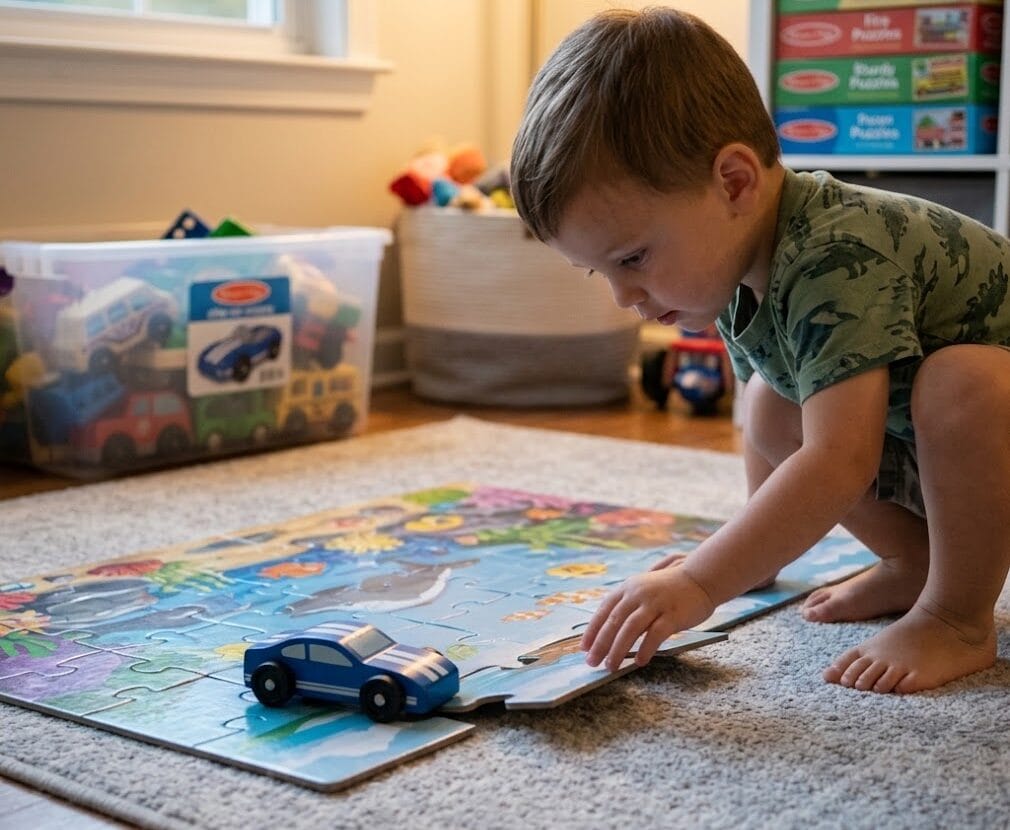
It’s worth pausing on why floor puzzles matter, beyond the simple fact that kids enjoy them. Research consistently shows that puzzle play in early childhood supports spatial reasoning, fine motor skill development, and early math cognition. A study published in the journal Child Development found that children who play with puzzles between ages 2 and 4 show stronger spatial skills later in childhood — skills that tend to correlate with performance in STEM subjects. The physical nature of floor puzzles adds dimension: unlike tabletop puzzles, floor puzzles encourage whole-body engagement, as children crawl, reach, and reposition themselves, which supports gross motor development alongside the cognitive work.
For parents navigating the American Academy of Pediatrics’ guidance on screen time, floor puzzles represent one of the most accessible and genuinely effective alternatives — they require sustained attention, reward persistence, and are naturally collaborative when a parent or sibling sits down to join.
A Few Things to Watch For When Shopping
Not all floor puzzles that look good in photographs translate well in person. Here are a few watch-outs our team encountered during testing.
Piece counts can be misleading. A 48-piece puzzle from one brand may be significantly harder than a 48-piece puzzle from another, depending on how the image is divided. Puzzles where each piece has a very distinct color zone are far more accessible to young children than those with large areas of similar color (like an all-blue sky).
Finished size varies more than you’d expect. “Floor puzzle” as a category spans anywhere from about 18 x 24 inches to a full 3 x 4 feet. If you want the big, dramatic floor spread, check the assembled dimensions carefully before buying.
Storage matters more than it seems. Once you’ve lost three pieces from a 48-piece set, the puzzle loses much of its value. Prioritize puzzles with sturdy, closeable boxes and a lid image that kids can use as a reference — it helps them pack up independently and keep all pieces accounted for.
Frequently Asked Questions About Floor Puzzles
At what age can kids start doing floor puzzles?
Most floor puzzles are designed for ages 2 and up, though this depends heavily on piece count and size. Simpler 12–25 piece puzzles with very large pieces can work well for confident 2-year-olds, especially with some adult support. Fully independent puzzle completion typically starts around age 3–4 for most children.
Are floor puzzles good for preschoolers?
Absolutely — and they’re among the best developmental toys for the preschool age range. They support fine motor development, hand-eye coordination, spatial reasoning, and vocabulary development, particularly when a parent or educator engages with the child during the activity.
How do I store a floor puzzle without losing pieces?
The most effective approach is to use the original box if it has a secure lid. For puzzles that came in a bag, consider repacking them in a zip-lock bag inside a shallow bin. Several families we spoke with during testing also use rubber bands around the assembled sections of a partially completed puzzle to keep progress intact between sessions.
Can floor puzzles be done on carpet?
Yes, though a smooth, hard floor generally makes it easier for pieces to be slid around and positioned accurately. Carpet can cause pieces to grip and shift, which sometimes frustrates younger children. A large, flat foam play mat can offer a good middle-ground surface.
What’s a good floor puzzle to give as a gift?
For gifting purposes, QUOKKA stands out for its premium box presentation. Crocodile Creek is also an excellent gift choice for families who appreciate distinctive artwork. For a classic, you can rarely go wrong with a Melissa & Doug floor puzzle — they’re widely trusted and appreciated across age groups.