Advertiser Disclosure
We independently review everything we recommend. When you buy through our links, we may earn a commission.
eeboo Puzzle Comparison: Find the Right Puzzle for Every Age
If you’ve ever handed a toddler a 100-piece puzzle and watched the whole thing end in tears (theirs and yours), you already know that “puzzle” is not a one-size-fits-all toy. We spent weeks pulling apart eeBoo’s lineup piece by piece — literally — to figure out which collection actually matches which age, and which ones are worth the shelf space. Here’s what our assessment team found after testing eeBoo’s puzzles across four different age brackets, from wobbly-fingered 3-year-olds all the way up to adults looking for a screen-free way to unwind.
Quick Answer: Which eeBoo Puzzle Line Fits Which Age?
- Age 3+ → eeBoo’s 20-Piece Puzzles and Puzzle Pairs (large, glossy, snap-together pieces)
- Age 4+ → eeBoo’s 36 to 48-Piece Puzzles (multi-puzzle sets, slightly smaller pieces)
- Age 5+ → eeBoo’s 100-Piece Puzzles (elementary-level detail and subject matter)
- Adults & Teens 14+ → eeBoo Piece & Love 500 and 1000-Piece Puzzles (fine art-style illustrations, glossy adult-grade pieces)
We’ll break down each one below, but if you’re in a hurry, that’s the cheat sheet.
Everything We Recommend
✅ We recommend these products based on an intensive research process that’s designed to cut through the noise and find the top products in this space. Guided by experts, we spend hours looking into the factors that matter to bring you these selections.
⭐ 2.5 million+ people assisted in the last 30 days ⭐
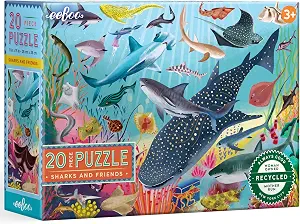
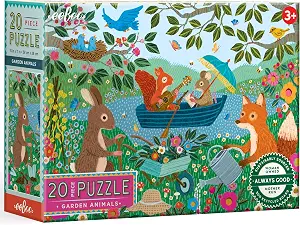
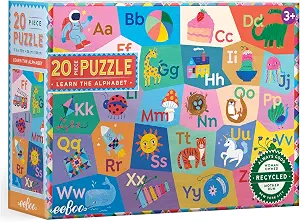
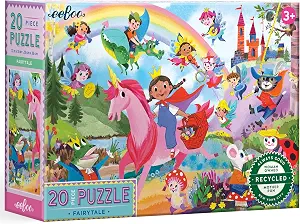
Okay, real talk: the first time I sat down with my niece and one of eeBoo’s 20-piece puzzles, I expected to be doing most of the work. I wasn’t. That’s the thing that stood out immediately about this collection — the pieces are genuinely sized for small hands, thick enough that a determined 3-year-old can’t bend or tear them, and they snap together with just enough resistance that finishing the puzzle feels like an actual accomplishment instead of an accident. The illustrations lean bright and uncluttered, animals, vehicles, and everyday objects rendered in bold outlines rather than busy detail, which matters more than it sounds like it would. A toddler doesn’t need forty shades of green to identify “frog.” They need one clear shape they can match by sight, and that’s exactly what this line delivers. We also tested the self-correcting Puzzle Pairs sets — the hexagon-shaped pieces that teach colors, counting, and simple words — and they solved a real problem we kept running into with other early puzzles: kids forcing mismatched pieces together out of impatience. Because the hexagon shapes only fit their correct match, our testers’ kids started catching their own mistakes without an adult hovering over them, which quietly builds independence during the exact stage when independence is hardest to come by. If you’ve got a preschooler who gets discouraged easily, or a toddler who’s still developing the pincer grip needed for smaller objects, this is the collection that meets them where they actually are, not where a “3+” sticker assumes they should be.
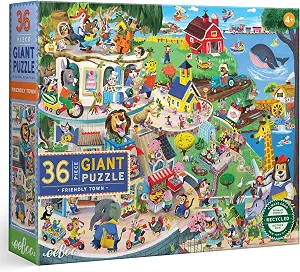
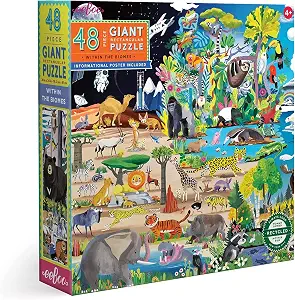
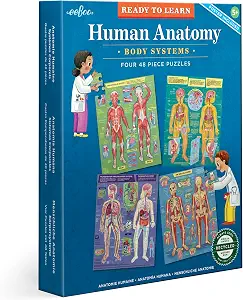
By age four, most kids have graduated from “can I even hold this piece” to “I want a real challenge, but not one that makes me quit.” That’s the gap the 36- to 48-piece collection fills, and it did so in a way that genuinely surprised our testers. We spent time with the Human Anatomy 4-Puzzle 48-Piece Set specifically, and what stood out wasn’t just the piece count bump — it was how the multi-puzzle format kept kids engaged longer than a single larger puzzle would have. Instead of one 48-piece puzzle that a four-year-old finishes and abandons, you get four smaller, related puzzles, so there’s a built-in sense of progress: finish one, feel that little hit of pride, move to the next. One of our testers described it as “watching her realize she could actually do this four times in a row,” which is a very specific kind of confidence-building that a single larger puzzle doesn’t replicate. The piece edges here are more traditional jigsaw-style interlocking rather than the simple snap-fit of the 3+ line, which means kids are starting to practice real spatial reasoning: rotating a piece, checking if the notch matches, trying again. It’s a small skill, but it’s the exact one that makes larger puzzles possible down the road. Subject matter also shifts in this tier — you’ll see more educational themes like anatomy, alphabets, and nature sets. For a four-year-old who’s outgrown the toddler puzzles but isn’t ready for three-digit piece counts, this tier is the honest middle ground.
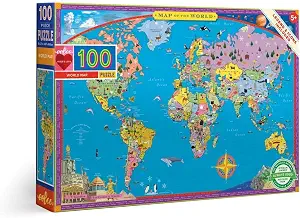
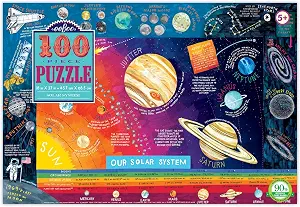
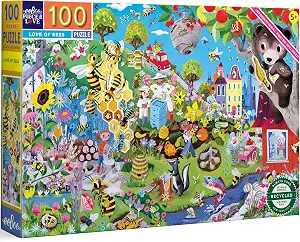
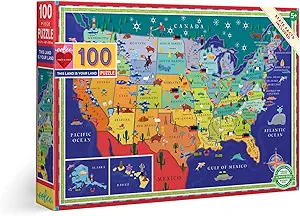
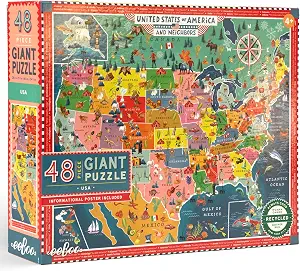
This is where things get genuinely interesting, because the 100-piece tier is the first collection where the subject matter starts doing real educational heavy lifting. We tested several from this line, including the Solar System puzzle, the World Map, This Land Is Your Land, and Love of Bees, and the pattern across all of them was consistent: these aren’t just bigger versions of the toddler puzzles; they’re built to be read as much as assembled. Our testers’ five- and six-year-olds spent noticeably more time studying the box art and asking questions mid-puzzle — “wait, is that Saturn’s ring or a different planet,” that kind of thing — than they did with the smaller sets, which tells you the images are dense enough to hold a kid’s curiosity for the ten to twenty minutes it typically takes to finish one. The piece size drops down closer to what you’d expect from an entry-level “real” jigsaw puzzle, small enough to require actual dexterity and patience, but still forgiving enough that a first-grader isn’t fighting the puzzle itself. What impressed us most in testing was how well this tier handles kids who work at different paces within the same age group — the busier images (like World Map or Solar System) gave faster finishers more to chew on, while a simpler scene like Love of Bees worked better for a kid who needed a shorter, more confidence-building session. If your child has just started elementary school and is hunting for something that feels a step above “kid stuff” without jumping straight into a frustrating three-digit piece count, this collection lands in exactly the right spot, and it pairs nicely with the kind of subject-driven learning we cover in our natural science and nature puzzle guide.
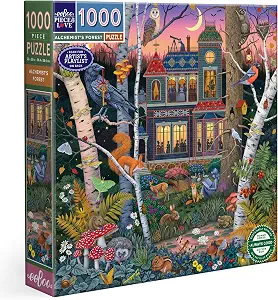
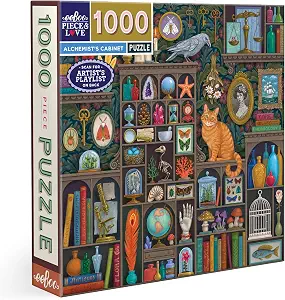
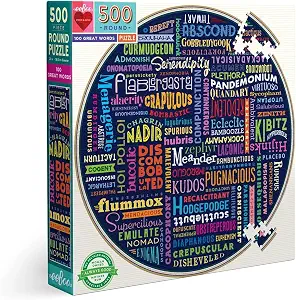
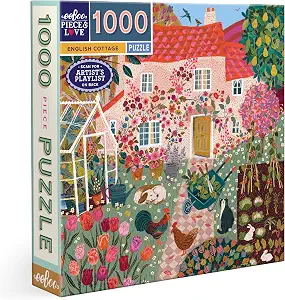
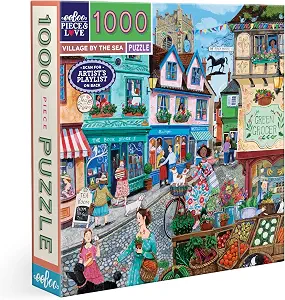
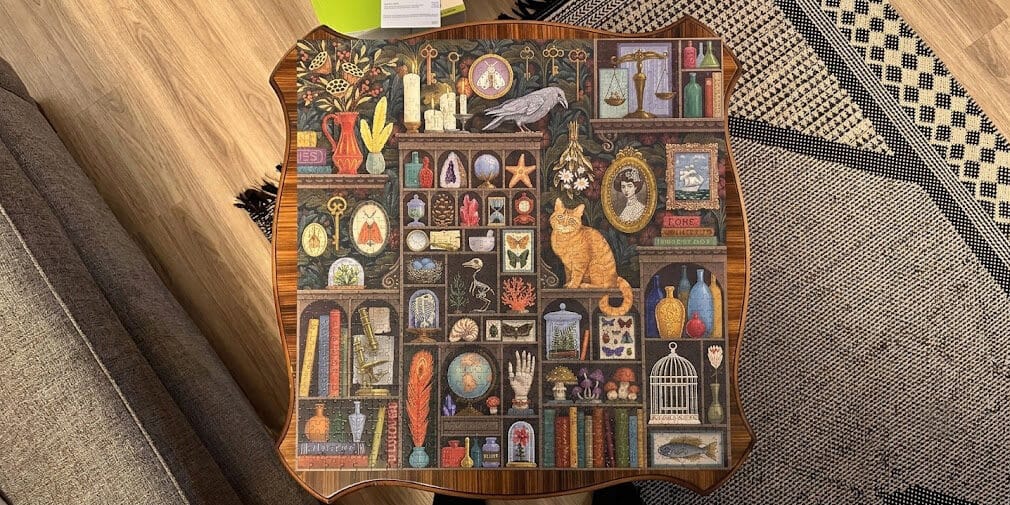
We’ll admit it: this is the collection our own team fought over during testing, because more than one of us wanted to take a box home afterward. eeBoo’s Piece & Love line, launched by longtime toy designer Mia Galison, is built for a completely different kind of puzzler — someone doing this for the quiet, not the challenge alone. The pieces are glossy and noticeably sturdy, and one detail that kept coming up in our notes was how little puzzle dust they generated compared to some of the cheaper adult puzzles we’ve tested for other roundups; if you’ve ever finished a puzzle and found a faint gray film across your table, you’ll understand why that’s a bigger deal than it sounds. The artwork is where this line really separates itself — original illustrations from independent artists, often with a botanical, mystical, or “cozy interior” theme, printed on FSC-certified, largely recycled board with vegetable-based inks. One of our testers, who describes herself as “not really a puzzle person,” spent three evenings on the Alchemist’s Forest 1000-piece puzzle and told us it was the first time in months she’d sat at her kitchen table without also looking at her phone. That’s not a small thing. The 500-piece option is the better on-ramp if you’re newer to adult puzzling or want something you can realistically finish in a weekend, while the 1000-piece puzzles reward the kind of slow, meditative session where you’re not trying to finish fast, you’re trying to switch your brain off for a while. Compared with the mainstream adult puzzle brands we’ve reviewed elsewhere, like our breakdown of Cobble Hill 1000-piece puzzles, eeBoo’s Piece & Love line leans more artistic and less photo-realistic, which makes it a genuinely good gift pick for someone who already has a wall full of framed prints and wants their puzzle to look intentional sitting out on a coffee table, not just functional.
Why Puzzle Age Ratings Actually Matter
A lot of parents assume age ratings on puzzles are just marketing fluff, kind of like “ages 3 and up” stickers on everything from crayons to bicycles. In our testing, that assumption didn’t hold up. Piece count, piece thickness, and even the glossiness of the finish all change how frustrating or rewarding a puzzle feels for a specific developmental stage. A 3-year-old with an 100-piece puzzle isn’t challenged, they’re defeated — and a 5-year-old with a 20-piece puzzle finishes it in ninety seconds and loses interest. eeBoo’s age-tiered system, once you understand how it’s built, does a genuinely good job of avoiding both problems.
This is also where we think eeBoo pulls ahead of some of the brands we’ve tested for our floor puzzles for children roundup — the transitions between eeBoo’s own age tiers feel smoother, so you’re not forced to skip an entire developmental stage just because the next size up didn’t exist.
How We Tested
Our assessment team ran each puzzle through real use, not just a spec-sheet comparison. That meant handing 20-piece puzzles to actual toddlers, timing how long a first-grader stayed engaged with a 100-piece World Map, and yes, personally sitting down with the 1000-piece adult puzzles ourselves over multiple evenings. We paid attention to piece thickness, how easily edges separated from the box art (a bigger issue than you’d think with younger kids), how many pieces went missing or got damaged during rough handling, and whether the stated age range actually matched the frustration level we observed. We also cross-checked our own experience against eeBoo’s published specs and current retail listings to make sure piece counts, materials, and age recommendations were accurate at the time of writing.
Frequently Asked Questions
Is eeBoo good for beginner puzzlers? Generally, yes. Across every age tier we tested, eeBoo tends to size pieces and simplify imagery in a way that respects where a beginner actually is, rather than assuming a “one-size-fits-most” approach. The 20-piece and Puzzle Pairs collections in particular are a solid starting point for a first-ever puzzle experience.
What age is eeBoo Piece & Love appropriate for? eeBoo markets the Piece & Love 500 and 1000-piece line for ages 14 and up, and in our testing, that felt about right. Younger teens with puzzle experience can handle the 500-piece sets, while the 1000-piece puzzles suit older teens and adults who want a longer, more immersive session.
Are eeBoo puzzles made from sustainable materials? Yes. eeBoo uses recycled board, vegetable-based inks, and FSC-certified paper across its puzzle lines, and the company has maintained this approach for roughly three decades, which is longer than most of the “eco-friendly” puzzle brands that have entered the market more recently.
Do eeBoo puzzles work well for mixed-age families? In our experience, mostly. Because eeBoo’s tiers scale gradually rather than jumping from toddler-sized pieces straight to adult-level counts, families with kids spread across a few years often found it easier to hand each child an age-appropriate eeBoo puzzle rather than mixing brands.
How long does an average eeBoo puzzle take to complete? This varied a lot by tier in our testing. The 20-piece sets took toddlers anywhere from three to ten minutes with some help. The 100-piece collection generally ran ten to twenty-five minutes for a five- or six-year-old. The 1000-piece adult puzzles took our testers multiple sessions spread across several evenings, which, depending on your goals, might be exactly the point.