Advertiser Disclosure
We independently review everything we recommend. When you buy through our links, we may earn a commission.
The Best 3D Wooden Puzzles for Adults

Our assessment team has a running joke in the office: you can always tell who had a rough week by which desk has a half-finished wooden gearbox sitting on it. 3D wooden puzzles have become our go-to stress reliever, and honestly, we don’t think we’re alone. Somewhere between a jigsaw puzzle and a model kit, these builds ask for your full attention for a few hours and hand you something genuinely satisfying in return — a music box that plays, a tractor that rolls across the kitchen table, a tiny bookstore that glows when you flip the light switch.
We tested and compared seven of the most established brands in the space — ROKR, UGEARS, FUNPOLA, Wood Trick, Rolife, ROBOTIME, and Rowood — to figure out which ones actually deliver on their promises, who each brand tends to suit best, and where the trade-offs really are. If you’ve been scrolling through gift guides feeling a little overwhelmed by the options, this one’s for you. And if you’re just trying to find a hobby that doesn’t involve a screen, well, you’re also in the right place.
How to Choose the Right 3D Wooden Puzzle for You
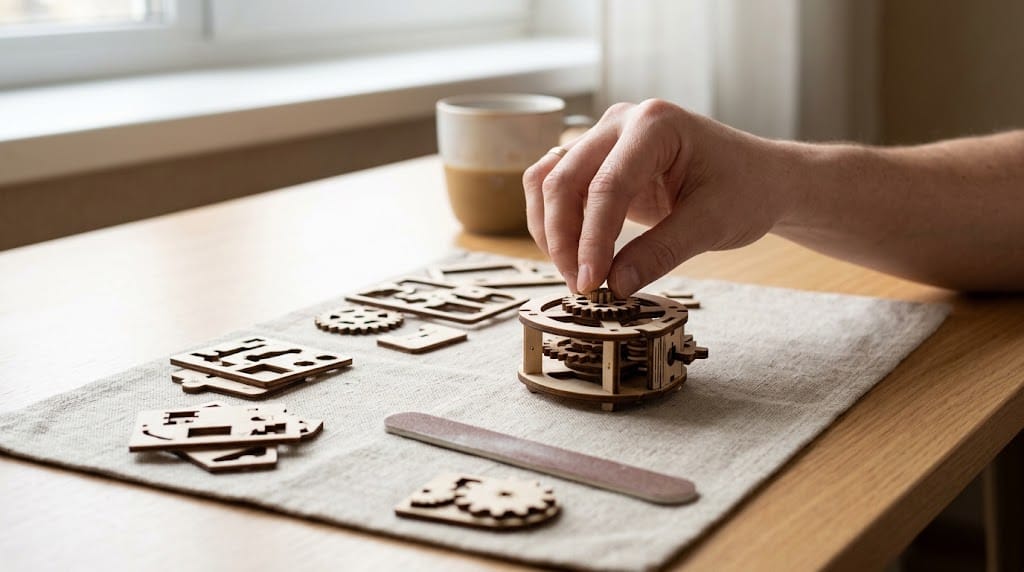
After building through all seven brands, our biggest takeaway is this: the “best” brand really depends on what you want to happen after the last piece clicks into place. Before you buy, ask yourself whether you want:
- A model that keeps moving. If watching gears turn, hearing a music box play, or shifting a working transmission is the appeal, look toward ROKR, UGEARS, or Wood Trick.
- A decorative centerpiece. If you mostly want something beautiful to display, FUNPOLA and Rolife tend to deliver the strongest visual payoff, especially with built-in LED lighting.
- A low-pressure first project. Rowood and ROBOTIME’s smaller kits are more forgiving for beginners or younger family members, with shorter build times and simpler mechanics.
- A gift for a specific person, not just “a puzzle.” A book lover will probably want Rolife’s book-nook style far more than a marble run, while an engineer on your list will likely get more out of ROKR’s exposed-linkage builds.
It’s also worth thinking about the same way you might approach choosing a jigsaw puzzle brand for kids — piece count and stated difficulty aren’t the whole story. A 200-piece Rolife book nook can take longer than a 400-piece Rowood animal kit simply because the assembly style is different (careful layering versus straightforward slotting).
Everything We Recommend
✅ We recommend these products based on an intensive research process that’s designed to cut through the noise and find the top products in this space. Guided by experts, we spend hours looking into the factors that matter to bring you these selections.
⭐ 2.5 million+ people assisted in the last 30 days ⭐

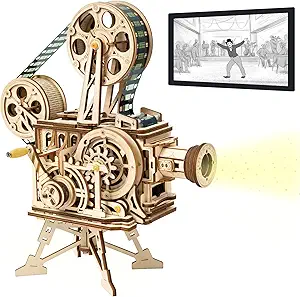
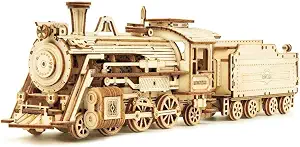
Best for: Engineers, tinkerers, and anyone who wants the finished model to do something | Typical price range: $25–$140 | Difficulty: Beginner to advanced (ages 14+)
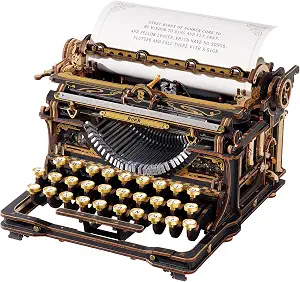
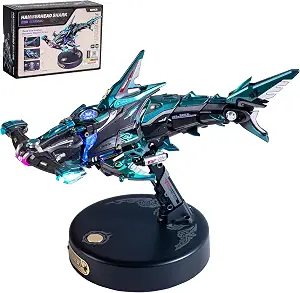
We’ll be honest, ROKR was the brand that converted a few skeptics on our team. This is a sub-brand under Robotime that leans hard into what they call an “industrial” aesthetic, and the models genuinely earn that description — exposed gears, visible linkages, and a punk-adjacent design language that feels more like tabletop engineering than a craft project. We built their typewriter kit, and it remains one of the most delightful “aha” moments any of us has had testing a product this year: every single key drives its own wooden typebar through a hand-assembled linkage, so when you press a letter, an arm rises, strikes the platen, and the carriage actually advances — no motor, no simulation, just pure mechanical cause and effect. It took one of our testers roughly twelve hours across two evenings, and by the end she genuinely understood, for the first time, why old typewriters sound the way they do. We also ran the Hammerhead Shark kit, which trades quiet mechanics for spectacle — a brass touch switch powers laser “eyes,” breathing electroreceptor lights, and a four-segment tail that sways back and forth on three AAA batteries, and it was a two-hour build that felt more like assembling a prop than a puzzle. Where ROKR asks a little more of you is precision: the laser-cut tolerances are famously tight (well under a thousandth of an inch by their own claims), which makes for a snug, rattle-free fit once everything’s seated, but it also means you need to actually read the instructions before pressing pieces into place, because forcing a misaligned part is the fastest way to snap a wooden gear tooth. If that happens — and it happened to us once — ROKR’s replacement-parts program came through without much hassle. We’d point ROKR toward anyone who’s building for themselves or for a partner who loves knowing how machines work, more than someone who wants a pretty shelf object; the payoff here is almost entirely in the mechanism, not the paint job.
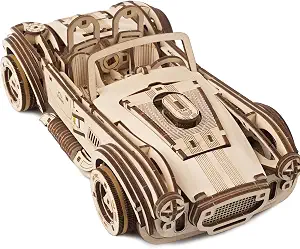
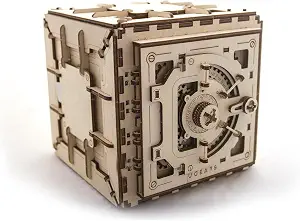
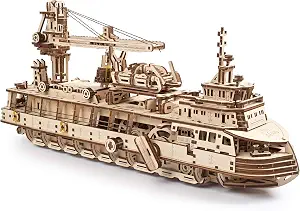
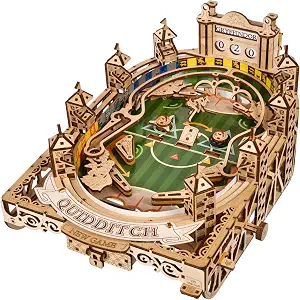
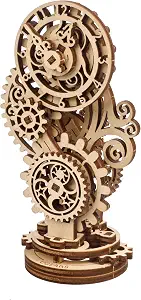

Best for: Gearheads, gift-givers, and anyone who wants a model that genuinely moves under its own power | Typical price range: $20–$250 | Difficulty: Easy to hard (ages 14+)
UGEARS is a Ukrainian company, and it’s the brand our team kept coming back to when we wanted to actually play with the finished object rather than just look at it. Nearly everything they make is self-propelled — no batteries, no electricity, just rubber-band motors, springs, and gravity doing the work — and that constraint seems to push their engineers toward genuinely clever solutions. We built the Mechanical Tractor, which has a real three-speed transmission you shift between park, low, and sport, and watching a piece of plywood we assembled ourselves trundle across a conference table under its own rubber-band power got more of our coworkers out of their chairs than we expected. The Combination Lock kit, styled like a Da Vinci Code-era crypt-key, was a different kind of satisfying — you set your own multi-letter code into the wooden dials, and it earned a permanent spot on one tester’s desk as an actual, functioning secret box for spare keys. What impressed us most, though, was the Horse Mechanoid, UGEARS’ first walking quadruped model, which uses a claw mechanism and an internal pendulum to mimic a genuine four-legged gait — it’s not a gimmick; it actually walks with a rhythm that looks unsettlingly lifelike for a stack of laser-cut plywood. None of the kits we tried needed glue or specialty tools, and the numbered plywood sheets made navigation easy even on the 900-plus-piece builds, though we’d steer first-timers toward the “Easy” or “Intermediate” tier rather than jumping straight into a 16-hour advanced set. If you’re shopping for someone who loved building model kits as a kid but wants the adult version — with a genuine engineering payoff and zero screens or batteries involved — UGEARS is the brand we’d point them to first.

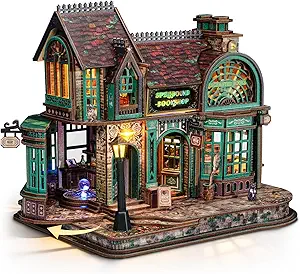
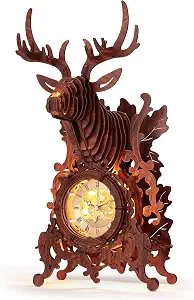



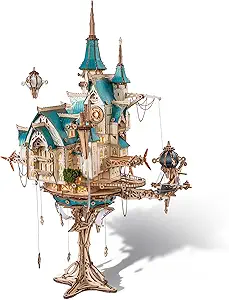
Best for: Home decorators, book lovers, and anyone who wants a puzzle that doubles as a nightlight | Typical price range: $30–$70 | Difficulty: Beginner to intermediate (ages 14+)
FUNPOLA was the outlier on our list in the best possible way — it’s less about mechanical complexity and more about atmosphere. We built their Countryside Cottage kit over a quiet Sunday afternoon, and what struck us wasn’t the difficulty (a manageable 251 pieces, roughly eight hours) but how much the built-in LED system changed the finished piece once the lights went on. It’s a genuinely different object in daylight versus at night, with a soft, warm glow that highlights details you’d otherwise miss, like the tiny street lamp and the swing out front. We also tested one of their book nook-style kits, the kind designed to slide between actual books on a shelf, and the mirror-and-LED combination inside creates a surprisingly convincing illusion of depth — it looks like the little wooden scene extends back much farther than the physical piece actually does, which is a clever trick that got genuine gasps from a couple of testers who hadn’t seen the style before. One of our team members who bought the Deer-shaped LED clock for her home office reported that it’s held up as an actual functioning clock for months now, not just a one-time build-and-forget project, and it gets commented on by literally every visitor to her desk. The trade-off with FUNPOLA is that you’re not getting the intricate mechanical gear trains that ROKR or UGEARS specialize in — these are largely static once assembled, aside from the lighting and the occasional music box or hand-cranked element — so we’d recommend it for people whose priority is a beautiful, glowing centerpiece rather than a puzzle that keeps moving after the last piece clicks in. For anyone furnishing a reading nook, a dorm room, or a bookshelf that needs a conversation piece, FUNPOLA tends to be the easiest win.
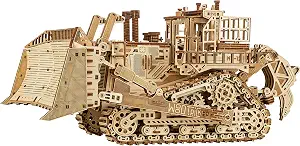
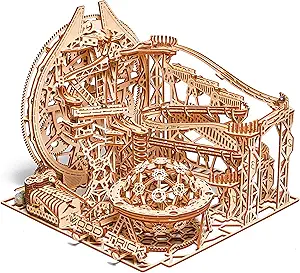
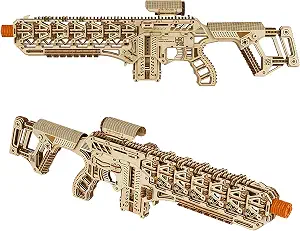
Best for: Hobbyists who want bigger, more ambitious mechanical builds | Typical price range: $30–$180 | Difficulty: Intermediate to advanced (ages 14+)
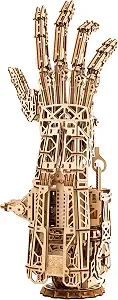
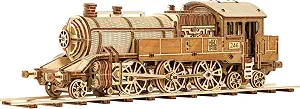
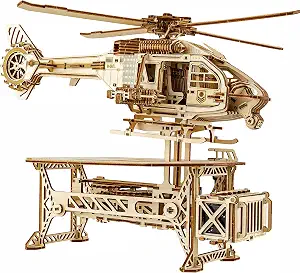
Wood Trick, based out of Krakow, Poland, occupies a similar mechanical-puzzle lane to UGEARS, but our team noticed a distinct personality once we got a few kits under our belts. Their Mechanisms Series leans into functional, almost workshop-grade builds — we assembled their mechanical crane, which includes a genuine working hoist and pulley system with a rotating base and an extending boom, and it was the closest any kit on this list came to feeling like a scaled-down piece of actual construction equipment rather than a toy. What sets Wood Trick apart is their Electric Series, which swaps the rubber-band-only approach for small electric motors on select kits; we built a version of their marble run track that used a motor to keep the marble cycling continuously, and it turned out to be a genuinely mesmerizing desk object that our whole team ended up gathering around during a coffee break. Wood Trick also makes birch plywood wall maps that you can personalize with pins marking places you’ve traveled, which isn’t technically a “puzzle” in the traditional sense but was a fun surprise addition to their catalog that a couple of testers ended up ordering separately as gifts. Where Wood Trick asks more patience than some competitors is piece orientation — several of our testers flagged that getting a part backward is an easy mistake on the more complex kits, and the retaining pegs on some models can work themselves loose if you’re not careful during assembly, so this isn’t necessarily where we’d point a total beginner. If you or the person you’re shopping for already has a kit or two under their belt and wants to level up to something with real hoisting mechanisms, working pulleys, or an electric-motor twist, Wood Trick is where we’d send them next.


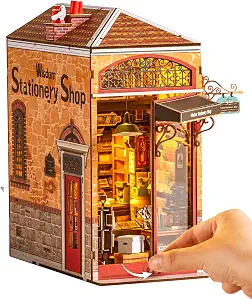
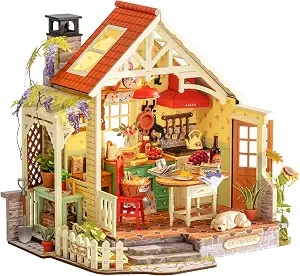
Best for: Book lovers, dollhouse enthusiasts, and anyone decorating a bookshelf | Typical price range: $25–$90 | Difficulty: Beginner to intermediate (ages 14+)
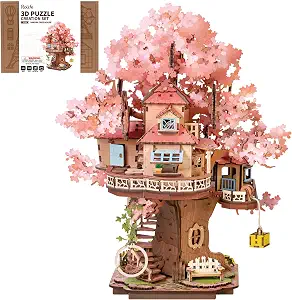
Rolife occupies a completely different corner of the 3D wooden puzzle world, and honestly, it’s the brand that got the most enthusiastic reaction from the non-” puzzle person” members of our testing group. Instead of gears and motors, Rolife specializes in book nook kits and miniature dollhouse-style scenes — small dioramas designed to slide onto a bookshelf between your actual books, so they read as tiny hidden worlds rather than obvious toys. We built the Garden House kit, a French-glasshouse-style scene with layered wisteria details and a warm built-in LED light, and the piece-by-piece assembly genuinely felt more like solving a spatial puzzle than following a typical instruction manual — you push pieces together layer by layer, occasionally needing a small dab of glue, but mostly relying on precisely laser-cut tabs and slots. One tester who built their Sakura-themed book nook described the whole process as meditative rather than frustrating, and finished it in a single relaxed evening. Rolife is part of the same parent company as ROKR and Rowood, and it shows in the manufacturing quality — the wood is FSC-certified and the color pre-printing on the pieces is even and precise, which matters a lot on a decorative kit where paint quality is the whole point. The honest trade-off here is that these are display pieces first, not interactive mechanisms — once your book nook is built, its “movement” starts and ends with a light switch, so if you’re shopping for someone who wants an ongoing mechanical fidget object, look elsewhere on this list. But if you know a reader, a plant lover, or someone who’s been eyeing those book nook videos all over social media, Rolife is very hard to beat.
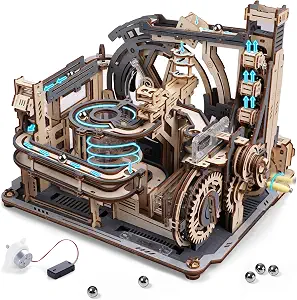
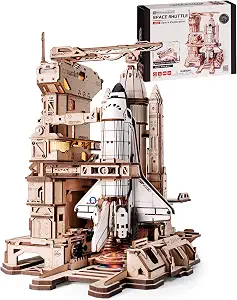

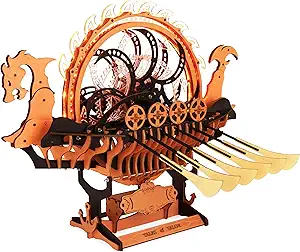
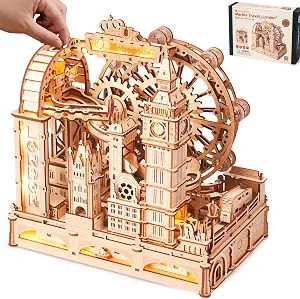
Best for: Fans of kinetic desk toys and family-friendly builds | Typical price range: $25–$100 | Difficulty: Beginner to intermediate (ages 8+)
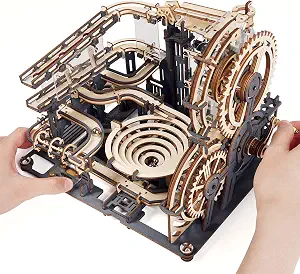
ROBOTIME is technically the parent company behind ROKR, Rolife, and Rowood, but they also release standalone kits directly under the ROBOTIME name, and their marble run lineup is where the brand really distinguishes itself. We built the Marble Spaceport, one of their motorized sets, and were impressed by how much variety they packed into a single track — gravity loops, a gathering-and-diversion hub, gear crosshatches, and a “Z-shaped” lifting stair section that carries the marble back up to the top so the whole run cycles indefinitely once you flip the motor switch or turn the hand crank. It’s the kind of desk object that’s genuinely hard to walk past without pausing to watch a lap or two, and more than one visitor to our office asked where they could buy one. ROBOTIME’s marble runs are also expandable — you can buy link packs to combine sets like the Marble Spaceport and Marble Night City into one larger, more elaborate maze, which felt like a smart way to let a casual buyer start small and build up their collection over time rather than committing to one giant kit upfront. Assembly on the sets we tried landed in the five-to-eight-hour range, with numbered parts and laser-cut precision that made the process approachable even for a tester who’d never built one of these kits before. ROBOTIME has also picked up Disney’s Integrated Management System certification and BSCI European Business certification, which won’t matter to most shoppers but is a reasonable signal of manufacturing consistency if you’re buying sight unseen online. We’d point ROBOTIME toward people who want a lower-commitment entry point into this hobby, a family project that a slightly younger teen can help with, or simply the most hypnotic desk toy on this entire list.
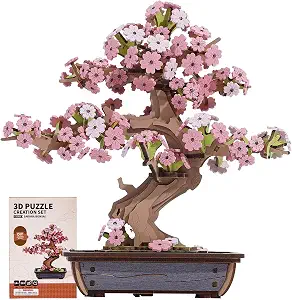

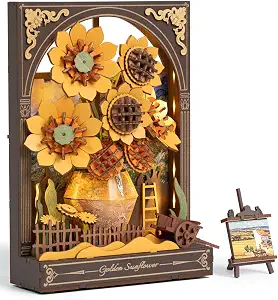

Best for: First-timers, casual gift shoppers, and animal lovers | Typical price range: $15–$40 | Difficulty: Beginner (ages 8+)
Rowood is the most approachable brand on this list, and honestly, it’s the one we’d recommend to someone who’s never built a 3D wooden puzzle before and isn’t sure they’ll stick with the hobby. Unlike the natural, unpainted plywood look of most brands here, Rowood’s pieces come pre-colored, so the finished animal models — we built their wolf kit — look vibrant and gift-ready straight out of the box without any painting or staining required. The snap-fit assembly doesn’t need glue, and our least experienced tester, who’d never touched a kit like this before, finished the wolf in under two hours without ever feeling lost or frustrated. That accessibility is really the whole pitch: Rowood isn’t trying to compete with ROKR’s mechanical complexity or Wood Trick’s motorized ambition, and it doesn’t need to. It fills a real gap for the person who wants a satisfying, low-stakes weekend project, a parent looking for something a slightly younger builder can tackle with a little supervision, or a shopper who just needs an inexpensive, colorful gift that doesn’t require the recipient to have any prior puzzle experience. We also appreciated that Rowood leans into floral arrangements and nature themes beyond just animals, which gives it a softer, more decorative appeal that felt distinct from the industrial vibe of its sibling brand ROKR. If you’re buying your very first 3D wooden puzzle, or shopping for someone you suspect might be intimidated by a 500-piece mechanical kit, start here — you can always graduate to the more advanced brands on this list once the bug bites.
Why Adults Are Suddenly Obsessed With Wooden Puzzles
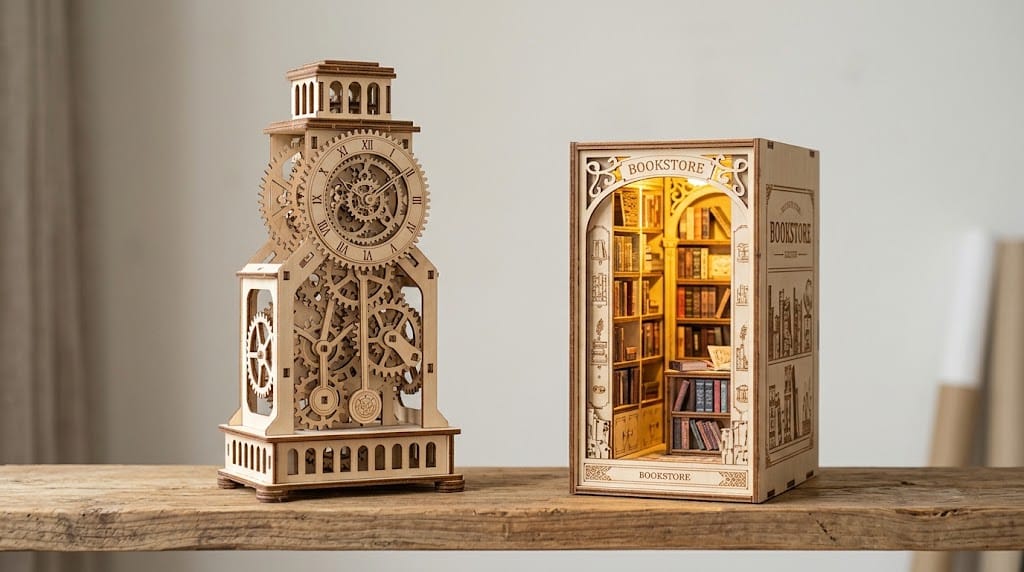
It’s not just a niche hobby anymore. Walk into any home office, den, or bookshelf-adjacent nook these days, and there’s a decent chance you’ll spot a laser-cut wooden model sitting proudly on display. Part of the appeal is tactile — in a world where most of our work happens on a screen, there’s something quietly grounding about handling actual wood, sanding a rough edge, and watching hundreds of flat pieces slowly become a three-dimensional object.
There’s also a genuine mechanical curiosity at play. UGEARS, one of the brands on our list, ships more than 100,000 puzzle kits every month to customers across 95 countries — a scale that tells you this isn’t a fad. These aren’t static models sitting in a display case; the best ones actually move, powered by rubber bands, springs, and gravity instead of batteries, which appeals to people who grew up loving how things work.
We’d also gently push back on the idea that these are just “boy toys” or STEM gifts for teenagers. In our testing, we found kits that suit book lovers, home decorators, engineers, parents looking for a screen-free weekend project, and people who just want something pretty to put on their shelf. That range is exactly why picking the right brand — not just the right puzzle — matters so much.
How We Tested
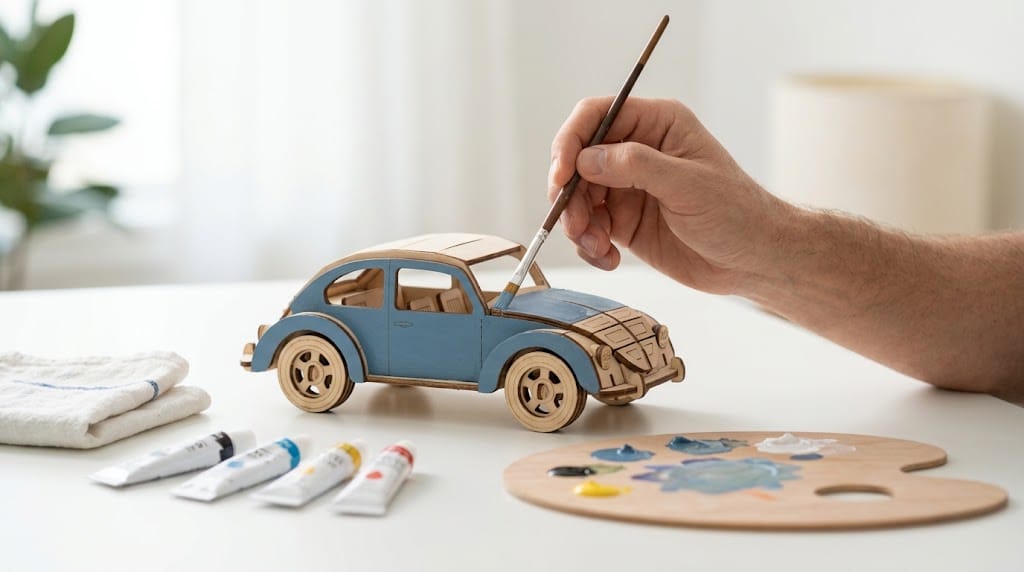
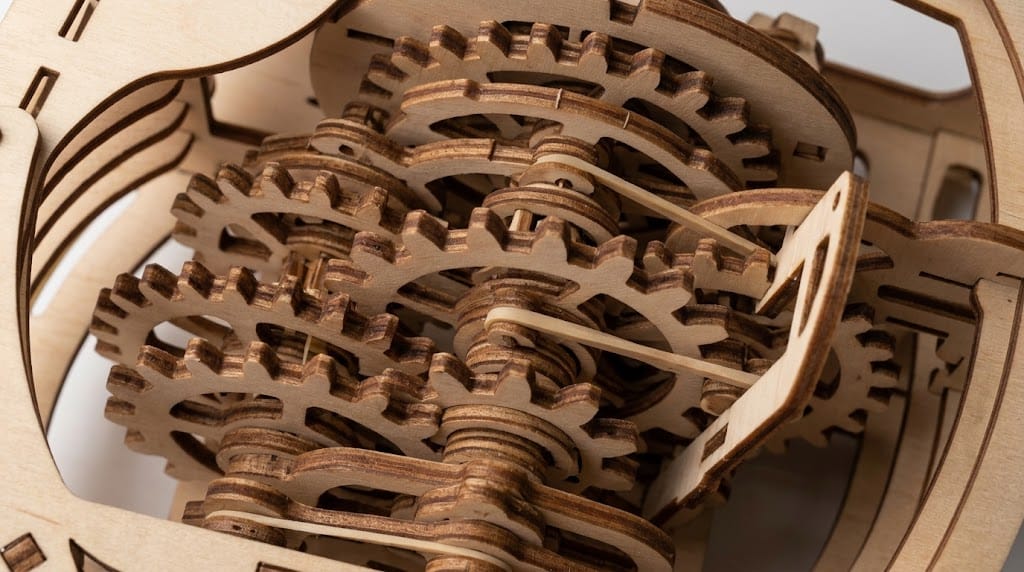
Our approach was pretty straightforward: we built the kits ourselves, start to finish, tracking assembly time, part quality, instruction clarity, and how each finished model actually performed once we were done gluing (or, in most cases, not gluing at all). We paid close attention to whether the mechanisms worked smoothly on the first try, how forgiving the tolerances were if a piece popped out slightly warped, and whether customer support and replacement-part policies held up when we intentionally lost a small gear or two.
We also tried to represent a range of use cases — mechanical puzzles for people who want to understand why something moves, decorative kits for people who want something beautiful on a shelf, and beginner-friendly builds for first-timers who might be intimidated by a 900-piece kit. Below, in no particular ranking order, are our honest takes on all seven brands.
Frequently Asked Questions
Are 3D wooden puzzles actually worth the money? In our experience, yes, for the right buyer. These kits generally cost more per hour of entertainment than a flat jigsaw puzzle, but you’re also left with a physical object at the end rather than something you take apart and box up. Whether that trade-off is “worth it” tends to come down to whether you want a keepsake or just a temporary activity.
Do 3D wooden puzzles require glue? Most don’t, at least not for the core structure. Brands like UGEARS and Rowood are specifically designed for glue-free, snap-fit assembly, while some of the more decorative kits from FUNPOLA and Rolife may call for a small dab of glue on delicate trim pieces. We’d recommend checking the specific kit’s listing, since this does vary model to model even within the same brand.
How long does it take to build a 3D wooden puzzle? It ranges enormously — anywhere from under two hours for a simple Rowood animal kit to more than twelve hours for an advanced ROKR or UGEARS build. As a general rule, mechanical kits with working gear trains take noticeably longer than static display pieces with a similar piece count, since alignment and tension matter more.
What age range are these puzzles appropriate for? Most brands on this list recommend ages 14 and up due to small parts and the precision required, though Rowood and some ROBOTIME marble run kits are marketed for ages 8 and up with adult supervision. If you’re shopping for a younger builder, we’d lean toward the simpler, pre-colored kits over anything with exposed gear mechanisms.
Which brand is best if the recipient has never built one before? Based on our testing, Rowood is the gentlest entry point, followed closely by ROBOTIME’s smaller marble run sets. Save the advanced ROKR and Wood Trick kits for someone already comfortable following detailed, multi-stage instructions.
Can these puzzles be repainted or customized? Some can. Natural unpainted plywood kits from brands like UGEARS and Wood Trick are popular candidates for custom painting, and several of our testers mentioned doing exactly that with acrylic or gouache paint. Just avoid painting any moving mechanical parts, since a thick paint layer can interfere with how gears and joints fit together.