Advertiser Disclosure
We independently review everything we recommend. When you buy through our links, we may earn a commission.
The Best Random Cut Puzzle Brands Worth Your Time
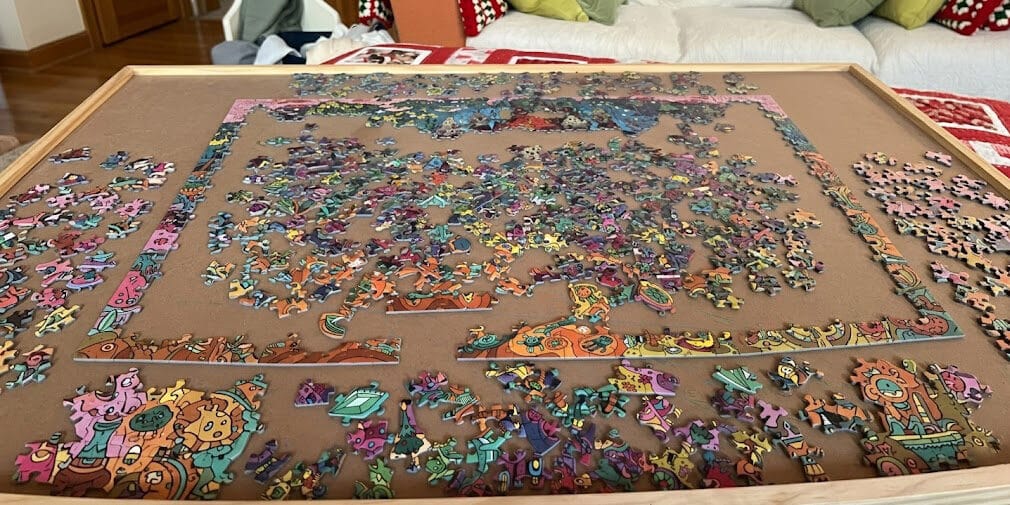
Random cut puzzles, sometimes called irregular cut puzzles, are having a well-deserved moment right now. Unlike grid-cut puzzles, where every piece is essentially the same shape stamped out in rows, random cut puzzles use a die or laser cutter to create genuinely unique piece shapes across the entire board. The result tends to feel more satisfying to solve, more visually interesting to sort, and — for most puzzlers we’ve spoken to — a lot more rewarding to finish.
We’re breaking down the five brands that consistently rose to the top: Magic Puzzle Company, Cobble Hill, New York Puzzle Company, Springbok, and Bits and Pieces. Whether you’re shopping for yourself, looking for a gift, or building out a puzzling collection, here’s everything you need to know.
What Makes a Random Cut Puzzle Different
Before we get into brand-by-brand recommendations, it’s worth spending a moment on why random cut puzzles earn such loyalty from experienced puzzlers.
In a standard grid cut, pieces share predictable shapes — two tabs, two blanks, arranged in columns and rows. Once you figure out the system, a lot of the challenge collapses. Random cut puzzles don’t follow that pattern. Each piece tends to have a genuinely unique silhouette, which means you’re relying more on color, texture, and pattern matching than on shape shortcuts. For many people, that’s a more immersive, more mentally engaging experience.
The quality of the cut also affects the physical feel. A well-executed random cut produces pieces that fit snugly and stay where you put them — no sliding, no accidental separation when you shift a section. A poorly executed one leaves gaps or creates pieces so similar in shape that the random variety barely registers.
The brands we recommend below all get this right in their own ways, though each has a different philosophy about what the puzzling experience should feel like.
Our Top 5 Random Cut Puzzle Brands
✅ We recommend these products based on an intensive research process that’s designed to cut through the noise and find the top products in this space. Guided by experts, we spend hours looking into the factors that matter to bring you these selections.
⭐ 2.5 million+ people assisted in the last 30 days ⭐
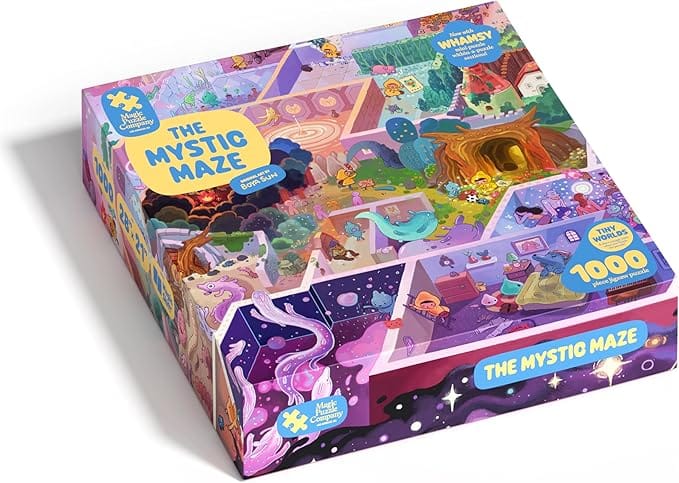
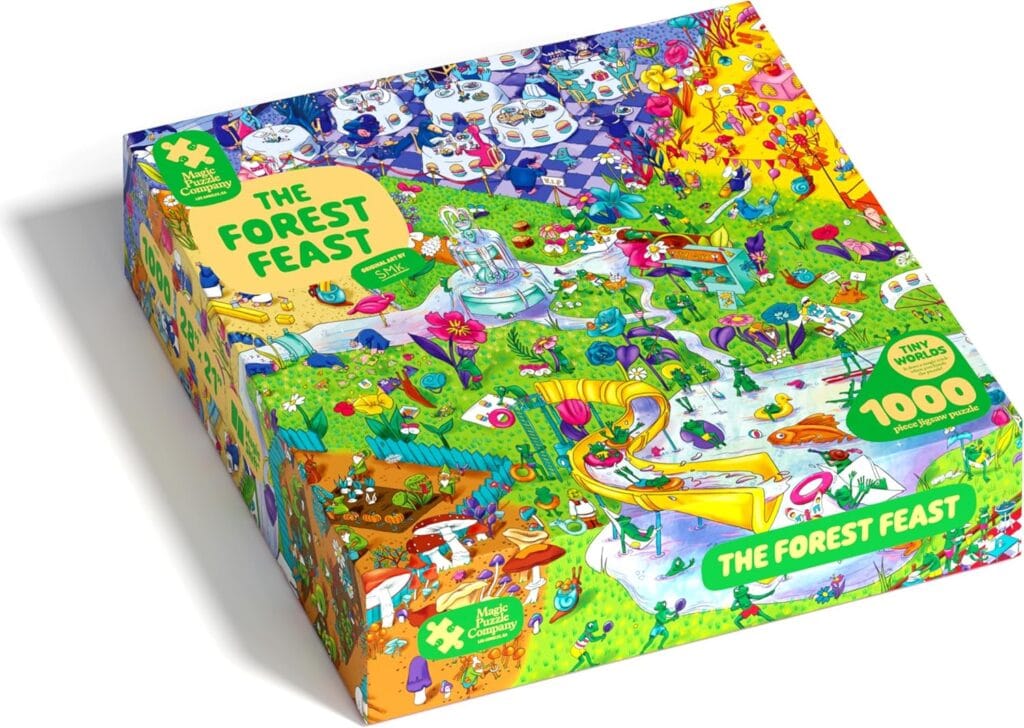
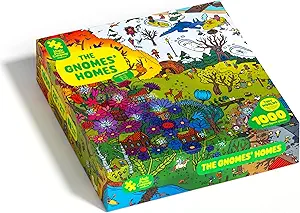
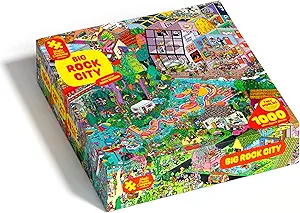
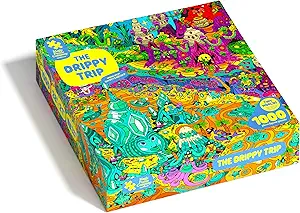
Magic Puzzle Company is, without question, one of the most genuinely exciting brands to enter the puzzle market in years — and after spending time with several of their releases, we think the enthusiasm is completely warranted. What sets them apart isn’t just the cut quality, though that’s excellent: pieces are thick, fit with a deeply satisfying snap, and hold together well enough that you can pick up completed sections without them falling apart. What really makes Magic Puzzle Company special is the concept built into every single box. Each puzzle hides what they call a “secret surprise” — an unexpected visual twist or hidden element that only becomes apparent as you approach the final pieces. For puzzlers who love that electric moment of realization mid-solve, it’s genuinely delightful. The artwork tends to be bold and contemporary, drawing on illustrators whose work feels fresh rather than generic. Piece counts 1,000 pieces, which makes these accessible to intermediate puzzlers while still offering a real challenge. If you’ve been looking for something that makes puzzling feel playful and a little bit magical again, Magic Puzzle Company is where we’d tell you to start.
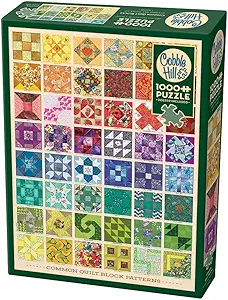
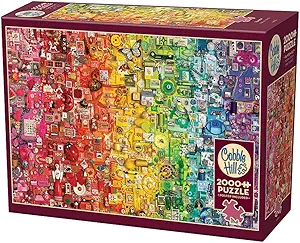
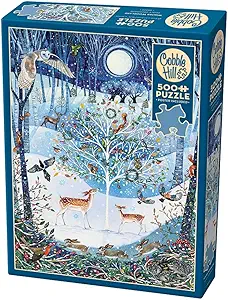
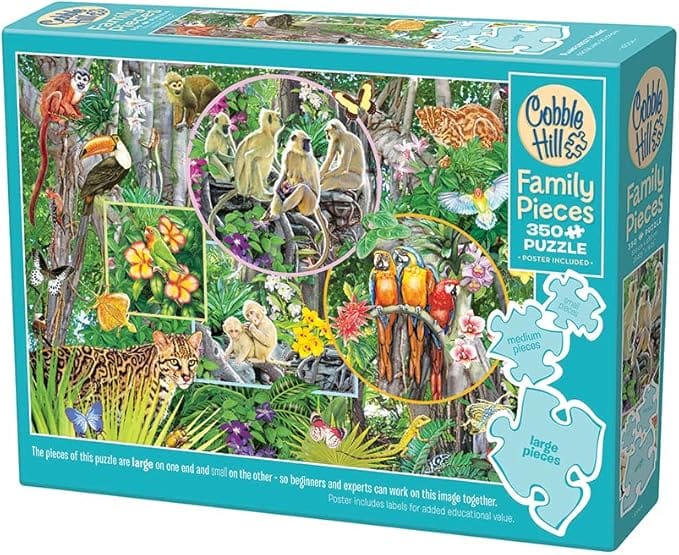
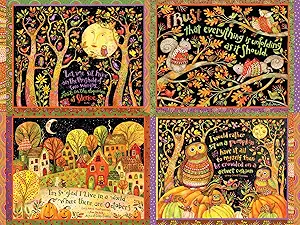
Cobble Hill has built a devoted following over the years, and after testing several of their puzzles, it’s easy to see why. This is a brand that clearly understands what casual and mid-level puzzlers actually want: beautiful, warm imagery — think cottages surrounded by wildflowers, cozy market scenes, stacked vintage quilts — combined with a consistently reliable cut quality without demanding museum-level attention. Their pieces are made from recycled cardboard and use soy-based inks, which matters to a growing number of buyers who want their hobbies to align with their values. The random cut on Cobble Hill puzzles tends toward rounder, more organic shapes, which makes sorting feel approachable and the solving process genuinely relaxed rather than combative. One thing our team particularly appreciated: the image quality on the finished board is sharp and rich, so even after hours of work, the payoff feels proportionate to the effort. Cobble Hill also offers a wide range of piece counts — from family-friendly 275-piece options to 1,000-piece challenges — so there’s something here for nearly every skill level. If you’re buying for a mixed-generation household or want a puzzle that invites rather than intimidates, Cobble Hill earns a strong recommendation.
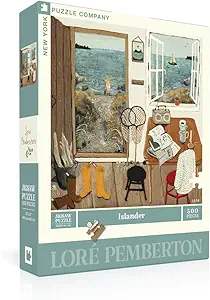
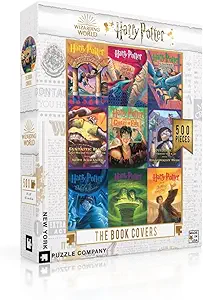
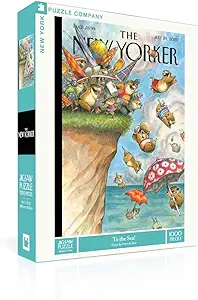

If your puzzle collection skews toward art prints, vintage maps, magazine covers, or cultural imagery, New York Puzzle Company should already be on your radar. This brand has carved out a distinct and genuinely appealing niche by licensing artwork from institutions like The New Yorker, the MoMA, the New York Times, and various natural history collections, which means the images on their boxes tend to feel more like framed art than mass-market merchandise. The random cut is precise and well-executed, with pieces that interlock cleanly and a finish that’s linen-textured to reduce glare under task lighting. Our team found that the piece shapes skewed toward smaller, more intricate cuts compared to some other brands, which adds to the challenge in a way that experienced puzzlers tend to appreciate. New York Puzzle Company also produces puzzles in a broader range of unusual piece counts — 500, 1,000, and some extended sizes — and they’ve started releasing double-sided puzzles and other formats that add variety for repeat solvers. If you want a puzzle that also functions as a conversation piece, or if you’re shopping for someone with a strong sense of design, this brand tends to land extremely well.
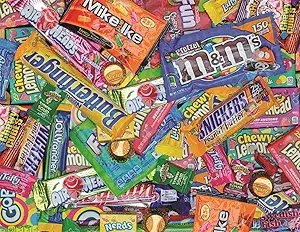
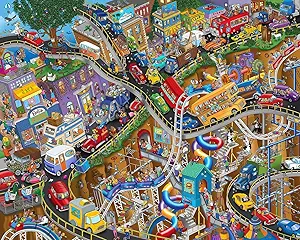
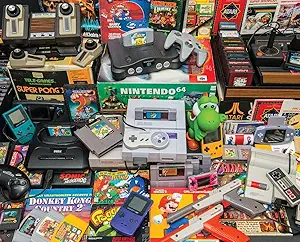
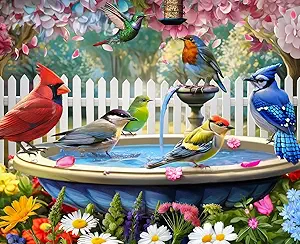
Springbok has been around since 1963, and in a category crowded with newcomers, that kind of longevity tends to mean something. What’s kept this brand relevant for more than six decades is a combination of genuinely strong random cut quality — their pieces use an interlocking system that tends to be tighter and more secure than many competitors at a similar price point — and a catalog that skews nostalgic and Americana in the best possible way. Think sweeping national park landscapes, vintage diner scenes, and holiday imagery that feels genuinely warm rather than clichéd. Springbok puzzles are made in the United States, which is notable and increasingly rare in this category. The board tends to be a slightly thicker stock than you’d get from mass-market alternatives, which makes pieces easier to handle and reduces the bending and warping that cheaper puzzles are prone to over time. Our team also appreciated that Springbok includes a reference poster in most of their boxes — a small detail that matters enormously when you’re working on a complex image and need to check a corner of the scene. For buyers who value longevity, domestic manufacturing, and a classic puzzling experience, Springbok remains one of the most reliable choices in the category.
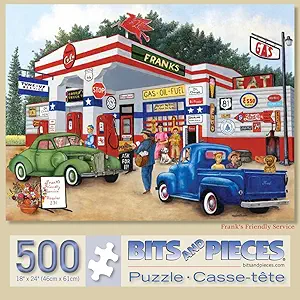
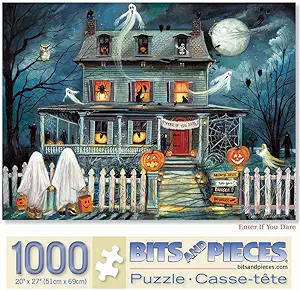
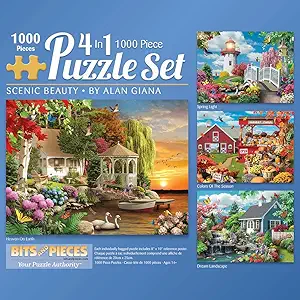
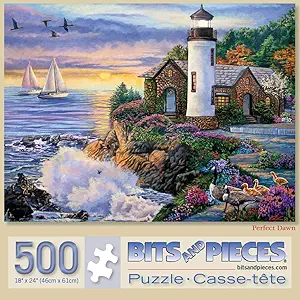
Bits and Pieces occupies an interesting position in the random cut market: it’s a brand that punches well above its price point, offering a wide and frequently updated catalog at costs that make collecting genuinely accessible. Their images range from whimsical fantasy scenes and animal portraits to holiday-themed releases and landscape photography, so the catalog has real variety. The cut quality is solid — not quite at the premium end of what you’d get from Magic Puzzle Company or New York Puzzle Company, but clean, consistent, and satisfying to work with. What Bits and Pieces does particularly well is volume and value: if you’re a high-frequency puzzler who goes through several boxes a month, or if you’re shopping for a group setting like a senior center, a classroom, or a family vacation rental, this brand lets you build a collection without an outsized budget. The piece counts span a wide range, including some larger formats in the 1,500-to-2,000-piece range that more casual brands don’t typically offer. There’s also a subscription model that delivers new puzzles regularly, which our team found genuinely convenient for dedicated puzzlers who’d rather not spend time browsing. If you want consistent quality at a price that doesn’t make you wince, Bits and Pieces is a dependable, low-fuss choice.
Frequently Asked Questions About Random Cut Puzzles
What exactly is a random cut puzzle, and how is it different from a regular puzzle?
A random cut puzzle uses an irregular die or laser cutting process to create piece shapes that vary across the entire board — no two pieces are exactly alike. Standard grid-cut puzzles use a repeating stamp pattern, which means pieces in the same “row” share the same general shape. Random cut tends to produce a more challenging, more satisfying solve because you can’t rely on shape shortcuts as heavily. Most of the brands we recommend above use some variation of random cutting, though the specific style — how organic the curves are, how many pieces vary — differs from brand to brand.
Are random cut puzzles harder than regular puzzles?
Generally, yes — though “harder” doesn’t necessarily mean “less enjoyable.” Because piece shapes are more varied and less predictable, you spend more time relying on color and pattern matching rather than shape recognition alone. Many experienced puzzlers find this more engaging. That said, piece count and image complexity still matter more than cut style when it comes to overall difficulty. A 500-piece random cut puzzle with a colorful, high-contrast image is likely to be easier than a 1,000-piece grid-cut puzzle with a subtle, low-contrast scene.
Which random cut puzzle brand is best for beginners?
Cobble Hill and Bits and Pieces both offer accessible entry points. Cobble Hill’s imagery tends to be warm and visually organized, which makes it easier to work section by section, and their lower piece counts (275 and 500 pieces) are a good starting point. Bits and Pieces offers a similarly wide range at a price that reduces the pressure of the investment. If a beginner is also someone who appreciates design or art, New York Puzzle Company’s imagery might provide extra motivation to push through the challenge.
What should I look for in terms of puzzle quality?
Beyond the cut style, the key factors are board thickness, piece fit, and image finish. Thicker board tends to mean more durable pieces that are easier to handle and less prone to warping. The piece fit should be snug enough that the pieces stay connected when you move a section, but not so tight that you’re forcing pieces together. A linen or matte finish on the image surface tends to reduce glare significantly, which matters if you’re puzzling under overhead lighting. Springbok and Magic Puzzle Company both tend to rate well on all three dimensions.
Are there random cut puzzles suitable for kids?
Yes, though you’ll want to pay attention to piece count and image complexity. Cobble Hill makes several puzzles in the 275-piece range with imagery designed to appeal to younger solvers. For toddlers and very young children, the random cut format can actually be beneficial because the unique piece shapes offer more tactile feedback — though at that age, you’d be looking at much simpler puzzle formats overall. If you’re shopping for a family that spans age ranges, look for brands like Cobble Hill that offer the same image in multiple piece counts, so different family members can participate at their own level.
How do I store a random cut puzzle without losing pieces?
The most reliable method is a resealable bag or a puzzle storage case. Many puzzlers who return to the same puzzle multiple times use a roll-up puzzle mat, which lets you roll the in-progress puzzle up for storage and unroll it later. For completed puzzles you want to keep, puzzle glue applied to the front surface and mounted on backing board is a popular option. Springbok’s slightly thicker board makes their finished puzzles particularly well-suited to mounting. A few brands, including Magic Puzzle Company, package their puzzles in sturdy, reusable boxes that work reasonably well for storage on their own.
What’s the difference between a die-cut and a laser-cut random puzzle?
Die-cut puzzles use a physical metal die pressed into the cardboard — a process that’s fast, cost-effective, and produces consistent results at scale. Laser-cut puzzles use a laser to cut each piece individually, which allows for greater precision and more unique piece shapes, but tends to be more expensive. Laser cutting is more common in premium or boutique puzzle brands. For the brands in this guide, most use die-cutting, though the quality of the die varies significantly and contributes to the differences in piece fit and feel.
How to Choose the Right Brand for You
With five solid options in front of you, the choice generally comes down to three things: what kind of imagery you’re drawn to, how you want the puzzling experience to feel, and what you’re willing to spend.
If you want something that feels fresh and a little surprising, Magic Puzzle Company is the clear choice — the hidden element in each puzzle adds a layer of discovery that most brands simply don’t offer. If you prioritize warm, cozy imagery and a relaxed solving experience, Cobble Hill is reliably excellent and suits mixed-age groups especially well. For art and design lovers, New York Puzzle Company brings in imagery that most puzzle brands don’t touch, and the finished product tends to feel genuinely display-worthy. If domestic manufacturing, longevity, and a classic American puzzling aesthetic matter to you, Springbok has decades of credibility behind it. And if you’re a high-volume puzzler working within a budget, Bits and Pieces offers the most accessible path into the random cut category without meaningfully compromising on quality.
Any of these brands would be a sound starting point. And as anyone who’s deep into the hobby will tell you, once you’ve tried a well-made random cut puzzle, the grid-cut alternatives tend to feel like a step backward.