Advertiser Disclosure
We independently review everything we recommend. When you buy through our links, we may earn a commission.
Best Vintage Puzzles That Will Transport You Back in Time
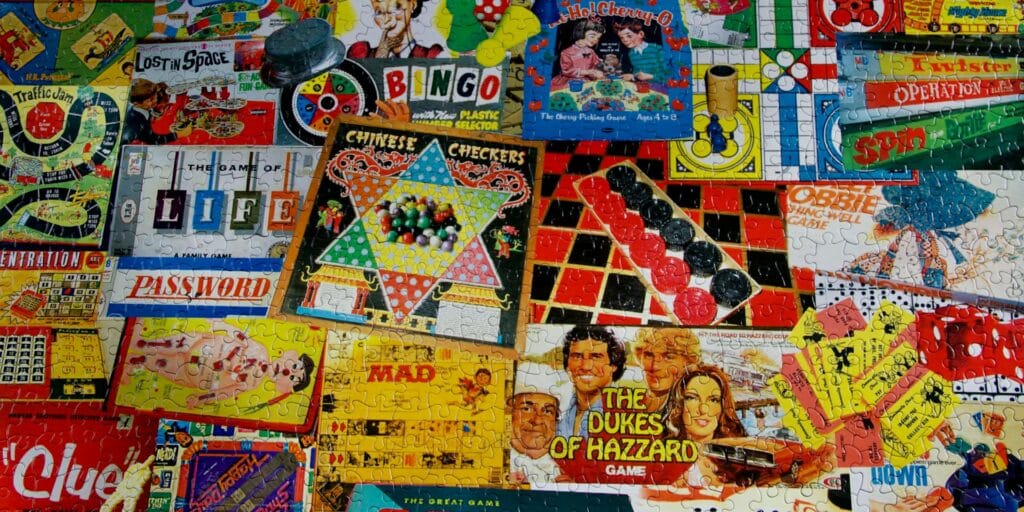
There’s something quietly magical about settling down with a vintage-style puzzle. Maybe it’s the warm, faded colors that feel like a photograph left on a sunny windowsill for too long. Maybe it’s the familiar imagery — old travel posters, classic advertising signs, archive botanical prints — that pulls you into a slower, more deliberate world. Whatever it is, vintage puzzles tend to hit differently than their modern counterparts, and once you’ve assembled one, it’s hard to go back.
Whether you’re a seasoned collector chasing the charm of antique imagery, a casual puzzler looking for something more evocative than a generic landscape, or someone shopping for a thoughtful gift, this guide will help you find the right fit. We’ve narrowed it down to five brands whose vintage offerings genuinely stand out — and we’ll walk you through exactly why.
What Makes a Puzzle "Vintage," Anyway?
Before we get into specific picks, it’s worth briefly unpacking what we mean by “vintage puzzles,” because the term gets used loosely. Broadly, it tends to cover three overlapping categories.
The first is authentically vintage — puzzles that were actually manufactured decades ago, often by now-defunct companies like Milton Bradley’s Big Ben line or Waddingtons. These are collector items, typically sourced through eBay, estate sales, or flea markets. They can be charming, but they come with condition risks, missing pieces, and the lack of any warranty or return policy.
The second is vintage-imagery puzzles — modern puzzles that use artwork sourced directly from historical archives: 19th-century botanical plates, antique maps, mid-century travel posters, and similar material. The puzzle itself is new and well-manufactured, but the image carries genuine historical provenance.
The third is vintage-style or nostalgic puzzles — modern designs that evoke the aesthetic of the past without necessarily drawing from real archives. Think retro diner collages, illustrated Americana scenes, or pop culture throwbacks styled to feel like they came from another era.
All three categories have their appeal. In this guide, we’re focusing primarily on the second and third — modern puzzles with vintage soul — because they offer the aesthetic experience without the logistical headaches of hunting down antique cardboard.
The Five Brands, With Their Positioning
- New York Puzzle Company — literary and cultural nostalgia; non-grid cut, recycled materials, made in USA; honest note on loose piece fit
- White Mountain Puzzles — nostalgic Americana collages; larger-than-average pieces; strong accessibility and family appeal; Happiness Guarantee
- Ravensburger — premium European construction benchmark; extra-thick blue board, linen-structured matte surface, lifetime warranty; vintage themes including Vintage Games and Vintage Vinyl
- Cavallini & Co. — authentic historical archive imagery; distinctive plastic-free cylindrical tube packaging with muslin bag and mini poster; collector and gift appeal
- MasterPieces — broadest vintage Americana range; EZ Grip accessibility line; reference poster included; eco-friendly materials; honest note on thinner piece construction
Our Top Vintage Puzzle Picks
✅ We recommend these products based on an intensive research process that’s designed to cut through the noise and find the top products in this space. Guided by experts, we spend hours looking into the factors that matter to bring you these selections.
⭐ 2.5 million+ people assisted in the last 30 days ⭐
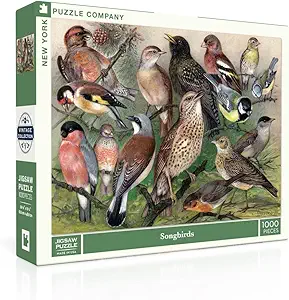
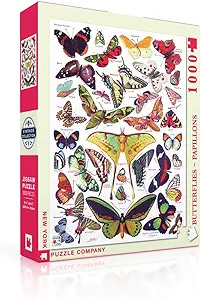
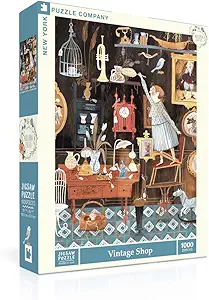
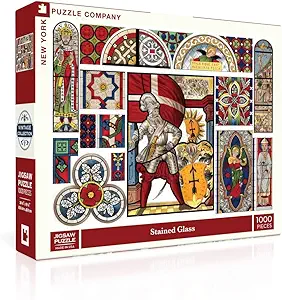
New York Puzzle Company occupies a genuinely distinctive niche in the puzzle world, and their vintage-adjacent offerings were among the most emotionally resonant we encountered during our testing. Founded in 2007 by two college friends who started with a puzzle of the NYC subway map, NYPC has built its identity around imagery that feels culturally meaningful — and nowhere is that clearer than in their New Yorker magazine cover collection and their vintage travel poster series. When one of our testers pulled apart the box on a New Yorker cover puzzle, the reaction was immediate: “I feel like I should be reading it, not assembling it.” That’s the NYPC effect. The images are drawn from genuinely iconic sources — The New Yorker, National Geographic, NASA, vintage Americana — and each one carries a sense of narrative that keeps you engaged throughout the assembly process. Technically, NYPC puzzles are made in the USA using recycled chipboard and soy-based inks, with a non-grid cut that produces varied piece shapes and a moderate-to-challenging assembly experience. The pieces have a clean matte finish that’s easy on the eyes in evening light, and the cardboard is solid if not quite as thick as European premium brands. One honest trade-off: the piece fit is on the loose side, which means completed sections don’t hold together firmly enough to lift — something to keep in mind if you prefer working in movable chunks. But if what you’re after is a puzzle that functions as a cultural artifact as much as an activity, and you want something genuinely giftable with a point of view, NYPC is hard to beat. Their 1,000-piece puzzles typically measure 26 by 19 inches when complete, and the range runs from 100 to 1,500 pieces across dozens of themes.
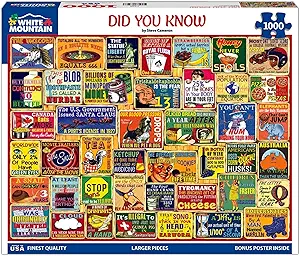
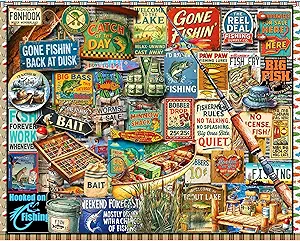
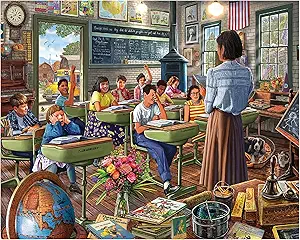
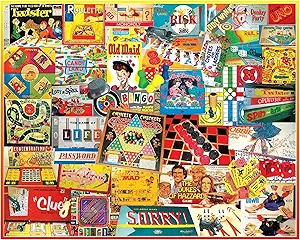
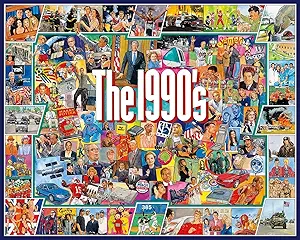
White Mountain has been making puzzles in New Hampshire since 1987, and there’s a straightforward, unpretentious quality to their work that we find genuinely appealing. Their vintage and nostalgic collection is extensive — covering retro advertising signs, classic American diners, decade-by-decade cultural collages, TV history, vintage vehicles, and Americana scenes that feel like they were pulled from a mid-century roadside photograph. What distinguishes White Mountain in practical terms is their piece size: they use larger-than-average pieces, which makes their puzzles notably more comfortable for extended sessions, and significantly more accessible for puzzlers who find fiddly, small pieces frustrating. During our time with their “Vintage Signs” 1,000-piece puzzle — a dense, colorful collage of classic American advertising imagery by artist Lois B. Sutton — we found ourselves doing something we don’t always do: reading the puzzle. The details are rich enough that the assembly feels like a discovery process, not just a pattern-matching exercise. At 24 by 30 inches completed, White Mountain puzzles are also among the larger assembled formats available, which suits the busy, detail-packed imagery they tend to feature. The piece construction is solid rather than premium — you won’t get the thick European blue-board feel here — but the pieces interlock reliably, and the images are sharp. White Mountain also backs every puzzle with what they call a “Happiness Guarantee”: if you’re not satisfied with your experience, they’ll replace the puzzle for free, no questions asked. For multigenerational puzzle nights where the imagery needs to spark conversation, and the pieces need to be manageable for older hands, White Mountain is consistently one of our first recommendations.
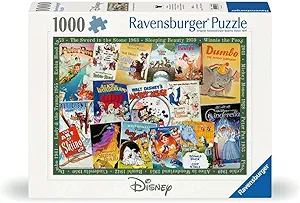
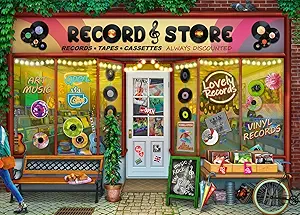
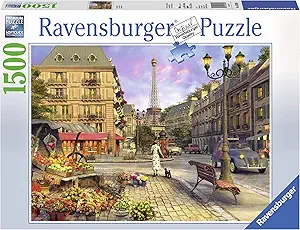
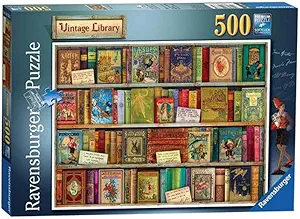
Ravensburger has been making puzzles in Germany for over 130 years, and if you’ve spent any time in the puzzling world, you’ve probably already formed an opinion about them. Ours, after extensive testing across their vintage-themed offerings, is that the reputation is deserved. Their vintage collections — which include titles like “Vintage Games,” “Vintage Vinyl,” and their Disney Vintage Movie Posters series — deliver imagery that’s warm, detailed, and rendered with a level of print quality that genuinely sets the standard. But the real differentiator is the construction. Ravensburger uses a proprietary extra-thick European blue board with hand-crafted die-cutting tools, and the results are immediately noticeable when you pick up a piece: there’s a satisfying heft, clean edges with no fraying or peeling, and a piece-fit that’s precise enough that completed sections hold together when lifted. Their linen-structured, museum-quality surface paper is matte and glare-free, which becomes surprisingly important over a long assembly session under artificial light. We spent a full weekend with their 1,000-piece “Vintage Games” puzzle — a nostalgic collage of classic board and card games from Parcheesi to Old Maid — and the experience was notably smooth: no puzzle dust, pieces that clicked rather than slid into place, and an image that stayed sharp all the way to the edges. The trade-off with Ravensburger is price; they typically run higher than comparable domestic brands. But every piece in a Ravensburger puzzle is unique, with no duplicates, and the brand backs their puzzles with a lifetime warranty. If you’re buying for someone who cares about the craft of puzzling as much as the image, Ravensburger is the answer.
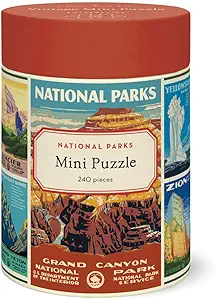
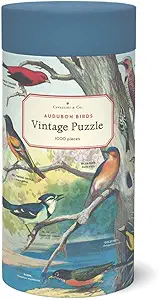
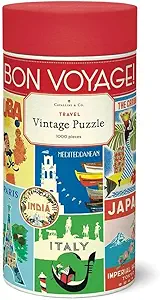
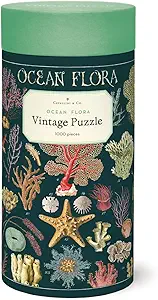
Cavallini & Co. is the brand that consistently surprises people who haven’t encountered it before, and it was a genuine discovery moment for several members of our team. Founded in San Francisco in 1989, Cavallini built its entire identity around its archives — a vast collection of historical images spanning 19th-century anatomical charts, antique botanical plates, mid-century travel guides, vintage maps, and postcards — and their puzzle line draws directly from that material. The result is imagery that doesn’t just look vintage; it genuinely is, in a documentary sense, and that distinction comes through in the final assembled image in ways that are hard to articulate but easy to feel. What also sets Cavallini apart immediately is the packaging. Rather than a standard flat box, their 1,000-piece puzzles arrive in a decorative cylindrical cardboard tube, with the pieces held inside a hand-sewn muslin drawstring bag. It is 100% plastic-free. The tube is sturdy and beautiful enough that people routinely keep it on shelves after the puzzle is assembled. A mini poster guide is included for reference during assembly. When one of our testers opened a Cavallini “Mushrooms” puzzle — 22 species of illustrated fungi from the archives, rendered in the style of 19th-century scientific illustration — she described the unboxing as “the most gift-like puzzle experience I’ve had.” On the assembly side, Cavallini puzzles offer a moderate challenge with large areas of similar tone that reward careful sorting; the pieces are standard thickness, and the fit is reliable. The range covers everything from National Parks and ocean flora to vintage bicycles, world maps, and constellation charts, finishing at 22 by 28 inches for the 1,000-piece versions. For collectors, curious gifters, and anyone drawn to imagery with real historical weight, Cavallini is a category of its own.
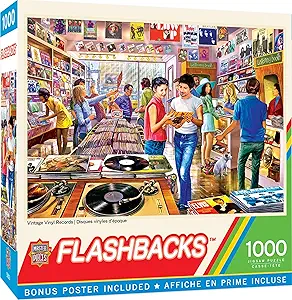
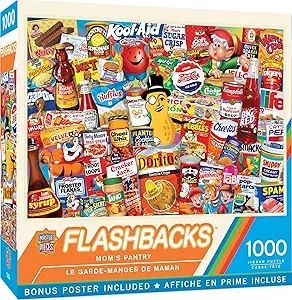
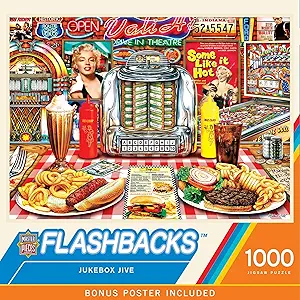
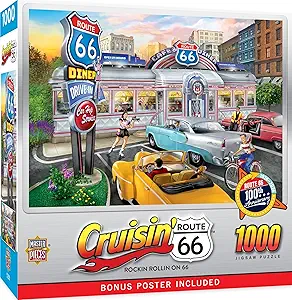
MasterPieces is an Arizona-based brand with over 25 years of puzzle-making behind it, and its depth of catalog in the vintage and Americana space is genuinely impressive. Where some brands offer a handful of nostalgic titles alongside their core lineup, MasterPieces has built entire collections around them: vintage National Parks poster art, patriotic Americana scenes, classic advertising imagery, wildlife in retro illustration styles, and themed series covering everything from Coca-Cola collectibles to glow-in-the-dark novelty puzzles. Their “National Parks – Vintage Collage Poster Art” 1,000-piece puzzle was one of our most-enjoyed assemblies — a rich, golden-age-of-exploration aesthetic that assembles into a 19.25 by 26.75 inch finished image packed with enough detail to stay interesting throughout. What we appreciate about MasterPieces from a practical standpoint is their breadth of piece count options (running from 100 to 5,000 pieces) and their thoughtful accessibility features: their EZ Grip and Easy Grasp lines use larger pieces specifically designed for puzzlers with manual dexterity challenges or anyone who finds small-piece puzzles uncomfortable for extended sessions. Almost every MasterPieces puzzle also includes a reference poster, which is a small but meaningful touch that makes a real difference when you’re 600 pieces in and staring at an area of similar tones. Their pieces are made from recycled board with soy-based inks, and while the cardboard isn’t quite as thick as European premium brands, the die-cut precision is consistent and reliable. One honest note: pieces can feel slightly thinner and fit slightly looser than premium competitors, so this isn’t the brand for someone whose priority is a tight, liftable finished puzzle. But for sheer range of vintage and nostalgic subject matter, accessibility across skill levels and physical needs, and price points that make them genuinely approachable for everyday puzzling, MasterPieces earns its place firmly on this list.
What to Look for Before You Buy
Image Source and Authenticity
There’s a real difference between a puzzle that uses imagery scanned from 19th-century archives and one that was digitally illustrated to look old. Neither is inherently better — it depends on what you’re after — but it’s worth knowing which you’re getting. Archive-sourced imagery tends to have natural imperfections, texture variation, and a sense of genuine history. Digitally styled vintage work can be crisper and more visually consistent, which makes for a different (sometimes easier) assembly experience.
Piece Quality and Cut Style
Piece thickness varies substantially across brands, and it matters more than people expect. Thicker pieces are easier to handle, hold up better to multiple assemblies, and tend to produce more satisfying tactile feedback when they click into place. Cut style also affects difficulty: a random, non-grid cut produces a more varied and challenging experience than a grid-based cut, where pieces of the same shape are easier to place.
Packaging
This sounds trivial, but packaging affects the gift experience considerably. Some brands use cylindrical tubes, drawstring bags, and keepsake-quality boxes. Others use thin cardboard boxes that barely survive one assembly. For a puzzle you’re giving to someone, presentation matters.
Piece Count and Assembled Size
A 1,000-piece puzzle is the standard for adult puzzlers, but brands vary in how large the assembled image actually ends up. Larger assembled sizes tend to suit vintage imagery better — the extra scale lets fine details breathe. If you’re working with limited table space, check the assembled dimensions before you buy.
Frequently Asked Questions About Vintage Puzzles
Are vintage puzzles harder to assemble than modern ones?
It depends on the imagery more than the age. Vintage imagery often features large areas of similar tone — aged paper backgrounds, monochromatic botanical illustrations, muted antique maps — which can make sorting and placing pieces more challenging than a brightly colored modern design. That said, many puzzlers find this challenge more rewarding than more frustrating. If you’re new to puzzling, starting with a vintage collage (which offers lots of varied color across the image) rather than a single-image vintage scene tends to make for a more approachable experience.
What’s the difference between a vintage puzzle and a retro puzzle?
The terms are often used interchangeably, but there’s a meaningful distinction. “Vintage” typically implies either actual historical provenance (the puzzle itself is old, or the imagery is sourced from genuine archives) or at least a strong stylistic connection to a specific historical period. “Retro” tends to mean styled to evoke the past without necessarily drawing from real historical material — a newly illustrated diner scene that looks like it could have been painted in 1957, for example. Both are valid; it just helps to know which you’re getting.
Are vintage puzzles good gifts?
Genuinely, yes — and in our experience, they tend to land better than generic landscape or photo-based puzzles as gifts. The imagery carries a sense of thoughtfulness and specificity: a New Yorker cover puzzle for a literary friend, a Cavallini botanical archive puzzle for someone who loves natural history, a White Mountain Americana collage for a grandparent who grew up with those signs. Vintage puzzles often function as objects as much as activities; the completed image is something people want to frame or photograph.
How do I store a vintage puzzle if I want to keep it?
If you’re assembling a puzzle you’d like to preserve, a few options work well. Puzzle glue (applied to the front of the completed image) can seal it for framing. Puzzle saver sheets allow you to slide a completed puzzle onto a backing board without glue. Some puzzlers simply take a photograph of the completed image and return the pieces to the box for a future assembly. For puzzles in cylindrical tube packaging (like Cavallini), the tube itself is sturdy enough for long-term storage with the pieces back in the muslin bag.
What piece count is right for a vintage puzzle?
For most adult puzzlers, 1,000 pieces is the standard recommendation — it offers enough challenge to be engaging over multiple sessions without becoming an indefinite commitment. For casual or occasional puzzlers, 500 pieces tends to be more realistic for a weekend project. If you’re shopping for someone older or someone dealing with dexterity challenges, look for brands (like White Mountain or MasterPieces’ EZ Grip line) that use larger pieces in their 500 or 1,000-piece options.
Can I find genuinely antique puzzles to collect?
Yes, though it takes patience and some knowledge. Platforms like eBay and Etsy are the most accessible sources for vintage puzzles from brands like Milton Bradley’s Big Ben line, Springbok, and Waddingtons. Flea markets, thrift stores, and estate sales also surface them regularly. The main risks are condition (faded colors, warped pieces) and completeness — always check whether a listing states the puzzle has been verified complete, and expect to pay a premium for sealed or near-mint examples.
How to Get the Most Out of Your Vintage Puzzle Experience
A few practical notes that make a meaningful difference. First, lighting matters more with vintage imagery than with bright modern designs. The muted, warm tones of antique-style art can be hard to distinguish under yellow incandescent light; daylight or a cool-white lamp makes the subtle color differences much easier to read.
Second, sorting strategy shifts with vintage puzzles. Rather than sorting by color (which is less useful when most pieces share a warm sepia-or-cream range), sorting by texture, border, and pattern type tends to work better. Edge pieces first, then distinctive elements like text or strong geometric shapes, then the tonal masses.
Third, if you’re new to puzzling and want the genuine vintage experience without the difficulty of a single-image archive design, start with a collage-format vintage puzzle — White Mountain’s Americana series or MasterPieces’ vintage poster collections are good entry points. The variety of distinct imagery within a single collage gives you more anchor points during assembly and generally makes the process feel more rewarding from the start.