Advertiser Disclosure
We independently review everything we recommend. When you buy through our links, we may earn a commission.
The Best Puzzle Brands Made in the US
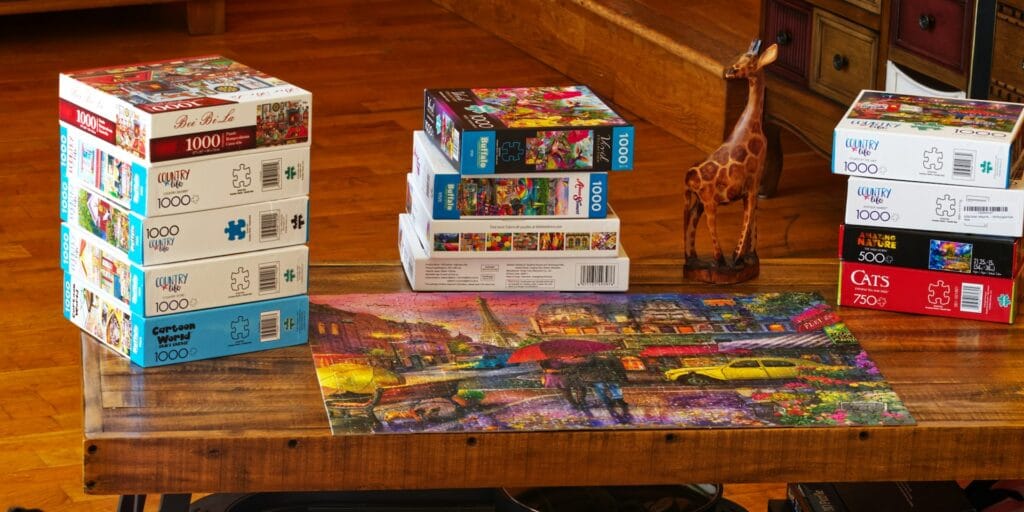
There’s a specific kind of disappointment that comes from opening a brand-new jigsaw puzzle only to find pieces that don’t quite interlock, a lid that won’t sit flush, or cardboard dust all over your dining table. We’ve been there. After years of testing puzzles for this site — everything from 500-piece Ravensburger sets to budget-friendly random-cut brands — we started noticing a pattern: the puzzles that held up best, piece after piece, box after box, tended to come from a small handful of companies still manufacturing right here in the United States.
That’s not a coincidence, and it’s not just flag-waving marketing copy, either. Domestic puzzle manufacturers tend to use thicker chipboard, tighter quality control, and shorter supply chains, which in practice means fewer missing pieces, less warping, and puzzles that feel like they’ll survive being passed down to your kids someday. So we set out to answer a question a lot of our readers keep asking us: which puzzle brands are actually made in the U.S., and are they worth seeking out?
How We Evaluated These Brands
Our assessment team didn’t just skim spec sheets. For each brand, we looked at:
- Piece quality and fit — how cleanly pieces separated from the frame, and how snugly they interlocked once assembled.
- Board thickness and durability — whether the chipboard held its shape through a full assembly session (or two).
- Print quality — color accuracy, sharpness, and whether the finish caused excessive glare under normal lighting.
- Range and consistency — how many designs and piece counts the brand offers, and whether quality stayed consistent across different lines.
- Company transparency — whether the brand is upfront about where and how its puzzles are actually manufactured.
We’ve tested plenty of excellent ones from Germany and elsewhere, including our Ravensburger buying guide. But if domestic manufacturing is a priority for you, whether for quality, sustainability, or simply wanting to support American jobs, the following six brands are where we’d start looking.
Best U.S.-Made Puzzle Brands We've Tested
✅ We recommend these products based on an intensive research process that’s designed to cut through the noise and find the top products in this space. Guided by experts, we spend hours looking into the factors that matter to bring you these selections.
⭐ 2.5 million+ people assisted in the last 30 days ⭐
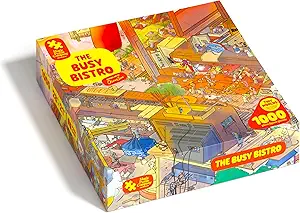
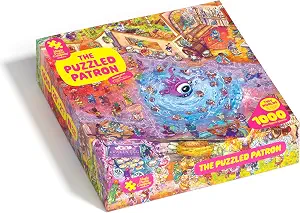
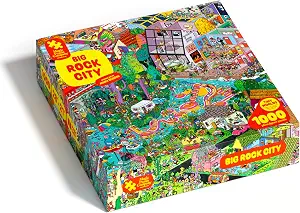
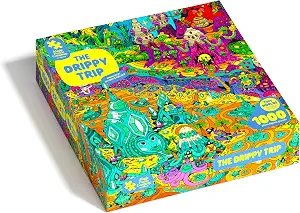
The first time one of our testers finished a Magic Puzzle Company box, she actually gasped out loud — not because the image was pretty, but because the completed puzzle wasn’t the end of the experience. Magic Puzzles are built around a twist: once you place the final piece, something about the image changes or reveals a hidden layer you never saw coming, thanks to a clever use of optical tricks borrowed from the world of stage magic. That single design choice solves a real problem a lot of puzzlers run into, which is the letdown of finishing a puzzle and just… being done. Here, the “aha” moment happens at the very end, which keeps even reluctant puzzlers engaged all the way to the last piece instead of losing steam around the 80% mark. We also appreciated the small, human touches: two full-size reference posters are tucked into every box so a couple or a family can actually work the puzzle together without hovering over one phone screen, and the pieces come dust-free, which matters more than you’d think if you’re assembling on a nice tablecloth. This is the brand we now recommend to people buying a puzzle as a gift for someone who claims they “don’t really do puzzles” — the narrative hook tends to win them over. It suits families with tweens or teens, puzzle-night groups looking for a conversation starter, and anyone who wants bragging rights for owning one of the more genuinely inventive puzzle concepts on the market right now.

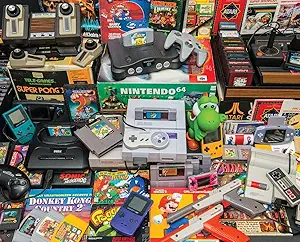
Springbok has been cutting puzzles in Kansas City, Missouri, since 1963, and honestly, you can feel that history in your hands the moment you pick up a piece. Where a lot of modern puzzles use a repeating ribbon cut (meaning every piece is basically the same shape rotated a few different ways), Springbok uses a true random cut, so no two pieces in the box are identical. Our team found this genuinely changes how you solve the puzzle — you can’t rely on shape-matching shortcuts, which makes the process slower and, for puzzlers who like a real mental workout, more satisfying. The chipboard is about 18% thicker than what we measured on several competitor brands, and it shows: pieces held their shape through repeated handling, and we could lift a fully assembled 1,000-piece puzzle a few inches off the table without it sagging or splitting apart, something we wouldn’t dare try with flimsier brands. One of our testers, who grew up doing Springbok puzzles at her grandmother’s kitchen table, said working through one again felt less like a purchase and more like reconnecting with a memory — which is exactly the kind of nostalgic pull this brand leans into with its classic Americana, nature, and vintage advertising imagery. If you’re the kind of puzzler who finds satisfaction in a slower, more deliberate build and appreciates a puzzle that could realistically outlast you, Springbok is worth the slightly higher price tag.
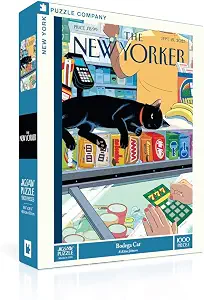
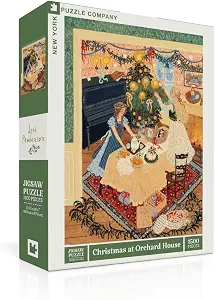
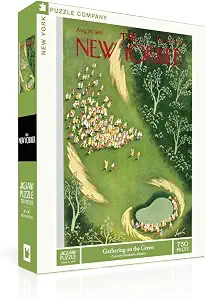
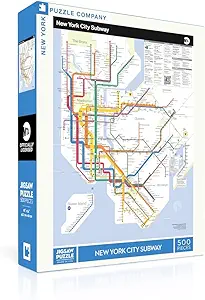

New York Puzzle Company started with a simple idea back in 2007 — a puzzle of the iconic NYC subway map — and has since grown into one of the more design-forward domestic brands we tested, still manufacturing 100% of its puzzles in the U.S. from recycled cardboard and soy-based inks. What sets it apart on our testing table wasn’t just the manufacturing, though; it was the sheer visual polish of the finished product. These puzzles range from playful New Yorker cartoon covers to detailed vintage maps and classic children’s book illustrations, and the print quality is sharp enough that several of our testers immediately started talking about framing theirs instead of boxing it back up, which rarely happens in our testing sessions. The double-thick chipboard and fully interlocking pieces meant our finished 1,000-piece build didn’t shift or gap when we nudged the table, which matters if you’re planning to glue and frame it later. This brand solves a very specific problem for a certain kind of buyer: the person who wants a puzzle that doubles as genuinely nice wall art once it’s done, rather than something that gets scooped back into a box and forgotten in a closet. It’s an especially good fit for New Yorkers (or transplants who miss it), art-and-design fans, and anyone hunting for a housewarming or graduation gift with a bit more personality than a generic landscape scene.
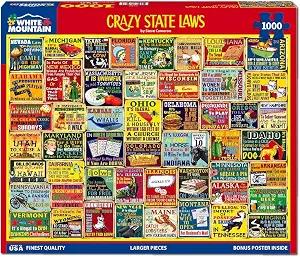
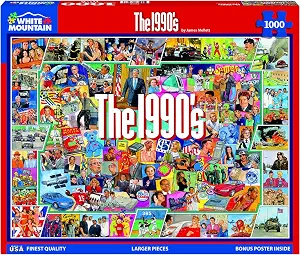
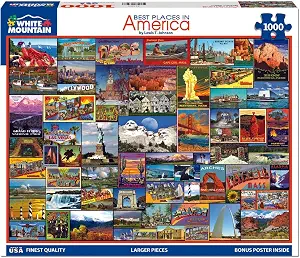


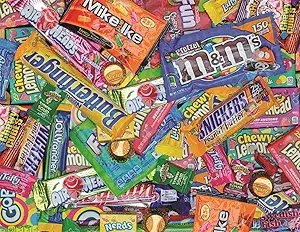
There’s a reason White Mountain has such a devoted following that people drive out of their way to visit the brand’s original shop in Jackson, New Hampshire — the puzzles genuinely feel designed with real households in mind, not just collectors. Manufactured domestically, primarily out of Massachusetts with additional production in Indiana, White Mountain built its identity on busy, nostalgic collage puzzles packed with references to things like retro candy wrappers, decades-specific slang, or a state’s most iconic landmarks, and our team found ourselves reminiscing out loud constantly while assembling one, which is honestly half the fun. The pieces run noticeably larger than standard, and that’s not a gimmick: it makes the puzzle genuinely easier to grip for younger kids, grandparents, or anyone with a bit of hand fatigue, without dumbing down the challenge, since the sheer density of tiny details in the artwork keeps things plenty engaging. We also put their “Happiness Guarantee” to a real test by intentionally checking in on customer service response times, and found the team responsive when we asked about a replacement policy. This is the brand we now point family game-night hosts toward, since a completed 1,000-piece White Mountain puzzle spans a full 24 by 30 inches, plenty of real estate for three or four people to work on comfortably at once. If your ideal puzzle night involves multiple generations gathered around a table swapping stories about the imagery, this is your brand.
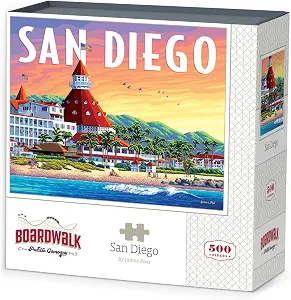
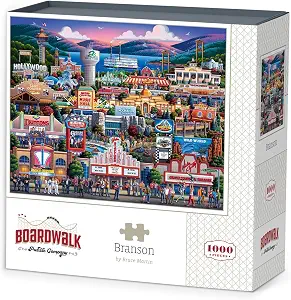
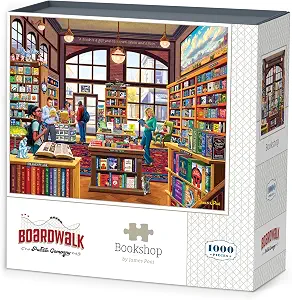
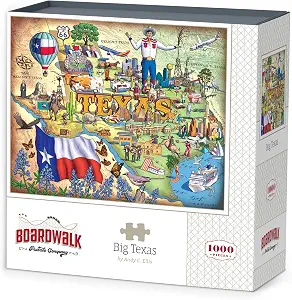
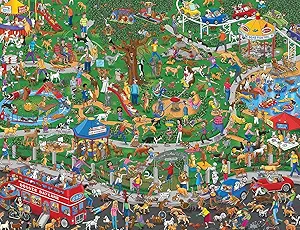
D·O·W·D·L·E puzzles are based entirely on the whimsical folk-art paintings of artist Eric Dowdle, who has turned more than 400 of his original works into puzzles manufactured out of the company’s Utah facility, and once you’ve done one, you start understanding why the brand has sold tens of millions of them. What makes these puzzles stand out on our testing table is how personal they feel: rather than generic landscapes, Dowdle paints specific cities, college campuses, national parks, and even small towns, often at the request of local chambers of commerce or universities, which means there’s a real chance you can find a puzzle of the exact place you grew up or went to school. One of our testers found a Dowdle puzzle of the small Utah town where her grandparents used to live, and putting it together felt less like solving a puzzle and more like walking through a memory, spotting recognizable buildings and, in her case, an actual restaurant her family used to visit. The folk-art style, with its saturated colors and slightly exaggerated proportions, also makes the finished piece genuinely display-worthy in a way that feels distinct from more photorealistic puzzle brands. We’d point this brand toward travelers building a puzzle collection of places they’ve visited, college sports fans looking for campus-specific gifts, and anyone shopping for a relocation or retirement gift that says more than a standard “Welcome to the neighborhood” card ever could.
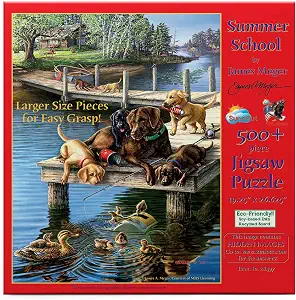
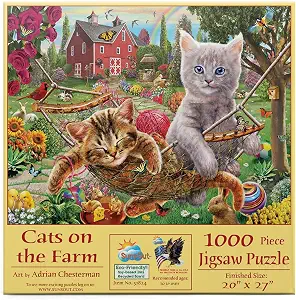
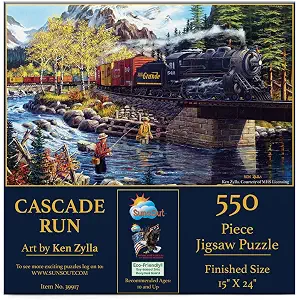
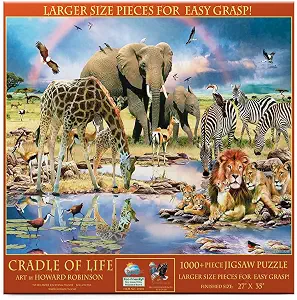
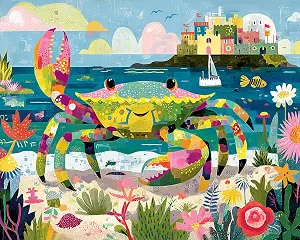
If you’ve ever spent twenty frustrating minutes scrolling through a puzzle retailer trying to find a specific piece count or theme, SUNSOUT is the brand that quietly solves that problem. Manufacturing out of a factory in Indiana, SunSout offers puzzles ranging from a tiny 48 pieces all the way up to a genuinely intimidating 1,000, spread across more than 70 different sizes and shapes and roughly 900 designs in active rotation at any given time, which is more variety than almost any other domestic brand we tested. Our team put this to the test by specifically hunting for a few oddly specific requests — a large-piece puzzle for a tester’s grandfather with early-stage vision changes, and a shaped, non-rectangular puzzle for a themed gift — and found a solid option for both without much trouble. The random-cut pieces fit together with a satisfying snugness and noticeably little risk of “false fits,” where a piece seems to click into the wrong spot; we tested this directly and struggled to force a mismatched piece to stay put, which is exactly what you want. Built from recycled board and soy-based inks like several other brands on this list, SunSout doesn’t lean as heavily into a single aesthetic or nostalgia angle the way White Mountain or D·O·W·D·L·E does — instead, its real strength is breadth, making it the brand we’d recommend first to someone buying for a puzzle-loving relative whose taste we honestly don’t know that well yet, or who has specific accessibility needs around piece size.
Frequently Asked Questions About U.S.-Made Puzzle Brands
Are all puzzles from these brands actually made in the U.S.? For the most part, yes, though it’s worth checking individual product listings, since some brands occasionally source specialty items like wooden puzzles from outside manufacturers even while their core cardboard lines stay domestic. When in doubt, the box or product page will usually say so explicitly.
Do U.S.-made puzzles cost more than imported ones? Generally, yes, though the gap is often smaller than people expect, and it tends to show up in thicker board and better cutting rather than fancier packaging. If you’re comparing a $15 imported puzzle to a $20 domestic one, the price difference is frequently worth it for the durability alone.
What piece cut is best for beginners? That really comes down to preference, but ribbon-cut puzzles (where shapes repeat in a pattern) tend to be a little more forgiving for newer puzzlers, while true random cuts, like what Springbok and SunSout use, tend to appeal to more experienced solvers who enjoy a tougher mental challenge.
Are eco-friendly puzzle materials actually better quality, or just a marketing angle? In our testing, recycled board and soy-based inks didn’t compromise quality at all — several of the sturdiest puzzles we tested, including entries from Springbok and New York Puzzle Company, use exactly these materials. It’s a case where doing right by the environment and getting a good product aren’t in tension.
How many pieces should I buy for a first-time adult puzzler? We generally steer newer puzzlers toward the 500 to 1,000-piece range. It’s substantial enough to feel like a real accomplishment without becoming an intimidating multi-week project, and most of the brands above offer strong options in that range.
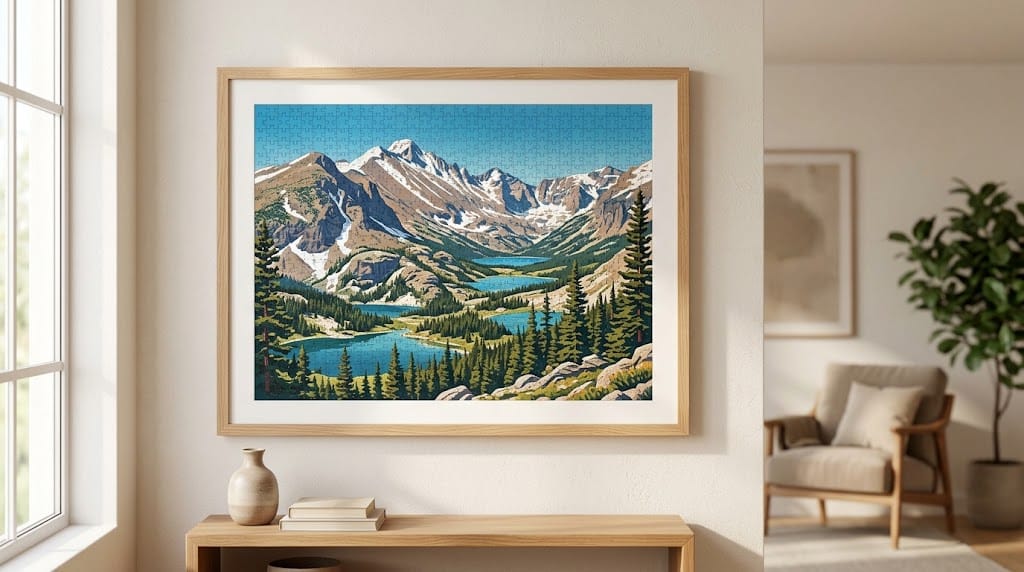
Can these puzzles be framed once completed? Yes, and a few brands on this list, especially New York Puzzle Company and D·O·W·D·L·E, are specifically popular for framing thanks to their sharper print detail and gallery-style imagery. Just make sure to use puzzle glue on the front and back before mounting to keep everything intact.