Advertiser Disclosure
We independently review everything we recommend. When you buy through our links, we may earn a commission.
Dewenwils Low Voltage Transformer Review - Exclusive 15% Off Coupon

Picture this: you’ve just spent a weekend planting pathway lights and spotlights around your yard. Everything looks stunning during the day — but the moment the sun goes down, your outdoor lighting is either flickering, dimming unevenly, or just…not turning on at all. Sound familiar?
We’ve been there. And after testing dozens of landscape lighting setups, our assessment team kept coming back to one brand that genuinely solved these problems without breaking the bank: Dewenwils—specifically, their line of low-voltage transformers.
Enter this exclusive promo code (DEPB15) at checkout to enjoy a 15% discount on the entire collection. (available for all cord reels on Dewenwils’ website)
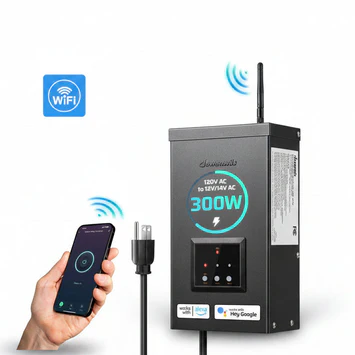
Exclusive Promo Code: DEPB15 Save 15% (now – 12/31/2026)
What Is a Low Voltage Transformer and Why Does It Matter?
Before we dive into Dewenwils specifically, let’s quickly cover the basics — because this is the question we get asked the most.
A low-voltage transformer converts your standard 120V AC household power into a much safer, lower output — typically 12V or 14V AC, or 12V DC — which is exactly what most landscape lighting fixtures need to run properly. Without a transformer, you’d either need to run high-voltage wiring through your yard (a serious safety and code issue) or use battery-powered fixtures that never quite deliver the brightness you’re after.
The transformer acts as both a power source and a control hub. It protects your fixtures from voltage spikes, ensures consistent brightness across long cable runs, and gives you centralized control over your entire outdoor lighting system. For most homeowners, it’s the single most important piece of equipment in any landscape lighting setup.
Dewenwils has built its transformer lineup around a simple but powerful idea: make professional-grade outdoor lighting accessible to everyone. Their transformers step down voltage reliably, offer smart automation features, and come in a range of wattages to match setups of every size — from a modest front-yard path to a sprawling multi-zone estate.
The Dewenwils Low Voltage Transformer Lineup: What's Available?
One of the things our team genuinely appreciates about Dewenwils is how thoughtfully they’ve structured their product range. You’re not stuck buying more power than you need, and you’re not left scrambling when your setup grows.
Here’s how the wattage tiers break down:
- 60W–120W models — Perfect for small gardens, accent lighting, and spotlight setups
- 150W–200W models — Great for mid-sized front or backyard landscaping projects
- 300W models — Ideal for medium to large properties with multiple lighting zones
- 600W models — Built for large estates, high-density lighting systems, and complex multi-zone configurations
Each tier is available in multiple control configurations: photocell/dusk-to-dawn, countdown timer, remote control, and Wi-Fi/smart versions. That flexibility is a huge deal, because it means you can match the transformer to your actual lifestyle rather than forcing yourself into an overcomplicated smart-home setup if you just want basic automation.
The smart models are particularly impressive. The Wi-Fi and Matter-enabled versions work with Alexa, Google Assistant, and Siri, letting you control zones, set schedules, and automate your lighting entirely from your phone or voice. Meanwhile, if you just want reliability without the tech overhead, the photocell models handle everything automatically — lights on at dusk, lights off at dawn, zero programming required.
Exclusive Promo Code: DEPB15 Save 15% (now – 12/31/2026)
7 Powerful Reasons to Choose Dewenwils for Your Landscape Lighting
1. Built-In Dusk-to-Dawn Photocell Sensor
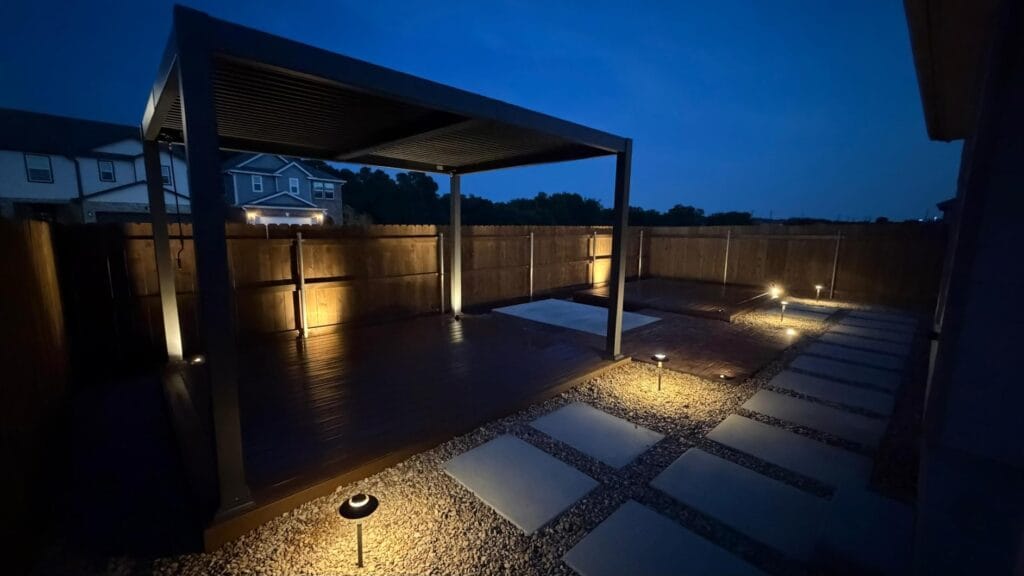
This is the feature that first got our attention. Many of the Dewenwils models come with a built-in photocell sensor that automatically detects ambient light levels and turns your landscape lights on at dusk and off at dawn. No timer programming, no manual switching, no forgetting to turn things off in the morning.
For busy homeowners, this is genuinely life-changing. You set it once, and the system handles itself. The 200W and 300W models with built-in photocells are especially popular because they balance solid wattage capacity with hands-off automation.
2. Flexible Countdown Timer — Up to 9 Hours
Not everyone wants their lights running all night. Dewenwils addresses this directly with a 1–9 hour countdown timer built into most of their mid-range and upper-tier models. The transformer turns on at dusk and then automatically shuts off after your chosen interval — 1, 2, 3, all the way up to 9 hours later.
This is a real energy saver, and it’s incredibly simple to configure. Just press the selector button until you hit your preferred countdown duration. Done.
3. Reliable Memory Function (Survives Power Outages)
Here’s one that most people overlook until they’ve been burned by it: power outages reset lesser transformers back to their factory defaults, which means you wake up to find your lighting schedule wiped and have to reprogram everything from scratch.
Dewenwils builds a memory function into their transformers that retains your selected mode and settings even after a power interruption. The one caveat — and Dewenwils is upfront about this — is that the transformer needs to run in the chosen mode for at least 24 hours before the memory function kicks in. After that, your settings are locked in.
4. Smart Wi-Fi and Matter Control
For those who want full smart-home integration, the Dewenwils Wi-Fi and Matter models are outstanding. Connect through the app, set custom schedules, control individual zones remotely, and trigger automations based on time of day or routine.
The Matter-enabled models take things a step further with native compatibility for Alexa, Google Assistant, and Siri — meaning your outdoor lighting can integrate seamlessly with whatever smart-home ecosystem you’re already running. Voice commands, app control, and scheduled automation all coexist on the same device.
Standby power consumption on the smart models is impressively low — typically below 1W, often around 0.5W — so you’re not paying a meaningful energy penalty for keeping the Wi-Fi circuitry active around the clock.
5. Weatherproof and Built for the Long Haul
Outdoor equipment lives a hard life. Rain, snow, dust, UV exposure, temperature swings — it all adds up. Dewenwils uses high-performance metal construction with corrosion-resistant materials across most of its transformer lineup. The housings are molded to be weatherproof, protecting internal components from moisture and debris year-round.
Their transformers also include a built-in automatic circuit breaker that kicks in to prevent overload and short-circuit damage — essential protection for any outdoor electrical installation. For installation, each unit comes with built-in mounting holes and a 3.3-foot STJW 18AWG power cord, making wall mounting straightforward even for first-timers.
6. Wide Compatibility With Major Lighting Brands
One concern we always check when reviewing a transformer is whether it plays nicely with fixtures from other brands. Dewenwils passes this test easily. Their 12V/14V AC models are compatible with the vast majority of halogen and LED landscape fixtures designed for AC low-voltage input — including fixtures from Malibu, Kichler, Hinkley, FX Luminaire, and many more.
The DC models (12V DC output) are specifically designed for LED fixtures that require a stable DC input, ensuring consistent brightness without flicker. As long as you match your transformer’s output type (AC or DC) to your fixture requirements and stay within 70–80% of the rated wattage capacity, you’ll have full compatibility.
7. Safety Certifications You Can Trust
Dewenwils doesn’t cut corners on compliance. Their transformers carry FCC certification for Wi-Fi and smart control electronics, and applicable models meet UL/ETL outdoor ratings for fire safety and outdoor use standards. These certifications matter — they’re the difference between a product that’s been rigorously tested and one that’s just hoping for the best.
Frequently Asked Questions About the Dewenwils Low Voltage Transformer
How many lights can I connect to a Dewenwils low voltage transformer?
This depends entirely on total wattage, not the number of fixtures. Add up the wattage of every light you plan to connect, then make sure that total doesn’t exceed 70–80% of your transformer’s rated capacity. So if you have a 200W transformer, keep your total load at or below 160W. This headroom prevents voltage drop, overheating, and premature wear on both the transformer and your fixtures.
For example, if you’re running ten 10W LED spotlights (100W total), a 150W or 200W transformer gives you comfortable headroom and room to expand later.
What’s the difference between AC and DC Dewenwils transformers?
AC transformers (like the 300W Wi-Fi and 600W photocell models) output 12V or 14V AC, which is compatible with most traditional and LED landscape lighting designed for AC low-voltage systems. Polarity doesn’t matter when connecting fixtures to AC models — a major installation convenience.
DC transformers output a stable 12V DC, which is specifically required by certain LED fixtures designed for DC input. These models require you to match positive and negative terminals correctly during installation. If you’re not sure which type your fixtures need, check the fixture spec sheet or the label on the fixture itself.
Where should I install the Dewenwils low voltage transformer?
Install your transformer near a GFCI-protected 120V outdoor outlet, mounted above ground level and away from areas where standing water can accumulate. The built-in photocell sensor (on applicable models) needs an unobstructed view of the open sky to work accurately — avoid placing it where it will be shaded by eaves, overhangs, or dense foliage that could trick it into thinking it’s dusk before it actually is.
Most models include built-in hanging holes and a 3.3-foot power cord, so you can mount directly to an exterior wall and plug into a nearby outlet without any complex wiring.
Is the Dewenwils low voltage transformer compatible with LED landscape lighting?
Yes — Dewenwils transformers are fully compatible with all standard 12V LED landscape lighting fixtures, including spotlights, pathway lights, garden lights, and water feature lighting. In fact, LED fixtures are strongly recommended because they draw far less wattage than halogen equivalents, meaning you can power significantly more fixtures from the same transformer capacity.
Can I expand my lighting system after installation?
Absolutely. One of the smartest reasons to choose a Dewenwils transformer is the scalability. As long as you stay within the 70–80% wattage rule, you can add fixtures over time without replacing the transformer. If you anticipate future expansion, our team recommends choosing a transformer one tier higher than your current needs — the cost difference is modest, and you avoid the hassle of upgrading later.
How do I set up the Wi-Fi models?
Dewenwils Wi-Fi models connect to 2.4GHz networks through the companion app. One important setup tip we’ve found in real-world use: the reset button on these units is recessed and requires a pointed object (like a retracted pen or a pin) to depress — using a finger typically won’t work. Once you press that reset button properly, the Wi-Fi pairing process is quick and straightforward. Also worth knowing: in the Dewenwils app, “Open” means lights are ON and “Closed” means lights are OFF — a quirky but consistent labeling choice you’ll want to know before your first setup.
Does the Dewenwils low voltage transformer work with voice assistants?
Yes — the Matter and Wi-Fi-enabled models work with Amazon Alexa, Google Assistant, and Apple Siri. The Matter protocol specifically enables cross-platform compatibility, so whether your home runs on one ecosystem or a mix of several, you can integrate your outdoor lighting without friction. For remote control models, a physical remote with up to 200 feet of range handles on/off and timer modes independently of any app or Wi-Fi connection.
Installation Tips From Our Assessment Team
We’ve seen a lot of landscape lighting installs, and a few mistakes come up repeatedly. Here’s what to watch out for:
Stay within 80% of rated capacity. We’ve said it before, but it bears repeating — running a transformer at or near 100% capacity accelerates wear and increases the risk of nuisance tripping. Always leave headroom.
Use the right wire gauge. For longer cable runs or higher-wattage systems, upgrade to 14AWG wire to minimize voltage drop. Thin wire over long distances leads to uneven brightness, especially at the far end of a run.
Let the memory function settle. After setting your preferred mode, let the transformer run continuously for at least 24 hours before testing the memory function’s behavior after a power interruption.
Mount thoughtfully for photocell accuracy. If your sensor model isn’t triggering at the right time, the most common cause is shading around the sensor. Reposition to give it a clear sightline to the open sky.
Exclusive Promo Code: DEPB15 Save 15% (now – 12/31/2026)