Advertiser Disclosure
We independently review everything we recommend. When you buy through our links, we may earn a commission.
Acrylic Suncatcher Puzzles That Turn Sunlight Into Colorful Art
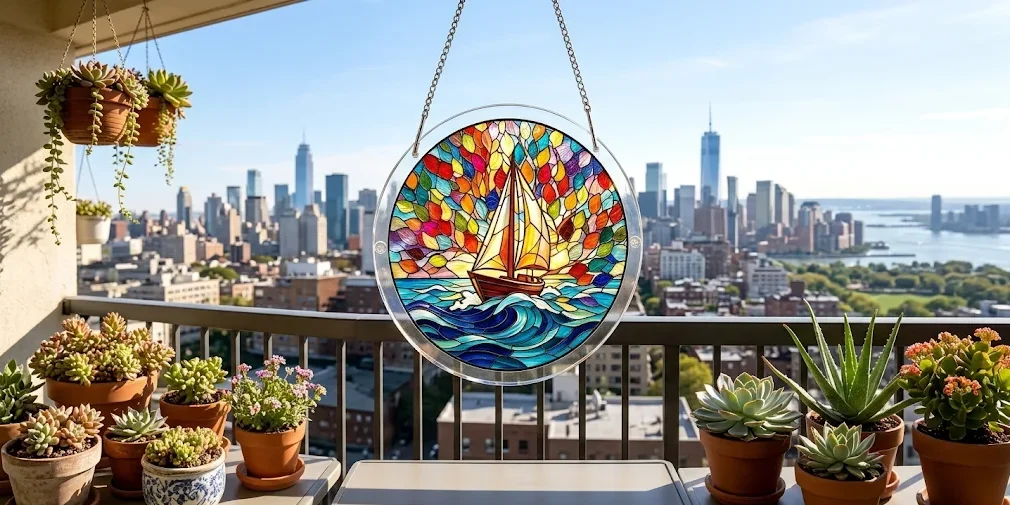
There’s a moment that happens with acrylic suncatcher puzzles that you don’t quite expect until it hits you. You’ve just snapped the last piece into place—maybe 83 small, jewel-colored acrylic pieces—you hold it up to your window, and suddenly your room fills with soft, shifting rainbow light. It’s part puzzle, part stained glass, and part something you genuinely want to leave hanging in your window for the rest of the year.
That’s the core appeal of this category, and it’s why acrylic suncatcher puzzles have quietly become one of the most giftable, shareable, and genuinely satisfying DIY decor items on the market right now. They’re not a craft project that gets shoved in a drawer when you’re done. They become part of your space.
Everything We Recommend
✅ We recommend these products based on an intensive research process that’s designed to cut through the noise and find the top products in this space. Guided by experts, we spend hours looking into the factors that matter to bring you these selections.
⭐ 2.5 million+ people assisted in the last 30 days ⭐
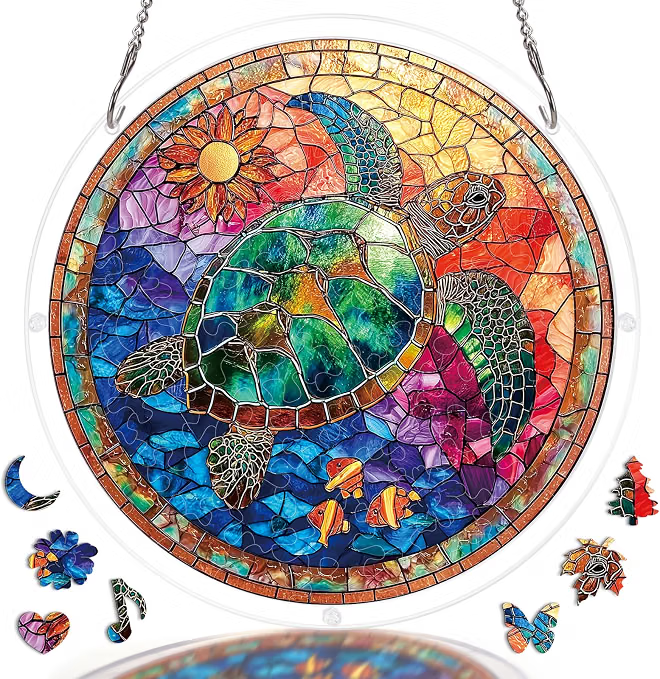
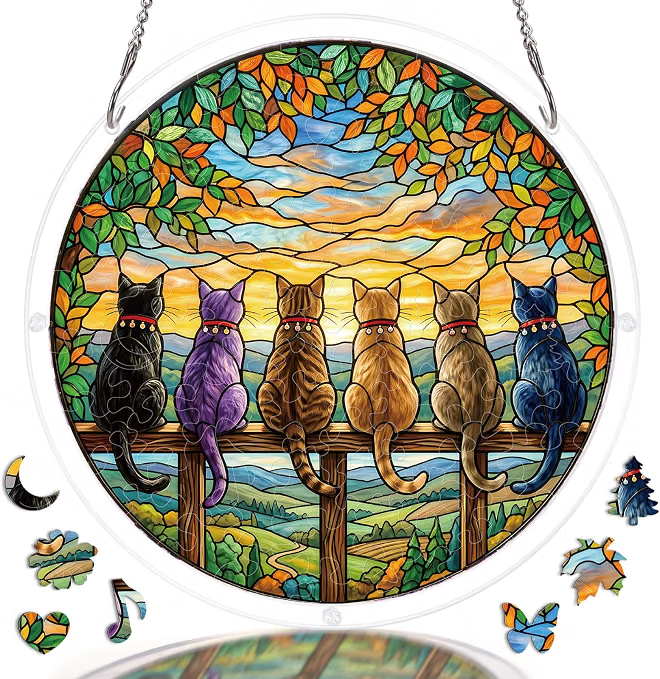
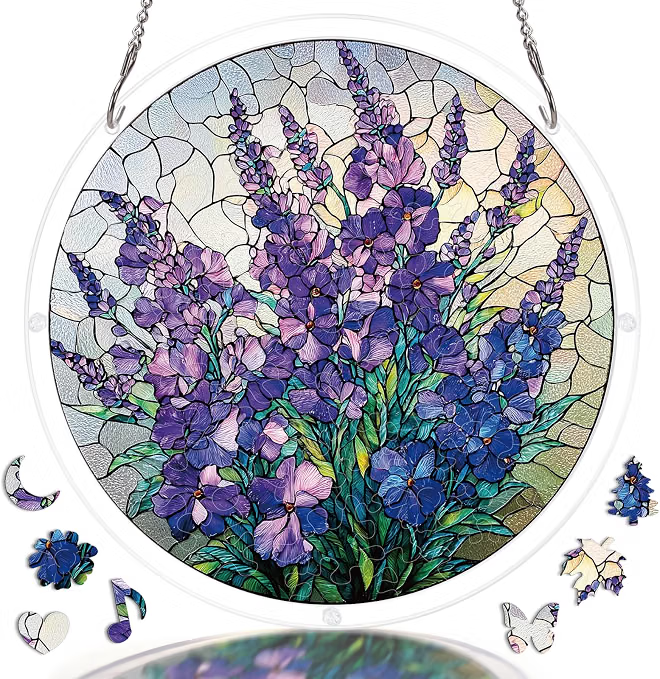
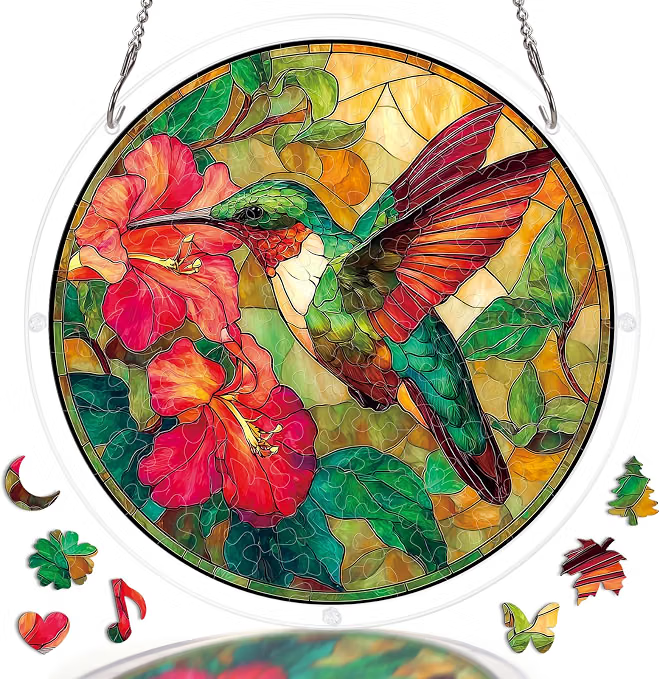
KAAYEE has built its reputation in the puzzle and DIY decor space by leaning hard into craftsmanship details that most buyers don’t think to look for until something goes wrong — and their acrylic suncatcher puzzle line is a good example of that philosophy in practice. What immediately stood out when our team opened the KAAYEE box was how well-considered the packaging was: each design style has its own labeled box with a visual guide printed on the inside flap, so you’re not squinting at a vague reference image on a fold-out sheet while trying to figure out where a piece goes. That sounds like a small thing, but when you’re 45 minutes into an 83-piece build and trying to identify whether a particular teal piece belongs in the upper-left cluster or the center medallion, it genuinely matters. KAAYEE’s piece tolerance is tight — the fit is snug without being fussy, and the finished puzzle holds its shape cleanly when lifted from the edges. The light projection through their high-transparency acrylic is warm and consistent, casting well-defined color patches rather than the blurry halos you get from thinner material. It’s not a perfect pick for everyone — the more intricate designs have a steeper difficulty curve than the packaging implies, and the piece count stays at 83 regardless of design complexity, so a dense floral pattern demands more focus than a simpler geometric one. But for anyone who wants a suncatcher puzzle that looks like a considered, beautiful object even before it goes in the window, KAAYEE is the name we keep coming back to.
Best for: Gift-givers, detail-oriented crafters, anyone who wants premium packaging. Limitation: More complex designs can be trickier than expected for first-timers.
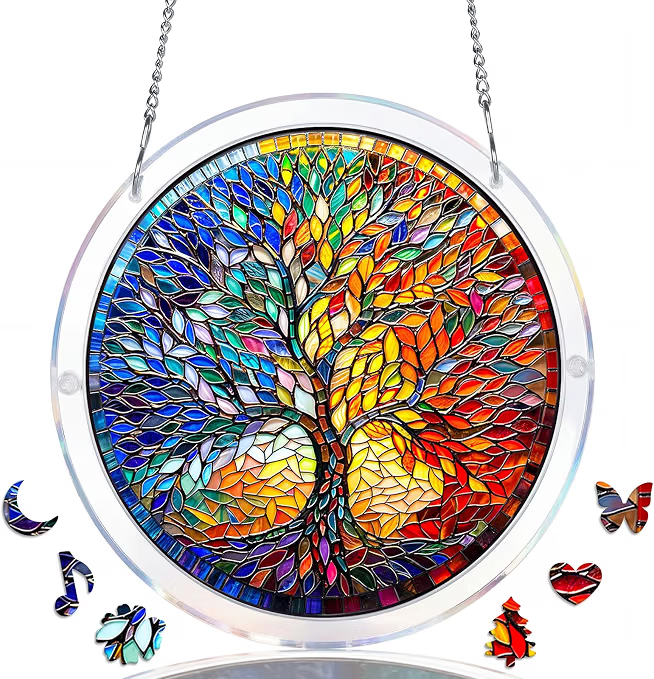
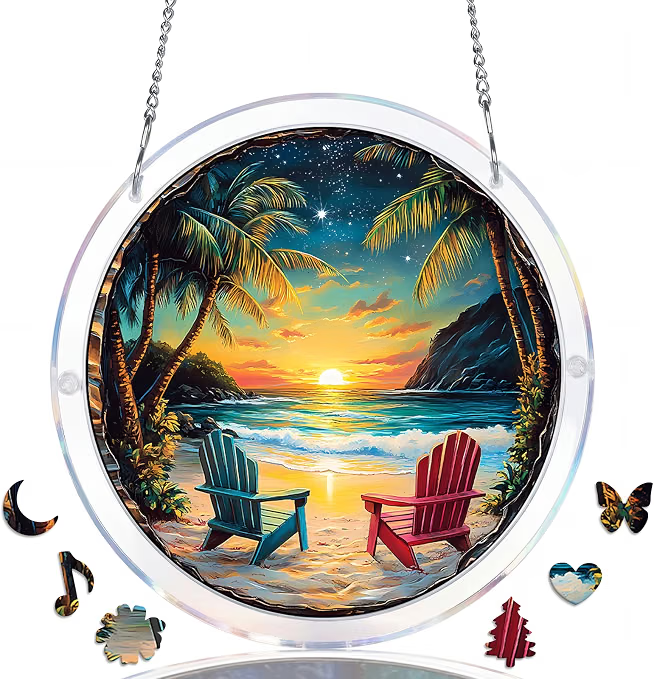
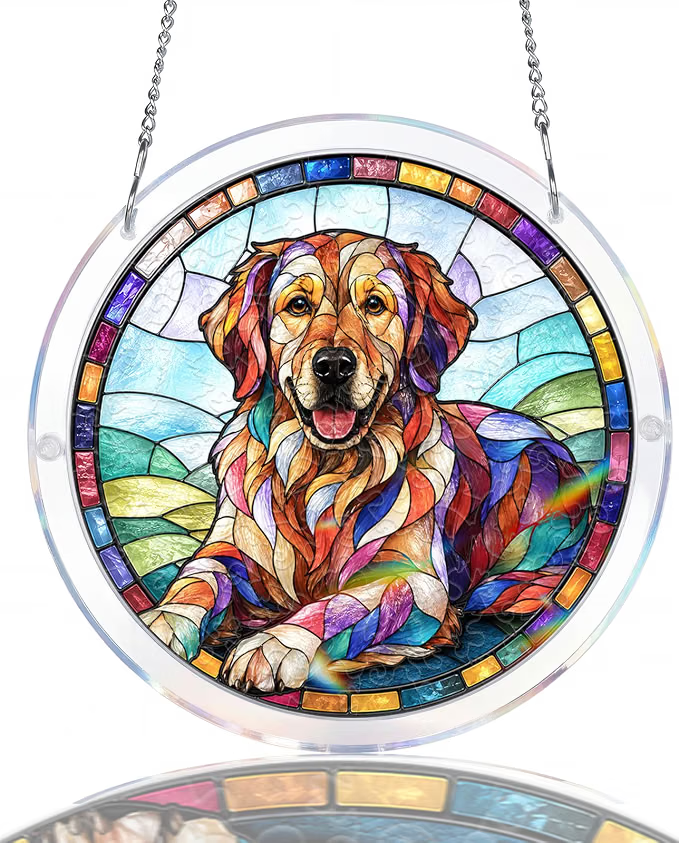
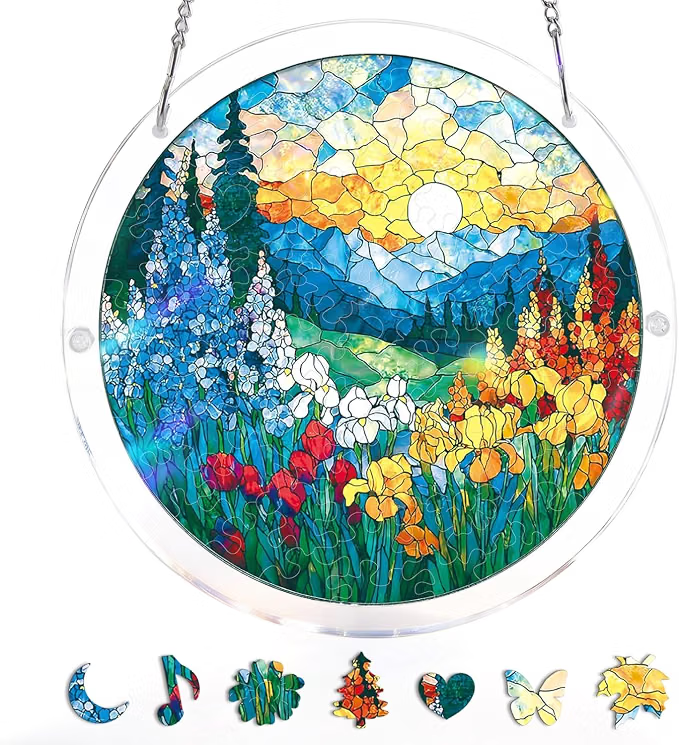
The name suggests wooden puzzles, but WOODBESTS‘ entry into the acrylic suncatcher puzzle space shows they understand what makes this specific format work: it’s about the light. Their UV-printing process produces some of the most saturated, visually striking colors we tested across this category — the Beach Vacation design we evaluated has an almost watercolor-painting quality when assembled, with deep turquoise and coral tones that hold their intensity across both the assembled surface and the projected light pattern on adjacent walls. WOODBESTS leans into the dual-use angle more deliberately than some competitors, designing their pieces so the finished puzzle reads beautifully even before you hang it, almost like a small piece of framed art you could prop up on a shelf if window hanging isn’t your situation. The piece fit is reliable — we didn’t encounter any of the loose-tolerance issues that make some acrylic puzzles slide apart when you pick them up. One thing to note is that WOODBESTS offers a wide range of design themes (nature scenes, holiday motifs, abstract patterns), and quality consistency can vary slightly between design lines — the nature-themed options tend to show off their UV printing process most effectively because of the gradient complexity involved. If you’re buying for someone who is going to put this on a kitchen or living room window where they want maximum visual impact, WOODBESTS is the pick we’d steer you toward first.
Best for: Anyone prioritizing color impact; buyers who want multiple design options. Limitation: Design quality is uneven across the full catalog; stick to the nature or floral themes for best results.
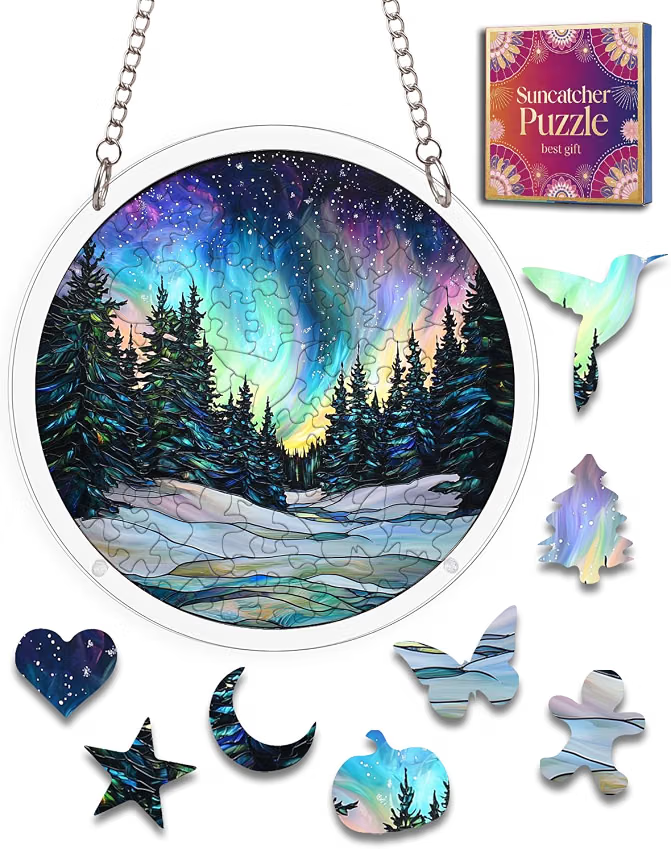
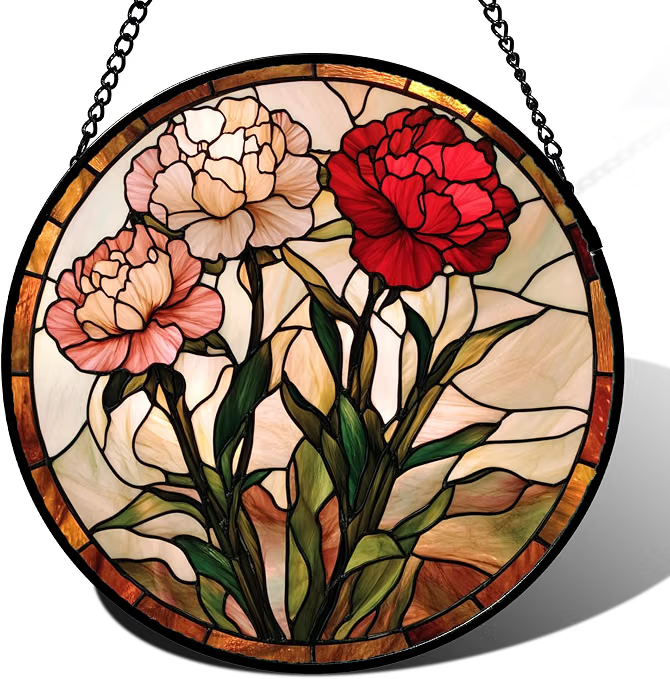
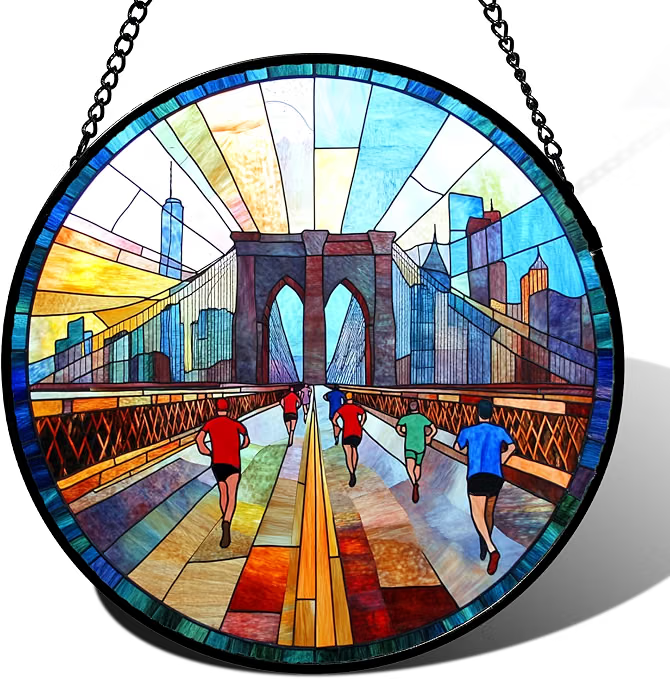
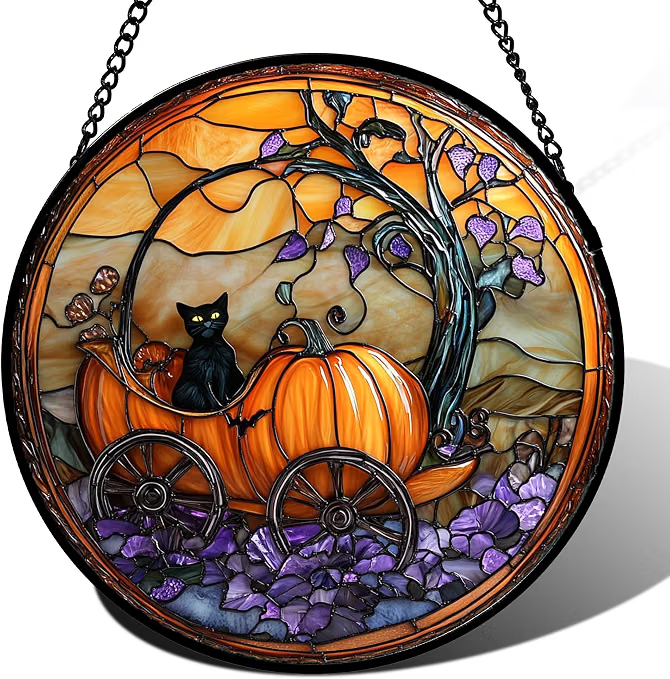
HWRHTR sits at the lower end of the price range for this category, and in a lot of product categories, that would be a reason to temper expectations. What makes HWRHTR interesting is that they’ve made a smart, deliberate trade-off: rather than competing on packaging or design variety, they’ve kept their focus on getting the fundamental experience right. The acrylic is appropriately thick, the piece fit is consistent, and the light-projection effect — which is ultimately the whole reason you buy one of these — works as advertised. Our team assembled two designs from HWRHTR and found the experience genuinely enjoyable both times: the pieces are shaped distinctively enough that assembly doesn’t require the constant second-guessing that plagues cheaper alternatives with generic-cut pieces. Where HWRHTR shows its budget positioning is in the packaging, which is functional but not gift-ready, and the included chain, which is lighter-gauge than what KAAYEE or WOODBESTS provides. If you’re buying this as a gift that someone will unwrap with expectations attached, those details matter. But if you’re buying it for yourself, for a kid’s room window, or for a relaxed afternoon project with no particular fanfare required, HWRHTR delivers a genuinely satisfying result at a price that makes it easy to pick up two or three designs at once and rotate them seasonally.
Best for: Budget-conscious buyers, personal use, parents looking for a creative activity. Limitation: Packaging isn’t gift-presentation-ready; the chain feels lighter than premium alternatives.
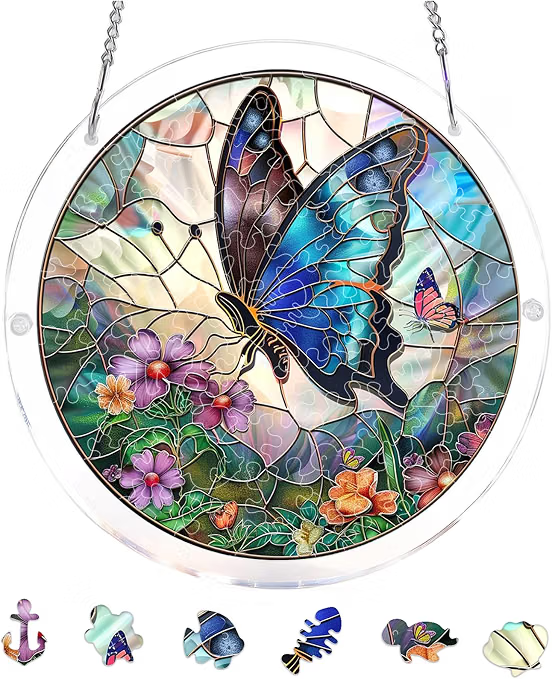
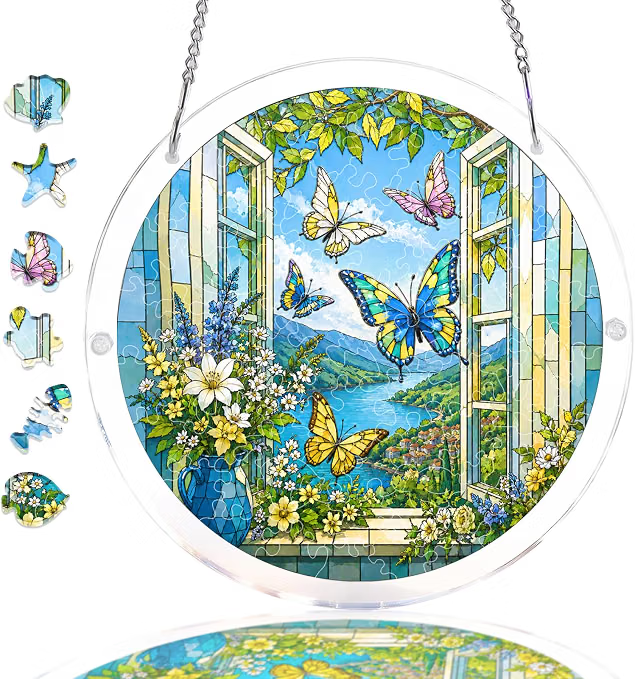
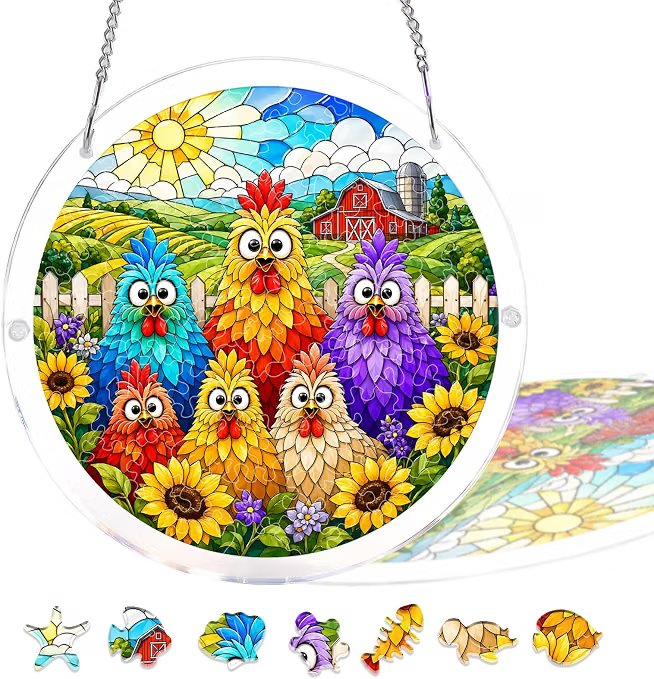
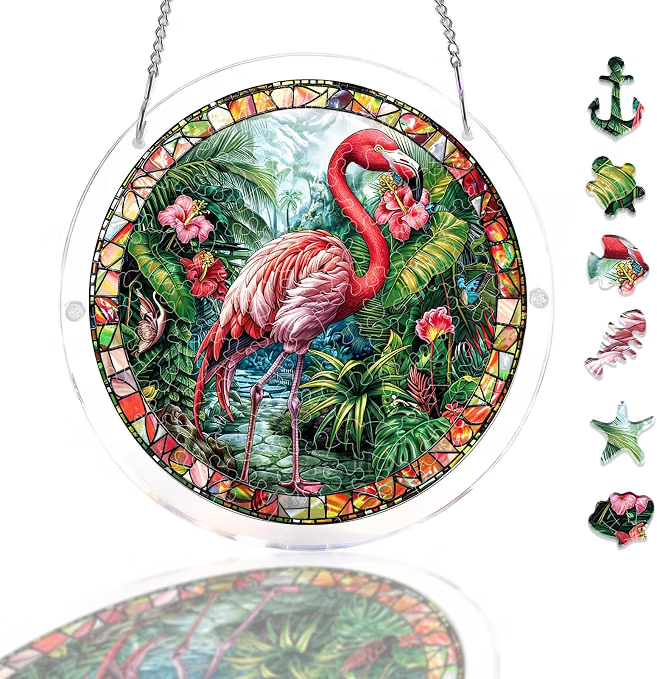
Hopelucr has a background in wooden puzzle design — their uniquely shaped wooden puzzles have a following among people who want a build that actually engages the brain rather than just moving pieces around — and that design sensibility carries into their acrylic suncatcher format in a way that sets them apart. Where most brands in this category use irregular-but-fairly-intuitive piece shapes that guide you toward the right fit, Hopelucr’s pieces are designed with a bit more ambiguity — multiple pieces can appear to fit in a given spot, and working out the correct placement takes a moment of genuine focus. For the casual buyer who just wants a relaxing afternoon, that’s a potential frustration. For the person who finds standard 83-piece suncatcher builds a little too breezy, it’s exactly the engagement level they’re looking for. Beyond the assembly experience, Hopelucr’s designs tend toward nature-inspired patterns — botanicals, celestial themes, wildlife motifs — printed with a subtlety that rewards close viewing. The colors aren’t the most saturated we tested, but they have a quality our team described as “stained glass realness”: in the right window light, the finished piece genuinely resembles traditional leaded glass rather than a printed plastic panel. If the person you’re shopping for is a puzzle hobbyist first and a home decorator second, Hopelucr is the brand that will satisfy both sides of that equation.
Best for: Puzzle enthusiasts, people who want a moderate challenge, nature-themed decor lovers. Limitation: Less intuitive assembly than other brands — not ideal for young children or first-time buyers expecting a quick build.
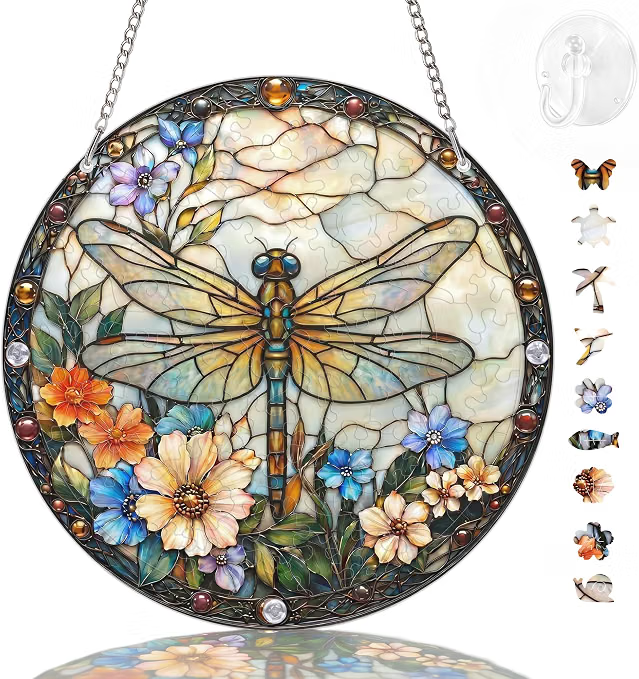
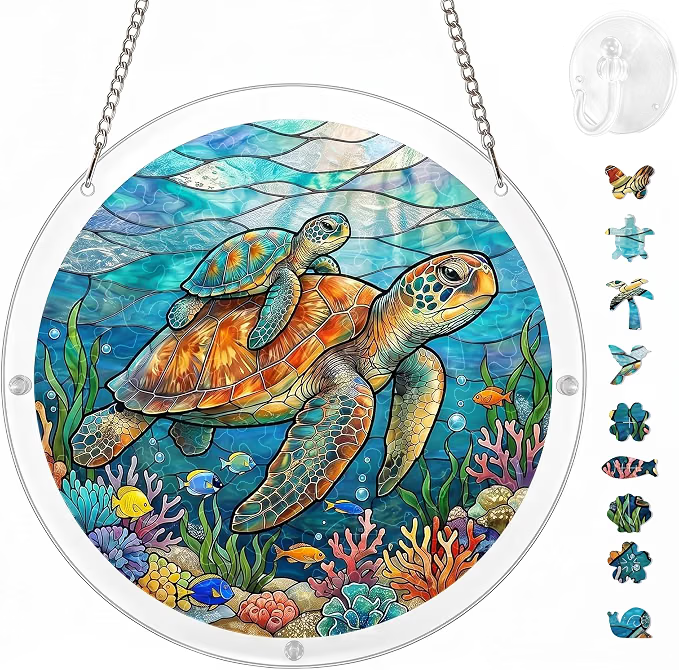
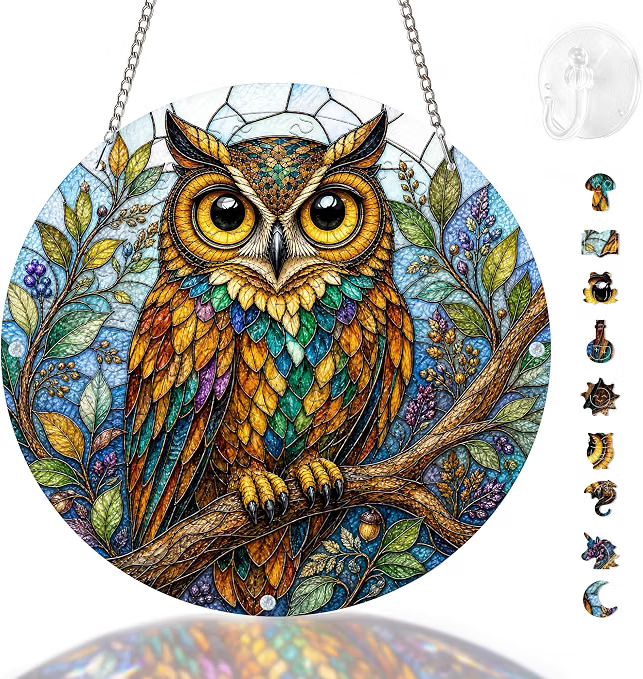
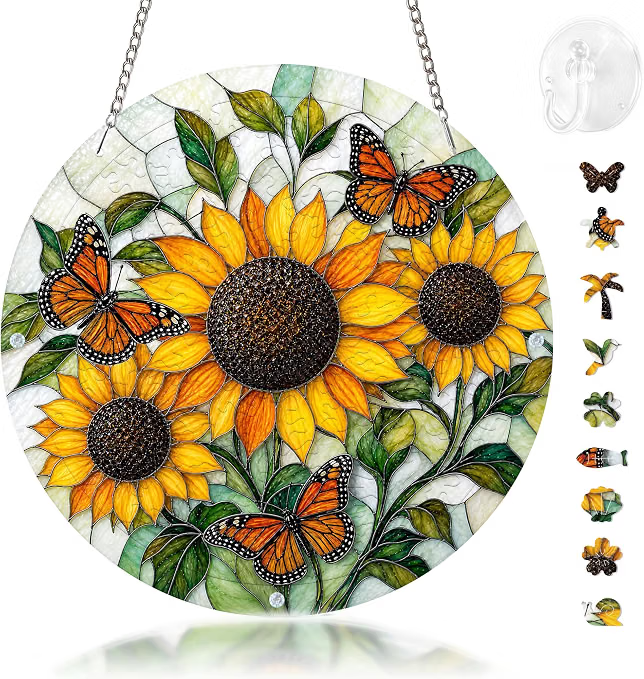
Fungzy’s design approach is exactly what the name implies: these are built to be fun, accessible, and low-stakes. Their acrylic suncatcher puzzles tend toward bolder color palettes, cleaner shapes, and design themes that skew slightly younger (think bright butterflies, cheerful florals, playful animals) — not in a way that feels childish for adult buyers, but in a way that makes them genuinely usable across a range of ages without anyone feeling like they’re doing a kids’ craft project. The piece-fit logic is the most intuitive of the five brands we tested: Fungzy’s irregular piece shapes are designed to minimize assembly confusion, with enough distinctiveness per piece that even younger builders can find their way without constant adult guidance. That beginner-friendliness does mean the assembly experience is quicker and less challenging than Hopelucr’s, but that’s a feature for a large portion of the market, not a flaw. The finished light projection is vibrant and punchy — Fungzy doesn’t underplay color — and the included chain is appropriately sturdy for the product’s weight. Where Fungzy earns its spot on this list over cheaper alternatives in the same accessible-and-fun tier is in its color consistency: the product we received matched the online listing photos more accurately than most of the other brands we tested, which matters a lot when you’re buying online as a gift and can’t hold the item first. If you’re looking for a weekend activity that works for a ten-year-old and a forty-year-old sitting at the same table, Fungzy is the pick.
Best for: Families, beginners, anyone who wants a quick, satisfying build with no frustration. Limitation: Less challenging for experienced puzzle builders; design themes skew slightly toward the playful end.
What Is an Acrylic Suncatcher Puzzle, Exactly?
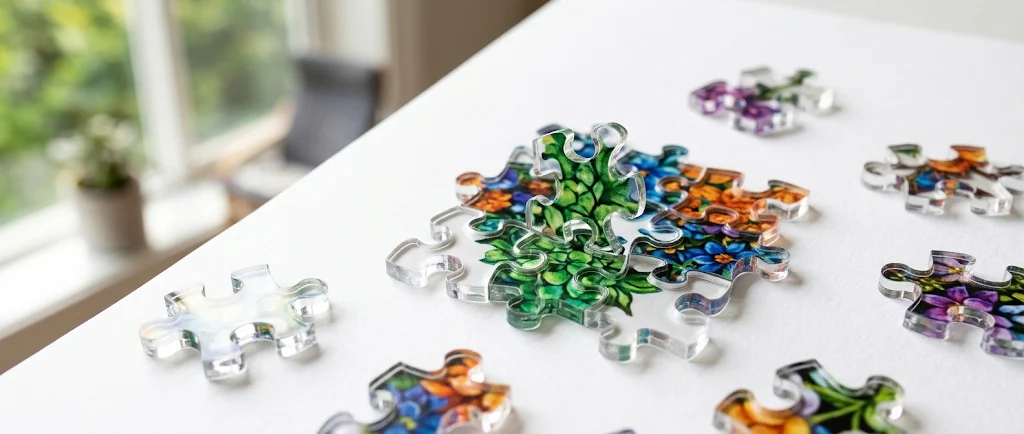
If you’ve never encountered these before, the concept is simple: you assemble a jigsaw puzzle made entirely from translucent, UV-printed acrylic pieces. When you’re finished, the completed puzzle doubles as a hanging window decoration — a suncatcher that catches natural light and throws color patterns into your room.
Most designs in this category run around 83 pieces, which puts them in the sweet spot between “done in one sitting” and “actually a satisfying challenge.” The finished size tends to land around 7.4 inches square, which is compact enough for most windows but substantial enough to look intentional rather than a decorative impulse buy. A metal hanging chain is usually included, so you can go from assembled puzzle to window art in about 30 seconds.
The acrylic itself is the key variable. The best versions use 2mm thick, high-transparency acrylic with UV-printed color — meaning the design is printed at a molecular level into the material, not just applied as a surface layer that can scratch or peel. When sunlight passes through that quality of acrylic, the color projection is vivid and clean. Cheaper alternatives use thinner material or surface-coating techniques that look fine initially but fade noticeably in direct sun within a few months.
The puzzle pieces themselves are typically irregular in shape — not the standard cardboard-jigsaw cutout style, but custom-fit organic shapes that interlock in a specific way. This design choice makes them easier to assemble (fewer “it looks like it fits but it doesn’t” moments) and helps the finished piece hold together firmly enough to be handled and hung without falling apart.
It’s a genuinely clever category. The DIY process gives you an afternoon of calm, satisfying activity. The finished product gives you home decor that isn’t available at every big-box home goods store. And as a gift, it checks boxes that most gifts don’t — it’s experiential, it’s displayable, and it personalizes the recipient’s space in a small but noticeable way.
How We Tested and What We Looked For
Our team ordered products from each of the five brands featured in this guide and spent time actually working through the assembly and display process, paying attention to what makes the experience either smooth or frustrating.
Piece fit and assembly experience. This is the first place quality differences show up. We timed how long it took to find pieces that “looked right” versus pieces that actually locked correctly, and noted whether pieces required force or felt like they slid naturally into place. We also checked whether the completed puzzle held together without additional adhesive when lifted by the hanging chain.
Acrylic quality and light behavior. We placed completed puzzles in a south-facing window for a consistent light test, documenting how vivid the projected light was, how even the color distribution was, and whether any pieces created visual gaps or opaque patches that interrupted the effect.
Color durability. For brands we had additional data on, we checked for fade resistance over extended window exposure. UV-printed acrylic holds color significantly better than surface-coated alternatives — this became a meaningful point of differentiation across the brands we tested.
Included hardware and packaging. A missing or flimsy hanging chain is a surprisingly common failure point in this category. We checked chain quality, hook style, and whether packaging protected the pieces during shipping adequately.
Value relative to price. These puzzles typically sell in the $18–$30 range on Amazon. Within that band, the differences in quality are real. We flagged where paying a few dollars more meaningfully changes what you get.
Buying Guide — What to Look For Before You Buy
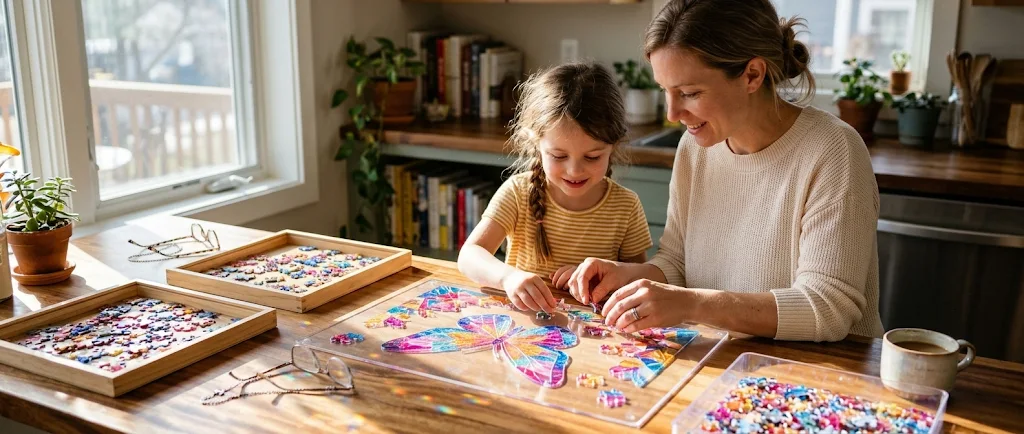
Knowing which brand to pick is one part of this decision. The other part is understanding which features actually matter and which are just marketing language.
Acrylic Thickness and Transparency
The standard for a quality suncatcher puzzle is 2mm acrylic. Thinner than that, and you’ll notice the pieces flex slightly when handled and the light projection becomes diffuse rather than crisp. When a listing doesn’t specify thickness — which is more common than it should be — look for the words “high-transparency” in the product description, and pay attention to whether reviewer photos show vivid window light effects or just show the assembled puzzle on a flat surface (the flat-surface photos often hide transparency quality issues).
UV Printing vs. Surface Coating
UV printing means the color is integrated into the acrylic at a structural level during manufacturing. It doesn’t scratch off, it doesn’t peel at the edges, and it holds up to extended sun exposure significantly better than surface-coated alternatives. If a listing describes the printing method at all, UV printing is what you want. If it doesn’t describe the method, look for user reviews that specifically mention color durability after a few weeks of window exposure.
Piece Count and Design Complexity
Most acrylic suncatcher puzzles in this price range contain 83 pieces, and that’s a reasonable benchmark. What varies is how complex the design is relative to that piece count — a detailed mandala pattern with 83 pieces is a genuinely different experience from a simple three-bird nature scene with 83 pieces. If you’re buying for a beginner or a child, look for designs with large color regions and minimal detail. If you’re buying for a puzzle enthusiast who wants to actually think, look for brands that design for challenge rather than accessibility.
Included Hardware
A quality hanging experience requires at minimum a sturdy metal chain (not plastic) and a mounting hook. Some brands include everything you need; others include the chain but expect you to source a hook yourself. Check the product listing’s “what’s included” section before you buy, and if that information isn’t present, treat it as a red flag for overall product quality.
Packaging (If Gifting)
If this is going to someone as a gift, the box it arrives in matters. KAAYEE and WOODBESTS both put real effort into gift-ready packaging. HWRHTR and Fungzy are more utilitarian. This doesn’t affect the product itself, but it affects the unwrapping experience, which matters if that’s the context.
Price Range and Value
Expect to pay $18–$30 for a quality acrylic suncatcher puzzle. Options priced below $15 generally compromise on acrylic thickness, piece tolerance, or printing quality in ways that become obvious when you’re actually assembling. Options priced above $35 for a standard 83-piece design aren’t typically delivering proportionally better quality — you’re often paying for brand premium or specialty design licensing.
Frequently Asked Questions
How long does it take to assemble an acrylic suncatcher puzzle?
Most 83-piece suncatcher puzzles take between 45 minutes and 2 hours for an adult working alone, depending on design complexity and the buyer’s puzzle experience. Designs with high color variety are generally faster because you can sort by color before starting. Dense single-color designs — like an all-blue ocean scene — take longer because piece shape becomes the primary sorting criterion.
Can kids do acrylic suncatcher puzzles?
Generally yes, though age and design complexity both matter. Brands like Fungzy design specifically for accessible assembly, and their pieces are large enough and distinct enough that kids around 8–10 years old can work through them with minimal frustration. Smaller pieces and intricate designs (like Hopelucr’s more detailed options) are better suited for teens and adults. Always check that pieces don’t present a swallowing hazard for children under 5.
Where is the best place to hang a suncatcher puzzle?
East-facing or south-facing windows work well for most of the day. The light projection effect is most dramatic in morning or early afternoon sunlight — direct, angled light creates more vivid color patterns than diffuse overcast light. Avoid north-facing windows if you want the full visual effect, though the puzzle still looks attractive as a pure window decoration even without direct sunlight hitting it.
Does the color fade over time?
For puzzles using genuine UV-printed acrylic (which all five of our picks use to varying degrees), color fade is minimal over typical display timescales — most users report no noticeable fading after six to twelve months of regular window exposure. Surface-coated puzzles fade faster, often visibly within two to three months. If long-term display is a priority, UV printing is the specification worth paying attention to.
Can I reassemble it after taking it down?
Yes — the interlocking acrylic pieces can be disassembled and reassembled multiple times without damage under normal conditions. Some users rotate seasonal designs throughout the year, storing disassembled pieces in zip-lock bags. The pieces don’t degrade through normal handling, though dropping the assembled puzzle onto a hard floor risks cracking. No adhesive is required, so there’s nothing that sets permanently.
Are these good gifts?
They’re among the stronger gift options in the $20–$30 range because they combine an experience (the assembly) with a lasting product (the decor). They work particularly well for people who like craft activities, people who’ve recently moved or redecorated (window decor is always needed), and people who appreciate handmade-feeling objects without wanting to do intensive craft projects. The main gap is design preferences — if you’re not sure whether the recipient prefers a hummingbird motif or a mandala, that uncertainty is real. When in doubt, nature-themed designs and floral patterns tend to have the broadest appeal.
What’s the difference between a suncatcher puzzle and a regular acrylic puzzle?
A standard acrylic puzzle is typically designed for display as an opaque finished image — you assemble it, potentially frame it, and it functions like a printed picture. A suncatcher puzzle specifically uses transparent or semi-transparent acrylic that allows light to pass through, creating the stained-glass window effect. The functional use case is different (window hanging vs. frame display), and the material specs are different (transparency is essential for suncatchers, optional for standard acrylic puzzles).
Do they work in apartments with limited window space?
Yes, and the compact size is actually an advantage in that context. At roughly 7.4 inches square, a suncatcher puzzle takes up minimal window real estate while still producing a noticeable light effect. Many apartment renters hang them from suction-cup hooks in kitchen or bathroom windows where wall space is limited but light is reliable.
The Bottom Line
If you buy one thing from this guide, let it be this: acrylic suncatcher puzzles are a genuinely good product when you buy from a brand that takes material quality seriously. The difference between a cheap version and a well-made one shows up most clearly at the window — in the vividness of the light projection, in whether the finished piece looks like a considered art object or a flimsy novelty, and in whether the colors are still rich six months from now.
For most buyers — whether you’re buying for yourself or as a gift — KAAYEE is the name we’d put first. The piece fit is tight, the packaging is gift-ready, and the light effect in a real window is genuinely striking. If color saturation and design variety are your highest priority, WOODBESTS earns that position with their UV-printing quality and range of themes. Budget-conscious buyers who still want the core experience to work will find HWRHTR delivers real value without the compromises you’d expect at that price point. Puzzle enthusiasts who want an actual challenge should look at Hopelucr, whose assembly experience rewards patience and genuine puzzle-solving focus. And for families, beginners, or anyone who wants the whole thing to feel fun and accessible from first piece to finished window art, Fungzy is the pick that keeps everyone at the table.
Whichever you choose, hang it in a south-facing window on a sunny afternoon. That first moment when the light hits the acrylic and throws color across your wall — that’s the whole point, and it reliably delivers.