Advertiser Disclosure
We independently review everything we recommend. When you buy through our links, we may earn a commission.
Best Office Chairs for Back Pain Under $500
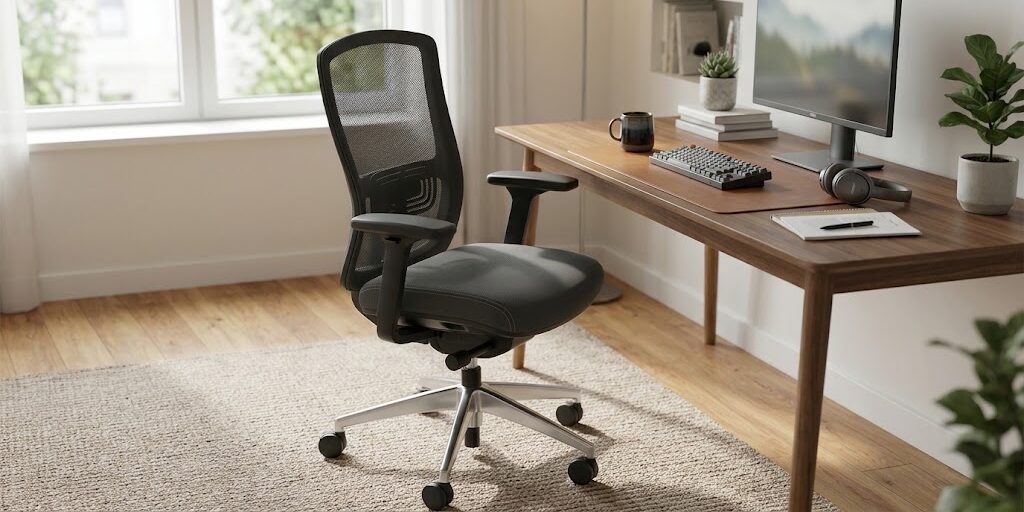
If your lower back starts complaining by 2 p.m. every single day, you already know the problem isn’t willpower — it’s your chair. We spend most of our working lives sitting, and a chair that doesn’t support your spine’s natural curve will eventually make itself known, usually in the form of a dull ache that creeps up your lumbar spine and refuses to leave.
The good news: you don’t need to spend four figures to fix this. We’ve tested dozens of ergonomic chairs over the past few years, and some of the most genuinely supportive options we’ve sat in all day, every day, land comfortably under $500. We narrowed this list down to six chairs that combine real adjustable lumbar support, breathable materials, and the kind of build quality that holds up after months of daily use.
Ready to buy? SIHOO Doro C300 is our #1 pick — see it on Amazon
Everything We Recommend
✅ We recommend these products based on an intensive research process that’s designed to cut through the noise and find the top products in this space. Guided by experts, we spend hours looking into the factors that matter to bring you these selections.
⭐ 2.5 million+ people assisted in the last 30 days ⭐
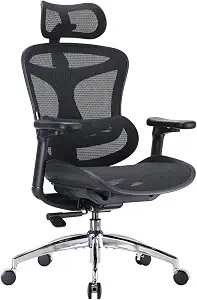
Best Overall for Back Pain
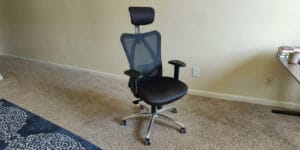
Enjoy ergonomic comfort with the SIHOO A3’s breathable mesh seat, automatic lumbar support, and adjustable 3D headrest.
Customize headrest positioning with 4.5 cm vertical adjustment, 6.5 cm forward movement, and 20° angle adjustment.
Find personalized support with a four position backrest offering 6 cm of height adjustment and linked 3D armrests.
Relax with an intelligent gravity mechanism offering automatic resistance adjustment and reclining angles of 92°, 100°, and 112°.
Work confidently with BIFMA and TÜV certifications, an SGS Class 4 gas lift, and a three year warranty.
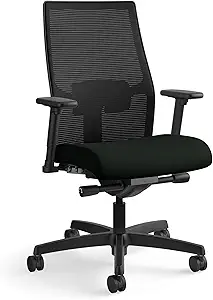
Best Truly Adjustable Lumbar Support
Stay comfortable during desk work with a breathable mid back mesh chair and supportive lumbar design.
Adjust armrest height and width, seat height, and tilt to suit your workstation and sitting preferences.
Enjoy breathable mesh, swivel movement, and supportive seating for daily tasks, meetings, studying, and extended work sessions.
Use this versatile office chair for home offices, corporate workspaces, study areas, and hybrid working environments.
Handle everyday work with durable construction, smooth rolling mobility, and added confidence from the HON Full Warranty.
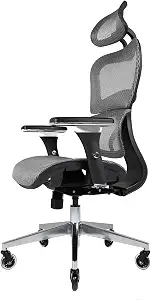
Best for Dynamic, Responsive Lumbar Support
Enjoy personalized support with 4D adjustable armrests, 3D lumbar support, and a reclining backrest up to 135°.
Stay comfortable during long work sessions with breathable full mesh construction that promotes airflow and reduces heat buildup.
Support up to 300 pounds with a five point aluminum alloy base, dual casters, and BIFMA tested construction.
Adjust the headrest, seat height, lumbar support, and backrest, then assemble the chair in eight simple steps.
Use this versatile ergonomic chair for office work, studying, gaming, or everyday computer tasks at home.
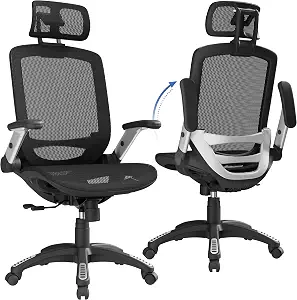
Best Budget Pick for Larger Frames
Enjoy ergonomic support for your head, back, hips, and arms, with adjustable lumbar support and seat height.
Accommodate different body types with a 20.5-by-20-inch seat, 300-pound capacity, and 90°–120° recline.
Save desk space with flip-up armrests that fold upward 45° using convenient release buttons.
Stay comfortable for 4–8 hours with breathable mesh seating, a high backrest, and smooth PU wheels.
Assemble the chair in 15–20 minutes with included tools and instructions, backed by a 3-year warranty.
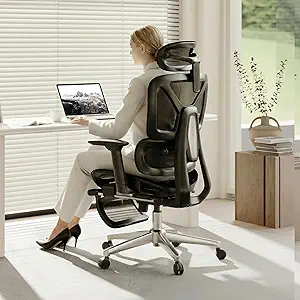
Best Value With a Built-In Footrest
Customize your fit with 17–20-inch seat depth, 20.1–22.4-inch height, and 400-pound weight capacity.
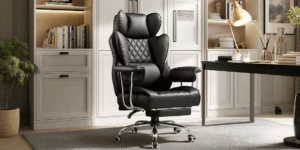
Support your back and neck with dynamic lumbar support, five backrest levels, a 3D headrest, and footrest.
Reduce arm strain with 3D adjustable armrests offering height, forward-backward, and swivel adjustments.
Choose breathable mesh or cushioned foam seating, supported by premium materials and a durable Class 4 gas lift.
Enjoy versatile comfort for working, relaxing, or gaming in your office, bedroom, or gaming room.
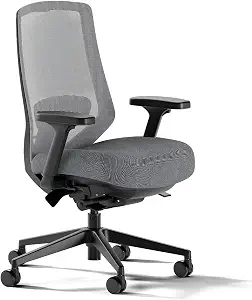
Best splurge-but-still-under-$500
Personalize your seating with 14 adjustment points designed to improve ergonomic support, posture, and everyday comfort.
Align your spine with a padded, two-way lumbar cushion that adjusts vertically for targeted back support.
Position your arms comfortably with 5D armrests adjustable in height, width, depth, pivot, and pad position.
Support natural movement with adjustable tilt tension, forward seat tilt, and a reclining function for posture changes.
Enjoy lasting comfort from molded, high-density foam that distributes weight evenly and helps maintain its shape.
How We Chose These Chairs
We looked at six ergonomic office chairs, all priced at or under $500 in their standard configuration, and evaluated each one on:
- Lumbar support quality — whether it’s genuinely adjustable (height, depth, or firmness) or just a contoured shape that happens to sit near your lower back
- Seat depth and pan design — because a seat edge that digs into the back of your knees undercuts good lumbar support
- Recline and tilt mechanics — a chair that locks you in one position all day works against your spine, not for it
- Material breathability — mesh backs that let airflow through versus foam that traps heat
- Weight capacity and frame durability — how the chair holds up for different body types over months, not just weeks
- Price relative to feature set — what you’re actually getting for the money, trade-offs included
Our Top Picks by Use Case
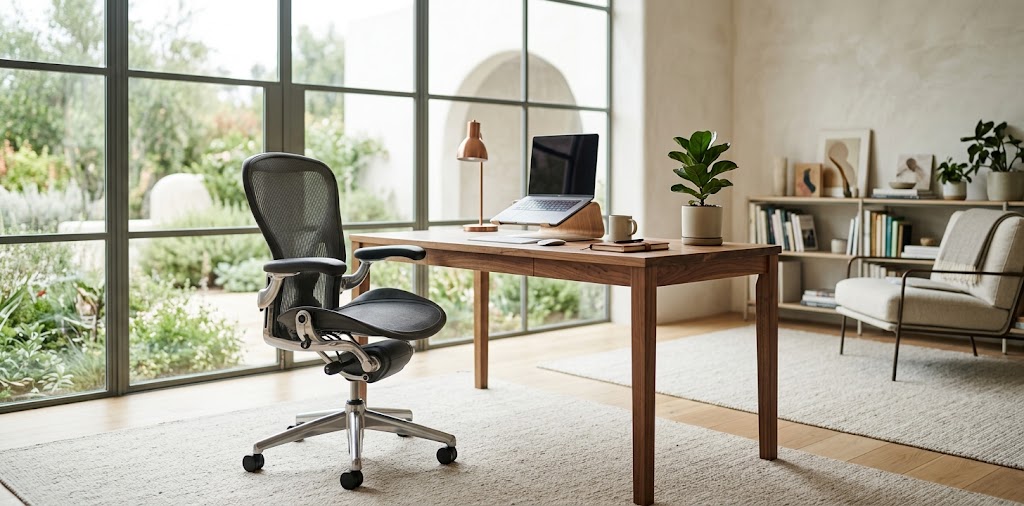
- Best overall for back pain: SIHOO Doro C300 — standout design and airflow at a genuinely reasonable price
- Best adjustable lumbar support: HON Ignition 2.0 — independently adjustable lumbar height most budget chairs don’t offer
- Best for petite to average frames: Nouhaus Ergo3D — dynamic lumbar that tracks your movement
- Best for larger or taller users on a tight budget: GABRYLLY GY01 — wide seat, high weight rating, low price
- Best value with a footrest: FLEXISPOT ErgoX Premium — dynamic lumbar and a retractable footrest, often discounted well under $500
- Best splurge-but-still-under-$500: Branch Ergonomic Chair Pro — the most refined feel on this list, if you skip the add-ons
The SIHOO Doro C300 earns the top spot here mostly because of how it handles the two things people managing back pain care about most: airflow and spinal alignment through a full day of sitting, not just the first hour. The all-mesh seat and back let heat escape in a way foam-cushioned chairs simply can’t match, which matters more than it sounds like it should when you’re trying to stay focused instead of shifting around because your lower back has gone damp and stiff. Testers who sat in the Doro C300 for extended stretches noted the waterfall-edge seat pan reduces pressure behind the knees, which indirectly helps posture because you’re not unconsciously sliding forward to relieve that pressure — a habit that flattens the lower back’s natural curve over time. Where it falls short is lumbar adjustability: the support is largely fixed in the upright position and only shifts when you recline, so if your lower back needs a very specific, dialed-in pressure point, this chair asks you to work with its shape rather than fully customize it. The armrests are also a known soft spot — they’re 3D-adjustable and pivot nicely, but several testers found they shift out of position more easily than they’d like during normal use. At roughly $300, retailing for less than many chairs with a fraction of its adjustability, it’s a strong first stop for anyone who hasn’t owned a genuinely ergonomic chair before and wants to feel the difference without committing to a $450+ price tag.
If the SIHOO’s fixed lumbar shape sounds like a dealbreaker, the HON Ignition 2.0 solves exactly that problem. HON built its reputation on commercial-grade office furniture, and the Ignition 2.0 carries that pedigree into the home office: the lumbar support raises and lowers independently, so you can hunt for the exact spot where your lower back actually wants pressure instead of accepting wherever the chair decided to put it. That’s a meaningfully different experience if you’ve ever sat in a chair that was “close enough” but never quite right — a half-inch of lumbar adjustment can be the difference between a chair that helps and one that just doesn’t actively hurt. The seat cushion also slides forward and back independently of the backrest, which lets taller and shorter users dial in proper knee angle without compromising on back contact, something surprisingly few chairs in this price range get right. The trade-off is material: the base configuration pairs a contoured fabric seat cushion with a mesh backrest rather than mesh throughout, so it won’t breathe quite as well as the all-mesh SIHOO or FLEXISPOT on long, warm afternoons. Pricing also swings by retailer and configuration — we’ve seen it land anywhere from the high $300s to north of $650 depending on headrest and fabric choices, so it’s worth confirming the exact configuration stays under budget before you check out. For anyone who has tried a “one-size-fits-all” ergonomic chair and found the lumbar support never quite matched their spine, this is the chair that actually listens.
The Nouhaus Ergo3D takes a different approach to lumbar support. Instead of a fixed or manually adjusted pad, its lumbar support moves dynamically as you shift and recline, tracking your spine rather than forcing you to find one static setting and stick with it. In practice, that means less fiddling — you’re not stopping every twenty minutes to nudge a dial, because the chair is doing some of that adjusting on its own as you lean forward to type or recline to think. The 4D-orbital armrests (up and down, forward and back, and side-to-side pivot) pair well with that philosophy, letting you reposition your whole upper body setup without wrestling with levers. Testers consistently point to the breathable mesh back as a genuine strength for anyone who runs warm during the day. Where the Ergo3D asks for a trade-off is frame size: with a 275-pound weight capacity and a seat depth of roughly 16.3 inches, it’s noticeably better suited to average and smaller frames than to taller or larger users, and reviewers specifically flag that it starts to feel cramped for anyone over about 6’1″. If that’s not you, though, this is one of the more naturally comfortable chairs on this list for people who move around in their seat throughout the day rather than sitting rigidly still — which, frankly, is the healthier way to sit anyway.
The GABRYLLY GY01 is the chair we’d point to if your top priority is simply getting a wide, supportive seat without spending close to $500 to get it. It’s consistently the least expensive chair on this list — typically in the $150 to $230 range depending on sale pricing — and yet it carries one of the highest weight ratings here, with manufacturer specs listing support up to 400 pounds. That combination of a wide mesh seat and a high weight capacity makes it a genuinely practical option for bigger and taller users who’ve found that most “ergonomic” chairs under $300 are really only built for smaller frames. The flip-up armrests are handy if you want to tuck fully under your desk or roll closer without bumping your elbows, and the adjustable headrest is a nice inclusion at this price point. The honest limitation here is lumbar support itself: the GY01 relies on the mesh backrest’s contoured shape rather than any kind of adjustable lumbar mechanism, so if your back pain responds specifically to pinpoint lumbar pressure, this chair offers general support rather than a dialed-in fix. The armrests also don’t adjust in height, only flipping up or staying down, which can be a dealbreaker if you type at a non-standard desk height. Think of the GY01 as the chair that solves “I need a big, breathable, affordable seat” extremely well, while leaving fine-tuned lumbar adjustment to the chairs further up this list.
The FLEXISPOT ErgoX Premium is the chair on this list most likely to surprise you, mainly because its list price sits right around $420, but it’s frequently discounted into the $280 to $300 range — which, for a chair with dynamic lumbar support, 3D armrests, a 3D headrest, and a retractable footrest, is a genuinely strong deal when the sale is live. The dynamic lumbar support adjusts across five levels and responds as you shift position, similar in spirit to the Nouhaus Ergo3D, but FLEXISPOT pairs it with a Class 4 gas lift and a weight capacity up to 400 pounds, giving it a sturdier, more commercial feel than the price alone suggests. The retractable footrest is a standout feature nobody else on this list offers, and it’s genuinely useful during short breaks or when you want to recline and stretch your legs without getting up — a small thing, but one that encourages the kind of position changes that actually help lower back fatigue over a long day. The main caveat is that this chair’s reputation is built partly on catching it during a sale; at full list price, it’s a solid chair but a less obvious standout against the SIHOO or HON. It’s also worth noting that the seat material specifics are less clearly documented by the manufacturer than some competitors, so if all-day breathability is your top priority, we’d lean toward confirming current seat construction before buying. If your office setup has room for a chair with a footrest and you’re comfortable chair-shopping with sale alerts on, this is one of the best dollar-for-dollar picks here.
The Branch Ergonomic Chair Pro is the chair on this list testers reach for when they want the closest thing to a premium ergonomic chair without actually spending premium-chair money. At a base price of $499, it sits right at our budget ceiling — which is the first thing to know, because popular add-ons like the headrest ($69) or the extended-range cylinder ($29) will push the total over $500 fast, so this is a chair you want to configure carefully rather than click through. What you get for that base price is genuinely impressive: 14 separate adjustment points, including seat depth, back tilt, back tilt tension, and forward seat tilt, plus 5D armrests that move further than nearly every other chair here. Testers consistently describe it as the most polished, “office-grade” feeling chair of the group — it looks and feels like furniture you’d see in a well-funded startup’s office, not a chair ordered off Amazon at midnight. The adjustable lumbar panel sits behind the back panel and can be dialed for more or less support, though more than one reviewer noted they wished the adjustment range went further for genuinely significant lower back pain. The seat bottom also runs firmer than some testers expected given the premium positioning, and if you skip the headrest to stay under budget, taller users reclining frequently may miss that extra support. Still, for anyone who has outgrown a $200 mesh chair and wants to feel the jump in build quality without crossing into four-figure territory, the Branch Pro is the chair that makes the strongest case for spending closer to the full $500.
How to Choose Between These Six
If you’re deciding purely based on back pain severity, the HON Ignition 2.0’s independently adjustable lumbar height and seat depth give you the most precise control over spinal support, which matters most if you’ve already tried a “generic ergonomic” chair and found it didn’t actually help. If you’re newer to ergonomic chairs altogether and want to feel an immediate, noticeable difference without overthinking the purchase, the SIHOO Doro C300 delivers that at a price that doesn’t feel like a gamble.
Body size changes the calculus considerably. The Nouhaus Ergo3D is best reserved for average or smaller frames — its seat depth and 275-pound capacity simply aren’t built for larger users. If you’re taller, heavier, or both, the GABRYLLY GY01 and FLEXISPOT ErgoX Premium both rate to 400 pounds and offer noticeably more room, with the FLEXISPOT edging ahead if you want dynamic lumbar adjustment rather than the GABRYLLY’s fixed mesh contour.
Budget flexibility matters too. If you can comfortably spend close to the full $500, the Branch Ergonomic Chair Pro delivers the most refined overall experience — just configure it without extras to stay under the line. If you’d rather spend a third of that and put the savings toward a standing desk or a better monitor arm, the GABRYLLY GY01 gets you real support without the premium price tag, with the trade-off of less precise lumbar customization.
Office Chair Features That Actually Matter for Back Pain
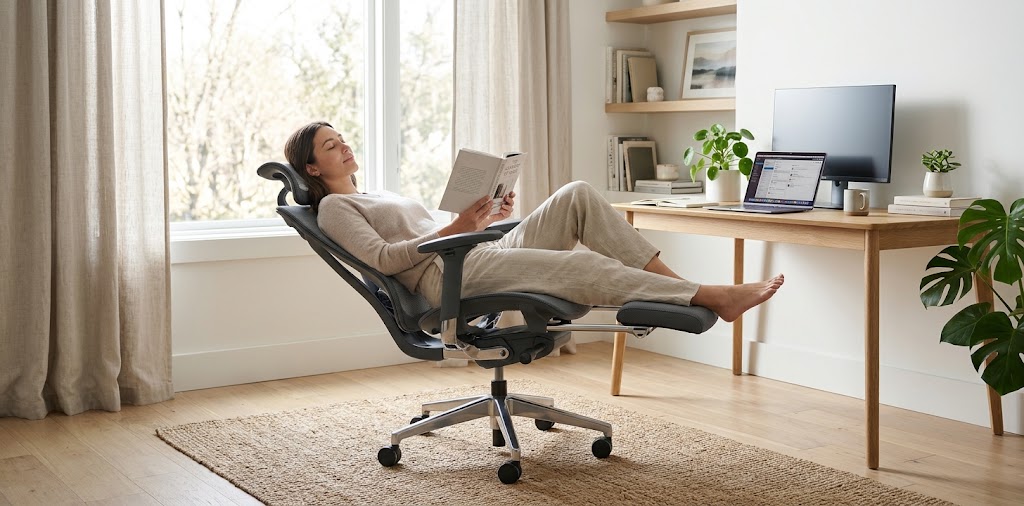
Adjustable lumbar support. Look for a mechanism that moves — up, down, in, or out — rather than a fixed curve that assumes everyone’s spine sits in the same place. A chair that lets you dial in height or depth independently (like the HON Ignition 2.0) tends to outperform chairs that rely purely on a contoured shape.
Seat depth. If the front edge of the seat presses into the back of your knees, you’ll unconsciously slide forward in the chair to relieve that pressure — which flattens your lower back and defeats the purpose of good lumbar support entirely. Seat depth adjustment, or at minimum a waterfall-edge design, matters more than most buyers realize.
Recline and tilt tension. Sitting perfectly upright for eight hours isn’t actually ideal for your spine. A chair that lets you recline slightly and adjust tilt tension encourages small position changes throughout the day, which reduces the static load on your lower back.
Material breathability. Mesh backs and seats let heat and moisture escape, which matters more for comfort-driven posture than people expect — nobody sits up straight when they’re uncomfortably warm and trying not to think about it.
Weight capacity and seat width. A chair rated well below your body weight won’t offer stable, consistent support, and the seat padding will compress unevenly faster. Matching the chair’s rated capacity to your actual body type isn’t vanity — it’s structural.
Frequently Asked Questions
Can an office chair actually fix back pain, or does it just help with comfort? An ergonomic chair won’t cure an existing spinal condition, and if you’re dealing with chronic or severe back pain, that’s a conversation for a doctor or physical therapist, not a shopping guide. What a well-designed chair can do is reduce the postural strain that makes everyday discomfort worse — supporting your lower back’s natural curve, reducing pressure behind your knees, and encouraging small position changes throughout the day. For a lot of people, that’s enough to turn “my back hurts by 3 p.m. every day” into something much more manageable.
Is mesh or cushioned foam better for back pain? Neither is universally better — it depends on your body and how long you sit. Mesh (like on the SIHOO Doro C300 or Nouhaus Ergo3D) breathes better and tends to flex slightly with your movement, which some people find more comfortable over long stretches. Foam cushioning (like the HON Ignition 2.0’s seat) can feel more supportive initially but traps more heat. If you run warm or sit for 8+ hours daily, lean toward mesh. If you prioritize plush support and don’t mind the extra warmth, foam-cushioned seats work well too.
Do I need an adjustable headrest if I have back pain specifically, not neck pain? Not necessarily. A headrest mainly supports your neck and upper spine during reclined positions, so it matters more if you tend to lean back frequently or deal with neck tension alongside back pain. If your discomfort is purely lower-back and you sit upright most of the day, prioritizing lumbar adjustability (like on the HON Ignition 2.0) over a headrest is the better use of your budget.
How long should a good office chair actually last? With daily use, a well-built ergonomic chair in this price range should reasonably hold up for 5 to 7 years before the gas lift, mesh, or padding show real wear. Warranty length is a decent proxy for how confident the manufacturer is in that lifespan — the HON Ignition 2.0 and Branch Ergonomic Chair Pro both carry 7-year warranties, notably longer than most budget options, which tells you something about expected durability.
Is it worth spending close to $500, or are budget chairs under $200 good enough? It depends on how much time you spend sitting and how specific your back pain is. If you’re at a desk 6+ hours a day and have tried generic chairs without relief, the adjustability you get from chairs like the HON Ignition 2.0 or Branch Ergonomic Chair Pro can genuinely make a difference that a flatter, less-adjustable chair simply can’t replicate. If your sitting time is more moderate or your discomfort is mild, a chair like the GABRYLLY GY01 offers real ergonomic benefits — wide seat, breathable mesh, adjustable headrest — without the higher price tag.
What’s the difference between “ergonomic” and just a chair that has a lumbar pillow? A genuinely ergonomic chair is designed around adjustability — seat height, depth, lumbar position, armrest height, tilt tension — so it can be tuned to your specific body rather than offering one fixed shape. A chair with a lumbar pillow attached is better than nothing, but it’s a fix layered onto a design that wasn’t built around your spine in the first place. Every chair on this list was selected specifically because its lumbar support is integrated into the chair’s structure, not bolted on as an afterthought.
The Bottom Line
For most people dealing with everyday desk-related back pain, the SIHOO Doro C300 offers the best overall balance of price, airflow, and genuine ergonomic design — it’s the chair we’d suggest if you’re replacing a non-ergonomic chair for the first time and want to feel the difference immediately. If your pain is specific enough that you need to fine-tune exactly where lumbar pressure sits, spend the extra and go with the HON Ignition 2.0 — its independently adjustable lumbar height is the most precise on this list. And if body size is your deciding factor rather than adjustability, the GABRYLLY GY01 and FLEXISPOT ErgoX Premium both rate up to 400 pounds and offer considerably more room than the Nouhaus Ergo3D’s smaller frame.
Whichever you choose, give it a real adjustment period — spend your first week actually using every lever and dial rather than leaving the chair in its default position. Most of the complaints we see about “uncomfortable” ergonomic chairs trace back to a chair that was never actually adjusted to fit the person sitting in it. For more on dialing in your full workstation setup, our guide to building a back-pain-friendly home office setup walks through desk height, monitor positioning, and footrest placement alongside your chair choice. And if you want to see how the SIHOO M18 — a close sibling to the Doro C300 — stacks up on its own, our full SIHOO M18 office chair review breaks down where the two models overlap and where they differ.