Advertiser Disclosure
We independently review everything we recommend. When you buy through our links, we may earn a commission.
Cats, Dogs, and Jigsaw Puzzles: Save Your Pieces From Pet Chaos
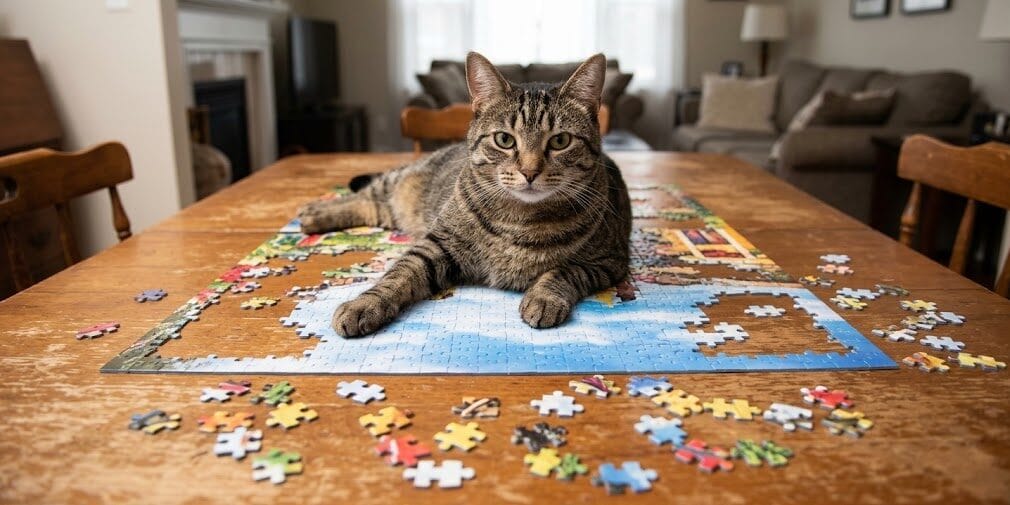
Puzzling is one of the most relaxing hobbies out there, right up until a curious paw or a wagging tail turns your dining table into a crime scene. Cats are drawn to puzzles because of the smooth cardboard texture, the movement of pieces, and honestly, because they can’t stand not being the center of attention. Dogs, meanwhile, are often just chasing a scent, a squeaky sound, or the simple thrill of chewing something new. Either way, the result is the same: missing pieces, chewed edges, and a puzzle that will never look quite complete again.
11 Ways to Keep Pets Away From Your Puzzle
1. Puzzle on an Elevated Surface
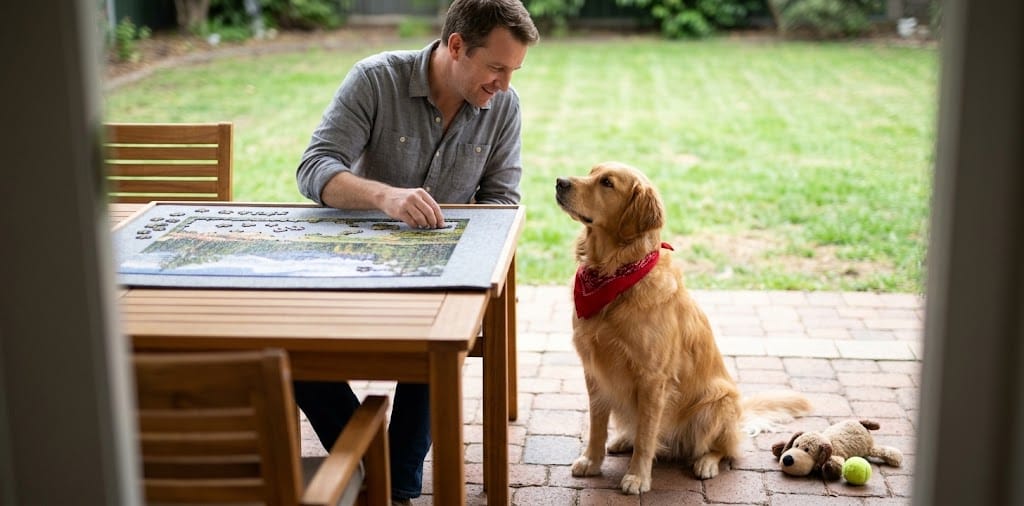
The single easiest fix is height. Cats can jump, sure, but a puzzle mat rolled out on a high shelf, a closet door, or an elevated puzzle table instantly becomes less accessible than one spread across the living room floor or a low coffee table. Dogs simply can’t reach what they can’t get to, and even determined cats will think twice before leaping onto a narrow surface where a wrong step means scattering pieces everywhere.
2. Invest in a Puzzle Board With a Cover
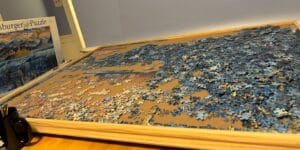
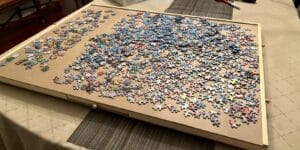
This is where a dedicated puzzle board earns its keep. Boards designed specifically for jigsaw puzzles typically include a flat surface, sometimes with a felt lining to keep pieces from sliding, and many come with a fitted cover you can slide over the top when you walk away. It’s a simple habit: finish your session, cover the board, and walk away worry-free. If you’re still assembling your puzzle station, our guide to choosing the right puzzle accessories for your setup breaks down which boards, sorting trays, and covers are actually worth the money.
3. Roll It Up When You’re Done
If a flat board isn’t in the cards, a roll-up puzzle mat is the next best thing. These felt mats let you assemble a puzzle in progress, then roll it up around an inflatable or solid tube and secure it with straps, tucking the whole thing away in a closet or under the bed. Roll-up mats designed for jigsaw puzzles can typically hold anywhere up to 1,500 or even 3,000 pieces depending on the size you choose, so even large-format puzzles have a safe home between sessions. It genuinely solves two problems at once: pet-proofing and space-saving, which matters a lot if you’re working through anything from a quick weekend puzzle to one of the sprawling 5,000-piece sets collectors love to tackle.
4. Close the Door (Seriously, Just Close It)
It sounds almost too simple, but a closed door is one of the most reliable pet deterrents there is. Dedicate a spare room, office, or even a section of your bedroom to puzzling, and close the door behind you when you step away. No access, no chaos. If a fully separate room isn’t realistic, even a baby gate at the entrance to your puzzle space can keep dogs out while still letting you hear them from another room.
5. Use Puzzle Glue or Frames for Finished Sections
Once a section of your puzzle is complete and you don’t plan to move it, consider using puzzle glue to lock those pieces in place. Not only does this protect your progress from an accidental swipe of a paw, but it also means that even if a curious cat does get close, the glued section won’t scatter. For puzzles you’re especially proud of, like a Disney collector’s edition or a nostalgic Christmas scene, framing the finished sections keeps them protected long after the puzzle is complete.
6. Redirect With Their Own Toy
Cats and dogs act out around your puzzle largely because they want attention or stimulation, so give them an outlet. Keep a favorite toy, a puzzle feeder, or a scratching post near your puzzling area. When your cat starts eyeing the pieces, redirect that energy toward their own “puzzle.” A treat-dispensing toy works especially well here, since it scratches the same mental itch without putting your 1,000-piece masterpiece at risk.
7. Use Scent Deterrents Around the Puzzle Area
Cats in particular dislike citrus, eucalyptus, and certain herbal scents. A light citrus-based spray (pet-safe; always check the label) around the edges of your puzzle table can be enough to make the area less appealing without harming your cat. Dogs tend to respond similarly to bitter apple sprays, which are commonly used to deter chewing on furniture and can work just as well applied lightly near puzzle boxes and boards.
8. Keep Puzzle Sessions Shorter and More Frequent
If your cat or dog only acts up during long stretches of inactivity, on your part, try breaking your puzzling into shorter sessions with cleanup in between. A puzzle left unattended for an hour is a far bigger temptation than one you’re actively working on for twenty minutes before putting it away. This is especially useful advice for households with kittens or puppies, whose attention spans and mischief levels are both notoriously high.
9. Store Loose Pieces in a Sealed Container
Loose puzzle pieces waiting to be sorted are often the biggest target, since they’re small enough for a cat to bat around like a toy or a dog to snatch and swallow. Keep unsorted pieces in a shallow, lidded container or a sorting tray with a cover rather than spread loosely across the table. This is one of the simplest habits you can build, and it dramatically cuts down on the risk of losing (or worse, having your pet ingest) a piece.
10. Choose Sturdier, Larger-Piece Puzzles for Pet-Heavy Households
If you’re regularly battling curious pets, consider working with puzzles that use thicker cardboard or larger piece sizes. They’re simply harder for a cat to knock loose or a dog to swallow accidentally, and they hold up better to the occasional bump. This is also a smart consideration if you’re puzzling with young kids and pets in the same house; our breakdown of jigsaw puzzle cut types and what they mean for durability is worth a look if you want to understand which puzzles are built to survive a busy household.
11. Supervise, Don’t Isolate
Ultimately, the goal isn’t to banish your pet from the room every time you sit down to puzzle. Most cats and dogs settle down once the novelty wears off, especially if they associate the puzzle table with “not my spot” rather than “forbidden and exciting.” A little supervision during the first few sessions, paired with consistent redirection, usually teaches pets to leave the puzzle alone on their own.
Setting Up a Pet-Proof Puzzle Zone From the Start
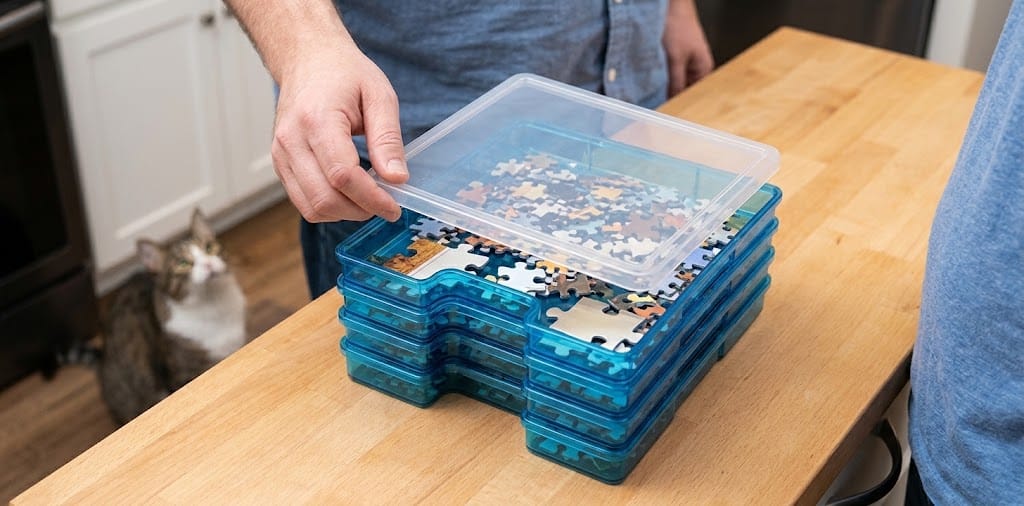
If you puzzle often, it’s worth thinking about your setup the same way you’d think about pet-proofing a kitchen or a nursery, prevention beats correction every time. Start by picking a permanent spot for your puzzle table, ideally somewhere with a door or at least some distance from your cat’s favorite napping windowsill. Consistency matters here. Pets learn patterns fast, and if your puzzle table always lives in the same off-limits corner, they’ll stop testing the boundary within days rather than weeks.
Next, build your accessory kit before you need it rather than scrambling after your first near-miss. A puzzle board, a roll-up mat, a sorting tray with a lid, and a soft-bristle brush for clearing dust and stray pet hair off pieces will cover nearly every scenario you’ll run into. Many of our readers who puzzle regularly with pets at home keep two setups on hand: a portable roll-up mat for shorter projects and a dedicated board for bigger ones, like the collector-style 1,000-piece and 1,500-piece sets that can take weeks to finish.
Finally, don’t underestimate the value of timing. Cats tend to get their biggest bursts of energy in the early morning and evening, so if you can, schedule your puzzling sessions for the quieter midday hours when your cat is more likely to be napping. Dogs, meanwhile, are usually calmer after a walk or a play session, so a quick game of fetch before you sit down can buy you a solid stretch of uninterrupted puzzle time.
What to Do If Your Pet Has Already Damaged a Puzzle
Even with the best precautions, accidents happen. If your dog has chewed through a piece or your cat has knocked a section apart, don’t panic; most of the damage is fixable. For a single chewed or missing piece, check the manufacturer’s website first; many major puzzle brands offer replacement piece programs for a small fee or sometimes even free of charge if you can describe the piece’s approximate location on the box image. For older puzzles, out of print, or from smaller independent makers, community forums and marketplace groups dedicated to puzzle trading are often your best bet for tracking down a lookalike replacement.
If the damage is cosmetic rather than structural- a light chew mark on the edge of a piece, for instance- you can often disguise it during framing by orienting that piece toward a corner or edge where it will be less noticeable. And if you’re puzzling with kids as well as pets, it’s worth keeping a small “spare parts” box nearby, since a stray piece that gets nudged under the couch by an overly curious cat is far easier to track down before it becomes a permanent mystery.
Frequently Asked Questions
Why does my cat always sit on my puzzle? Cats are drawn to warm, flat surfaces, and a puzzle board checks every box: it’s usually at chest height, often near a window or lamp, and it smells like you. Combine that with a cat’s instinct to claim whatever their owner is focused on, and your puzzle becomes prime real estate in their mind.
Will my dog get sick if it swallows a puzzle piece? It’s genuinely possible, and it’s one of the more urgent reasons to puzzle-proof your space. Cardboard puzzle pieces can pose a choking or intestinal blockage risk, particularly for small dogs. If you ever suspect your dog has swallowed a piece, contact your veterinarian right away rather than waiting to see what happens.
What’s the best way to store an unfinished puzzle overnight? A roll-up mat or a covered puzzle board are both excellent overnight solutions. They keep loose pieces contained, protect your progress from curious pets, and make it easy to pick right back up where you left off the next day.
Are certain cat or dog breeds worse around puzzles? Generally, high-energy and highly food- or prey-motivated breeds, think Border Collies, terriers, or particularly playful domestic shorthair cats, tend to show more interest in puzzles. That said, individual personality matters more than breed. A laid-back Labrador can be just as much of a menace to a puzzle table as an energetic Jack Russell if boredom is the real driver.
Can I train my pet to avoid the puzzle table completely? Yes, with consistency. Positive reinforcement works far better than scolding. Reward your pet when they stay away from the puzzle area on their own, and redirect them toward their own toy every time they approach. Most pets learn the boundary within a couple of weeks of consistent, calm redirection.