Advertiser Disclosure
We independently review everything we recommend. When you buy through our links, we may earn a commission.
Thomas Kinkade Puzzles: Which Brands Make the Best Ones?
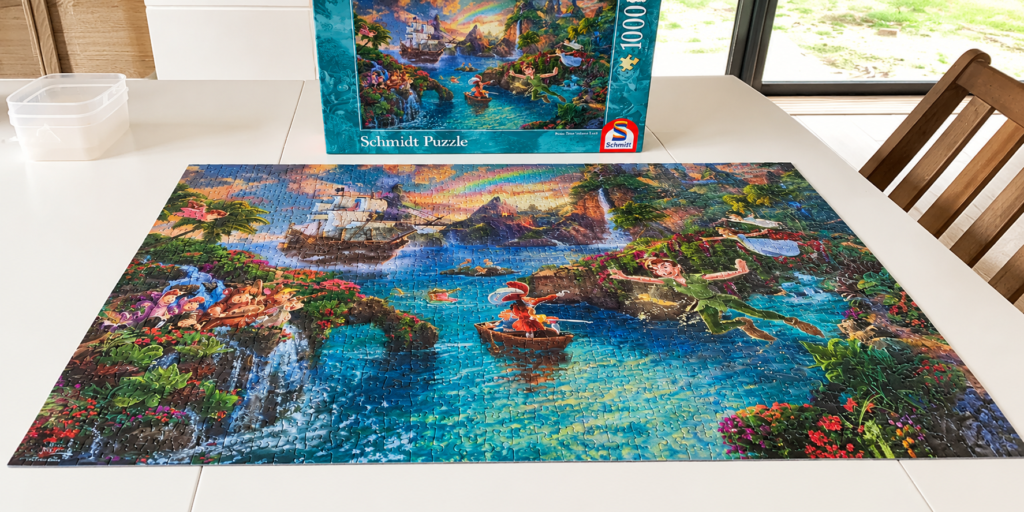
There’s something almost meditative about sitting down with a Thomas Kinkade puzzle. The warm glow spilling from a cottage window, the soft mist rolling over a mountain stream, the kind of scenes that ask nothing of you except to slow down and pay attention — that’s part of the appeal. But here’s the thing most people don’t think about until they’re elbow-deep in a 1000-piece spread: the puzzle itself matters just as much as the image on the box.
We’ve spent time with puzzles from three of the most prominent brands that produce officially licensed Thomas Kinkade content: Schmidt, CEACO, and Buffalo Games. Each takes a different approach — different materials, different target audience, different price points — and understanding those differences can be the gap between a puzzle you proudly frame and one you quietly slide back into the box.
Everything We Recommend
✅ We recommend these products based on an intensive research process that’s designed to cut through the noise and find the top products in this space. Guided by experts, we spend hours looking into the factors that matter to bring you these selections.
⭐ 2.5 million+ people assisted in the last 30 days ⭐





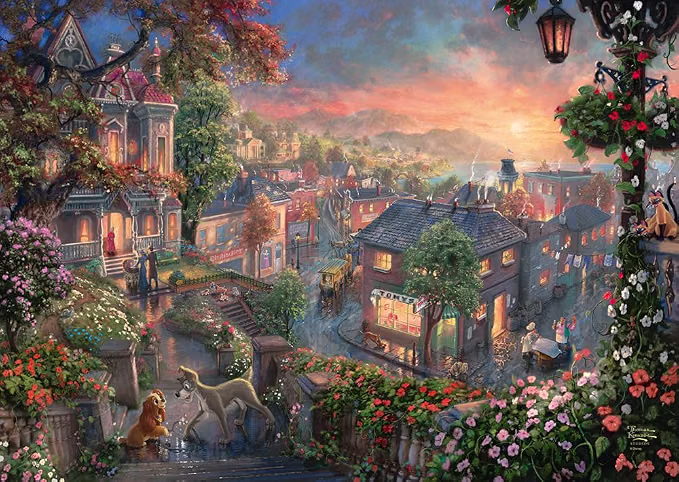
The Brand at a Glance: Schmidt Spiele has been manufacturing puzzles in Germany since 1907, and you can feel that history in the product. Where many mass-market puzzle brands treat cardboard as a commodity, Schmidt treats it as a craft material. Their Kinkade line reflects that philosophy at every step — from the density of the chipboard to the precision of the die-cut, to the linen-textured matte finish that gives the pieces a refined, glare-free feel right out of the box.
Our Experience with Schmidt Kinkade Puzzles: The first thing our team noticed when opening a Schmidt Kinkade puzzle was the weight. These pieces have a heft to them that most U.S.-market puzzles simply don’t. The chipboard is thick — genuinely thick — and finished with a subtle linen structure and matte varnish that resists warping and cuts down on surface glare, even when you’re working directly under an overhead lamp. When you pick up a handful of pieces and let them sift through your fingers, there’s a satisfying rigidity to them that signals quality before you’ve even placed a single one.
Schmidt’s color reproduction is where they really earn their reputation with Kinkade imagery. The brand uses a printing process that handles the painter’s signature luminosity unusually well. Kinkade’s paintings are built around glowing light sources — lanterns, windows, sunsets — and cheaper printing tends to blow those out into overexposed blobs or crush them into dull amber smears. Schmidt’s prints hold the gradient. You can see the distinction between the outer glow and the inner light even on a 1.5-centimeter puzzle piece, which is genuinely impressive.
Piece fit is tight and consistent — often referred to by fans as Schmidt’s “6-Star Quality.” Completed sections can be slid and lifted as a unit without pieces separating, which matters a great deal if you’re working on a large puzzle over multiple sessions and need to move assembled portions aside. The cut variety is solid — Schmidt uses a well-varied grid cut that avoids repetitive patterns and keeps the final 20% of a puzzle from turning into a frustrating guessing game.
The puzzle subjects in Schmidt’s Kinkade range tend to favor the artist’s cottage, garden, and village scenes, alongside a popular Disney collaboration line. If you’re specifically looking for Kinkade’s broader American architectural or seasonal catalog, you may find Schmidt’s selection narrower than the U.S. license holders.
Who Schmidt Is Best For: Schmidt is the right choice if print fidelity, anti-glare texture, and physical build quality are non-negotiable for you. Puzzlers who frame their completed work, hobbyists who build under bright indoor lighting, and anyone burned by pieces that curl or warp mid-build will appreciate what Schmidt brings to the table. It’s also worth noting that Schmidt puzzles tend to hold up for multiple builds — the piece coating resists fingerprint oils and edge wear better than average, so a Schmidt puzzle you assemble, disassemble, and return to the box still looks good the second and third time around.
The one realistic trade-off: Schmidt Kinkade puzzles typically cost more in North America because of import costs, and availability in U.S. retail stores is uneven. If you need a last-minute gift from a local store, Schmidt may not be on the shelf. But if you’re shopping with lead time and want the best physical quality in the category, Schmidt is the brand we’d point you toward without hesitation.
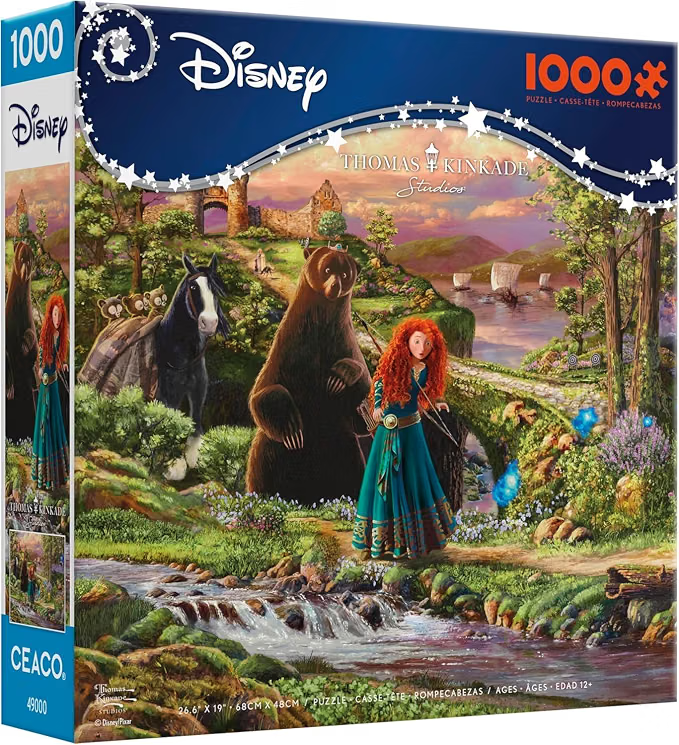
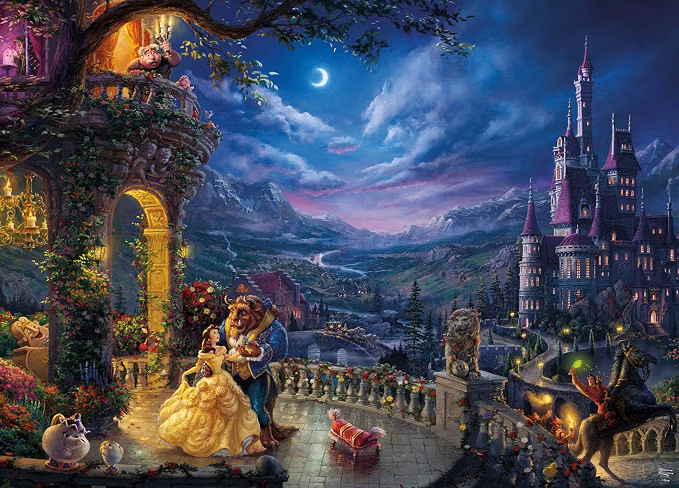
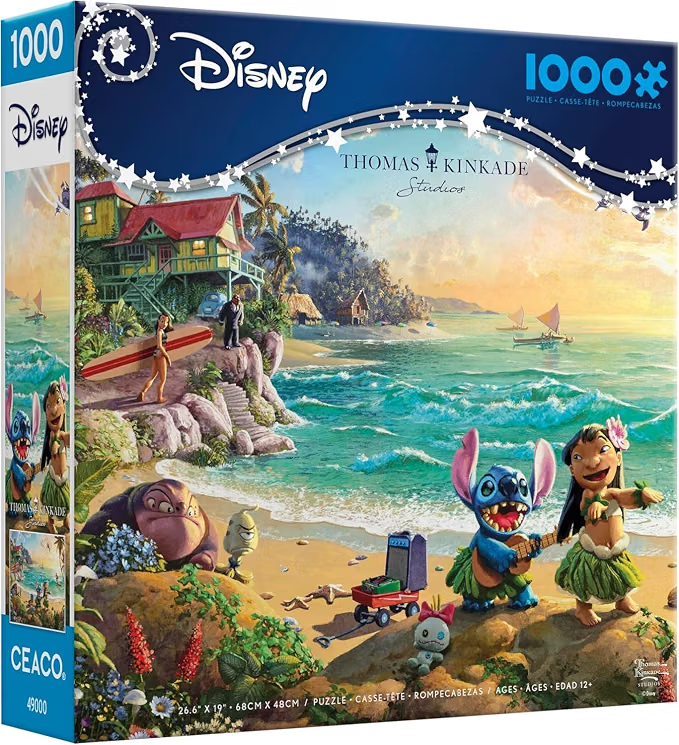
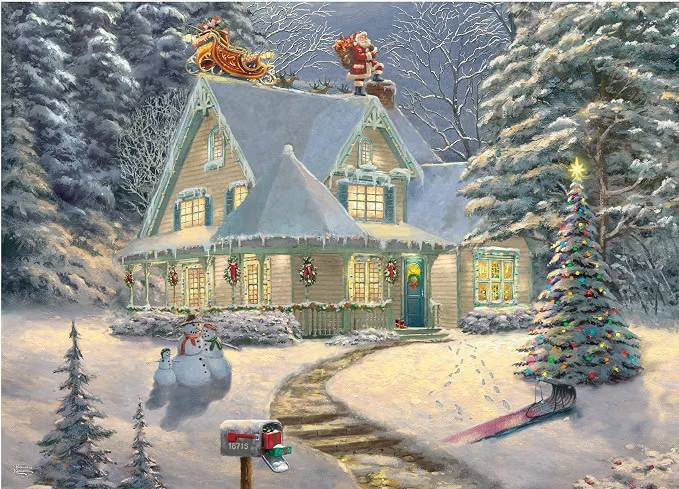
The Brand at a Glance: CEACO is the most recognizable Thomas Kinkade puzzle brand in the American market, and it’s not especially close. As a longtime holder of the official Thomas Kinkade Studios license (and now part of the Buffalo Games family since their 2020 acquisition), CEACO has built the most extensive library of Kinkade images in puzzle form of any single manufacturer — from intimate 300-piece sets aimed at younger or casual puzzlers to sprawling 2000-piece builds and multi-pack collections. If there’s a Kinkade painting you have your heart set on, there’s a strong chance CEACO has turned it into a puzzle.
Our Experience with CEACO Kinkade Puzzles: Working through several CEACO Kinkade titles, the experience varies meaningfully by piece count and product line. Their standard 1000-piece puzzles — which represent the bulk of what you’ll find on store shelves — deliver a solid experience for the price. The pieces are noticeably thinner than Schmidt’s, and slightly lighter than Buffalo Games’ core line. In day-to-day puzzling, however, it’s not a dealbreaker: the pieces lie flat well enough, and the assembled puzzle holds together reasonably well when you need to slide small sections around your work surface.
Where CEACO stands out most clearly is in their image selection and print color calibration. The brand has clearly put effort into making Kinkade’s warm palette translate accurately to the finished puzzle. Scenes like The Garden of Prayer or A New Day Dawning come through with the peachy golds and cool blues intact — colors that are notoriously tricky to reproduce faithfully on standard puzzle boards. Our testers were pleasantly surprised by how closely the finished puzzle matched the reference image on several titles.
Sorting pieces is engaging because CEACO traditionally favors a random-cut pattern with whimsical, varied piece shapes rather than a strict uniform grid. For puzzlers who enjoy hunting by unique silhouettes and distinctive contours rather than standard two-in, two-out shapes, CEACO’s die-cut adds personality to the build.
Most modern single-box CEACO Kinkade releases include a full-color bonus reference poster inside, though some older stock and multi-puzzle value packs still rely on the box lid alone. If you’re picking up a multi-pack, you’ll likely want to prop up the box lid for a consistent reference angle.
CEACO’s main limitation is piece durability over multiple builds. The thinner chipboard shows wear faster than heavier alternatives — edges can soften and lose their sharpness after two or three complete disassemblies. If you’re building a puzzle once to frame it, that’s not a concern. If you’re a repeat builder who returns to favorite puzzles, thicker alternatives will serve you better over time.
Who CEACO Is Best For: CEACO is the go-to for Kinkade fans who care most about image selection and value. If you want a specific painting — a beloved image that holds personal meaning — and you want it in puzzle form without paying a premium, start your search here. The brand is widely available at Target, Walmart, and Amazon, which also makes it the easiest option for gift-givers who need something in hand quickly. For casual puzzlers, families building together on a weekend afternoon, or anyone for whom the subject of the puzzle matters more than heavy-duty piece construction, CEACO offers a genuinely enjoyable experience at an accessible price point.

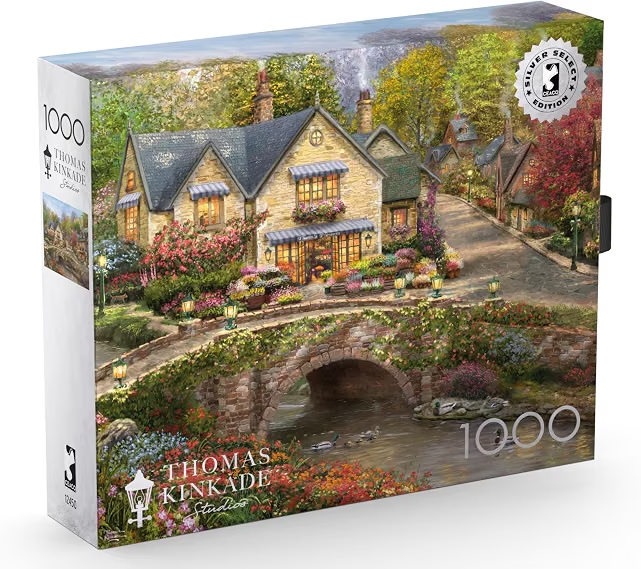
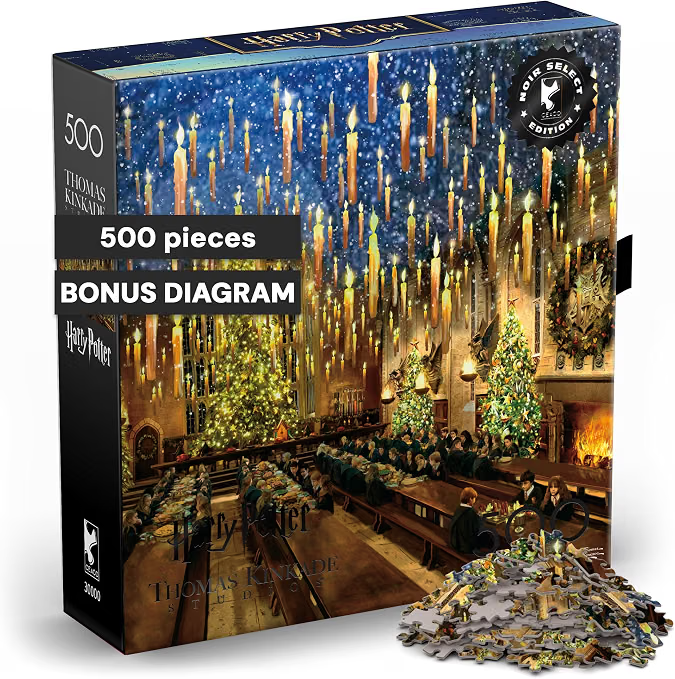
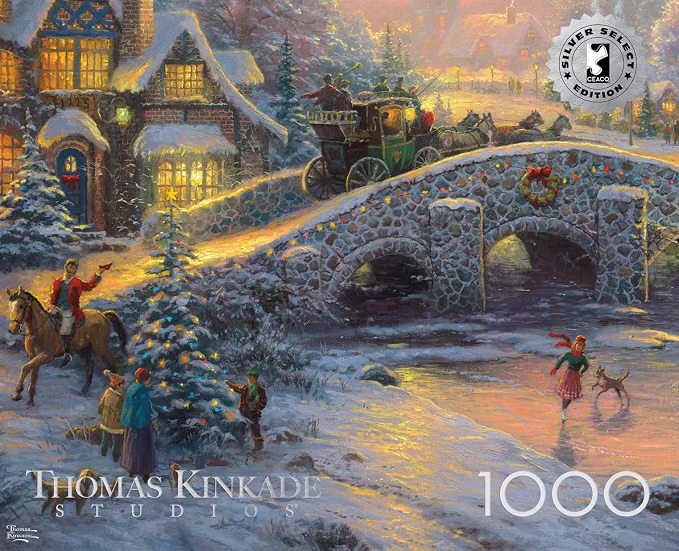
The Brand at a Glance: Buffalo Games occupies an interesting position in the Kinkade puzzle market. Rather than feeling like a purely mass-market souvenir item, their Kinkade releases reflect thoughtful, builder-friendly design: a large full-color bonus poster included in every box so you can keep the box closed while you work, signature “Perfect Snap” precision cutting, and piece construction that sits solidly in the mid-to-upper tier of American puzzles. It’s the kind of product refined by people who understand the practical realities of sitting at a table for hours assembling a 1000-piece image.
Our Experience with Buffalo Games Kinkade Puzzles: The full-color Bonus Poster is the first thing that earns Buffalo Games goodwill from our testing team, and it may sound like a small detail until you’ve actually used it. With puzzles that lack an insert, you’re either propping the box lid up at an awkward angle or laying it flat where it eats up table space. With Buffalo Games, you close the box — keeping the remaining pieces safely contained inside — and lay the large reference poster flat beside your build area. Over a 1000-piece build spanning three evenings, having an unobstructed, full-size reference sheet makes a real difference in how comfortable and organized the experience feels.
Piece construction is noticeably more robust than standard CEACO lines. The recycled chipboard is sturdy and thick, though it doesn’t quite reach Schmidt’s heavy European density. Fit is excellent — Buffalo Games’ signature “Perfect Snap” die-cut ensures pieces seat firmly with a crisp click, and completed sections hold together reliably when moved. Unlike CEACO’s quirky random cuts, Buffalo Games uses a clean, structured grid-cut pattern with strong shape diversity across standard piece types, making it much easier to systematically sort and test pieces in large sky-and-water sections.
The surface features a clean, smooth semi-gloss finish that makes Kinkade’s rich colors pop vividly. The one minor caveat is that under direct overhead LEDs or a low desk lamp, the smoother finish can catch a bit more glare than Schmidt’s matte linen texture — angling your light source slightly off-axis easily solves this.
The image selection in Buffalo Games’ Kinkade range (including their foil-accented Silver Select series) is generous and tilted toward the artist’s most iconic and recognizable work — the Christmas scenes, the lighthouse series, and the village and cottage classics. If you’re buying a Kinkade puzzle as a gift for someone who loves the artist, Buffalo Games is likely where you’ll find a beloved classic at a very reasonable price.
The realistic limitation here is that Buffalo Games’ puzzles aren’t quite as elevated in anti-glare finish or board weight as Schmidt’s best offerings. For the overwhelming majority of builders, the difference in print clarity is barely perceptible. But if you’re the kind of person who demands a glare-free linen texture and maximum chipboard heft, Schmidt still holds the crown. For everyone else, Buffalo Games strikes the best overall balance of piece fit, included poster convenience, selection, and value of the three brands we tested.
Who Buffalo Games Is Best For: Buffalo Games is our top pick for most Thomas Kinkade puzzle buyers — and the hands-on experience backs it up. The included full-size bonus poster, the sturdy piece construction with a crisp “Perfect Snap” fit, and the wide selection of beloved Kinkade images combine into a package that works seamlessly in real-world use. If you’re a dedicated puzzler who builds regularly, if Kinkade Christmas puzzles are a household tradition, or if you’re shopping for someone who loves assembling jigsaws, Buffalo Games is the brand we’d recommend without hesitation.
What Makes a Great Thomas Kinkade Puzzle?
When our team looks at a Kinkade puzzle, we’re thinking about five things:
1. Print quality. Kinkade’s signature style lives in its light — those luminous highlights, soft gradients, and layered color. Poor printing collapses all of that into muddy midtones. A good puzzle preserves the depth and warmth of the original artwork, even on small individual pieces.
2. Piece construction. Cardboard thickness matters more than most buyers realize. Thin pieces bend, warp, and refuse to lie flat. They also tend to have looser tolerances, which means assembled sections shift and slide when you try to move them. Heavier chipboard with a solid cut keeps everything locked in place.
3. Piece fit. A satisfying fit is tight enough that pieces don’t pop apart when you nudge a completed section, but not so tight that forcing the last row damages the puzzle. Kinkade’s images often feature large areas of similar tone — sky, water, foliage — which means cut variety is essential. Without enough variation in piece shapes, you’ll spend twice as long searching for the right match.
4. Surface finish. A linen or matte finish reduces glare under artificial lighting, which is relevant because most puzzling happens indoors in the evening. Some finishes also help pieces slide and separate more easily as you sort.
5. Packaging and reference materials. A reference image on the box lid is table stakes, but some brands go further — including a small poster or booklet that lets you keep the box closed and use the reference image separately. That’s a small thing that makes a real difference over a multi-day build.
How to Choose the Right Brand for You
If you’ve read this far, you likely already have a sense of which brand fits your situation. But here’s a simple breakdown to make the decision even easier:
Choose Schmidt if:
Build quality and print fidelity are your top priorities
You plan to frame the finished puzzle
You build on a hard surface or under bright indoor lighting where matte anti-glare protection matters
You’re comfortable ordering online and don’t need same-day availability
You’re purchasing as a gift for a serious, discerning puzzler who will notice the difference in materials and German craftsmanship
Choose CEACO if:
You have a specific Kinkade image in mind and want the best chance of finding it in puzzle form across their vast licensing library
You’re on a budget or shopping for a casual puzzler
You need to pick something up from a local retail store today
You’re buying for a family activity where the subject matters more than heavy-duty craftsmanship
You want a range of piece counts — CEACO’s 300-piece options with their whimsical random cuts are genuinely good for younger builders or less experienced puzzlers
Choose Buffalo Games if:
You want the best all-around experience for everyday puzzling
You build under lighting and appreciate precision-cut pieces that lock in with a satisfying “Perfect Snap”
You love Kinkade’s most iconic images — Christmas scenes, lighthouses, village classics — and want a wide selection backed by an included full-size reference poster
You’re buying a gift and want a brand that feels thoughtful and complete right out of the box
You value practical features like the bonus reference poster that improve the building session rather than just the finished product
A Quick Note on Piece Counts
All three brands offer their Kinkade puzzles in multiple piece counts, and the right count depends on your skill level and the time you have available. As a rough guide:
500 pieces suit a relaxed evening of focused puzzling;
1000 pieces is the sweet spot for most experienced hobbyists and typically takes two to four sessions;
2000 pieces is a serious undertaking best suited for dedicated puzzlers with ample table space.
CEACO’s 300-piece options are worth mentioning specifically — they reproduce Kinkade’s simpler, more graphic compositions surprisingly well at that scale, and they’re a genuinely good entry point for new puzzlers or kids building alongside adults.
Frequently Asked Questions About Thomas Kinkade Puzzles
Are Thomas Kinkade puzzles officially licensed? Yes — Schmidt, CEACO, and Buffalo Games all produce puzzles under official Thomas Kinkade Studios licensing agreements. This means the artwork used is legitimate and cleared for reproduction, and that the brands have access to high-quality master files rather than working from scanned prints. Unofficial or unlicensed Kinkade puzzles do circulate through third-party sellers on some marketplaces; they tend to show noticeably inferior color accuracy and are often printed at lower resolution. Sticking with an established licensed brand is the simplest way to avoid that problem.
What piece count is best for a Thomas Kinkade puzzle? For most adult puzzlers building solo or with one other person, 1000 pieces tends to hit the right balance of challenge and completion time. Kinkade’s imagery is detailed and color-rich enough to keep a 1000-piece build engaging without pushing into genuinely frustrating territory. If you’re buying for a gift and aren’t certain of the recipient’s experience level, a 500-piece puzzle is a thoughtful, safe choice — it’s approachable for casual puzzlers but still substantial enough to feel like a real project.
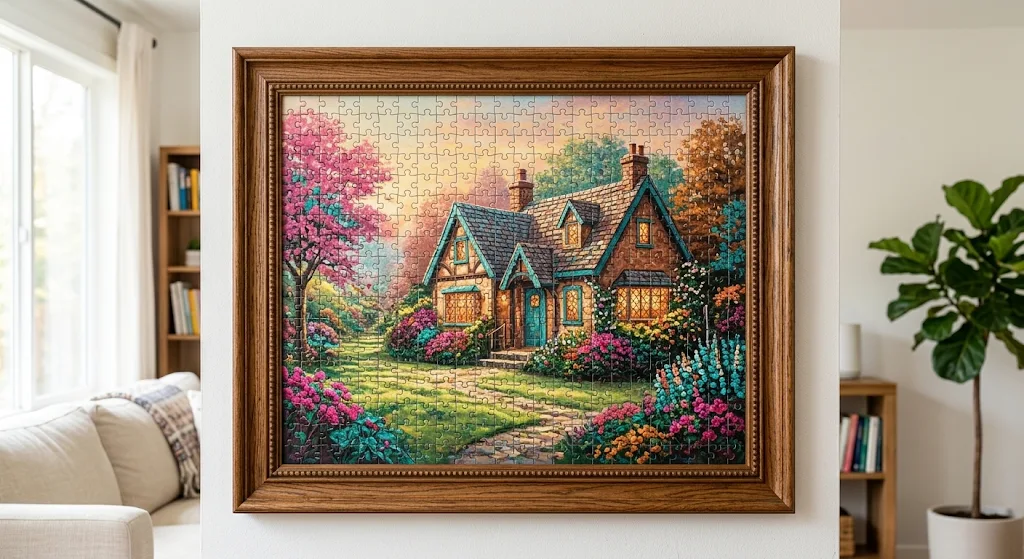
Can Thomas Kinkade puzzles be framed after assembly? Absolutely, and many people do exactly that — Kinkade’s cottage and garden scenes are especially popular for framing in living rooms, guest bedrooms, and holiday displays. For framing, you’ll want to use puzzle glue or adhesive sheets to bond the assembled pieces before you attempt to move them. Schmidt puzzles tend to work particularly well for framing because the heavier chipboard and tight click-fit hold their shape exceptionally well when glued and moved. Standard puzzle frame sizes exist for most common piece counts, though you should measure your assembled puzzle and check dimensions before purchasing a frame, as exact assembled dimensions vary by brand and piece count.
How do Thomas Kinkade puzzles compare in difficulty to regular puzzles? Kinkade puzzles range from moderately challenging to quite difficult depending on the specific image. His paintings often feature large areas of soft, similar-toned color — forest canopies, twilight skies, misty water — which can make piece-matching genuinely tricky. The paintings that include architectural elements, defined foreground objects, or strong color contrast (many of his Christmas scenes, for example) tend to be more approachable. If you’re introducing someone to Kinkade puzzles for the first time, look for a composition with clear, distinct zones — a building, a path, a flower garden — rather than an open landscape.
Do any of these brands produce oversized Kinkade puzzles? All three brands periodically release larger-scale puzzles — 2000 pieces is the most common large-format option, and CEACO has released some oversize builds up to around 2000 pieces in select Kinkade titles.
What’s the best Thomas Kinkade puzzle for a gift? For a gift, Buffalo Games is typically the most reliable choice. The packaging is clean and gift-ready, the included bonus poster adds a thoughtful touch, and the selection of iconic Kinkade scenes means you’re likely to find an image the recipient will recognize and love. If you know the recipient is a serious puzzler who values top-tier physical quality above all else, a Schmidt puzzle makes a more elevated gift — but be prepared to order online in advance rather than finding it at a local retailer.
The Bottom Line: Which Thomas Kinkade Puzzle Brand Should You Buy?
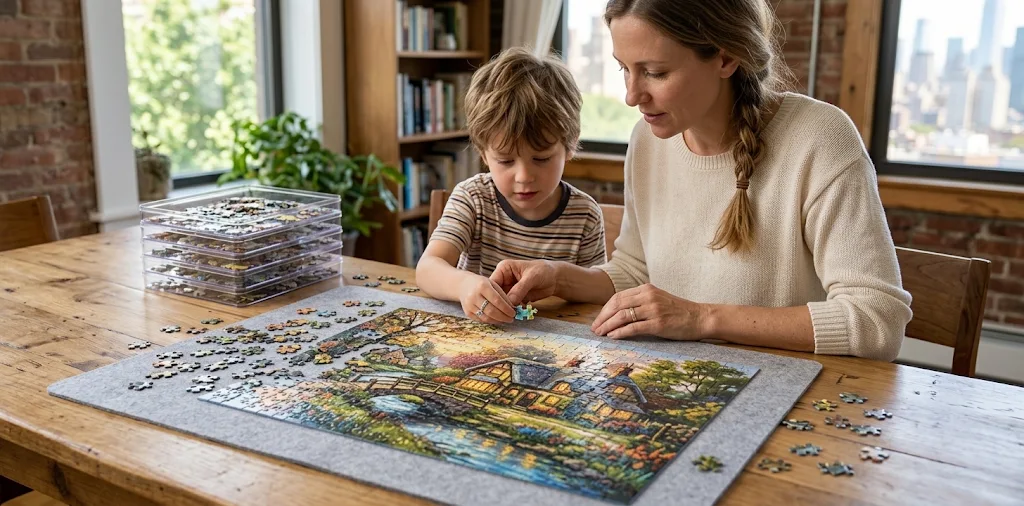
After working through puzzles from all three brands, our recommendation is clear: Buffalo Games is the best Thomas Kinkade puzzle brand for most people. The combination of sturdy chipboard, a crisp “Perfect Snap” fit, an included full-size reference poster, and a wide catalog of the artist’s most beloved images gives it a practical edge that holds up across different types of builders and use cases. It’s not a luxury import product — it’s a well-considered everyday favorite, and that matters when you’re the kind of person who actually sits down and builds puzzles regularly.
Schmidt is the right choice for a specific type of buyer: someone who wants the finest European physical quality, anti-glare linen texture, plans to frame the result, and doesn’t mind ordering online and paying a premium. If that’s you, the investment is worth it. The print fidelity and piece construction are genuinely in a different category from the other two brands, and a Schmidt puzzle is the kind of object that justifies the word “heirloom” without embarrassment.
CEACO earns its place through sheer selection, whimsical random cuts, and accessibility. If you’ve searched Schmidt and Buffalo Games and can’t find the specific Kinkade image you want, check CEACO. And if you need a Kinkade puzzle today, from a store you can walk into, CEACO is likely what’s on the shelf. For the price, its quality is fair — just go in knowing the pieces are thinner and that multiple builds will show wear faster than the other two brands.
Kinkade’s paintings are built around warmth, light, and the feeling that somewhere, right now, someone is at home and comfortable. A good puzzle version of that work should feel the same way to build — unhurried, satisfying, the right kind of absorbing. All three of these brands can deliver that experience. Buffalo Games does it most reliably, Schmidt does it most beautifully, and CEACO does it most accessibly. Pick the one that fits your situation, clear off a table, and enjoy the process.