Advertiser Disclosure
We independently review everything we recommend. When you buy through our links, we may earn a commission.
A Few 500 Piece Christmas Puzzles That Caught My Eye
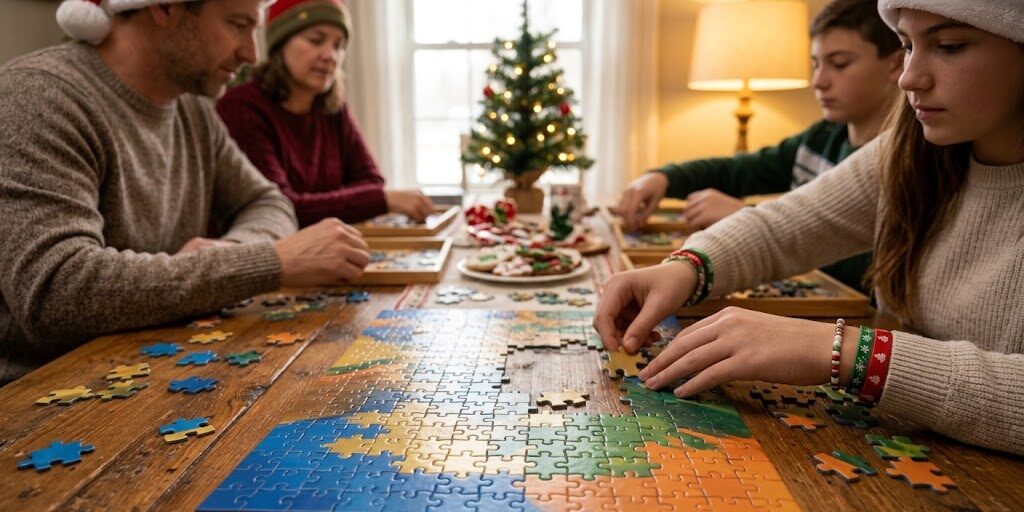
There’s something about spreading a puzzle out on the kitchen table in December that just feels right. Maybe it’s the colder weather nudging you to slow down, or maybe it’s the way a holiday scene builds piece by piece — small moments adding up to something bigger. Whatever draws you to it, Christmas puzzles have become a genuine tradition in many households, and the 500-piece format has quietly become the go-to sweet spot for most of them.
We spent time looking closely at what’s actually available this season, and a handful of brands kept standing out for good reasons. Galison, White Mountain, Ravensburger, Springbok, and Mudpuppy each bring something different to the table — different art styles, different manufacturing approaches, different vibes entirely. This article is our attempt to break down what makes each one worth considering and help you figure out which one belongs under your tree (or on your coffee table right now).
Whether you’re shopping for yourself, a grandparent who loves holiday traditions, a family looking for a screen-free activity, or a puzzle enthusiast who takes piece quality seriously, there’s a solid option here. We’ll walk through each brand honestly — including the trade-offs — so you can make a confident call.
Everything We Recommend
✅ We recommend these products based on an intensive research process that’s designed to cut through the noise and find the top products in this space. Guided by experts, we spend hours looking into the factors that matter to bring you these selections.
⭐ 2.5 million+ people assisted in the last 30 days ⭐
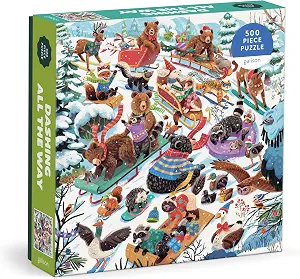
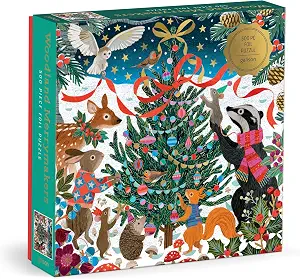
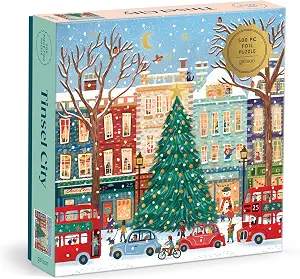
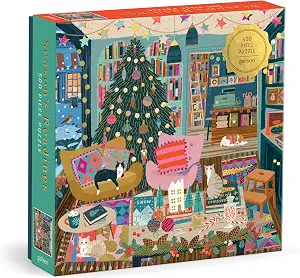
Galison occupies a distinctive niche in the puzzle world that’s hard to describe until you hold one: it genuinely feels like a design object. The company partners with artists, estates, and museums to license artwork that skews toward the sophisticated end of holiday imagery — you’re more likely to find a mid-century illustrated Christmas market or a Scandinavian-inspired winter pattern than a generic photo of ornaments on a tree. During our time with several Galison 500-piece holiday puzzles, the thing that struck us most wasn’t the quality of the pieces themselves (though those are solid) — it was how much care goes into the art selection. If you’ve ever finished a puzzle and thought, “I’d actually hang this,” Galison is probably the brand that made it. The pieces have a thick, linen-finish feel that reduces glare under indoor lighting, and the cut tends toward more irregular, interlocking shapes that click together with a reassuring firmness. The box design is a notch above most competitors — clean, giftable, and retail-quality in a way that makes it feel intentional rather than an afterthought. The main trade-off worth knowing: Galison puzzles lean harder into art-collector territory than cozy-holiday territory, which means the imagery may feel more refined than warm and fuzzy. If your family gravitates toward traditional Christmas scenes with Santas and snowmen, Galison’s aesthetic can feel a little understated. But for anyone who wants a puzzle that also doubles as a conversation piece — or who’s shopping for someone with strong visual taste — it’s genuinely one of the more thoughtful picks in the 500-piece holiday category.
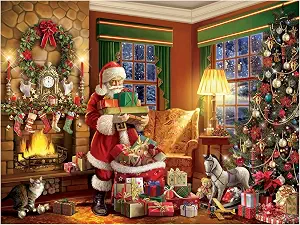
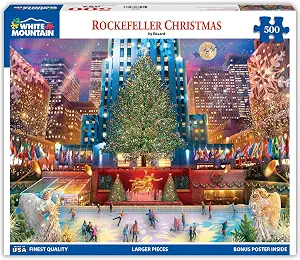
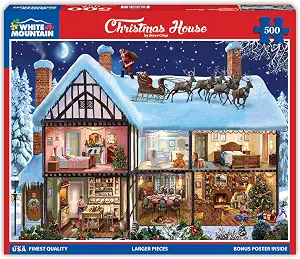
If Galison is the puzzle you’d frame, White Mountain is the puzzle you’d actually do every December with the same group of people for twenty years running — and that’s meant as a compliment. This Vermont-based company has been making American-made puzzles since 1976, and their holiday lineup leans completely into nostalgia: vintage department store Christmases, bustling small-town winter scenes packed with dozens of tiny details, and illustrations that look like they belong on a tin of holiday cookies from your childhood. When we spread out a White Mountain 500-piece during testing, the first thing people did was point at things — a little figure ice skating in the corner, a shop window display, a dog chasing a sled. That kind of detail-rich imagery is White Mountain’s signature, and it makes the puzzling experience genuinely engaging even when you’re working through a tricky, same-color section. The pieces are made from recycled chipboard and feel a touch thinner than premium European brands, but they interlock cleanly and hold together well once assembled. The real-world trade-off: that same richness of detail that makes White Mountain scenes so fun to explore also means large sections of similar colors (snowy rooftops, grey winter skies) can require patience. These puzzles reward a methodical sorting approach more than an intuitive one. But for multigenerational family puzzle nights — particularly if nostalgia is part of what you’re going for — White Mountain delivers in a way that feels authentic rather than manufactured.
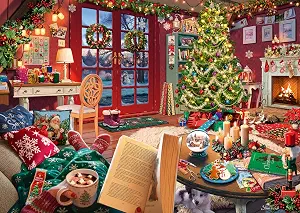
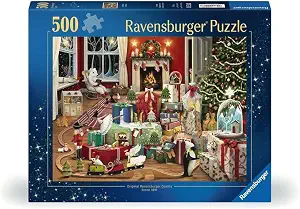
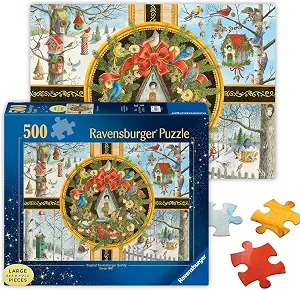

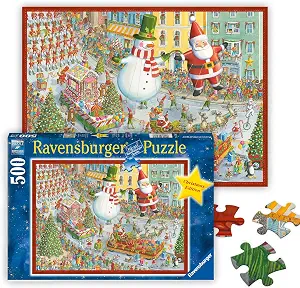
Ravensburger is the brand that serious puzzlers tend to cite when someone asks what the best puzzle feels like, and after spending time with their holiday 500-piece offerings, it’s not hard to understand why. Founded in Germany in 1883, the company has spent well over a century refining the mechanics of what makes a puzzle work — and it shows. The pieces are cut from premium linen-finish cardboard that’s noticeably thicker and stiffer than most competitors, which means individual pieces are easier to pick up and handle, and assembled sections hold together without flexing. The fit is where Ravensburger earns its reputation most clearly: their die-cut technology produces pieces that click together with a precision that feels almost engineered. There’s no wiggling, no ambiguous fit — a piece either belongs, or it doesn’t, and you know immediately. For its Christmas themes, Ravensburger tends to favor classically beautiful imagery—European winter villages, richly illustrated scenes, and some licensed designs that lean into storybook warmth rather than kitsch. The finished puzzle holds up well enough to frame, and the anti-glare finish makes working under a lamp noticeably more comfortable than glossy-finish alternatives. The trade-off is straightforward: Ravensburger puzzles typically cost more than comparable options from White Mountain or Springbok. For many people, the quality difference justifies the price—especially if the puzzle will be reassembled or given as a gift meant to last. But if budget is a real factor, you’re making a real sacrifice to get here, and it’s worth being honest about that.
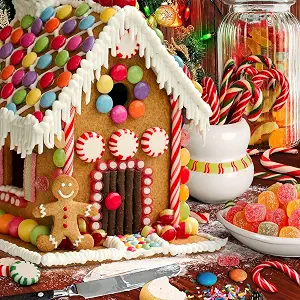

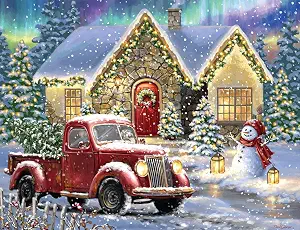
Springbok is the brand that tends to surprise people who haven’t puzzled with them before. It’s not the most famous name in the category, and it doesn’t have the heritage cachet of Ravensburger or the artsy positioning of Galison — but it does something specific extremely well, which is producing jigsaw pieces with one of the most distinctive cuts in the industry. Springbok uses a random-cut process that results in pieces with unusual, organic shapes that fit together in ways that feel genuinely different from the grid-adjacent cuts most puzzle brands use. Once you’ve tried it, you either love the experience or find it disorienting — but most people in our testing group found it more engaging, particularly when working through complex sections. Their holiday imagery tends toward vivid, richly colored Christmas scenes: decorated trees, vintage Santas, festive village illustrations that feel warm and immediate rather than cool or artistic. The color printing is notably bright and saturated, which makes sorting by hue easier and gives the finished puzzle a visual pop that photographs well. Made in the USA, Springbok puzzles are cut from recycled materials, and the company has a long track record — they’ve been in business since 1963. The downside worth flagging: that distinctive random cut means Springbok pieces are less standardized than competitors, and occasionally you’ll encounter a piece that seems to fit in multiple places before you find its true home. For some puzzlers, that’s part of the fun; for others, it’s a minor frustration. Either way, Springbok earns its place on this list as a genuinely underrated option with a loyal following for good reason.
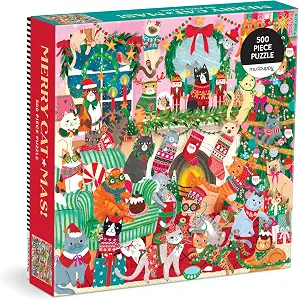
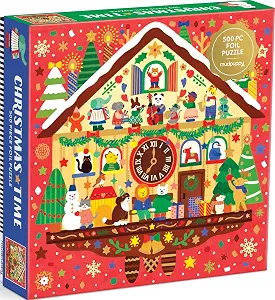
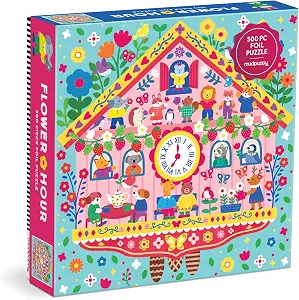
Mudpuppy is the wildcard on this list, and depending on what you’re looking for, it might also be the most exciting one. Where most puzzle brands play it fairly safe with holiday imagery — snowy villages, decorated trees, classic winter scenes — Mudpuppy leans into illustration styles that feel genuinely fresh. Their art direction tends to favor contemporary illustrators and designers, which means their Christmas puzzles often feature bold color palettes, graphic flat-art aesthetics, and character-driven scenes that don’t look like anything else in the puzzle aisle. During our testing, Mudpuppy puzzles attracted a different kind of attention than the others — people with younger kids or a stronger design sensibility consistently gravitated toward them first. There’s also a values dimension worth noting: Mudpuppy is a certified B Corp, and they prioritize eco-friendly materials, recycled packaging, and responsible manufacturing in a way that a growing number of buyers genuinely care about. The pieces themselves are made from recycled chipboard and have a solid, dependable feel. The fit is good without being exceptional — on par with White Mountain, a step below Ravensburger. The honest limitation is that Mudpuppy’s more design-forward aesthetic isn’t for everyone: if your household is firmly attached to traditional Christmas imagery, their catalog may feel too contemporary or too playful. But for families who love art and design, or anyone shopping for a puzzle lover who might roll their eyes at another generic holiday scene, Mudpuppy is genuinely worth seeking out.
Why 500 Pieces Is the Sweet Spot for Christmas Puzzles
Puzzle makers offer everything from 100-piece designs for young kids to 2,000-piece behemoths for serious enthusiasts. So why does 500 keep coming back as the format most people actually reach for during the holidays?
It comes down to time and payoff. A 500-piece puzzle typically takes two to five hours to complete — long enough that it feels like a real activity, short enough that you can actually finish it in an afternoon or over a couple of evenings. A 1,000-piece puzzle, by contrast, tends to stretch into week-long commitments that often get abandoned before the last pieces go in. Nobody wants a half-finished Christmas scene sitting on the dining room table when it’s time to set up for dinner on December 25th.
The 500-piece format also works well across ages. It’s accessible enough for teenagers and adults who don’t puzzle regularly, while still offering enough complexity to keep experienced puzzlers engaged. That makes it a genuinely good group activity — one person can sort edges, another tackles the sky, and someone else handles the details. It scales with however many people pull up a chair.
There’s also a practical storage and space argument. A 500-piece puzzle assembles to a size you can actually work with on a normal table — usually around 18 by 24 inches — without commandeering the entire room. And when it’s done, the box stores easily on a shelf alongside the rest of your holiday things.
What to Look for in a Christmas Puzzle
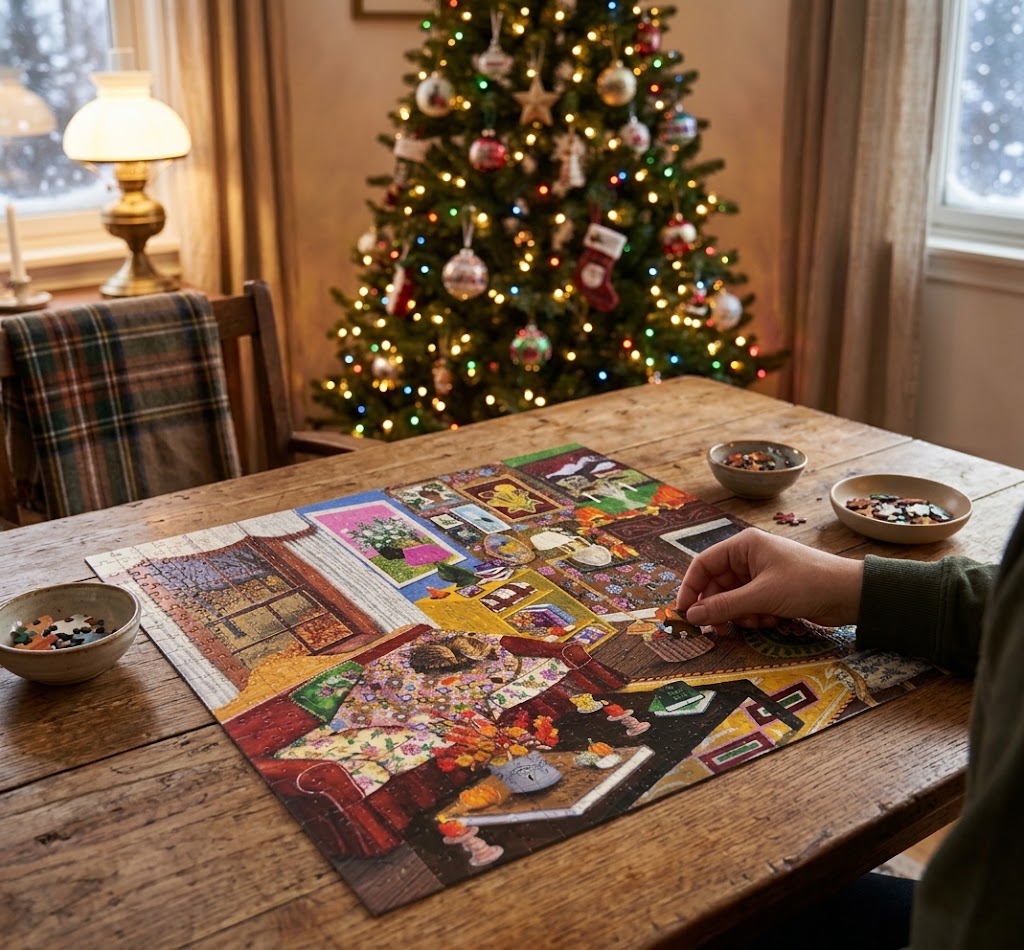
Not all puzzles are created equal, and once you’ve worked through a few from different brands, the differences become very clear. Here’s what actually matters:
Image quality and art style. This is the most personal factor, and it varies enormously across brands. Some lean into nostalgic, vintage-style illustrations; others use modern photography or licensed fine art. None is objectively better — it depends entirely on the aesthetic you’re drawn to. What does matter is that the print quality is sharp enough that distinguishing similar-colored pieces doesn’t feel like an eye exam.
Piece cut and fit. A good puzzle piece clicks into place with a satisfying firmness and stays there. A frustrating one either fits too loosely (so completed sections slide apart) or won’t mate properly due to inconsistent die-cutting. Most quality brands nail this, but it’s worth knowing going in — piece fit is often where budget puzzles fail.
Finish and glare. Glossy surfaces catch light in ways that make a puzzle harder to work with under typical home lighting. Linen or matte finishes tend to be easier on the eyes during longer sessions, though this varies by brand.
Piece thickness and durability. Thicker pieces feel more substantial, handle repeated use better, and are easier to pick up without bending. This matters most if you plan to frame the finished puzzle or expect it to be done more than once.
Box quality and sorting. A sturdy box lid that doubles as a workspace or sorting tray is a small but genuinely useful feature. Some brands include a reference poster, which is helpful for complex holiday scenes with lots of similar-colored areas.
How to Choose Between These Brands
Now that we’ve walked through each one, here’s the honest decision framework — because the right pick genuinely depends on what matters most to you.
Go with Ravensburger if piece quality and fit are your top priority. The premium price is real, but so is the difference. If you’re buying for someone who takes puzzling seriously, or you want a puzzle that holds together well enough to frame, this is the one.
Go with Galison if the art matters as much as the puzzling experience. The designs are curated in a way that feels intentional and refined. Good for design-minded gift-givers or anyone who wants their puzzle to look good on a shelf before it’s even opened.
Go with White Mountain if nostalgia and family tradition are central. The detail-rich, old-fashioned American Christmas imagery is genuinely distinct, and the puzzles hold up well as a multigenerational activity. The American-made angle also matters to some buyers.
Go with Springbok if you want something a little different from the usual puzzle experience. The random-cut pieces and vivid color printing make for an engaging working experience, and the price-to-quality ratio is favorable.
Go with Mudpuppy if you’re buying for someone with strong design taste, a younger family, or an eco-conscious household. The B Corp credentials are backed up by real commitments, and the contemporary illustration style stands out clearly from the competition.
If you’re buying blind — unsure which direction to go — Ravensburger is the one recommendation we’d make with the most confidence. The piece quality alone tends to convert skeptics.
FAQ: 500-Piece Christmas Puzzles
How long does a 500-piece puzzle typically take to complete?
For most adults puzzling casually, a 500-piece puzzle takes between two and five hours. That range is wide because difficulty varies a lot based on the image — a puzzle with lots of distinct details and varied colors goes faster than one with large areas of similar tone (a snowy sky, for instance). Working with a second person generally cuts the time noticeably.
Are 500-piece puzzles suitable for kids?
Generally, 500-piece puzzles are appropriate for ages 10 and up, though this varies by the child. Kids who puzzle regularly can absolutely tackle them younger; first-time puzzlers of any age may find them more challenging than expected. If you’re buying for a child specifically, Mudpuppy’s kid-friendly imagery makes the experience more inviting, even if the piece count remains the same.
What size does a 500-piece puzzle assemble to?
Most 500-piece puzzles assemble to roughly 18 by 24 inches, though this varies by brand. Ravensburger and Galison tend to be fairly consistent in this range. Always check the box dimensions if table space is a real constraint.
Can I frame a finished 500-piece puzzle?
Yes — standard puzzle frames in the 18 x 24 inch size work for most 500-piece puzzles. Ravensburger puzzles tend to hold together particularly well for framing, though any puzzle can be glued and framed with the right puzzle preserver. It’s worth checking the exact assembled dimensions against frame sizes before buying, since there’s some variation between brands.
Which of these brands makes puzzles in the USA?
White Mountain and Springbok both manufacture their puzzles domestically in the United States. Ravensburger is a German company with international manufacturing. Galison and Mudpuppy are based in the US but manufacture overseas.
Are any of these brands eco-friendly?
Mudpuppy is a certified B Corp and places particular emphasis on eco-friendly materials and packaging. White Mountain and Springbok both use recycled chipboard in their puzzle pieces. Ravensburger uses FSC-certified cardboard. Most major puzzle brands have moved toward more sustainable materials over the past decade, though the degree of commitment varies.
What’s the best 500-piece Christmas puzzle to give as a gift?
For gifting, Galison tends to win on packaging and presentation — the boxes look intentional and giftable without requiring any additional wrapping. Ravensburger is the strongest choice if you want to give something the recipient will remember for its quality. White Mountain is the best option for someone who loves traditional Christmas imagery and Americana.
Conclusion
The 500-piece Christmas puzzle market is in genuinely good shape right now. These five brands — Galison, White Mountain, Ravensburger, Springbok, and Mudpuppy — each bring a distinct perspective, and any of them is a solid pick if you choose based on what you actually want from the experience.
To quickly recap the distinctions: Ravensburger leads on piece quality and fit; Galison leads on art direction and giftability; White Mountain leads on nostalgic American Christmas imagery; Springbok offers a unique cut and great color for the price; Mudpuppy is the strongest choice for design-forward households and eco-conscious buyers.
The best way to approach this is to think about who’s doing the puzzling and what the scene around it looks like. Is it a quiet solo December evening? A noisy family table? A gift for someone specific? The answers tend to point clearly toward one of these brands.
And if you’re genuinely stuck, our honest top pick for most people is Ravensburger — the piece quality is consistently the thing that leaves an impression, and a Christmas puzzle that feels good to work with tends to become one that comes out every year. That kind of staying power is what makes the slightly higher price worth thinking about seriously.