Advertiser Disclosure
We independently review everything we recommend. When you buy through our links, we may earn a commission.
Best Tight-Fitting Jigsaw Puzzles: Brands That Actually Click Together

If you’ve ever bumped a table and watched a hard-won corner of your puzzle slide apart, you already know why fit matters. A tight-fitting jigsaw puzzle changes the whole experience. Pieces click into place with a small, satisfying resistance. Sections hold together when you lift them. And you spend your evening solving, not nudging stray pieces back into position.
This guide covers the brands we’d look at first if tight fit is your priority. We’ve ranked them with a clear winner up top, flagged the real trade-offs for each, and added a short FAQ at the end. Every brand here has at least one limitation, and we’ve said so plainly.
Quick Picks: Which Brand Should You Start With?
- Best overall for tight fit: Ravensburger. Its pieces are precisely cut and tend to lock together firmly. This is the brand we’d hand to most people.
- Best for a dust-free, glossy finish: Pintoo. These are plastic puzzles with a very different feel.
- Best for thick, sturdy pieces: Springbok, White Mountain, and Gibsons. Each makes thick, durable pieces in its own style.
- Best for art lovers: Pomegranate. Museum-quality imagery with a firm board.
- Best for something different: Magic Puzzle Company. Layered concepts and surprises beyond the picture on the box.
- Best budget-friendly options: Buffalo Games, MasterPieces, and HUADADA. Easy to find and generally easy on the wallet.
How We Judge a "Tight" Puzzle
We don’t just ask whether pieces connect. We look at a handful of practical things:
- Click and hold. Does a piece seat with a gentle resistance, and does it stay when you lift the section?
- Consistency. Are the cuts uniform from piece to piece? A few loose pieces in an otherwise tight puzzle are common, but a pattern of them is a red flag.
- Board quality. Thicker, denser board generally feels sturdier and resists bending at the edges.
- Surface and dust. Some puzzles shed cardboard dust at the cut edges. It’s mostly a cosmetic nuisance, but it can affect how pieces slide together.
- Box and packaging. Pieces that arrive crushed or bent won’t fit well regardless of the cut.
If you want more help choosing a puzzle that suits your skill level and space, our guide to jigsaw puzzles for adults covers piece counts, difficulty, and picture styles in more detail.
The Brands, Ranked
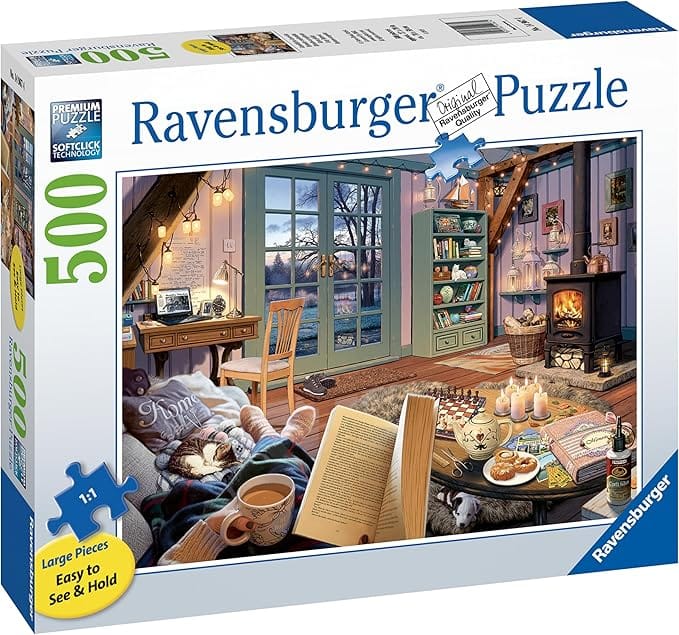
Ravensburger is the brand we’d point most people toward first, and the reason is simple: its pieces tend to lock together more reliably than most of what’s on the shelf. The company markets what it calls Softclick technology, a cutting approach designed so pieces seat with a gentle click, and in our experience that description holds up better than most marketing language. The first time we lifted a finished section of a Ravensburger puzzle off the table without anything falling away, one of our testers quietly said, “Oh, that’s nice,” which is about the highest praise a jigsaw gets around here. The surface has a slightly textured, low-glare finish that makes photographing your finished puzzle easier, and the cut pattern is consistent enough that you rarely hit a piece that’s noticeably looser than its neighbors. It’s a particularly good fit for people who build on a coffee table or dining table and need to move things around, and for anyone who wants a low-drama experience from box to finished picture. The trade-off is price: Ravensburger generally costs more than the budget brands on this list, and the huge catalog means some designs feel more commercial than others. If you want one safe, dependable choice, though, this is it.
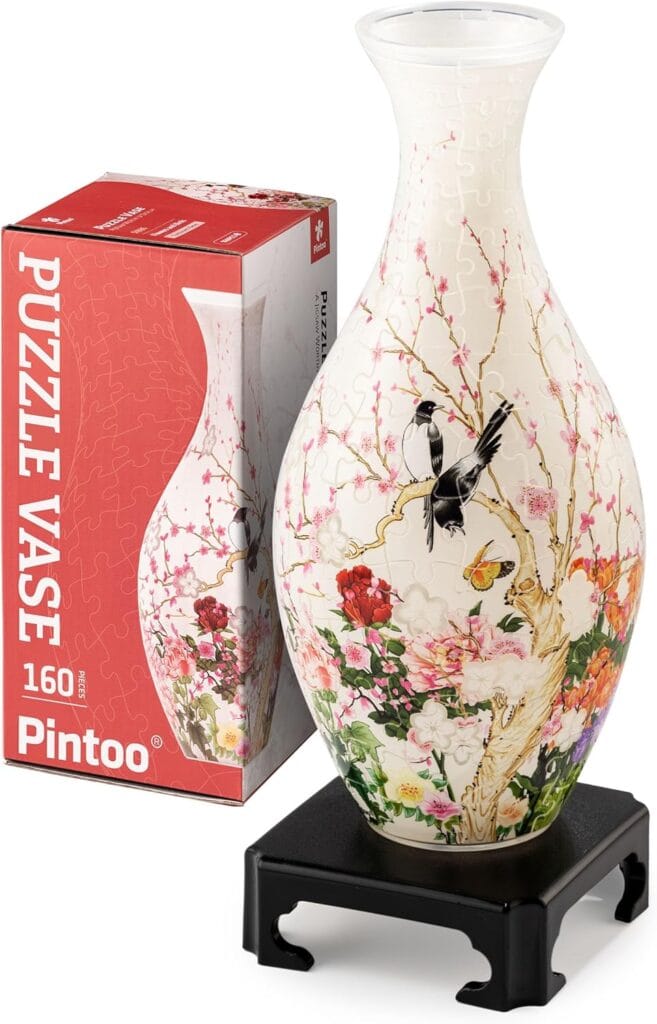
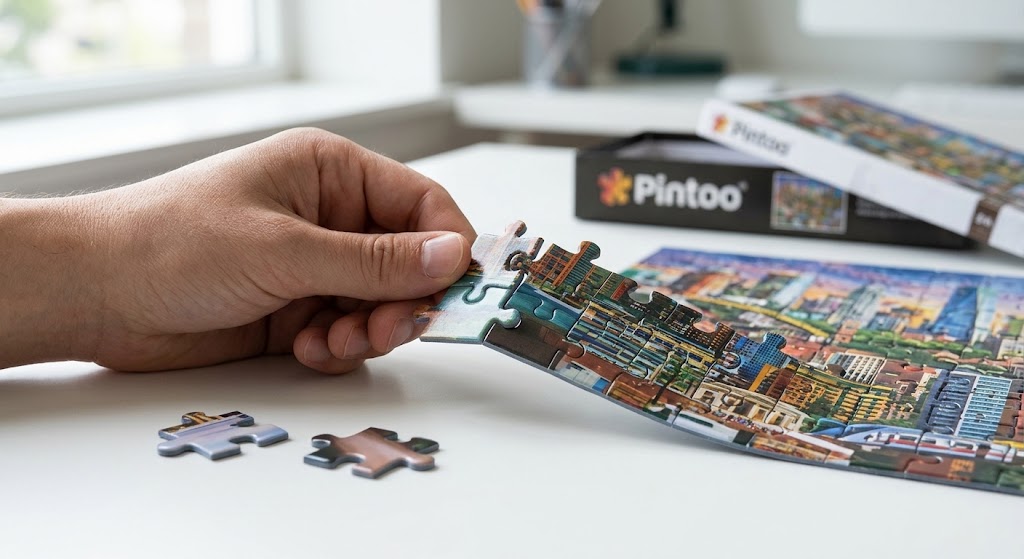
Pintoo does something none of the other brands here do: it makes its puzzles from plastic rather than cardboard. That sounds like a gimmick until you build one. The pieces have a smooth, glossy surface and a firm, even snap, and because there’s no paper board, there’s no cardboard dust to wipe off your table or your hands. One of our team members, who builds puzzles on a small apartment table next to a pet that sheds, found the lack of dust a genuine relief. The tight fit is consistent, and finished puzzles feel more like a solid tile than a paper craft. It’s well suited to people who dislike dust or lint, to anyone who builds in a spot where cleanliness matters, and to people who want a finished piece sturdy enough to display. The trade-offs are real, though: the glossy surface can reflect overhead lighting, which makes darker images harder on the eyes, and the feel is different from a classic cardboard puzzle, which some purists won’t enjoy. Pintoo is also generally priced above mainstream cardboard brands. If you’ve ever thought, “I love puzzles but hate the mess,” this is the one to try.
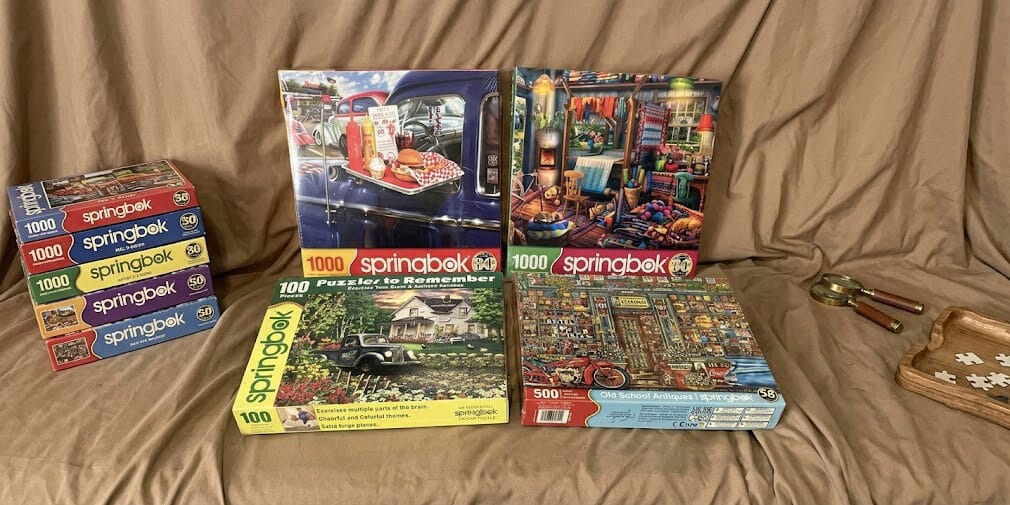
Springbok has been around for decades, and its reputation rests on a heavy, sturdy board with a firm cut. When we picked up a Springbok box, the first thing we noticed was how substantial it felt, and that heft carries through to the pieces themselves. They resist bending, they hold together well once seated, and the unusual, often vintage-feeling artwork gives the puzzle a character you don’t see on every shelf. It’s a strong choice for anyone who builds puzzles regularly and wants pieces that survive repeated rebuilding, or for families who pass the same puzzle between households. We’d also point it toward people who like a slightly nostalgic picture rather than a bright, glossy photograph. The trade-off is that Springbok’s catalog isn’t as deep as the biggest brands, so you may need to hunt a bit for a subject that suits you, and the thicker pieces can make very intricate images feel a bit blocky. Compared with Ravensburger, Springbok trades a little precision for more heft and charm, which is a fair swap if you value durability.
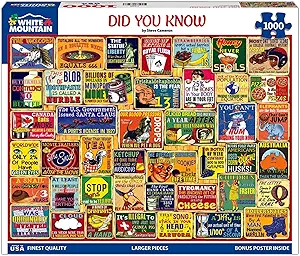
White Mountain is the brand we reach for when we want a puzzle that feels like a small piece of Americana. Its images lean toward charming, detailed scenes (small-town streets, seasonal landscapes, old-fashioned storefronts), and the pieces are cut with a sturdy, dependable fit. Where White Mountain stands out in practice is the pairing of nostalgic imagery with a board that doesn’t feel flimsy. A grandparent who builds a puzzle a week told us she likes that the pieces stay together when she moves the board to clear the table for dinner, and that matches what we saw. It’s a particularly good fit for relaxed, cozy building sessions, for gift-giving, and for puzzlers who prefer illustrated scenes over photographs. The drawback is that those busy, detail-heavy images can be genuinely difficult, so a 1,000-piece White Mountain puzzle may take longer than the same count from another brand. The fit is solid, but not quite as crisp as Ravensburger’s, and the selection leans toward a particular visual style. If that style appeals to you, though, it’s hard to beat.
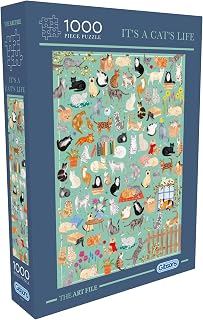
Gibsons has a long history in the UK, and its puzzles have earned a reputation for quality rather than being mass-produced. Pieces are cut cleanly, with firm joints, and the board feels dense in a way that makes the whole puzzle feel like a considered product rather than a mass-market item. We found that Gibsons puzzles assembled with a satisfying steadiness, and that the artwork (often scenes of English countryside, cozy interiors, and quirky illustrations) gave each box a distinct personality. It’s well suited to people who enjoy a slower, more contemplative build and who like their puzzle imagery with a touch of charm. It’s also a good pick if you want something a little different from the big American and German names. The trade-offs are availability and price. Depending on where you live, Gibsons can be harder to find and more expensive after shipping, and some of its picture styles lean heavily British, which may not be to everyone’s taste. If you can get one at a fair price, though, it’s a rewarding build.
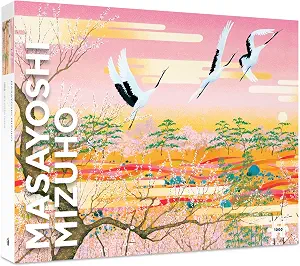
Pomegranate is the brand to choose when the artwork matters as much as the build. It partners with museums and artists to produce puzzles featuring fine art and illustration, and the finished results are the kind you’d actually want to look at after you’re done. The fit is firm, and the board has a sturdy feel that suits the more demanding art-heavy images. One tester, an art history enthusiast, said that building a puzzle based on a painting felt like studying it up close, noticing brushwork and color choices she’d have missed in a gallery. That’s the unique appeal here. It’s a great fit for art lovers, for gifts to people who appreciate museums, and for anyone who wants a puzzle that doubles as a conversation piece. The trade-off is difficulty: art-based images with subtle color gradients and few distinct features can be punishing, and they’re not ideal for beginners. Pricing also tends to be on the higher side. If you’re comfortable with a challenge, Pomegranate gives you something more than a typical landscape puzzle.

Magic Puzzle Company takes a different approach from the others on this list. Its puzzles are designed around concepts that go beyond the picture on the box, with layered images and hidden elements that reveal themselves as you build. The fit is generally firm enough to keep sections together, but the real draw is the experience: our team found that the puzzle kept surprising us, with moments where a hidden detail or a transition between layers made us stop and say “wait, what?” It’s best for people who find standard landscapes boring, for puzzle-loving friends who want something to talk about, and for anyone looking for a gift that feels unusual. The trade-off is that the concept can make the build more challenging than the piece count suggests, and not every layered puzzle will appeal to everyone. If your priority is purely the tightest possible fit with a classic experience, Ravensburger is a safer bet. But if you want novelty, Magic Puzzle Company delivers something you won’t find elsewhere.

Buffalo Games is the brand most people run into at big-box stores, and that accessibility is part of its strength. The pieces are cut with a reasonably firm joint, and the board is thicker than what you’d find on many bargain puzzles. In our experience, Buffalo puzzles are a dependable choice for casual builders who want a decent, tight-ish fit without paying premium prices. The artwork ranges widely, from bright, cheerful scenes to licensed or themed designs, so there’s usually something that suits a gift or a family project. A parent on our team described buying one for a rainy weekend with her kids, and said the pieces stayed put well enough that the table didn’t need to be cleared for dinner. It’s a good fit for families, for first-time buyers, and for anyone who wants a solid puzzle without overthinking the purchase. The trade-off is that fit and finish can vary a bit more from box to box than with the premium brands, and the picture quality isn’t always as crisp. For the price, it’s a sensible choice, but it won’t match Ravensburger’s precision.
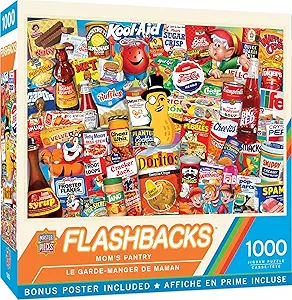
MasterPieces offers an unusually broad catalog, with plenty of scenic, seasonal, and themed puzzles in a range of piece counts. The pieces are cut with a decent, firm fit, and the boxes are often designed with the casual builder in mind, with clear images and sensible packaging. We’d recommend it as a good value choice for people who build puzzles occasionally and want something that works without fuss. One tester, who builds a holiday puzzle every December, said that MasterPieces gave her plenty of seasonal options without the price anxiety. It’s a particularly good fit for families, for holiday gifts, and for beginners who want a pleasant first experience. The trade-offs are consistency and finish: the fit is good but not exceptional, and you may notice occasional loose pieces or a slightly softer surface than on the premium brands. It’s a solid, approachable option rather than a standout in terms of tightness. If you’re comparing it against Buffalo Games, we’d say they’re close, with MasterPieces slightly ahead on variety.
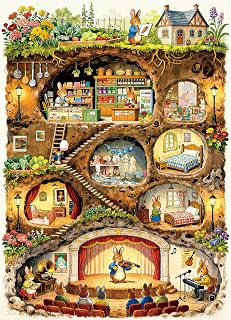
HUADADA is the most budget-oriented brand on our list, and it’s popular among online shoppers looking for low-cost puzzles with bold or unusual imagery. The fit can be surprisingly decent for the price, and some designs, particularly the colorful, high-contrast ones, are enjoyable to build. We’d suggest it for people who want to try puzzling without committing much money, for gifts where cost matters, or for experimenting with a new style of image. The honest trade-off is consistency. Because HUADADA sits at the low end of the price range, you’re more likely to encounter variation in piece fit, edge quality, and print sharpness from one box to the next, so we’d treat it as a “good value if you’re lucky” brand rather than a guaranteed tight fit. Check recent buyer feedback on the specific puzzle you’re considering, and keep your expectations realistic. If a tight fit is your top priority and you can spend a bit more, any of the brands above will serve you better. As a low-risk entry point, though, it has its place.
Why Tight Fit Matters More Than You Think
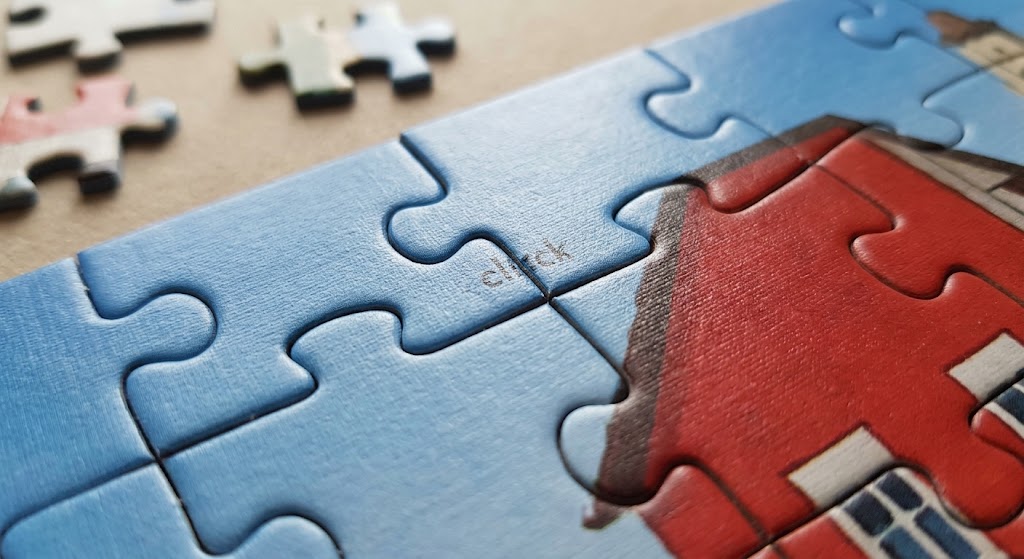
Most people judge a puzzle by its picture. That makes sense at the store, but it’s not what you’ll notice at hour three. What you’ll notice is whether the pieces feel secure.
A loose fit causes three everyday problems:
- Sections fall apart when you move them. If you ever need to slide a half-finished border or a cluster of pieces across the table, loose joints are a headache.
- Pieces shift when you press neighbors in. You push one piece home, and the one beside it pops loose.
- Frustration builds during long sessions. Fiddly assembly makes a relaxing hobby feel like a chore.
A good fit comes from a few factors working together: how cleanly the pieces are cut, how thick and dense the board is, and how consistent the manufacturing is from box to box. Surface finish matters too, mostly because a slick or rough surface changes how pieces grip each other.
How Do These Brands Compare?
A few comparisons come up again and again, so here’s how we’d settle them.
Ravensburger vs. Springbok. If you want crisp precision, choose Ravensburger. If you want weight and character, choose Springbok. For tight fit specifically, Ravensburger wins.
Ravensburger vs. Pintoo. Pintoo wins for anyone bothered by dust or who wants a more durable finished piece. Ravensburger wins for a classic cardboard feel and a more traditional puzzling experience.
Buffalo Games vs. MasterPieces. They’re close. We’d lean Buffalo Games if you want slightly thicker pieces, and MasterPieces if you want more subject variety.
Pomegranate vs. White Mountain. Pomegranate suits art lovers who want a challenge. White Mountain suits cozy, nostalgic building. Neither is the easy option, but White Mountain is a little more forgiving.
Gibsons vs. Magic Puzzle Company. Gibsons offers a traditional, firm-cut experience with British charm. Magic Puzzle Company offers novelty. Choose by how much you value surprise.
Frequently Asked Questions About Tight-Fitting Jigsaw Puzzles
What makes a jigsaw puzzle “tight-fitting”?
It comes down to cut precision, board density, and manufacturing consistency. A tight puzzle has pieces that seat with gentle resistance and stay locked together when you lift a section. Generally, thicker boards and cleaner cuts produce a firmer fit.
Which brand has the tightest-fitting pieces?
In most cases, we’d give the edge to Ravensburger for its consistent, clicking fit. Pintoo is a strong runner-up if you prefer a plastic puzzle, since its pieces snap together firmly and don’t shed dust.
Are thicker puzzle pieces always better?
Not always. A thicker board tends to feel sturdier and resist bending, but it doesn’t guarantee a tight fit. The cut pattern matters just as much. A thinner puzzle with a precise cut can fit better than a thick one with sloppy edges.
Why do some puzzles produce so much dust?
Cardboard puzzles release small particles when the board is cut and handled. It’s mostly a cosmetic issue, and a quick wipe usually fixes it. If it bothers you, a plastic puzzle like Pintoo avoids the issue entirely.
Do tight puzzles take longer to build?
Sometimes slightly, since pieces need a bit more pressure to seat. In practice, most people find the extra security worth it. A tight fit also tends to reduce the time you spend fixing pieces that have shifted.
How can I tell if a puzzle will fit tightly before buying?
Check recent buyer feedback on the specific puzzle, since quality can vary between product lines and print runs. Look for comments about “loose pieces,” “dust,” and “board thickness.” Sticking with well-regarded brands also helps. If you’re building for the first time, our beginner puzzle tips cover a few other things to look for.
What’s the best piece count for a first tight-fitting puzzle?
For most beginners, 500 pieces is a comfortable starting point. It’s large enough to feel like an accomplishment but small enough to finish in a few sittings. If you’re an experienced builder, 1,000 pieces is the usual standard.
How should I store a finished puzzle to keep pieces tight?
Keep the pieces in their original box or a sealed bag, away from humidity and heat. Moisture can cause cardboard to swell and warp, which loosens the fit over time. If you want to display a finished puzzle, a puzzle glue and a sturdy backing board are worth considering. Our guide to how to frame a jigsaw puzzle walks through the process.
Is a more expensive puzzle always a better fit?
Generally, premium brands like Ravensburger and Pintoo offer a more consistent fit, but price isn’t a perfect predictor. A well-chosen mid-priced puzzle will often beat a poorly made expensive one. That’s why we recommend checking current feedback rather than relying on brand name alone.
Tips for Getting the Best Fit From Any Puzzle
Even the best puzzle can feel loose if you build it the wrong way. A few habits help:
- Use a flat, firm surface. A wobbly table or a soft mat can make pieces shift. A puzzle board or a clear table works best.
- Press evenly. Apply gentle, steady pressure when you seat a piece. Forcing it at an angle can distort the edges.
- Keep the box dry. Humidity is the quiet enemy of a good fit. Store puzzles somewhere cool and dry.
- Don’t force mismatched pieces. If a piece doesn’t seat easily, it probably doesn’t belong there. Forcing it can bend the tab and loosen future joints.
- Sort by edge and color first. A well-organized workspace makes it easier to test a piece and move on without stressing the cut.
Which Tight-Fitting Puzzle Should You Buy?
If you want a single recommendation, start with Ravensburger. Its pieces lock together more consistently than any other brand on this list, the finish is pleasant to work with, and the selection is broad enough that you can find a picture you’ll actually enjoy. The main drawback is price, and it’s one we think is worth paying if tight fit is your priority.
If dust or mess is your biggest annoyance, choose Pintoo. It’s a different kind of puzzle, but the clean, firm snap is genuinely impressive, and the plastic construction is a real advantage for anyone who builds in a tidy space.
If you want sturdy, characterful pieces without paying premium prices, Springbok, White Mountain, and Gibsons are all worthwhile, each with its own personality. If you care about the artwork, Pomegranate is the clear choice. If you want novelty, Magic Puzzle Company is the one to try. And if budget matters most, Buffalo Games and MasterPieces are sensible, widely available options, with HUADADA as a low-cost experiment, as long as you go in with realistic expectations.
Whatever you pick, a tight-fitting puzzle makes the whole hobby more relaxing. Choose one that suits your table, your taste, and your patience, and you’ll spend less time fixing sections and more time enjoying the picture coming together.
Looking for more ideas? Browse our guides to family-friendly jigsaw puzzles and challenging 1000-piece puzzles for your next build.