Advertiser Disclosure
We independently review everything we recommend. When you buy through our links, we may earn a commission.
Top One Piece Anime Puzzles Worth Buying
Our assessment team has put together a lot of puzzles over the years — holiday scenes, national parks, the occasional 5,000-piece monster that ate an entire month. But One Piece puzzles are a different animal. They’re not just “pretty pictures cut into pieces.” Between the classic Clementoni-style character art and the increasingly popular Ensky mosaic format, there’s a real decision to make before you click “buy,” and most product listings don’t explain the difference well.
Quick Picks Before You Scroll
- Most approachable overall: Clementoni 39726 (1000-Piece)
- Best for a shorter, lower-commitment session: Clementoni 35137 (500-Piece)
- Most rewarding display piece: ENSKY One Piece 1000-Piece Mosaic Art
- Best for fans caught up on the newest arcs: Ensky One Piece Gear 5 (950-Piece Mosaic Art)
Everything We Recommend
✅ We recommend these products based on an intensive research process that’s designed to cut through the noise and find the top products in this space. Guided by experts, we spend hours looking into the factors that matter to bring you these selections.
⭐ 2.5 million+ people assisted in the last 30 days ⭐
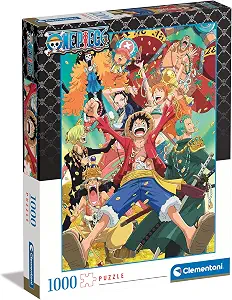
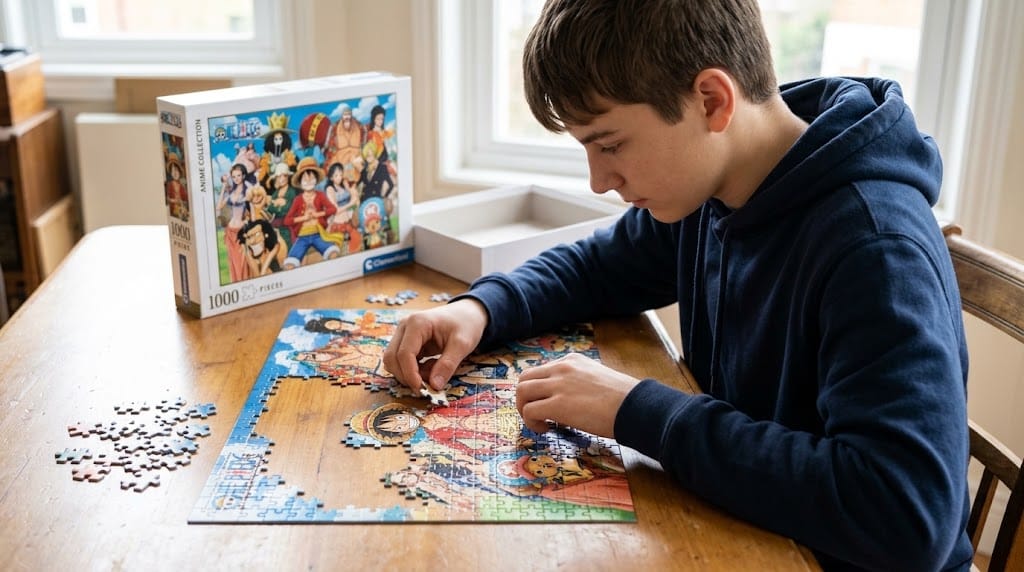
This was the puzzle our team reached for first, mostly because Clementoni’s Anime Collection has a reputation for being a dependable, no-surprises build, and it mostly lived up to that. The finished puzzle measures roughly 70 x 50 cm (about 27.5 x 19.7 inches), which is large enough to feel like a real accomplishment on the wall without swallowing your entire dining table for two weeks straight. What struck us first wasn’t the piece count — it’s the box. Clementoni ships this in what they call a cube box, part of a stackable Anime Collection design, so if you’re the type of puzzler who buys more than one in a series, they actually look intentional sitting on a shelf together instead of a mismatched pile of rectangular boxes. During assembly, the character art (a vibrant Straw Hat crew scene) sorted itself pretty naturally by color blocks, which made this one of the more relaxing builds of the four — one of our testers described it as “the puzzle you put on while a show is playing in the background,” and that tracks. Where it’s genuinely useful is for anyone easing into anime-themed puzzling for the first time, or buying a gift for a teenage One Piece fan who hasn’t built many 1000-piece sets before; the piece cut is standard and forgiving, and there’s enough color variation to avoid the frustration you sometimes get with flat, single-tone anime art. The trade-off is that it’s a fairly familiar puzzle-building experience — if you’ve already built a lot of character-illustration puzzles, this won’t reinvent anything for you, and a couple of us noted the box art photography made the finished colors look very slightly more saturated than the actual print. Still, for the price point and the reliability of the piece quality (Clementoni’s board tends to hold its shape well and resist warping), this remains a sensible starting point if you’re building your first One Piece puzzle or want something you can realistically finish over a weekend.

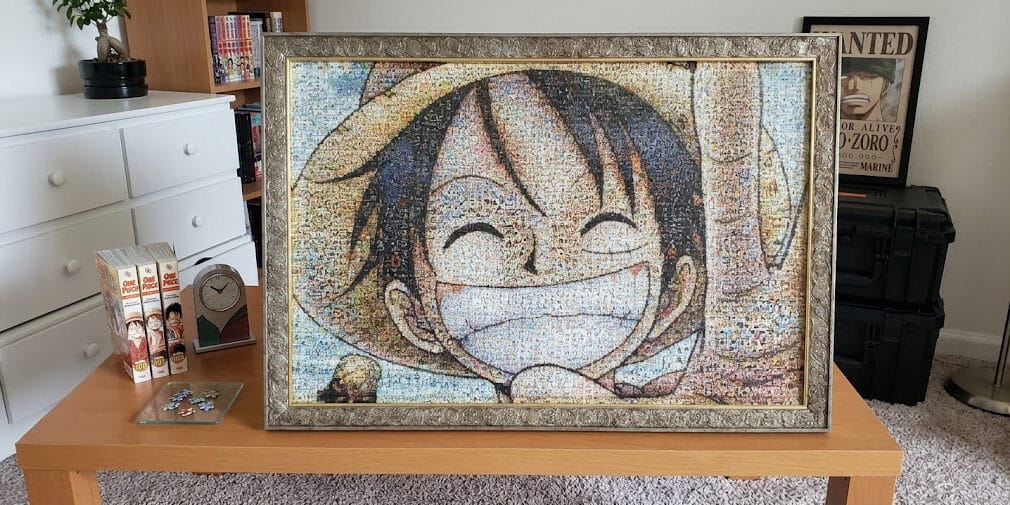
If the Clementoni build was the relaxing one, this was the one that actually made someone on our team say “wait, what am I even looking at?” out loud — in a good way. The ENSKY mosaic finishes at roughly 50 x 75 cm (19.6 x 29.5 inches), and instead of one continuous illustration, the completed image is built from a huge number of tiny individual panels, each one a genuine scene pulled from the anime. Step back from the table once it’s done, and you get a large portrait-style image of Luffy; lean in close, and you realize every square inch is actually its own miniature story — a fight scene here, a quiet character moment there. It’s genuinely a puzzle within a puzzle, and that’s not just marketing language; it changes how you approach the build. Sorting by color alone doesn’t get you very far here, because so many of the tiny panel images share similar tones, so our team ended up sorting more by recognizable character silhouettes and scene fragments, which slowed the pace but made the whole thing feel more like solving something than just assembling something. This is where it earns its keep: if you’re a longtime One Piece viewer who can actually recognize specific story arcs from a thumbnail-sized image fragment, this puzzle rewards that knowledge in a way a standard illustration puzzle never could, and it’s genuinely one of the more satisfying “aha” moments we’ve had with any anime puzzle this year. It’s not the puzzle we’d hand to someone building their first 1000-piece set, though — the visual similarity between pieces means it generally takes longer and asks for more patience than the Clementoni option above, so we’d point newer puzzlers toward that one first and save this for a second or third build. Once finished, it’s genuinely worth framing; several of us agreed it looks more like a piece of collectible art than a “kids’ puzzle,” which is part of why it tends to run a bit pricier than a standard-format equivalent.
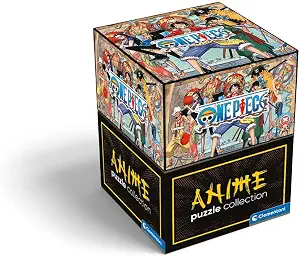
Sometimes you don’t want a project — you want an evening. That’s the honest case for the Clementoni 35137, a 500-piece puzzle from the same Anime Collection cube-box line, finishing at a compact 49 x 36 cm (about 19.3 x 14.2 inches). We built this one on a Tuesday night with a podcast running in the background and had it done well before we’d normally head to bed, which tells you most of what you need to know about the time commitment. What we appreciated most in practice was how well-suited this size is for anyone who’s puzzle-curious but doesn’t want to commit table space for a week and a half — it’s the one we’d recommend to a friend who says “I haven’t done a puzzle since I was a kid, but I kind of want to try again.” The smaller piece count also makes it a genuinely solid option for a One Piece fan in the 10-to-13 age range who’s ready to step up from an easy 100-piece kids’ puzzle but isn’t quite ready for the concentration a full 1000-piece build demands; if you’re shopping specifically with a younger builder in mind, it’s worth comparing this against age-tiered options like the ones we cover in our guide to jigsaw puzzle brands built for kids, since piece cut difficulty varies more than people expect between brands. The character art itself carries the same clean, poster-style illustration as the 39726 above, just scaled down, and it uses the same cube-box packaging, so the two pair up nicely if you want a matched set on a shelf. The obvious limitation is size — at under 20 inches on its longest side, it’s not going to anchor a big blank wall the way the 1000-piece version does, and a couple of our faster-building testers found it finished quicker than they expected, which might leave puzzle veterans wanting more of a challenge. But for what it’s built to do — a quick, satisfying, lower-commitment build — it does the job well, and it’s a genuinely good “test the waters” pick if you’re not sure a One Piece puzzle habit is for you yet.
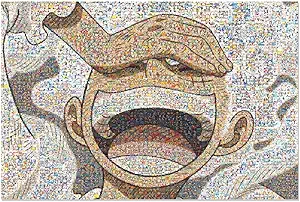
This one is for a specific kind of fan, and we mean that as a compliment, not a knock. The Ensky Gear 5 puzzle applies the same mosaic-art technique as the ENSKY set above, but built entirely around Luffy’s Gear 5 transformation — meaning the tiny panel images that make up the larger portrait are pulled specifically from the Wano Country and Egghead arcs, some of the more recent and, frankly, more visually chaotic stretches of the anime. Finished, it measures roughly 19.5 x 29.25 inches, and one detail our team genuinely appreciated is that it ships with puzzle glue and a glue spatula included, which is a small thing but meant we didn’t have to make a separate purchase before mounting it — a nice, practical touch that saved us an extra errand. Building it felt noticeably different from the standard ENSKY mosaic, mostly because the source material is newer and more specific: if you’ve watched all the way through Egghead, you’ll recognize far more of the individual scene fragments as you sort, and that recognition genuinely speeds up the process compared to going in cold. That’s also the honest caveat here — if you’re not caught up on the newer arcs, a meaningful chunk of the “aha, I remember that scene” payoff simply won’t land for you, and it might feel like assembling a very detailed but somewhat anonymous mosaic instead. We’d point this one specifically at longtime viewers who are current on the story and want a display piece that reflects where the series is now, rather than an earlier, more familiar era of the show — it’s less of a general “One Piece puzzle” and more of a tribute to one specific, fairly recent character arc. It also runs on the more challenging side of our four picks, so we’d treat it as a puzzle to work toward rather than a starting point, alongside our note above that mosaic-style builds generally reward puzzlers who already have a completed illustration puzzle or two under their belt. Given how specialized and recent the source material is, it’s also one to double-check availability on, since licensed puzzles tied to newer story arcs can sell through or get repriced faster than evergreen character art.
What to Actually Look For in a One Piece Puzzle
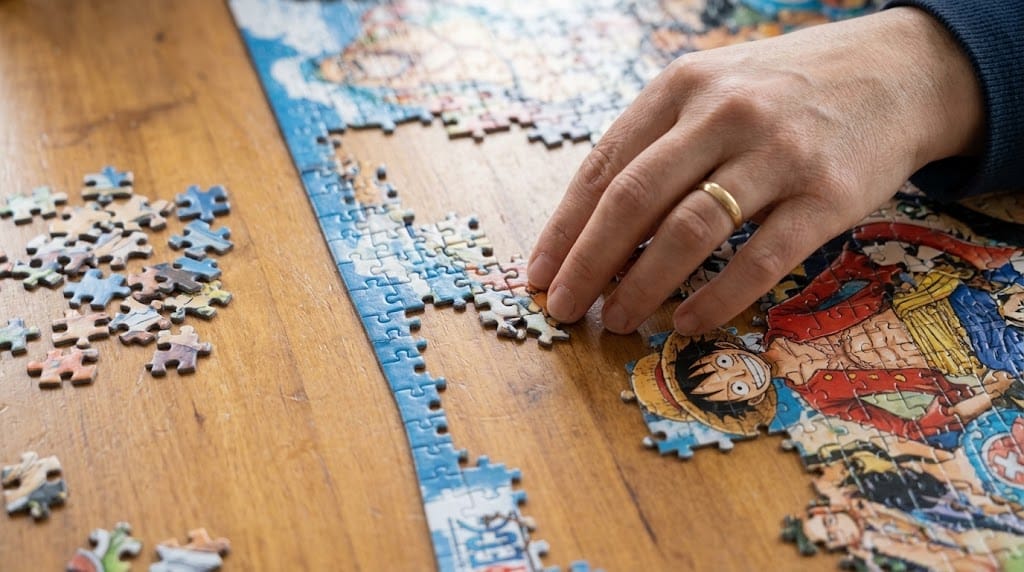
Classic character-art puzzles (like Clementoni’s Anime Collection) use a single illustrated scene — usually Luffy and the Straw Hat crew rendered in a clean, poster-like style. These tend to assemble the way a “normal” puzzle does: you sort edges, then work through color blocks and character details. They’re generally more approachable, especially if you’re newer to jigsaw puzzles or want something you can finish in a weekend.
Mosaic art puzzles (Ensky’s specialty) are a different beast entirely. Instead of one big image, the final picture is actually made up of hundreds or thousands of tiny individual scene panels from the anime — so once assembled, you get a large portrait of a character that, up close, reveals dozens of tiny familiar moments. These generally take longer to sort because color similarity does most of the misleading, and the reward is a genuinely unique piece worth framing.
A few other things worth weighing before you buy:
- Piece count and your available table space. A 1000-piece puzzle can sit out for days if you don’t have a dedicated surface, and a 500-piece build is a much more realistic weeknight project.
- Finished size, since some of these puzzles run long and narrow rather than square, which affects whether you can actually frame or display them afterward.
- Age and skill level. Anime-style puzzles with flat color fields can sometimes be trickier than photo-based ones because there’s less visual texture to key off of — something worth knowing if you’re buying for a teenager who’s newer to puzzling. If you’re shopping for a younger puzzler specifically, it’s worth comparing against family-friendly options in our breakdown of jigsaw puzzle brands built for kids, since piece cut and difficulty vary a lot by brand.
- Whether it’s officially licensed. Both Clementoni and Ensky produce officially licensed One Piece merchandise, which generally means better print accuracy to the source anime and manga.
- Piece shape and cardboard thickness. This isn’t something most listings advertise clearly, but it affects the whole experience. Thinner board can warp slightly if you leave a puzzle half-built near a window, and looser piece cuts tend to shift more easily if the table gets bumped. Neither Clementoni nor Ensky is prone to major issues here, but it’s still worth handling the pieces gently while you’re mid-build, especially with a mosaic set where you might have it out for a week or more.
- Whether you plan to frame it afterward. If display is the end goal, finished dimensions matter more than piece count. A 950-piece mosaic puzzle that finishes long and narrow needs a very different frame than a 500-piece square build, so it’s worth measuring your intended wall space before you order.
None of this is meant to overcomplicate a purchase that’s ultimately supposed to be fun. It’s more that a few extra minutes of comparison shopping tends to save you from the most common regret we hear about anime puzzles specifically: buying based on the box art alone and being surprised by how long — or how short — the actual build turns out to be.
How These Four Actually Compare
| Puzzle | Pieces | Finished Size | Style | Best For |
|---|---|---|---|---|
| Clementoni 39726 | 1000 | ~70 x 50 cm | Classic illustration | First-time anime puzzlers, gifting |
| ENSKY 1000pcs Mosaic Art | 1000 | ~50 x 75 cm | Mosaic art | Longtime fans wanting a display piece |
| Clementoni 35137 | 500 | ~49 x 36 cm | Classic illustration | Quick builds, younger puzzlers, testing the waters |
| Ensky Gear 5 Mosaic Art | 950 | ~49.5 x 74 cm | Mosaic art | Fans caught up on Wano/Egghead arcs |
If you’re deciding purely on ambition versus time, the two Clementoni puzzles tend to be friendlier entry points, while the two Ensky mosaic sets ask for more patience but pay it back with a genuinely distinct finished product. Neither approach is objectively better — it really comes down to whether you want an easier evening or a longer-term project that ends in something closer to wall art.
Frequently Asked Questions About One Piece Anime Puzzles
What’s the difference between a classic character-art puzzle and a mosaic art puzzle? A classic puzzle uses one continuous illustrated image, similar to most puzzles you’ve probably built before. A mosaic puzzle builds its final image out of many smaller individual images — in this case, actual scenes from the One Piece anime — so the completed picture rewards a closer look. Mosaic puzzles generally take longer to sort because the small images can look visually similar from a distance, even when the actual content is different.
How many pieces should I choose for my first One Piece puzzle? If you’re new to puzzling in general, a 500-piece build like the Clementoni 35137 tends to be a more realistic starting point — you can usually finish it in one or two sittings. If you’ve built puzzles before and want something that occupies a table for a week or more, a 1000-piece set is a reasonable next step, especially the more straightforward illustration-style option.
Are officially licensed One Piece puzzles worth paying more for? Generally, yes, mainly for print accuracy. Officially licensed puzzles from brands like Clementoni and Ensky tend to reproduce the source art and color palette more faithfully, and the box packaging usually includes a licensing mark you can use to verify authenticity before buying, which matters if you’re collecting or displaying the finished piece.
How long does a 1000-piece One Piece puzzle typically take to finish? This varies a lot by experience level and how much table time you dedicate to it, but our testers generally finished the classic illustration-style 1000-piece build over a weekend of casual sessions, while the mosaic-art version took noticeably longer — closer to a week of evening sessions — because of the added difficulty in sorting similar-looking pieces.
Can kids build these puzzles, or are they meant for adults? It depends on the specific puzzle. Most listings recommend these for teens and adults (commonly 10-plus or 14-plus, depending on the exact product), largely because of small-parts choking hazards for younger children rather than pure difficulty. If you’re shopping for a younger child specifically, it’s worth checking age-tiered puzzle brands built with that audience in mind rather than assuming any anime puzzle will fit.
What’s the best way to display a finished One Piece puzzle? Puzzle glue (often included with mosaic sets, as it was with the Ensky Gear 5 puzzle we tested) lets you seal the front of the completed puzzle before framing, which keeps pieces from shifting when you move it. A simple poster frame sized to the puzzle’s finished dimensions is usually enough — just double-check the finished size listed on the box, since these four puzzles range from a compact 19 x 14 inches up to nearly 30 inches on the long edge.
What should I do if I lose a piece or need to pause a build for a few days? Both brands generally offer a lost-piece or missing-piece support process through their customer service, so a single lost piece usually isn’t a total loss — it’s worth checking the manufacturer’s site before assuming you’ll have to buy the whole puzzle again. For pausing mid-build, a puzzle board or large tray you can slide under a bed or table works well for the classic illustration puzzles; for mosaic sets, we’d honestly suggest trying to finish in one extended session if you can, since the similar-looking pieces are easier to keep organized while the layout is still fresh in your head.
Our Final Take
None of these four puzzles is a universal answer to “which One Piece puzzle should I buy” — and honestly, we’d be a little skeptical of any article that claimed otherwise. What we can say, after actually building all four, is that the right pick mostly comes down to two questions: how much time do you want to spend at the table, and do you want a familiar illustration or something closer to a hidden-scene collectible? If you land on “quick and easy,” start with the Clementoni 500-piece. If you’re after something that looks genuinely different once it’s framed and hanging on a wall, the mosaic-art builds from Ensky are worth the extra patience they ask for. And if you’re a One Piece puzzle newcomer looking to round out a growing collection afterward, it’s worth browsing wider category guides — our breakdown of Disney puzzle options across different piece-count tiers is a useful reference for how piece count generally affects difficulty across brands, and if you eventually want to push past flat jigsaw puzzles entirely, our guide to 3D wooden puzzle brands for adults covers a genuinely different kind of challenge. Whichever one you choose, clear off a table, put on an episode, and take your time — that’s really the whole point.