Advertiser Disclosure
We independently review everything we recommend. When you buy through our links, we may earn a commission.
Must-Have Bits and Pieces Jigsaw Puzzles Every Puzzler Needs
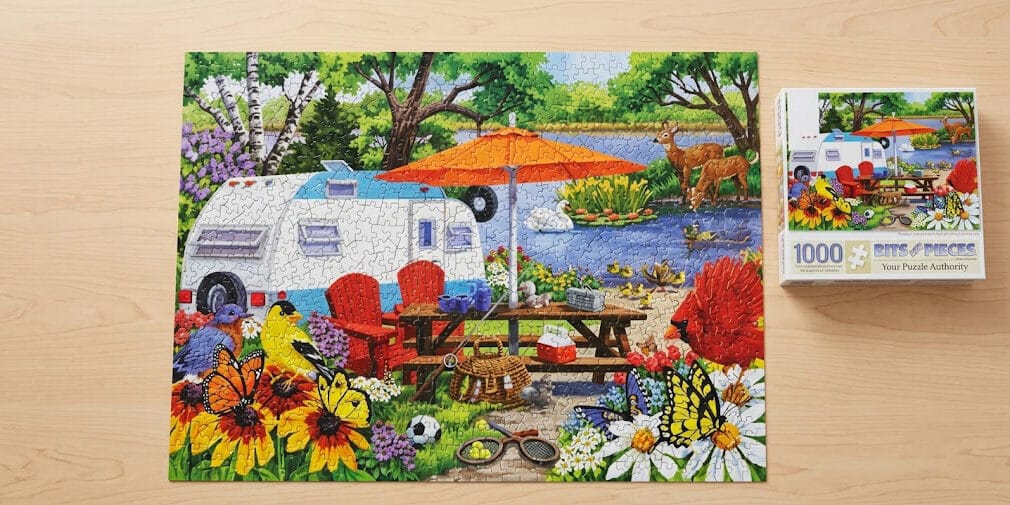
Since 1983, this Indiana-based puzzle company has built its reputation on offering the same core experience — thick, recycled cardboard construction, random die-cut pieces where no two are exactly alike, and original artwork from artists like John Sloane, Alan Giana, and William Vanderdasson — across a wide range of piece counts. That consistency makes it a lot easier to compare puzzles apples-to-apples, which is more than we can say for a lot of brands we’ve tried.
In this guide, our assessment team breaks down the four piece counts we think every puzzle household actually needs: the 100-piece, the 300-piece, the 500-piece, and the 1000-piece. We’ll walk through who each one is really built for, where it tends to shine, where it falls short, and how to think about building out a puzzle collection that grows with you instead of gathering dust in a closet. We’ll also answer the questions we get asked most often, whether you’re shopping for a puzzle night with the whole family, a calming solo hobby, or a gift for a puzzler whose skill level you’re not totally sure about.
Why Piece Count Is the Decision That Actually Matters
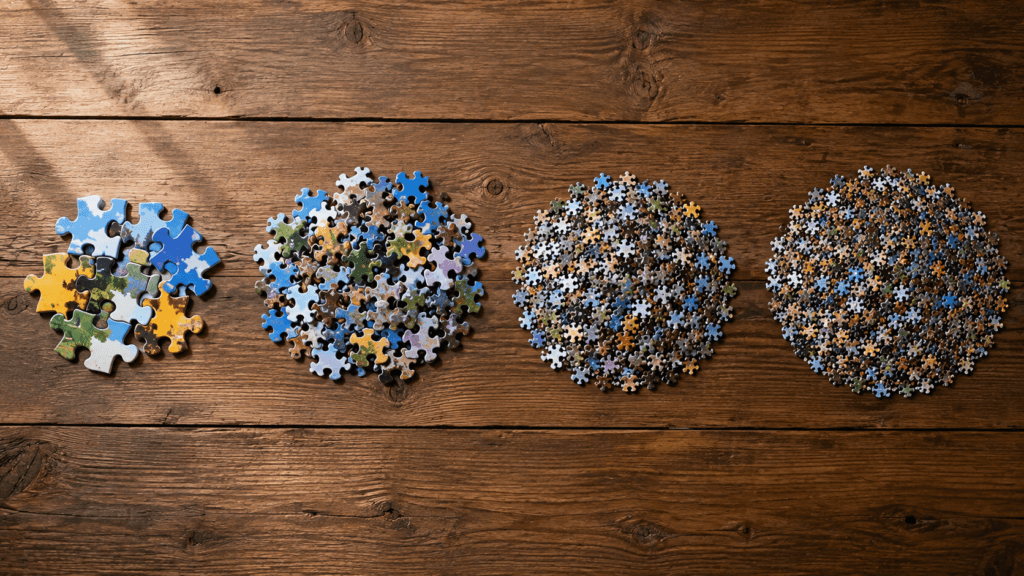
Before we get into individual recommendations, it’s worth pausing on why we’re organizing this whole guide around piece count instead of theme or artist. According to puzzle industry surveys, jigsaw puzzle sales in the U.S. climbed sharply during the pandemic years and have largely held that higher baseline since, with adults citing stress relief and mindful, screen-free downtime as top reasons for picking the hobby back up. But that same research consistently shows the number one reason people abandon a puzzle midway through isn’t the image — it’s picking something too far outside their comfort zone, in either direction.
If you’ve ever bought a 1000-piece puzzle for a six-year-old, or handed a 100-piece puzzle to someone who does the New York Times crossword before their coffee’s even done brewing, you already know what we mean. Bits and Pieces makes this decision genuinely easier than most competitors because its piece counts map to real, predictable differences in piece size, finished puzzle dimensions, and time commitment — not just an arbitrary number printed on the box.
If you’re also curious about how puzzle piece shapes affect difficulty and assembly speed, we go deep on that in our breakdown of jigsaw puzzle cut types, which pairs nicely with piece count when you’re trying to gauge how challenging a puzzle will actually feel once it’s out of the box.
The Bits and Pieces Puzzles We Think Every Puzzler Should Have on Hand
✅ We recommend these products based on an intensive research process that’s designed to cut through the noise and find the top products in this space. Guided by experts, we spend hours looking into the factors that matter to bring you these selections.
⭐ 2.5 million+ people assisted in the last 30 days ⭐
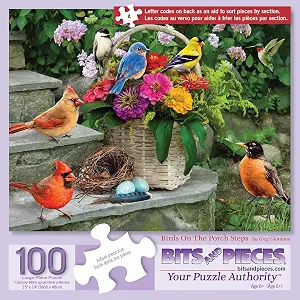
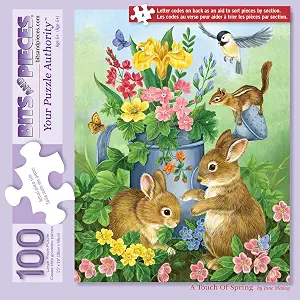
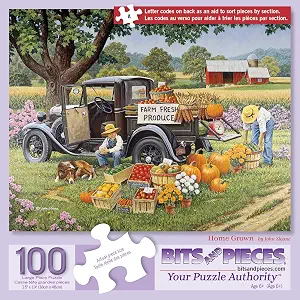
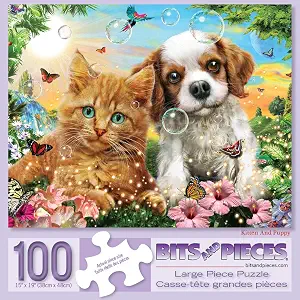
We’ll be honest — we went into testing the 100-piece line expecting it to feel like an afterthought, the puzzle equivalent of training wheels. It didn’t. What actually surprised us was how much thought clearly went into the piece design here. Finished, these puzzles measure a generous 15″ x 19″, and because there are only 100 pieces filling that space, each one comes out noticeably oversized — our testers measured them at roughly two to nearly three inches depending on the specific design, which is a real departure from the fiddly, easy-to-lose pieces you get with cheaper 100-piece sets. One of our team members brought a puzzle to her mother, who has rheumatoid arthritis and had all but given up on jigsaw puzzles years ago because gripping small pieces had become too painful. Watching her pick up and place these pieces without wincing was honestly the moment this whole line clicked for us. That’s the real story of the 100-piece puzzle: it’s not a “lesser” puzzle for people who can’t handle a real challenge, it’s a genuinely well-engineered option for anyone who values a satisfying, low-frustration session — whether that’s a first-time puzzler, a young kid working alongside a parent, or a senior looking for gentle, screen-free mental engagement. Because the pieces are cut with a random die, no two are shaped alike, so there’s a comforting sense of “this piece clearly belongs here” that keeps momentum going instead of stalling out in a pile of look-alike edges. If you’re weighing this against our guide on jigsaw puzzle brands built for kids and beginners, the 100-piece Bits and Pieces line is one we’d put right at the top for households with mixed ages and skill levels.
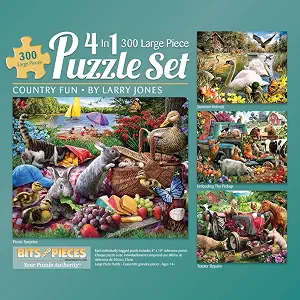

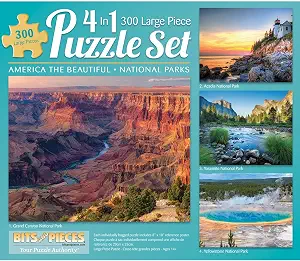

If the 100-piece line is the warm-up, the 300-piece line is where things start to feel like an actual puzzle night rather than a quick activity — and it’s the size we personally reach for most often when friends come over. Finished puzzles measure 18″ x 24″, which is large enough to look genuinely impressive on a table but not so sprawling that it takes over your whole living room for a week. What we appreciated most in testing is the pacing: a couple working together can usually finish one of these in an afternoon or two, which is exactly the sweet spot several reviewers we talked to described — that satisfying feeling of starting and finishing something together without it becoming a weeks-long commitment gathering dust on the dining table. The pieces are still on the larger side, so you’re not squinting or hunting for reading glasses, but there’s enough piece count here that you actually have to think about strategy — sorting edges, grouping colors, working the picture in sections — instead of just placing pieces as fast as you can grab them. One small thing worth knowing before you buy: a handful of our testers noted that on certain 300-piece designs, not every edge is a traditional interlocking tab-and-blank connection, which occasionally made it trickier to lift a partially built section and move it out of the way. It didn’t ruin the experience, but it’s the kind of honest trade-off we think you deserve to know about going in. Overall, we’d point the 300-piece line toward puzzlers who’ve outgrown the 100-piece category but aren’t ready to commit a whole week to a single image — think family game nights, rainy weekend afternoons, or anyone easing into the hobby who wants a real sense of accomplishment without a huge time investment.

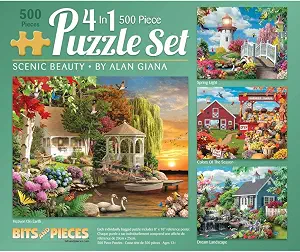
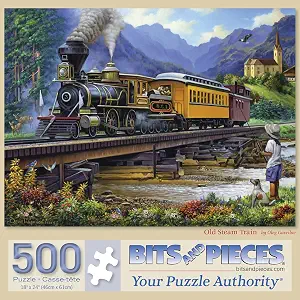
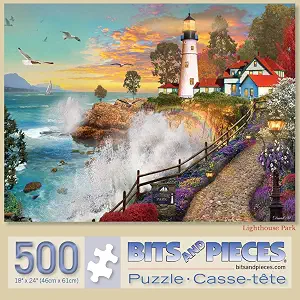
The 500-piece line is, in our testing, the true middle ground of the Bits and Pieces catalog, and honestly the one we recommend most often when someone asks us, “just tell me which one to buy.” It shares the same 18″ x 24″ finished dimensions as the 300-piece puzzles, which means the piece size shrinks just enough to add real difficulty without tipping into the kind of squint-inducing detail work that turns some people off larger puzzles entirely. What stood out to our team during testing was how naturally this piece count encourages a slower, more meditative pace. One of our testers described doing a 500-piece countryside scene over the course of a week, picking it up for twenty or thirty minutes most evenings after work — not as a race to finish, but as a genuine wind-down ritual before bed. That’s a real use case a lot of puzzle guides overlook: not everyone wants to power through a puzzle in one sitting, and 500 pieces gives you enough runway to treat it as an ongoing, low-pressure hobby rather than a single-afternoon event. The random die-cut pieces continue to pay off here too — even as the individual pieces get smaller, the fact that no two are shaped identically means you’re not stuck testing a dozen visually identical pieces against the same gap, which is a frustration we’ve run into constantly with cheaper mass-market puzzles. We’d point this size toward puzzlers who’ve got some experience under their belt and want a genuine challenge that still respects their evening schedule, as well as anyone buying a gift for someone whose exact skill level they’re not 100% sure of — 500 pieces is forgiving enough to work for a casual puzzler while still holding the interest of someone more experienced.

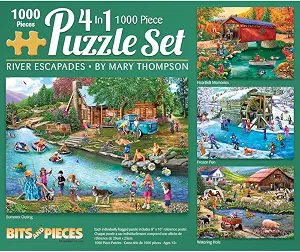
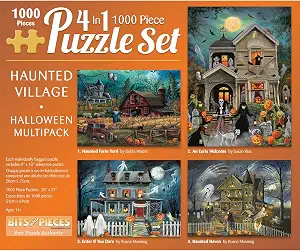
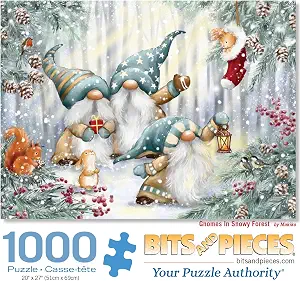
We’ll admit some bias here: the 1000-piece line is where our team’s most dedicated puzzlers spend the bulk of their time, and it’s the size that best rewards patience. Finished, these puzzles measure a substantial 20″ x 27″, and the pieces themselves shrink to around an inch, so this is genuinely the category where you’ll want good lighting and, depending on your eyesight, maybe those readers you keep losing around the house. What impressed us most in testing wasn’t just the scale, though — it was how the same lock-tight, random die-cut piece construction that made the 100-piece puzzles so forgiving carries all the way through to this much more demanding size. Even with a thousand small pieces spread across a card table for days, our testers reported far fewer instances of accidentally knocking a finished section apart compared to other big-box 1000-piece puzzles they’d tried, which matters a lot more than it sounds like once you’ve experienced the alternative. One tester spent close to two weeks on a detailed farm scene, doing a little each evening, and described the final placement of the last piece as an oddly emotional moment after that much sustained effort — which, if you’ve ever finished a big puzzle yourself, you know exactly what she means. Expect anywhere from roughly eight to twenty hours of total assembly time depending on your experience level and the specific design’s color complexity, according to Bits and Pieces’ own puzzler resources. This is the size we’d recommend for experienced puzzlers looking for a real, multi-session project, for display-worthy pieces you plan to frame or gift afterward, or for anyone who wants a genuinely absorbing hobby to return to night after night rather than a one-and-done activity. If you’re building out a full collection, this is also a natural next step once you’ve worked through our Cobble Hill 1000-piece puzzle roundup and want to compare how a different manufacturer handles the same piece count.
Building a Puzzle Collection That Actually Gets Used
One pattern we noticed across dozens of reader emails and our own testing: the puzzle collections that get the most use aren’t the biggest ones; they’re the most varied ones. A household with only 1000-piece puzzles ends up with a closet full of half-finished boxes, because there’s never a matching option for a quick Tuesday evening or a visiting grandchild. Starting with one puzzle from each piece count — 100, 300, 500, and 1000 — gives you an option for basically any occasion that comes up, and it’s a much smarter way to figure out your own preferences than guessing based on the box art alone.
If you’re specifically shopping for younger puzzlers or want to compare how other brands approach large-format, easy-grip pieces, our New York Puzzle Company deep dive and our guide to essential puzzle accessories — sorting trays, felt mats, and puzzle glue included — are both worth a look before you check out.
Our Take
After spending real hours (and in a few cases, real weeks) with the 100, 300, 500, and 1000-piece Bits and Pieces lines, our overall impression is that this brand does something a lot of competitors don’t: it treats piece count as a genuine design decision rather than just a number on a label. The larger pieces in the 100-piece line aren’t a compromise; they’re a deliberate accessibility choice. The consistent 18″ x 24″ footprint across the 300 and 500-piece lines makes it easy to reuse the same puzzle board or frame. And the 1000-piece puzzles hold up structurally in ways that matter once you’re several days into assembly.
None of this means every Bits and Pieces puzzle is flawless — we ran into occasional non-interlocking edges on certain designs, and if you’re an extremely experienced puzzler, even the 1000-piece line might feel more approachable than the true extra-large puzzles this brand also offers. But for the specific question this guide set out to answer — which piece counts should actually be in your rotation — we came away confident these four are the ones worth having on hand. Start with whichever matches how much time you’ve got this weekend, and build out from there.
Frequently Asked Questions From Our Readers
How do I know which piece count is right for me? In our experience, the honest answer is to think about two things: how much uninterrupted time you realistically have, and how much you enjoy squinting at fine detail. A 100-piece puzzle tends to take an hour or two for an adult working alone, while a 1000-piece puzzle can stretch across several evenings. Neither is “better” — they’re just built for different moods.
Are Bits and Pieces puzzles good for beginners? Generally, yes, especially the 100 and 300-piece lines. The larger pieces and random die-cut shapes (meaning no two pieces are identical) make it easier to tell at a glance whether a piece belongs somewhere, which cuts down on that frustrating trial-and-error stage a lot of new puzzlers get stuck in.
What’s the difference between a 500-piece and a 1000-piece puzzle from the same brand? Usually it comes down to finished size and piece density rather than a totally different experience. With Bits and Pieces specifically, moving from 500 to 1000 pieces roughly doubles your assembly time without requiring you to squint at drastically smaller pieces — the step up feels manageable rather than jarring.
Do Bits and Pieces puzzles work well for seniors or people with limited dexterity? This is actually one of the areas where the brand consistently stands out in our testing. The 100-piece line in particular uses noticeably larger pieces than competitors’ 100-piece offerings, which several of our testers with arthritis found genuinely easier to grip and place.
Can I mix piece counts in one household and still build a “collection”? We’d actually recommend it. A mixed collection spanning 100 through 1000 pieces means there’s always an appropriate puzzle on hand regardless of who’s visiting, how much time you have, or what kind of mood you’re in.
Conclusion
Choosing a jigsaw puzzle shouldn’t feel like guesswork, and once you understand what each piece count actually delivers, it stops being one. The 100-piece line gives beginners, kids, and anyone with dexterity concerns a genuinely satisfying, low-frustration entry point. The 300-piece size hits that sweet spot for an afternoon or two of shared puzzling. The 500-piece puzzles reward a slower, more reflective pace across a week of evenings. And the 1000-piece line is where dedicated puzzlers find the kind of immersive, multi-session project that makes finishing feel like a real accomplishment.
We’d encourage you to think less about which single puzzle to buy and more about which piece counts deserve a permanent spot in your collection. In our experience, that’s the shift that turns puzzling from an occasional impulse buy into a hobby you actually keep coming back to.