Advertiser Disclosure
We independently review everything we recommend. When you buy through our links, we may earn a commission.
Springbok Puzzles: Everything You Need to Know Before Buying
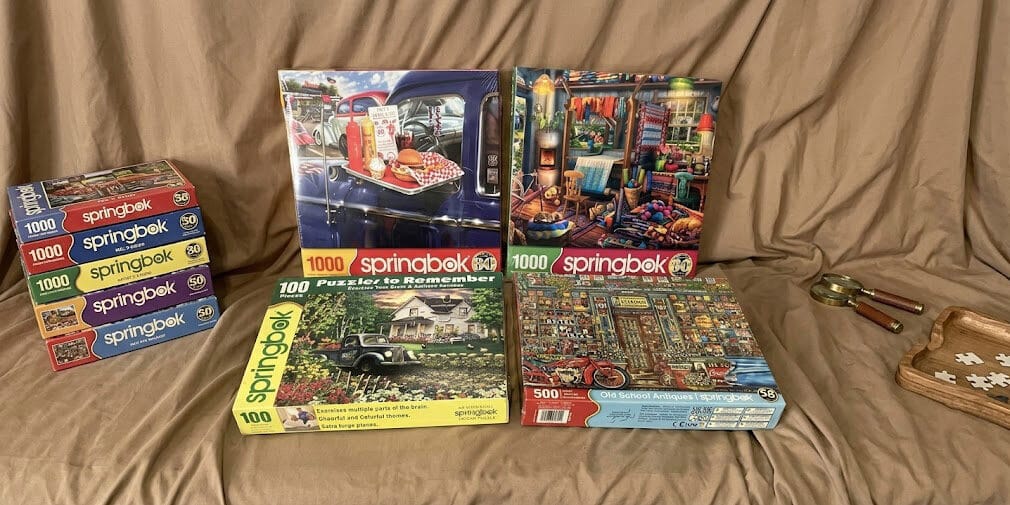
If you’ve spent any time browsing jigsaw puzzles online, you’ve probably run into the name Springbok more than once. Maybe it was tucked into a “best puzzle brands” roundup, or maybe your grandmother had a box of them stacked in a closet that somehow never went out of style. Either way, you’re here because you want a straight answer to a simple question: are Springbok puzzles actually worth buying, and which size should you start with?
Our assessment team spent several weeks working through Springbok puzzles across the brand’s full range, from the jumbo-piece sets made for little hands and memory care activities to the sprawling 2000-piece editions that eat up an entire dining table for a month. We wanted to know if the brand’s reputation as “America’s oldest puzzle maker” is still earned, or if it’s coasting on nostalgia. Along the way, we compared notes on piece thickness, box accuracy, how the random cut actually felt under our fingers, and where the puzzles genuinely shine versus where they ask a little more of your patience.
Why Springbok Puzzles Even Matter
Springbok isn’t a brand that showed up during the pandemic puzzle boom and slapped a nice font on a box. The company traces back to 1963, when Robert and Katie Lewin founded Springbok Editions after Robert picked up a set of circular jigsaw puzzles while traveling in London and brought them home as gifts for their kids. That gift sparked an idea, and with some early guidance from the puzzle maker whose designs had inspired them, the Lewins built what would become one of the most recognized puzzle brands in the country.
The brand changed hands a couple of times over the decades. Hallmark Cards acquired Springbok in 1967 and kept the puzzles as a Hallmark-store exclusive for more than three decades, which is honestly why so many of us have a hazy childhood memory of finding one in a gift shop. Production later moved to Allied Products Inc., a company that had to build out entirely new die-cutting and lithography capabilities just to keep the puzzles up to the standard longtime fans expected. Today, Springbok puzzles are manufactured in Kansas City, Missouri, and the company continues to lean on that “made in America since 1963” identity as a core part of its brand story.
What’s stuck around through every ownership change is the puzzle-making philosophy: original artwork, a distinctive piece shape, and a level of quality control that’s kept a devoted following buying the brand for generations. Over the years, Springbok has also built out licensing partnerships with recognizable names, including Coca-Cola and children’s book illustrator Mary Engelbreit, which is part of why you’ll find such a widespread spread of nostalgic and collectible imagery across the catalog rather than a single visual style. That’s a big part of why Springbok still comes up constantly in conversations about vintage puzzle brands and the puzzlers who collect them, some of whom track down decades-old editions specifically for their original box art.
What Actually Makes a Springbok Puzzle Different
This is the part that matters most if you’re comparing Springbok against, say, a Ravensburger or a Buffalo Games box sitting next to it on the shelf. Three things set Springbok apart in a way you’ll actually notice once the pieces are in your hands.
The random cut. Most modern puzzle brands use a grid or ribbon cut, where pieces repeat in predictable rows and columns. Springbok has built its identity around the random cut instead, meaning every single piece is shaped differently and appears only once in the entire puzzle. There’s no relying on “oh, this is one of those long skinny edge pieces I’ve seen six times already.” Every piece is its own small puzzle to solve, which is exactly why the brand pairs so naturally with a deeper conversation about jigsaw puzzle cut types if you’re curious how this compares to the ribbon and grid cuts most other brands use.
The board thickness. Springbok pieces are cut from what the company calls 75-point board, which it states is roughly 18% thicker than the industry average. In practice, this means the pieces feel sturdier in your hand and hold their shape better over repeated use, which matters if a puzzle is going to get passed around a family game night more than once.
The materials. Springbok’s chipboard is made from 100% recycled materials, and the company reports that a large share of that comes from post-consumer waste. Printing is done with soy and vegetable-based inks rather than petroleum-based alternatives. If sustainability factors into your buying decisions the way it does for a lot of our readers, this is a genuinely meaningful point in Springbok’s favor, and it’s one of the more consistent things outside reviewers point to when they talk about the brand.
None of this means Springbok is automatically the right choice for every puzzler. The random cut and firmer interlock that longtime fans love is the same thing that trips up puzzlers who are used to the more forgiving grid cut of other brands. We’ll get into that trade-off more later on.
How We Approached Testing
Our team split up puzzles across four piece-count tiers so we could evaluate Springbok the way an actual household would use it: a quick one for the kids, a relaxed afternoon puzzle, a serious weekend project, and a genuine long-haul commitment. We tracked how long each puzzle actually took compared to the brand’s stated estimate, how the pieces felt after repeated handling, whether the box art matched the finished image, and how satisfying (or frustrating) that final random-cut interlock felt once the last piece went in. Here’s what we found, broken down by the size that’s likely closest to what you’re shopping for.
Springbok Puzzles by Piece Count: What Each Size Is Actually Like
✅ We recommend these products based on an intensive research process that’s designed to cut through the noise and find the top products in this space. Guided by experts, we spend hours looking into the factors that matter to bring you these selections.
⭐ 2.5 million+ people assisted in the last 30 days ⭐




We started here because this tier tends to get overlooked in most puzzle roundups, and honestly, it shouldn’t be. Springbok’s 36- to 60-piece puzzles use noticeably jumbo pieces, sized so that a puzzle like “Everything’s Ducky” or “Animal Kingdom” fills roughly the same footprint as a full 500-piece puzzle despite having a fraction of the pieces, which is a clever bit of design that makes the finished picture feel like an actual accomplishment rather than a token activity. What surprised our tester who tried this size with her three-year-old wasn’t just that the pieces were large enough for small hands to grip without dropping them constantly; it was how the outer edge pieces were noticeably bigger than the interior ones, so a toddler working the frame felt just as capable as an older sibling filling in the middle. We also handed one of these puzzles, “Fox Pups Den,” to a family member helping care for a parent with dementia, and the response was immediate: the bold, high-contrast imagery and forgiving piece count made it something her mom could sit with for a full session without getting overwhelmed or frustrated, which lines up with why this size shows up so often as a recommendation for memory care and Alzheimer’s activities. If you’re buying for a preschooler building fine motor skills, a grandparent who wants something achievable in one sitting, or anyone easing into puzzles for the first time, this is the tier that delivers real confidence without babying the experience, and it pairs naturally with a browse through the best jigsaw puzzle brands for kids if you want to compare Springbok’s approach against other children’s puzzle makers.
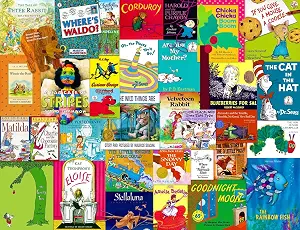


This is Springbok’s bread and butter, and after working through several puzzles in this range, including “Book Shop,” “Crazy Quilts,” and the seasonal “Special Delivery,” we understood immediately why the brand recommends starting here if you’re new to puzzling. The finished sizes land around 18 by 24 inches for most 500-piece editions, and every one we tried took right around the 4-to-6-hour window Springbok advertises, whether that was one focused evening or two more relaxed sittings with coffee in hand. What stood out most was how well-suited this range is to actually finishing something without a multi-week commitment hanging over your coffee table. “Crazy Quilts” in particular became a bit of a running joke on our team because the densely patterned imagery made the random cut feel genuinely clever rather than punishing, every piece looked like it could belong in five different spots until it very much didn’t, and there’s something deeply satisfying about that click when it finally locks in. This tier is the one we’d hand to someone hosting a family game night, a couple who wants a low-stakes weekend project, or anyone buying their first Springbok puzzle and wanting to understand what the fuss is about before committing to something bigger. If a 500-piece puzzle from this brand hooks you, it typically hooks you for good.
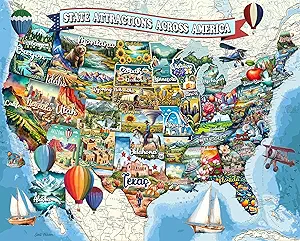

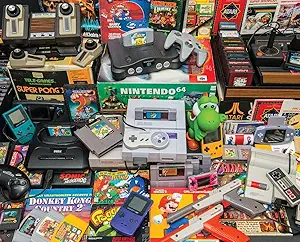

The 1000-piece tier is where Springbok makes its biggest and most confident claim: a finished size of 24 by 30 inches, which the company states makes it the largest standard 1000-piece puzzle on the market, with pieces cut over 30% larger than what you’d typically find at this count from other brands. We put that claim to the test with “Duck Lodge” and “The Toy Shoppe,” and the size difference was noticeable the moment we opened the box. These pieces have real heft compared to a standard 1000-piece puzzle from most other manufacturers, which made long stretches of sorting and placing far easier on the hands and eyes than we expected. Completion took us closer to the 8-to-10-hour range Springbok cites, spread across several evenings, and the extra piece size meant we could work under regular room lighting without squinting at tiny interlocking tabs the way some other brands demand. One tester who normally reaches for 750-piece puzzles because standard 1000-piece sets start to strain her eyes told us this was the first time she finished a full 1000-piece puzzle in one week without putting it down out of frustration. If you’ve outgrown smaller puzzles but don’t want the eye strain that usually comes with stepping up to four digits, this is the size that solves that exact problem, and it’s worth comparing against how other popular 1000-piece options stack up, including our notes on White Mountain’s 1000-piece lineup and Buffalo Games’ 1000-piece puzzles, if piece size and finished dimensions are a priority for you.




This is the tier for puzzlers who’ve already proven to themselves that they can finish the big ones and are chasing something that takes real weeks, not days. The 1500-piece puzzles finish around 36 by 28.75 inches, and the 2000-piece editions stretch out to a genuinely wall-worthy 42.5 by 34 inches. We spent close to three weeks on “Central Park Paradise” at 1500 pieces, working it in short evening sessions, and then handed off “Tin of Treats” at 2000 pieces to a tester who describes puzzling as her version of meditation. Her verdict was that the sheer surface area changes the entire experience: you’re not just filling in a picture, you’re managing sections like separate mini-projects, sorting by color zone, tackling the sky one week and the architecture the next, which turns the puzzle into something closer to a long-term hobby than a weekend activity. What impressed us most at this size was that the piece quality held up under that much handling; nothing softened, frayed, or lost its snap after being picked up, set down, and picked up again for the better part of a month. This size isn’t for someone who wants a quick win; it’s for the puzzler who has a dedicated table they don’t need back anytime soon, and it’s a natural next step if you’ve already worked through Ravensburger’s 1500-piece catalog or you’re building toward eventually tackling a 5000-piece jigsaw puzzle down the line. When it’s finished, you’ll understand immediately why so many puzzlers frame this size instead of breaking it back down into the box.
Quick Springbok Facts Worth Knowing
- Founded in 1963 in Kansas City, Missouri, and still manufactured there today
- Offers puzzles across nine piece counts: 36, 60, 100, 350, 400, 500, 1000, 1500, and 2000
- Releases roughly 20 to 25 new puzzle images a year, so the catalog turns over slowly and deliberately rather than flooding the market
- A 500-piece puzzle typically takes 4 to 6 hours to complete, while a 1000-piece puzzle runs closer to 8 to 10 hours
- Most Springbok puzzles fall in the $15 to $35 range depending on piece count, with 1500- and 2000-piece editions sitting at the higher end
- Pieces are cut roughly 18% thicker than the industry average, according to the company
Who Springbok Puzzles Are Actually Best For
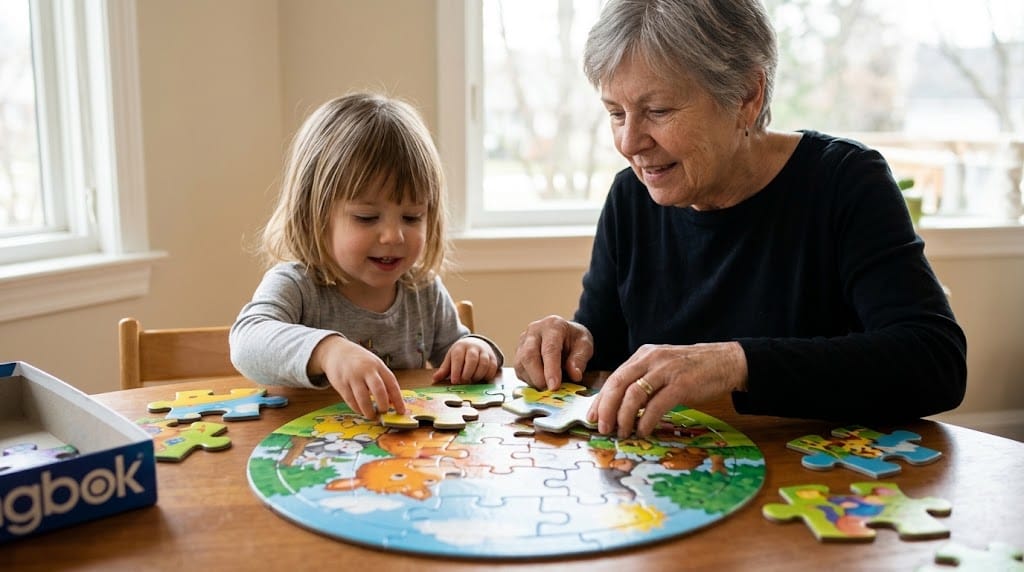
Because the catalog spans everything from toddler-friendly jumbo pieces to sprawling 2,000-piece displays, it helps to think about Springbok less as a single product and more as a family of puzzles built for different moments. Buying a puzzle as a stocking stuffer or a rainy-afternoon activity for kids visiting over the holidays? The smaller tiers do that job well, and it’s worth browsing Springbok’s seasonal lineup alongside our roundup of the best Christmas puzzle brands if timing your purchase around a holiday matters. Looking for something spookier to hand out at a fall gathering? Springbok’s catalog does dip into seasonal themes worth comparing against our picks for the best Halloween puzzles. And if you’re shopping for a puzzler who’s more into pop culture and licensed artwork than classic Americana, it’s worth knowing Springbok leans traditional; readers chasing something like our coverage of One Piece anime puzzle designs will likely find a better thematic match elsewhere, even if Springbok wins on pure build quality.
In our experience, Springbok earns its strongest recommendation for three kinds of puzzlers specifically: families who want a durable puzzle that survives being picked up and put down by multiple sets of hands, gift-givers who care about the “made in the USA” story behind what they’re buying, and puzzlers who’ve gotten a little bored with the predictability of a standard grid cut and want something that keeps them paying closer attention piece by piece.
The Trade-Offs: What We Loved and What Gave Us Pause
No puzzle brand is right for everyone, and we’d be doing you a disservice if we didn’t lay out where Springbok genuinely struggles alongside where it shines.
What we appreciated:
- The random cut genuinely does make the solving experience feel less repetitive than a standard ribbon cut, especially once you’ve done a few and start to notice the difference
- Piece thickness held up across every tier we tested, with no soft edges or fraying even after extended handling
- The eco-friendly manufacturing claims are backed by actual sourcing practices, not just a green logo on the box
- Domestic manufacturing means faster restocks and, for some buyers, a meaningful reason to choose Springbok over imported alternatives
- The jumbo-piece sizing at 1000 pieces and above is a real advantage for anyone who finds standard piece sizes hard on the eyes
Where we’d set expectations:
- The random cut and snug interlock that veteran puzzlers love can genuinely frustrate someone used to the more forgiving fit of a grid-cut brand, so it’s worth trying a smaller Springbok puzzle before committing to a 1500- or 2000-piece box
- Catalog turnover is slow by design, with only 20 to 25 new images released a year, so if you’re after constant novelty, you may find the selection narrower than brands that release new artwork monthly
- A handful of the Larsen-branded children’s puzzles in Springbok’s lineup are manufactured overseas rather than domestically, which is worth knowing if “made in the USA” is a hard requirement for every purchase
- Box art occasionally runs slightly more saturated than the finished puzzle’s actual coloring, a common complaint we’ve also seen echoed in other independent reviews of the brand
Springbok vs. Other Popular Puzzle Brands
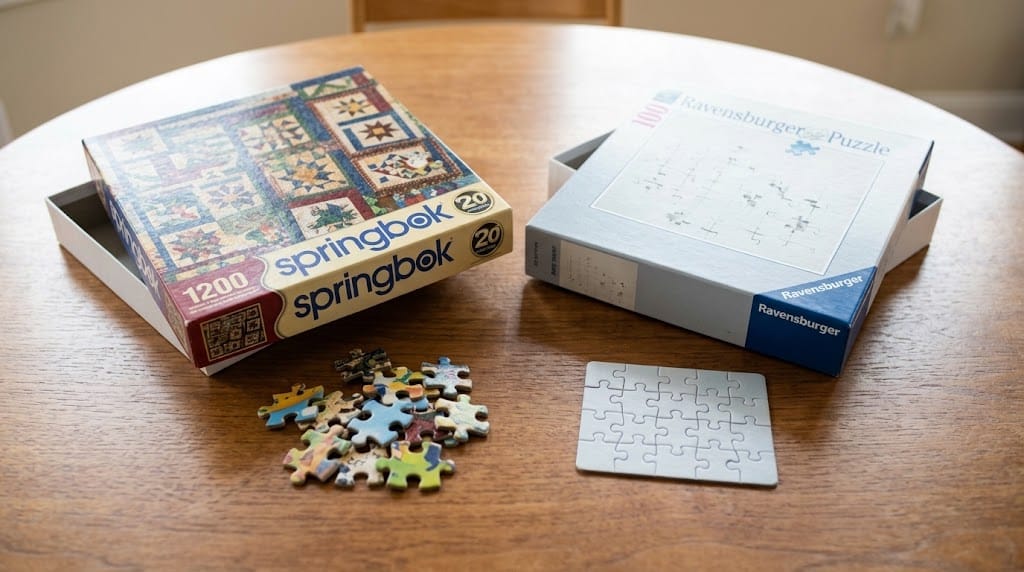
It’s worth putting Springbok in context against the brands you’re probably also considering. Compared to a brand like Ravensburger, whose German-engineered grid cut is famous for an almost buttery-smooth fit, Springbok’s random cut asks more of you but rewards that effort with a puzzle that feels less predictable piece to piece. Against Buffalo Games, which has built a reputation on vivid, high-contrast artwork at a lower price point, Springbok tends to lean into more classic, nostalgic imagery and a noticeably thicker piece. And compared to White Mountain, another proudly American-made brand known for nostalgic collage-style puzzles, Springbok’s biggest differentiator really does come down to that random cut and the larger-than-standard piece sizing at the 1000-piece tier. If your comparison shopping stretches into smaller, artist-driven puzzle makers, it’s also worth reading our deep dives on New York Puzzle Company and Galison, along with our look at Cobble Hill’s 1000-piece collection, since all three take a noticeably different approach to piece cut and artwork sourcing than Springbok does. None of these comparisons make one brand objectively “better”; they just help clarify what kind of puzzling experience you’re actually shopping for.
Caring for Your Springbok Puzzle
Because Springbok pieces are thicker and the random cut creates such a tight, satisfying interlock, a lot of puzzlers end up wanting to preserve their finished work rather than break it back down into the box. If that’s you, plan: puzzle glue and a proper mat or board go a long way toward protecting a finished piece, especially at the 1000-piece size and above where the interlocking strength is strong enough to actually lift the puzzle intact off the table, a tradition longtime fans have nicknamed the “Springbok Challenge.” We’d point you toward a closer look at puzzle accessories worth owning if you’re planning to frame or display a finished Springbok puzzle, since the right glue, backing board, and storage setup make a real difference in how long that finished piece lasts. A few habits made a noticeable difference for our team: working on a felt puzzle mat kept larger projects from sliding around over multiple sessions, sorting edge pieces into a separate tray before diving into the interior sped up even our slowest 2000-piece attempt, and letting puzzle glue cure fully before lifting a finished piece off the table prevented the kind of cracking that can undo weeks of work in one careless move.
Frequently Asked Questions About Springbok Puzzles
Are Springbok puzzles good quality? Based on our testing, yes. The pieces are noticeably thicker than standard puzzle board, the die-cutting is precise enough for a tight and consistent fit, and that quality held up across every piece count we tried, from 60-piece children’s puzzles up through the 2000-piece tier.
Are Springbok puzzles actually made in the USA? The vast majority are. Springbok has manufactured its puzzles in Kansas City, Missouri since 1963, with the notable exception of its Larsen-branded children’s line, which is produced overseas.
What’s a random cut puzzle, and why does it matter? A random cut means every piece in the puzzle is a unique shape that appears only once, rather than the repeating grid or ribbon shapes most modern brands use. It tends to make the solving experience feel less predictable, though it can also feel more challenging for puzzlers used to a standard grid cut.
How long does a Springbok puzzle take to finish? It depends heavily on piece count. Expect roughly 4 to 6 hours for a 500-piece puzzle, 8 to 10 hours for a 1000-piece puzzle, and several days to a few weeks of casual sessions for the 1500- and 2000-piece tiers.
Are Springbok puzzles good for kids? The 36-to-60 piece tier is genuinely well suited to young children thanks to the jumbo piece sizing and forgiving piece count, though the brand’s mid-size and larger puzzles are better suited to older kids and adults given the more challenging random cut.
What happens if my Springbok puzzle is missing a piece? Springbok backs its puzzles with what it calls the Missing Piece No Worry Warranty, which covers replacement if you come up short.
Are Springbok puzzles worth the price? For puzzlers who value American manufacturing, sustainable materials, and a piece-cutting style you won’t find at most other brands, we think the price generally lines up with what you’re getting. If your priority is simply the lowest cost per puzzle, you may find better value elsewhere.
Are Springbok puzzles harder than other brands? Many puzzlers find them a bit more challenging at first, simply because the random cut removes the visual shortcuts you get from a repeating grid pattern. It’s less about raw difficulty and more about a different kind of solving experience, one that rewards attention to color and image detail over piece shape alone.
Where can I buy Springbok puzzles? Springbok sells directly through its own website, and puzzles are also widely available through major retailers like Walmart and Amazon as well as specialty puzzle shops that carry the full range of piece counts, including the 1500- and 2000-piece editions that can be harder to find in physical stores.